Why Toilet Trapways Are Curved Like an S
Toilets4.6
Learn why toilet trapways curve like an S, how each bend blocks sewer gas, and what the shape means for clogs and…
Read the guideIf your brand new toilet clogs more than the 20-year-old model it replaced, you are not alone. This guide explains the real reasons behind poor flush performance in modern toilets and provides step-by-step fixes to restore clog-free operation.
A new toilet clogs more than the old one primarily because federal water-efficiency regulations force modern toilets to use less water per flush (1.28 GPF vs. 3.5+ GPF in older models). This reduced water volume often lacks the momentum to clear the trapway, especially if the toilet has a narrow trapway, low MaP score, or if the home has old cast-iron waste pipes. The fix is usually a toilet with a wider trapway, a pressure-assist flush, or a simple plunger technique.
Modern toilets are federally mandated to use no more than 1.6 gallons per flush (GPF), with most new WaterSense models using just 1.28 GPF. Older toilets often used 3.5 to 5 GPF, which provided far more water volume and force to push waste through the trapway. The reduced water volume in new toilets means less hydraulic pressure and a weaker flush, making them more prone to clogs, especially with dense waste or low-flow designs.
The single biggest factor is water volume. A toilet from the 1980s or early 1990s typically used 3.5 to 5 gallons per flush. That massive amount of water created strong siphoning action and easily cleared the trapway. In 1992, the U.S. Energy Policy Act mandated that new toilets use no more than 1.6 GPF. Today, the EPA WaterSense program encourages even lower consumption at 1.28 GPF. While this saves thousands of gallons of water per year per household, it also reduces the flush power dramatically.
If your old toilet was a 3.5 GPF model and your new toilet is a 1.28 GPF model, you have lost roughly 63% of the water volume that was available to push waste through the drain. Many homeowners report that their old toilet rarely clogged, but the new one clogs weekly or even daily. This is not a defect in the toilet itself; it is a direct result of water conservation requirements.
The MaP (Maximum Performance) test is the industry standard for measuring a toilet's ability to clear waste. A toilet with a MaP score of 600 grams or higher is considered good, but many budget models score below 400 grams. Always check the MaP score before buying. A toilet with a high MaP score and a 1.28 GPF rating will outperform a low-scoring 1.6 GPF toilet.
Three design features contribute most to clogging: narrow trapway diameter (less than 2 inches), low MaP flush performance scores (below 500 grams), and gravity-fed flush systems that lack pressure assist. A trapway that is too narrow or has sharp bends restricts waste passage, while a weak siphon from low water volume fails to clear the bowl.
The trapway is the curved channel inside the toilet that carries waste from the bowl to the drainpipe. Older toilets often had trapways of 2.5 to 3 inches in diameter. Many modern toilets, especially budget models, use trapways as narrow as 1.75 inches. A narrower trapway creates more friction and is more likely to clog with solid waste or even large amounts of toilet paper.
Another critical factor is the flush valve size. A 3-inch flush valve allows water to enter the bowl much faster than a standard 2-inch valve, creating a stronger siphoning action. Toilets with a 3-inch flush valve, such as the TOTO Drake II or American Standard Champion 4, generally have better clog resistance than those with a 2-inch valve.
| Model | MaP Score | GPF | Flush Type | Trapway | Height | Best For | Check Price |
|---|---|---|---|---|---|---|---|
| TOTO Drake II | 1000g | 1.28 | Gravity (3" valve) | 2-1/8" | 17" | Clog resistance | Check price |
| American Standard Champion 4 | 1000g | 1.28 | Gravity (4" valve) | 2-3/8" | 16.5" | Heavy use | Check price |
| Kohler Highline | 600g | 1.28 | Gravity | 2" | 17" | Budget | Check price |
| Woodbridge T-0001 | 800g | 1.28 | Gravity (3" valve) | 2" | 16.5" | Value | Check price |
| Gerber Viper | 500g | 1.28 | Gravity | 1.75" | 16.5" | Low cost | Check price |
Pressure-assist toilets, like the TOTO UltraMax II or Kohler Wellworth Pressure Lite, use compressed air to force water into the bowl with high velocity. These models can clear clogs with less water but are louder and more expensive. Gravity-fed toilets are quieter but rely entirely on water volume and trapway design.
Start by checking the water level in the tank; it should be at the fill line marked inside the tank. If the water level is too low, adjust the float valve to raise it. Use a plunger with a flange (not a sink plunger) to create a better seal. If clogs persist, consider upgrading to a toilet with a 3-inch flush valve and a MaP score of 800 grams or higher.
Many clogging issues can be resolved without replacing the toilet. First, check the water level in the tank. If the water level is set too low, there will not be enough water to create a strong siphon. Most toilets have a mark inside the tank indicating the correct water level. Adjust the float arm or screw to raise the water level to that mark.
Second, use the correct plunger. A standard cup plunger is designed for sinks and will not create a good seal in a toilet bowl. Use a flange plunger (also called a toilet plunger) which has an extended rubber flap that fits into the toilet drain opening. This creates a much better seal and allows you to generate more force.
Third, check for partial clogs in the trapway. Sometimes a small object like a plastic wrapper or a child's toy can get lodged in the trapway. Use a toilet auger (also called a closet auger) to break up or retrieve the obstruction. Do not use chemical drain cleaners, as they can damage the wax ring and porcelain.
If your new toilet clogs only with solid waste but flushes liquid fine, the issue is likely the MaP score. Toilets with a MaP score below 500 grams struggle with solid waste. The fix is to replace the toilet with one that has a MaP score of 800 grams or higher, such as the TOTO Drake II or American Standard Champion 4.
If you have tried adjusting the water level, using a flange plunger, and clearing partial clogs with an auger, and the toilet still clogs frequently, replacement is the most reliable solution. Look for a toilet with a 3-inch or larger flush valve, a trapway diameter of at least 2 inches, and a MaP score of 800 grams or higher. Pressure-assist models are also an option for maximum clog resistance.
Replacing a toilet is a straightforward DIY project that takes about an hour. The cost of a high-performance toilet ranges from $250 to $600, which is a small price to pay for years of clog-free operation. When shopping, focus on three specifications: flush valve size, trapway diameter, and MaP score.
The TOTO Drake II (CST454CEFG) is widely regarded as the best gravity-fed toilet for clog resistance. It uses a 3-inch flush valve and a 2-1/8 inch trapway, and it scores 1000 grams on the MaP test. The American Standard Champion 4 uses a 4-inch flush valve and a 2-3/8 inch trapway, also scoring 1000 grams. Both models use 1.28 GPF and are WaterSense certified.
For those who want maximum flushing power, pressure-assist toilets like the Kohler Wellworth Pressure Lite or TOTO UltraMax II use compressed air to create a powerful flush. These models are louder and cost more, but they rarely clog. The trade-off is noise; some users find the whooshing sound startling.
If you have an older home with cast-iron waste pipes, a pressure-assist toilet may be the best choice. Cast-iron pipes have a rougher interior surface than modern PVC, which creates more friction. The extra force from a pressure-assist flush helps overcome this friction and prevents clogs further down the drain line.
Yes, old plumbing can cause a new toilet to clog even if the toilet itself is high-quality. Cast-iron waste pipes develop rust and scale buildup over decades, which narrows the pipe diameter and creates rough surfaces that catch waste. The reduced water volume from a modern toilet may not have enough force to push waste through these rough pipes, leading to clogs.
If your home was built before 1990, it likely has cast-iron waste pipes. Over time, these pipes accumulate rust, mineral deposits, and grease buildup that can reduce the effective diameter by 30% or more. An old toilet with 3.5 GPF had enough water volume to push waste through these narrowed pipes. A new 1.28 GPF toilet may lack the hydraulic force to do the same.
You can test this by checking how quickly water drains from the toilet after flushing. If water rises in the bowl before slowly draining, or if you hear gurgling sounds from other drains when you flush, you likely have a partial blockage in the main waste line. In this case, the toilet itself may be fine, but the drain line needs cleaning by a plumber.
Another common issue is an improper wax ring seal. If the wax ring is not seated correctly, it can protrude into the drain opening and create a partial obstruction. This is more common with new toilet installations if the flange is too high or too low. A simple fix is to remove the toilet, inspect the wax ring, and replace it if necessary.
Before replacing a new toilet that clogs, have a plumber scope the main drain line with a camera. This will reveal any scale buildup, root intrusion, or partial blockages. If the drain line is clear, then the toilet itself is the problem. If the drain line has significant buildup, a professional drain cleaning will likely solve the clogging issue.
The best replacements are models with a MaP score of 800 grams or higher, a 3-inch or larger flush valve, and a trapway diameter of at least 2 inches. Top recommendations include the TOTO Drake II, American Standard Champion 4, Kohler Highline, Woodbridge T-0001, and the pressure-assist TOTO UltraMax II.
This is the most reliable gravity-fed toilet for clog resistance, with a 1000g MaP score and a 3-inch flush valve.
The TOTO Drake II uses a 3-inch flush valve that delivers water quickly to create a strong siphon. The 2-1/8 inch trapway is wider than most competitors. Owner reviews consistently report that this toilet rarely clogs, even with heavy use. The elongated bowl and 17-inch height provide comfort.
One downside is the price, which is typically around $350 to $450. However, the lifetime warranty and proven performance make it a worthwhile investment for anyone frustrated by frequent clogs.
The Drake II is the gold standard for gravity-fed toilets. If you want a toilet that simply works without fuss, this is the one to buy.
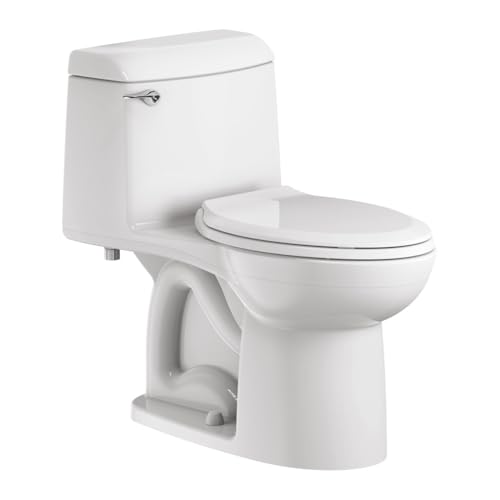
The Champion 4 uses a massive 4-inch flush valve and a 2-3/8 inch trapway, making it one of the most powerful gravity toilets available.
The Champion 4 is designed specifically for clog resistance. The 4-inch flush valve allows water to rush into the bowl faster than any other gravity toilet. The 2-3/8 inch trapway is the widest in the industry. Many owners report that it has never clogged in years of use.
The main complaint is that the flush is noticeably louder than other gravity toilets. The bowl finish is also not as smooth as TOTO's, which can lead to more cleaning. However, for the price (typically $250 to $350), it is an excellent value.
If you need a toilet that can handle heavy use and large waste, the Champion 4 is a top choice. The noise is a trade-off for power.

A solid budget option with a 600g MaP score and a 2-inch trapway, the Highline is better than most budget toilets but may still clog with heavy use.
The Kohler Highline is a popular choice for budget-conscious buyers. It has a comfortable 17-inch height and a quiet flush. The 600g MaP score is adequate for normal use but may struggle with large waste or heavy toilet paper use.
For light to moderate use, the Highline performs well. However, if you have a large family or frequently deal with clogs, the higher MaP score of the TOTO or American Standard models is worth the extra cost.
The Highline is a good toilet for a guest bathroom or a single person. For a primary bathroom, invest in a higher MaP model.

The UltraMax II uses a pressure-assist system that delivers a powerful flush with only 1.28 GPF, making it nearly clog-proof.
The TOTO UltraMax II combines TOTO's engineering with a pressure-assist system. The flush is powerful enough to clear any waste, and the toilet rarely clogs. It is quieter than other pressure-assist models but still louder than gravity toilets.
The main downside is the price, which is typically $500 to $700. The noise may also be a concern for light sleepers. However, for those who prioritize clog resistance above all else, the UltraMax II is a top choice.
If you have old cast-iron pipes or a history of severe clogs, the UltraMax II is the most reliable solution. The noise is a small price to pay for a clog-free experience.
Even name brand toilets can clog if they have a low MaP score or narrow trapway. Check the model's MaP score; if it is below 500 grams, clogs are common regardless of brand.
No, the internal design of the toilet limits the maximum water volume. You can adjust the water level to the fill line, but you cannot exceed the manufacturer's specification without risking overflow.
Yes, many dual-flush toilets clog more because the low-flow option (0.8 GPF) often lacks sufficient water volume. If you need a dual-flush, look for one with a high MaP score on both flush settings.
Yes, pressure-assist toilets use compressed air to create a powerful flush that can clear clogs even with low water volume. They are louder but highly effective.
Search the model number on map-testing.com. The MaP test database lists scores for thousands of toilet models.
Yes, if the toilet is designed well. A toilet with a 3-inch flush valve and a wide trapway can flush solid waste effectively with 1.28 GPF. Poorly designed toilets struggle.
Start with a flange plunger. If that does not work, use a toilet auger. Do not use chemical drain cleaners, as they can damage the wax ring and porcelain.
Yes, a clogged vent pipe can prevent air from entering the drain system, slowing drainage and causing clogs. If multiple drains are slow, the vent may be blocked.
A pressure-assist toilet like the TOTO UltraMax II or a high-MaP gravity toilet like the TOTO Drake II is best for old cast-iron pipes.
There is no set schedule. Replace a toilet when it clogs frequently despite cleaning and adjustment, or when it is more than 20 years old.
Yes, excessive toilet paper can overwhelm any toilet. Use only as much as needed and consider septic-safe toilet paper that breaks down quickly.
Yes, elongated bowls generally have better flushing dynamics than round bowls, but the trapway design and flush valve size are more important factors.
Yes, TOTO toilets consistently have the highest MaP scores and widest trapways, making them the most reliable for clog resistance. The higher price is justified by performance.
Yes, replacing a toilet is a DIY project that takes about an hour. You will need a wrench, a wax ring, and a new toilet. Watch a video tutorial if you are unsure.
A new toilet clogs more than the old one because modern water-efficiency regulations limit flush volume to 1.28 GPF, which lacks the hydraulic force of older 3.5 GPF models. The most reliable fix is to replace the toilet with a model that has a MaP score of 800 grams or higher, a 3-inch or larger flush valve, and a trapway diameter of at least 2 inches. The TOTO Drake II and American Standard Champion 4 are the top recommendations for gravity-fed toilets. For homes with old cast-iron pipes, the TOTO UltraMax II pressure-assist toilet offers the best clog resistance. Always check the MaP score before buying, and ensure your home's drain line is clear of buildup.
Learn why toilet trapways curve like an S, how each bend blocks sewer gas, and what the shape means for clogs and…
Read the guideAlmost every US toilet has a left-side handle. Learn the plumbing and mechanical reasons behind the layout and when it actually changes.
Read the guideHome toilets rely on tanks because household water lines lack the pressure that public flushometer systems use to flush straight from the…
Read the guide