A new toilet is really two separate costs: the fixture and the labor or parts to get it sealed and running. The fixture is where most shoppers focus, but the relationship between price and flush performance is not the straight line the marketing suggests. This guide breaks down every cost tier, explains which line items earn the spend, and uses real MaP flush data, EPA WaterSense certification limits, and published specs from TOTO, Kohler, American Standard, Woodbridge, Swiss Madison, and Gerber to show where value actually lives in 2026.
Quick Answer
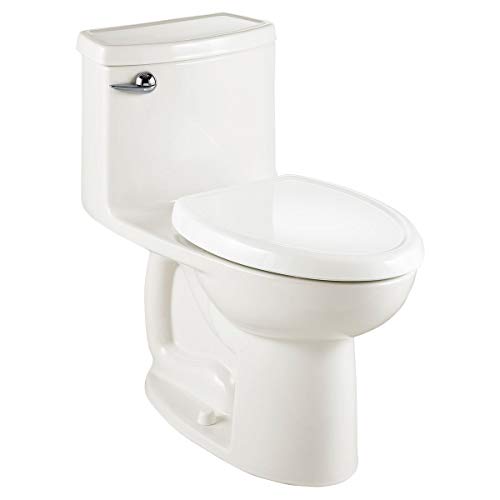
Toilet cost splits into the fixture and the installation. The American Standard Cadet 3 is the sharpest spend in 2026: it earns a verified 1000 g MaP flush score at WaterSense 1.28 GPF, outflushing many premium units while staying firmly in the budget tier, which means most families get maximum clearing power without climbing to the mid or premium price bands.
Few purchases are as easy to overpay or underspend on as a toilet. Overpay and you are buying a skirted silhouette or a heated smart seat while the bowl geometry underneath is identical to the budget tier. Underspend and you land a fixture that double-flushes on heavy days, clogs a fussy drain line, and uses proprietary parts that vanish from shelves within a few years. The good news is that the toilet category is more transparent about value than almost any other home fixture, because independent MaP (Maximum Performance) flush testing places every brand on the same numeric scale. You can see exactly where the price stops buying performance and starts buying aesthetics. This guide maps that line so your money lands where it does the most actual good.
Everything here is built from published manufacturer specifications, independent MaP flush-test data at map-testing.com, EPA WaterSense certification records, and consistent patterns across thousands of aggregated owner reviews. We do not physically install or test fixtures. We deliberately avoid quoting dollar amounts, because prices shift by retailer, region, and season, and a number that is accurate today may mislead next month. What stays stable is the performance relationship between tiers, and that is what this guide tracks. For the models that win their tiers, our roundup of the best flushing toilets ranks them in detail. Our deeper Toilet Buying Guide (2026): everything you need to know expands every specification covered below.
What are the main cost tiers for a toilet in 2026?
Toilets sort into four spending tiers in 2026: budget, mid, premium, and smart/luxury. Budget and mid-tier gravity toilets from brands like Gerber, American Standard, TOTO, and Kohler both reach the top 1000 g MaP flush score at WaterSense 1.28 GPF, proving that peak flush performance is available well below premium pricing. The premium and smart tiers add one-piece or skirted designs, glazed trapways, integrated bidet features, and heated seats, none of which improve raw flush power over a well-engineered budget or mid-tier toilet.
Two costs, not one. Every toilet purchase has two halves: the fixture cost and the installed cost. The installed cost includes labor if you hire a professional, plus a wax ring or wax-free gasket, closet bolts, and a flexible supply line. A budget toilet professionally installed can cost more all-in than a mid-tier toilet you set yourself. Decide which half you are optimizing before you compare models.
What does a toilet actually cost? Breaking down each price tier
Budget tier: where flush value is surprisingly strong
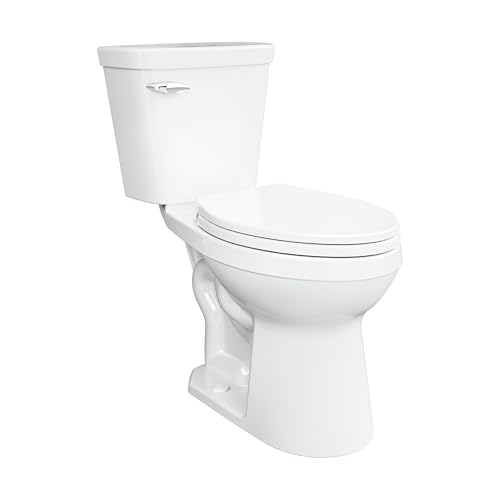
The budget tier is where value-focused shoppers should look first, because it is the most competitive segment in the category. The two stand-out models are the Gerber Viper and the American Standard Cadet 3. Both earn the top 1000 g MaP flush score at 1.28 GPF with EPA WaterSense certification. That combination means they clear the same load in one pass that premium fixtures do, while sitting at the lowest end of the market. You give up styling polish, often a soft-close seat, and a glazed trapway that resists mineral buildup, but you do not give up flush power. For a rental property, a guest bathroom, or any shopper whose priority is the flush data over the aesthetic, the budget tier frequently wins outright.
The American Standard Cadet 3 pairs its 1000 g MaP with an EverClean antimicrobial surface on the bowl that inhibits bacterial growth. The Gerber Viper uses a 3-inch flush valve (larger than the standard 2-inch), which is one reason it achieves its high MaP score on modest water use. Both are two-piece designs with exposed trapways, which makes repairs straightforward and replacement parts widely available. Their EPA WaterSense 1.28 GPF certification also qualifies them for water utility rebates in many states, which offsets part of the purchase cost.
Mid tier: where most family bathrooms belong
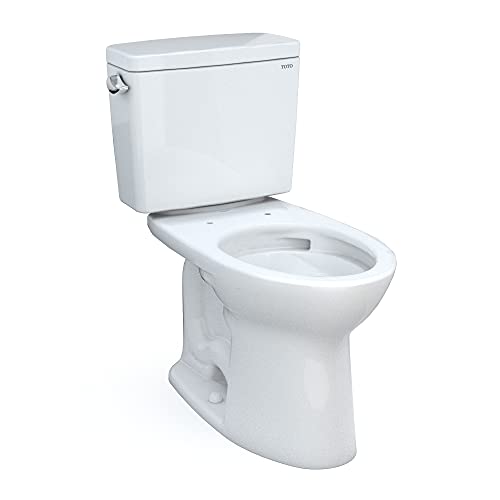
The mid tier adds real daily quality-of-life improvements that go beyond the flush spec. The TOTO Drake and TOTO Drake II dominate this space, pairing a 1000 g MaP flush with TOTO's proprietary CeFiONtect glaze, which is an ion-barrier ceramic coating that prevents waste particles and mineral scale from bonding to the trapway and bowl surface. The result is a bowl that stays cleaner between scrubs and resists the ring buildup that cheaper glazes accumulate in hard-water areas. Comfort height (roughly 17 to 19 inches to the seat surface) is also standard here, making them easier for adults and seniors to sit on and stand from. The soft-close seat often requires a separate purchase on TOTO's two-piece models, which is a real cost to add to your comparison.
The Kohler Cimarron and Kohler Highline compete in the same band. Both reach 1000 g MaP at 1.28 GPF, and Kohler's Class Five flush technology uses a canister-style flush valve that opens fully and releases water faster than a flapper valve, generating a stronger pull on the trapway. The Cimarron adds comfort height as standard. The Highline is slightly more compact, making it the choice for bathrooms with tighter back clearance. Kohler includes its AquaPiston valve on both, which is quieter than a standard flapper because there is no hinge to clatter. This tier is the sweet spot for most households, where a modest premium over budget buys cleaning and comfort gains you will notice daily.
Premium tier: styling and refinement, not more flush power
The premium tier delivers seamless design and high-end finish. One-piece units like the TOTO UltraMax II and Kohler Santa Rosa, skirted two-piece models like the TOTO Vespin II, and dual-flush units like the TOTO Aquia IV all live here. The TOTO UltraMax II is a one-piece elongated toilet with a 1000 g MaP score, the TOTO double Tornado flush, and a CeFiONtect glaze throughout. Its one-piece body has no tank-to-bowl seam, which eliminates the most common spot for leaks and makes it faster to clean. The Kohler Santa Rosa is a compact one-piece that fits shorter back-to-wall distances, scoring 800 g MaP, which is still strong for most households.
The key distinction in this tier is that the flush power does not meaningfully exceed the mid tier. The TOTO UltraMax II posts the same 1000 g MaP as the two-piece Drake at a noticeably higher price. What you are buying is the one-piece body, the wipe-clean skirted or seamless surface, and a more refined aesthetic. If those things matter to you, the premium is justified. If they do not, the Drake or Cimarron delivers the same clearing performance for less. For a side-by-side look at the tradeoffs between one-piece and two-piece designs, our guide to one piece vs two piece toilets: which is better? covers the full picture.
The Woodbridge T-0001 and T-0019 occupy an interesting position: one-piece rimless designs at a lower price than TOTO's premium lineup. They score around 800 g MaP and feature a dual-flush system at 0.8 and 1.6 GPF, which is not WaterSense at the higher flush rate. Their rimless bowl design makes cleaning the underside of the rim easy. Aggregated owner reviews are positive for the style and ease of cleaning, with some notes about customer service access being slower than with the major brands. The Swiss Madison St. Tropez is similar, offering a sleek one-piece look with a lower MaP score of around 600 g, which places it below the minimum most households should accept for a primary bathroom.
Smart and luxury tier: comfort features, not flush power
At the top of the market sit integrated bidet toilets and fully smart units with heated seats, automatic lids, self-cleaning wands, built-in deodorizers, and remote controls. TOTO's Washlet-integrated models lead this category globally. The cost here is almost entirely driven by the electronics and comfort features rather than the flush engineering. These toilets do not clear the bowl significantly better than a mid-tier gravity design. What they do is deliver a spa-level experience that many owners describe as transformative once they have lived with it. Judge this tier on whether you want those comfort features, not on whether it flushes harder. It usually does not.
Editorial Take
The most common expensive mistake in toilet buying is paying premium-tier prices for flush power that a budget model already delivers. The MaP test numbers prove this is not a risk worth taking. Buy the tier that matches your cleaning-ease and aesthetic priorities, not the one you assume will flush stronger. If your only requirement is a 1000 g MaP score at 1.28 GPF, the American Standard Cadet 3 and Gerber Viper get you there at the lowest spend. Step up to TOTO's mid tier only if the CeFiONtect glaze and comfort height are genuinely worth the delta to you.
Does a higher price guarantee a stronger flush?
No. Flush power is set by bowl geometry, trapway diameter, and flush-valve size, none of which scale neatly with price. The MaP program's independent testing proves it: budget models like the Gerber Viper and American Standard Cadet 3 reach the same 1000 g ceiling as toilets costing significantly more. Higher prices in the toilet category mainly buy one-piece or skirted construction, glazed trapways, included soft-close seats, and smart features rather than raw flush strength. A skirted designer model and a plain two-piece can post identical MaP scores because the panel hides the trapway for cleaning, not for power.
Feature
Drives Flush Power?
Drives Price?
Trapway diameter (2 in+)
Yes
Slightly
Flush valve size (3 in+)
Yes
Slightly
Bowl geometry / jet design
Yes
Somewhat
CeFiONtect / glazed trapway
Cleaning, not power
Yes
One-piece body
No
Yes
Skirted / concealed trapway
No
Yes
Smart bidet integration
No
Yes
What is the cheapest toilet that still flushes well?
The Gerber Viper and American Standard Cadet 3 are the two strongest budget-tier picks, both earning a 1000 g MaP flush score at EPA WaterSense 1.28 GPF. The Gerber Viper uses a 3-inch flush valve that generates the fast water release behind its high MaP rating. The American Standard Cadet 3 adds an EverClean antimicrobial surface. Both are two-piece designs with widely available replacement parts. They trade away premium glaze and soft-close seats but deliver flush performance that matches units at two to three times their price.
What is a good MaP score for a toilet?
A good MaP score is 800 grams or higher, and 1000 grams is excellent. MaP (Maximum Performance) is an independent program that measures how many grams of solid waste a toilet clears in a single flush. Scores below 500 g indicate a weak flush for a primary bathroom. A score of 800 g suits a normal family bathroom without issues, while 1000 g means the toilet will rarely need a second flush. Critically, a high MaP score and low water use are not in conflict: well-engineered bowls like the TOTO Drake and American Standard Cadet 3 both hit 1000 g at 1.28 GPF.
How much does toilet installation cost?
Toilet installation cost has two components: the consumable parts and optional labor. Every install requires a wax ring or wax-free gasket, closet bolts, and a flexible supply line; a shutoff valve replacement is sometimes needed too. If you hire a licensed plumber or handyman, labor is a separate line that varies by local market rates and the complexity of the job. A clean swap of an existing toilet is the cheapest professional scenario; a damaged flange, a relocated drain, or a first-time install in a new bathroom will increase labor. For a DIY-capable homeowner, the consumables alone cover the full installation cost.
Measure first. Before comparing any models, measure the rough-in: the distance from the finished back wall to the center of the bolt caps at the toilet base. The vast majority of homes use a 12-inch rough-in, but some older homes use 10 inches and some use 14. If your rough-in is not 12 inches, your model options narrow significantly. Our guide on round vs elongated toilets: how to choose also covers the bowl-length clearance check you need before ordering.
The installation cost breakdown: every line item
Homeowners consistently underestimate the installed cost of a toilet because the fixture listing is the only number they see. The real spend includes several small but mandatory items and, for most people, a labor charge. Here is every line item in a typical replacement install:
Wax ring or wax-free gasket
The wax ring seals the toilet base to the floor flange. It is a single-use item that must be replaced every time a toilet is removed and reset. Wax-free foam gaskets are an alternative that some plumbers prefer because they allow minor adjustments without breaking the seal. Either option is inexpensive but non-negotiable. A failed wax ring seal is the most common source of floor rot under a toilet.
Closet bolts
Closet bolts, also called Johnny bolts, anchor the toilet base to the floor flange. They are often included with a new toilet but should be replaced during any swap because old bolts corrode. New stainless-steel bolts are inexpensive and prevent the corrosion that can cause a toilet to rock within a year of install.
Flexible supply line
The supply line connects the shutoff valve on the wall to the fill valve on the toilet tank. It should always be replaced during a toilet swap, since old braided lines can fail and flood a bathroom. Stainless-steel braided lines are the most reliable option. This is one consumable many DIY guides omit, and skipping it is the cause of a significant portion of post-install water damage claims.
Shutoff valve
While the toilet is off the floor is the easiest time to replace a shutoff valve that is stiff, corroded, or leaks past the stem. Adding a valve is optional, but a valve that fails to shut off fully during a future repair turns a minor fix into an emergency. The cost of a new valve during the swap is far less than the cost of a leak response later.
Labor
If you hire a professional, a clean residential toilet swap is typically a one-hour job. Complications extend this: a damaged flange requires a repair kit and additional time, a corroded water supply line to the wall may need repiping, and removing and disposing of the old toilet adds a disposal fee in some markets. Getting a local quote before buying a model is worth the call, because labor can equal or exceed the fixture cost in some regions.
Editorial Take
The single best thing you can do to reduce installation cost is to inspect the floor flange before you order a new toilet. A toilet that sits on a damaged or recessed flange will rock, break the wax seal over time, and cause slow water damage that reveals itself as a ruined subfloor months later. A flange repair kit costs little and takes less than an hour; a subfloor replacement costs many times more. Pull the old toilet before you commit to a brand, check the flange, and buy a flange repair ring if needed. It is the step most big-box delivery services will not tell you about.
Is a one-piece toilet worth the extra cost?
A one-piece toilet costs more because the seamless tank-and-bowl ceramic is harder to mold, fire, and ship without breakage, but it does not flush more powerfully than a two-piece. The premium buys two real benefits: easier cleaning with no tank-to-bowl seam where bacteria can accumulate, and a sleeker aesthetic. The TOTO UltraMax II and Kohler Santa Rosa are the leading examples. If cleaning ease and appearance matter to you, the extra spend is justified. If flush performance is the only goal, a two-piece like the TOTO Drake delivers the same 1000 g MaP for less.
Long-term cost: water use, parts availability, and lifespan
The sticker is only the upfront cost. A toilet's true fifteen-year cost includes water consumption, maintenance parts, and eventual disposal. Getting that number right requires thinking about three things.
Water savings from a 1.28 GPF WaterSense toilet
An EPA WaterSense toilet at 1.28 GPF uses 20 percent less water per flush than the previous federal standard of 1.6 GPF. In a household that flushes an average of five times per person per day, that difference accumulates to thousands of gallons annually. Over a fifteen-year toilet lifespan, the water savings can represent a meaningful offset against the purchase price, and many water utilities offer rebates for certified WaterSense fixtures that reduce the upfront cost immediately. Every model recommended in this guide carries WaterSense certification. The full math on annual household water use is covered in our guide on how much water a toilet uses.
Parts availability and repair cost
A toilet body made of vitreous china does not wear out; it can last fifty years or more with basic care. What fails is the internal hardware: the flapper or fill valve (every five to seven years), the wax ring (whenever the toilet is removed), and occasionally the flush handle or seat. Established brands like TOTO, Kohler, and American Standard keep these parts stocked through major plumbing distributors, hardware chains, and their own parts programs for decades. Gerber has a strong parts network in North America. Woodbridge and Swiss Madison have smaller retail footprints, which means tracking down an exact proprietary flapper can sometimes require an online-only order and a wait.
The hidden cost risk of an off-brand or discontinued toilet is a flapper or fill valve that no longer exists in the supply chain, turning a five-dollar repair into a full fixture replacement. That risk makes brand support and parts availability a legitimate cost consideration when comparing otherwise similar flush specs, and it is a real reason to prefer a well-supported brand even at the budget tier.
Lifespan and replacement cycle
A quality toilet installed on a sound flange with a fresh wax ring should last fifteen to twenty-five years without structural issues. Cracks in the porcelain, a hairline in the tank, or a flange that is so deteriorated it cannot hold a seal are the scenarios that force a full replacement. Regular inspection of the wax ring seal (look for water staining around the base), the tank bolts (corrosion causes leaks at the tank-to-bowl joint), and the fill valve (ghost flushing is an early warning sign) are the three maintenance checks that extend fixture life and avoid the emergency replacement cost.
Top picks by spending tier
Recommended toilets for every budget
Three proven models covering the three most common spending levels. Each earns its position on published MaP data, EPA WaterSense certification, and consistent owner satisfaction patterns rather than brand marketing.
Best Budget
American Standard Cadet 3
1000 g MaP at the lowest spend
4.4
The Cadet 3 is the clearest proof in the toilet category that a 1000 g MaP flush at WaterSense 1.28 GPF does not require a mid or premium budget. The EverClean antimicrobial bowl surface and a 3-inch flush valve make it the most efficient spend for a primary or secondary bathroom.
The Drake II matches the 1000 g MaP of the best budget models and adds TOTO's dual-nozzle Tornado flush and the ion-barrier CeFiONtect glaze throughout the trapway and bowl. It is the model that most family bathrooms should buy if the mid-tier premium is within reach.
The UltraMax II delivers the same 1000 g flush as the Drake II in a seamless one-piece body with no tank-to-bowl seam to clean around. The premium here is entirely about the look and the cleaning-ease of the smooth outer profile, not additional flush power.
Specs that drive cost but not performance: what to skip
Understanding which features inflate the price without improving the flush helps you avoid spending in the wrong places. These are the most common cost inflators that shoppers mistake for performance upgrades.
Skirted or concealed trapway
A skirted toilet has a smooth ceramic panel running from the bowl down to the floor, hiding the curves of the trapway. It is easier to wipe clean and looks more modern. It is also more expensive to manufacture and therefore commands a price premium. The trapway geometry underneath the skirt is exactly the same as an exposed-trapway design. The TOTO Vespin II is the best-known example: a skirted two-piece that posts excellent flush specs while costing more than the exposed-trapway Drake for purely aesthetic reasons.
Rimless bowl design
Rimless or open-rim bowls, common in European designs and now appearing in models like the Woodbridge T-0019, eliminate the inner ledge under the rim that traditional bowls have. This makes cleaning the entire bowl interior straightforward and eliminates the area where bacterial films form under the rim. The tradeoff can be a slightly different flush direction and, in some designs, more splash. Rimless models typically cost more, and their MaP scores vary widely, so verify the independent score before paying the premium.
Dual flush
Dual flush toilets, like the TOTO Aquia IV and the Swiss Madison St. Tropez, offer two flush volumes: a light flush (typically 0.8 or 0.9 GPF) for liquids and a full flush (1.28 or 1.6 GPF) for solids. They save the most water in a household where occupants remember to use the light flush consistently. The TOTO Aquia IV is the most reliable dual-flush design at this price level, scoring 1,000 g MaP on its full flush, matching the single-flush Drake at the test ceiling. Dual flush mechanisms also have a higher maintenance incidence in owner reviews, because the two-button actuator has more failure points than a single flapper.
Integrated bidet seats and smart features
Integrated bidet toilet systems from TOTO (the Neorest and Washlet+ lines) and the growing market of third-party bidet seats added to standard toilets represent the fastest-growing segment in the category. A bidet seat added to an existing toilet is a separate purchase that does not change the flush performance of the base toilet at all. An integrated bidet toilet system combines both in a single unit and typically commands a significant premium over buying the best flushing toilet and a separate bidet seat. The flush performance of integrated systems is generally comparable to a mid-tier gravity toilet. The value is in the bidet, deodorizer, heated seat, and auto-lid features, not the flush.
Editorial Take
The single best value move after choosing your toilet is to budget for a quality soft-close seat and a clean wax ring installation, not for a higher toilet tier. A seat that closes silently and a tight floor seal protect both the bathroom and the fixture for its full lifespan. Many two-piece toilets in the mid tier, including the TOTO Drake and Drake II, ship without a seat, and the soft-close seat adds real daily quality that the base toilet pricing does not include. Check the listing carefully: "seat not included" costs are easy to overlook in a comparison.
FAQ
Frequently asked questions
? What does a toilet typically cost in 2026?
Toilet cost has two components: the fixture and the installation. The fixture spans a wide range from the budget tier to smart luxury systems. Installation adds labor if you hire a professional, plus mandatory consumables including a wax ring, closet bolts, and a supply line. A budget toilet professionally installed can cost more all-in than a mid-tier toilet you set yourself, so decide which half you are optimizing before you shop.
? Do more expensive toilets flush better?
Not reliably. The MaP program's independent testing shows budget models like the Gerber Viper and American Standard Cadet 3 reaching the same 1000 g flush ceiling as toilets that cost far more. Higher prices in the toilet category mainly buy one-piece or skirted construction, glazed trapways, soft-close seats, and smart features, not stronger flush performance.
? What is the best cheap toilet that flushes well?
The American Standard Cadet 3 and the Gerber Viper are the two clearest budget-tier picks, both hitting 1000 g MaP at EPA WaterSense 1.28 GPF. The Cadet 3 adds an EverClean antimicrobial surface; the Viper uses a larger 3-inch flush valve. Both have widely available replacement parts and qualify for WaterSense utility rebates in many states.
? What small parts do I need to buy when installing a toilet?
At minimum: a wax ring or wax-free gasket, closet bolts (even if they come with the toilet, new ones are cheap and prevent corrosion issues), and a flexible stainless-braided supply line. If the shutoff valve is stiff or corrodes, replace it while the toilet is already off. All are inexpensive but mandatory, and having them before you start avoids a mid-install hardware-store trip.
? What is a good MaP score for a toilet?
A MaP score of 800 grams or higher is good; 1000 grams is excellent and is the practical ceiling of the test. MaP (Maximum Performance) is an independent test measuring grams of solid waste cleared in one flush. A score below 500 g is a red flag for a primary bathroom. The TOTO Drake, Drake II, Kohler Cimarron, American Standard Cadet 3, and Gerber Viper all reach 1000 g.
? How much does professional toilet installation cost?
A clean residential toilet swap is typically a one-hour job for a licensed plumber or handyman, with labor rates varying by region and market. Complications that extend the job include a damaged floor flange, corroded supply plumbing, a heavy one-piece fixture that requires two people to set, or a first-time install in a bathroom without existing plumbing. Getting a local quote before buying the fixture helps you plan the true all-in cost.
? Is a one-piece toilet worth the extra cost?
It depends on your priorities. A one-piece costs more because seamless ceramic is harder to manufacture and ship, but it does not flush harder than a two-piece. The premium buys easier cleaning with no tank-to-bowl seam and a sleeker aesthetic. The TOTO UltraMax II and Kohler Santa Rosa are the reference one-piece options. If raw flush performance is your only goal, a two-piece Drake delivers the same 1000 g for less.
? Does the toilet seat come included in the purchase?
Often not, especially with two-piece mid-tier models. The TOTO Drake and Drake II, for example, ship without a seat. Many premium one-piece models include a soft-close seat. Read the listing carefully before comparing prices, because the seat is a real additional cost that can close the gap between tiers when you add it to the base price.
? How much water does a 1.28 GPF WaterSense toilet save?
A WaterSense toilet at 1.28 GPF uses 20 percent less water per flush than the previous 1.6 GPF standard. Across a household averaging five flushes per person per day, the savings add up to thousands of gallons annually. Many water utilities offer rebates for WaterSense-certified fixtures, directly offsetting the purchase cost. Every model recommended on this page carries WaterSense certification.
? Are dual flush toilets worth the extra cost?
Dual flush toilets like the TOTO Aquia IV save the most water when occupants consistently use the lighter flush for liquids. The full-flush MaP score on dual-flush models is often lower than single-flush designs, so verify it before buying. Dual-flush mechanisms have more failure points than a single flapper, and owner reviews show a higher incidence of actuator repairs over time. Best for water-conscious households willing to engage both buttons.
? Is a skirted toilet worth paying more for?
A skirted toilet's concealed trapway panel is easier to wipe clean and looks more modern, but it adds no flush power. The ceramic skirt is harder to manufacture, which is why it costs more. It is worth the premium if cleaning ease and aesthetics are priorities. The TOTO Vespin II is the most cited example: identical flush specs to the Drake underneath a smooth skirted exterior.
? How long does a toilet last before needing replacement?
A quality vitreous china toilet body can last fifteen to twenty-five years or longer. What fails is the internal hardware: flappers (every five to seven years), fill valves (every ten years), and wax rings (whenever the toilet is removed and reset). Regular inspection of the base seal for water staining and of the fill valve for ghost flushing catches issues before they become structural problems.
? Why does parts availability matter for long-term cost?
A toilet body made of porcelain rarely fails, but the internal parts do, and a five-dollar repair becomes a full fixture replacement if the part is no longer manufactured. Established brands like TOTO, Kohler, and American Standard stock replacement flappers, fill valves, and seals through hardware chains and plumbing distributors for decades. Off-brand or discontinued fixtures can leave you with a proprietary part that requires replacing the whole toilet over a failed flapper.
? Do smart and luxury toilets flush better than standard ones?
Generally no. Smart toilets and integrated bidet systems spend most of their price premium on heated seats, auto-open lids, self-cleaning wands, built-in deodorizers, and remote controls. Their flush performance is typically comparable to a well-engineered mid-tier gravity toilet, not dramatically stronger. Buy the smart tier for the comfort and hygiene features, not for superior clearing power.
? What toilet brands offer the best value for the money?
American Standard and Gerber lead on budget value, both reaching 1000 g MaP at affordable prices with strong parts networks. TOTO and Kohler dominate the mid tier with CeFiONtect glaze, comfort height, and included refinements. Woodbridge offers style-forward one-piece value below TOTO's premium pricing. Swiss Madison's St. Tropez has an attractive look but posts a lower MaP score. For primary bathrooms, TOTO and American Standard offer the most dependable combination of flush data and parts support across their ranges.
? Should I replace the wax ring when swapping a toilet?
Yes, always. A wax ring is a single-use seal that deforms to fill the gap between the toilet horn and the floor flange. Reusing an old wax ring after moving a toilet risks an incomplete seal that causes slow water damage to the subfloor. The wax ring is one of the least expensive items in the entire project and one of the most important. A wax-free foam gasket is an alternative if the flange sits above or at floor level.
? Does a higher MaP score cost more?
Not in a reliable straight line. The independent MaP test shows budget models like the American Standard Cadet 3 and Gerber Viper reaching the top 1000 g tier at affordable prices, while some premium-priced designer toilets score lower because their styling priorities compromised the bowl geometry. A 1000 g MaP score is achievable at the budget tier and is not a reliable reason to spend up to premium pricing.
? What is the Gerber Viper's advantage over similarly priced toilets?
The Gerber Viper uses a 3-inch flush valve, which is larger than the 2-inch standard in many budget competitors. The larger valve opening allows more water to enter the bowl faster, generating a stronger siphon pull on the trapway. The result is a 1000 g MaP score at 1.28 GPF, which matches the performance of mid-tier toilets at a budget price. It is the go-to choice for high-traffic bathrooms and rental properties where maximum clearing reliability is the priority.
? Can I install a toilet myself to save on labor?
Yes, for a straightforward swap. The job involves shutting off the supply valve, disconnecting the supply line, removing the tank, unbolting and lifting the old toilet, replacing the wax ring, setting the new toilet, and reconnecting the supply. The main risks are a damaged flange that needs repair before setting the new toilet, and the weight of a one-piece unit that often requires two people. Read our complete 2026 toilet-choosing guide for a pre-purchase checklist, then tackle the install when you have confirmed the flange is sound.
Manufacturer published specifications (TOTO, Kohler, American Standard, Gerber, Woodbridge, Swiss Madison)
Our Verdict
Toilet cost is two numbers: the fixture and the install. The category's saving grace is that flush performance, the thing you live with daily, is available at the budget tier. A verified 1000 g MaP score at WaterSense 1.28 GPF appears on the American Standard Cadet 3 and Gerber Viper at the lowest tier, making them the sharpest spends for performance-first shoppers. Step up to the TOTO Drake II for the CeFiONtect glaze and comfort height that reduce cleaning frequency. Go to the TOTO UltraMax II for a seamless one-piece body that eliminates the tank seam. Spend up only for styling, glaze, and smart features, and always budget separately for the wax ring, supply line, and bolts regardless of which model you choose.
Marcus compiles bathroom-fixture data, MaP flush scores, GPF ratings, trapway and flush-valve specs, and weighs them against thousands of verified owner reviews to build our rankings. He does not run physical lab tests; every verdict is sourced from published specifications, certifications (MaP, EPA WaterSense) and real owner feedback.
Updated August 2026 · Buying Guides
Keep reading
Related guides
Where Does Toilet Water Go After You Flush
Buying Guides
4.6
When you flush, where does it go? Follow toilet water from the bowl through the trap, drain, and stack to a septic…