
Why Toilet Trapways Are Curved Like an S
Toilets4.6
Learn why toilet trapways curve like an S, how each bend blocks sewer gas, and what the shape means for clogs and…
Read the guideIron, manganese, hard water scale, and organic buildup are the four root causes. Each requires a different cleaner. Here is exactly how to identify which one you have and eliminate it for good.
Brown stains in a toilet bowl are caused by iron or manganese in your water supply, calcium-magnesium scale tinted by minerals, mold and biofilm buildup, or rust from aging tank parts. Iron stains respond to citric acid or oxalic acid; scale responds to diluted hydrochloric acid products; mold clears with bleach; rust needs a dedicated rust remover and part replacement.
Before reaching for a cleaner, you need to identify which type of stain you are dealing with. Applying the wrong chemistry wastes time and can damage the vitreous china glaze that protects your toilet bowl. The four causes each produce a visually distinct stain in a characteristic location.
| Cause | Stain Color | Typical Location | Diagnostic Test | Best Remover Chemistry |
|---|---|---|---|---|
| Iron / Rust (water supply) | Orange-brown, reddish | Waterline ring, under rim jets | Water test for iron >0.3 mg/L | Citric acid, oxalic acid (Iron Out) |
| Manganese | Dark brown to black-brown | Waterline, drain opening | Water test for manganese >0.05 mg/L | Oxalic acid, phosphoric acid |
| Hard water scale (calcium/magnesium) | Yellow-brown, chalky | Below waterline, drain | Vinegar test: dissolves scale | Diluted HCl (CLR, Lime-A-Way) |
| Mold / Biofilm | Brown, grey, slimy | Under rim, waterline | Bleach test: fades immediately | Sodium hypochlorite (bleach) |
| Internal rust (tank components) | Streaky orange-brown | Running from tank down bowl | Open tank, inspect bolts/fittings | Replace rusted parts + citric acid |
According to the United States Geological Survey, approximately 85 percent of American households receive hard water, and iron concentrations above 0.3 milligrams per liter are common in well-water regions. If your brown stain reappears within two to three weeks of cleaning, your water supply is the source and cleaning alone will not be a permanent solution. A whole-home iron filter or water softener is the only way to stop recurrence at the root level.
Brown stains in a toilet bowl are primarily caused by dissolved iron or manganese in the water supply that oxidizes on contact with porcelain surfaces, leaving rusty or dark-brown deposits. Hard water minerals (calcium and magnesium) also accumulate over time and absorb iron particles into their structure, creating tinted scale. Mold and organic biofilm can appear brown or grey, especially under the rim where cleaning is difficult, and rust from deteriorating tank bolts or supply lines can streak the bowl from the top down.
A brown ring caused by iron, manganese, or mineral scale is primarily a cosmetic and hygiene issue rather than a direct health hazard, since these minerals are not harmful at the concentrations that cause staining. However, mold or biofilm forming brown or grey-brown patches under the rim can release spores into the air and is worth eliminating promptly, especially in households with allergy sufferers or compromised immune systems. The EPA regulates iron and manganese as secondary contaminants with recommended limits of 0.3 mg/L and 0.05 mg/L respectively, based on aesthetic concerns rather than toxicity.
Removing brown toilet stains requires matching the cleaner to the cause: citric acid or oxalic-acid products (such as Iron Out or Bar Keepers Friend) dissolve iron and rust deposits; acids like CLR or diluted hydrochloric acid break down calcium-magnesium scale; and sodium hypochlorite bleach eliminates mold and biofilm. For any of these, you should lower the water level in the bowl first by turning off the supply valve and flushing, then apply the cleaner directly to the stained surface, allow adequate dwell time (15 to 30 minutes), and scrub with a non-scratch toilet brush. Never mix bleach with acid-based cleaners, as the combination produces toxic chlorine gas.
Drop a small amount of white vinegar (acetic acid) on the stain. If the stain is scale-based, you will see light fizzing and the surface will begin to soften within five minutes. If nothing happens, the stain is likely iron or manganese. Apply a small amount of liquid bleach. If the stain fades or disappears immediately, you are dealing with mold or biofilm, not a mineral deposit.
Turn the shutoff valve (located behind the toilet, at the wall) clockwise until it closes. Flush the toilet to empty the bowl. This exposes the stained surfaces below the waterline and ensures your cleaner is not immediately diluted. If the shutoff valve is stuck or does not fully close, use a sponge or small cup to bail out remaining water.
For iron and rust stains: Sprinkle Bar Keepers Friend (oxalic acid powder) or pour Iron Out gel directly onto the stained surfaces. Alternatively, mix 3 tablespoons of citric acid powder with 1 cup of warm water and spray it on. Let it sit for 20 to 30 minutes. For severe staining, stuff paper towels soaked in citric acid solution against the waterline and leave for 60 minutes.
For manganese stains: Oxalic acid is effective, but phosphoric acid products (found in some commercial bathroom cleaners) penetrate dark manganese deposits more efficiently. Hydro-Force and similar professional cleaners contain phosphoric acid at 9 to 15 percent concentration. Dwell time of 30 minutes is recommended before scrubbing.
For hard water scale: CLR (Calcium, Lime, Rust) contains lactic acid and gluconic acid. Lime-A-Way uses a blend of HCl and organic acids. Both are effective on calcium-magnesium deposits. Apply to the bowl, wait 10 to 15 minutes, and scrub. For heavy scale buildup, you may need a pumice stone (used carefully to avoid scratching the glaze).
For mold and biofilm: Apply undiluted or diluted bleach (sodium hypochlorite at 3 to 5 percent) under the rim and along the waterline. Let it sit for 10 minutes. The organic matter will oxidize and loosen. Scrub with a toilet brush paying attention to rim jets.
Use a stiff-bristled toilet brush or, for stubborn spots, a pumice stone dampened with water. Work in circular motions starting from the top of the bowl. Apply moderate pressure. A pumice stone will not scratch vitreous china when both surfaces are wet, but dry pumice will leave marks. Rinse thoroughly by turning the supply valve back on and flushing multiple times.
Rim jets (the small holes under the toilet rim through which water flows during a flush) are a common hiding spot for mineral buildup and biofilm. Use a small mirror and flashlight to inspect them. A dental pick, straightened paper clip, or fine wire can clear blocked rim jets. Follow with a citric acid or vinegar soak using paper towels pressed into the underside of the rim.
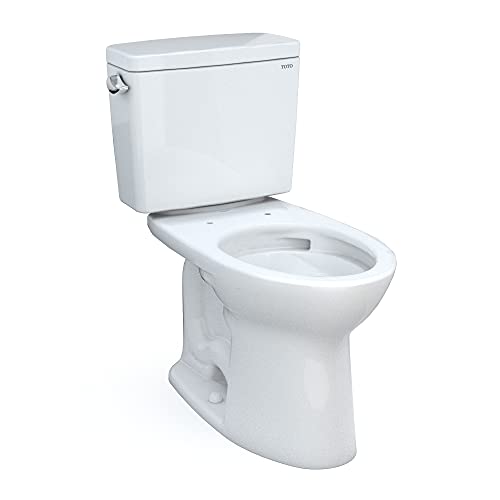
Porcelain and vitreous china are protected by a fired glaze that is moderately acid-resistant but can be degraded over time by repeated exposure to strong acids at high concentrations. For routine maintenance, mild acids (citric acid, acetic acid) are safer choices than hydrochloric acid. Reserve HCl-containing products for severely scaled bowls and always rinse thoroughly after use. Toilets with CeFiONtect glaze (found on TOTO models including the Drake, Drake II, UltraMax II, and Aquia IV) have an ion-barrier surface that resists mineral adhesion and makes stain removal significantly easier.
Brown stains return quickly when the underlying water quality problem is not addressed. If iron concentration in your water supply exceeds 0.3 mg/L, every flush deposits fresh iron particles that oxidize and bind to the porcelain; cleaning removes the visible deposit but the water keeps reintroducing mineral load. Solving recurring iron stains requires a whole-home iron filter (such as an air injection oxidizing filter or a greensand filter) or a water softener rated to remove iron, both installed before the supply line reaches the toilet. Manganese above 0.05 mg/L follows the same logic.
Yes, significantly. The quality and condition of the toilet's interior glaze directly affects how easily mineral deposits and biofilm adhere. Older toilets with worn or micro-cracked glaze give iron particles and mold spores more surface texture to grip. Newer models from top-rated toilet brands feature advanced glaze technologies that measurably reduce staining frequency.
TOTO's CeFiONtect glaze uses an ion-barrier titanium dioxide coating that creates an extremely smooth surface at the molecular level. Laboratory data published by TOTO shows that CeFiONtect reduces biofilm adhesion by approximately 90 percent compared to standard vitreous china. The TOTO Drake II, UltraMax II, and Aquia IV all carry this glaze and consistently earn high owner-review scores for staying clean longer between scrubbing sessions.
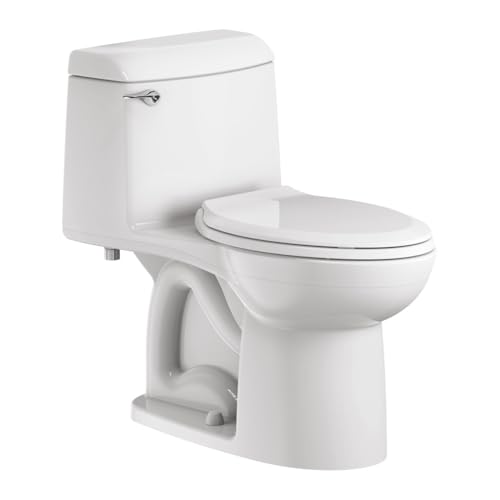
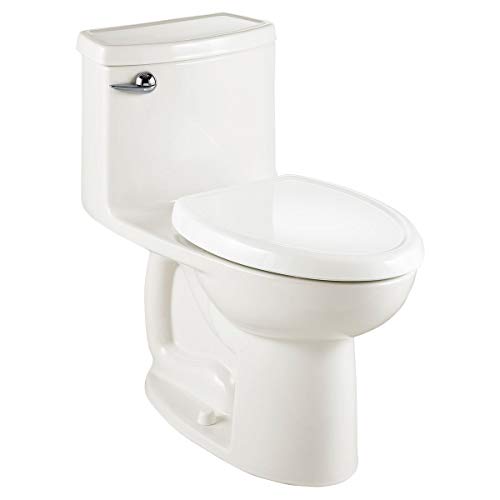
American Standard's EverClean surface uses a proprietary antimicrobial glaze that inhibits the growth of bacteria, mold, and mildew. It is featured on models including the Champion 4 and Cadet 3. Kohler's HydroClean technology (in select Highline and Cimarron models) uses a built-in fill valve that directs a continuous slow trickle of water under the rim, which helps flush away mineral deposits before they solidify. Woodbridge's T-0001 and Swiss Madison models use standard high-polish glazes that perform acceptably but lack the specialized anti-adhesion coatings of TOTO and American Standard.
| Brand / Model | Anti-Stain Glaze Technology | MaP Flush Score | Glaze Feature | Stain Resistance Rating | Check Price |
|---|---|---|---|---|---|
| TOTO UltraMax II | CeFiONtect | 1,000g | Ion-barrier, titanium dioxide | Excellent | Check price |
| TOTO Drake II | CeFiONtect | 1,000g | Ion-barrier, titanium dioxide | Excellent | Check price |
| American Standard Champion 4 | EverClean | 1,000g | Antimicrobial silver ions | Very Good | Check price |
| American Standard Cadet 3 | EverClean | 800-1,000g | Antimicrobial silver ions | Very Good | Check price |
| Kohler Cimarron | Standard high-gloss | 800g | No specialized coating | Good | Check price |
| Kohler Highline | Standard high-gloss | 800g | No specialized coating | Good | Check price |
| Woodbridge T-0001 | Standard high-gloss | 600-800g | No specialized coating | Average | Check price |
| Gerber Viper | Standard vitreous china | 1000g | No specialized coating | Average | Check price |
If you are shopping for a replacement toilet with better stain resistance, see our guide to the best toilets for hard water and our detailed best toilet bowl cleaners comparison.
Several home remedies circulate online for brown toilet stains. Some have genuine chemistry behind them. Others are ineffective or potentially counterproductive.
White vinegar (acetic acid, 5 percent): Works well for light calcium-magnesium scale because acetic acid reacts with carbonate minerals to dissolve them. It is too weak to remove iron deposits or dark manganese staining. Best used as a weekly preventive rinse. Pour 2 cups into the bowl, let it sit overnight, and scrub in the morning.
Citric acid powder: Considerably stronger than vinegar (food-grade citric acid is available at 99 percent purity). Highly effective on iron deposits. Mix 3 to 4 tablespoons per cup of warm water, apply to the stain, let dwell 20 to 60 minutes. Safe for septic systems and does not damage porcelain glaze with regular use.
Baking soda and vinegar combination: Produces a fizzing reaction that many find satisfying but which is largely ineffective for mineral stains. The neutralization reaction between the acid (vinegar) and the base (baking soda) cancels out the acid that does the cleaning work. For light organic buildup, it provides mild abrasive action. For mineral stains, it is not recommended.
Coca-Cola: Contains phosphoric acid at approximately 0.055 percent, which is far too dilute to dissolve significant mineral deposits. Useful for very light staining only, and the sugar creates a food source for bacteria. Not recommended as a serious cleaning agent.
Bleach: Effective for mold, biofilm, and some organic staining. Completely ineffective on mineral deposits (iron, calcium, manganese). Bleach will not remove rust stains. It temporarily brightens the bowl by oxidizing organic pigments but may actually set iron stains by oxidizing ferrous iron to ferric iron, which binds more strongly to porcelain.
Pumice stone: Mechanical abrasion works on any type of deposit, including heavy scale and encrusted iron stains that acid cleaners cannot penetrate. Must be used wet. Works best after acid dwell time has softened the deposit. Use with gentle pressure to avoid scratching. Not suitable for toilets with specialized anti-scratch coatings.
The most effective protocol for severe brown staining from iron-rich well water is a two-stage approach: first apply citric acid paste (powder mixed to thick consistency) and leave for 60 minutes, then follow with a pumice stone while the surface is still wet. The acid chelates and softens the iron oxide; the pumice provides the mechanical removal. This combination handles deposits that resist commercial iron removers used alone. After cleaning, a weekly preventive citric acid or enzyme treatment keeps staining minimal.
The only permanent fix for iron or manganese staining is to remove those minerals from the water before they reach your toilet. Options range in cost and effectiveness:
Water softener with iron removal capability: Ion-exchange water softeners remove hardness minerals (calcium, magnesium) and can remove ferrous (clear-water) iron up to approximately 1 to 3 mg/L. If your iron level is higher, or if you have ferric (red-water) iron, you need a dedicated iron filter.
Air injection oxidizing (AIO) filter: Injects air into the water stream to oxidize dissolved iron and manganese, converting them to solid particles that are captured by a filter bed. Effective for iron up to 15 mg/L and manganese up to 2 mg/L. These systems are typically installed at the point of entry to the home.
Birm or greensand filter: Uses a catalytic media to oxidize and filter iron and manganese. More economical than AIO systems for moderate iron levels (2 to 8 mg/L). Requires periodic backwashing.
Vitamin C (ascorbic acid) tablet in the tank: A widely shared DIY trick that has some limited basis in chemistry. Ascorbic acid is a mild reducing agent that keeps iron in its soluble ferrous form longer, preventing the brown oxidized deposit. The effect is short-lived as the tablet dissolves quickly, and it does nothing for manganese or scale. It is a temporary maintenance tool, not a solution.
If the staining runs as vertical orange streaks from the tank down the bowl, your water supply is probably not the only culprit. Remove the tank lid and look for:
Tank bolts are typically brass or stainless steel but some older or budget toilets use zinc-coated steel that rusts within a few years. Replacement brass tank bolt kits are inexpensive and available at any hardware store. If your supply line is braided metal that shows rust coloration, replace it with a new braided stainless steel supply line. See our guide on how to remove rust from a toilet for a full walkthrough of tank component inspection.
Mineral deposits adhere more stubbornly the longer they remain. A consistent cleaning schedule prevents the multi-layer buildup that requires aggressive chemistry or mechanical scrubbing to remove:
Most brown staining is a cleaning and water treatment issue that does not require a plumber. However, certain situations warrant professional assessment:
If your toilet is older and the glaze is extensively worn, no amount of cleaning will keep it looking acceptable for long. At that point, replacing the toilet is more cost-effective than repeated intensive cleaning. When evaluating a replacement, prioritize models with advanced glaze technology and strong MaP flush test performance. Our full guide to the best flushing toilets covers the top options across all budgets, with MaP scores and glaze specifications for each.
Iron-reducing bacteria deserve specific mention because they are often confused with simple iron staining. IRB are naturally occurring bacteria that metabolize iron and produce a slimy orange-brown or reddish biofilm that has an oily sheen and an unpleasant petroleum-like or cucumber-like odor. Unlike ordinary iron staining, IRB biofilm reappears within days of chlorine treatment. If you have a well and suspect IRB, the Minnesota Department of Health recommends shock chlorination of the entire well system, followed by testing. A plumber or well contractor should perform this procedure.
These are related but distinct problems. Brown water visible inside the toilet tank is almost always coming from either your water supply (iron, manganese, sediment) or from corroding internal tank components. If you lift the tank lid and see brown or orange-tinted water, take a sample in a white cup and hold it to light. If the water itself is colored, the supply is the source. If the water appears clear in the cup but there is brown residue on the tank walls, the tank components are corroding.
Standard tank components that corrode include the flush handle arm (if metal), the old-style float ball assembly (metal arm and ball), and the flush valve seat on older toilets. Modern fill valves and flush valves are typically made from ABS plastic and do not rust, but the tank bolts and the supply line fitting points can. Replacing degraded components with plastic or stainless alternatives stops bowl staining that originates inside the tank.
If the problem is supply-side brown water affecting your whole home, contact your municipality (for city water) or have your well tested and inspected (for private wells). Municipal water discoloration is typically temporary (during pipe maintenance) but persistent brown city water should be reported and investigated.
Brown stains are most commonly caused by dissolved iron or manganese in the water supply oxidizing on porcelain surfaces, hard water scale (calcium and magnesium deposits) that has been tinted by iron particles, mold and biofilm under the rim, or rust leaching from corroded tank bolts and supply line fittings.
Soak strips of paper towel in undiluted white vinegar, citric acid solution, or a commercial descaler like CLR and press them against the underside of the rim. Leave for 30 to 60 minutes. The acid penetrates the mineral deposits. Follow with a stiff brush to clear debris from the rim jets. For mold, use bleach instead of acid.
Bleach removes brown stains caused by mold, organic matter, or biofilm. It is completely ineffective on mineral stains from iron, manganese, or calcium deposits. Bleach may temporarily brighten the bowl but cannot dissolve mineral compounds. For iron stains, use citric acid, oxalic acid, or a dedicated rust remover.
Iron Out (sodium dithionite and sodium metabisulfite) is one of the most effective commercial products for iron and rust stains in toilets. Bar Keepers Friend (oxalic acid) and citric acid powder are strong alternatives that are safer for septic systems. CLR is effective if the stain is a combination of iron and calcium scale.
Yes, a pumice stone can be used safely on vitreous china toilet bowls when both the stone and the surface are wet. The pumice is slightly softer than the fired porcelain and will not scratch a fully intact glaze under wet conditions. Do not use a dry pumice stone as it will scratch. It is not recommended for toilets with specialized nano-glaze coatings.
Weekly cleaning with an acid-based gel cleaner prevents mineral deposit accumulation. For homes with hard or iron-rich water, installing a whole-home water softener or iron filter at the point of entry is the most effective long-term prevention. Citric acid tablets placed in the tank monthly also help reduce iron oxidation at the bowl surface.
If the bowl turns brown immediately after flushing, the incoming water contains elevated iron or manganese that oxidizes instantly on contact with air and the porcelain surface. This is a water supply issue. Have your water tested for iron (target below 0.3 mg/L) and manganese (target below 0.05 mg/L) and install the appropriate treatment system.
Vertical orange or brown streaks running from the tank area down the bowl surface are typically caused by rust from the tank bolts or the internal metal components of the fill or flush valve. Open the tank lid and inspect for rust. Replace corroded tank bolts (use brass or stainless steel replacements) and consider replacing any degraded metal internal fittings.
Brown toilet water from iron or manganese is not a toxicity hazard at typical household concentrations; the EPA's secondary maximum contaminant levels (0.3 mg/L for iron, 0.05 mg/L for manganese) are set on aesthetic grounds rather than health basis. However, persistent brown water from well systems may indicate other microbiological contamination, so testing is recommended. Mold present in the bowl should be eliminated for air quality reasons.
Hard water (water with elevated calcium and magnesium) causes white to yellowish scale deposits. When iron is also present in the water, iron particles become embedded in the calcium-magnesium scale matrix, turning the deposits brown or orange-brown. This combined stain is common in well-water regions and requires both an acid descaler and an iron-removal agent for complete removal.
For light iron staining, 20 to 30 minutes of dwell time is usually sufficient. For heavy or long-standing deposits, leave citric acid solution (3 to 4 tablespoons per cup of warm water) in contact with the stain for 60 minutes or longer. Soaking paper towels in the solution and pressing them against the stained area maximizes contact time and prevents the acid from draining away.
CLR (Calcium, Lime, Rust) is formulated to be safe on vitreous china when used as directed. The manufacturer advises diluting CLR with water (1:1) for toilet bowl use and not allowing it to remain in contact with the surface for more than 2 minutes before rinsing thoroughly. Extended exposure to undiluted CLR on older or micro-cracked glaze can cause etching over repeated use.
No. Mixing bleach and vinegar (or any acid) produces chlorine gas, which is toxic and can cause serious respiratory irritation or injury even at low concentrations in a poorly ventilated bathroom. Never combine these products. Use them separately with thorough rinsing and ventilation between applications.
Manganese concentrations above 0.05 mg/L (the EPA secondary maximum contaminant level) are typically sufficient to cause visible dark brown to black-brown staining in toilet bowls over time. At levels above 0.3 mg/L, the Health Effects Support Document for Manganese (EPA, 2004) notes that staining of fixtures and laundry becomes pronounced. A certified water test will identify your manganese level precisely.
Yes, substantially. TOTO's CeFiONtect glaze creates an ion-barrier surface that laboratory tests show resists biofilm adhesion by approximately 90 percent compared to standard vitreous china. American Standard's EverClean glaze uses antimicrobial silver-ion technology. Both coatings slow stain formation significantly between cleanings. Worn or older glazes with micro-surface roughness allow minerals and biofilm to grip more readily.
Turn off the water supply and flush to lower the bowl level. Use a small mirror and flashlight to inspect each rim jet opening. Clear blocked jets with a wire, dental pick, or sharpened chopstick. Follow by pressing citric acid-soaked paper towels against the underside of the rim for 30 minutes to dissolve internal mineral buildup inside the jet channels. Restore the water supply and flush to clear loosened debris.
If a toilet is over 15 to 20 years old, has extensively worn glaze, uses 3.5 gallons per flush (pre-1992 models) or even 1.6 GPF without a strong MaP flush score, and requires intensive monthly cleaning to maintain appearance, replacement is more cost-effective. Modern toilets with CeFiONtect or EverClean glazes, EPA WaterSense certification at 1.28 GPF, and MaP scores of 800g or higher are dramatically easier to keep clean and significantly more water-efficient.
Iron-reducing bacteria (IRB) are naturally occurring microorganisms found in soil and groundwater that metabolize iron compounds and produce an orange-brown to reddish, sometimes slimy biofilm with a petroleum-like or cucumber-like odor. Unlike simple iron staining, IRB deposits have an oily sheen and return within days of bleach treatment. IRB in well systems requires shock chlorination of the whole system performed by a licensed well contractor.
In-tank tablets containing citric acid or ascorbic acid provide mild short-term prevention by keeping iron in its more soluble ferrous form and providing a mild acid environment that slows calcium scale formation. They are not a substitute for proper water treatment and do not address manganese. For homes with iron above 1 mg/L, in-tank tablets slow but do not prevent staining. Use them as a supplement to point-of-entry water treatment, not a replacement for it.
A brown ring at the waterline is typically caused by iron, manganese, or mineral scale. A black ring is almost always mold (most commonly Aspergillus or Cladosporium species) or manganese-oxidizing bacteria, which produce dark grey-black deposits. Black rings respond to bleach; brown mineral rings require acid cleaners. Some rings are mixed mineral-mold deposits that require sequential acid and bleach treatment with thorough rinsing between steps. See our related guide on black rings in toilet bowls for more detail.
Brown stains in a toilet bowl are a mineral and biology problem, not a scrubbing problem. Matching the correct chemistry to the identified stain type (iron, manganese, scale, mold, or internal rust) is what produces reliable results. For homes with iron-rich or hard water, the only permanent solution is water treatment at the point of entry. Upgrading to a TOTO Drake II, UltraMax II, or American Standard Champion 4 with a dedicated anti-adhesion glaze makes every future cleaning faster and extends the interval between deep-cleaning sessions significantly.
Learn why toilet trapways curve like an S, how each bend blocks sewer gas, and what the shape means for clogs and…
Read the guideAlmost every US toilet has a left-side handle. Learn the plumbing and mechanical reasons behind the layout and when it actually changes.
Read the guideHome toilets rely on tanks because household water lines lack the pressure that public flushometer systems use to flush straight from the…
Read the guide