


How Often Should You Clean a Toilet?
Cleaning & Maintenance4.6
Clean a toilet fully once a week, wipe the handle and seat with a disinfecting cloth two to three times between weekly…
Read the guideOrange and rust-brown streaks in a toilet bowl are iron oxide, a mineral deposit that bleach cannot dissolve and often intensifies. This guide matches the right removal chemistry to each rust stain type, covers step-by-step methods for mild, moderate and heavy deposits, explains why well water and old pipes cause recurring rust, and shows which toilet glazes from TOTO, Kohler and American Standard resist iron adhesion most effectively so the stain comes back slower after every cleaning.
For rust stains, Iron OUT Rust Stain Remover is the most targeted pick: turn off the water supply, lower the bowl water level, apply Iron OUT, dwell 5 to 10 minutes, scrub and flush. On moderate mixed rust and calcium, use CLR Calcium, Lime & Rust Remover instead. Never apply bleach to a rust stain as it deepens the orange discoloration by further oxidizing the iron.
Rust stains in a toilet bowl are chemically distinct from organic grime and from calcium-lime hard water scale. They are iron oxide deposits, formed when dissolved iron in the water supply contacts oxygen at the air-water interface and precipitates out onto the porcelain glaze. That distinction matters because the cleaning chemistry that removes iron oxide is completely different from the chemistry that removes organic grime or lime scale. Bleach oxidizes and lifts organic stains but it also accelerates iron oxidation, which is why a rust stain often looks worse, not better, after a bleach application. The correct chemistry for iron oxide is a reducing agent like sodium hydrosulfite (Iron OUT) or an organic acid like oxalic acid (Bar Keepers Friend) or the lactic and gluconic acid blend in CLR.
Understanding which stain type you are dealing with takes about five seconds: if the stain is orange, rust-brown or reddish, it is iron oxide. If it is white, gray or chalky at the waterline, it is calcium and lime. If both colors appear together, you have iron mixed with mineral scale, and CLR handles the combination. Get the chemistry right first and removal takes minutes rather than hours of frustrated scrubbing. For a complete look at toilet design factors that affect stain resistance, see the guide to the best flushing toilets.
The U.S. Environmental Protection Agency sets the secondary drinking water standard for iron at 0.3 milligrams per liter (mg/L), a threshold based on aesthetics rather than health. Many groundwater wells naturally exceed this level, particularly in the Midwest, Southeast and parts of New England where iron-rich geology is common. Even water at or below 0.3 mg/L can produce visible staining in a toilet bowl over weeks because the water is repeatedly cycling through and the iron accumulates at the waterline. At iron levels above 1 mg/L, staining on toilet surfaces can become visible within days of a fresh cleaning.
Pipe corrosion is a second source that affects city water users. Galvanized steel pipes installed before the 1960s corrode from the inside out, and the dissolved iron they release travels with the household water supply to every fixture. Rust staining that appears on the toilet, the sink and the bathtub simultaneously, rather than on the toilet alone, usually indicates a pipe source rather than the water supply itself. A licensed plumber can test the iron content at the tap and confirm whether the source is the supply water, the pipes, or a combination. For toilets in older homes where the tank interior also shows rust, the fill valve, trip lever or other iron hardware inside the tank may be the contamination source, depositing rust-laden water into the bowl with every flush.
| Product | Active Chemistry | Best Stain Type | Strength | Septic Safe | Rating |
|---|---|---|---|---|---|
| Iron OUT Rust Stain Remover | Sodium hydrosulfite | Iron oxide and pure rust streaks | Strong | As directed | 4.6 |
| CLR Calcium, Lime & Rust Remover | Lactic / gluconic acid | Mixed rust, calcium and lime | Moderate | Yes | 4.7 |
| Bar Keepers Friend Cleanser | Oxalic acid | Rust and light mineral | Gentle | Yes | 4.7 |
| The Works Toilet Bowl Cleaner | Hydrochloric acid | Heavy combined rust and lime scale | Very strong | As directed | 4.6 |
| Lime-A-Way Toilet Bowl Cleaner | Acid gel | Rust with heavy lime scale | Moderate | As directed | 4.6 |
| Zep Acidic Toilet Bowl Cleaner | Hydrochloric acid | Heavily embedded rust and scale | Very strong | As directed | 4.5 |
| White Vinegar (undiluted) | Acetic acid (5%) | Light fresh rust film only | Gentle | Yes | 4.2 |
The step-by-step method below covers a standard orange or rust-brown stain at or below the waterline. Specific variations for stains under the rim, inside the tank outlet and at the trap entrance are addressed in later sections.
The number one mistake when removing rust from a toilet is applying bleach first. Bleach oxidizes iron further and deepens the stain rather than lifting it. Get Iron OUT or CLR on the stain at full concentration on a lowered water level, hold the dwell time, and on a fresh deposit the stain lifts in one pass. On a deposit that has built up over several months, expect two applications. The chemistry always beats the scrubbing effort: patience during the dwell period is the technique that separates a clean bowl from a half-cleaned one.
The underside of the toilet rim is one of the most rust-prone surfaces in the bowl because it is constantly wet from the flush cycle but never fully flushed away with each pass. Dissolved iron in the water contacts the wet underside and the rim jet openings and deposits there over time, producing orange or brown rings and streaks on the interior rim surface. When iron accumulates inside the rim jet openings themselves, it narrows the channel through which flush water enters the bowl. A toilet that previously flushed with a strong, even swirl and now sends water unevenly or weakly to one side often has partially blocked jets from iron scale rather than any problem with the flapper, fill valve or flush handle.
Removing under-rim rust requires getting the rust remover physically into contact with the jet openings. A spray-nozzle Iron OUT bottle or a clinging gel formula applied with the angled bottle neck directly under the rim is the standard approach. Work the cleaner into each jet opening with the corner of a stiff toilet brush or a small angled nylon brush before the dwell timer starts. After a 5 to 10 minute dwell, scrub each jet opening individually, check that each one is flowing by watching for an even water swirl on the next flush. If specific jets remain blocked, a dentist pick or straightened wire clip used carefully can mechanically open the narrowed channel before a second acid application. For brush options with the angled heads suited to rim access, see our roundup of the best toilet brushes of 2026.
Rust inside the toilet tank usually means that iron hardware in the tank, most commonly an older iron trip lever, a metal fill valve shank, or early-model metal flush valve seat, is corroding and releasing iron into every fill cycle. Each flush carries iron-laden water from the tank into the bowl, depositing rust on the bowl surface below the rim jets with every use. Removing the tank rust stains without replacing the corroding hardware is a temporary fix; the staining returns within days or weeks because the source continues releasing iron into every fill. Identifying and replacing the rusting component, usually a straightforward flapper or fill valve swap available at any hardware store, stops the deposit cycle permanently.
For the tank interior surface itself: CLR applied to a sponge or spray-applied and wiped across the tank walls after draining removes iron staining from porcelain tank interiors efficiently. Allow 5 minutes of dwell time on the wet surface, wipe firmly, then refill the tank fully and flush twice to rinse. Iron OUT spray works on the tank surface and on any rusting hardware that is being cleaned before replacement. Avoid bleach tablets in the tank, as the American Standard, Kohler and TOTO manufacturer guidelines all specify that in-tank bleach products accelerate degradation of the rubber flapper, shortening its service life from several years to under one year. Continuous bleach exposure also attacks wax ring integrity over time. For a guide to drain-clearing products that work alongside toilet maintenance, see the best drain cleaners of 2026.
This is the most consequential mistake in toilet cleaning, and it happens repeatedly in households that keep only a bleach-based bowl cleaner under the sink. The misunderstanding is intuitive: bleach is a powerful cleaner and disinfectant, so it seems like the logical choice for a stubborn stain. But bleach whitens by oxidizing organic chromophores, the molecules responsible for color in grime, mold and bacterial film. Iron oxide in a rust stain is already fully oxidized iron; there is no further oxidation reaction available, and the bleach's only measurable effect is to deepen and set the color by reacting with surrounding porcelain contaminants. Homeowners who report that a rust stain "turned darker and spread" after bleach application are describing exactly this chemical outcome.
The practical guidance is straightforward: look at the stain color. Orange, rust-brown or reddish means iron oxide, and that rules out bleach entirely. White or gray at the waterline means calcium and lime, and while an acid-based cleaner is still better than bleach, bleach at least will not worsen the situation. When both colors appear together, CLR addresses both chemistries. Keep bleach for organic grime and disinfection as a separate cleaning session after the rust work is done. For full-bathroom surface cleaning options beyond the toilet bowl, see our guide to the best bathroom cleaners of 2026.
Glaze quality is the primary toilet hardware variable that determines how quickly rust staining returns after a cleaning. A rougher or more porous glaze provides more surface area for iron oxide to grip. An ultra-smooth, low-adhesion glaze gives deposits fewer attachment points, so the same iron load in the water supply results in lighter, slower-accumulating staining that requires less effort to remove at the next cleaning interval.
TOTO's CeFiONtect glaze is the most recognized and owner-verified surface in this category. Applied as a baked-on ion barrier to the vitreous china, it reduces the zeta potential of the bowl surface, meaning mineral and biological deposits have a weaker electrostatic bond to the glaze. Owner reports from households in iron-heavy well-water regions consistently rate the TOTO Drake II (MaP score 1,000 grams, GPF 1.28, EPA WaterSense certified) and the TOTO UltraMax II (MaP 1,000 grams, GPF 1.28, one-piece skirted design) as holding up longest between cleanings compared to standard vitreous china. The TOTO Aquia IV (dual-flush 0.8/1.28 GPF, EPA WaterSense certified, MaP 1,000 grams at high-flush setting) and the TOTO Vespin II (MaP 1,000 grams, 1.28 GPF, skirted two-piece) carry the same glaze. The TOTO Entrada (MaP 1,000 grams, 1.28 GPF, round or elongated, budget-friendly within the TOTO lineup) uses CeFiONtect on select configurations.
Kohler's approach differs by geometry. The Kohler Cimarron's DryShield technology reconfigures the under-rim architecture to reduce the surface area exposed to standing water under the rim, which is where iron most persistently accumulates between flushes. The Kohler Highline Arc and Kohler Memoirs use a PureClean surface on some configurations. The Kohler Santa Rosa (compact one-piece, elongated bowl, 1.28 GPF, EPA WaterSense certified) carries standard Kohler vitreous china with a clean manufacturing finish that owner reports rate well for ease of cleaning in moderate iron water. The American Standard Champion 4 (MaP 1,000 grams, 1.6 GPF, large 2-3/8 inch fully glazed trapway) and the American Standard Cadet 3 (MaP 1,000 grams, 1.28 GPF, EPA WaterSense certified) both feature the EverClean antimicrobial surface, which inhibits bacterial and mold growth on the ceramic and contributes to a surface that is easier to clean even if the primary mechanism is antimicrobial rather than anti-mineral.
The Woodbridge T-0001 (one-piece, 1.28 GPF, skirted, elongated) and Woodbridge T-0019 (dual-flush, 0.8/1.6 GPF) use a polished vitreous china finish without a proprietary glaze coating but earn positive owner reviews in iron-heavy water households because the smooth polish limits surface roughness. The Swiss Madison St. Tropez (one-piece, 1.28 GPF, skirted, rimless flush design) uses a rimless bowl that eliminates the under-rim channel entirely, removing the location where iron most stubbornly accumulates in conventionally-rimmed toilets. The Gerber Viper (MaP 1,000 grams, 1.28 GPF) and Gerber Avalanche both carry a glazed trapway and standard vitreous finish without a specialty barrier coating.
If you are on well water with iron above 0.5 mg/L and cleaning your toilet every two weeks, the single most effective long-term intervention is TOTO's CeFiONtect glaze at the next toilet replacement. The ion barrier surface is the most consistently owner-validated rust-resistance technology across different iron water conditions. Pair it with monthly under-rim Iron OUT maintenance and a well water iron filter on the supply line, and the cleaning cycle extends from two weeks to two months in most moderate iron-water households. Treating the water source and improving the glaze are the two levers that actually reduce how often you are cleaning.
White vinegar is the most commonly attempted natural rust remover in household advice, and it works on a genuinely fresh and light iron film because acetic acid dissolves iron oxide at low concentrations. The method is: pour 2 cups of undiluted white vinegar into the bowl, or press vinegar-soaked paper towels against under-rim rust, and allow a 30 to 60 minute dwell before scrubbing. On staining that has been developing for more than two to four weeks, the 5 percent acetic acid in grocery-store vinegar is insufficient to penetrate the hardened iron oxide layer, and multiple applications will not compensate because the concentration ceiling is the same each time. Heating vinegar slightly before application does increase the reaction rate marginally but does not change the acid strength limitation for thick deposits.
Bar Keepers Friend is the natural-adjacent option that consistently performs better than vinegar on moderate rust stains. Its active ingredient is oxalic acid, which forms a soluble iron-oxalate compound with iron oxide and allows it to rinse away. The powder formula is applied as a paste to a dry or damp bowl surface, worked in with a gloved hand or soft brush for 30 seconds, and allowed to sit for 5 minutes before scrubbing. The liquid formula applies more easily under the rim. Bar Keepers Friend is considered safe for porcelain when used as directed and does not require the ventilation precautions of hydrochloric acid products. For a fresh rust stain discovered within the first week or two, Bar Keepers Friend and CLR are often comparable in performance. For a set-in stain of several months, Iron OUT or The Works hydrochloric gel remains the more reliable option.
Lemon juice (citric acid) applied undiluted and dwelt for 30 minutes removes very light surface iron film on porcelain. Its practical limitation is the same as vinegar: insufficient acid concentration for moderate to heavy deposits. Combine lemon juice with a Bar Keepers Friend paste for a slightly more aggressive natural approach. Baking soda added to any of these acid applications creates a fizzing reaction and slight abrasive action but also neutralizes some of the acid, reducing net effectiveness. Use baking soda for scrubbing after the acid treatment is complete rather than as an additive during the dwell phase.
Prevention operates at three levels: the water supply, the toilet hardware and the maintenance frequency. The water supply is the only place where the iron load itself can be reduced. The EPA's secondary maximum contaminant level for iron is 0.3 mg/L, and a water quality test from a certified laboratory (certified under the Safe Drinking Water Act) will confirm whether your well or pipe supply exceeds this. Iron filters for residential well water use one of three technologies: oxidizing filters (such as Birm or greensand media) that convert dissolved ferrous iron to filterable ferric particles; aeration systems that achieve the same oxidation with air injection; or chemical injection systems using potassium permanganate for high-iron or combined iron-manganese water. For city water with pipe-corrosion iron, a point-of-use or whole-house cartridge filter rated for dissolved iron can reduce the iron load reaching fixtures. NSF International certifies water filters by performance category, including iron reduction.
At the toilet hardware level, inspecting the inside of the tank annually for rusting metal components takes 30 seconds. Modern fill valves, flush valves and trip levers are almost universally plastic or stainless now, and replacement parts from manufacturers such as Fluidmaster, Korky and the OEM brands are inexpensive and widely available at hardware stores. A tank that contains only non-rusting components cannot deposit iron into the bowl from within, regardless of the water supply iron content. For the bowl glaze, the TOTO CeFiONtect-glazed models noted above are the most owner-verified for extending the interval between rust treatments in iron-heavy water.
At the maintenance frequency level, the key insight is that fresh iron film dissolves in 2 to 5 minutes with CLR or undiluted white vinegar. The same iron deposit after 6 to 8 weeks of accumulation requires Iron OUT or The Works with a 10-minute dwell. Consistent weekly or bi-weekly light maintenance with a citric acid cleaner or vinegar prevents the accumulation from hardening and keeps each cleaning session brief. Monthly under-rim acid treatment prevents rim jet narrowing before it affects flush performance. For drain maintenance that complements this toilet care routine, see our guide to the best drain cleaners of 2026.
Rust removal chemistries carry one overriding safety rule and several product-specific cautions. The overriding rule: never mix bleach and acid or bleach and Iron OUT in the same bowl during the same cleaning session. Bleach (sodium hypochlorite) combined with hydrochloric acid (The Works, Zep) produces chlorine gas, which is toxic even at low concentrations in an enclosed bathroom. Bleach combined with Iron OUT (sodium hydrosulfite) generates heat and sulfur dioxide, also harmful in a confined space. The safe protocol is to use only one chemistry per cleaning session, flush twice, and wait at least 30 minutes before switching to a different product type.
Hydrochloric acid gels require rubber or chemical-resistant gloves, open-window ventilation and care to keep splashes off chrome hardware, brass fixtures, natural stone surfaces and painted trim around the toilet base. Do not use them as a daily cleaner; repeated use above the manufacturer's recommended frequency can gradually etch a porcelain glaze that already has micro-cracks or crazing. CLR specifies a maximum dwell time of 2 minutes for most household surfaces; on porcelain toilet bowls, most cleaning sources treat up to 5 minutes as safe, but the manufacturer guidance is authoritative. Iron OUT is safer to work with than hydrochloric acid in terms of fume level but still warrants gloves and ventilation. Bar Keepers Friend is the mildest option in terms of safety profile and is suitable for users sensitive to stronger chemical fumes. Keep all rust removers stored separately from bleach products in the cabinet under the sink to reduce the risk of accidental sequential use. Full guidance on choosing bathroom-safe cleaning products appears in our best bathroom cleaners guide.
These three products cover the full range from light fresh rust film to heavy, months-old iron deposits. Each is matched to a specific rust severity rather than a generic "rust remover" label.
Sodium hydrosulfite reducing agent converts iron oxide to a water-soluble compound. The most targeted chemistry for pure orange rust stains in both bowl and tank. Spray or powder formula, 5 to 10 minute dwell, and flush. Lower the water level first for best results.
Check price on AmazonLactic and gluconic acid blend addresses iron, calcium and lime in one product. The right pick when the stain is orange-plus-white combined, which is the most common presentation in hard water regions with iron. Septic-safe and gentler on porcelain than hydrochloric options.
Check price on AmazonHydrochloric acid gel clings to the ring rather than draining away and is the strongest widely available option for thick deposits that have resisted both CLR and Iron OUT. Lower water level, dwell up to 10 minutes with ventilation, scrub and flush. Not for daily use.
Check price on AmazonThe three-product approach here covers 99 percent of residential rust stain scenarios. Iron OUT for pure rust, CLR for mixed rust-and-calcium (the most common presentation in any home with hard water that also has iron), and The Works for the deposit that has been building since before anyone can remember. Buy CLR first if you do not know which type you have, because it handles both orange and white together. Add Iron OUT if the stain is purely orange and CLR underperforms. Reach for The Works only when both CLR and Iron OUT have been applied and something still remains.
Bleach (sodium hypochlorite) is an oxidizer. Rust stains are iron oxide, which is already oxidized iron. Applying bleach adds oxidizing energy to an already-oxidized deposit, causing the iron to form darker and more embedded oxide compounds on the porcelain surface. The stain does not lift, it deepens. Always use a reducing agent (Iron OUT) or acid (CLR) for rust, never bleach.
The Iron OUT manufacturer recommends a 5 to 10 minute dwell time for toilet bowl rust stains after lowering the water level. Light stains typically respond in 5 minutes. Heavy, set-in rust deposits benefit from the full 10 minutes. Do not exceed 15 minutes and flush thoroughly afterward to rinse all product from the bowl surface.
Yes. CLR Calcium, Lime and Rust Remover is safe for porcelain toilet bowls when used as directed. The manufacturer specifies a maximum dwell time of 2 minutes for most surfaces; porcelain bowls are generally tolerant up to 5 minutes. Do not use CLR in a tank that contains rubber components without rinsing thoroughly afterward, and never mix CLR with bleach in the same bowl session.
Yes. Bar Keepers Friend uses oxalic acid, which chemically dissolves iron oxide by forming soluble iron-oxalate compounds. The powder formula is applied as a paste to a damp bowl surface, allowed to sit for 5 minutes, then scrubbed and rinsed. It is most effective on fresh to moderate rust stains and is gentler on porcelain than hydrochloric acid products. On thick, set-in deposits older than two months, Iron OUT or CLR is more effective.
City water supplies are treated to EPA secondary standards with a maximum iron limit of 0.3 mg/L, but old galvanized or cast iron pipes inside the home leach iron into the water as they corrode. If rust staining appears on the toilet, sink and bathtub simultaneously, pipe corrosion is the likely cause. An older iron or galvanized fill valve, trip lever or flush valve inside the tank can also release iron with every fill cycle independently of the supply water.
Most toilet seat rust stains occur at the bolt holes where metal hardware corrodes against the seat plastic or porcelain. CLR applied to a cloth and pressed onto the stain for 2 to 3 minutes, then scrubbed with a soft brush and rinsed, removes mild to moderate rust staining on plastic and porcelain-coated seats. Check the seat bolt hardware and replace corroded metal bolts with nylon or stainless steel equivalents to stop recurrence.
Lower the water level in the bowl, apply CLR or Iron OUT at full concentration to the rust stain, and allow the full dwell time of 5 to 10 minutes. On fresh deposits of less than two to three weeks, the chemistry alone dissolves the iron oxide sufficiently that a brief brush pass or even a strong flush removes the residue without hard scrubbing. On older, hardened deposits, some scrubbing is typically required regardless of the product used, because the chemistry softens the deposit but the physical bond to the glaze needs mechanical disruption.
The TOTO Drake II (MaP 1,000 grams, 1.28 GPF, CeFiONtect glaze, EPA WaterSense certified) is the most consistently owner-reviewed model for resistance to rust and mineral staining in iron-heavy water. The TOTO UltraMax II and TOTO Aquia IV carry the same CeFiONtect glaze with similar performance. The TOTO Vespin II adds a skirted design that eliminates crevices where iron accumulates at the trapway exterior.
Not directly, but in-tank bleach tablets degrade rubber flapper seals over time, eventually causing the flapper to fail and allow tank water to trickle continuously into the bowl. If that tank water contains iron, the continuous trickle deposits iron on the bowl at a much higher rate than normal flush cycles. TOTO, Kohler and American Standard all specify in their product care guidelines that in-tank bleach tablets void the warranty on internal components and are not recommended.
Weekly rust staining indicates high dissolved iron in the water supply or an iron-releasing component inside the tank. Test the water iron level first with a certified laboratory kit. If the supply water reads above 0.5 mg/L, an iron filtration system on the well supply line eliminates new staining at the source. If the tank interior shows rust, replace any iron or galvanized metal hardware inside with plastic or stainless components. Weekly undiluted white vinegar maintenance also prevents fresh iron film from hardening if the iron level is moderate.
No. Do not mix acid products such as The Works or CLR with Iron OUT (sodium hydrosulfite) in the same bowl simultaneously, as the reaction between an oxidizing acid and a reducing agent generates heat and potentially irritating gases. Use one product per session, flush thoroughly, and if a second product is needed on a subsequent attempt, flush at least twice between applications and allow the bowl to fully rinse before applying the second chemistry.
An orange ring at the bottom of the toilet bowl, below the normal waterline, is typically iron oxide deposited where water sits still and iron precipitates out. It can also be Serratia marcescens, a pink or orange bacterial film that thrives in wet environments, if it has a slightly slimy or pink tint rather than a dry mineral appearance. True rust (dry, orange-brown, hard surface texture) responds to Iron OUT or CLR. Bacterial pink-orange film responds to a bleach-based cleaner and more frequent brushing.
White vinegar (undiluted, 30 to 60 minute dwell) handles light fresh rust film. Bar Keepers Friend oxalic acid powder paste handles moderate rust on a damp surface in 5 minutes. Lemon juice combined with salt as a mild abrasive works on very light deposits. For anything heavier than a two to three week old deposit, natural acid concentrations are insufficient and a commercial product such as CLR or Iron OUT will remove it in one application rather than requiring multiple weak-acid attempts.
Rust-colored staining directly below the rim jet openings indicates iron deposits from the water entering the bowl during each flush. Because the rim jets direct water at a specific angle onto the bowl, iron in the flush water contacts and deposits on that exact portion of the bowl surface. This localized pattern is characteristic of either high iron in the water supply or rust inside the tank entering the bowl through the jets. Apply Iron OUT or CLR with a brush directly into the jet openings and allow a 5 to 10 minute dwell to address both the jet interiors and the stained bowl surface below.
A skirted toilet bowl such as the TOTO UltraMax II, Woodbridge T-0001, Woodbridge T-0019 or Swiss Madison St. Tropez eliminates the exposed trapway exterior and the outer crevices where iron oxide and mineral deposits accumulate on non-skirted models, making the outer surface easier to clean. Rust staining inside the bowl depends on the glaze quality rather than the external skirting. The TOTO CeFiONtect glaze provides the actual iron-adhesion benefit; the skirted design simplifies exterior cleaning.
Apply the rust remover first and observe the full dwell time before using the brush. An angled-head brush reaches under the rim and into the curve at the trap entrance more effectively than a standard flat-bristle design. Stiff nylon bristles rather than soft ones are needed to disrupt the mineral bond after the chemistry has softened it. Disposable flushable brush refills are convenient but usually lack the bristle stiffness for set-in rust. See the best toilet brushes of 2026 for angled models suited to rust-stain scrubbing.
CLR Calcium, Lime and Rust Remover is labeled septic-safe when used as directed. Iron OUT is also generally considered septic-safe at the quantities used for toilet cleaning because sodium hydrosulfite rapidly oxidizes to sodium sulfate, which does not harm septic bacteria. Bar Keepers Friend is safe for septic systems. Hydrochloric acid products such as The Works and Zep Acidic Toilet Bowl Cleaner should be used sparingly in a septic-connected home and always flushed with multiple full flushes to dilute the acid before it reaches the tank. Follow the product label's septic guidance as the authoritative reference for each specific formulation.
Iron OUT is the most targeted pick when the stain is pure iron oxide from well water. CLR is the better all-in-one pick when well water has both iron and hardness (calcium and magnesium), which is the most common scenario in the Midwest, Southeast and New England well-water regions. Pair either product with weekly white vinegar maintenance to prevent fresh iron film from hardening between monthly deep-clean sessions. A well-water iron filter at the source eliminates new staining permanently, which no cleaning product can do.
Rust stains in a toilet bowl are a chemistry problem, not a scrubbing problem. Match the remover to the stain: Iron OUT for pure orange rust, CLR for mixed rust and mineral scale, The Works hydrochloric gel for heavy hardened deposits. Never apply bleach to an orange stain. Lower the water level, hold the dwell time, and on a fresh deposit the stain lifts in one pass. For long-term prevention, TOTO's CeFiONtect-glazed models (Drake II, UltraMax II, Aquia IV, Vespin II) provide the most consistently owner-verified resistance to iron adhesion at the next toilet replacement, and an iron filter on a high-iron well supply is the only intervention that stops new staining at the source.
Clean a toilet fully once a week, wipe the handle and seat with a disinfecting cloth two to three times between weekly…
Read the guide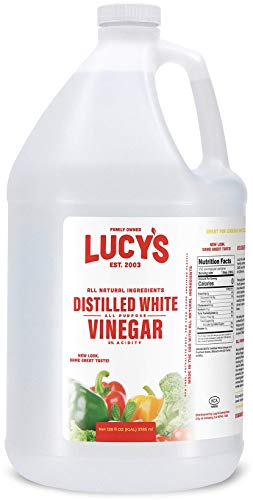
The toilet tank sits out of sight and out of mind until the flush goes weak, the bowl develops a mystery ring,…
Read the guideCleaning a toilet the right way is a ten-minute task when you match the chemistry to the stain and follow the correct…
Read the guide