

Best Toilet Flush Valve: How to Choose the Right One
Plumbing4.6
Which is the best toilet flush valve? Compare 2-inch, 3-inch, adjustable, and canister flush valves by fit and flush power, plus how…
Read the guideA black ring in the toilet bowl is almost never just dirt. It is almost always one of three distinct causes: mold and mildew feeding on mineral residue at the waterline, manganese from your water supply depositing a near-black crust, or Serratia bacteria forming a dark organic film. Each cause has its own cleaner, its own method, and its own prevention plan. Using bleach on a manganese crust or acid on a mold ring wastes your time. This guide shows you how to identify which black ring you have in under a minute, the exact product and technique to remove it, and the routine changes that keep it from coming back every week.
Most black rings are mold or dark mildew: a clinging bleach gel like Clorox Toilet Bowl Cleaner with Bleach, applied under the rim with a 10-minute dwell and a firm scrub, removes it in one pass. A hard, gritty near-black crust is manganese from your water supply, which requires an acid cleaner like Lime-A-Way, not bleach. Identify the texture first: soft and slimy means bleach; hard and crusty means acid.
The black ring is one of the most alarming things a homeowner sees in a toilet bowl, and it is also one of the most consistently misunderstood. The color suggests something dangerous or deeply embedded, but in almost every case it is a surface deposit that a correctly chosen cleaner removes completely in a single session. The problem is that most people reach for the same product every time, regardless of what they are actually dealing with. A bleach gel is perfect for a dark mold or bacteria ring and does essentially nothing to a manganese mineral crust. An acid cleaner dissolves that manganese crust quickly and is unnecessary for mold. Getting the identification right takes thirty seconds and determines whether your cleaning effort works or fails.
This guide covers the three causes of a black ring in order of frequency, the products matched to each cause, the step-by-step removal method, and the prevention strategies that reduce how often you have to repeat the job. We compare manufacturer specifications, active-ingredient chemistry, EPA WaterSense guidance on toilet bowl maintenance, and the patterns visible in thousands of verified owner reviews. For the underlying toilet question, our pillar on the best flushing toilets covers which bowl glazes resist staining longest.
Understanding the cause changes everything about how you clean. All three causes produce a ring in roughly the same location, at or just above the waterline where water meets air and the bowl surface alternates between wet and damp. But the chemistry that fixes each one is completely different, and in the case of bleach versus acid, using the wrong one not only fails but can make the situation harder to diagnose next time because it partially alters the appearance without removing the underlying deposit.
The majority of black rings are mold and mildew. Toilet bowl mold is most often caused by Aspergillus, Cladosporium, or similar common household molds that grow on the thin film of minerals, soap residue and organic matter that coats the bowl at the waterline. Mold ranges from gray to charcoal to near-black depending on the species, and it frequently presents as a ring because the waterline is where the surface stays perpetually damp without being fully submerged. A flushing toilet that splashes the area above the waterline and leaves it moist between flushes is close to ideal mold territory. In a bathroom with low ventilation, warm temperatures, or a toilet that is not cleaned on a weekly schedule, mold can establish a visible ring within four to seven days. The texture is soft, slightly fuzzy or slimy, and it wipes away relatively easily with a brush once the correct cleaner is applied.
A black or near-black ring that feels hard and gritty to the touch when you press the toilet brush against it is almost certainly a manganese mineral deposit. Manganese is a naturally occurring metal that appears in both well water and some municipal supplies at concentrations high enough to deposit at the waterline. The EPA's secondary maximum contaminant level for manganese in drinking water is 0.05 mg/L; water above this level commonly stains fixtures black or brown-black. When manganese-rich water sits at the waterline between flushes, it oxidizes on contact with air and deposits a hard, dark mineral crust on the porcelain surface. Unlike mold, this deposit does not soften with bleach at all. It is a mineral, like a darker version of the calcium and lime scale that forms white rings, and it requires the same chemistry: an acid that breaks the mineral bond and dissolves the deposit into solution so it rinses away.
Serratia marcescens is the bacterium commonly responsible for the pink or orange-red ring in toilets, but in certain conditions and with certain strains, the colony can appear dark gray to black rather than the typical pink. It has a characteristic slightly slimy, almost greasy texture. Serratia thrives in standing water, feeds on mineral traces and organic matter, and recolonizes within days of cleaning if the cleaning was incomplete or if the bowl is not used and flushed daily. Because it is a living organic colony, bleach or a disinfecting cleaner kills it and removes the stain. The distinguishing characteristic that separates a dark Serratia ring from mold is the sliminess: Serratia feels faintly greasy or soapy when the brush touches it, while mold tends to have a drier, more fibrous texture.
| Ring Type | Texture | Cause | Best Cleaner | Dwell Time | Natural Option |
|---|---|---|---|---|---|
| Black / Dark Gray (soft) | Fuzzy or soft | Mold and mildew | Bleach gel | 10 min | Baking soda + tea tree |
| Near-Black (hard, gritty) | Hard and crusty | Manganese minerals | Acid gel | 15-20 min | Citric acid paste |
| Dark Gray / Black (slimy) | Greasy, slimy | Dark Serratia bacteria | Bleach gel | 10 min | White vinegar + dish soap |
| Black streaks (running down) | Streaky, staining | Manganese from well water | Iron/mineral remover | 15 min | Citric acid soak |
The identification is genuinely fast. You do not need a water test kit or any special knowledge. Simply hold the brush at the ring and apply a small amount of pressure. A mold or bacteria ring yields immediately: the brush moves through it and the ring either wipes away in patches or smears. A manganese crust pushes back. The brush slides or scrapes on a hard surface without removing material. That hardness is the key signal that acid chemistry is needed.
A second check is location and shape. A mold ring sits at or very near the waterline and tends to form a relatively even band all the way around the bowl, because the entire perimeter is equally damp. A manganese deposit often concentrates on the side of the bowl facing the incoming water from the fill, or shows as an irregular darker band that is thicker in some areas than others, because mineral precipitation is not uniform around the bowl.
If you live on well water or have ever seen orange or brown staining anywhere else in your plumbing, reddish streaks in your sinks, or discoloration in a water heater drain, assume manganese and iron are in your water and that the hard black ring is mineral. If your water supply is standard municipal and the ring appears soft and fuzzy, assume mold and clean accordingly.
The identification step takes literally five seconds and determines whether your entire cleaning session works or wastes your time. The single most common reason a black ring keeps returning is that someone has been bleaching a manganese crust for months. The bleach lightens the organic film sitting on top of the crust, so it looks better briefly, but the hard mineral core is untouched and the dark ring is fully back within a week. If your black ring has survived multiple rounds of bleach, stop bleaching it and get an acid cleaner. One correctly identified treatment does more than a year of mismatched cleanings.
Mold rings respond very well to bleach-based toilet bowl cleaners because sodium hypochlorite both kills the mold organism and oxidizes the dark pigment it produces, removing the stain and the colony in the same application. The key is dwell time. A quick wipe-and-flush gives the bleach no time to penetrate the ring and kills only the surface layer, leaving the mold roots embedded in the mineral film on the porcelain. A ten-minute dwell is the minimum for a visible ring; fifteen minutes for a heavy, long-established one.
The angled neck on most clinging bleach gels is designed to coat under the rim where mold and bacteria hide and from which they reseed the bowl with each flush. Make sure the product contacts the underside of the rim, not just the visible part of the band. After the dwell, scrub firmly from the rim down through the ring. If you have a low-use toilet (a guest bathroom or a second bathroom that sees little traffic), the mold is likely reestablishing from the rim area within days of each cleaning. A thorough under-rim scrub on every cleaning session interrupts this cycle.
For ongoing prevention of a mold ring, the most effective measure is frequency. A quick two-minute scrub twice a week, with a clinging bleach gel left for a minute before rinsing, keeps organic matter from accumulating to the point where mold can establish. A toilet that is cleaned only once every two to three weeks gives mold colonies enough time to establish, produce more spores, and anchor the ring more firmly with each cycle. If your toilet is in a low-light, warm, poorly ventilated bathroom, running the exhaust fan for 30 minutes after each shower also reduces the ambient humidity that mold depends on. For related guidance on clogging issues that can affect how thoroughly the bowl rinses during a flush, see our guide on why toilets keep clogging.
Manganese removal is a chemistry problem, not a scrubbing problem. The mineral crust that forms a hard black ring is bonded to the porcelain surface the same way calcium scale bonds in a hard-water ring. Physical scrubbing against an untreated crust achieves little except wearing down your brush. An acid cleaner dissolves the mineral bond first, and then scrubbing removes what the acid has loosened. Skipping the chemical step and going straight to abrasion is why a manganese ring looks temporarily lighter after scrubbing with bleach and returns within days: the acid surface of the mineral is very slightly altered by the scrubbing but the bond to the porcelain is intact.
The most effective sequence for a heavy manganese ring is as follows. Turn off the supply shutoff valve (the oval valve on the wall or floor behind the toilet) and flush to lower the water level, fully exposing the black band. Apply an acid toilet bowl cleaner around the exposed ring, letting it run down the bowl wall and pool at the base of the crust. Dwell for fifteen to twenty minutes without touching it. The acid needs time to work through the mineral layers. After the dwell, scrub firmly with a stiff-bristled brush. For a crust that has built up over six months or more, the acid dwell will loosen the outer layers but may leave a harder core. A wet pumice stone rubbed gently over the wet porcelain surface will remove the remaining crust without scratching, as long as both the stone and the bowl stay wet throughout. Rinse thoroughly, restore the water supply, and flush.
In homes with consistently high manganese water, the ring will rebuild. The permanent fix requires addressing the water itself: a manganese-specific water filter, a greensand filter, or a whole-house water softener with an iron and manganese filter stage removes the mineral before it reaches the toilet. These are plumber-installed solutions, but if you find yourself repeating the acid cleaning process every three to four weeks, the water treatment route pays for itself in time and cleaning supplies. Short of water treatment, a periodic acid cleaning on a regular schedule, every three to four weeks in high-manganese homes, prevents the crust from becoming thick enough to require the full removal process each time. For more information on bowl maintenance and flush performance, see our guide to how to improve toilet flush power, which covers how a well-maintained bowl rinses more efficiently.
The product category matters more than the specific brand. What you are choosing is a chemistry type: oxidizing bleach for organic stains or dissolving acid for mineral ones. Here is how the main options compare.
A thick sodium hypochlorite gel that kills mold colonies, bleaches the dark pigment they produce, and coats the underside of the rim where the colony reseeds with each flush. The standard choice for any black ring that yields to light brush pressure. Dwell 10 minutes before scrubbing.
Check price on AmazonAn acid gel that dissolves manganese, calcium, and lime mineral deposits that bleach cannot touch. Clings to the vertical bowl surface during the dwell so the acid stays concentrated on the mineral band rather than running to the trap. The correct switch when bleach repeatedly fails on a hard black ring.
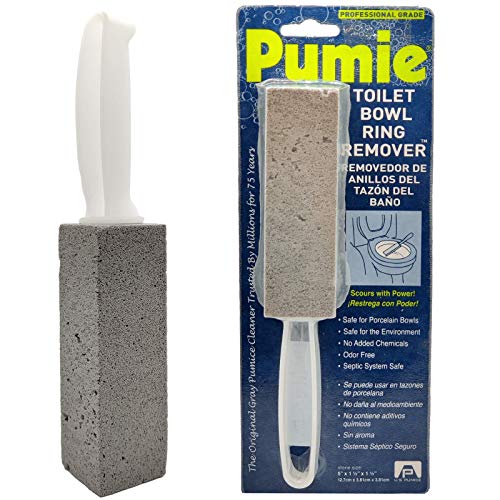
Check price on AmazonA wet pumice stone removes hardened mineral crust that acid has loosened but not fully dissolved. Safe on glazed porcelain when both the stone and the bowl are kept wet throughout. Used after an acid dwell, it handles years of manganese buildup in one session without scratching the glaze on any standard TOTO, Kohler, American Standard, Woodbridge or Gerber toilet.
Check price on AmazonThe single most effective change you can make is to stop skipping the dwell time. In the years of feedback visible in owner reviews on cleaning products, the dominant complaint pattern is "it did not work," and in almost every case the person applied the product and scrubbed immediately or waited two minutes. An acid gel on a manganese ring needs a genuine fifteen to twenty minute dwell for a heavy crust: the acid has to work through the layers. Set a timer, leave the bathroom, and come back. The ring that required ten minutes of hard scrubbing with bleach last month dissolves with five minutes of light scrubbing after a proper acid dwell. Dwell time is where the work actually happens.
Natural cleaning is slower and requires more time in the dwell step but genuinely works on both types of black ring. For a mold ring, the combination of baking soda (mild abrasive and odor neutralizer) with tea tree oil (a natural antifungal compound) forms a clinging paste that, when left against the ring for at least twenty minutes, kills the mold colony and allows scrubbing to remove the stain. White vinegar can replace or supplement the tea tree oil; its acetic acid kills most common mold species on contact and cuts the organic film under the ring that the mold feeds on. Apply the vinegar first, dwell five minutes, then add the baking soda paste over it for the fizzing action that helps lift the loosened mold from the bowl surface.
For a hard manganese ring, citric acid is the natural alternative to commercial acid cleaners. Food-grade citric acid powder, available in grocery stores and online, dissolves manganese deposits through the same acid chemistry as Lime-A-Way, though at a lower concentration. The key is a longer dwell: where a commercial acid product needs fifteen to twenty minutes, a citric acid solution may need forty-five minutes to an hour on a heavy crust, and a repeat application may be needed. Mix four tablespoons in one cup of very hot water to maximize concentration, apply to the dry-exposed ring after lowering the water level, and let it sit for at least an hour before scrubbing. Both citric acid and baking soda are fully septic-safe in household quantities. For toilets on septic systems where chemical use is a concern, the natural route with citric acid and a pumice stone follow-up is a reliable option. A weak flush that leaves residue on the bowl walls speeds up ring formation; see our guide on toilet not flushing properly if your bowl is not rinsing fully with each flush.
The most common reason a black ring returns is that the cleaning addressed the visible surface of the ring but not the reservoir feeding it. For mold, this reservoir is under the rim of the bowl. The underside of the toilet rim has a series of small holes through which water enters the bowl during each flush. These areas are warm, damp, and never directly visible, making them ideal mold habitat. Even after cleaning the visible ring thoroughly, mold remaining under the rim releases spores with each flush and reestablishes the ring in three to five days. The solution is to clean under the rim every time, not just the visible bowl surface. A gel product with an angled neck that reaches under the rim, applied and left to dwell, clears the reservoir that seeds the ring.
For a manganese ring, the deposit is rebuilt by your water supply with every flush, and no cleaning routine can prevent it without addressing the source. A manganese concentration above the EPA secondary standard of 0.05 mg/L will deposit visibly at the waterline within a week of the most thorough cleaning. In this situation, the realistic options are a regular acid cleaning schedule every three to four weeks, which keeps the deposit thin enough to remove quickly, or water treatment that removes the manganese before it reaches the toilet. A greensand filtration system or a birm filter specifically targets manganese at the whole-house level and is worth discussing with a plumber if manganese staining affects multiple fixtures in the home.
A third reason for quick return is the condition of the bowl glaze. An older toilet whose glaze has worn or crazed, particularly TOTO, Kohler, American Standard, and other porcelain fixtures that are more than fifteen to twenty years old, develops microscopic pitting in the glaze surface. Both mold spores and mineral particles anchor to this roughness far more readily than to a smooth modern glaze. A ring that reappears within two days of thorough correct-chemistry cleaning, on a toilet that has been cleaned with abrasive products over the years, is often a glaze problem. Modern stain-resistant finishes like TOTO CeFiONtect, Kohler's EverClean surface, or American Standard's EverClean glaze are baked-in treatments that create a porcelain surface dense enough to resist organic and mineral adhesion for years longer than a standard glaze. For a toilet with persistent ring problems that match this description, a replacement with a modern stain-resistant bowl may be the most practical long-term solution. For issues with weak flush performance on an aging toilet, our dedicated guide covers the most common causes and remedies.
Manganese is a regulated contaminant in US drinking water. The EPA's National Secondary Drinking Water Regulations set a secondary maximum contaminant level (SMCL) of 0.05 mg/L for manganese. Secondary standards are not enforced but represent the level above which taste, odor, and staining effects become noticeable. Manganese above this level causes the characteristic black and dark brown staining visible in toilet bowls, and at the EPA's health-based goal (MCLG) of 0 mg/L for high-risk populations, even lower concentrations warrant attention in homes with young children.
Well water in areas with granitic or metamorphic rock aquifers, parts of the Northeast, Southeast, and Midwest, commonly exceeds the SMCL for manganese. Municipal water supplies generally treat for manganese, but older distribution systems can leach it from pipes, and treatment can be inconsistent. If you suspect manganese in your water, a certified water test from a state-approved laboratory gives a definitive result. Many home improvement stores and water treatment companies offer mail-in water testing kits that screen for manganese and iron. If your result comes back above 0.05 mg/L, discussing a whole-house treatment system with a WQA-certified water treatment specialist is the recommended next step. For guidance on which toilet models handle hard water conditions best, see our guide to toilets and clogging issues associated with mineral-heavy water affecting the trapway over time.
The glaze is the critical factor in how quickly a black ring forms and how easily it cleans. A standard vitreous china toilet has a glaze that starts smooth but accumulates micro-scratches over years of abrasive cleaning, providing an increasingly hospitable surface for both mold adhesion and mineral precipitation. A toilet with a treated glaze maintains its surface density longer, denying the micro-texture that stains anchor to.
| Toilet | Glaze / Finish | MaP Score | GPF | Ring Resistance | Check Price |
|---|---|---|---|---|---|
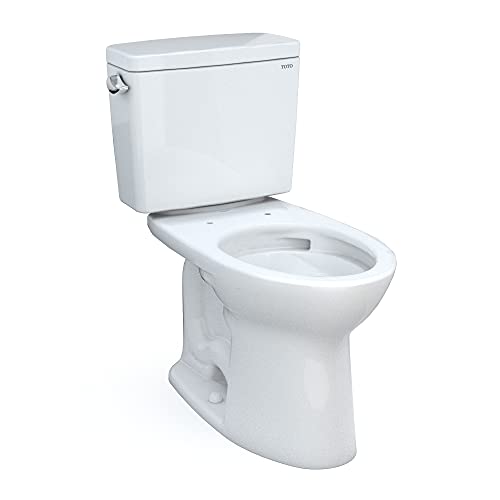
| TOTO Drake II | CeFiONtect (ion barrier) | 1000 g | 1.28 | Excellent | Check price |
| TOTO UltraMax II | CeFiONtect (ion barrier) | 800 g | 1.28 | Excellent | Check price |
| Kohler Cimarron | EverClean (antimicrobial) | 1000 g | 1.28 | Very Good | Check price |
| American Standard Cadet 3 | EverClean (antimicrobial) | 1000 g | 1.28 | Very Good | Check price |
| TOTO Aquia IV | CeFiONtect (ion barrier) | 600 g | 0.8 / 1.0 | Excellent | Check price |
| Woodbridge T-0001 | Standard vitreous china | 800 g | 1.28 | Good | Check price |
| Swiss Madison St. Tropez | Standard vitreous china | 600 g | 0.8 / 1.28 | Good | Check price |
| Gerber Viper | Standard vitreous china | 800 g | 1.28 | Good | Check price |
TOTO CeFiONtect is the most technically documented stain-resistant glaze currently available on a residential toilet. TOTO's engineering publications describe it as an ion-barrier glaze layer with a surface roughness that is approximately 30 times smoother than standard glazed porcelain, which significantly reduces the surface area available for organic matter and minerals to adhere to. In practice, owners of TOTO Drake II, UltraMax II, Vespin II and Aquia IV models consistently report that rings take longer to form and clean off more easily with a brush and light detergent without the heavy dwell times needed on standard glazes. The Drake II, in particular, pairs this glaze with a 1,000-gram MaP flush score, so the bowl also rinses more thoroughly with each flush, removing loosely deposited material before it has a chance to establish.
Kohler's EverClean and American Standard's EverClean surface take a different approach: antimicrobial treatment baked into the glaze inhibits the growth of mold, Serratia, and other bacteria on the bowl surface. This does not make the bowl immune to mineral rings but directly addresses the most common cause of a black ring. The Kohler Cimarron and Highline and the American Standard Cadet 3 and Champion 4 all carry this treatment and are widely available at standard retail, making them a practical choice for households where a mold or Serratia black ring is the recurring problem.
If you are replacing a toilet that has been giving you a persistent black ring on a bowl over ten years old, the glaze upgrade is the most underappreciated benefit of a new toilet. Most people buying a replacement look at flush power, water efficiency, and price. The glaze is rarely mentioned in the box, but it is what determines how often you have to clean. A TOTO Drake II with CeFiONtect in a hard-water home develops a visible ring noticeably more slowly than a standard-glaze toilet of the same flush power. If you are already shopping for a new toilet, look for CeFiONtect or EverClean in the product specifications. It is a quiet feature that changes the cleaning experience every week for the life of the toilet.
A black ring is caused by mold and mildew growing at the waterline on organic and mineral film, by manganese mineral deposits from water with elevated manganese content, or by dark Serratia marcescens bacteria. Mold and bacteria rings are soft and yield to brush pressure; manganese rings are hard, gritty, and do not yield without acid chemistry.
Bleach removes a black ring caused by mold, mildew, or bacteria very effectively, with a 10-minute dwell and a firm scrub. It does not remove a hard black ring caused by manganese minerals. If your black ring has survived multiple bleach treatments, it is mineral and requires an acid cleaner. The ring surviving bleach is the most reliable indicator that it is manganese and not mold.
The three main causes of a returning ring: mold surviving under the rim and reseeding the bowl with each flush (fix: always clean under the rim), manganese in your water supply constantly redepositing at the waterline (fix: regular acid cleaning schedule or water treatment), or a worn glaze that is rough enough to trap stain immediately after cleaning (fix: consider replacing the toilet). The fastest return, within two to four days, is almost always under-rim mold that was missed.
A mold or bacteria ring is not a significant health risk in a healthy household but should be cleaned regularly to prevent spore accumulation in a damp bathroom. A manganese ring is a sign of elevated manganese in your water supply, which warrants a water test, particularly in homes with young children. The EPA has established a health-based goal of 0 mg/L for manganese because of its association with neurological development in children at higher concentrations.
A hard black ring that bleach does not remove is almost certainly manganese, a naturally occurring metal that deposits from water with elevated manganese content. It forms a near-black mineral crust at the waterline that feels gritty to the brush and does not loosen with bleach. An acid toilet bowl cleaner like Lime-A-Way dissolves it, with a 15-to-20-minute dwell, followed by scrubbing. A wet pumice stone removes any remaining crust on glazed porcelain without scratching.
Yes, on glazed porcelain and vitreous china bowls, which covers essentially all residential toilets from TOTO, Kohler, American Standard, Woodbridge, Swiss Madison, and Gerber. The rule is that both the pumice stone and the bowl surface must stay wet throughout. Wet pumice is softer than the fired glaze but harder than mineral deposits, so it removes the crust without touching the glaze. Never use a dry stone on a dry surface, and avoid pumice on colored, acrylic, or plastic bowls.
For a mold ring: baking soda paste with tea tree essential oil, pressed onto the ring after lowering the water, dwell 20 to 30 minutes, then scrub. Or white vinegar sprayed on the ring, dwell 10 minutes, then scrub with a baking soda paste. For a manganese ring: dissolve 3 to 4 tablespoons of food-grade citric acid powder in hot water, apply to the exposed ring, dwell 45 to 60 minutes, then scrub and finish with a wet pumice stone. Both approaches are septic-safe and chemical-free.
For a soft, mold or bacteria ring: Clorox Toilet Bowl Cleaner with Bleach or any sodium hypochlorite gel, with a 10-minute dwell. For a hard, gritty manganese ring: Lime-A-Way, CLR Bath and Kitchen Cleaner, or any acid toilet bowl cleaner, with a 15-to-20-minute dwell. The correct choice depends entirely on whether the ring is soft or hard. The wrong product applied for any amount of time will not lift the ring.
For a bathroom in regular daily use: once a week with a clinging bleach gel under the rim and over the ring, dwell a few minutes, scrub and flush. For a low-use or guest bathroom: still once a week, because standing damp water in an infrequently flushed bowl grows mold and bacteria rings faster than a daily-use toilet. For hard water or high-manganese water: add a full acid cleaning every three to four weeks to prevent mineral crust from hardening.
A mold or bacteria ring indicates a cleaning frequency or ventilation issue, not necessarily age. An old toilet is more prone to fast-returning rings because the glaze becomes microscopically rougher over years of use, giving stain more to grip. A hard manganese ring has nothing to do with toilet cleanliness and everything to do with the mineral content of your water supply. Even a brand new toilet in a high-manganese water area develops a black ring within a week.
You can prevent it from returning quickly with the right routine, but true permanent prevention requires addressing the root cause. For mold: weekly cleaning under the rim keeps the colony from establishing. For manganese: whole-house water treatment removing the mineral is the only true prevention; regular acid cleaning is the management alternative. For a worn-glaze toilet: a replacement with a modern stain-resistant glaze (TOTO CeFiONtect, Kohler EverClean) significantly extends the time between visible rings.
Never. Bleach (sodium hypochlorite) plus an acid like Lime-A-Way produces chlorine gas, which is toxic to breathe even at low concentrations in an enclosed bathroom. Always use one cleaner type at a time, flush and rinse the bowl at least twice before switching from bleach to acid or vice versa, and keep the bathroom ventilated throughout any cleaning session.
Yes, well water is a common cause of hard black rings due to elevated manganese content. Groundwater in areas with granitic or metamorphic rock can contain manganese at concentrations well above the EPA's secondary standard of 0.05 mg/L. Other well-water issues like high iron produce orange-brown staining. If you are on well water and have a persistent black or very dark ring that bleach does not clear, a certified water test for manganese and iron provides a definitive answer and guides the appropriate water treatment choice.
Use a clinging bleach gel with an angled neck bottle and squeeze it under the rim, rotating around the entire perimeter. Let it dwell ten minutes so the gel flows over the small holes and into the crevice where the rim meets the bowl. Then use an angled toilet brush or a curved brush specifically designed to reach under the rim, and scrub the underside thoroughly. An old toothbrush or a rim cleaning brush reaches further under the overhang than a standard bowl brush. This under-rim step is what prevents a mold ring from reforming within a week.
TOTO models with CeFiONtect glaze, including the Drake II, UltraMax II, Vespin II, and Aquia IV, are the most stain-resistant TOTO toilets. CeFiONtect is an ion-barrier glaze approximately 30 times smoother than standard glazed porcelain, which significantly reduces adhesion of both organic matter and minerals. The TOTO Drake without CeFiONtect uses a standard glaze and does not carry this advantage. When purchasing a TOTO toilet specifically for stain resistance, confirm CeFiONtect is listed in the specifications.
Yes, indirectly. A toilet that does not thoroughly rinse the bowl walls with each flush leaves a thin film of waste, mineral residue, and organic matter on the bowl surface between flushes. This film is what mold feeds on, and it is what manganese precipitates onto. A toilet with a strong flush and a good bowl coating action, like a TOTO Drake with G-Max flushing or a Kohler Cimarron with Class Five, removes this residue with each flush and slows ring formation. If your toilet flushes weakly, addressing that problem also reduces how frequently the black ring appears.
A black or very dark gray slimy substance in the bowl is most likely mold in an advanced growth stage, a dark strain of Serratia marcescens bacteria, or a combination of both. Both are organic and bleach removes them. Apply a clinging bleach gel, let it dwell ten to fifteen minutes, scrub under the rim and throughout the bowl, and flush. If the sliminess returns in two to three days, the under-rim reservoir was not fully cleared, so repeat the cleaning with extra attention to the underside of the rim.
A ring above the waterline, on the dry upper part of the bowl where water does not reach during normal use, is almost always mold or dark mildew. This area gets splash from flushing, stays damp from humidity, and is rarely scrubbed. It is purely organic and bleach removes it with the same dwell-and-scrub method. It is not a mineral deposit because mineral deposition only occurs where water evaporates at the waterline. A ring above the waterline exclusively means a cleaning coverage issue: the brush is not reaching the upper bowl.
A wider trapway does not directly prevent a black ring, but toilets with a strong flush and a wide trapway, such as the American Standard Champion 4 with its 2-3/8 inch glazed trapway or the Gerber Viper with its 2-1/8 inch trapway, rinse the bowl walls more completely with each flush. This removes loosely deposited film and sediment before it accumulates. In practice, a high-MaP toilet in a well-maintained home develops visible rings more slowly than a weak-flushing one, especially in hard-water or high-manganese areas.
A black ring in the toilet bowl has three possible causes, and identifying which one you have by touching the ring with a brush takes five seconds and changes everything about how you clean. A soft, fuzzy or slimy black ring is mold or bacteria: apply a clinging bleach gel like Clorox Toilet Bowl Cleaner with Bleach under the rim and over the ring, dwell ten minutes, scrub, and flush. A hard, gritty black ring that bleach has never moved is manganese minerals from your water supply: switch to an acid cleaner like Lime-A-Way, lower the water level, dwell fifteen to twenty minutes, scrub, and finish with a wet pumice stone for any remaining crust. For a natural approach, citric acid dissolved in hot water handles manganese, and a baking soda and tea tree paste handles mold, both requiring longer dwell times. If the ring returns within a week of correct-chemistry cleaning, the cause is still active: under-rim mold that was not cleared for an organic ring, manganese water for a mineral ring, or a worn glaze on an aging toilet that traps stain in its rough surface and warrants a replacement with a stain-resistant CeFiONtect or EverClean bowl.
Which is the best toilet flush valve? Compare 2-inch, 3-inch, adjustable, and canister flush valves by fit and flush power, plus how…
Read the guideYes, flushing a toilet can make your shower go cold, hot, or lose pressure. Learn why it happens, how to diagnose it,…
Read the guideWhen you flush one toilet and another gurgles or bubbles, it usually means a venting or drain problem. Here are the causes,…
Read the guide