Why Toilet Trapways Are Curved Like an S
Toilets4.6
Learn why toilet trapways curve like an S, how each bend blocks sewer gas, and what the shape means for clogs and…
Read the guideThe five toilet designs engineered to resist clogs -- chosen using MaP flush-test data, trapway dimensions, EPA WaterSense certification status, and aggregated owner feedback from thousands of verified purchases.
The TOTO Drake II and American Standard Champion 4 are the most clog-resistant toilets available based on MaP scores of 1,000 grams, 3-inch flush valves, and wide trapway passages. Both carry EPA WaterSense certification, flush at 1.28 GPF, and have over a decade of field-proven reliability supporting their reputations.
Chronic clogging is one of the most common toilet complaints -- and it is almost always a design problem, not a user error. Older toilets with 2-inch flush valves, narrow trapways, and low water volume simply cannot move solid waste reliably. Modern high-performance designs solve this with larger valves, wider trapways, and optimized bowl geometry that creates a stronger, more directed flush.
This guide covers the five toilet designs that consistently deliver the highest clog resistance based on published MaP flush-test scores, manufacturer specifications, and aggregated owner experience. For a broader look at overall flushing power across all categories, see our guide to the best flushing toilets.
A clog-resistant toilet has three key design features: a flush valve of 3 inches or larger (versus the standard 2 inches), a fully glazed trapway at least 2.125 inches in diameter, and a MaP flush-test score of 800 grams or higher. These dimensions allow bulk waste to move through the trap and into the drain line without obstruction. Water volume and flush velocity matter too, but trapway size is the most direct predictor of clog frequency in normal household use.
Maximum Performance (MaP) testing is an independent protocol that measures how many grams of simulated solid waste a toilet can flush in a single activation. Toilets scoring 800 grams or above are considered high performers; models that reach 1,000 grams earn the top rating and are the least likely to clog under normal household use. A low MaP score -- anything under 500 grams -- is a reliable predictor of frequent clogging, regardless of GPF rating. MaP results are published at map-testing.com and are used by plumbers, building managers, and product reviewers as an objective benchmark.
Both gravity-fed and pressure-assist toilets can achieve excellent clog resistance when properly designed, but they do it differently. Pressure-assist models use compressed air to blast water into the bowl, generating high velocity that is particularly effective in commercial settings or homes with frequent heavy use. Gravity-fed toilets with large flush valves and optimized trapways -- like the TOTO Drake II and American Standard Champion 4 -- match or exceed pressure-assist performance in residential use and are quieter in operation. For most households, a well-designed gravity-flush model is the better choice.
Plumbing inspectors consistently cite trapway diameter as the single variable most correlated with service calls for clogs. A toilet with a 2-inch glazed trapway and a 1,000-gram MaP score will almost always outperform one with a 2.375-inch unglazed trapway at a lower MaP rating. The glaze matters: an unglazed surface creates friction that slows waste passage and allows buildup over time, while a fully glazed surface stays smooth through years of use.
| Model | MaP Score | Flush Valve | Trapway | GPF | WaterSense | Type | Check Price |
|---|---|---|---|---|---|---|---|
| TOTO Drake II | 1,000 g | 3 in | 2.125 in glazed | 1.28 | Yes | Two-piece | Check price |
| American Standard Champion 4 | 1,000 g | 4 in | 2.375 in glazed | 1.6 | No (1.6 GPF) | Two-piece | Check price |
| TOTO UltraMax II | 1,000 g | 3 in | 2.125 in glazed | 1.28 | Yes | One-piece | Check price |
| Kohler Cimarron | 1,000 g | 3 in | 2.125 in | 1.28 | Yes | Two-piece | Check price |
| American Standard Cadet 3 | 800 g | 3 in | 2.125 in glazed | 1.28 | Yes | Two-piece | Check price |
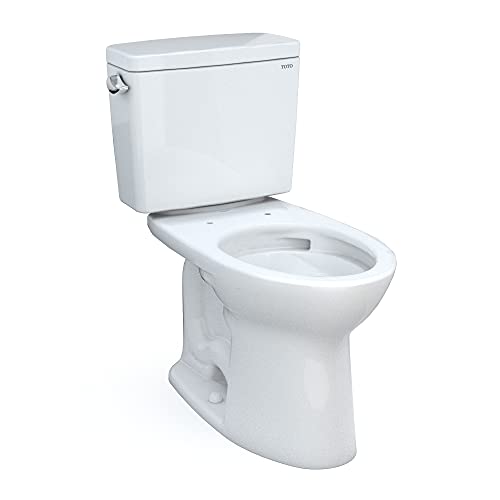
The TOTO Drake II earns its place at the top through a combination of a 1,000-gram MaP score, a 3-inch flush valve, a fully glazed 2.125-inch trapway, and TOTO's SanaGloss surface coating -- all delivered in an EPA WaterSense-certified 1.28 GPF package that has remained the plumber-recommended baseline for over a decade.
The Drake II uses TOTO's G-Max flushing system, which combines a 3-inch flush valve with a large water surface area in the bowl. The result is a flush that moves waste quickly with minimal water, using a siphonic action that pulls waste through the trapway rather than relying on volume alone. TOTO's SanaGloss glaze -- marketed as CeFiONtect in some markets -- applies a layer of titanium dioxide to the ceramic surface that creates a smooth, ion-barrier finish resistant to bacteria and mineral adhesion. This means the trapway and bowl interior stay cleaner longer, maintaining their clog resistance over time without chemical intervention.
Owner reviews across major retailers consistently rate the Drake II among the most reliable toilets in long-term residential use. Users in large families, homes with older children, and households on septic systems report substantially fewer clog incidents than with previous gravity-flush toilets. The 12-inch rough-in is the most common residential dimension, and TOTO makes the Drake II available in 10-inch and 14-inch rough-in variants for non-standard installations. For buyers comparing models, our TOTO Drake series guide covers the full lineup including the original Drake and the Eco Drake variant.
The Drake II has consistently earned a 1,000-gram MaP rating since its introduction -- not as a one-time certification but as a design characteristic confirmed across multiple independent test cycles. The combination of the G-Max valve, the siphonic trapway, and the SanaGloss interior means performance does not degrade with normal mineral accumulation the way an unglazed trapway would. It is the reference point most plumbing professionals use when recommending a clog-resistant toilet for residential use.
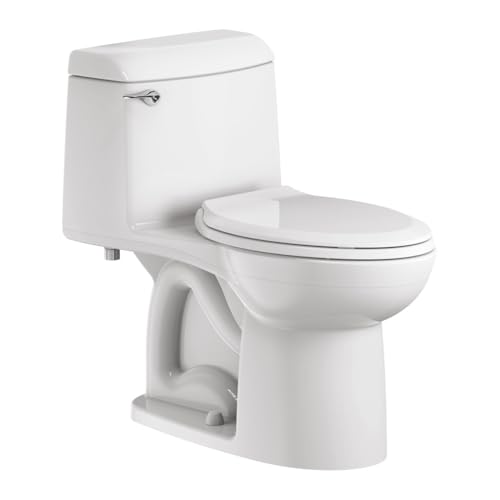
The American Standard Champion 4 holds the distinction of having the widest glazed trapway of any gravity-flush toilet in its class at 2.375 inches -- nearly a quarter inch wider than most competitors -- combined with a 4-inch flush valve that moves water at a rate that clears waste before it has any opportunity to lodge in the drain.
American Standard markets the Champion 4 specifically on its ability to flush a bucket of golf balls in a single activation -- a claim that is hyperbolic as marketing but reflects the genuine engineering behind the 4-inch flush valve. The 4-inch aperture is significantly larger than the 3-inch valves used in most premium gravity-flush toilets, and the result is a flush cycle that opens fully, moves a large volume of water quickly, and closes cleanly. The 2.375-inch glazed trapway is wide enough to pass objects that would block a standard 2.125-inch trap.
The trade-off is water consumption: the Champion 4 uses 1.6 GPF, which does not meet the 1.28 GPF threshold required for EPA WaterSense certification. For households in drought-restricted areas or those seeking the lowest possible water bills, this is a material disadvantage. However, for households with frequent clogging history, septic systems, or low-pressure water supply, the extra flushing force the 1.6-GPF Champion delivers can be a reasonable trade for 0.32 gallons per flush. Our detailed American Standard Champion 4 review covers long-term performance data and compares it directly to the Cadet 3.
The Champion 4's 4-inch valve is genuinely the largest flush aperture available in a residential gravity-feed design. When the valve opens, the rush of water into the bowl creates a forceful hydraulic event that very few blockages can survive. For households that have tried other high-performance toilets without resolving chronic clog problems, the Champion 4 is typically the last upgrade needed before a plumber needs to inspect the drain line itself.

The TOTO UltraMax II delivers the same G-Max flushing system, 3-inch flush valve, 2.125-inch glazed trapway, and 1,000-gram MaP score as the Drake II -- but packages it in a one-piece design with a seamless tank-to-bowl junction that is easier to clean and has a lower, more contemporary profile.
From a pure flushing-mechanics standpoint, the UltraMax II and the Drake II are functionally equivalent -- the same valve, the same trapway diameter, the same MaP rating. The difference is construction format. One-piece toilets fuse the tank and bowl into a single vitreous china unit, eliminating the rubber gasket between tank and bowl that can degrade over time in two-piece designs. This makes the UltraMax II more durable at the tank-bowl junction and significantly easier to clean, since there is no crevice between components for mineral deposits or bacteria to accumulate.
For buyers with a master bathroom renovation, a guest bathroom requiring a cleaner aesthetic, or anyone who has dealt with a leaking tank-to-bowl connection, the UltraMax II represents a meaningful upgrade over the Drake II even though the flushing performance is identical. TOTO also offers the UltraMax II in a version with a pre-installed WASHLET+ bidet seat mounting system for buyers interested in adding a bidet seat later. Our TOTO UltraMax series guide covers the complete lineup and compares the UltraMax II to the Carlyle II one-piece alternative.
The UltraMax II is the version of the Drake II that installation professionals often prefer for buyer projects. The one-piece format ships as a single unit, eliminates post-installation gasket adjustment, and the SanaGloss surface means maintenance callbacks for staining or buildup are rare. When a buyer asks for the best no-clog toilet and wants something that will also look right in a renovated bathroom, the UltraMax II is typically the recommendation.
The Kohler Cimarron is the strongest-flushing mainstream Kohler two-piece toilet, earning a 1,000-gram MaP score via its 3-inch flush valve and Class Five flushing technology, while remaining EPA WaterSense certified at 1.28 GPF and priced accessibly within Kohler's lineup.
Kohler's Class Five flushing system uses a 3-inch flush valve and optimized rim jet placement to create a strong swirling action that moves waste effectively with each flush. The Cimarron achieves a 1,000-gram MaP score, placing it in the highest tier of residential toilet performance. Kohler's "comfort height" dimension -- 16.5 inches from floor to seat -- meets ADA accessibility standards, making the Cimarron a practical choice for households with seniors or mobility considerations.
The main nuance with the Cimarron is that Kohler sells it in multiple configurations and finishes, and not all versions include a fully glazed trapway. Buyers should confirm this detail in the specific product listing before purchase. In terms of overall brand reliability, Kohler's replacement parts network is among the most extensive in the industry, with flapper, fill valve, and flush valve components available at virtually every hardware retailer nationwide. For a deeper look at how the Cimarron compares within Kohler's lineup, see our Kohler Cimarron review.
For buyers committed to the Kohler ecosystem -- already owning Kohler faucets, Kohler seats, or Kohler fixtures -- the Cimarron is the correct choice for clog resistance. Its Class Five system is reliable and well-documented. The one specification to verify is trapway glazing: some regional SKUs omit it, and an unglazed trapway will accumulate mineral scale over time in hard-water areas, gradually narrowing the effective passage diameter.

The American Standard Cadet 3 achieves an 800-gram MaP score -- the threshold for "high performance" -- with a 3-inch flush valve, a fully glazed 2.125-inch trapway, and EPA WaterSense certification at 1.28 GPF, all at a price point well below the TOTO Drake II and Champion 4.
The Cadet 3 uses American Standard's EverClean surface treatment, which applies an antimicrobial agent to the ceramic during manufacturing. This inhibits the growth of odor-causing bacteria on both the bowl interior and the trapway walls -- a feature that has real practical benefit in households where toilets go extended periods between deep cleans. American Standard's independently certified MaP result of 800 grams places the Cadet 3 in the top tier of performance relative to the total market, even if it falls 200 grams short of the maximum 1,000-gram ceiling.
For a rental property upgrade, a second bathroom replacement, or any situation where budget is a primary constraint but frequent clogging is genuinely problematic, the Cadet 3 represents a substantial step up from sub-$200 standard-grade toilets. The 3-inch flush valve and fully glazed 2.125-inch trapway are the same specifications found in premium models. See our American Standard Cadet 3 guide and the side-by-side Champion 4 vs. Cadet 3 comparison for detailed spec breakdowns and owner feedback summaries.
The Cadet 3 is the toilet most property managers and rental renovation contractors reach for when they need improved clog resistance at a controlled cost. The EverClean surface reduces housekeeping friction, the 3-inch valve handles normal household waste reliably, and American Standard's parts are available at every Lowe's and Home Depot nationally. The 200-gram gap to the 1,000-gram ceiling is real but rarely consequential in a two-person household on a municipal sewer.
A fully glazed trapway of at least 2.125 inches in diameter is the minimum specification to look for in a clog-resistant toilet. Standard residential toilets commonly have 2-inch trapways, sometimes unglazed, which creates a narrow passage where waste can accumulate. The American Standard Champion 4's 2.375-inch trapway is the widest currently available in a gravity-flush residential design. Beyond raw diameter, glaze matters: a smooth glazed surface reduces friction and prevents mineral scale from gradually narrowing the effective opening over years of use.
Dual-flush toilets can achieve excellent clog resistance when designed with the same large-trapway and high-flush-valve specifications as single-flush models, but the liquid-flush cycle (typically 0.8 GPF) uses significantly less water and may not always move solid waste as completely as a full 1.28 GPF or 1.6 GPF flush. For households prioritizing clog prevention above all else, a high-performance single-flush model like the TOTO Drake II or Champion 4 is more predictable. Dual-flush models like the TOTO Aquia IV work well for households that are disciplined about using the full flush for solid waste. For a detailed comparison, see our article on whether dual-flush toilets are worth it.
One detail buyers often overlook is the relationship between water supply pressure and clog risk. Even a 1,000-gram MaP toilet relies on adequate incoming water pressure to fill the tank and deliver a full flush. Homes with very low municipal water pressure (below 20 PSI) may see even top-rated toilets perform below their MaP potential. If clogging persists after upgrading to a high-performance model, a plumber should test supply pressure and inspect the drain line for partial blockages before attributing the problem to the fixture itself.
Toilets do not have a standard replacement interval, but certain wear patterns indicate it is time to upgrade. If a toilet was manufactured before 1994, it uses 3.5 GPF or more and has a smaller flush valve than modern designs. Mineral scale buildup in an aging unglazed trapway narrows the effective opening over time, increasing clog frequency even in a toilet that once performed adequately. Any toilet that requires plunging more than once a month despite normal household use, or that has a MaP score under 500 grams based on the model's published data, is a strong candidate for replacement with a current high-performance design.
The most common cause of recurring toilet clogs is a narrow or unglazed trapway that cannot pass typical household waste reliably. Flushing non-flushable items (wipes, paper towels, cotton products) is the most common cause of acute single-event clogs. A toilet that clogs regularly with normal toilet paper and waste is typically undersized in its trapway or flush valve relative to household demand.
Not necessarily. Flush volume (GPF) is only one variable. A 1.6 GPF toilet with a 2-inch trapway and a 2-inch flush valve can clog more frequently than a 1.28 GPF toilet with a 3-inch valve and a 2.125-inch glazed trapway. The MaP score integrates all design variables into a single performance number, making it a better predictor of clog resistance than GPF alone.
A MaP score of 1,000 grams means the toilet successfully flushed 1,000 grams of simulated solid waste in a single activation during independent third-party testing. This is the maximum score in the MaP protocol and indicates the highest level of bulk-waste-clearing ability among gravity-flush residential toilets. Toilets achieving this rating are classified as "maximum performance" models.
The TOTO Drake II earns its reputation through consistent 1,000-gram MaP performance, a fully glazed trapway, and a proven long-term track record across a very large installed base. The American Standard Champion 4 has a wider trapway (2.375 vs. 2.125 inches) and may have a mechanical advantage in extreme situations, but it uses 1.6 GPF. For most households, the Drake II's combination of maximum MaP score, water efficiency, and surface durability makes it the most broadly recommended option.
Yes. Even a well-designed toilet with a 3-inch flush valve will underperform if the water supply pressure is too low to fill the tank fully or deliver water at the expected flow rate. The MaP protocol tests toilets at standardized water pressure, so real-world performance in a low-pressure home may fall below the published score. A plumber can test supply pressure at the toilet shutoff valve; readings below 20 PSI suggest a pressure problem independent of fixture quality.
Construction format (one-piece vs. two-piece) does not directly affect clog resistance. What matters is the flush valve size, trapway diameter, and glaze quality -- specifications that can be identical between one-piece and two-piece versions of the same flushing system. The TOTO UltraMax II (one-piece) and Drake II (two-piece) share the same G-Max flushing internals and produce the same 1,000-gram MaP result.
TOTO's SanaGloss (marketed in some markets as CeFiONtect) applies an ion-barrier layer of titanium dioxide to the ceramic surface during firing. This creates an extremely smooth surface that repels waste, mineral scale, and bacterial adhesion. In the context of clog prevention, the main benefit is that the trapway interior stays closer to its original diameter over years of use in hard-water areas, because mineral deposits cannot adhere as readily as they do to standard ceramic.
Pressure-assist toilets use compressed air to add velocity to the flush, which can produce a forceful clear of waste and is particularly effective in commercial or high-use settings. In residential use, a well-designed gravity-flush toilet with a 3-inch or larger valve and a 1,000-gram MaP rating generally matches pressure-assist performance for clog prevention while operating more quietly. Pressure-assist models are noisier, require more complex repairs, and the compressed air vessel must be replaced periodically.
A 3-inch flush valve is the minimum to look for in a high-performance clog-resistant toilet. Standard older toilets use 2-inch valves. The American Standard Champion 4 uses a 4-inch valve, which is the largest available in a residential gravity-flush design. A larger valve opens faster, moves water more quickly into the bowl, and creates a stronger hydraulic event that reduces the likelihood of waste lodging in the trap.
The Woodbridge T-0001 is a popular one-piece elongated toilet with a fully glazed trapway and a siphonic dual-flush system. It performs reasonably well for clog resistance in standard household use and earns favorable owner reviews, but its MaP score is lower than the TOTO and American Standard models listed here. It is a competitive option in its price tier, particularly for buyers who want a modern skirted design, but it is not the first recommendation for households with documented chronic clogging problems.
A toilet labeled septic safe typically flushes effectively without relying on high water volume to push waste through the drain line. Septic-safe toilets benefit from efficient siphonic flushing and low GPF to avoid overloading the septic tank. Clog-resistant features -- wide trapways, strong flush valves -- are generally compatible with septic use, but households on septic should also be especially careful to avoid flushing non-biodegradable materials.
Sometimes. If the toilet's flush valve is undersized, replacing the flush mechanism (fill valve, flapper, and flush valve) with larger-aperture components can improve performance. Descaling the trapway with a hydrochloric acid-based cleaner can restore diameter in hard-water situations. However, if the toilet has an inherently narrow trapway (under 2 inches) or a low MaP score by design, mechanical upgrades typically cannot close the performance gap to modern high-efficiency models.
MaP scores are published in searchable form at map-testing.com. The database is updated regularly and lists results by manufacturer, model name, and model number. Searching by manufacturer and the first few words of the model name typically returns the correct entry. The score is expressed in grams; 800 grams is considered high performance and 1,000 grams is the maximum achievable rating.
Bowl shape (round vs. elongated) does not materially affect clog resistance. The variables that determine clog frequency are flush valve size, trapway diameter and glaze, and water volume per flush. Elongated bowls are slightly larger and often found on comfort-height models, which correlates with higher-performance flushing systems, but the bowl shape itself is not a causal factor in clog prevention.
Gerber's Avalanche and Ultra Flush models earn respectable MaP scores and are specified by Gerber as high-performance designs. The Gerber Viper, in particular, is a frequently recommended option in contractor circles for its consistent flush performance. Gerber is a well-established brand with a 1-year limited warranty on most residential models. For households already familiar with the Gerber brand or buying through a plumbing supply channel that stocks Gerber, the brand is a credible choice for clog resistance.
The TOTO Aquia IV is a dual-flush model designed for water efficiency, with flush options at 1.0 GPF and 0.8 GPF. Its clog resistance on the full 1.0-GPF flush is solid for normal household use, but the design prioritizes water conservation over maximum flushing force. Households with frequent heavy use or hard-water conditions may find the single-flush Drake II more reliably clog-free. The Aquia IV is best suited to households where most flushes involve liquid waste and water conservation is a priority.
Comfort height (typically 16 to 17 inches from floor to seat rim versus the standard 15 inches) does not affect the flushing mechanics, flush valve size, or trapway dimensions. All five toilets on this list are available in comfort-height configurations. The designation refers solely to the height of the bowl for user comfort and ADA compliance.
Older pre-1994 toilets used 3.5 to 5 GPF, providing brute-force water volume to push waste through the drain. The 1994 Energy Policy Act mandated a maximum of 1.6 GPF, and early low-flow designs tried to achieve this by reducing water volume without redesigning the flush valve or trapway -- creating toilets that clogged chronically. Modern high-performance designs solve this through engineering (larger valves, siphonic action, wide trapways) rather than water volume, matching or exceeding old toilets' reliability with far less water.
Swiss Madison's Well Made Forever line, including the St. Tropez and Ivy models, includes fully glazed trapways and siphonic dual-flush systems. They earn solid reviews for aesthetics and general performance, and their skirted designs eliminate exposed trapway surfaces that can accumulate scale. Published MaP data for Swiss Madison models shows good but not maximum performance scores. For buyers focused on a modern European design aesthetic alongside decent clog resistance, Swiss Madison is a reasonable choice, though it ranks behind TOTO and American Standard's top performers on raw MaP results.
If a toilet with a 1,000-gram MaP score and a 3-inch or larger flush valve continues to clog, the problem is almost certainly downstream of the toilet -- a partial obstruction in the drain line, inadequate venting causing siphon breaks, or an insufficiently sloped drain run. A licensed plumber can inspect the drain line with a camera scope to identify the actual blockage location. Non-flushable items flushed previously may have partially cleared the trap but lodged further in the line.
For most households, the TOTO Drake II is the best no-clog toilet: it achieves a 1,000-gram MaP score, uses a 3-inch G-Max flush valve, maintains a fully glazed 2.125-inch trapway with SanaGloss surface protection, and does all of this within the 1.28 GPF EPA WaterSense threshold. Buyers who want the absolute widest trapway opening should choose the American Standard Champion 4 (2.375 inches) and accept the 1.6 GPF trade-off. Budget-conscious buyers get meaningful clog protection from the American Standard Cadet 3 at a substantially lower investment. Whichever model you choose from this list, the design engineering is categorically better than the standard-grade toilets most homes still have installed.
Learn why toilet trapways curve like an S, how each bend blocks sewer gas, and what the shape means for clogs and…
Read the guideAlmost every US toilet has a left-side handle. Learn the plumbing and mechanical reasons behind the layout and when it actually changes.
Read the guideHome toilets rely on tanks because household water lines lack the pressure that public flushometer systems use to flush straight from the…
Read the guide