
Best Toilet Flush Valve: How to Choose the Right One
Plumbing4.6
Which is the best toilet flush valve? Compare 2-inch, 3-inch, adjustable, and canister flush valves by fit and flush power, plus how…
Read the guideA complete breakdown of every fill valve design, how each one works, which toilets use them, when to replace yours, and how to choose the right upgrade for less water waste and faster refill times.
Float-cup fill valves (also called anti-siphon fill valves) are the best choice for most homes today. They are inexpensive, durable, water-efficient, and meet modern plumbing codes. Floatless diaphragm valves work well in low-pressure or commercial settings. Ballcocks are outdated and should be replaced when they fail.
The fill valve controls water flow from the supply line into the toilet tank after every flush. When you push the handle, the flush valve opens and empties the tank. The fill valve detects the drop in water level, opens to refill the tank to a preset level, then shuts off automatically. Without a properly functioning fill valve, the tank cannot refill correctly, leading to weak flushes, running toilets, or overflow.
Most homeowners only think about the fill valve when something goes wrong -- a hissing tank, a toilet that runs for minutes after a flush, or a slow refill that makes the next flush feel anemic. Understanding the four main fill valve types helps you diagnose problems faster, choose the right replacement part, and avoid paying a plumber for what is often a $10 to $20 fix.
Fill valves are also directly tied to water efficiency. A faulty or misadjusted fill valve can waste thousands of gallons per year -- a figure the EPA WaterSense program links specifically to leaking toilet components as one of the top sources of household water waste in the United States.
| Fill Valve Type | Era of Common Use | Float Mechanism | Typical Water Level Control | Meets Modern Code | Avg. Lifespan |
|---|---|---|---|---|---|
| Traditional Ballcock (brass) | Pre-1970s | Large side-float ball on horizontal arm | Manual bend of arm or adjustment screw | Often no | 20+ years (brass) |
| Plastic Ballcock | 1970s-1990s | Side-float ball on plastic arm | Bend arm or screw | Sometimes | 5-10 years |
| Float-Cup (Anti-Siphon) | 1990s-present | Float cup rides up/down the valve shaft | Turn adjustment screw or pinch clip | Yes | 7-12 years |
| Floatless / Diaphragm | 2000s-present | No external float; internal diaphragm senses pressure | Internal pressure adjustment | Yes (most) | 10-15 years |
A ballcock is the original toilet fill valve design, characterized by a large rubber or plastic ball attached to a horizontal arm. As the tank fills, the rising ball floats upward until it shuts off the water supply. Ballcocks are still functional when maintained, but they are bulkier, harder to adjust precisely, and in older brass versions may not comply with current anti-siphon plumbing codes. Most plumbers recommend replacing a ballcock with a modern float-cup valve when it starts to leak or wear.
The ballcock design dates to the 19th century and was standard in virtually every American toilet tank through the 1980s. The mechanism is simple: water flowing into the tank pushes a float ball upward, and when the ball reaches a preset height, it mechanically closes a valve seat to stop the flow.
Brass ballcocks are the original version. They are exceptionally durable -- some last 30 to 50 years -- and are still installed in older homes and historic buildings. However, brass ballcocks typically do not include an anti-siphon vacuum breaker, which is now required under most U.S. plumbing codes (ASSE 1002 standard). Without an anti-siphon feature, contaminated tank water can theoretically be drawn backward into the potable water supply under certain pressure drop conditions.
Plastic ballcocks were widely used from the 1970s into the 1990s. They are lighter and cheaper than brass but degrade faster, with plastic arms and seals cracking after 5 to 10 years of chlorinated water exposure. Brands like Fluidmaster introduced plastic ballcocks with better adjustment screws, but the fundamental float-arm geometry remained unchanged.
Plumbing engineers have noted that ballcock valves are prone to "phantom flush" behavior when the float ball develops a small crack and fills with water, making it too heavy to fully close the valve. If your toilet runs intermittently or you can hear a faint trickle of water entering the tank at night, a waterlogged float ball is one of the first things to check.
To adjust water level on a traditional ballcock, you physically bend the float arm downward (to lower the water level) or upward (to raise it). On plastic versions, a screw on the arm adjusts without bending. Neither approach is as precise as the adjustment mechanisms on modern float-cup valves.
Replacement ballcock valves are still sold at hardware stores for compatibility with older toilet designs, but if your existing ballcock is failing, switching to a float-cup valve is almost always the smarter long-term choice.
A float-cup fill valve uses a cylindrical float that slides up and down directly on the valve shaft rather than on a side arm. As the tank drains, the float drops and the valve opens. As water rises, the float climbs until it triggers the valve to close. Water level is adjusted by turning an adjustment screw or moving a pinch clip on the shaft, giving much finer control than a ballcock arm. Float-cup valves also include a built-in anti-siphon air gap to meet modern plumbing codes.
The float-cup design, popularized by Fluidmaster in the 1990s, is now the default fill valve type in nearly all new toilets sold in the United States. Brands like TOTO, Kohler, American Standard, Woodbridge, and Swiss Madison all ship their toilets with float-cup-style valves or proprietary variants that share the same operating principle.
Key advantages of float-cup valves:
Float-cup adjustment: Most models include a mark on the shaft indicating where the float should sit for proper water level (typically 1 inch below the overflow tube). To raise or lower the level, you press the adjustment clip or turn the top in the direction indicated by the arrow molded into the cap. The adjustment range on a typical Fluidmaster 400A is about 2 inches -- enough to handle the variation between a standard 3.5 GPF older tank and an EPA WaterSense-certified 1.28 GPF modern tank.
Float-cup valves are the go-to replacement for plumbers across the country precisely because they are universal, code-compliant, and take about 10 minutes to install. The Fluidmaster 400A series alone has been the best-selling toilet repair part in the U.S. for over two decades -- a strong indicator of broad compatibility and proven field reliability.
One weakness of float-cup valves is sensitivity to debris. If sediment from the supply line gets past the inlet screen, it can lodge in the diaphragm seat inside the cap and cause the valve to drip or run continuously. Disassembling the top cap (turn counterclockwise) and flushing the seat with water usually fixes this without replacing the valve.
A floatless fill valve uses an internal pressure-sensing diaphragm rather than an external float to detect water level. When pressure inside the tank reaches a preset threshold corresponding to the correct fill level, the diaphragm closes the valve. These valves are typically installed below the waterline at the bottom of the tank, have a very low profile, and are favored in pressure-assisted toilets and some commercial installations. They require a minimum water pressure (typically 20 PSI) to function correctly.
Floatless fill valves are less common in residential toilets but are found in specific scenarios:
The most recognized floatless fill valve for residential use is the Fluidmaster 400LS (low-profile) and the Fluidmaster 400 Quiet Fill models, which use a pressure-sensing mechanism rather than a traditional float cup. Korky also makes floatless options in their QuietFILL Platinum series.
Installation note: Floatless valves are installed near the bottom of the tank and require a slightly different procedure than upright float-cup valves. The lock nut tightening torque matters more -- overtightening can crack older porcelain tanks. Fluidmaster recommends hand-tight plus a half-turn with pliers for most porcelain installations.
Floatless valves shine in noise-sensitive environments. Because water enters at the bottom of the tank under controlled pressure rather than splashing in from above, fill noise is dramatically reduced. Homeowners replacing a loud ballcock or chattering float-cup valve in a bedroom-adjacent bathroom often find that a floatless or "quiet fill" model is the right solution even when the toilet itself does not require one.
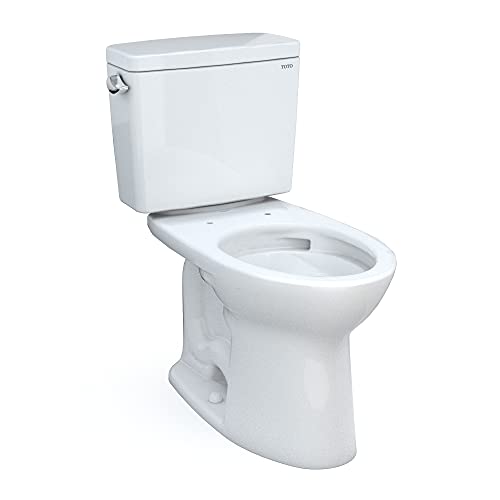
TOTO uses proprietary float-cup fill valves in most of its toilets, including the Drake, Drake II, and UltraMax II models, with a design that prioritizes quiet operation and precise water level calibration. Kohler uses branded float-cup valves across the Highline and Cimarron lines. American Standard primarily uses float-cup fill valves in its gravity-flush models like the Cadet 3, while its pressure-assist toilets use floatless fill valves inside sealed pressure vessels. All of these OEM valves can typically be replaced with universal aftermarket equivalents.
Here is a brand-by-brand breakdown of fill valve types used in major toilet lines:
TOTO Drake and Drake II (gravity flush, 1.28 GPF): TOTO installs its own G-Max or Tornado Flush-compatible fill valve, which is a float-cup design with a dual-float arrangement in some models. The valve is manufactured to tighter tolerances than most aftermarket alternatives and contributes to TOTO's reputation for extremely quiet tank refill. TOTO's OEM fill valve part number for the Drake II is TSU99A.X, though aftermarket Korky 528 series valves are widely reported as compatible substitutes. If you own the TOTO UltraMax II, which is a one-piece toilet with a compact tank, TOTO recommends using OEM fill valves to ensure the float does not interfere with the lid.
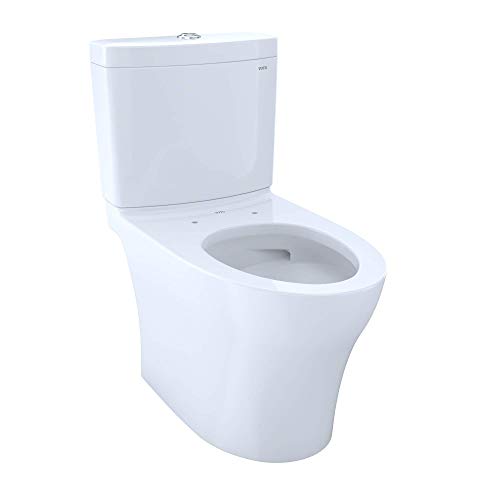
TOTO Aquia IV (dual flush, 1.0/0.8 GPF): The Aquia IV uses a diaphragm-type fill valve tailored for its dual-flush mechanism. The valve interfaces with the trip lever and flush tower assembly, so using a non-OEM replacement requires careful measurement of the shaft height.
Kohler Highline and Cimarron (1.28 GPF, Class Five flush): Kohler installs its branded 1085505 fill valve across most gravity-flush models. It is a standard float-cup design. Kohler sells replacements under part numbers 1085505 and GP1083167, and Fluidmaster 400AH valves are widely confirmed as compatible across homeowner forums and plumbing supply communities.
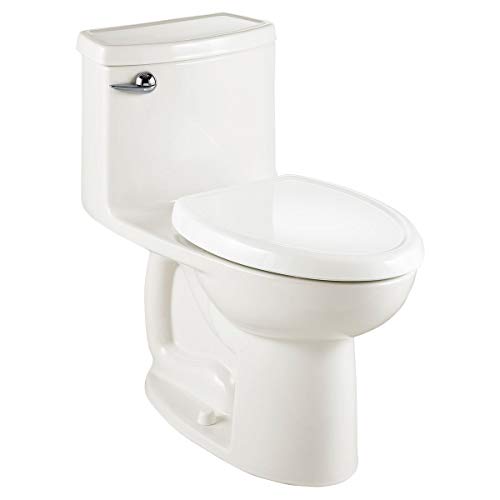
American Standard Cadet 3 and Champion 4 (1.28 GPF): The Cadet 3 uses a standard float-cup fill valve. The Champion 4 uses American Standard's proprietary 4215A.020 fill valve, which has a larger inlet opening to support its high-flush-volume 4-inch flush valve system. The Fluidmaster PerforMAX 400ARHR is the most cited compatible aftermarket replacement for Champion 4 models.
Woodbridge T-0001 (1.28 GPF / 0.8 GPF dual flush): The Woodbridge T-0001 uses a float-cup fill valve paired with a push-button dual-flush tower. Replacement fill valves are available from Woodbridge directly (part WBR5007) and are also compatible with Fluidmaster 400 series valves cut to the correct height.
Swiss Madison Sublime II and Ivy (1.1 GPF dual flush): Swiss Madison uses a slimline float-cup valve designed for their compact, low-profile tanks. Aftermarket replacement options are more limited due to the compressed tank dimensions, and Swiss Madison recommends OEM parts for their one-piece models.
Gerber Viper and Avalanche (1.28 GPF): Gerber's gravity-flush models use a standard float-cup valve (Geberit-influenced design in many models). Their pressure-assist Avalanche uses a floatless pressure-vessel fill valve, similar to Sloan and Flushmate systems.
| Brand / Model | Fill Valve Type | OEM Part | Aftermarket Option | GPF | Check Price |
|---|---|---|---|---|---|
| TOTO Drake II | Float-cup (proprietary) | TSU99A.X | Korky 528 | 1.28 | Check price |
| TOTO Aquia IV | Diaphragm / dual-flush | TSS114 | OEM only recommended | 1.0 / 0.8 | Check price |
| Kohler Highline | Float-cup | GP1083167 | Fluidmaster 400AH | 1.28 | Check price |
| American Standard Cadet 3 | Float-cup | 3174.105-0070A | Fluidmaster 400A | 1.28 | Check price |
| American Standard Champion 4 | Float-cup (wide inlet) | 4215A.020-0070A | Fluidmaster 400ARHR | 1.6 | Check price |
| Woodbridge T-0001 | Float-cup (dual flush) | WBR5007 | Fluidmaster 400A (cut to height) | 1.28 / 0.8 | Check price |
| Gerber Avalanche (PA) | Floatless / pressure vessel | Flushmate vessel unit | Flushmate M-101526-F3 | 1.0 | Check price |
The clearest sign a fill valve needs replacement is a toilet that runs continuously or cycles on and off after the flush cycle should be complete -- a condition called "phantom flushing" or "ghost flushing." Other signs include a hissing sound from the tank, water visible trickling into the bowl even when the toilet has not been used, a tank that takes more than 2 to 3 minutes to refill, and visible mineral deposits or cracks on the valve body. Most fill valves last 5 to 15 years depending on water quality and valve type.
Running toilet diagnosis: The standard dye tablet test (or a few drops of food coloring in the tank) can reveal whether water is leaking past the flapper into the bowl, which is distinct from a fill valve issue. If the dye appears in the bowl within 15 minutes without flushing, the flapper is the problem. If the tank refills correctly but makes noise or runs irregularly, the fill valve is the likely culprit.
Water waste calculation: The EPA estimates that a running toilet can waste up to 200 gallons of water per day. At U.S. average water rates, that translates to significant annual cost -- making a $15 fill valve replacement one of the highest-return plumbing fixes available to homeowners.
Lifespan factors: Hard water accelerates fill valve degradation. Mineral deposits can build up on the diaphragm seat inside the valve, reducing sealing effectiveness. In regions with water hardness above 150 mg/L (the EPA threshold where scale buildup accelerates), replacing fill valves every 5 to 7 years rather than waiting for failure is a reasonable maintenance strategy.
Water pressure: Floatless valves are particularly sensitive to pressure fluctuations. If water pressure in your home drops below the 20 PSI minimum (common in rural well systems or older urban supply lines with corroded pipes), a floatless valve may not close reliably. Switching to a float-cup valve in these situations is the correct fix.
A fill valve replacement is one of the few plumbing repairs where the aftermarket option is frequently as good as or better than the OEM part. Fluidmaster and Korky invest heavily in fill valve engineering, and their current-generation products in many cases outlast the original equipment. Checking that the replacement valve's shank height matches your tank's bottom-to-waterline measurement is the main technical step most homeowners overlook -- measure before you buy.
Selecting the correct replacement fill valve involves four measurements and one code check:
For most homeowners replacing a failed valve in a standard gravity-flush two-piece toilet, the Fluidmaster 400A or 400AH is the recommended starting point. It is stocked at every hardware chain, costs under $15, takes 10 to 15 minutes to install, and fits 90%+ of residential toilets on the market.
For a look at how fill valve quality affects overall flushing performance, see our guide to the best flushing toilets -- fill valve design is one of several factors that separates high-MaP scoring toilets from weaker performers.
EPA WaterSense certification is applied to complete toilet systems, not individual fill valves. However, the fill valve directly determines the water volume used per flush by controlling the tank refill level. An incorrectly adjusted fill valve -- one set 1 inch too high -- can add a meaningful volume of water to every flush cycle.
The EPA WaterSense standard requires that certified toilets use no more than 1.28 GPF. MaP testing (by independent engineers at the IAPMO Research and Testing lab) then verifies that each certified toilet actually flushes effectively at that volume -- MaP scores of 500 grams or more are considered acceptable, while scores of 800 grams and above indicate strong performance. The TOTO Drake II consistently achieves a perfect 1,000-gram MaP score at 1.28 GPF, partly because its fill valve calibration ensures the tank always holds precisely the design volume of water.
When replacing a fill valve in a WaterSense-certified toilet, always set the water level to the mark on the overflow tube -- not above it. Overfilling a 1.28 GPF tank increases per-flush water use and can cause the toilet to run continuously as water trickles over the overflow tube into the bowl.
For context on how toilets compare on water efficiency, our article on 1.28 GPF vs 1.6 GPF toilets covers the practical difference in annual water bills and flush power.
Tank refill noise is a common complaint and is almost always traced to one of three fill valve issues:
1. Water hammer / banging pipes: When the fill valve closes abruptly at the end of the fill cycle, the sudden stop of water flow creates a pressure wave through the supply line. This is more common with ballcock valves and older float-cup designs. Solutions include installing a water hammer arrestor on the supply line or switching to a slow-close fill valve like the Fluidmaster 400AH, which has a graduated shutoff to reduce pressure shock.
2. Screaming or screeching during fill: A high-pitched noise during filling typically indicates a deteriorating diaphragm or washer inside the fill valve cap. The deformed seal vibrates as water flows past it. Replacing the entire valve (rather than just the diaphragm) is faster and costs little more.
3. Hissing after the fill cycle completes: A continuous hiss after the tank is full suggests water is passing the shut-off seat. This can result from debris on the seat (clean by lifting the cap and flushing) or a worn diaphragm that can no longer fully seal. In either case, replacing the fill valve resolves the issue permanently.
For general toilet maintenance topics including fill valve noise, our toilet running after flush diagnosis guide covers the full decision tree for isolating fill valve from flapper issues.
The four main types are the traditional brass ballcock, the plastic ballcock, the float-cup (anti-siphon) fill valve, and the floatless diaphragm fill valve. Float-cup valves are the most common type installed in new toilets today.
A brass ballcock can last for decades and is not inherently unsafe if it is functioning correctly. However, older ballcocks without anti-siphon protection may not comply with current plumbing codes, and their water level control is less precise than modern float-cup valves. Replacing a failing ballcock with a float-cup valve is the recommended upgrade.
Float-cup fill valves typically last 7 to 12 years under normal residential use. Brass ballcocks can last 20 to 50 years. Floatless diaphragm valves often last 10 to 15 years. Water quality (especially hardness and chlorine content) significantly affects lifespan -- hard water shortens fill valve life.
Yes. Fill valve replacement is one of the most beginner-friendly plumbing repairs. The basic process is: shut off the supply valve, flush to empty the tank, disconnect the supply line, unscrew the lock nut under the tank, remove the old valve, install the new one, reconnect the supply, and adjust the water level. Most homeowners complete the job in under 20 minutes.
The Fluidmaster 400A is the most widely recommended aftermarket fill valve for standard gravity-flush toilets. For high water pressure (above 80 PSI), the Fluidmaster 400AH adds a regulating feature. For quiet operation, the Korky QuietFILL Platinum 528 is frequently cited by homeowners as the quietest option available.
If the toilet runs after a fill valve replacement, the water level is likely set too high (water flowing into the overflow tube) or the flapper is leaking separately. Check that the water level is at least 1 inch below the top of the overflow tube. Then perform a dye test to determine whether the flapper is sealing correctly.
An anti-siphon fill valve includes a built-in air gap that prevents contaminated tank water from being siphoned backward into the potable water supply if pressure in the supply line drops suddenly. All modern float-cup fill valves are anti-siphon by design and comply with ASSE 1002. This is now required by plumbing codes in all 50 U.S. states.
TOTO uses proprietary fill valves in most of its toilets, particularly in one-piece models and Washlet+ integrated units where the tank dimensions are specific to the design. However, aftermarket valves (Korky 528 series, Fluidmaster 400 series cut to height) are widely used as replacements for TOTO two-piece models like the Drake and Drake II with documented success.
The Kohler Highline uses Kohler's branded GP1083167 fill valve, which is a float-cup design. The Fluidmaster 400AH is the most cited compatible aftermarket replacement for Kohler Highline and Cimarron models.
Yes, indirectly. The fill valve controls how much water enters the tank before the next flush. If it is adjusted too low, the tank does not hold enough water for a full, powerful flush. If the valve is slow or partially blocked, tank refill time increases, limiting how quickly the toilet is ready for the next flush. A properly calibrated fill valve is part of maintaining the MaP flush performance a toilet was designed to achieve.
A floatless fill valve is a compact cylindrical unit, typically 4 to 6 inches tall, mounted at the bottom of the tank. It has no external float arm or float cup. Instead, it senses tank water level through internal pressure changes. Its low profile makes it well-suited to compact or one-piece toilet tanks.
A ballcock is one specific type of fill valve -- the original design using a float ball on a horizontal arm. "Fill valve" is the broader category that includes ballcocks, float-cup valves, floatless valves, and other designs. Modern plumbing literature uses "fill valve" as the standard term; "ballcock" refers specifically to the older float-ball design.
On most Fluidmaster 400 series valves, grip the top of the valve body and turn it counterclockwise to unlock (about a quarter-turn), then turn the entire body clockwise to raise the water level or counterclockwise to lower it. The water line should sit at the mark on the overflow tube, or 1 inch below the top of the overflow tube if no mark is present.
Most floatless fill valves require a minimum supply pressure of 15 to 25 PSI to function correctly. If your home's water pressure drops below this range (common with well pumps or in rural supply areas), the internal diaphragm may not seat properly, resulting in a running or slow-filling toilet. A float-cup valve is more tolerant of low-pressure conditions.
The most common causes of fill valve noise are a worn diaphragm (causing screeching), debris on the valve seat (causing hissing), or water hammer from abrupt valve closure (causing banging). Clean the valve seat by removing the cap and flushing with water. If the valve is over 7 years old or the noise persists, replacement is faster and more reliable than further repair attempts.
Yes. Hard water (above 150 mg/L calcium carbonate) deposits mineral scale on fill valve diaphragms and seats, reducing their flexibility and sealing ability. In hard water areas, fill valve lifespan can drop to 4 to 6 years from the typical 7 to 12. Using a fill valve with a replaceable top cap (like the Fluidmaster 400A) allows periodic cleaning without full replacement.
Not all fill valves are compatible with dual-flush mechanisms. Dual-flush toilets use a tower or canister flush valve rather than a standard flapper, and the fill valve must be the correct height so the refill tube connects properly to the overflow tower port. Manufacturers like Woodbridge and Swiss Madison provide specific fill valve part numbers for their dual-flush models; always confirm compatibility before purchasing an aftermarket replacement.
The fill valve controls water flowing in to refill the tank. The flush valve controls water flowing out from the tank into the bowl when you flush. They are two separate components. The fill valve is the taller unit connected to the water supply line. The flush valve sits in the center of the tank and is controlled by the flapper or flush tower.
In most residential toilets, yes -- both Korky and Fluidmaster float-cup fill valves use a 7/8-inch shank and a similar adjustment range, making them functionally interchangeable for most standard two-piece toilets. The main practical differences are adjustment mechanism feel, noise level (Korky's QuietFILL is noticeably quieter in many user reports), and the design of the refill tube connection.
Replacing a fill valve does not affect the toilet's WaterSense certification status, but it is important to set the replacement valve to the correct water level. If the tank overfills, the toilet will use more than the certified 1.28 GPF per flush. Always set the water level at or below the fill mark on the overflow tube to maintain the efficiency the toilet was designed for.
For the vast majority of homeowners, a float-cup fill valve is the right choice: it is universally compatible, code-compliant, easy to adjust, and available for under $15 at any hardware store. Ballcocks belong in the past once they fail. Floatless valves solve specific problems around noise and low-profile tank height. Understanding which type you have -- and when to replace it -- is the single most impactful and lowest-cost toilet maintenance decision you can make.
Which is the best toilet flush valve? Compare 2-inch, 3-inch, adjustable, and canister flush valves by fit and flush power, plus how…
Read the guideYes, flushing a toilet can make your shower go cold, hot, or lose pressure. Learn why it happens, how to diagnose it,…
Read the guideWhen you flush one toilet and another gurgles or bubbles, it usually means a venting or drain problem. Here are the causes,…
Read the guide