Best Toilet Flush Valve: How to Choose the Right One
Plumbing4.6
Which is the best toilet flush valve? Compare 2-inch, 3-inch, adjustable, and canister flush valves by fit and flush power, plus how…
Read the guideEvery flush depends on one small component inside your tank. Understanding the three main flush valve types -- 2-inch, 3-inch, and tower (canister) -- helps you diagnose leaks, pick replacement parts faster, and choose toilets that genuinely deliver the flush power you need.
The 3-inch flush valve moves roughly 50% more water per flush than the classic 2-inch design, making it the standard for high-performance toilets at 1.28 GPF. Tower (canister) valves open 360 degrees, delivering the fastest water release of all three types -- preferred in pressure-assisted and ultra-low-flow designs. Match valve size to your replacement flapper or you will get a chronic leak.
A flush valve is the assembly inside a toilet tank that holds water between flushes and releases it into the bowl when you press the handle. It sits at the center bottom of the tank, connects to the flush handle via a chain or lever, and seals with a flapper or tower seal. The valve diameter controls how much water rushes into the bowl -- larger openings mean faster, more powerful flushes.
When you press the flush lever, a chain lifts a rubber flapper (or tower seal) off the valve seat. Water falls through the opening, down the flush tube, and into the bowl through the rim holes and siphon jet, creating the siphon effect that carries waste away. The flapper drops back down once the tank empties, and the fill valve refills the tank for the next flush.
The flush valve is the single biggest determinant of raw flushing power in a gravity-fed toilet. A wider opening releases water faster, creating a stronger siphon before the tank runs dry. That is exactly why toilet engineers moved from 2-inch to 3-inch and then to tower valves as water efficiency targets tightened -- they needed more power from less water.
The relationship between flush valve diameter and flush power is not linear -- doubling the diameter more than doubles the flow rate because flow is proportional to the square of the radius. A 3-inch valve has 2.25 times the opening area of a 2-inch valve. This is why upgrading a 1.6 GPF toilet from a 2-inch to a 3-inch valve can dramatically improve clearing performance without increasing water use.
A 2-inch flush valve is the traditional gravity-flush standard found in most American toilets manufactured before the mid-2000s, as well as many budget models sold today. It uses a rubber flapper that lifts off a 2-inch seat opening. These valves are compatible with the widest range of replacement flappers on the market, making repairs easy and inexpensive.
The 2-inch valve design has been in continuous production for decades. Brands like Kohler, American Standard, and Gerber used it as the default on 3.5 GPF and 1.6 GPF toilets for most of the 20th century. Its advantages are real: flappers cost under $5 at any hardware store, installation takes minutes, and compatibility is rarely an issue.
The limitation becomes clear when you compare MaP (Maximum Performance) flush test scores. MaP testing measures how many grams of solid waste a toilet can remove in a single flush -- 500g is the minimum acceptable score, and 1,000g is the maximum tested. Many 1.6 GPF toilets with 2-inch valves score in the 600g to 800g range. By contrast, virtually all toilets earning 1,000g MaP scores use 3-inch or tower valves.
Toilets that typically use 2-inch flush valves include older Kohler Highline models, many American Standard Cadet 2 and earlier units, and most imported toilets sold without a specific performance rating. If you are replacing a flapper on a toilet purchased before 2005 and do not know the valve size, measure the flapper opening -- 2 inches across means a 2-inch valve.
A 2-inch flapper on a 1.6 GPF tank can still produce a respectable flush if the trapway is fully glazed and the siphon jet is well-positioned. The limiting factor is the speed of water delivery, not the total volume. Budget toilets pair 2-inch valves with partially glazed or 2-inch trapways, compounding the restriction. If your toilet clogs frequently, check both the valve size and the trapway diameter before assuming you need a full replacement.
A 3-inch flush valve has a seat opening 50% wider in diameter than the 2-inch standard, giving it approximately 2.25 times the cross-sectional area and delivering water to the bowl significantly faster. This larger opening compensates for the reduced tank volume in 1.28 GPF toilets by ensuring the available water empties quickly enough to generate a strong siphon before it runs out.
When the EPA WaterSense program established 1.28 GPF as the certification threshold for high-efficiency toilets, manufacturers faced a real engineering challenge: how do you flush a toilet effectively with 20% less water than the 1.6 GPF standard? The 3-inch valve was a central part of the answer.
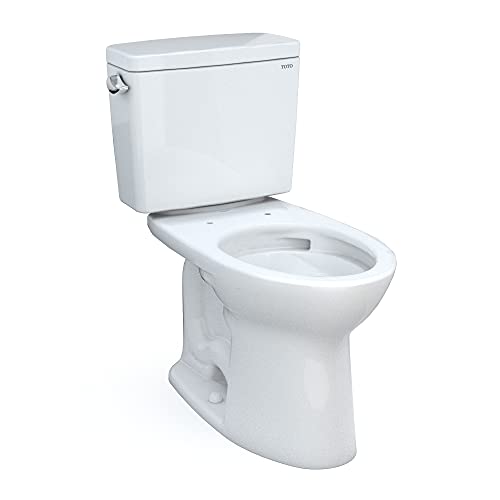
TOTO pioneered the 3-inch flush valve in its G-Max and Tornado Flush systems. The TOTO Drake, one of the most widely sold toilets in North America, uses a 3-inch flush valve paired with a fully glazed 2-1/8-inch trapway. Its MaP score is 1,000g at 1.6 GPF, and the Drake II achieves 1,000g at 1.28 GPF -- a result that would be impossible with a 2-inch valve at the lower water volume.
The Kohler Cimarron and Kohler Highline (in their modern configurations) also use 3-inch valves. The American Standard Champion 4 uses a proprietary 4-inch accelerator valve that operates on the same principle -- wider opening, faster water release -- taken even further. The American Standard Cadet 3 uses a 3-inch flush valve with a fully glazed 3-inch trapway, which is one of the widest available in any residential toilet.
Replacement flappers for 3-inch valves are widely available but not interchangeable with 2-inch flappers. The Korky 3-inch flapper (model 100BP) and Fluidmaster 5403 are among the most commonly specified replacements. Installing a 2-inch flapper on a 3-inch seat causes immediate and chronic leaking -- the flapper simply cannot cover the larger opening.
| Feature | 2-Inch Valve | 3-Inch Valve | Tower / Canister Valve |
|---|---|---|---|
| Opening diameter | 2 inches | 3 inches | 3-4 inches (360-degree lift) |
| Flow rate (relative) | Baseline | ~2.25x faster | Fastest -- full circumference open |
| Typical GPF range | 1.6 GPF | 1.28-1.6 GPF | 0.8-1.28 GPF |
| Seal type | Rubber flapper | Rubber flapper | Rubber tower seal / disc |
| Replacement parts cost | Lowest ($3-$8) | Low ($5-$12) | Moderate ($10-$25) |
| Parts availability | Universal | Very wide | Often brand-specific |
| MaP score potential | 600-900g | 800-1,000g | 800-1,000g |
| Best for | Older toilets, budget replacement | Most 1.28 GPF EPA WaterSense toilets | Dual-flush, ultra-low-flow, modern designs |
| Example brands | Older Kohler, older American Standard | TOTO Drake, Kohler Cimarron, American Standard Cadet 3 | TOTO Aquia IV, Woodbridge T-0001, Swiss Madison |
A tower flush valve, also called a canister valve or piston valve, replaces the hinged rubber flapper with a cylindrical tower that lifts straight up when flushed. Because the tower lifts off a circular seat rather than pivoting open on a hinge, it exposes the full 360-degree circumference of the valve opening simultaneously -- allowing water to exit from all sides at once, not just the front half as with a flapper.
The mechanical difference between tower and flapper valves is significant. A traditional flapper pivots on a hinge at the back, so when it lifts, the front edge rises first and the water initially exits only through a partial opening. A tower valve, by contrast, lifts straight up like a piston, opening the entire circumference at once. This produces a faster, more uniform water release that delivers a stronger initial surge into the bowl.
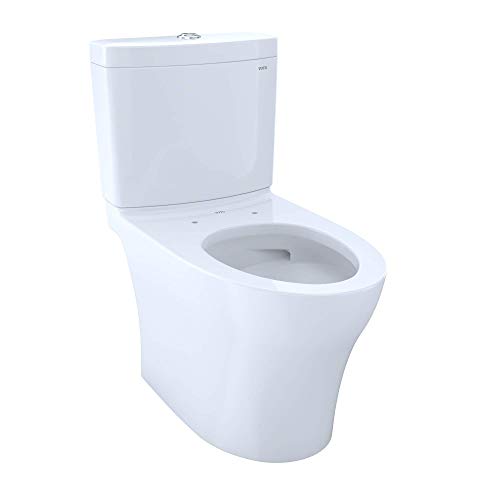
TOTO uses a variant of this concept in its Tornado Flush system. The TOTO Aquia IV, a popular dual-flush toilet certified by EPA WaterSense at 1.0/0.8 GPF, uses a tower valve that opens the full seat area simultaneously. This allows the toilet to achieve MaP scores of 800g on the full flush despite using only 1.0 GPF -- a figure that no 2-inch flapper valve could match at that water volume.
The Woodbridge T-0001, Swiss Madison Chateau, and Gerber Viper also use tower or near-tower valve designs. These toilets share a distinctive tank design: a taller, narrower tank profile compared to traditional gravity toilets. The tower valve requires a minimum water depth to seal correctly, which influences tank geometry.
One practical consideration: tower valves are far more brand-specific than flappers. While a Korky or Fluidmaster flapper can be adapted to dozens of toilet models, a tower seal replacement is often specific to one manufacturer's assembly. Kohler, for example, sells proprietary canister valve replacement kits for its tower-valve toilets. Always record your toilet model number before ordering replacement parts for a tower valve.
Tower valves have one underappreciated maintenance advantage: because the seal is a flat rubber disc or O-ring on the bottom of the tower rather than a curved flapper edge, they are less prone to warping over time. Rubber flappers exposed to chloramine-treated municipal water degrade within 3 to 5 years in many markets. Tower seals, when made with chloramine-resistant material, often last considerably longer -- but when they do fail, the repair cost is higher and the correct part is harder to source.
Remove the tank lid and look at the center-bottom of the tank. If you see a rubber flap on a hinge lifting off a circular seat, measure the seat opening: 2 inches across is a 2-inch flapper valve, 3 inches across is a 3-inch flapper valve. If you see a cylindrical tower or piston-shaped assembly that lifts straight up rather than tilting, you have a tower (canister) valve. The toilet model number, printed inside the tank or on the underside of the lid, confirms valve type if you cross-reference the manufacturer's parts diagram.
Identifying your flush valve type is the first step before any repair or replacement. Here is a step-by-step approach:
One common source of confusion: some toilet tanks have a 3-inch tower valve but use a separate flush rod and lever that looks like a standard setup. TOTO's G-Max system, for example, uses a 3-inch tower in some configurations with a conventional exterior handle. Do not assume the valve type from the handle -- always check inside the tank.
For a deeper look at how flush valve type interacts with overall toilet performance, see our guide to the best flushing toilets on the market, where MaP scores and valve configurations are compared across all major brands.
Flush valve size directly enables water efficiency by allowing manufacturers to reduce GPF while maintaining adequate flush power. The EPA WaterSense program certifies toilets at 1.28 GPF or less, requiring them to pass the MaP flush test at a minimum of 350g -- though nearly all certified toilets exceed 600g. Without a 3-inch or tower valve, achieving those scores at reduced water volume is not reliably possible with standard gravity-fed tank designs.
The EPA WaterSense label appears on toilets that use no more than 1.28 gallons per flush and have been independently verified to flush at least 350 grams of solid material per flush under MaP protocols. In practice, toilets earning the WaterSense certification and scoring 1,000g MaP nearly always use a 3-inch or tower valve. The physics do not support a 2-inch valve delivering 1,000g MaP performance at 1.28 GPF.
The water savings from WaterSense toilets are meaningful. The EPA estimates that replacing a pre-1994 toilet (3.5 GPF or higher) with a WaterSense certified 1.28 GPF model saves approximately 13,000 gallons of water per year in an average household. That reduction is possible in part because larger valves allow toilet designers to use less water without sacrificing clearing ability.
Dual-flush toilets extend this further. The TOTO Aquia IV uses 1.0 GPF for a full flush and 0.8 GPF for a reduced flush, achieving a 1,000g MaP score on the full flush mode. Its tower valve is fundamental to achieving that performance at 1.0 GPF. The American Standard H2Option dual-flush toilet uses a 3-inch valve to similar effect, earning WaterSense certification at a 1.1/0.92 GPF average.
For those comparing water usage in detail, our 1.28 GPF vs 1.6 GPF comparison covers the real-world savings numbers and which valve configurations appear in each category.
MaP testing is conducted at a fixed water supply pressure and with the tank filled to the manufacturer's specified water line. A toilet tested at 1.28 GPF with a 3-inch valve will not replicate that performance if the valve is swapped to a 2-inch flapper. This matters for landlords and plumbers who replace flappers without checking the seat size -- you can inadvertently degrade the flush performance of a WaterSense certified toilet by installing the wrong replacement flapper.
Replace only the flapper if the valve seat is smooth and intact -- flapper replacement costs under $10 and solves the vast majority of running-toilet complaints. Replace the entire flush valve assembly if the seat is cracked or pitted (causing the flapper to leak even when new), the flush tube is cracked, or you are upgrading from a 2-inch valve to a 3-inch to improve flush performance on a compatible toilet.
The most common toilet repair is flapper replacement. A running toilet that wastes 200 gallons a day in a typical failure mode is almost always caused by a degraded flapper -- a $5 to $10 fix. Before assuming the valve seat needs replacement, run your finger around the seat surface with the tank empty. A smooth, unbroken edge in good condition means a new flapper will seal correctly.
Full flush valve replacement is warranted when:
Full valve replacement on a standard toilet is a DIY-accessible project requiring a wrench, a sponge, and about 30 minutes. Fluidmaster, Korky, and Danco all manufacture universal replacement flush valve kits for 2-inch and 3-inch configurations. Tower valve replacements require brand-specific kits from TOTO, Kohler, or the relevant manufacturer.
If you are dealing with persistent clogs rather than leaks, the flush valve is rarely the cause -- look instead at the trapway diameter and whether the bowl's rim holes are clogged with mineral deposits. Our guide to chronic toilet clogging walks through the diagnostic sequence.
Understanding flush valve types is most useful when connected to specific toilet models you can buy or already own. Here is how the major brands distribute their valve technology across their lineups.
TOTO uses 3-inch valves in its G-Max gravity-flush system (Drake, Drake II, Eco Drake) and tower-style valves in its Tornado Flush line (Ultramax II, Vespin II). The TOTO Aquia IV dual-flush uses a tower valve enabling the 1.0/0.8 GPF split. TOTO's E-Max system, used in mid-range dual-flush designs, uses a 3-inch valve.
You can find TOTO Drake models at TOTO Drake on Amazon or compare the Aquia IV at TOTO Aquia IV on Amazon.
Kohler uses 3-inch valves in its Class Five flushing technology (Cimarron, Highline Classic with Class Five). The Kohler Highline Tall uses a 3-inch valve with Kohler's proprietary AquaPiston canister, which is a hybrid between a traditional tower valve and a flapper -- the AquaPiston opens 360 degrees like a tower but uses a canister housing similar to a piston valve. The Kohler San Souci and Santa Rosa use this AquaPiston design.
American Standard is notable for pushing valve diameter further than most -- the Champion 4 uses a 4-inch accelerator valve, a proprietary design that is the widest gravity-flush valve in mainstream residential production. The Cadet 3 uses a 3-inch valve. Older American Standard models (Savona, Cadet 2) used 2-inch valves.
The Woodbridge T-0001, a popular one-piece toilet, uses a tower-style valve with a dual-flush mechanism (1.6/1.0 GPF). Swiss Madison Chateau and Chateau Dual Flush models also use tower valve designs enabling the dual-flush splits. These brands often use European-style valve mechanisms that differ from US Fluidmaster/Korky standards -- replacement parts must be sourced from the manufacturer.
Gerber uses 3-inch valves in its Viper, Maxwell, and Avalanche lines. The Gerber Viper achieves 1,000g MaP at 1.28 GPF using a 3-inch DFI (Direct Feed Injection) valve with a fully glazed 2-1/8-inch trapway.
For a broader comparison of which brands earn the highest flush performance ratings across their full lineup, see our toilet brands comparison guide.
Flush valve problems are behind the majority of toilet complaints that are not clog-related. The symptoms break down cleanly by component:
This is almost always a flapper or tower seal issue. The seal is not closing fully or is warped. Test by adding food coloring to the tank -- if color appears in the bowl within 15 minutes without flushing, the seal is leaking. Replace the flapper or tower seal. A running toilet wastes between 200 and 7,000 gallons per day depending on the severity of the leak.
Check the water level in the tank first -- it should be 1 inch below the top of the overflow tube. Low water level from a misadjusted fill valve is the most common cause. If the water level is correct, inspect the flapper: a worn flapper drops back too quickly, ending the flush before the tank fully empties. A flapper that closes in under 3 to 4 seconds will produce a weak flush on most 3-inch valve toilets.
Occurs when a slow leak through the flapper causes the water level to drop far enough to trigger the fill valve. The toilet "ghost flushes" every 10 to 60 minutes. Solution is identical to the running toilet fix: replace the flapper or tower seal.
If water pools under the flush valve inside the tank, the spud washer -- the rubber gasket between the valve body and the tank -- has failed. This is a full valve replacement job, not a flapper replacement. This symptom is often confused with a condensation problem; check whether water is dripping from the tank exterior or pooling inside.
The toilet flushes twice with one handle press. This usually means the flapper is closing too slowly, allowing a second siphon to initiate. Shorten the flapper chain by 1 to 2 links. If the problem continues, the flapper may be the wrong model -- a lighter or differently shaped flapper for the specific valve seat is needed.
Most toilets manufactured before 2005 use a 2-inch flush valve. Toilets manufactured since the mid-2000s at 1.28 GPF typically use a 3-inch valve. Tower valves appear in dual-flush and ultra-low-flow designs across multiple brands.
No. A 3-inch flapper is physically larger than a 2-inch seat and will not seal properly on a 2-inch valve. Conversely, a 2-inch flapper cannot cover a 3-inch seat. Always match the flapper to the valve seat diameter.
Remove the tank lid and look at the central assembly at the tank bottom. A flapper valve will show a rubber flap on a hinge. A tower valve will show a cylindrical tower that lifts straight up when flushed. Tower assemblies are typically taller and more complex-looking than flappers.
It depends on the toilet's trapway size. If your toilet has a 2-inch trapway, upgrading to a 3-inch valve will improve flush speed but the narrow trapway remains a limiting factor. A fully glazed 3-inch trapway paired with a 3-inch valve delivers the full performance benefit.
MaP (Maximum Performance) testing measures how many grams of simulated solid waste a toilet removes in a single flush. Scores of 600g or higher are acceptable; 1,000g is the maximum tested. MaP scores are the most reliable independent measure of flush performance and are published at map-testing.com.
Tower seals are less prone to the warping that affects flappers in chloramine-treated water. However, when they do fail, replacement parts are more expensive and often brand-specific. A flapper valve may need replacement every 3 to 5 years; a tower seal can sometimes last 7 to 10 years.
The TOTO Drake uses a 3-inch G-Max flush valve. The Drake II uses the same 3-inch valve at 1.28 GPF. Both models achieve 1,000g MaP scores, with the Drake II also qualifying for EPA WaterSense certification.
The American Standard Champion 4 uses a proprietary 4-inch accelerator valve -- the widest gravity-flush valve in mainstream residential production. This larger opening contributes to its 1,000g MaP score at 1.6 GPF.
Yes, if the toilet tank is designed to accommodate a 3-inch valve. The valve hole at the bottom of the tank must be large enough to accept the 3-inch assembly. Some older tank designs have a smaller mounting hole and cannot be upgraded without replacing the tank. Measure the existing hole before purchasing a kit.
No. EPA WaterSense certification is based on GPF (maximum 1.28 GPF) and MaP flush performance (minimum 350g), not on valve type. However, in practice, achieving strong MaP scores at 1.28 GPF essentially requires a 3-inch or tower valve in a gravity-fed design.
The valve seat may be damaged, pitted, or have mineral scale that prevents a full seal. Run your finger around the seat surface -- it should feel completely smooth. If you find rough spots, light sanding with fine-grit sandpaper sometimes restores the seal. If the damage is significant, a full valve replacement is needed.
The Kohler AquaPiston is a canister-style valve that combines features of both tower and flapper designs. It opens 360 degrees like a tower valve rather than pivoting on a hinge, but uses a canister housing and rubber gasket similar to a piston valve. It is found in modern Kohler Highline, Cimarron, and San Souci models.
The valve body (the hard plastic housing and flush tube) typically lasts the life of the toilet -- 20 to 50 years. The seal (flapper or tower seal) degrades with water chemistry exposure, UV light, and mechanical wear, typically lasting 3 to 7 years depending on water quality and chloramine levels.
Indirectly. A flapper that closes too quickly reduces flush power, which can leave waste in the trapway rather than clearing it fully. This does not cause clogs on its own but can make a marginally sized trapway clog more frequently. A worn flapper is more likely to cause running water than a clog.
Fluidmaster's 507AKR (3-inch) and 5403 are among the most widely used universal replacement valves for 3-inch seat toilets. Korky's 3060BP is also highly rated. For 2-inch valves, the Fluidmaster 501B and Korky 100BP are standard choices. Korky's TOTO-specific kits (e.g., model 3030BP) are designed for TOTO valve seats.
Yes. Dual-flush toilets use a valve assembly that can release two different volumes of water depending on which button or handle position is activated. Most dual-flush designs use a tower valve that can be partially or fully lifted by a two-button actuator on top of the tank. The TOTO Aquia IV and Woodbridge T-0001 are examples of this configuration.
Yes, supply pressure affects how quickly the tank refills, but not the flush itself -- since flushing is gravity-driven from a pre-filled tank. However, supply pressure that is too high can cause the fill valve to cycle noisily and wear faster. Normal residential supply pressure of 40 to 60 PSI is ideal for tank toilets.
Fluidmaster, Korky, and Danco are the leading aftermarket flush valve brands for US residential toilets. For original equipment, TOTO, Kohler, and American Standard produce long-lasting proprietary valve systems with readily available factory replacement parts through their plumbing parts divisions.
The 3-inch flush valve is the right choice for the vast majority of toilets bought or repaired today. It delivers the flush power needed to make EPA WaterSense 1.28 GPF performance viable, achieves 1,000g MaP scores in combination with the right trapway design, and its replacement parts are widely available and inexpensive. Tower (canister) valves excel in dual-flush and ultra-low-flow designs where every drop of water release speed matters. The 2-inch valve remains relevant only for maintaining older toilets -- in a new purchase or a full replacement scenario, it is the least capable of the three types. Know your valve size before you buy a replacement flapper, verify the seat condition before assuming a new flapper will stop a leak, and match the entire flush system -- valve, flapper, and trapway -- when evaluating a toilet for genuine clog resistance.
Which is the best toilet flush valve? Compare 2-inch, 3-inch, adjustable, and canister flush valves by fit and flush power, plus how…
Read the guideYes, flushing a toilet can make your shower go cold, hot, or lose pressure. Learn why it happens, how to diagnose it,…
Read the guideWhen you flush one toilet and another gurgles or bubbles, it usually means a venting or drain problem. Here are the causes,…
Read the guide