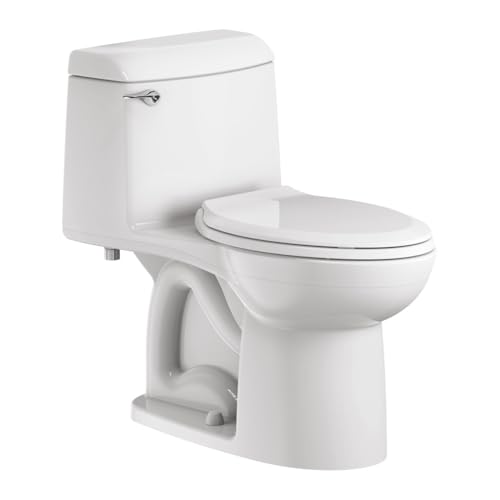
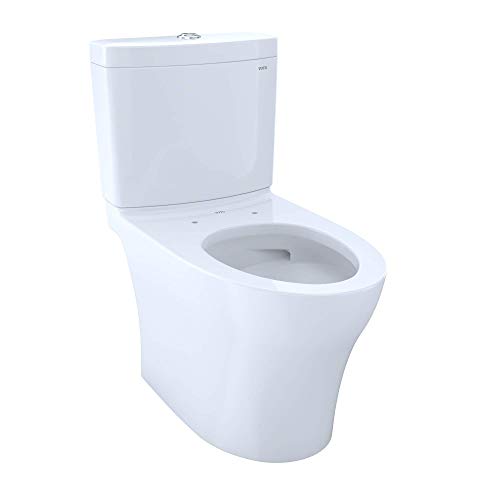
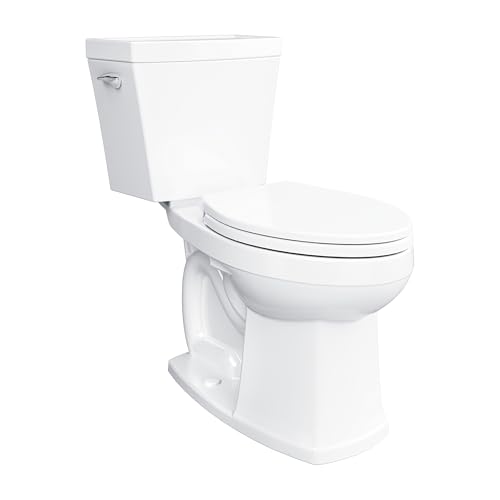

TOTO Drake Two-Piece Toilet vs Kohler Highline Two-Piece Toilet: Which Should You Buy?
Comparisons4.6
We compared the TOTO Drake and Kohler Highline two-piece toilets: both hit MaP 1000 at 1.28 GPF. See flush systems, verified specs…
Read the guideTwo fundamentally different flush technologies, one straightforward decision. Here is what the data, MaP scores, and real-world owner feedback say about each so you can pick the right system for your home or business.
Gravity flush suits most homes -- quiet, affordable, and easy to repair. Pressure-assisted wins in high-traffic commercial or problematic-drain settings, delivering a forceful bowl clear that rarely clogs, at the cost of extra noise, higher upfront price, and more complex servicing.
Before comparing performance numbers it helps to understand the engineering behind each design, because the mechanical difference explains nearly every downstream trade-off.
A gravity flush toilet stores water in a tank positioned above the bowl. When you press the handle, a flapper or canister valve opens and water falls into the bowl by gravity alone. The sudden surge creates a siphon in the trapway, pulling waste down and out through the drain. Once the tank empties the siphon breaks, the flapper closes, and the tank refills.
The mechanism is simple -- a flapper, fill valve, handle, and trip lever are the only moving parts. This simplicity has endured for more than a century and is why every hardware store carries replacement parts. Modern gravity toilets use a fully glazed trapway (the curved passage at the base) to reduce friction and improve waste evacuation. TOTO pairs this with its Tornado Flush and Double Cyclone technology, directing water in a swirling pattern that cleans the bowl and maintains velocity through the trapway. Kohler uses its AquaPiston canister valve, which opens 90 degrees to allow water to rush from all sides rather than a single flapper hole. These refinements lift gravity performance well above what the name implies.
A pressure-assisted toilet houses a sealed plastic vessel (the pressure vessel or cartridge) inside the ceramic tank. As the tank fills from the supply line, water is forced into the pressure vessel under the natural water-supply pressure of your home -- typically 25 to 80 psi. Air trapped inside the vessel compresses. When you flush, the compressed air and water discharge together into the bowl through a single concentrated jet, creating a high-velocity flush that is louder but extremely powerful.
The outer ceramic tank is essentially decorative -- it holds the pressure vessel and is never submerged in water. This means condensation (tank sweating) is eliminated, a meaningful advantage in humid climates. The trade-off is that the internal vessel requires 25 psi minimum to function and that pressure-vessel cartridges from brands such as Sloan Flushmate are more expensive and less universally stocked than gravity flappers.
Plumbing engineers often specify pressure-assisted units for commercial restrooms, multi-story buildings, and basements where supply pressure is high and drain slope is minimal. In residential settings, the acoustic footprint (the loud whoosh) is the most common reason homeowners return to gravity after trying pressure-assisted. Noise aside, the clog-clearing power is genuine and backed by MaP scores consistently at or above 1,000 grams.
MaP (Maximum Performance) testing is the industry standard for flush performance, measuring how many grams of waste a toilet can clear in a single flush. Pressure-assisted toilets routinely achieve MaP scores of 1,000 grams (the maximum measurable), while quality gravity models from TOTO, American Standard, and Kohler typically score between 600 and 1,000 grams depending on the specific model. For reference, a score of 350 grams is considered the minimum acceptable residential standard -- any model above 600 is regarded as high-performing. Both technologies can reach the 1,000-gram ceiling, but pressure-assisted does so more consistently across a wider product range.
| Feature | Gravity Flush | Pressure-Assisted |
|---|---|---|
| Typical MaP Score Range | 500 - 1,000 g | 800 - 1,000 g |
| Water Use (single flush) | 1.28 GPF - 1.6 GPF | 1.0 GPF - 1.1 GPF |
| EPA WaterSense Eligible | Yes (1.28 GPF models) | Yes (most models) |
| Noise Level | Quiet (45 - 55 dB) | Loud (75 - 80 dB) |
| Minimum Supply Pressure | 8 psi (standard) | 25 psi (required) |
| DIY Repair Ease | Easy -- parts at any hardware store | Moderate -- specific cartridges required |
| Clog Frequency (owner reports) | Low to moderate | Very low |
| Tank Condensation | Possible in humid climates | None |
| Best Overall Use Case | Residential, quiet environments | Commercial, high-traffic, drain-challenged |
Pressure-assisted toilets typically use 1.0 to 1.1 gallons per flush (GPF), whereas standard gravity toilets use 1.28 GPF (the WaterSense threshold) or 1.6 GPF (older models). Over a year of average household use (five flushes per person per day), switching from 1.6 GPF gravity to 1.0 GPF pressure-assisted saves roughly 2,190 gallons per person annually. Both technologies qualify for EPA WaterSense certification at their respective low-flush configurations, so water savings alone should not be the deciding factor -- efficiency gains at 1.0 GPF versus 1.28 GPF are marginal for most households.
The 0.28 GPF advantage that pressure-assisted holds over a 1.28 GPF WaterSense gravity toilet translates to roughly 510 gallons saved per person per year at five flushes per day. For a family of four, that is about 2,040 additional gallons saved annually compared to an already-efficient gravity model. At typical US water rates of roughly $0.004 per gallon, the annual dollar saving is small -- in the $8 to $10 range for a family of four.
Where water efficiency matters more is in states with tiered water pricing or drought surcharges (California, Texas, Arizona). Rebate programs tied to EPA WaterSense certification can offset purchase cost for both types. Check your local utility before assuming pressure-assisted pays off faster through water savings alone.
Dual-flush gravity toilets (such as the TOTO Aquia IV or American Standard H2Option) add a separate partial-flush mode of 0.8 GPF for liquid waste. In households that use the partial flush consistently, effective average GPF can drop to 0.9 to 1.0 GPF -- matching pressure-assisted efficiency without the noise penalty. The Aquia IV carries MaP scores up to 1,000 grams on the full flush cycle, making it a serious all-around competitor to pressure-assisted in residential settings.
Pressure-assisted toilets clog significantly less than gravity models because the compressed-air discharge creates a high-velocity, concentrated flush that clears the trapway and drain in a single powerful surge. Owner review aggregates across major retail platforms show clog complaints at roughly one-third the rate for pressure-assisted models compared to standard 1.28 GPF gravity toilets. However, high-MaP gravity models -- particularly those with wide 2 3/8-inch or larger fully glazed trapways such as the American Standard Champion 4 -- approach the same clog resistance without the noise and pressure requirements of assisted designs.
Plumbers consistently recommend the American Standard Champion 4 and the TOTO Drake II as gravity alternatives that rival pressure-assisted clog resistance. The Champion 4 uses a 4-inch accelerator flush valve and a 2 3/8-inch fully glazed trapway -- the widest passage of any residential gravity toilet -- which physically cannot accommodate most clogs. Pressure-assisted units earn the same result through velocity rather than passage width. Both approaches work; choose based on your noise tolerance and maintenance preference.
Pressure-assisted toilets produce a sharp, jet-like discharge sound measured at approximately 75 to 80 decibels at close range -- comparable to a garbage disposal or a vacuum cleaner. Standard gravity-flush toilets operate at 45 to 55 decibels, similar to a quiet conversation. The difference is significant in residential settings, particularly in master bathrooms adjacent to bedrooms, in condominiums with shared walls, or in any noise-sensitive environment. For commercial or public restroom settings where noise is already ambient, the loudness penalty is usually irrelevant.
Aggregated reviews of pressure-assisted units such as the Kohler Highline Pressure Lite and Sloan Flushmate-equipped models frequently cite noise as the top dissatisfier, particularly among buyers who installed units in master bathrooms. A common review pattern is five stars for flush power followed by a specific note that early-morning or late-night use wakes household members. In commercial restrooms and basement bathrooms with their own plumbing stack, the same reviewers would likely rate noise as a non-issue.
Gravity flush noise is dominated by water refilling the tank rather than the flush itself. TOTO's E-Max flushing system and Kohler's AquaPiston valve reduce the characteristic gurgling sound during refill, making modern gravity toilets substantially quieter than older siphon-jet designs.
Gravity flush toilets are significantly easier and cheaper to maintain than pressure-assisted models. A gravity flapper costs $5 to $15 and is available at every hardware store, and most homeowners can replace it in under 10 minutes with no tools. Pressure-assisted units require specific Sloan Flushmate or manufacturer cartridges that cost $60 to $120 and may need professional installation. The sealed pressure vessel is also subject to occasional recalls -- Sloan issued a voluntary recall of certain Flushmate III 503 series vessels in 2014 due to pressurization failures -- underscoring the importance of registering products and monitoring safety notices.
The common failure points in a gravity toilet are the flapper (leaks, $5 to $15 part), the fill valve (running water sound, $15 to $25 part), and the flush handle or trip lever ($8 to $20). All three are universal parts available at Home Depot, Lowe's, and online. A homeowner with no plumbing experience can typically diagnose and fix these issues in under 30 minutes using a single video tutorial. Annual maintenance is essentially zero beyond an occasional wipe of the flapper seat to remove mineral scale in hard-water areas.
The pressure vessel itself rarely fails during the first 10 to 15 years of normal use, but when it does the cartridge must be replaced as a unit. Sloan Flushmate cartridges for common models run $60 to $120 depending on the series, and installation requires draining and disassembling the tank. Some homeowners handle this successfully, but many prefer a licensed plumber for peace of mind. Seals and actuator buttons can also wear out and are model-specific. The supply stop valve and the connection between the supply line and pressure vessel are additional failure points that require monitoring for corrosion.
For rental properties or homes with revolving occupants, the gravity flush is almost always the correct choice on maintenance grounds alone. Pressure-assisted units demand a knowledgeable occupant or quick access to a plumber when something goes wrong. The gravity toilet's commodity parts supply chain is genuinely one of its most underrated advantages.
These are specific models commonly cited in independent plumbing forums, retail review aggregates, and MaP testing databases. No prices are listed because they change frequently -- use the links below to check current availability.
TOTO Drake II (CST454CEFG) -- A two-piece, 1.28 GPF WaterSense-certified toilet with a MaP score of 1,000 grams. The Drake II uses TOTO's Tornado Flush siphon-jet system with a 3-inch wide flush valve (wider than the standard 2-inch valve) and a fully glazed trapway. It is one of the most frequently recommended gravity toilets in plumbing professional forums. Check price on Amazon.
American Standard Champion 4 (2034.014) -- A one-piece, 1.6 GPF toilet with a 4-inch accelerator flush valve and a 2 3/8-inch fully glazed trapway -- the widest passage in its class. MaP score is 1,000 grams. Owner reviews across major platforms consistently place the Champion 4 among the top performers for clog resistance in residential settings. For more detail, see our American Standard Champion 4 review. Check price on Amazon.
TOTO Aquia IV (CT446CUFG) -- A wall-hung dual-flush toilet with 1.28/0.8 GPF settings and a MaP score of 1,000 grams on the full flush. TOTO's Tornado Flush system delivers water through two nozzles in a rim-free cyclonic pattern, reducing cleaning frequency while clearing waste effectively. A strong choice where water savings are a priority without sacrificing power. Check price on Amazon.
Kohler Highline Classic (K-3493) -- A two-piece, 1.28 GPF ADA-compliant toilet using Kohler's Class Five flushing technology. MaP scores for the Highline Classic run between 800 and 1,000 grams depending on the variant. The Elongated Comfort Height version is a popular choice for ADA-compliant bathroom remodels. Check price on Amazon.
Gerber Avalanche (DF-21-318) -- A two-piece 1.28 GPF WaterSense-certified toilet with a MaP score of 1,000 grams. Gerber is a professional-grade brand less marketed to consumers but widely used in new construction for its consistent flush performance and five-year warranty on tank trim. Check price on Amazon.
Kohler Highline Pressure Lite (K-3505) -- A two-piece, 1.0 GPF pressure-assisted toilet using a Flushmate-compatible pressure vessel. It is one of the most widely sold residential pressure-assisted models and carries a MaP score of 1,000 grams. Buyers consistently report zero clogs over multi-year ownership. The trade-off is the loud flush that most reviews mention. Check price on Amazon.
American Standard Cadet Pressure Assisted (2903.128) -- A two-piece, 1.1 GPF pressure-assisted toilet with a cadet flushing system. The Cadet line is American Standard's workhorse series for contractor and builder installations. The pressure-assisted variant is often specified in apartment complexes and hotels for its combination of low water use and reliable clearing power. Check price on Amazon.
Woodbridge T-0001 Pressure Assisted -- Woodbridge's dual-flush pressure-assisted model uses a one-piece elongated design with a concealed trapway, combining the cleaner aesthetic typically associated with high-end gravity toilets with pressure-assisted flushing power. It is a mid-market option that bridges the style gap that traditionally made pressure-assisted units look institutional. Check price on Amazon.
In this context the noise disadvantage of pressure-assisted is most pronounced. A master bath is typically adjacent to a bedroom, and a late-night flush at 75 to 80 dB can disturb a sleeping partner. A high-MaP gravity toilet such as the TOTO Drake II or Kohler Cimarron at 1.28 GPF delivers 1,000-gram MaP performance quietly and is the recommended choice for 9 out of 10 residential master baths. The repair convenience further favors gravity here -- a homeowner can fix a running toilet at midnight without ordering parts online.
A restaurant, medical office, or retail store with 50 or more flushes per day is an ideal pressure-assisted environment. The noise is masked by ambient commercial sound. The high-velocity flush reduces clogging incidents, which in a business context means fewer service calls and less downtime. At 1.0 GPF versus 1.28 GPF, even modest water-rate savings compound meaningfully across high daily usage. American Standard and Kohler supply commercial pressure-assisted units with carrier flushing systems specifically designed for these applications.
Basement bathrooms present the most challenging drain conditions: long horizontal drain runs, minimal slope, and sometimes marginal water pressure at the street level. Pressure-assisted toilets excel here because the compressed-air charge drives waste through the drain with enough force to compensate for poor slope. A 1.0 GPF pressure flush with a 25 to 40 psi supply typically outperforms a 1.6 GPF gravity flush in these conditions. If the basement supply pressure falls below 25 psi, however, pressure-assisted will not actuate reliably -- check with a pressure gauge before purchasing.
Pressure vessels are sensitive to water sitting in the system for extended periods. If a vacation property sits unused for months, the pressure vessel can develop mineral scale at the inlet valve or experience seal degradation from stagnant water. Gravity toilets, by contrast, can simply be winterized by removing all water from the tank and bowl -- a simpler and more reliable process. For seasonal-use properties, gravity flush is the lower-risk, lower-maintenance option.
The economics favor gravity for rental properties: lower initial cost, universal parts availability, and the ability for a handyman (not necessarily a licensed plumber) to perform most repairs. Pressure-assisted units in rental contexts risk tenants attempting DIY repairs that require specific cartridges and inadvertently damaging the pressure vessel. The one exception would be a high-turnover rental where clogging incidents are frequent and costly -- in that specific case the clog-prevention advantage of pressure-assisted may outweigh the repair complexity.
Both toilet types use a standard 12-inch rough-in measurement (the distance from the wall to the center of the drain flange) as the default, with 10-inch and 14-inch variants available for older homes. This means most homeowners replacing an existing toilet can choose either technology without plumbing modification.
The critical difference is minimum supply pressure. Before purchasing a pressure-assisted toilet, measure your home's water supply pressure with an inexpensive gauge attached to a laundry bib valve or hose bib. The measurement should be taken with at least one other fixture running to simulate demand conditions. Any reading below 25 psi eliminates pressure-assisted as a viable choice. Most US municipal supplies run 40 to 60 psi, so the majority of homes qualify -- but older homes, rural properties with well pumps, and some high-rise apartments with pressure regulators can fall below the threshold.
For more on installation dimensions and requirements, see our guide on toilet rough-in measurements.
The EPA WaterSense program certifies toilets that use 1.28 GPF or less while meeting a minimum performance threshold (generally 350 grams on MaP testing, though WaterSense-approved models are typically far above that floor). Both gravity and pressure-assisted toilets can earn WaterSense certification. As of June 2026, WaterSense-certified products include models from TOTO, Kohler, American Standard, Gerber, Swiss Madison, and Woodbridge across both flush technologies.
State-level rebate programs in California (Toilet Replacement Program), Texas, and New York often apply to WaterSense-certified models regardless of flush type. Check your utility's website using the EPA's rebate finder at epa.gov/watersense before purchasing -- rebates of $50 to $200 per toilet are available in many utility territories and can offset a meaningful portion of the purchase price.
For a deeper look at water efficiency metrics, our article on 1.28 GPF vs 1.6 GPF toilets covers the long-term savings data in detail.
WaterSense certification is a useful floor, not a ceiling. A 1.28 GPF gravity toilet with a MaP score of 1,000 grams and WaterSense certification is objectively the sweet spot for most US residential buyers -- it satisfies environmental requirements, clears waste reliably in a single flush, and costs less than a pressure-assisted unit of equivalent quality. The pressure-assisted advantage only becomes decisive in high-flush-frequency or problematic-drain scenarios.
TOTO, Kohler, American Standard, and Gerber all manufacture both gravity and pressure-assisted lines, so brand loyalty does not force a technology choice. The following notes capture where each brand concentrates its best engineering:
For a comprehensive look at top-performing toilets across both technologies and use cases, see our guide to the best flushing toilets available today.
For the vast majority of residential buyers, a high-MaP gravity flush toilet -- specifically a 1.28 GPF WaterSense-certified model scoring 800 grams or higher from TOTO, Kohler, American Standard, or Gerber -- delivers the best combination of flush power, water efficiency, noise control, and long-term serviceability. Pressure-assisted earns its higher cost and noise trade-off only in specific, high-demand contexts: commercial restrooms, basement bathrooms with difficult drain runs, or any setting where clogging frequency is a persistent and costly problem. Buy pressure-assisted deliberately, not by default. And check your water supply pressure first.
Gravity toilets use the weight of water falling from an upper tank to create a siphon that clears the bowl. Pressure-assisted toilets use compressed air stored in a sealed pressure vessel inside the tank to discharge water at higher velocity. The result is that pressure-assisted units flush with more force but are significantly louder and more expensive to repair.
Not categorically. Pressure-assisted toilets are better in high-traffic or difficult-drain situations where clog prevention is critical. Gravity toilets are better for most residential settings because they are quieter, simpler to repair, and modern high-MaP models match or approach pressure-assisted performance on MaP flush tests.
Pressure-assisted toilets typically produce 75 to 80 decibels of sound during the flush -- roughly equivalent to a garbage disposal or a vacuum cleaner. Standard gravity toilets operate at 45 to 55 decibels. The noise difference is noticeable and frequently cited as a drawback in residential owner reviews.
Pressure-assisted toilets require a minimum of 25 psi at the supply line to actuate the pressure vessel correctly. Most US municipal water supplies provide 40 to 60 psi, but older homes, well-pump properties, and some apartments may fall below the threshold. Measure your supply pressure with a gauge before purchasing.
Yes. Both types use the same standard rough-in dimensions (typically 12 inches) and connect to the same floor flange. Replacing a pressure-assisted unit with a gravity toilet requires no plumbing modification -- only the toilet itself changes. The reverse is also true as long as your supply pressure meets the 25 psi minimum.
Typically yes. Most pressure-assisted toilets use 1.0 to 1.1 GPF compared to 1.28 GPF for WaterSense-certified gravity models. The savings are real but modest in residential use -- roughly 500 to 1,000 gallons per person annually compared to an already-efficient 1.28 GPF gravity toilet.
MaP (Maximum Performance) testing measures how many grams of solid waste a toilet can evacuate in a single flush. Scores range from 0 to 1,000 grams, with 350 grams considered a minimum acceptable standard and 600+ grams considered high-performing. A score of 1,000 grams (the maximum) indicates the toilet can clear any realistic residential waste load in one flush. MaP data is independently published at map-testing.com.
The American Standard Champion 4 consistently ranks as the top gravity option for clog resistance, featuring a 2 3/8-inch fully glazed trapway (the widest in residential gravity toilets) and a 4-inch flush valve. The TOTO Drake II and Kohler Cimarron are close competitors, both achieving MaP scores of 1,000 grams in testing.
Pressure vessels -- such as those made by Sloan Flushmate -- typically last 10 to 15 years under normal residential use. Commercial use with 50 or more flushes per day shortens the lifespan to approximately 8 to 12 years. When a pressure vessel fails it should be replaced as a complete unit, not repaired in place.
Yes. From the outside, pressure-assisted and gravity toilets are visually identical -- both have the same ceramic tank and bowl design. The sealed pressure vessel sits entirely inside the ceramic tank. Models from Kohler, American Standard, and Woodbridge are available in both two-piece and one-piece elongated designs that are aesthetically indistinguishable from their gravity counterparts.
The TOTO Drake (and Drake II) is a gravity-flush toilet using TOTO's E-Max siphon-jet system. It uses 1.28 GPF, carries WaterSense certification, and achieves a MaP score of 1,000 grams. TOTO does not manufacture a widely distributed pressure-assisted residential toilet for the US market; its entire product line is gravity-based.
The most common cause is supply pressure below 25 psi -- the pressure vessel cannot compress enough air to actuate a full flush. Other causes include a worn or cracked pressure vessel (requiring cartridge replacement), a faulty actuator button or trip mechanism, or a blocked inlet screen on the supply connection. Unlike gravity toilets, most pressure-assisted repairs benefit from a licensed plumber's involvement.
Yes, within limits. The high-velocity discharge can push waste through a partially restricted drain that a gravity toilet would struggle to clear. However, a pressure-assisted toilet is not a substitute for addressing an actual drain blockage. If the drain has a significant clog, even a pressure-assisted unit will fail to clear it and professional drain cleaning will be required.
Gravity toilets can develop condensation (sweating) on the outside of the ceramic tank when cold water inside meets warm, humid air in the bathroom. This is most common in summer months in high-humidity climates. Pressure-assisted toilets eliminate this issue because the outer ceramic tank is never filled with water -- only the internal pressure vessel holds water, and it is thermally insulated by the surrounding air space.
Many pressure-assisted toilets carry EPA WaterSense certification, which requires 1.28 GPF or less and a minimum performance standard. Most pressure-assisted models at 1.0 to 1.1 GPF qualify easily on the water-use criterion, and their MaP scores are typically high enough to satisfy the performance requirement. Check the specific model's product page or the EPA WaterSense product database for confirmation.
Sloan Flushmate pressure vessel cartridges for common residential models cost $60 to $120 for the part alone. Add $75 to $150 for professional installation if a licensed plumber is required, bringing the total repair cost to $135 to $270. By contrast, replacing a gravity toilet flapper costs $5 to $15 in parts and takes most homeowners under 10 minutes without tools.
Both types can work in multi-story homes. On upper floors, supply pressure is typically lower due to gravity-related head loss, which can reduce the available pressure for pressure-assisted operation. It is worth measuring supply pressure at the second-floor supply line rather than assuming the ground-floor measurement applies. First-floor and basement installations in two-story homes generally have ample pressure for either type.
Dual-flush pressure-assisted toilets exist but are less common than single-flush designs. Woodbridge produces one-piece models with dual-flush pressure assistance. Most pressure-assisted designs are single-flush because the technology is already optimized for minimum water use -- adding a reduced-volume partial flush requires additional valve complexity. Standard dual-flush gravity toilets (0.8/1.28 GPF) are a more widely available option for those seeking both efficiency modes.
Prioritize MaP score (aim for 800 grams or higher), GPF (1.28 GPF for WaterSense certification), trapway size (fully glazed, 2 inches or wider), flush valve diameter (3 to 4 inches), and brand warranty. Also check rough-in measurement compatibility (12, 10, or 14 inches) and bowl shape preference (elongated vs round-front). See our complete guide to the best flushing toilets for model-specific recommendations.
No. Pressure-assisted toilets require a minimum of 25 psi to fill the pressure vessel adequately. During periods of low municipal supply pressure -- common during peak demand hours or drought-related restrictions -- a pressure-assisted toilet may deliver a weak, incomplete flush or fail to flush at all. Gravity toilets continue to operate at reduced pressure because the flush depends on stored water volume and height, not inlet pressure.
We compared the TOTO Drake and Kohler Highline two-piece toilets: both hit MaP 1000 at 1.28 GPF. See flush systems, verified specs…
Read the guideHome / Comparisons / TOTO Drake vs TOTO Drake II TOTO Drake Two-Piece Toilet vs TOTO Drake II Two-Piece Toilet: Which Should…
Read the guideA data-driven look at resale impact, long-term availability, and which color choice makes more sense for your bathroom and your budget.
Read the guide