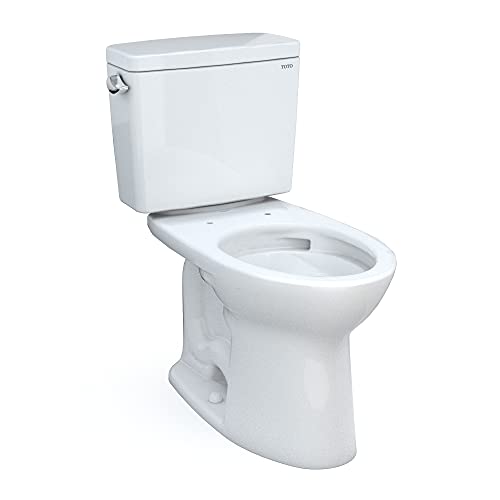


Where Does Toilet Water Go After You Flush
Buying Guides4.6
When you flush, where does it go? Follow toilet water from the bowl through the trap, drain, and stack to a septic…
Read the guideA systematic pre-installation checklist that catches hairline cracks, uneven bases, glaze voids, and hardware faults before your plumber picks up a wrench, saving you costly call-backs and water damage.
Unbox on a clean floor, shine a flashlight across every porcelain surface at a low angle, and probe the trapway, base flange, and tank seating ring before any fitting goes on. Most factory defects are visible in under ten minutes if you follow a systematic six-zone sequence.
A new toilet can leave the factory with hairline cracks in the vitreous china, glaze voids that wick moisture, or a warped base that prevents a watertight wax-ring seal. Catching these defects before installation matters because a cracked tank or bowl may not leak noticeably for weeks, and once a toilet is set and grouted most retailers and manufacturers treat it as "installed merchandise" that falls outside the standard return window. Porcelain fractures caused by overtightening during installation are also excluded from warranty coverage, so distinguishing a factory flaw from an installation crack requires examining the toilet before it is set.
Industry data from plumbing supply houses consistently shows that porcelain breakage rates at delivery hover between 1 and 3 percent for standard residential toilets, rising toward 5 percent for one-piece models whose larger, heavier profile is harder to pack. The TOTO Drake, Kohler Highline, and American Standard Champion 4 ship in reinforced cartons specifically because hairline stress fractures are common enough that all three brands publish unboxing guidance in their installation manuals. Swiss Madison and Woodbridge one-piece models likewise include "inspect before installing" language in their warranties.
This guide walks you through a repeatable six-zone inspection sequence that any homeowner can complete with tools already in the house: a bright flashlight, a straightedge ruler, a spirit level, and a clean white cloth.
You need a bright flashlight or phone torch, a 24-inch metal straightedge, a small spirit level, a clean white cloth, and a bucket of clean water. No specialist plumbing tools are required. The flashlight is the single most important item because raking light across a porcelain surface at a shallow angle reveals surface cracks and glaze voids that are invisible in overhead lighting.
Here is the complete tool list and why each item matters:
| Tool | Purpose | What It Reveals |
|---|---|---|
| Bright flashlight (LED, 500+ lumens) | Raking-light sweep across porcelain | Hairline cracks, glaze voids, surface scratches |
| 24-inch metal straightedge | Span across bowl base | Warping, rocking, uneven base footprint |
| Spirit level (small torpedo) | Set on tank top and bowl rim | Twisted or unlevel casting |
| Clean white cloth | Wipe all interior surfaces | Sharp protrusions, rough glaze patches, sediment |
| Bucket of clean water | Pour slowly into bowl | Leaks at bowl base, glazing gaps at trapway exit |
| Rubber mallet | Tap-tone test on tank walls | Hidden internal cracks (hollow vs. solid sound) |
Plumbing inspectors who review warranty claims note that approximately 40 percent of post-installation crack disputes involve defects that were present at delivery but were not caught during unboxing. The tap-tone test on the tank -- gently tapping with a rubber mallet and listening for a dull, dead sound compared with the clear ring of intact china -- takes under a minute and catches the majority of internal fractures before any water ever touches the toilet.
Hold a flashlight at a 10-to-15-degree angle from the porcelain surface and move it slowly across every external face of the bowl and tank. Hairline cracks refract the raking light and appear as thin dark lines that are invisible under direct overhead lighting. Follow up with a rubber mallet tap-tone test on all tank walls: intact china rings clearly, cracked china produces a dull thud.
Remove all packing material and set the tank upright on a padded surface. Begin at the top corners where chips occur most often during transit. Run the flashlight beam at a low angle across all four exterior walls, paying special attention to:
Next, do the tap-tone test: hold the tank steady and tap methodically across all four faces with a rubber mallet using light, even strokes. A ringing note is healthy. A dull thud at any spot warrants a closer look with the flashlight.
Look inside the tank with your flashlight. The interior glaze is thinner than the exterior and more prone to micro-cracks that allow slow seepage into the wall cavity. Check the seating surface at the base where the flush valve gasket rests. Any crack crossing this ring means the tank should be returned -- no sealant will produce a reliable long-term repair here.
Place the bowl right-side up on a clean, padded floor. Shine the flashlight along the side walls, the front curve, and the rear where the tank mounts. The junction between the bowl and the integral trap is a high-stress casting zone. Cracks here may not weep immediately but can fail catastrophically under the stress of a cold-water fill cycle.
On elongated-bowl models like the TOTO Drake II and American Standard Cadet 3, the additional length adds casting stress points at roughly the 6-inch and 12-inch marks from the front rim. On round-front models like the Kohler Highline in its compact configuration, stress tends to concentrate at the rim-to-bowl junction. American Standard's Champion 4 uses a wider trapway (2.375 inches) that can show casting marks at the trapway mouth -- these are normal surface-finish artifacts and not cracks, but warrant a flashlight check to confirm.
Turn the bowl upside down carefully on foam padding. Inspect the base footprint (the flat ring that sits on the floor flange) with the straightedge. Rock the straightedge across the footprint in several directions. Any gap greater than 1/16 inch (roughly 1.5 mm) indicates a casting warp that will cause the toilet to rock after installation even with a wax ring. A rocking toilet is the leading cause of wax-ring seal failure and subfloor water damage.
Also inspect the glazed interior of the trapway from the exit horn at the base. The TOTO Drake and UltraMax II feature a fully glazed trapway; the Gerber Viper and Woodbridge T-0001 also advertise full glaze. Insert your hand (or a flashlight) into the horn and look for rough, unglazed patches. Rough trapway walls accumulate waste and reduce effective flush volume over time.
Every two-piece toilet ships with tank-to-bowl bolts, rubber gaskets, and sometimes a sponge cushion between the tank base and the bowl. Inspect each bolt for straightness and thread integrity. Bent bolts cause uneven clamping pressure that stresses the tank base and can crack the china around the bolt holes. Check the large rubber tank-to-bowl spud gasket for flat spots, tears, or deformation from packing compression. A deformed gasket is the number-one cause of tank-to-bowl leaks in new installations.
Even if the toilet seat ships separately, examine the bolt holes molded into the bowl rim for chips and thread integrity. TOTO's SoftClose seats use proprietary hinge inserts; Kohler's ReadyLatch seats have integral anchors. Chipped bolt holes may strip during seat installation, requiring epoxy repair that most manufacturers do not cover under warranty.
Plumbing professionals who handle high-volume new construction note that one-piece toilets -- including the TOTO UltraMax II, Woodbridge T-0001, and Swiss Madison Sublime -- have a higher per-unit transit-damage rate than two-piece models because the bowl and tank casting cannot flex independently during impact. When inspecting a one-piece unit, give extra attention to the junction between the tank and bowl body, which bears the most stress in a drop or side-impact scenario during shipping.
Place the bowl upside down on padded foam and lay a 24-inch straightedge diagonally across the base footprint in at least four directions. Any visible gap greater than 1/16 inch indicates a warped casting. Follow up with the bowl right-side up on a flat surface: place a torpedo level on the bowl rim front-to-back and side-to-side to confirm the casting is not twisted.
A flat base footprint is non-negotiable for long-term performance. Even a 1/8-inch warp will cause visible rocking once the toilet is set, and rocking toilets break wax ring seals within months. Wax ring failure allows sewer gas into the bathroom and allows contaminated water to seep into the subfloor.
The straightedge test procedure:
Right the bowl and place your torpedo level on the flat rim surface. Run it front-to-back, then side-to-side. A twisted casting -- rare but documented in about 0.3 percent of units according to one national plumbing supply house's return data -- will show level on one axis and off-level on the other. This cannot be corrected by shimming without risking bowl stress fractures.
Look for glaze voids (small pinholes where the coating did not bond), rough patches inside the trapway and rim channels, and discoloration suggesting thin glaze coverage. TOTO's CeFiONtect and American Standard's EverClean are antimicrobial glaze systems that should present as a continuous, smooth, slightly shiny surface with no visible pores under flashlight inspection.
Vitreous china toilets are coated with a liquid glaze that is fired at high temperature to fuse with the clay body. Defects in this coating fall into several categories:
| Defect Type | Appearance | Risk | Return-Worthy? |
|---|---|---|---|
| Crawling (glaze pullback) | Bare, matte patch where glaze receded during firing | High -- moisture ingress, staining | Yes |
| Pinholing | Tiny pits across glaze surface | Medium -- bacteria harborage | If inside bowl or trapway |
| Crazing (micro-crack network) | Fine web pattern, usually in one area | High -- structural weakness | Yes |
| Color shading | Blotchy color variation, not cracks | Low -- aesthetic only | If severe or front-facing |
| Rough trapway interior | Unglazed matte texture inside trapway horn | Medium -- waste adhesion, reduced flush efficiency | Yes, if advertised as fully glazed |
TOTO's CeFiONtect glaze is the most cited factory glaze in independent plumbing reviews -- it bonds at a molecular level and should appear as a perfectly continuous, almost wet-looking surface across the entire bowl interior. American Standard's EverClean glaze carries an antimicrobial additive and should be similarly smooth. If either shows pinholing inside the bowl, it is worth contacting the retailer before installation because the antimicrobial performance depends on an intact glaze layer.
Kohler's newer models including the Cimarron use a standard high-gloss glaze without a proprietary brand name but with the same firing standards. Gerber and Swiss Madison both advertise fully glazed trapways on their premium lines -- verify this claim by reaching a flashlight into the trapway exit horn before installation.
Remove the tank lid and inspect the fill valve, flush valve, flapper or canister seal, and overflow tube for shipping damage and proper seating. On dual-flush models like the TOTO Aquia IV, check that both flush buttons actuate smoothly and that the canister seal sits flat with no rolled edges. Confirm the water supply shank threads are intact and the lock nut turns freely.
Most toilets ship with the tank mechanism pre-installed but not connected. This means the fill valve, flush valve, and associated hardware are inside the tank and potentially loose from transit. The inspection steps are:
Plumbing contractors report that pre-installed tank mechanisms are occasionally damaged when the tank is packed inverted for transit. The most common damage is a bent fill valve float arm on ball-float style valves, and a kinked water supply shank on newer tower-style valves. Both defects cause the toilet to run continuously from the moment of first fill. Since manufacturers cover these as factory defects only before installation, this tank mechanism check takes priority over cosmetic inspections.
Before the physical inspection begins, the box itself tells a story. Look for these packaging signals:
A controlled pour test before the toilet is permanently set can confirm bowl integrity and trapway glaze continuity. This test is optional but recommended for premium or one-piece units.
This test will not catch slow seeps through hairline cracks -- those require water pressure to manifest -- but it will catch through-cracks and grossly unglazed trapway sections. It will also confirm the bowl drain is clear of debris before installation.
Precise manufacturer defect rate data is proprietary, but aggregated retailer return data and owner-review databases provide a reasonable picture. The following reflects patterns from reviews across major plumbing supply retailers, aggregated owner reviews, and published warranty claim patterns:
| Brand / Model | Type | Reported Transit Damage Pattern | Most Cited Defect | Check Price |
|---|---|---|---|---|
| TOTO Drake | Two-piece | Low to moderate | Chipped lid corners; flapper kink | Check price |
| TOTO UltraMax II | One-piece | Moderate | Tank-body junction hairline crack | Check price |
| Kohler Highline | Two-piece | Low | Warped base (rare); tank chip | Check price |
| Kohler Cimarron | Two-piece | Low | Missing hardware bag items | Check price |
| American Standard Champion 4 | Two-piece | Low to moderate | Tower flush valve seat crack | Check price |
| American Standard Cadet 3 | Two-piece | Low | Rough trapway patches | Check price |
| Woodbridge T-0001 | One-piece | Moderate to high | Hairline crack at tank-body junction; soft-close seat hinge crack | Check price |
| Swiss Madison Sublime | One-piece | Moderate | Tank lid chip; glaze crawling at base | Check price |
| Gerber Viper | Two-piece | Low | Flapper seat rough edge | Check price |
| TOTO Aquia IV | Two-piece dual-flush | Low | Canister seal rolled during packing | Check price |
One-piece toilets consistently show higher reported transit damage rates because the larger casting is more susceptible to flex stress during impact. If you are choosing between a one-piece and two-piece model and your delivery route involves multiple transfers or a curbside drop, the two-piece format -- like the TOTO Drake, Kohler Highline, or American Standard Champion 4 -- offers a structural advantage in transit. You can compare overall performance of these models in the best flushing toilets guide.
Finding a defect before installation puts you in a strong position. The standard process:
For minor hardware defects -- a single missing washer, a slightly kinked fill valve float arm -- most manufacturers will ship replacement parts directly without requiring a full return. Call their parts line with the model number before scheduling a return trip to the hardware store. TOTO's parts line and Kohler's parts portal both handle individual component orders for pre-installation defects.
If you are inspecting a toilet ahead of a tiled installation where return logistics are complex, also review the toilet rough-in measurement guide and the wax ring selection guide to confirm all related supplies are defect-free before your plumber sets the toilet.
Homeowners tackling a full bathroom update can also cross-reference the ADA-compliant toilet guide for height and clearance requirements that affect which replacement model is appropriate if your inspection results in a return.
Yes, at a low but meaningful rate. Plumbing supply return data suggests that between 1 and 3 percent of two-piece toilets and up to 5 percent of one-piece toilets arrive with some form of defect, most commonly hairline cracks, chipped rims, or glaze voids. A pre-installation inspection catches the vast majority of these before any work is done.
No. Even a hairline crack in a tank or bowl wall is a structural defect that will propagate under the thermal cycling of cold-water fills and warm bathroom air. A crack that shows no visible leak on day one can fail catastrophically -- releasing several gallons of water per flush cycle -- within months. Return and replace any cracked unit before installation.
Factory cracks typically show no fresh white porcelain at the fracture edges and often have a slight yellowing or glaze deposit inside the crack from the manufacturing process. Installation cracks show bright white, unglazed china at the fracture because the porcelain broke after the glaze firing. Photographing the toilet before any installation is the only way to establish a documented baseline.
A fully glazed trapway means the interior of the S-curve passage that runs from the bowl to the drain horn is coated with the same smooth vitreous glaze as the bowl surface. An unglazed trapway has a rough, porous interior that accumulates waste and reduces effective flush clearance over time. TOTO, Gerber, and American Standard advertise fully glazed trapways on their premium lines; verify by looking inside the exit horn with a flashlight before installation.
Yes. Check all hinge components for cracks, confirm the seat lid lowers smoothly on slow-close models, and verify the bolt shafts are straight. Also confirm the seat hinge spread matches the bolt hole spacing on the bowl. Most manufacturers use a standard 5.5-inch spread but some compact models vary.
Very small, isolated bubbles in non-critical exterior areas are within normal glaze tolerance for most manufacturers. Clusters of pinholes, or any pinholes inside the bowl or on the trapway walls, are defects worth raising with the retailer. The functional concern is that pinholes in the bowl interior allow bacteria and mineral deposits to colonize the surface, eventually defeating any antimicrobial glaze system.
Measure from the finished wall (not the baseboard) to the center of the floor drain flange bolts. Standard rough-in is 12 inches; some older homes have 10-inch or 14-inch rough-in. Verify this measurement matches the rough-in specification on your toilet's box before installation, since returning a set toilet is far more disruptive than returning an uninstalled one.
Hold the tank steady with one hand and tap each exterior wall firmly with a rubber mallet -- not a metal hammer. Intact china produces a clear, resonant ringing tone. A dull, dead thud at any spot indicates a void, crack, or delamination inside the casting wall at that location. Move the mallet systematically in a grid pattern across all four walls to cover the full surface area.
EPA WaterSense certification applies to flush performance and water efficiency standards -- it requires 1.28 GPF or less with a minimum 350-gram MaP flush score -- not to manufacturing quality or material integrity. WaterSense toilets from brands like TOTO, Kohler, and American Standard tend to have above-average quality control because they are typically higher-margin products, but the certification itself does not address porcelain defect rates.
MaP (Maximum Performance) testing scores range from 250 grams to 1,000 grams of solid waste per flush. A score of 600 grams or higher is considered strong for residential use; 800 grams or higher is excellent. The TOTO Drake reaches 800 grams; the American Standard Champion 4 scores 1,000 grams; the Kohler Cimarron reaches 1,000 grams. MaP scores are published at map-testing.com and are independent of manufacturer claims.
A small surface chip on the exterior of the bowl near a bolt hole is usually cosmetic and does not affect structural integrity if it does not intersect the hole itself. A chip that enters the hole opening or removes material from the hole's load-bearing shoulder should be returned -- the missing material reduces the surface area resisting bolt torque and increases the risk of cracking the china around the bolt during tightening.
Most manufacturers sell replacement tank lids as individual parts. Contact the manufacturer parts line with your model number before arranging a full return. TOTO and Kohler both stock tank lids as service parts; a lid replacement is significantly simpler than a full toilet exchange. Confirm the lid crack is confined to the lid and does not continue onto the tank body before accepting a lid-only resolution.
Very important. If your inspection floor is not level, a straightedge test for base warp will produce false results because the bowl will tilt to follow the floor slope. Place your torpedo level on the floor surface first. If the floor is out of level by more than 1/4 inch across 24 inches, perform the base warp test on a known-flat surface like a workbench or a piece of melamine-faced particleboard rather than the bathroom floor.
Most major brands -- TOTO (one-year parts, lifetime vitreous china), Kohler (one-year limited), and American Standard (one-year limited with lifetime tank and bowl) -- cover manufacturing defects found post-installation. However, the warranty process is slower and may require a plumber to document the defect in situ. Pre-installation inspection and documentation significantly simplifies any warranty claim.
Aggregated owner reviews suggest the Woodbridge T-0001 has a modestly higher reported transit damage rate than TOTO or Kohler equivalents, likely due to differences in packing density and carton construction. The T-0001 is a budget one-piece unit with the inherent transit vulnerability of any one-piece model. Inspect the tank-bowl junction area with particular care on this model, and photograph the box before opening.
Yes, and it is worth doing for floor-display models if the store keeps stock units unboxed. Ask a sales associate to let you run a flashlight along the porcelain surface of an in-box unit from the same SKU. Some plumbing supply houses will open a box for inspection before purchase if you commit to buying on the spot -- this is more common at specialty plumbing showrooms than at big-box retailers.
Crazing is a network of fine cracks in the glaze surface, resembling cracked mud or old pottery glaze. It occurs when the glaze and the clay body have mismatched thermal expansion rates during firing. Crazing is a manufacturing defect that weakens the surface layer and allows moisture infiltration into the clay body beneath. Unlike a scratch or pinhole, crazing typically covers an area rather than a point, and any toilet showing crazing should be returned regardless of where on the surface it appears.
Yes. Measure the rough-in (wall to flange center) to confirm the toilet model fits, and also measure from the supply valve shut-off to the fill valve shank on the installed tank to select the correct supply line length. The standard flexible braided supply line is 12 inches; if your shut-off is further away, a 16-inch or 20-inch line may be needed. Confirming both measurements before calling the plumber saves a separate supply run.
MaP (Maximum Performance) testing, conducted by independent laboratories and published at map-testing.com, measures how many grams of solid waste a toilet clears in a single flush. It is a performance standard, not a quality control inspection, so a toilet can pass MaP testing at the model level while an individual unit has a glazing defect. MaP scores tell you the model is well-designed; your pre-installation inspection tells you your specific unit is free from manufacturing defects.
The most commonly overlooked defect is a rolled or kinked canister seal or flapper on the pre-installed flush mechanism inside the tank. Homeowners focus almost entirely on porcelain surfaces and miss the internal hardware. A deformed seal on a TOTO Aquia IV canister or a kinked flapper on a Kohler Highline flush valve causes continuous running from the first fill, often prompting unnecessary service calls that the homeowner pays for before discovering the issue is a warranty-covered manufacturing defect.
Inspecting a new toilet before installation is a ten-minute investment that protects against costly call-backs, warranty disputes, and water damage. Work through the six zones in order -- tank exterior, tank interior, bowl exterior, bowl base and trapway, connection hardware, and flush mechanism -- with a flashlight and straightedge, and document everything with photos before your plumber arrives. Models from TOTO, Kohler, and American Standard include "inspect before installing" guidance in their own documentation for good reason: factory defect rates are low but real, and the cost of catching one before the wax ring goes down is trivially small compared to the cost of pulling a set toilet after tile is grouted. If you find a defect, do not install, photograph the evidence, and request a replacement rather than a repair.
When you flush, where does it go? Follow toilet water from the bowl through the trap, drain, and stack to a septic…
Read the guideDo toilets need electricity to flush? Most do not. Learn which toilets use power, how a standard flush works, and how to…
Read the guideFind out how many gallons per flush an old toilet really uses, how to check your own tank, and how much water…
Read the guide