
Where Does Toilet Water Go After You Flush
Buying Guides4.6
When you flush, where does it go? Follow toilet water from the bowl through the trap, drain, and stack to a septic…
Read the guideA thorough bathroom inspection goes far beyond whether the toilet flushes. Inspectors evaluate plumbing, ventilation, electrical safety, water damage, and fixture condition. This guide shows you exactly what they look for so you can spot problems before an offer or listing.
A standard bathroom inspection covers 40 to 60 individual checkpoints across plumbing, ventilation, electrical, structure, and fixtures. Inspectors prioritize active leaks, improper venting, GFCI protection, and mold indicators. Most issues are minor; roughly 12 percent of inspections flag a plumbing defect serious enough to negotiate repair or credit.
A licensed home inspector evaluates the bathroom's plumbing supply and drain lines, toilet function and stability, sink and tub/shower operation, exhaust ventilation, GFCI electrical protection, caulking and grout integrity, and visible signs of water intrusion or mold. The inspection is visual and functional: the inspector operates every fixture but does not open walls or pressure-test pipes.
Inspectors follow ASHI (American Society of Home Inspectors) or InterNACHI standards of practice, both of which mandate checking all accessible plumbing fixtures and reporting evidence of leaks, improper venting, or safety hazards at electrical outlets near water sources.
Bathroom inspections matter disproportionately in real estate transactions. According to the National Association of Realtors, plumbing problems are among the top five defects discovered during home inspections, and the bathroom is the most plumbing-dense room in any home. A single slow leak behind a toilet can silently rot subfloor material for years before it surfaces in an inspection report.
The checklist below mirrors the sequence most inspectors follow during a standard single-family home inspection. It covers toilets, sinks, tubs, showers, exhaust fans, electrical outlets, and structural elements like floors, walls, and ceilings. Use it as a pre-listing audit or as a buyer's companion when reviewing your inspector's written report.
| Inspection Category | Common Issues Found | Severity Level | Typical Repair Cost Range |
|---|---|---|---|
| Toilet function and sealing | Phantom flush, wobble, wax ring leak | High | $80 to $350 |
| Exhaust ventilation | Duct terminates in attic, no fan | High | $150 to $500 |
| GFCI protection | Missing GFCI within 6 ft of sink | High (safety) | $80 to $200 |
| Caulking and grout | Missing caulk at tub/shower seam | Medium | $50 to $250 |
| Subfloor around toilet | Soft or spongy floor material | High | $400 to $2,500 |
| Sink drain and P-trap | Slow drain, improper trap depth | Medium | $60 to $200 |
| Shower pan / tub surround | Grout cracks, failed waterproofing | Medium to High | $200 to $3,000 |
| Water pressure at fixtures | Low pressure, inconsistent hot water | Medium | $100 to $800 |
Inspectors test every toilet by flushing it at least once, watching for proper bowl clearing, checking for phantom flush (a sign of a worn flapper), and pressing against the base to detect movement or rocking. A stable toilet sits flush against a sound subfloor with no side-to-side play; any wobble suggests the wax ring seal may be compromised or the closet flange has corroded.
Inspectors also verify the shut-off valve operates, that no supply line is corroded or braided-hose past its rated lifespan (typically 10 years), and that water does not drip from the tank-to-bowl connection or from the base after flushing.
The toilet checklist breaks into three zones:
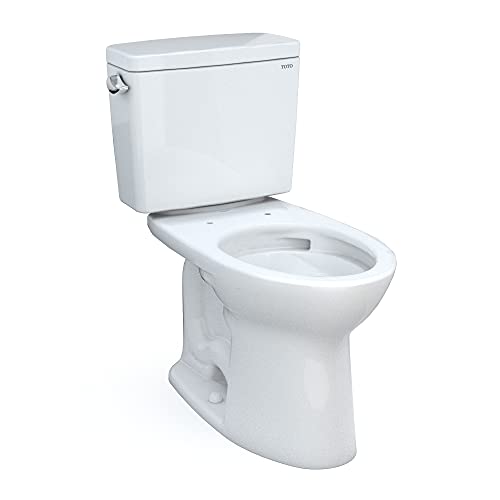
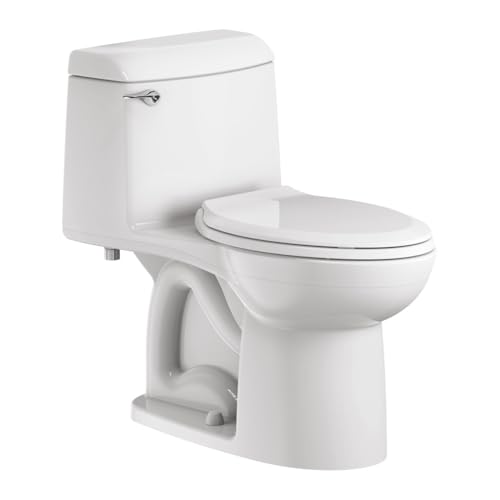
While inspectors do not score a toilet's flush performance to MaP standards, buyers should know that modern EPA WaterSense-certified toilets use 1.28 GPF or less. Older 3.5 GPF or 5 GPF toilets found in homes built before 1992 are legal to leave but add significant water cost. High-performers like the TOTO Drake II (1.28 GPF, MaP Premium at 1,000 grams) and the American Standard Champion 4 (1.6 GPF, MaP score 1,000 grams) demonstrate that flushing power and efficiency are not mutually exclusive. See our best flushing toilets guide for scored comparisons.
A toilet that runs continuously is the single most common plumbing defect reported in home inspections. It costs almost nothing to fix with a $15 flapper kit, but it inflates water bills by $70 to $200 per year and signals to buyers that routine maintenance has been deferred. Sellers should replace every flapper and fill valve in the home before listing.
Inspectors check every water-consuming fixture: sinks (hot and cold supply, drain speed, P-trap condition), bathtubs (overflow plate, drain stopper, tub surround waterproofing), and showers (pan integrity, door seals, pressure balance valve). They also look at visible drain cleanouts, note any evidence of prior leak repairs on supply lines, and check under vanities for active drips or water staining.
Water pressure is tested at each fixture. Most inspectors flag anything below 40 psi or above 80 psi at the fixture as noteworthy, since low pressure suggests a partially closed shutoff or supply line scale buildup, while excessive pressure can damage fixture internals over time.
Every bathroom outlet within six feet of a water source must be protected by a GFCI (Ground Fault Circuit Interrupter) device under the National Electrical Code. Inspectors test every GFCI outlet and circuit breaker with a plug-in tester and flag any that do not trip within the required time. Missing GFCI protection is one of the most commonly cited safety defects in home inspections.
Inspectors also check that light fixtures rated for damp or wet locations are used above or inside the shower enclosure, that exhaust fan wiring is enclosed and not spliced with exposed wire nuts, and that no extension cords or multi-outlet strips are in permanent use.
Inspectors look for visual indicators of water intrusion: staining on ceilings (from a bathroom above), dark discoloration at the base of walls, bubbled or peeling paint, warped baseboards, and soft or spongy flooring. Bathrooms directly over finished living space are inspected from below whenever access exists, because slow toilet wax ring leaks almost always affect the ceiling below before they surface as visible floor damage.
Mold identification is outside the standard inspector's scope. Inspectors report "evidence of possible mold" or "microbial growth" and recommend specialist testing; they do not identify species. However, any black or green growth on grout, caulk, or drywall near water fixtures warrants further evaluation before closing.
Subfloor rot around the toilet base is consistently the most expensive bathroom defect discovered in inspections, yet it is almost always caused by a $8 part: the wax ring. A wax ring that has compressed, dried, or shifted because the toilet rocked for years without being secured allows sewer gas and water to escape at the floor level on every flush. Pre-listing, any toilet that rocks even slightly should have the wax ring replaced and the closet flange inspected. Total cost: under $150 with a plumber. Discovered by a buyer's inspector: leverage for a $2,000 credit.
The International Residential Code (IRC) requires all bathrooms without an openable exterior window of at least 3 square feet to have a mechanical exhaust fan ventilating directly to the exterior. Fan capacity must be at least 50 CFM for intermittent use or 20 CFM for continuous operation per HVI (Home Ventilating Institute) minimums. Inspectors flag fans that terminate in the attic as a defect, because attic-dumped bathroom exhaust causes moisture condensation on rafters and can lead to mold or structural deterioration.
Beyond plumbing and safety systems, a thorough inspection documents fixture condition that affects livability and may affect negotiating position:
Understanding inspector scope prevents misaligned expectations:
Sellers should complete a self-audit using the same checklist an inspector will use: replace worn flappers and fill valves, re-caulk any gaps at the tub/wall seam and around the toilet base, anchor any loose toilet (re-set wax ring if it rocks), clean exhaust fan grilles and test fan operation, and verify all GFCI outlets test and reset correctly. Most of these items take under two hours and cost under $100 total in parts.
Addressing items proactively prevents a buyer's inspector from generating a defect list that triggers a renegotiation or repair request. Sellers who disclose proactive repairs with receipts often gain credibility with buyers and avoid post-inspection price reductions.
Rank these by cost-to-fix versus negotiating leverage lost if discovered:
If a bathroom inspection reveals an aging toilet with poor flushing, rocking issues, or active leaks, replacement is often more cost-effective than repeated repair. Based on MaP flush-test data and published specifications, these models have documented track records:
| Model | GPF | MaP Score | EPA WaterSense | Trapway Size | Best For | Check Price |
|---|---|---|---|---|---|---|
| TOTO Drake II | 1.28 | 1,000 g (Premium) | Yes | 2-1/8 in fully glazed | Best all-around performance | Check price |
| American Standard Champion 4 | 1.6 | 1,000 g | No (1.6 GPF) | 4 in fully glazed | Maximum clog resistance | Check price |
| Kohler Cimarron | 1.28 | 800 g+ | Yes | 3 in | Mid-budget reliability | Check price |
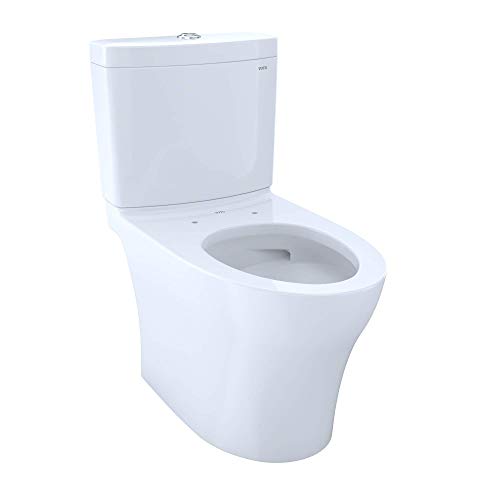
| TOTO Aquia IV | 1.0 / 0.8 | 800 g (flush 1) | Yes | 2-1/8 in glazed | Water conservation | Check price |
| American Standard Cadet 3 | 1.28 | 700 g+ | Yes | 3 in | Budget-friendly WaterSense | Check price |
| Woodbridge T-0001 | 1.28 | 800 g+ | Yes | 3 in | Modern one-piece look | Check price |
MaP scores above 500 grams are considered passing for household use; MaP Premium (1,000 grams) is the highest rating. All EPA WaterSense toilets use 1.28 GPF or less. For detailed flushing analysis, see our guides on TOTO Drake toilet review and American Standard Champion 4 review.
Homes built before specific code milestones carry predictable inspection flags:
| Home Era | Common Bathroom Defects | Primary Concern |
|---|---|---|
| Pre-1978 | Lead paint on window sills, old cast-iron drain lines, polybutylene supply pipes (if replumbed 1978-1995) | Material safety and drain capacity |
| 1978 to 1992 | 3.5 GPF or higher toilets, fiberglass tub degradation, no GFCI protection in older permitted work | Water cost and electrical safety |
| 1993 to 2005 | Missing pressure-balance valve in shower, 1.6 GPF low-profile toilets with poor flushing | Scald safety, flushing performance |
| 2006 to present | Generally code compliant; spot-check exhaust duct routing and GFCI daisy-chaining | Installation quality variations |
If you are evaluating whether a toilet replacement is necessary after an inspection, our when to replace a toilet guide and the complete toilet buying guide walk through decision criteria and sizing considerations by bathroom type.
Inspection reports use standardized severity language. Understanding the terminology helps buyers prioritize repair requests:
Yes. Standard ASHI and InterNACHI inspection practice requires the inspector to operate every toilet at least once, observe the flush cycle, check for phantom running, and press against the base to test stability. If the water to the home is off at the time of inspection, the inspector will note that they could not test the toilets.
The inspector will document "evidence of possible microbial growth" and recommend specialist evaluation. They will not identify the species. Buyers typically hire an environmental hygienist ($200 to $400) to sample and identify the mold before deciding to negotiate remediation costs or exit the contract.
It depends on severity. A toilet that runs briefly for 10 to 15 seconds after each flush is a minor maintenance item. A toilet that runs continuously wastes up to 200 gallons per day per EPA estimates and may indicate a failing fill valve or damaged overflow tube -- reported as a material defect that affects utility costs.
Home inspections do not use a pass/fail system. Inspectors document conditions. A bathroom with multiple defects -- failed GFCI, active leak, non-venting exhaust fan -- generates a detailed defect list that buyers use to negotiate repairs or price reductions. There is no threshold that "fails" a bathroom; the buyer and their agent interpret the findings.
A phantom flush (or ghost flush) is when the toilet refills on its own without being flushed. It is caused by a worn flapper allowing water to slowly leak from tank to bowl until the fill valve triggers. A flapper replacement costs $5 to $15 and takes 10 minutes. Fix it before listing -- it is a very visible and easily avoided defect.
Standard home inspectors do not measure GPF. They assess whether the toilet functions properly, not its efficiency rating. However, the toilet model is sometimes noted in the report. EPA WaterSense certification and MaP testing data are relevant when you choose a replacement, not during the inspection itself.
An inspector typically spends 10 to 20 minutes in each full bathroom during a standard home inspection. A half bath (toilet and sink only) takes 5 to 10 minutes. More time is spent if there are access restrictions, apparent water damage, or complex plumbing configurations.
Yes. Opening cabinet doors under the sink is standard practice. Inspectors look at the P-trap for corrosion or incorrect configuration, check supply shut-off valves for drips, and look at the cabinet floor and back wall for water staining that suggests past or ongoing leak activity.
The closet flange is the fitting that connects the toilet's drain horn to the drain pipe in the floor. If the flange is corroded, cracked, or set too low relative to the finished floor, the toilet cannot seat properly on the wax ring and will rock. Inspectors flag an unstable toilet; a plumber assessing that toilet often finds a failed flange beneath.
Age alone is not a reason to replace a functioning toilet. A toilet with no cracks, stable base, effective flush, and intact tank components can last 50 or more years. However, toilets manufactured before 1992 use 3.5 to 7 GPF versus today's 1.28 GPF WaterSense standard, representing significant annual water cost. Replacement for efficiency, not failure, is a valid economic decision.
EPA WaterSense certification requires 1.28 GPF or less. Some dual-flush models like the TOTO Aquia IV use 1.0 GPF for liquid waste and 0.8 GPF for the reduced cycle. These are among the most water-efficient toilets currently available with MaP test scores above 500 grams, confirming they clear waste adequately despite low water volume.
MaP (Maximum Performance) testing is an independent third-party protocol that measures how many grams of solid waste a toilet can remove in a single flush. It is not part of a home inspection, but it is highly relevant when choosing a replacement toilet after an inspection defect. MaP Premium (1,000 grams) is the highest performance tier. TOTO Drake, Drake II, and UltraMax II all achieve MaP Premium scores.
A non-functioning or absent exhaust fan in a bathroom without an openable exterior window is a material defect under most inspection standards and building codes. Even with a window present, many inspectors note a non-functional fan as a maintenance deficiency because of long-term humidity and mold risk. Replacing a fan costs $60 to $300 depending on whether ductwork changes are needed.
A pressure-balance valve (ASSE 1016 standard) prevents sudden temperature spikes in the shower when a toilet is flushed or another fixture draws cold water. Homes built after 1993 in most jurisdictions require them. Inspectors flag absent anti-scald protection as a safety concern. Replacement requires a licensed plumber and costs $150 to $400 depending on access.
Yes. This checklist mirrors professional inspection protocols and is suitable for a pre-listing self-audit or a buyer's pre-offer walkthrough. However, a licensed home inspector uses calibrated electrical testers, moisture meters, and professional-grade assessment documentation. Self-inspections are a starting point, not a substitute for a licensed professional evaluation.
TOTO, Kohler, American Standard, Woodbridge, Swiss Madison, and Gerber all manufacture toilets with robust warranty support and replacement parts availability. TOTO's Drake and UltraMax II lines are particularly noted for minimal maintenance callbacks in owner reviews aggregated across major retail platforms. Long-term parts availability matters because it affects how repairable a toilet is when an inspector flags a component issue.
Press the "Test" button on the GFCI outlet. The outlet should de-energize. Plug in a lamp or night light to confirm. Then press "Reset" to restore power. If the outlet does not trip when tested, or if pressing Reset does not restore power, the GFCI is faulty and must be replaced before the inspection. Cost: $15 to $25 for a new outlet, 20 minutes to install.
Subfloor rot around the toilet base or beneath the shower pan consistently generates the highest repair costs, ranging from $400 for a small localized area to $2,500 or more when rot has spread under adjacent tiles. Second most expensive is a failed shower pan requiring retiling and waterproof membrane replacement, often $1,500 to $3,000 depending on tile material and labor rates in the region.
Yes, whenever possible. Walking through the bathroom with the inspector while they explain each finding gives context that written reports cannot fully convey. Buyers who attend often understand which defects are genuinely concerning versus cosmetic, which directly affects the quality of their repair request negotiations.
Cracked or missing grout in shower walls is noted as a defect when it represents an active water infiltration risk -- particularly on horizontal joints where water sits and on joints adjacent to the tub/wall seam. Hairline grout cracks in non-wet areas are typically flagged as maintenance items. Inspectors distinguish between cosmetic grout aging and structurally compromised grout that allows water behind the tile.
A bathroom inspection examines roughly 40 to 60 checkpoints spanning plumbing, electrical safety, ventilation, moisture, and fixture function. The four highest-priority items inspectors and buyers should focus on are: toilet stability and wax ring integrity, GFCI protection at all outlets near water, functional exhaust ventilation vented to the exterior, and caulk/grout integrity at tub and shower seams. Addressing these before a listing or negotiating repair credits for them as a buyer will have the greatest impact on deal outcomes. For fixture replacement decisions prompted by an inspection, compare EPA WaterSense models with published MaP scores to ensure water efficiency does not compromise flushing performance.
When you flush, where does it go? Follow toilet water from the bowl through the trap, drain, and stack to a septic…
Read the guideDo toilets need electricity to flush? Most do not. Learn which toilets use power, how a standard flush works, and how to…
Read the guideFind out how many gallons per flush an old toilet really uses, how to check your own tank, and how much water…
Read the guide