
Why Toilet Trapways Are Curved Like an S
Toilets4.6
Learn why toilet trapways curve like an S, how each bend blocks sewer gas, and what the shape means for clogs and…
Read the guideConstant clogs, rising water bills, hairline cracks, and outdated flush technology are all signals your toilet has passed its useful life. Here is exactly what to look for -- and what to do next.
Replace your toilet when it needs repairs more than twice a year, uses 3.5 GPF or more, shows porcelain cracks, rocks on the floor, or chronically clogs. Most toilets last 25 to 50 years structurally, but their flush technology becomes obsolete and costly far sooner -- typically by the 15 to 20-year mark.
A toilet is one of those fixtures you stop noticing until it starts failing you. Then suddenly it demands your attention -- running all night, rocking toward the wall, or producing a flood at the worst moment. The question is not always obvious: should you repair it one more time, or is this the moment to replace it entirely?
This guide covers the 8 most reliable signals that replacement is the smarter call, along with hard data on water savings, flush performance benchmarks from MaP testing, and a look at the modern models that have made older toilets look wasteful by comparison. If you are already leaning toward an upgrade, our full roundup of the best flushing toilets breaks down top picks by flush power, bowl shape, and budget.
The porcelain body of a toilet can last 50 years or longer without structural failure. However, the internal components -- flappers, fill valves, flush valves, and wax seals -- typically require replacement every 5 to 10 years. Most plumbers recommend evaluating replacement when a toilet is 15 to 25 years old, because by that point it is likely using 3.5 to 7 gallons per flush and its internal parts are cycling through repairs frequently enough that the cumulative cost exceeds replacement value.
The porcelain bowl and tank can technically outlast almost everything else in your bathroom. The 1978 toilet in your grandmother's house might still flush -- but it is probably burning through 5 to 7 gallons every time someone pulls the handle. By contrast, an EPA WaterSense-certified toilet uses 1.28 GPF or less. At 5 flushes per person per day in a household of four, that gap adds up to roughly 28,000 gallons per year in wasted water.
Structural longevity and functional relevance are two very different things. The eight signs below help you figure out which category your toilet falls into.
A toilet that clogs more than once per month under normal household use is considered chronically clogging by plumbing industry standards. If the same toilet required plunging more than 10 to 12 times in a year, that frequency signals a design limitation -- typically a small trapway or inadequate flush volume -- rather than a user behavior issue. Replacing with a model rated 800 grams or higher on the MaP flush test resolves the problem in the majority of cases.
MaP (Maximum Performance) flush testing is the most objective measure available for toilet clog resistance. Toilets are tested for how many grams of solid waste they can remove in a single flush. A score of 500 grams meets the minimum standard. A score of 1000 grams is the highest possible rating and is awarded to models that flush the full 1000-gram payload in a single flush without issue.
| MaP Score | Performance Level | Suitable For | Example Models |
|---|---|---|---|
| Below 500g | Poor | Nobody -- replace | Most pre-2000 low-flow models |
| 500 to 599g | Adequate | Light household use | Some entry-level fixtures |
| 600 to 799g | Good | Average household | Kohler Highline |
| 800 to 999g | Very Good | Larger families | American Standard Cadet 3 |
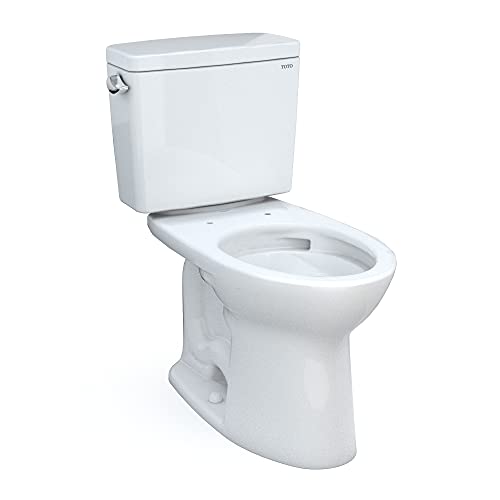
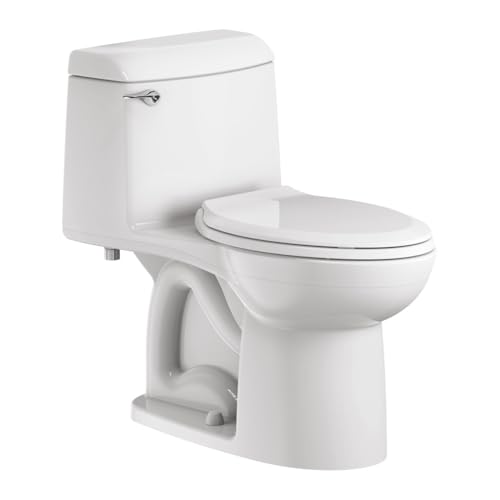
| 1000g (Max) | Excellent | All households | TOTO Drake, American Standard Champion 4, Gerber Viper |
If your toilet consistently fails to clear waste in a single flush and it predates 2005, it almost certainly scores below 600 grams on the MaP scale. Modern MaP-1000 models like the TOTO Drake and American Standard Champion 4 have fully solved this problem at a cost well under the annual plunging inconvenience of a chronically clogged unit.
Published plumbing industry guidance from organizations including the Plumbing-Heating-Cooling Contractors Association consistently identifies recurrent clogging as a top trigger for toilet replacement. A trapway diameter of 2 inches or less is the main culprit in older designs. Nearly all post-2010 MaP-rated models use a 2.125-inch or larger fully glazed trapway that dramatically reduces blockage risk without any change in user behavior.
The average cost to replace a toilet flapper is $10 to $30 in parts. A fill valve replacement runs $20 to $50 in parts. If you are calling a plumber for these repairs, labor adds $75 to $150 per visit. Two plumber visits per year for toilet repairs easily totals $200 to $400 annually -- and a quality replacement toilet with installation typically runs $300 to $700 all-in. The repair-versus-replace math tips toward replacement after two plumber visits within 12 months.
Internal toilet components have finite lifespans. Flappers made of rubber degrade from chlorine in municipal water and typically fail every 3 to 5 years. Fill valves wear out every 7 to 10 years. Flush valve seats develop mineral scale pitting that prevents a reliable seal. These are all normal -- in a toilet that is otherwise performing well.
The warning sign is when the same toilet needs multiple different repairs in a short window. A flapper replaced in January, a fill valve in April, and a running toilet again in September suggests the entire unit is aging out simultaneously. At that point you are funding a series of temporary fixes in a 20-year-old toilet that still uses 3.5 GPF. The numbers rarely favor continued repair. See our guide on toilet repair costs for a full breakdown of what each part typically costs with and without professional labor.
The United States federal standard since 1994 has been a maximum of 1.6 gallons per flush. Toilets manufactured before 1994 commonly used 3.5, 5.0, or even 7.0 gallons per flush. EPA WaterSense certification requires 1.28 GPF or less. At 5 flushes per day per person in a household of four, switching from a 3.5 GPF toilet to a 1.28 GPF WaterSense model saves approximately 22,630 gallons of water per year -- enough to fill a backyard swimming pool.
You can usually find your toilet's flush volume stamped inside the tank lid or on the back of the bowl near the floor. The date of manufacture is often stamped there too. Toilets made before January 1994 are almost certainly using 3.5 GPF or more and are exempt from federal efficiency standards simply because they predate them.
The EPA's WaterSense program, launched in 2006 and modeled on the EnergyStar framework, certifies toilets that use 1.28 GPF or less while meeting strict MaP flush performance thresholds. As of 2026, more than 2,300 toilet models carry the WaterSense label. Many utilities offer rebates of $50 to $150 when homeowners replace pre-1994 toilets with WaterSense-certified models -- meaning the effective out-of-pocket cost of a modern toilet can be substantially lower than the sticker price.
The financial case is straightforward. Water costs an average of $0.005 per gallon in the United States (though this varies significantly by region and is rising in water-stressed areas). Replacing one 3.5 GPF toilet with a 1.28 GPF model in a four-person household saves roughly $113 per year at average rates -- and considerably more in drought-prone states like California, Arizona, or Texas where tiered pricing applies. Over the 20-year life of the new toilet, that is a $2,260 savings on water alone.
Hairline cracks in porcelain may appear superficial but carry meaningful risk. A crack in the toilet bowl below the waterline will leak continuously, causing structural damage to subfloor and framing over time. A crack in the tank can expand suddenly under the water pressure of filling, producing a complete fracture and a rapid release of 1 to 3 gallons onto the floor. Any crack that reaches the waterline or below warrants immediate replacement rather than attempted repair, since porcelain repair compounds do not withstand sustained water pressure reliably.
Hairline cracks are easy to miss. A consistent puddle of water at the base that is not explained by a leaking wax ring or supply line is one of the clearest indicators. Another is a crack you can feel with your fingernail when you run it across the visible exterior of the bowl.
Cracks in the tank above the waterline are lower urgency -- the water line inside is lower than the exterior walls, so a high crack may not cause active leakage. But porcelain is brittle and cracks propagate. A crack that is visible above the waterline today can extend below it within months, especially if the toilet rocks slightly or is subjected to temperature swings. The smart call is replacement before the crack reaches the water.
See our related guide on toilet bowl cracks for a step-by-step assessment of crack location and severity.
A toilet that rocks or wobbles is not just an annoyance. The motion breaks the wax seal between the toilet horn and the flange, allowing sewer gases and waste water to leak beneath the floor. Over time this causes subfloor rot, mold growth, and structural damage that can cost thousands of dollars to remediate. A rocking toilet is always a sign that the wax ring seal has failed or is failing, and if the floor flange itself is cracked or corroded, simple wax ring replacement will not hold -- requiring more extensive repair or replacement.
The toilet base should have zero movement when you sit on it and shift your weight side to side. Any perceptible rocking needs investigation immediately. Common causes include:
Loose closet bolts and a failed wax ring are repairable without replacing the toilet, assuming the flange and subfloor are in good condition. But if inspection reveals a cracked flange or soft, water-damaged subfloor, the repair scope expands significantly. At that point -- especially if the toilet itself is aging -- a full replacement with proper installation makes more financial sense than keeping an old unit on a newly repaired floor. Our guide on fixing a rocking toilet walks through the diagnostic steps.
A running toilet wastes between 20 and 200 gallons of water per day depending on the severity of the leak. Phantom flushing -- where the toilet refills on its own without being used -- is caused by a flapper that does not seat properly, allowing water to seep from the tank into the bowl until the fill valve activates. While a $10 flapper replacement fixes this in most cases, a toilet that has gone through multiple flappers within a few years often has a warped or scaled flush valve seat that no flapper can seal against reliably.
A quick test: add 10 drops of food coloring to the toilet tank and wait 15 minutes without flushing. If color appears in the bowl, you have a flapper leak. A single flapper replacement is always worth trying first -- it is a five-minute repair costing under $15. But if the toilet returns to running or phantom flushing within 3 to 6 months despite new flappers, the problem is the flush valve seat itself, not the flapper.
Resurfacing a flush valve seat is possible but labor-intensive and not always successful on scaled or corroded porcelain. A complete flush valve replacement kit is a better option than resurfacing, and if the toilet is older than 20 years, the cost difference between a flush valve kit and a new toilet entry-level model may be small enough that replacement wins on overall value. Our guide on how to fix a running toilet covers the diagnostic ladder from cheapest to most involved fix.
According to EPA WaterSense program data, household toilet leaks account for nearly 1 trillion gallons of water wasted in U.S. homes each year. A single running toilet can add $70 to $200 to a household's annual water bill. In homes with multiple running toilets -- a common situation in houses where all bathrooms were fitted at the same time -- the combined waste can be staggering. Replacement eliminates the running problem entirely while also cutting flush volume by 50 to 80 percent compared to pre-1994 models.
Hard water deposits calcium carbonate and magnesium scale inside the rim jets and siphon jet of a toilet over time. When scale accumulates enough to partially block these jets, flush power drops noticeably and the bowl no longer cleans itself with each flush. Commercial limescale removers and muriatic acid treatments can dissolve deposits, but heavily scaled jet holes -- particularly those in toilets manufactured before the era of CEFIONTECT and similar glazing technologies -- may be too far gone to restore full flush performance reliably.
Modern toilets from TOTO, Kohler, American Standard, and Woodbridge have addressed this problem through advanced bowl glazings. TOTO's CEFIONTECT is an ion-barrier glaze that creates a surface so smooth that particles cannot adhere to it, dramatically reducing mineral scale and bacterial buildup. American Standard's EverClean surface uses a similar antimicrobial approach. These are not marketing claims -- they reflect measurable differences in surface porosity that have been validated in plumbing research settings.
An older toilet with standard uncoated porcelain will scale progressively in hard-water areas. Once the siphon jet or rim jets are significantly blocked, the toilet's effective MaP performance drops well below its rated specification, producing weaker flushes even though the mechanism itself may still be functioning. Descaling helps temporarily, but the problem returns faster each time. See our related guide on removing calcium buildup from toilets for a full treatment protocol before deciding on replacement.
A toilet manufactured before 1994 is using at least 3.5 gallons per flush by design, predates federal water efficiency standards, and has internal components that have exceeded their expected service life. A toilet manufactured between 1994 and 2005 meets the 1.6 GPF federal standard but likely lacks the flush performance optimization, bowl coating technology, and trapway engineering of post-2010 models. Age alone is not a reason to replace a fully functioning toilet, but age combined with any one of the other seven signs in this guide nearly always tips the math in favor of replacement.
The practical guide by manufacturing era:
Once you have determined that replacement is the right call, narrowing the field comes down to four factors: flush performance (MaP score), water efficiency (GPF), bowl height, and bowl shape. Here is a quick comparison of the most reliable models in 2026:
| Model | Type | GPF | MaP Score | WaterSense | Bowl Coating | Check Price |
|---|---|---|---|---|---|---|
| TOTO Drake (CST744SL) | Two-piece | 1.28 | 1000g | Yes | SanaGloss | Check price |
| TOTO Drake II | Two-piece | 1.28 | 1000g | Yes | CEFIONTECT | Check price |
| TOTO UltraMax II | One-piece | 1.28 | 1000g | Yes | CEFIONTECT | Check price |
| American Standard Champion 4 | Two-piece | 1.6 | 1000g | No | EverClean | Check price |
| American Standard Cadet 3 | Two-piece | 1.28 | 1000g | Yes | EverClean | Check price |
| Kohler Cimarron | Two-piece | 1.28 | 1000g | Yes | Standard | Check price |
| Kohler Highline | Two-piece | 1.28 | 600 to 800g | Yes | Standard | Check price |
| Woodbridge T-0001 | One-piece | 1.28 | 800g | Yes | Standard | Check price |
| Swiss Madison St. Tropez | One-piece | 1.28 | 800g | Yes | Standard | Check price |
| Gerber Viper | Two-piece | 1.28 | 1000g | Yes | Standard | Check price |
The TOTO Drake family consistently tops independent evaluations for combining MaP-1000 flush performance with 1.28 GPF WaterSense efficiency and a CEFIONTECT glazed bowl. For households that have dealt with recurring clogs and scale buildup, the Drake represents the single largest performance upgrade available in a standard two-piece configuration. The American Standard Champion 4 remains the strongest choice if maximum flush power is the priority over absolute water efficiency -- its 4-inch flush valve produces an exceptionally forceful single flush at 1.6 GPF.
For bathroom remodels where aesthetics matter as much as function, the one-piece designs from Woodbridge and Swiss Madison offer clean skirted profiles that are significantly easier to keep clean, though their MaP scores are lower than the TOTO and American Standard flagships. If you are evaluating specific models in depth, our guides on TOTO Drake vs UltraMax II and American Standard Champion 4 cover those decisions in detail.
The total cost of replacing a toilet includes the fixture itself, any needed supply line or shutoff valve replacement, and installation labor if you are not doing it yourself.
| Cost Component | DIY | With Plumber |
|---|---|---|
| Entry-level WaterSense toilet | $120 to $250 | |
| Mid-range toilet (TOTO Drake, Cimarron) | $250 to $500 | |
| Premium / one-piece model | $500 to $900 | |
| Wax ring and closet bolts | $10 to $25 | Included |
| Supply line replacement | $10 to $20 | Included |
| Plumber labor (standard swap) | N/A | $100 to $250 |
| Total range | $150 to $950 | $280 to $1,150 |
A straightforward toilet swap -- same rough-in distance, no subfloor damage, no flange repair needed -- takes a competent DIYer about 1 to 2 hours. Our step-by-step guide on how to replace a toilet covers the full process. The main measurements you need before buying: rough-in distance (almost always 12 inches, occasionally 10 or 14), bowl shape preference (elongated or round), and height (standard 15 inches or comfort height at 17 to 19 inches).
Before purchasing a replacement, confirm your rough-in measurement. This is the distance from the finished wall behind the toilet to the center of the floor drain. The vast majority of U.S. homes have a 12-inch rough-in, but 10-inch and 14-inch rough-ins do exist -- particularly in older homes and some manufactured housing. Buying a 12-inch toilet for a 10-inch rough-in means it will not fit against the wall. Our rough-in measurement guide shows exactly how to take this measurement in under two minutes.
Not every problem is a replacement trigger. Use this framework to decide quickly:
| Problem | Repair First? | Replace If... |
|---|---|---|
| Running toilet / phantom flush | Yes -- try new flapper ($10) | Returns after 2 flappers, or toilet is pre-2000 |
| Clog -- one-time event | Yes -- plunge or snake | Clogs more than once per month |
| Rocking / wobble | Yes -- tighten bolts, replace wax ring | Flange is cracked or subfloor is soft |
| Crack in tank above waterline | Situational -- monitor closely | Crack is visible or growing |
| Crack in bowl at or below waterline | No | Immediately |
| Uses 3.5+ GPF | No -- waste is the problem | Now, for water savings and rebates |
| Multiple problems simultaneously | No | Immediately -- cumulative cost exceeds replacement |
The porcelain body of a toilet can last 50 years or more without structural failure. Internal components like flappers and fill valves need replacement every 5 to 10 years. Plumbers generally recommend evaluating replacement when a toilet reaches 15 to 25 years old, particularly if it predates modern efficiency standards.
It depends on the nature and frequency of repairs. A single flapper replacement in a 20-year-old toilet that otherwise works well is worth doing. But a toilet that needs two or more plumber visits per year, or that uses 3.5 GPF or more, has almost certainly reached the point where replacement delivers better long-term value than continued repair.
Look for 1.28 GPF with an EPA WaterSense certification. This is the most efficient classification for standard gravity-flush toilets and meets the highest flush performance standards when paired with a high MaP score. Toilets using 1.6 GPF are still sold and perform adequately, but 1.28 GPF models have demonstrated they can match or exceed their performance on MaP testing.
MaP (Maximum Performance) testing is an independent evaluation conducted by Veritec Consulting and IAPMO that measures how many grams of solid waste a toilet can remove in a single flush. Scores range from 250g to 1000g. A score of 800g or higher indicates excellent real-world performance. MaP scores are publicly available at map-testing.com and are the most reliable indicator of clog resistance available to consumers.
Hairline cracks above the waterline can sometimes be patched with porcelain repair compound as a temporary measure, but this is not a reliable long-term fix. Any crack at or below the waterline should prompt immediate replacement, as repair compounds do not withstand sustained water pressure and a failure can cause significant water damage to subfloor and framing.
A puddle of water at the base of the toilet after flushing is the most obvious sign. However, slow leaks may only produce staining, soft flooring near the base, or a musty odor from mold growing beneath the floor. A wax ring failure is the most common cause. Our guide on toilet leaking at the base covers the diagnostic steps.
WaterSense certification requires that a toilet achieve a MaP score of at least 350 grams while using 1.28 GPF or less. However, the highest-performing WaterSense models achieve 800 to 1000 grams. The certification is a floor, not a ceiling -- always check the specific MaP score, not just the WaterSense label, when evaluating flush performance.
Standard height toilets measure 15 inches from floor to seat rim. Comfort height (also called ADA height or chair height) toilets measure 17 to 19 inches. Comfort height is easier for taller adults, seniors, and people with knee or hip issues. Children and shorter adults often find standard height more comfortable. Most major replacement purchases in 2026 trend toward comfort height as the default.
Occasional clogs -- once every few months or less -- are a user and usage issue, not necessarily a toilet deficiency. A toilet that clogs monthly or more frequently under typical household use is worth replacing, particularly if it scores below 600 grams on the MaP scale. Switching to a MaP-1000 model typically eliminates chronic clogging entirely.
Yes. Many water utilities offer rebates of $50 to $150 per toilet when homeowners replace pre-1994 fixtures with WaterSense-certified models. The EPA's WaterSense rebate finder (epa.gov/watersense/rebate-finder) allows you to search by zip code for available programs. Some states -- including California, Texas, and New York -- have had especially generous rebate programs for toilet replacement.
A standard toilet swap is considered a beginner-to-intermediate DIY plumbing task. If the rough-in measurement matches the new toilet (almost always 12 inches), the flange is in good condition, and there is no subfloor damage, the job typically takes 1 to 2 hours with basic tools. The hardest part for most people is lifting and maneuvering the old toilet -- two-piece toilets are easier because the tank and bowl can be separated and moved individually.
TOTO, Kohler, American Standard, and Gerber consistently lead independent evaluations for flush reliability, warranty support, and long-term owner satisfaction. TOTO in particular scores highest in aggregated owner reviews for quiet operation, no-clog performance, and bowl cleanliness due to CEFIONTECT glazing. Woodbridge and Swiss Madison offer strong value in one-piece designs at mid-range prices.
Many municipalities accept old toilets at construction debris drop-off sites. Some communities have toilet recycling programs where the porcelain is crushed and used in road base aggregate. Habitat for Humanity ReStore locations sometimes accept functional toilets. Contact your local waste management office for the nearest disposal option. Do not place an intact toilet in standard curbside recycling.
Usually yes, as long as you have sufficient clearance in front of the toilet. An elongated bowl extends approximately 2 inches further from the wall than a round bowl. If your bathroom has a very tight space in front of the toilet -- typically less than 24 inches from the front of the bowl to the opposite wall -- a round bowl replacement may be the better fit.
Measure from the finished wall behind the toilet (not the baseboard) to the center of the two bolts at the base of the toilet. The center of those bolts is directly over the center of the drain. Round to the nearest standard size: 10 inches, 12 inches, or 14 inches. If the toilet has four bolts, use the rear set. The vast majority of U.S. homes measure 12 inches.
One-piece toilets are easier to clean because they have no gap between tank and bowl where mold and mineral scale can accumulate. They are also more compact in overall profile. Two-piece toilets are generally less expensive, easier to transport (the tank and bowl ship and install separately), and simpler to repair because tank components are more accessible and more universally compatible. Both configurations are available in MaP-1000 models.
Phantom flushing is when the fill valve activates on its own without the toilet being used. It is almost always caused by a flapper that is not sealing against the flush valve seat, allowing water to slowly drain from the tank into the bowl until the float drops low enough to trigger refill. Try a new flapper first -- it is a $10 fix. If phantom flushing returns, the flush valve seat itself may be worn or scaled and a flush valve replacement kit is the next step.
Yes, in households with pre-1994 toilets the savings are substantial and measurable. At 5 flushes per person per day in a household of four, switching from a 3.5 GPF toilet to a 1.28 GPF WaterSense model saves approximately 22,000 to 28,000 gallons per year per toilet. At average U.S. water rates, that translates to $100 to $200 per year per toilet in direct savings, with the payback period on the new toilet typically under 3 to 5 years.
CEFIONTECT is TOTO's proprietary ionic barrier glaze technology applied to the bowl surface during manufacturing. It creates an ultra-smooth surface at the microscopic level that resists particle adhesion, dramatically reducing calcium scale buildup and bacterial colonization. It is available on TOTO Drake II, UltraMax II, Aquia IV, and most of TOTO's mid-range and premium models. The base TOTO Drake and TOTO Entrada carry SanaGloss rather than CEFIONTECT, which is a similar technology.
Most toilets that are 20 or more years old, chronically clog, run persistently, rock on the floor, or show visible cracks have passed the point where repair is the smarter investment. Replacing with a WaterSense-certified, MaP-1000 model -- particularly from TOTO, American Standard, or Gerber -- delivers a flush performance improvement that is immediately noticeable, a 50 to 75 percent reduction in water use per flush compared to pre-1994 models, and the elimination of the recurring repair cycle that older units produce. The upgrade typically pays for itself in water savings within 3 to 5 years, and in homes with utility rebate programs, often sooner.
Learn why toilet trapways curve like an S, how each bend blocks sewer gas, and what the shape means for clogs and…
Read the guideAlmost every US toilet has a left-side handle. Learn the plumbing and mechanical reasons behind the layout and when it actually changes.
Read the guideHome toilets rely on tanks because household water lines lack the pressure that public flushometer systems use to flush straight from the…
Read the guide