
Where Does Toilet Water Go After You Flush
Buying Guides4.6
When you flush, where does it go? Follow toilet water from the bowl through the trap, drain, and stack to a septic…
Read the guideEverything homeowners ask before tearing out tile, swapping fixtures, or choosing a new toilet -- answered with real specifications, cost data, and plumbing facts.
Most bathroom remodels cost $6,000-$15,000 for a full mid-range renovation. Replacing a toilet adds $150-$500 in parts. Prioritize EPA WaterSense-certified fixtures, a fully glazed trapway, and a MaP score of 500g or higher to reduce clogs, cut water bills, and satisfy buyers at resale.
A mid-range full bathroom remodel typically runs $6,000 to $15,000 according to contractor survey data, with high-end renovations reaching $25,000 or more depending on tile selection, fixture brands, and labor rates in your metro. A simple cosmetic refresh -- new paint, toilet, and vanity lighting -- can be done for $1,500 to $3,500. The largest cost drivers are labor (often 40-65% of the total), tile square footage, and whether plumbing needs to move.
Breaking the budget down by category helps you prioritize spending. Plumbing fixture replacement (toilet, vanity faucet, showerhead) typically accounts for 15-25% of the total. Tile and installation can easily consume 30-40% in a tiled shower remodel. Vanity cabinet and countertop is another 15-20%. Permit fees, demo, and miscellaneous materials fill the rest.
If your primary goal is resale value rather than personal enjoyment, focus budget where buyers look first: the toilet, vanity, lighting, and shower surround. A dated harvest-gold toilet or a cracked tile surround signals deferred maintenance to buyers far more than a basic chrome faucet does.
Plumbing layout is the single biggest cost variable. Moving a toilet 12 inches to center it in a small bath can add $800-$2,500 in drain rerouting costs. If your existing rough-in is 12 inches (the North American standard), keep the new toilet in the same footprint and spend that money on tile and lighting instead.
TOTO, Kohler, and American Standard consistently earn the highest owner-satisfaction ratings across aggregated review platforms, with TOTO leading in flush performance per MaP testing data. Woodbridge and Swiss Madison offer strong value at lower price points, while Gerber carries an underrated reputation for commercial-grade durability. Any toilet carrying EPA WaterSense certification uses 1.28 GPF or less and must meet minimum flush performance thresholds.
For a full bathroom remodel where the toilet will not be changed again for 15-20 years, spending more on a proven brand pays off. The best flushing toilets combine a high MaP score (the industry-standard flush test measuring grams of waste cleared in a single flush) with a fully glazed 2-inch or larger trapway and a powerful siphon jet.
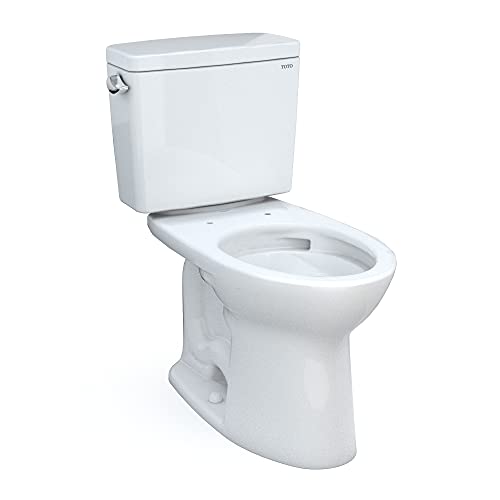
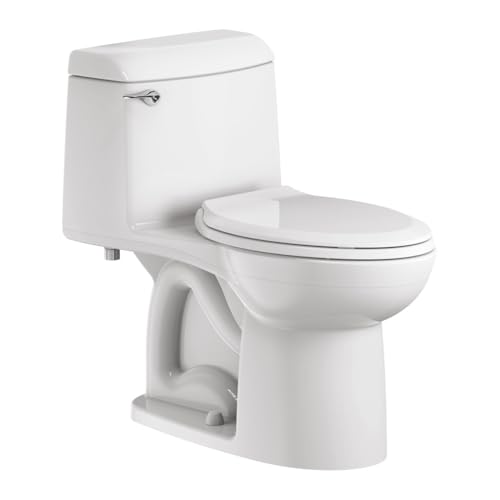
TOTO's Drake series (including the Drake II and UltraMax II one-piece) routinely scores 1,000g on MaP testing -- the maximum score -- meaning it clears a full kilogram of simulated waste per flush. American Standard's Champion 4 and VorMax also achieve 1,000g MaP and use a 4-inch flush valve for rapid bowl turnover. Kohler's Highline and Cimarron are solid mid-range choices at 800-1,000g MaP.
| Model | Type | GPF | MaP Score | WaterSense | Trapway | Check Price |
|---|---|---|---|---|---|---|
| TOTO Drake II | 2-piece | 1.28 | 1,000g | Yes | 2.125 in fully glazed | Check price |
| TOTO UltraMax II | 1-piece | 1.0 | 1,000g | Yes | 2.125 in fully glazed | Check price |
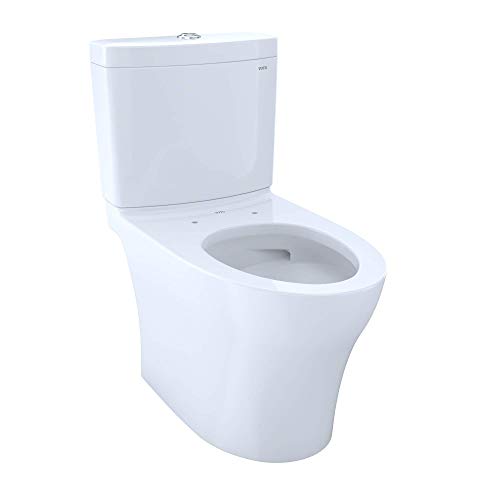
| TOTO Aquia IV | Dual flush | 1.0 / 0.8 | 600g (full) | Yes | 2.125 in fully glazed | Check price |
| American Standard Champion 4 | 2-piece | 1.6 | 1,000g | No | 4 in flush valve | Check price |
| Kohler Highline | 2-piece | 1.28 | 800g | Yes | 2 in fully glazed | Check price |
| Kohler Cimarron | 2-piece | 1.28 | 800g | Yes | 2 in fully glazed | Check price |
| American Standard Cadet 3 | 2-piece | 1.28 | 800g | Yes | 3 in fully glazed | Check price |
| Woodbridge T-0001 | 1-piece | 1.28 | 800g | Yes | Skirted fully glazed | Check price |
| Gerber Viper | 2-piece | 1.28 | 1000g | Yes | 2 in fully glazed | Check price |
Measure from the finished wall behind the toilet to the center of the floor drain bolts (the caps on either side of the base). A 12-inch measurement is standard in most North American homes built after 1960. Older homes often have 10-inch or 14-inch rough-ins, which require specific toilet models or an offset flange. Always measure before purchasing -- a wrong rough-in measurement is the most common avoidable toilet-buying mistake.
If your measurement falls between standard sizes, round down and use an offset closet flange, or round up and leave a small gap behind the tank (which a tank-to-wall distance is acceptable as long as it is covered by the toilet's footprint). Most toilet spec sheets list the rough-in as 10 inches, 12 inches, or 14 inches. TOTO and American Standard explicitly offer 10-inch and 14-inch rough-in variants of their most popular models.
One-piece toilets and skirted designs often have a longer overall footprint than two-piece models, which matters in a small bathroom. Before committing to a one-piece like the Woodbridge T-0001 or TOTO UltraMax II, measure the available floor space from the wall to any vanity, door swing, or cabinet.
A new toilet replaces a visible, functional fixture that buyers notice immediately. While it rarely adds dollar-for-dollar value, an old stained or running toilet is a negotiating point and inspection flag that a new $250 WaterSense toilet eliminates. Buyers in 2025-2026 also respond positively to EPA WaterSense labeling, which signals lower utility costs -- an increasingly important factor in rising-utility-rate markets.
Home inspection and real estate data consistently show that bathrooms and kitchens drive the most buyer decisions. A mid-range bathroom remodel historically returns 60-70% of cost at resale according to cost-vs-value survey data. A simple toilet swap costs far less than a full remodel and removes a common inspection flag without significant investment.
Water-efficient fixtures also matter to buyers in drought-prone states where tiered water pricing is in effect. An EPA WaterSense toilet using 1.28 GPF vs. an old 3.5 GPF toilet saves roughly 16,500 gallons per year for a family of four. That is a concrete selling point in markets where utility bills are a buyer concern.
A toilet that runs, rocks, or shows mineral stains creates a perception of neglect that affects buyer confidence far beyond the $200 fix. If the bathroom is otherwise in good condition, a toilet swap is one of the highest-ROI pre-listing improvements you can make. Pair it with a new seat, a caulk touch-up at the base, and clean supply lines for a complete refresh under $300.
MaP (Maximum Performance) testing is an independent flush-performance standard that measures how many grams of soybean paste -- used as a waste simulant -- a toilet clears in a single flush. Scores run from 250g to 1,000g (the maximum). EPA WaterSense requires a minimum 350g MaP score for certification, but a score of 500g or higher is recommended for households with multiple users or known clog history.
MaP scores are published at map-testing.com and provide a manufacturer-independent benchmark. Unlike marketing claims such as "PowerWash" or "Tornado Flush," MaP scores are reproducible, lab-measured results. A toilet that scores 1,000g -- like the TOTO Drake II, TOTO Drake, or American Standard Champion 4 -- will handle real-world household waste reliably without double-flushing.
For households prone to clogs, prioritize MaP score over GPF when selecting a WaterSense toilet. The TOTO Drake II, for example, uses only 1.28 GPF while still achieving a 1,000g MaP score -- demonstrating that water efficiency and flush power are not mutually exclusive with modern trap geometry and valve engineering.
MaP testing also covers dual-flush toilets, which are rated separately for full and reduced flush cycles. The TOTO Aquia IV scores 600g on its full flush at 1.0 GPF and 250g on its 0.8 GPF partial flush -- adequate for liquid waste. Dual-flush toilets tend to score lower per gallon than single-flush designs, a trade-off worth understanding before installation in a clog-prone household.
MaP scores above 800g are considered "high performance" in the industry. For a master bathroom or a household with four or more occupants, aim for 800g minimum. For a guest bath used infrequently, 500g is more than sufficient and gives you more model options at lower price points.
Before hiring any contractor for a bathroom remodel, ask for their plumbing and contractor license numbers for your state, proof of general liability and workers' compensation insurance, a detailed line-item quote (not just a lump sum), a projected timeline with payment milestones, and at least three local references from similar bathroom projects. A legitimate contractor will answer all five without hesitation.
Get at least three quotes from licensed contractors. Wide quote variation -- especially one quote that is 40% below others -- usually signals either missing scope or unlicensed work. Make sure each quote explicitly covers permit fees, demo and haul-away, tile setting materials (not just tile), and fixture installation.
Ask specifically: who pulls the permit? Reputable contractors pull permits themselves and include the fee in the quote. If a contractor suggests skipping the permit to save money, decline. Unpermitted plumbing work can void homeowner's insurance, create issues at resale disclosure, and be flagged by inspectors when you eventually sell.
For toilet-specific questions, confirm the contractor will inspect and replace the wax ring and closet flange as part of toilet installation, not just bolt the new toilet over the old flange. A failed flange is the leading cause of toilet rocking and slow floor rot around the base.
For most remodels, 1.28 GPF is the right choice: it meets EPA WaterSense certification, qualifies for utility rebates in many municipalities, and is supported by the highest number of high-performance toilet models. Toilets using 1.6 GPF are still legal nationwide but do not qualify for WaterSense rebates. Dual-flush models using 1.0/0.8 GPF are best in drought-sensitive regions where every gallon counts.
The federal maximum for new toilets is 1.6 GPF, but many states and municipalities set stricter local requirements. California, Colorado, Georgia, and Texas (in some districts) mandate 1.28 GPF or less for new installations. Verify your local code before purchasing a 1.6 GPF model for a permitted remodel.
For water saving toilets, the sweet spot is 1.28 GPF with a MaP score above 600g. This combination qualifies for EPA WaterSense rebates (which can run $50-$100 per toilet through local utilities), reduces annual water consumption, and still delivers reliable flush performance in virtually all household scenarios.
One-piece toilets offer easier cleaning (no seam between tank and bowl where mildew grows), a more modern silhouette, and slightly simpler long-term maintenance. Two-piece toilets cost less, are easier to ship and carry upstairs, and allow independent tank or bowl replacement if one component cracks. Both designs can achieve identical flush performance -- choice comes down to budget, aesthetics, and bathroom size.
In a small bathroom, a compact elongated or round two-piece toilet often fits better than a one-piece design with a longer tank footprint. Measure the distance from the wall to the front of the toilet bowl -- you need at least 18 inches of clearance from the front rim to any obstruction (door, vanity, wall) per ADA guidelines, and 21 inches is more comfortable.
One-piece models like the Woodbridge T-0001 and TOTO UltraMax II tend to have a lower overall profile than two-piece designs, which can make a small bathroom feel larger visually. The fully skirted trapway on the Woodbridge T-0001 also eliminates the exposed curves at the toilet base that collect dust and are difficult to clean around.
A full bathroom remodel -- including tile tear-out, shower rebuild, vanity replacement, and fixture installation -- typically takes 5 to 14 business days of active construction once permits are approved. Permit approval adds 3 to 21 days depending on jurisdiction. A cosmetic-only refresh (no tile or plumbing moves) can be completed in 2 to 4 days. Extended timelines usually result from special-order tile, backordered fixtures, or inspection scheduling delays.
The shower or tub surround is almost always the longest individual task. Cement board substrate, waterproof membrane application, tile setting, and grout curing must all complete sequentially -- no step can be rushed. Budget at least 3 days for a standard shower tile job, longer for large-format tiles or complex patterns.
A toilet-only swap takes 2 to 4 hours for an experienced plumber: remove old toilet, inspect and replace wax ring and flange if needed, install new toilet, connect supply line, test for leaks, and caulk the base. You can use the bathroom the same day. For a full remodel, discuss a temporary bathroom plan with your contractor if you have only one bathroom in the home.
In most jurisdictions, a like-for-like toilet replacement at the same location does not require a permit. However, if you are moving the toilet even a few inches, adding a bidet, or changing rough-in plumbing, a permit is typically required. Always check with your local building department before starting work -- requirements vary significantly by city and county.
The rough-in is the distance from the finished wall behind the toilet to the center of the floor drain (closet flange). Measure from the wall to the middle of the two bolts at the toilet base. Standard North American rough-in is 12 inches. Older homes frequently have 10-inch or 14-inch rough-ins. Always measure before ordering a replacement toilet.
EPA WaterSense is a voluntary certification program that requires toilets to use 1.28 GPF or less AND pass a minimum 350g MaP flush performance test. WaterSense-labeled toilets use at least 20% less water than the federal 1.6 GPF maximum while meeting a verified performance threshold. Many utilities offer rebates of $25-$100 per WaterSense toilet replaced.
A MaP score of 500g or higher is recommended for household use. Scores of 800g or above are considered high performance and are suitable for families with multiple occupants. Scores of 1,000g (the maximum) are achieved by models like the TOTO Drake II, TOTO Drake, and American Standard Champion 4 -- meaning they reliably clear 1 kilogram of simulated waste in a single flush.
One-piece toilets eliminate the tank-to-bowl gasket that can degrade and leak over time, require less cleaning effort because there is no seam, and typically have a lower, more modern profile. They cost more upfront but may reduce long-term maintenance. For a remodel where aesthetics and easy cleaning matter, the premium is often justified.
A fully glazed trapway means the internal S-curve channel that waste travels through from bowl to drain is coated with the same smooth vitreous china glaze as the visible bowl surface. Unglazed trapways have a rougher texture that allows waste to catch. A fully glazed trapway dramatically reduces clogs and makes the toilet easier to keep clean.
Professional toilet installation typically costs $150 to $350 including labor, wax ring, supply line, and minor flange work. If the existing flange needs full replacement (common in older homes with cast-iron drain pipes), add $100-$300. Many plumbers offer lower rates when toilet installation is bundled with other bathroom work during a full remodel.
Comfort height toilets (also called "right height" or "chair height") have a rim height of 17 to 19 inches from the floor -- similar to a standard chair seat -- compared to 14 to 15 inches for standard height. They are easier for adults to sit down and stand up from, especially for people with knee or hip issues, and are required by ADA guidelines in accessible bathrooms. For most adults over 40, comfort height is preferable.
Elongated bowls extend about 2 inches further from the front than round bowls, measuring approximately 18.5 inches vs. 16.5 inches. Elongated bowls are more comfortable for most adults and are the dominant choice in North American remodels today. Round bowls save space in bathrooms smaller than 30 inches of available depth and cost slightly less. Check your available floor clearance before choosing elongated in a tight powder room.
A like-for-like toilet replacement is within the ability of a confident DIYer with basic tools (wrenches, putty knife, level). The main risks are improper wax ring seating (which causes leaks at the base) and overtightening the floor bolts (which can crack the porcelain base). If the flange is damaged or needs raising, hire a licensed plumber -- flange repair requires working knowledge of drain pipe materials and slope.
Dual-flush toilets offer two flush options: a partial flush (typically 0.8 GPF) for liquid waste and a full flush (typically 1.0-1.28 GPF) for solid waste. They are common in Australia and Europe and growing in North American adoption. The TOTO Aquia IV is a popular dual-flush option. They save more water when users consistently choose the partial flush, but require user education -- in practice, water savings can be lower than spec if occupants always use the full flush.
Prioritize solid wood or plywood box construction over particleboard, which swells and delaminates in bathroom humidity. Dovetail drawer joints indicate higher quality construction. Soft-close hinges and drawer slides add usability. A quartz countertop resists staining better than cultured marble and requires no sealing. For resale, a 36-inch or 60-inch vanity with double sinks adds more buyer appeal than a custom unusual width.
For floors, choose tile rated for floor use with a slip resistance rating (COF) of 0.60 or higher per the ANSI A137.1 standard. For shower walls, any wall-rated ceramic or porcelain tile works well. Larger format tiles (12x24 or 24x24) create a more modern look and have fewer grout lines to clean, but require a perfectly flat substrate. Matte finish tiles hide water spots better than high-gloss in a bathroom setting.
A layout with the toilet in its own separate water closet compartment (or at minimum, positioned so it is not visible from the bathroom doorway) is considered more private and higher-end. Double sinks in a master bath are a strong buyer expectation in the $400,000+ market. Walk-in showers without a step threshold appeal to aging-in-place buyers. Keeping the tub in a master bath remains relevant for families with young children and for resale in traditional markets.
Survey data from the National Association of Realtors and homebuilder associations consistently shows buyers prioritize: a separate walk-in shower (not just a tub-shower combo), double sinks in the master, adequate storage/linen closet, heated floors, and good lighting. Water-efficient fixtures with EPA WaterSense certification are increasingly mentioned as a positive by buyers in utility-cost-conscious markets.
A constantly running toilet almost always traces to one of three causes: a worn flapper that no longer seals the flush valve, a float arm or float ball set too high causing water to spill into the overflow tube, or a fill valve that has failed. Flappers cost under $10 and replace in minutes. Fill valve kits cost $15-$30 and take about 30 minutes. If replacing both components does not resolve the issue, the flush valve seat itself may be cracked and require a plumber.
A skirted toilet has a smooth, flat side profile where the trapway is concealed behind a vertical panel of vitreous china rather than exposed as a curved contour. This eliminates the crevice where the base meets the floor on traditional designs, making cleaning significantly easier. The Woodbridge T-0001 and TOTO's Vespin II are examples of skirted designs. Installation typically requires a concealed mounting kit rather than standard floor bolts.
American Standard focuses on large-aperture flush technology -- the Champion 4 uses a 4-inch flush valve and 2.375-inch fully glazed trapway, the largest available in a residential toilet. This raw valve size produces extremely fast bowl turnover. TOTO emphasizes SanaGloss (CeFiONtect) ion barrier glaze and Tornado Flush cyclonic rim rinsing, which keeps the bowl cleaner between scrubbing. Both brands achieve 1,000g MaP on their top models but through different engineering approaches.
A bidet toilet seat (also called a washlet) replaces the standard toilet seat and connects to the existing cold water supply line. It requires a nearby GFCI electrical outlet -- typically within 4 feet of the toilet. Most bidet seats fit round or elongated bowls (check fit before ordering), and installation takes 30-60 minutes. TOTO's Washlet line is the category leader; Kohler and Brondell also offer well-reviewed options.
A rocking toilet almost always means the closet flange is below the finished floor level, or the wax ring did not seat correctly. Do not ignore it -- a rocking toilet will eventually break the wax ring seal and cause a slow leak into the subfloor. The fix is to remove the toilet, inspect the flange height (it should be at or slightly above the finished floor), use an extra-thick wax ring or a wax-free foam gasket for a better seal, and reinstall.
A successful bathroom remodel follows a predictable sequence. Skipping steps -- particularly permits and proper waterproofing -- creates problems that surface months or years later and are expensive to correct.
Step 1: Establish scope and budget. Decide upfront whether you are doing a cosmetic refresh (paint, fixtures, accessories) or a full structural remodel (new tile, plumbing moves, layout changes). Your budget determines which path is realistic. A firm budget prevents scope creep, which is the leading cause of bathroom remodels running 30-50% over estimate.
Step 2: Design and fixture selection. Choose your tile, vanity, toilet, fixtures, and lighting before getting contractor quotes. Contractors bid more accurately with a complete material list, and you avoid mid-project change orders (which are expensive and add time). For toilet selection, use our toilet buying guide to narrow choices by rough-in size, GPF, and flush performance requirements.
Step 3: Get licensed contractor quotes. Request three detailed line-item quotes. Verify contractor license and insurance. Understand what is and is not included (demo, haul-away, permit fees, grout color changes, etc.).
Step 4: Pull permits. Your contractor should pull plumbing and building permits as part of the project scope. Do not accept "we don't need permits" for work that involves moving plumbing or opening walls.
Step 5: Demo. Tile removal creates fine silica dust -- ensure workers use proper respiratory protection and the bathroom is sealed from the rest of the house. Inspect the subfloor and wall framing after tile removal for any rot, mold, or structural issues before proceeding.
Step 6: Rough-in plumbing changes (if any). Moving the toilet drain, repositioning the shower valve, or relocating the vanity drain must happen now, before substrate and tile installation.
Step 7: Waterproofing and substrate. A cement board backer with a liquid waterproof membrane (RedGard or Schluter KERDI) is the current best practice for shower walls and floors. This step is invisible in the finished bathroom but determines whether your tile job holds up for 20 years or begins to fail in 5.
Step 8: Tile installation. Large format tiles require a perfectly flat substrate. Budget time for grout cure (typically 24-72 hours depending on product) before exposing tile to water.
Step 9: Vanity, fixtures, and toilet installation. These are the final finish steps and the ones that transform the space visually. Toilet installation should always include a new wax ring and inspection of the closet flange, regardless of how "good" the old flange looks.
Step 10: Inspection and punch list. Schedule the final building inspection. Walk through with your contractor and note any items that need adjustment before final payment.
The waterproofing step (Step 7) is where the majority of shower failures originate. Cement board alone is not waterproof -- it is water resistant. A liquid membrane or sheet membrane system is required for a shower that will hold up over time. If your contractor does not mention a specific waterproofing product by name in their scope, ask the question explicitly before signing.
When selecting a toilet for a bathroom remodel, you will encounter several technology tiers beyond standard gravity-flush designs. Understanding what each offers helps match the product to the household's actual needs.
Standard gravity-flush (1.28 GPF): The workhorse of North American bathrooms. Reliable, easy to service, widely available. TOTO Drake II and American Standard Cadet 3 represent the best value in this category. Choose this for any bathroom where budget and reliability are the priority.
Pressure-assist: Uses compressed air in a sealed tank to deliver a powerful flush at 1.0-1.1 GPF. Significantly louder than gravity-flush (audible several rooms away). Best suited for commercial applications or households with severe clog problems where MaP scores are insufficient. Rarely appropriate for a residential remodel.
Dual-flush: The TOTO Aquia IV and Kohler Persuade Dual Flush are the leading residential dual-flush options. Works well in households where occupants are trained to use the partial flush for liquid waste. Not ideal where guests or young children are frequent users, as the dual-button system is often ignored or misused.
Integrated bidet toilets: TOTO Neorest series integrates a full bidet suite, self-cleaning wand, seat heating, and in some models an automatic lid. These are significant investments and require a dedicated GFCI outlet. For a luxury master bath remodel, an integrated bidet toilet is a premium upgrade with strong appeal. For a small bathroom or guest bath, a bidet seat add-on to a standard toilet achieves similar functionality at a fraction of the cost.
Wall-hung toilets: The bowl mounts to a carrier frame inside the wall; the tank is concealed in the wall cavity. Allows floor height adjustment (ideal for accessibility), makes floor cleaning easy, and creates a modern floating visual. Requires significant wall modification and a compatible in-wall carrier. Not practical as a replacement in a standard remodel without major construction -- best suited for new construction or a complete gut-and-rebuild.
A bathroom remodel delivers the best return when you plan scope carefully, pull permits, use proven waterproofing methods, and select fixtures with documented performance data. For toilets, choose a model with an EPA WaterSense certification and a MaP score of 800g or higher -- brands like TOTO, Kohler, and American Standard all offer excellent options in this tier. Keep the toilet in its existing rough-in location, invest in waterproofing behind the tile, and hire a licensed contractor who pulls their own permits. These three decisions prevent the majority of costly remodel failures.
When you flush, where does it go? Follow toilet water from the bowl through the trap, drain, and stack to a septic…
Read the guideDo toilets need electricity to flush? Most do not. Learn which toilets use power, how a standard flush works, and how to…
Read the guideFind out how many gallons per flush an old toilet really uses, how to check your own tank, and how much water…
Read the guide