

Common Bidets Problems and How to Fix Them (2026)
Bidets4.6
Step-by-step fixes for the bidet problems reported most often, from a unit that won't spray and weak water pressure to a seat…
Read the guideMost households cut toilet paper use by 75 to 80 percent after installing a bidet, based on published consumption data, environmental research and reported owner patterns. This guide breaks down exactly how much paper a bidet eliminates, what that means in dollars and environmental impact, how different bidet types compare, and which models produce the biggest reductions so you can make the switch with real numbers in hand.
A bidet with a warm-air dryer eliminates roughly 75 to 80 percent of toilet paper use for most households. A single person using 100 rolls per year drops to 20 to 25 rolls. A family of four can cut annual paper spending by $150 to $250, typically recovering a bidet seat's cost within 12 to 18 months.
Toilet paper reduction is the most concrete, measurable benefit a bidet delivers, yet it is often described vaguely as "you'll use less paper." The actual numbers are sharper than that. American consumers use more toilet paper per capita than almost any other country, averaging roughly 100 rolls per person per year according to data compiled by environmental research organizations and paper industry trade groups. Bidet owners consistently report dropping that figure to somewhere between 15 and 30 rolls, a reduction of 70 to 85 percent depending on the bidet type, the dryer it includes and whether they use a few sheets to pat dry after washing.
This article works through the data from multiple angles: how the reduction math works per person and per household, what drives the difference between a 50 percent cut and an 80 percent cut, how much money and how many trees are involved, how much water a bidet actually uses compared to the water embedded in making toilet paper, and which specific bidet models produce the most complete transition away from paper. For context on how bidet-compatible toilets themselves rank, see our full guide to the best flushing toilets.
The average American uses approximately 100 rolls of toilet paper per year, which is among the highest per-capita rates in the world. The United States as a whole consumes around 8 billion kilograms of toilet paper annually, accounting for roughly 20 percent of global consumption despite holding less than 5 percent of the global population.
Published figures from environmental research groups and the paper industry itself put the per-person average between 80 and 120 rolls per year, with household size and personal habits creating the range. A family of four using a shared supply often goes through 350 to 450 rolls annually, or roughly one roll per person every three to four days.
These numbers establish the baseline that a bidet works against. A 75 percent reduction from 100 rolls per year is 25 rolls remaining, saving 75 rolls, which at typical retail pricing represents a meaningful recurring annual saving after the one-time bidet investment.
A bidet with a warm-air dryer eliminates roughly 75 to 80 percent of toilet paper use for most people. Users typically keep a small supply for patting dry on occasions when they prefer not to wait for air drying, but consistent dryer users often report dropping to 10 to 20 rolls per year from a pre-bidet 80 to 100.
A bidet seat or attachment without a dryer typically reduces paper use by 60 to 75 percent because users still need a few sheets to dry off after washing. The wash does the cleaning work completely, so there is no wiping, but there is still some patting.
Non-electric bidet attachments, which use cold water and have no dryer, produce the smallest reductions in the 50 to 70 percent range, because the cold water can be less pleasant in winter and some users reach for extra paper when they rush or feel discomfort from cold spray.
| Bidet Type | Has Dryer | Estimated Paper Reduction | Rolls Saved Per Year (from 100) | Typical Remaining Use |
|---|---|---|---|---|
| Electric bidet seat with dryer | Yes | 75% to 85% | 75 to 85 rolls | Pat-dry only, 15 to 25 rolls/year |
| Electric bidet seat, no dryer | No | 65% to 75% | 65 to 75 rolls | Pat-dry, 25 to 35 rolls/year |
| Non-electric attachment (warm water) | No | 60% to 70% | 60 to 70 rolls | Pat-dry, 30 to 40 rolls/year |
| Non-electric attachment (cold only) | No | 50% to 65% | 50 to 65 rolls | Pat-dry plus winter reluctance |
| Handheld bidet sprayer | No | 55% to 70% | 55 to 70 rolls | Pat-dry, some variability by user |
| Smart toilet with integrated bidet | Yes | 80% to 90% | 80 to 90 rolls | Near-zero, 10 to 20 rolls/year |
At a typical cost of $1.00 to $1.50 per roll for mid-range toilet paper, a single person saving 75 rolls per year saves roughly $75 to $113 annually. A family of four saving 300 rolls per year saves $300 to $450 annually on toilet paper alone, not counting potential savings on wipes or disposable cleansing products.
A mid-range electric bidet seat with a dryer, such as the Brondell Swash 1400 or Bio Bidet BB-600, has a one-time purchase cost that a household of two adults typically recovers in 12 to 24 months purely through paper savings, after which the savings continue year over year for as long as the seat lasts. Most quality electric bidet seats carry two-year warranties and last five to ten years with normal use.
The payback period shortens if the household also uses wet wipes for supplementary cleaning, since bidet owners consistently report eliminating flushable wipes entirely. Flushable wipes cost considerably more per use than toilet paper and are a major source of plumbing blockages, adding further avoided cost.
The cost-recovery math on a bidet almost always works in the buyer's favor over a two-to-three-year horizon, and it becomes significantly more favorable if the household was spending on premium quilted paper, wet wipes or medicated wipes for conditions like hemorrhoids or sensitive skin. The real question is not whether a bidet pays back, but how quickly. For a family of four, the answer is typically under two years.
No. Manufacturing a single roll of toilet paper requires approximately 37 gallons of water, according to data published by water-use researchers and environmental organizations. A bidet uses between a quarter of a liter (0.066 gallons) and three-quarters of a liter (0.198 gallons) of water per use, meaning you would need to use a bidet more than 180 times to equal the water cost of one roll of paper it replaces.
A person who uses their bidet three times per day for a year uses roughly 25 to 75 gallons of bidet water annually. That same person, by eliminating 75 rolls of toilet paper per year, avoids the approximately 2,775 gallons of water embedded in manufacturing those rolls. The net water saving per person is approximately 2,700 to 2,750 gallons per year.
EPA WaterSense-certified toilets combined with a bidet reduce total bathroom water use further, since the bidet wash cycle uses far less water than a flush and often reduces the need for repeat flushing to clear heavy paper loads from the bowl.
The water-use argument for bidets is stronger than most people realize. The water a bidet uses per wash is negligible compared to the water embedded in making the paper it replaces. Environmental analyses consistently show that switching from toilet paper to a bidet reduces per-person freshwater consumption by thousands of gallons per year, not hundreds. It is one of the few household changes where the water-saving case is essentially unambiguous.
Producing one ton of toilet paper requires approximately 17 trees, and the average American uses roughly 50 pounds (about 23 kilograms) of toilet paper per year. Scaled to the 100-roll baseline, one person's annual toilet paper use represents a fraction of one tree, but at the scale of 330 million Americans using 100 rolls each, the figure reaches roughly 15 million trees per year for the United States alone.
On a per-household basis, a family of four cutting paper use by 75 percent effectively removes their contribution to the felling of roughly 0.2 to 0.3 trees per year. Over ten years, that is two to three trees preserved per household, and at the level of one million bidet-adopting households, the preservation impact reaches two to three million trees per decade.
Many toilet paper products use virgin pulp from old-growth and boreal forests rather than recycled fiber, making the tree-saving dimension more ecologically significant than the pure volume number suggests. Environmental certifications like FSC (Forest Stewardship Council) indicate more sustainable sourcing, but the lowest-impact option remains reducing consumption, which a bidet accomplishes directly.
Bidet models with effective warm-air dryers produce the largest toilet paper reductions, typically 80 to 90 percent for consistent dryer users. The TOTO Washlet S550e, TOTO Washlet C5, Bio Bidet BB-2000 Bliss and Brondell Swash 1400 all include dryers rated highly enough by owners to fully replace pat-drying for most people who allow adequate drying time.
Smart toilets like the TOTO Neorest 700H and Kohler Veil integrate the bidet and dryer into a single unit, producing the highest reduction rates in the 85 to 90 percent range, with many owners reporting they keep only a small emergency supply of paper rather than restocking regularly.
Non-electric attachments from brands like Tushy, Luxe Bidet and Brondell produce solid reductions in the 60 to 70 percent range without requiring electricity or an outlet, making them the entry point for households not ready for a full electric seat upgrade.
| Bidet Model | Dryer Quality | Paper Reduction (reported) | Best For | Check Price | Check Price |
|---|---|---|---|---|---|
| TOTO Washlet S550e | Excellent (fast, effective) | 80% to 85% | Maximum paper elimination | Check price | Check price |
| Bio Bidet BB-2000 Bliss | Excellent (strong airflow) | 78% to 85% | Full feature set + strong dryer | Check price | Check price |
| Brondell Swash 1400 | Good (warm, consistent) | 75% to 80% | Best value with dryer | Check price | Check price |
| TOTO Washlet C5 | Good (warm, adequate) | 73% to 80% | Best overall bidet seat | Check price | Check price |
| Tushy Classic 3.0 | None | 60% to 68% | Best non-electric entry point | Check price | Check price |
| Luxe Bidet Neo 320 | None | 62% to 70% | Budget warm-water attachment | Check price | Check price |
| Kohler Puretide | None | 60% to 65% | Brand-name non-electric seat | Check price | Check price |
Yes, significantly. Toilet paper is the single largest contributor to soft clogs in residential drain lines, and households that reduce paper use by 70 to 80 percent substantially lower their risk of slow drains, partial blockages and the emergency clogs that require a plunger or a plumber. High-efficiency toilets like the TOTO Drake II (1.28 GPF, MaP-tested at 1,000 grams) and the American Standard Champion 4 are designed to flush large waste loads, but reducing paper load reduces the stress on any flush system.
Bidet households that also eliminated flushable wipes report the greatest plumbing improvement, since flushable wipes are a documented primary cause of sewer system blockages and pump failures, despite their labeling. A bidet removes the functional need for wipes entirely.
EPA WaterSense-certified toilets with MaP scores above 500 grams have ample flushing power to handle the remaining reduced paper loads of bidet users, making the combination of a high-efficiency toilet and a bidet seat an effective upgrade for both paper reduction and plumbing performance.
Plumbers and wastewater engineers have noted for years that toilet paper and so-called flushable wipes are the leading cause of residential and municipal drain blockages. Bidet adoption, even at the 60 to 70 percent paper reduction level a non-electric attachment delivers, meaningfully reduces the organic material load that paper creates in drain lines. Households with older drain lines or septic systems stand to benefit the most from this secondary effect of bidet ownership.
Electric bidet seats consistently achieve higher toilet paper reductions than non-electric attachments, primarily because they offer warm water year-round and most include a warm-air dryer. The combination of warm wash and warm drying air allows most users to eliminate paper entirely except for occasional pat-dry use, resulting in reductions of 75 to 85 percent.
Non-electric attachments use cold water drawn from the supply line, which is comfortable in summer but can be jarring in winter months, leading some users to reach for paper more often when the water feels too cold for extended wash time. Without a dryer, non-electric users always need paper for drying. The result is a consistent but smaller reduction, typically 55 to 70 percent.
For households in climates with cold winters, or for anyone who wants to eliminate paper as completely as possible, the investment in an electric seat with a dryer produces a meaningfully higher return in paper savings and environmental impact than a non-electric attachment, often enough to offset the higher upfront cost within two to three years of paper savings alone.
Beyond tree preservation, toilet paper reduction lowers energy consumption in paper manufacturing, reduces chlorine or oxygen bleaching chemical use, decreases wastewater from pulp processing mills, and cuts the transportation and packaging emissions associated with distributing packaged toilet paper rolls. The paper industry is among the highest energy-consuming manufacturing sectors, and toilet paper specifically is a high-water and high-chemical-use product category.
Additionally, toilet paper in landfills generates methane as it decomposes, contributing to greenhouse gas emissions. Rolls that enter municipal waste systems add to the organic load of wastewater treatment plants. A 75 to 80 percent reduction in paper use proportionally reduces all of these downstream environmental costs.
Carbon footprint analysis published by environmental research groups estimates that switching one person from full toilet paper use to a bidet-primary routine saves approximately 15 to 20 kilograms of CO2-equivalent emissions per year per person, accounting for the electricity used by an electric bidet seat and the water used per wash.
The environmental case for bidet adoption compounds across multiple dimensions. The water embedded in toilet paper production, the energy cost of bleaching and drying pulp, the transportation emissions from distributing packaged rolls, and the methane generated by paper in landfills all add up to a surprisingly significant per-person footprint for what feels like a small household item. Reducing that footprint by 75 to 80 percent is one of the higher-impact bathroom upgrades most households can make.
Most households notice a sharp drop in toilet paper use within the first two to four weeks of consistent bidet use. The learning curve involves adjusting to the wash technique, positioning and pressure settings, and for electric models, finding comfortable temperature and dryer settings. Once these are dialed in, typically within the first month, paper use stabilizes at its new lower level.
Owner reports from aggregated review data consistently show that the reduction is immediate rather than gradual. Bidet users do not gradually reduce paper; they stop wiping during the wash phase on the first or second use, immediately eliminating the majority of paper consumption. The remaining paper usage for pat-drying continues until users either adopt the dryer or grow comfortable with air drying, which usually happens within the first few weeks.
Households with multiple members may see a staggered adoption curve, with the initial buyer showing full reduction quickly while other household members take a few weeks longer to adopt the new routine consistently.
For most people, a bidet with an effective warm-air dryer reduces toilet paper use to near zero for primary hygiene purposes, but does not fully eliminate a small household supply. Most bidet owners keep a roll available for guests who may not use the bidet, for situations where the bidet is unavailable, and for very occasional personal preference. In practice, this means buying a roll every month or two rather than weekly or more, which is effectively functional elimination from a household budget and supply-chain perspective.
Users of non-electric bidets and attachments without dryers will always need a small amount of paper for drying, making full elimination unlikely in that category. For electric bidet seat users with warm-air dryers, near-complete elimination is achievable and commonly reported in owner reviews of models like the TOTO Washlet S550e and Bio Bidet BB-2000 Bliss.
The honest answer is that "eliminate" overstates what most people experience, while "75 to 80 percent reduction" accurately describes the typical outcome. A small emergency supply of paper remains practical for nearly all households even after full bidet adoption.
A bidet consistently reduces toilet paper use by 75 to 80 percent for electric seat users with a dryer, and by 55 to 70 percent for non-electric attachment users without one. The savings are real, measurable and begin within days of installation. For the highest paper reduction, pair an EPA WaterSense-certified toilet like the TOTO Drake II or Kohler Cimarron with an electric bidet seat that includes a warm-air dryer, and you will effectively stop buying toilet paper as a regular household staple. The TOTO Washlet S550e and Bio Bidet BB-2000 Bliss are the top choices for near-complete elimination; the Tushy Classic 3.0 and Luxe Bidet Neo 320 are the best non-electric starting points for households new to the switch.
Step-by-step fixes for the bidet problems reported most often, from a unit that won't spray and weak water pressure to a seat…
Read the guideA step-by-step framework for picking the right bidet type, features, and fit based on your toilet, your bathroom's electrical access, and how…
Read the guide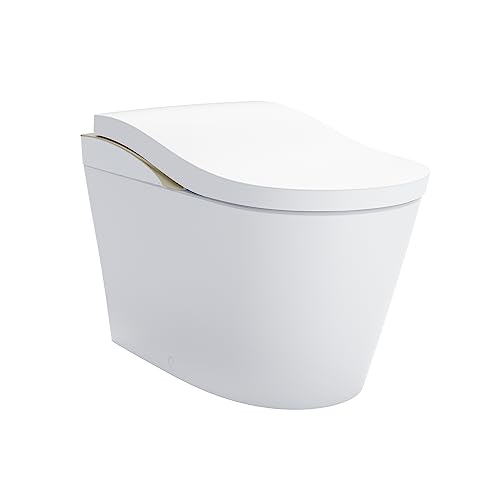
A luxury bidet is judged on a different set of criteria than a standard seat: automatic lid function, a full remote-controlled preset…
Read the guide