Bathroom Vanity Myths Debunked
Bathroom Remodeling4.6
From sealing schedules to material panic to the idea that bigger is automatically better, we separate what is actually true about bathroom…
Read the guideA small bathroom bathtub has to fit a compact three-wall alcove and usually double as the daily shower, which shifts the buying priority away from soak depth and toward compact length, corner-friendly shapes, and a surface rated to support real shower door hardware. We compared real tub dimensions, weight, and shower compatibility from Kohler, American Standard, and Woodbridge to find the tubs that actually fit a genuinely tight footprint.
Research updated June 2026.
The Kohler Underscore 60-inch Alcove Bath is the best overall small bathroom bathtub, fitting standard compact alcove framing while still supporting real shower door hardware for daily use. For a genuinely tight footprint, the American Standard Cadet 60-inch Alcove Bathtub is the best budget-friendly option, and a corner-shaped tub is the top pick for a bathroom too narrow for a standard 60-inch three-wall alcove.
A small bathroom bathtub is almost never chosen purely for a luxurious soak the way a primary bathroom tub is. In a compact footprint, the tub usually has to double as the daily shower, fit into a standard-size alcove without any room to spare, and hold up to being the single wet-area fixture in the room. That changes the buying criteria significantly: length and width against the actual framed opening matter more than soak depth, and shower door compatibility becomes a requirement rather than a nice-to-have.
This guide ranks tubs specifically for that small bathroom use case. We favor compact alcove and corner-shaped tubs built to support shower hardware over the deep freestanding soaking tubs that dominate primary bathroom lists. For sink and vanity options to pair with any of these tubs, see our best sinks for a small bathroom guide.
A small bathroom bathtub should prioritize a compact standard length, usually 60 inches or less, and the ability to support shower door hardware, since the tub almost always doubles as the daily shower in a tight footprint. A corner-shaped tub is worth considering when even a standard 60-inch alcove will not fit the available wall space.
Because a small bathroom rarely has room for both a dedicated soaking tub and a separate walk-in shower, the tub in this room type is a genuine dual-purpose fixture, expected to handle a quick daily rinse as often as an actual bath. That reality pushes the priority list toward a rim engineered for a hinged glass door or a sturdy curtain rod, a footprint that matches standard framing exactly, and a weight that does not complicate installation in an older home.
A standard three-wall alcove tub, typically 60 inches long, is the right choice for most small bathrooms since it fits common framing dimensions and supports shower door hardware. A corner-shaped tub is the better choice specifically when the room's available wall run is shorter than 60 inches, since a corner tub uses two adjoining walls rather than one long straight run.
An alcove tub like the Kohler Underscore fits into the same three-wall framing used across most American homes, which makes it the simplest replacement when an existing small bathroom already has a tub-shower combo. A corner tub, by contrast, is built for a bathroom where the straight wall space available is genuinely too short for a 60-inch tub, trading some soaking depth and shape for a footprint that works around an oddly proportioned room.
Yes, but not automatically. A tub's rim needs to be structurally rated for the weight and stress of a hinged glass shower door, not just a lightweight curtain rod. Models like the Kohler Underscore are specifically engineered for that dual role, while some compact or corner tubs are rated for a curtain only, so confirm shower door compatibility before ordering if that is part of the plan.
Seven real tubs chosen for compact footprint, shower compatibility, and durability in a small bathroom.
| Bathtub | Best For | Key Spec | Notes | Check Price |
|---|---|---|---|---|
| Kohler Underscore 60-Inch Alcove Bath | Best overall | Acrylic, 60 in, integral apron | Rated for shower door hardware, fits standard framing | Check price |
| American Standard Cadet Alcove Bathtub | Best budget alcove | Enameled steel, 60 in | Lower cost, still standard-framing fit | Check price |
| Compact Corner Tub-Shower Combo | Best for a short wall run | Acrylic, corner-shaped | Uses two walls instead of one long run | Check price |
| Kohler Villager Alcove Bathtub | Best simple no-frills alcove | Enameled cast iron, 60 in | Durable, no apron, standard framing | Check price |
| Woodbridge 54-Inch Compact Alcove Tub | Best shorter-than-standard length | Acrylic, 54 in | Fits rooms shorter than a standard 60-in run | Check price |
| American Standard Princeton Alcove Bathtub | Best lightweight standard alcove | Acrylic, 60 in | Lighter than cast iron, easier retrofit | Check price |
| Low-Threshold Shower Base Conversion Kit | Best tub-to-shower conversion | Acrylic or fiberglass base | Replaces tub entirely for a walk-in shower | Check price |
Each pick is ranked on compact footprint and shower-combo compatibility first, then material durability and installation fit.
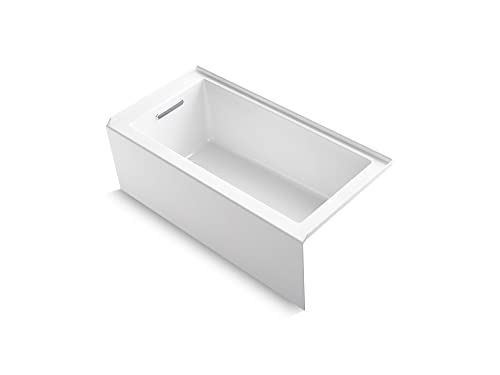
The Kohler Underscore is the best overall small bathroom bathtub, fitting standard compact alcove framing while being specifically engineered to support real shower door hardware for daily dual-purpose use.
A small bathroom almost never has room for a separate soaking tub and a walk-in shower, and the Underscore is built specifically for the fixture that has to serve both roles. Its structural rim is engineered to support the weight and stress of a hinged glass shower door, which matters because many standard acrylic tubs are only rated for a lightweight curtain rod, not a door.
Because it fits the same 60-inch three-wall alcove framing used across most American homes, it is also one of the simplest tub swaps for a small bathroom that already has a tub-shower combo in place. The integral apron front gives a clean, finished look on the exposed side without needing to tile a separate skirt, which keeps the installation straightforward.
For a small bathroom where the tub genuinely has to double as the daily shower, the Underscore's shower door compatibility is the detail that actually matters, not soak depth. Confirm the door hardware you want is rated for this tub before ordering.

A budget enameled steel alcove tub that fits the same standard framing as pricier options while keeping the cost well below acrylic or cast iron alternatives.
When a small bathroom remodel budget is stretched thin across a tub, vanity, and tile all at once, the Cadet delivers a durable enameled finish in a lighter, less expensive steel body than cast iron. It resists scratching and staining far better than a basic plastic tub, and its enameled surface looks nearly identical to pricier cast iron once installed.
Because it installs into the same standard alcove framing as premium options, it is a straightforward swap for a small bathroom tub-shower combo that needs replacing without a full remodel. It is a sensible place to save money on a small bathroom project without the tub looking or feeling cheap.
When the budget for a small bathroom remodel has to prioritize elsewhere, tile or a new vanity, the Cadet is where we tell buyers they can save money without the tub looking out of place. The enamel finish is doing a lot of the work here.

A corner-shaped tub-shower combo uses two adjoining walls instead of one long straight run, solving the layout for a bathroom too narrow for a standard 60-inch alcove.
Some small bathrooms simply do not have a straight wall run long enough for even a compact 60-inch alcove tub, and a corner tub solves that by triangulating across two adjoining walls instead. That geometry uses the room's corner, often an otherwise underused part of a small floor plan, more efficiently than forcing a straight tub into a space that cannot quite accommodate it.
The tradeoff is a smaller usable bathing footprint compared to a straight alcove tub of the same nominal size, and shower door options are more specific, typically a curved or neo-angle door built to match the tub's corner shape rather than a standard sliding door. For the right oddly proportioned small bathroom, though, it is often the only tub-shower combo that actually fits.
We bring up a corner tub specifically when a buyer's small bathroom cannot fit a standard 60-inch straight tub no matter how the layout is arranged. It is a real solution for a genuinely tight room, not a first choice for every small bathroom.

The Kohler Villager is a simple, no-frills cast iron alcove tub that fits standard small bathroom framing with the best heat retention on this list.
For a small bathroom where the tub sees daily use as both bath and shower, cast iron's superior heat retention is a genuine practical advantage over acrylic, keeping bathwater warmer for longer during whatever brief soak time the fixture gets between its shower duties. The Villager delivers that in a simple, no-apron design that fits the same standard framing as any other 60-inch alcove tub.
Because it has no integral apron, the exposed side needs a tile or panel skirt to finish it, an extra installation step compared to the Underscore's built-in apron, but a straightforward one for any small bathroom remodel already planning tile work. The tradeoff for cast iron's durability and heat retention is weight, so confirming subfloor support matters more here than with a lighter acrylic tub.
If heat retention matters more than installation simplicity for a small bathroom's daily-use tub, cast iron is still the better material, and the Villager is a dependable, no-frills way to get it in standard framing. Just verify your subfloor first.
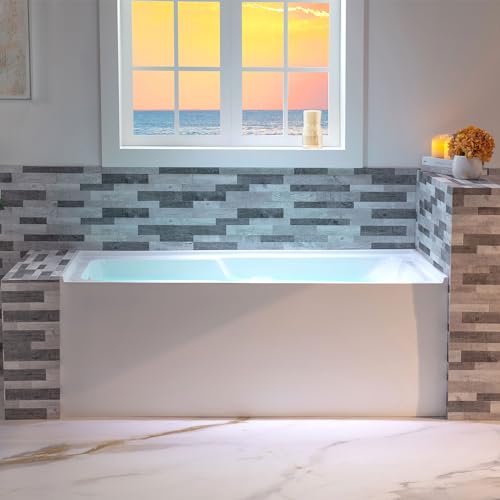
A shorter-than-standard 54-inch alcove tub fits a small bathroom whose wall run does not reach the usual 60-inch minimum.
Most small bathroom tub discussions assume a 60-inch wall run is available, but some genuinely tight bathrooms, especially in older homes, fall short of even that. The Woodbridge 54-inch model exists specifically for that scenario, fitting a shorter alcove without forcing a corner tub or a full layout change.
Because it is a less common size, it comes in a narrower range of finishes than standard 60-inch tubs, and buyers should confirm shower door compatibility directly with the manufacturer rather than assuming standard 60-inch hardware will fit. For the specific problem of a too-short alcove, though, it is a straightforward fix.
When a small bathroom's wall run measures under 60 inches, which happens more often than people expect in older homes, this is the size we look for first rather than assuming a corner tub is the only option.

A lightweight acrylic alcove tub in the standard 60-inch size, chosen for buyers who want an easier retrofit than cast iron without sacrificing standard-framing fit.
A small bathroom on an upper floor adds a real installation consideration that a ground-floor bathroom does not: getting a heavy cast iron tub up a narrow staircase and confirming the subfloor can support it. The Princeton sidesteps that entirely with a lightweight acrylic body that is dramatically easier to maneuver and install, while still fitting the same standard 60-inch alcove framing.
The tradeoff is heat retention and scratch resistance, both of which favor cast iron or enameled steel, but for a small upper-floor bathroom where installation logistics are the bigger practical concern, that tradeoff is often the right call.
For an upper-floor small bathroom specifically, we steer buyers toward a lightweight acrylic tub like the Princeton before cast iron. The installation logistics alone can make the decision for you.

For a small bathroom that would rather give up the tub entirely, a low-threshold shower base conversion kit turns the same alcove footprint into a walk-in shower.
Not every small bathroom needs to keep a tub at all, and for a household that showers daily and bathes rarely, converting the same standard alcove opening into a low-threshold shower base removes the need to step over a tall tub wall every single day. The conversion uses the identical three-wall framing a tub would use, so it is a genuine swap rather than a full room reconfiguration.
The obvious tradeoff is losing bathing capability entirely, which matters if the home has no other tub, particularly relevant for households with young children or anyone who may want a resale-friendly tub somewhere in the house. For a small bathroom that is not the only bathing option in the home, though, this conversion is a practical daily-use upgrade.
We bring up a shower base conversion when a buyer tells us they haven't used their small bathroom's tub for an actual bath in years. If another bathroom in the home still has a tub, giving up this one for daily shower ease is often the right call.
Across all seven picks, the small bathroom pattern is consistent: confirm the actual wall run available before assuming a standard 60-inch tub will fit, and prioritize shower door compatibility since the tub almost always doubles as the daily shower in a tight footprint. A corner or 54-inch tub solves a genuinely short wall run, while a shower base conversion is worth considering if the home has bathing capability elsewhere.
Match the tub to the room's actual dimensions and how it gets used day to day.
A standard alcove tub needs a 60-inch straight wall run. If your small bathroom falls short of that, look at a 54-inch compact model like the Woodbridge or a corner-shaped tub-shower combo before assuming a standard tub will fit.
If the tub also needs to function as the daily shower, which is the norm in a small bathroom, choose a model like the Kohler Underscore that is specifically rated for shower door hardware, rather than a tub only rated for a lightweight curtain rod.
If the small bathroom is not the only bathing option in the home and the tub rarely gets used for an actual bath, a low-threshold shower base conversion can improve daily usability without sacrificing the household's overall bathing capability.
Rarely, and in most small bathrooms, a single alcove tub rated for shower door hardware serves both roles rather than dedicating separate space to each. Only consider giving up the tub entirely, in favor of a walk-in shower base, if another bathroom in the home retains bathing capability.
The Kohler Underscore 60-Inch Alcove Bath is the best overall small bathroom bathtub, fitting standard framing while being specifically built to support real shower door hardware for genuine daily dual-purpose use. Choose the American Standard Cadet for a budget-friendly standard alcove fit, a compact corner tub-shower combo if no straight 60-inch wall run is available, or the Woodbridge 54-inch model for a wall run shorter than standard. Confirm your exact wall dimensions and shower hardware compatibility before ordering, then check the current price on Amazon.
Most small bathrooms use a standard 60-inch alcove tub. If the wall run is shorter than that, a compact 54-inch model or a corner-shaped tub is the better fit.
Yes, and in most small bathrooms it has to. Choose a tub specifically rated for shower door hardware, like the Kohler Underscore, rather than one only rated for a curtain.
Acrylic is the most common choice for a small bathroom because it is lightweight and simplifies installation, while enameled cast iron or steel offer better heat retention at a higher weight and cost.
A corner bathtub uses two adjoining walls instead of one long straight run, making it the right choice specifically when a small bathroom's available wall space is too short for a standard 60-inch alcove tub.
This varies by home and floor level. A cast iron tub can weigh over 300 pounds empty, so always confirm subfloor and joist capacity with a contractor before installing a heavy tub, especially on an upper floor.
It can be, especially for a household that showers daily and rarely baths, as long as another bathroom in the home retains a tub for resale value and any future need for bathing capability.
54 inches is a common shorter-than-standard option, compared to the typical 60-inch alcove tub, for bathrooms whose wall run falls just short of the usual minimum.
Not necessarily. An integral apron, like on the Kohler Underscore, gives a finished look without tiling a separate skirt, but a tub without one, like the Kohler Villager, works fine if you are already planning tile work on the exposed side.
Placing the tub itself is manageable for an experienced DIYer, but the plumbing connections and any shower door installation are typically best handled by a licensed plumber and installer, especially in a small bathroom where clearances are tight.
Yes, drain rough-in location varies by tub model and must match manufacturer specifications exactly. Always confirm the tub's rough-in diagram against your existing plumbing before finalizing a small bathroom remodel.
How we rank & our data sources
We do not run physical lab tests. Rankings are built from published, verifiable data and real owner feedback, never paid placement.
Researched by admin · Last updated July 11, 2026 · Our review method
From sealing schedules to material panic to the idea that bigger is automatically better, we separate what is actually true about bathroom…
Read the guideSizing, materials, installation, cost expectations, and maintenance, answered honestly and without guessing at numbers we cannot verify.
Read the guideA kids bathroom bathtub needs to survive years of splashing, toy storage, and the occasional standing child before it needs to look…
Read the guide