
Best Budget Bathtubs (2026)
Bathroom Remodeling4.6
A budget bathtub does not have to mean a thin plastic shell that flexes underfoot. Entry-level alcove tubs from American Standard, Kohler,…
Read the guideFrom sealing schedules to material panic to the idea that bigger is automatically better, we separate what is actually true about bathroom vanities from what is just repeated online without checking.
Research updated June 2026.
Most bathroom vanity myths mix up one product category with the whole category. Sealing requirements depend entirely on whether the top is porous natural stone, not on vanities in general. MDF failure stories almost always involve unsealed or non-moisture-resistant boards used the wrong way, not the material itself. And a bigger vanity can make a small bathroom feel more cramped, not more luxurious. Below are eight of the most persistent myths, with what actually determines the outcome in each case.
Bathroom vanity shopping generates an unusual amount of confident, contradictory advice. Some of it is outdated information about materials that have since improved. Some of it is a legitimate warning about one specific product tier that gets applied to an entire category. And some of it is simply repeated so often that it starts to sound like settled fact. This guide works through the myths that come up most often in vanity buying research, explains the real mechanism behind each one, and tells you what actually determines the outcome so you can shop with the right questions instead of the wrong fears.
If you are actively comparing vanities and want a structured way to weigh these tradeoffs, our bathroom vanity buying guide covers size, material, and storage selection from the ground up.
This is only true for porous natural stone tops, such as unsealed marble, travertine, or some granite finishes. Engineered quartz and solid-surface tops are non-porous by manufacturing design and do not require sealing at all, ever, under normal use. The "seal every year" rule that gets applied to every countertop actually applies to a narrower slice of the market than most buyers assume.
The confusion comes from natural stone kitchen countertop advice bleeding into bathroom vanity shopping without the distinction being carried over. Granite and marble are genuinely porous at a microscopic level, and a sealant fills those pores to reduce staining and etching from acidic products like toothpaste, mouthwash, and some skincare products. Quartz, by contrast, is an engineered material, roughly 90 to 95 percent ground quartz combined with resin binders, and the resin fills what would otherwise be porous space during manufacturing. Solid-surface tops (acrylic or polyester-based) are similarly non-porous throughout, not just on the surface.
The practical takeaway: check what your specific top is made of before assuming a sealing schedule applies. If it is quartz, solid-surface, or a fully glazed vitreous china integrated sink-top (common on budget and mid-range vanities from Kingston Brass and similar brands), no periodic sealing is needed. If it is natural stone, especially a honed or matte finish rather than polished, sealing on a schedule recommended by the fabricator (commonly every one to two years, depending on the stone and finish) does matter.
Stone fabricators note that polished natural stone finishes are less porous than honed or leathered finishes of the same material, because polishing partially closes surface pores. A honed marble top in a busy bathroom may need sealing checked more often than a polished granite top, even though both are natural stone. Ask your fabricator or the vanity manufacturer for the specific finish's sealing interval rather than applying a blanket yearly rule.
Standard interior MDF does swell and delaminate when it stays wet, but moisture-resistant MDF variants, sometimes labeled MR-MDF or marine-grade MDF, use a different resin formulation specifically engineered to resist swelling from humidity and incidental water exposure. When manufacturers use moisture-resistant MDF with properly sealed edges and finishes, the material performs well in normal bathroom conditions. It is not equivalent to submerging the material or leaving standing water against it, but neither is any wood-based cabinet material.
The bad reputation MDF has in bathroom applications comes largely from lower-tier products that use standard, non-moisture-resistant MDF, or that leave cut edges and drilled holes unsealed where water can wick into the core material. A cabinet base sitting directly in a puddle from a slow leak will eventually fail regardless of whether it is MDF, plywood, or solid wood, but MDF without moisture resistance and without sealed edges fails faster and more visibly, which is where the blanket "MDF is bad" reputation originated.
Reputable mid-range and premium vanity lines that use engineered wood typically specify moisture-resistant MDF or plywood cores under a painted or laminate finish specifically because the finish and edge banding, not the core material alone, are what keeps water out during normal use (splashes, humidity, incidental drips). Solid wood is not immune to water damage either; it can warp, swell at joints, and develop water rings from standing moisture just as engineered wood can, though it behaves differently under sustained soaking. See our comparison of best MDF bathroom vanities and best solid wood bathroom vanities for how the two material categories actually compare in real product lines.
| Material | Water Resistance Depends On | Common Failure Mode |
|---|---|---|
| Standard MDF | Almost entirely on finish/edge sealing | Swelling at unsealed edges and cutouts |
| Moisture-resistant MDF | Resin formulation plus finish/edge sealing | Failure only under sustained soaking or standing water |
| Plywood | Ply layer quality plus finish sealing | Delamination at edges if unsealed |
| Solid wood | Species, joinery, and finish quality | Warping, joint swelling, water rings from standing moisture |
An oversized vanity in a small bathroom reduces walking clearance, narrows the path between fixtures, and can make the entire room read as more crowded rather than more luxurious, even though the cabinet itself offers more storage. The right vanity size is the largest one that still preserves comfortable clearance around the toilet, tub, and door swing, not simply the largest one that physically fits against the wall.
This myth persists because bigger genuinely does mean more storage and more countertop space in isolation, and marketing photography for large furniture-style vanities is shot in generously sized bathrooms where scale problems do not show up. Applied to a small or average-size bathroom, the same cabinet can leave too little clearance for a door to open fully, crowd the walkway to the shower, or visually dominate a room that needed a lighter footprint to feel balanced.
The more reliable approach is to set your maximum footprint based on clearance requirements first (door swing, walkway width, distance to adjacent fixtures) and then choose the largest vanity that fits comfortably within that constraint, rather than starting from "how big can I possibly fit" and working backward. A well-proportioned 30 inch vanity with efficient storage frequently serves a small bathroom better than a 42 inch vanity that technically clears the walls but eliminates comfortable movement. Our guides to narrow depth bathroom vanities and small bathroom remodeling cover this sizing tradeoff directly.
Designers frequently recommend prioritizing depth reduction over width reduction in tight bathrooms, because a narrower-depth vanity (18 inches instead of a standard 21 to 22 inches) preserves more walkway clearance than shaving width, while often keeping close to the same drawer and door storage capacity.
A properly installed floating vanity, anchored into studs or dedicated blocking with hardware rated for the combined weight of the cabinet, top, and sink, is not inherently less durable than a floor-mounted cabinet of similar construction quality. Durability in both cases depends primarily on installation quality and material quality, not on whether the cabinet touches the floor.
The myth likely persists because floating vanities that are installed incorrectly, mounted into drywall alone without blocking, or paired with a top heavier than the hardware's rating, do fail more visibly than a floor-mounted cabinet with the same installation shortcuts, since a floor-mounted cabinet at least has the floor as backup support. That is an installation problem, not evidence that the floating format itself is fragile. Floating vanities installed to manufacturer specification, with correct blocking and a top matched to the rated weight capacity, hold up to the same daily use as any floor-mounted equivalent.
The upside some buyers overlook is that floating vanities can actually be easier to keep clean underneath and can make a small bathroom floor read as more open, which is a genuine functional advantage, not a durability tradeoff. See our floating bathroom vanity guide for the specific installation requirements that keep durability equal to a floor-mounted unit.
The applied finish and how well edges, joints, and cutouts are sealed matter more for day-to-day water resistance than which wood species or engineered material sits underneath. A premium hardwood cabinet with a poorly sealed finish can absorb moisture damage faster than a moisture-resistant engineered wood cabinet with a properly sealed factory finish.
This myth causes buyers to over-index on the substrate material description in a listing while under-checking the finish quality, which is harder to evaluate from a spec sheet. In practice, manufacturer warranty terms and aggregated owner reviews mentioning swelling, peeling, or delamination are a more useful signal of real-world water resistance than the base material name alone, because two vanities using the same core material can perform very differently depending on manufacturing quality control.
Custom cabinetry can offer configuration flexibility that stock cabinets cannot, but "custom" does not automatically mean better construction, hardware, or finish quality. Established manufacturers producing stock vanities at scale, such as Kohler, American Standard, and James Martin, use tested hardware (soft-close hinges, full-extension drawer slides) and repeatable finish processes that a small custom shop may or may not match, depending entirely on that shop's own standards.
The real advantage of a custom build is dimensional flexibility for an unusual space or a specific design vision, not a guaranteed quality upgrade. Buyers choosing between a stock vanity from an established brand and a custom-built alternative should compare warranty terms, hardware specifications, and finish process directly rather than assuming the custom option wins by default. A well-reviewed stock vanity with a published warranty is frequently the lower-risk choice unless your space genuinely requires a non-standard dimension that stock options do not cover.
Matching every metal finish in a bathroom exactly is a design choice, not a functional requirement, and intentionally mixed metals (matte black hardware with warm brass faucet trim, for example) is a widely used and well-reviewed design approach rather than a mistake. There is no compatibility or durability reason that drawer pulls and faucets must share a finish.
This myth likely originates from more conservative design guidance from years when a single dominant finish (polished chrome, then brushed nickel) was the default expectation in most American bathrooms. Current design practice treats hardware and faucet finish as independent decisions that can be coordinated deliberately, either matched for a cohesive look or intentionally mixed for contrast, both of which are represented across current product lines from major brands.
Vessel sinks (bowl-style sinks that sit on top of the vanity counter rather than being inset) go through popularity cycles like most bathroom design trends, but they remain in active production from major manufacturers and continue to appear in current furniture-style and powder-room vanity lines. Calling them "outdated" describes a shift in mainstream preference at a given moment, not a functional or quality problem with the sink type itself.
Vessel sinks do carry real practical tradeoffs worth weighing on their own merits: they typically sit higher than an undermount or integrated sink, which affects comfortable counter height for some users, and the exposed rim can require slightly more frequent wipe-down around the base. Neither of those is a durability defect, and neither has changed over time; they are simply the ongoing tradeoffs of the format, independent of whatever the current trend cycle favors.
With the myths cleared away, here is what genuinely determines how a vanity performs over time:
No. Quartz is an engineered, non-porous material by manufacturing design and does not require sealing under normal use. Sealing schedules apply to porous natural stone tops such as unsealed marble, travertine, or certain granite finishes, not to quartz or solid-surface tops.
Moisture-resistant MDF, properly sealed at edges and cutouts and finished with a quality painted or laminate surface, performs well in normal bathroom humidity and incidental splash exposure. Standard interior MDF without moisture resistance is the version that swells and fails, which is where MDF's poor reputation in bathrooms originated.
The largest vanity that still preserves comfortable door-swing and walkway clearance, which is often smaller than the maximum size that would physically fit against the wall. Depth reduction (18 inches versus a standard 21 to 22 inches) frequently preserves more usable clearance than width reduction while keeping similar storage capacity.
Not when installed correctly. A floating vanity anchored into studs or dedicated blocking, with hardware rated for the combined weight of cabinet, top, and sink, performs comparably to a floor-mounted cabinet of similar build quality. Failures typically trace back to installation shortcuts, such as mounting into drywall alone, not the floating format itself.
This depends on the specific stone and finish. Fabricators commonly recommend resealing every one to two years for honed or matte natural stone finishes, though polished finishes may need it less often since polishing partially closes surface pores. Ask your fabricator or the manufacturer for the specific interval rather than assuming a universal yearly rule.
No. Intentionally mixed metal finishes, such as matte black hardware paired with warm brass faucet trim, are a well-established and widely used design approach, not a mismatch. There is no functional requirement that hardware and faucet finish match.
Not automatically. Solid wood can warp, swell at joints, and develop water rings from standing moisture just as engineered wood can. The applied finish and how well joints and edges are sealed generally determine day-to-day water resistance more than whether the core material is solid wood or engineered wood.
Custom vanities make sense when your space genuinely requires a non-standard dimension or configuration that stock options do not offer. For standard dimensions, a well-reviewed stock cabinet from an established manufacturer often matches or exceeds custom build quality, since large manufacturers use tested hardware and repeatable finish processes.
Vessel sinks can require slightly more frequent wipe-down around the exposed base rim compared to an undermount or integrated sink, since water tends to collect at that junction. This is a minor daily maintenance difference, not a durability or hygiene problem.
No. MDF quality and moisture-resistance formulation vary significantly between manufacturers. Checking the specific product's spec sheet for a moisture-resistant designation, and checking aggregated owner reviews for swelling complaints, is more reliable than assuming all MDF-based vanities perform the same.
Often yes, provided the stone has not already developed permanent staining or etching. A fabricator can typically clean, and if needed lightly re-hone, a neglected natural stone top before applying a fresh sealer. Severe or long-term staining may not fully reverse, which is part of why regular sealing on porous stone matters.
Not if it compromises comfortable movement in a small bathroom. A well-proportioned vanity that preserves clearance generally reads better to buyers and appraisers than an oversized one that makes the room feel cramped, even though the oversized option offers more storage on paper.
There is typically some price premium for moisture-resistant MDF construction, but it is usually modest compared to the cost difference between MDF-based and solid-wood vanities overall. Given how much it affects long-term bathroom performance, checking for this specification is worth prioritizing over minor style preferences.
If your wall does not already have studs positioned correctly for the specific floating vanity's mounting rail, yes, blocking should be added before installation, typically during a renovation when the wall is open. Retrofitting blocking into an already-finished wall is possible but requires opening the drywall, so it is worth planning for during any related remodel work.
Nearly every persistent bathroom vanity myth collapses once you separate the product category from the specific tier or scenario the myth actually describes. Sealing depends on whether a top is porous stone, not on vanities generally. MDF's reputation traces back to unsealed, non-moisture-resistant boards, not the material category as a whole. And size decisions should be driven by real clearance math, not a blanket assumption that bigger always wins. Check the actual material, finish, and installation specification for the specific vanity you are considering, and most of these myths simply stop applying to your decision.
How we rank & our data sources
We do not run physical lab tests. Rankings are built from published, verifiable data and real owner feedback, never paid placement.
Researched by admin · Last updated July 22, 2026 · Our review method
A budget bathtub does not have to mean a thin plastic shell that flexes underfoot. Entry-level alcove tubs from American Standard, Kohler,…
Read the guideSizing, materials, installation, cost expectations, and maintenance, answered honestly and without guessing at numbers we cannot verify.
Read the guide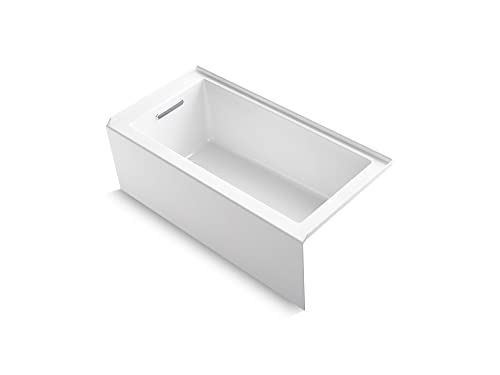
A small bathroom bathtub has to fit a compact three-wall alcove and usually double as the daily shower, which shifts the buying…
Read the guide