Best Bathtubs for a Small Bathroom (2026)
Bathroom Remodeling4.6
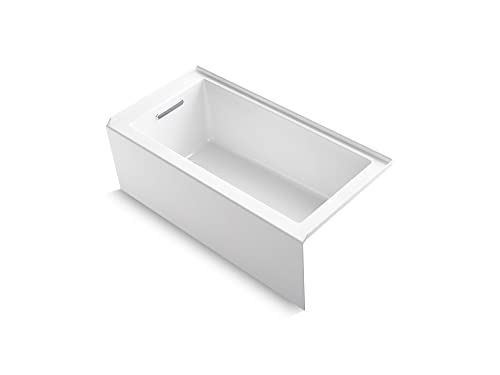
A small bathroom bathtub has to fit a compact three-wall alcove and usually double as the daily shower, which shifts the buying…
Read the guideSizing, materials, installation, cost expectations, and maintenance, answered honestly and without guessing at numbers we cannot verify.
Research updated June 2026.
Most bathroom vanities install in a single afternoon for a straight swap where the rough-in matches, longer if plumbing needs to move. Sizing should follow your room's clearance limits, not just wall width. Cabinet material and top material are two separate decisions with different water-resistance rules, and maintenance mostly comes down to keeping water from sitting against unsealed edges or porous stone.
Bathroom vanities sit at the intersection of furniture shopping and plumbing fixture shopping, which is part of why buyer questions cover such a wide range: cabinet dimensions, countertop chemistry, drain rough-in compatibility, drawer hardware, and long-term care all come up in the same purchase decision. This guide compiles the questions that come up most often across sizing, materials, installation, cost expectations, and maintenance, and answers each one honestly, including the cases where the honest answer is "it depends on your specific product and retailer."
If you already know roughly what you want and are comparing specific configurations, our bathroom vanity buying guide and how to choose a bathroom vanity guide walk through the full decision sequence. This FAQ is meant to answer the specific questions that come up along the way.
Start by measuring the maximum width, depth, and height your bathroom can accommodate while still leaving comfortable clearance for the door to swing, the walkway to remain usable, and any adjacent fixture (toilet, tub) to be reached without obstruction. Only after establishing that ceiling should you shop within it. Standard single-sink vanities run roughly 24 to 36 inches wide, with double-sink units typically starting around 60 inches, but the "right" size for your specific bathroom is whatever fits your clearance math, not a standard number.
Most standard vanities are 21 to 22 inches deep, though narrow-depth options around 18 inches exist specifically for smaller bathrooms where a few inches of depth reduction meaningfully improves walkway clearance. Depth reduction generally preserves more usable floor space than width reduction while sacrificing relatively little countertop and storage capacity.
Traditional vanity height sits around 30 to 32 inches, matched to a shorter sink-basin era of design. Comfort height (sometimes called counter height) vanities run closer to 34 to 36 inches, matching kitchen counter height and general standing-comfort preference for taller adults. Neither is objectively correct; the right height depends on who uses the bathroom most, including whether children or shorter adults will use it regularly.
| Vanity Type | Typical Width Range | Typical Depth | Best For |
|---|---|---|---|
| Narrow-depth single sink | 24-30 in | ~18 in | Small bathrooms, powder rooms |
| Standard single sink | 30-36 in | 21-22 in | Most primary and guest bathrooms |
| Double sink | 60-72 in | 21-22 in | Primary bathrooms with two users |
| Floating single sink | 24-48 in | 18-20 in | Small bathrooms, modern aesthetics |
There is no single best material for every buyer; the right choice depends on budget, maintenance tolerance, and how the top and cabinet will be used. Quartz and solid-surface tops offer strong water and stain resistance with no sealing required. Natural stone tops (marble, granite) offer a distinctive look but require periodic sealing on porous finishes. Cabinet material ranges from moisture-resistant MDF and plywood at accessible price points to solid hardwood at premium tiers, with quality construction and finish sealing mattering more than the base material name alone.
Quartz is engineered and non-porous, so it does not require sealing and resists staining consistently across the slab. Granite is natural stone with variable porosity depending on the specific slab and finish, offering a more one-of-a-kind look but requiring sealing on many finishes to maintain stain resistance. Neither is universally "better"; quartz wins on low maintenance, granite wins on natural variation and pattern uniqueness.
An integrated sink top is molded or fabricated as a single continuous piece with the countertop, common on vitreous china and solid-surface tops, eliminating the seam where a separate sink would meet the counter. A drop-in or undermount sink is a separate basin installed into a cutout in the countertop. Integrated tops have fewer seams to keep clean but cannot be replaced independently of the whole top if damaged; drop-in and undermount sinks can be swapped without replacing the entire countertop.
Buyers often over-focus on cabinet wood species and under-focus on hardware quality. Soft-close hinges and full-extension, ball-bearing drawer slides make a measurably bigger difference in daily satisfaction than the difference between two mid-tier engineered wood species, according to aggregated owner review patterns across multiple vanity brands.
If the new vanity's drain and supply line positions closely match your existing rough-in, installation is a straightforward swap: disconnect the old supply lines and trap, remove the old cabinet, set the new one in place, reconnect supply lines and the P-trap, secure the cabinet to the wall or floor, and install the top and sink. This is achievable for a confident DIYer with basic tools in a few hours. If the rough-in position does not match, or you are moving to a different cabinet configuration, a licensed plumber is the safer choice to reposition supply and drain lines correctly.
It depends on your wall structure and comfort with the required work. Floating vanities need to anchor into studs positioned correctly for the specific mounting rail, or into blocking added during a renovation. If your studs happen to align with the mounting hardware, a confident DIYer can complete the install. If blocking needs to be added inside a finished wall, that requires opening drywall, which is a bigger job best planned alongside other renovation work or handled by a contractor.
A straight swap where rough-in matches typically takes a few hours for the cabinet, top, and sink, plus reconnecting plumbing. Installs requiring rough-in changes, wall blocking, or electrical work for integrated lighting take considerably longer and are better scheduled as part of a broader bathroom project rather than a same-day swap.
Vanity pricing spans a wide range by tier: budget stock cabinets with laminate or basic engineered-wood construction sit at the lower end, mid-range vanities with solid-surface or quartz tops and better hardware sit in the middle, and premium furniture-style or natural-stone-topped vanities from brands like James Martin and Native Trails sit at the top. Within any given tier, size, sink configuration (single versus double), and top material are the biggest price drivers. Check current retailer pricing directly, since costs shift with material and shipping markets.
Not necessarily in a strictly linear way. Double-sink vanities often cost more than double a comparable single-sink model because they require two sink cutouts, two faucet sets, and often a longer, harder-to-fabricate top, especially in natural stone. Width alone is not the only driver of price within a size category.
Pre-matched vanity sets are usually more convenient and often better value than sourcing the cabinet, top, mirror, and faucet separately, since manufacturers price the set as a unit and guarantee fit between components. Buying components separately makes more sense when you want to reuse an existing piece (an existing faucet, for example) or need a specific combination not offered as a pre-matched set.
Wipe the top and cabinet surfaces regularly with a mild, non-abrasive cleaner, dry standing water rather than letting it sit against seams or unsealed edges, and check natural stone tops on the fabricator-recommended sealing schedule if applicable. Avoid harsh chemical cleaners (especially anything with bleach or strong acids) directly on natural stone, and keep drawer slide tracks free of hair and debris to preserve smooth operation over time.
Avoid abrasive scouring pads and strongly acidic or alkaline cleaners on natural stone, since they can etch or dull the surface over time. Quartz and solid-surface tops are more chemically resistant but manufacturers still generally recommend avoiding bleach-heavy cleaners and abrasive pads to preserve the finish's appearance long-term.
Wipe down the area around the faucet base and sink rim after use rather than letting water sit, and periodically check the caulk or seal line where the sink meets the countertop for gaps that would let water seep underneath. This single habit prevents the majority of slow, hidden water damage that eventually affects cabinet interiors.
Often yes, provided the new top's dimensions and sink cutout position match the existing cabinet, and the faucet hole spacing is compatible with your current or planned faucet. This is a common way to upgrade an outdated laminate top to quartz or solid-surface without replacing an otherwise sound cabinet.
A vanity set bundles the cabinet, top, and often the sink (and sometimes a mirror) as a matched unit guaranteed to fit together. Buying components separately gives more flexibility to mix brands or reuse existing pieces but places the fit-checking responsibility on the buyer.
Not universally. Some vanity lines are sold with a coordinated mirror as an optional add-on or separate purchase, while others are cabinet-and-top only. Check the specific listing to see whether a mirror is included, bundled at extra cost, or sold entirely separately.
Floating vanities are a well-established, currently popular style that can appeal to buyers seeking a modern look, but resale value impact depends more on overall bathroom condition and quality of installation than on vanity style alone. A well-installed floating vanity is not a resale risk; a poorly installed one (visible gaps, inadequate wall support) could be a red flag during a home inspection.
Yes, painting is a common and cost-effective way to refresh a structurally sound vanity cabinet. Proper prep (cleaning, deglossing or sanding, priming with a bonding primer suited to the substrate) matters more for a durable result than the paint brand chosen. This works well on solid wood, plywood, and painted MDF cabinets alike, provided the existing finish and substrate are in good condition.
Look for swelling, soft spots, discoloration, or a musty smell around the base, back panel cutout, and under the sink where plumbing connections pass through. Press gently on suspect areas; genuinely damaged MDF or particleboard will feel soft or crumble slightly under pressure, while solid wood may show visible warping or separation at joints instead.
Typically yes, each sink has its own P-trap and drain connection, though both often connect to a shared branch drain line behind the wall. Supply lines are similarly duplicated, one hot and one cold per sink, unless the design specifically shares a single set of valves, which is uncommon in standard double-sink installations.
No. A pedestal sink is a standalone sink and base column with no storage cabinet underneath, commonly used in powder rooms or where floor space is extremely limited. A vanity, by contrast, always includes cabinet storage beneath or around the sink. The two serve different priorities: pedestal sinks maximize visual openness, vanities maximize storage.
Soft-close hinges and drawer slides use a small hydraulic or spring damper to slow the last few inches of a door or drawer's travel, preventing slamming. It is a genuinely useful upgrade for daily-use durability and noise reduction, and is increasingly standard on mid-range and premium vanities rather than an exotic upgrade.
Some current vanity and mirror combinations include a built-in electrical outlet or USB charging port, either in the mirror frame or a discreet backsplash cutout, reducing visible cord clutter for hair tools and electric toothbrushes. This requires electrical rough-in coordination during installation and is worth planning for early if you want it, rather than adding after the fact.
Beyond the primary wall-mounting hardware, some floating vanity installations include additional bracket or safety-stop hardware designed to prevent the cabinet from tipping forward if weight is applied unevenly at the front edge. Not every floating vanity includes this, so check the specific installation manual if it is a priority for your household.
Furniture-style vanities are designed to resemble freestanding furniture pieces (a dresser or console table) rather than a built-in cabinet box, often featuring turned or tapered legs, decorative hardware, and finish details borrowed from furniture design rather than cabinetry. Functionally they still house a sink and plumbing, but the visual language is intentionally closer to a standalone furniture piece.
Traditional vanity height is around 30 to 32 inches. Comfort-height (counter-height) vanities run closer to 34 to 36 inches, matching typical kitchen counter height. The better choice depends on the height and preference of the household members who use that bathroom most.
General bathroom planning guidance recommends leaving enough clearance in front of the vanity for comfortable use and for cabinet doors and drawers to fully open without striking another fixture. Local code minimums for fixture clearance may also apply, so check your jurisdiction's requirements for renovation work.
Yes, most vanities can sit on top of existing finished flooring without any special preparation, provided the floor is level and structurally sound. If you plan to replace flooring later, some installers recommend installing new flooring before the vanity so the floor extends fully under the cabinet footprint.
A single-hole top has one drilled opening for a faucet with an integrated handle. A widespread top has three separate holes, typically spaced 8 inches apart, for a faucet with separate handles and spout. The two configurations are not interchangeable without redrilling or replacing the top.
With proper installation and reasonable care (keeping water from sitting against unsealed edges, maintaining sealed natural stone as recommended, and avoiding harsh chemical cleaners), quality vanities from established manufacturers commonly remain functional and attractive for well over a decade. Cabinet hardware such as hinges and drawer slides is often the first component to need replacement, and is typically replaceable independent of the whole cabinet.
Not necessarily for exterior wall measurements, but you do need to open the existing cabinet doors to measure interior rough-in positions (drain and supply centerlines) before ordering, since those measurements determine plumbing compatibility with the new unit.
Both exist in the market. Many mid-range and premium vanities ship fully or mostly assembled, while some budget options ship as flat-pack kits requiring cabinet assembly before installation. Check the specific listing for assembly requirements, since this affects both delivery logistics and installation time.
For floor-mounted vanities on a standard residential floor structure, weight is rarely a structural concern. For floating vanities, weight concerns shift to the wall mounting hardware and framing rather than the floor, which is why floating installs specifically require checking the manufacturer's weight rating.
Vanity installation itself does not change a bathroom's ventilation requirements, but adequate exhaust ventilation (a functioning bath fan or window) remains important for controlling humidity that affects cabinet materials, grout, and paint over time, regardless of which vanity is installed.
Yes, this is common in older homes with walls that are not perfectly plumb or floors that are not perfectly level. Installers typically use shims and matching caulk or trim to close small gaps. A persistent, large gap is worth having a professional assess, since it may indicate a deeper leveling issue.
Not always. Many manufacturers issue separate warranty terms for the cabinet, the top, and the sink, especially when a natural stone top is fabricated separately from the cabinet. Check the specific warranty documentation for each component rather than assuming uniform coverage.
Yes, but this requires establishing a plumbing rough-in (drain and supply lines) where none currently exists, which is a plumbing project requiring a licensed plumber in most cases, along with any needed electrical work for lighting or outlets near the new fixture.
Rough-in mismatches between the new cabinet's plumbing cutout and the home's existing drain and supply line position are among the most common causes of installation delays, since they require unplanned plumbing adjustments discovered only once the old vanity is removed.
Most contractors install flooring first, then set the vanity on top, so the floor extends fully under the cabinet footprint. Installing the vanity first can leave an unfinished gap under the cabinet if flooring is replaced later, though it is not a hard rule in every project sequence.
Most bathroom vanity confusion comes from treating the cabinet, the top, and the sink as one undifferentiated decision instead of three separate ones with different material rules and different maintenance needs. Measure your real clearance limits before shopping size, match top material to your maintenance tolerance rather than only aesthetics, and confirm rough-in compatibility before assuming a simple swap. Handled that way, most vanity purchases install cleanly and hold up well for many years of daily use.
How we rank & our data sources
We do not run physical lab tests. Rankings are built from published, verifiable data and real owner feedback, never paid placement.
Researched by admin · Last updated July 22, 2026 · Our review method
A small bathroom bathtub has to fit a compact three-wall alcove and usually double as the daily shower, which shifts the buying…
Read the guide
A kids bathroom bathtub needs to survive years of splashing, toy storage, and the occasional standing child before it needs to look…
Read the guideThe vanity that looks perfect online can still fail once it reaches your bathroom. Here are the measurement, plumbing, and planning mistakes…
Read the guide