
Bathroom Vanity Care for Hard Water and Well Water Areas
Bathroom Remodeling4.6
Homeowners with hard water or well water often shop for a "hard water resistant vanity," but the honest answer is that the…
Read the guideA true powder room technically has no bathtub, since the definition is a toilet and sink only, but plenty of homeowners use the term loosely for a small guest-facing half bath or a tiny full bath they want styled like one. When a compact tub is being squeezed into that kind of space, it needs a small footprint, a style-forward look that reads well to visitors, and a shape that does not fight the room's tight dimensions. We compared footprint, install type, and visual presence from Kohler, American Standard, and Woodbridge to find the tubs that work in that squeezed, guest-facing context.
Research updated June 2026.
The Woodbridge Oval Freestanding Acrylic Tub is the best overall choice for a compact, style-forward powder-adjacent bathroom, since its shorter 59-inch footprint still delivers a freestanding statement in a room too small for a full-size soaking tub. For a three-wall alcove that needs to fit standard framing, the Kohler Underscore is the top pick, and the American Standard Cadet is the best budget alcove option.
Most rooms marketed or thought of as a "powder room bathtub" project are really a small guest bathroom or half bath being expanded just enough to add a compact tub, since a true powder room by definition skips the tub entirely. That distinction matters for the buying decision: the tub has to be genuinely small, it has to look intentional and finished rather than crammed in, and because it is usually seen by visitors rather than used daily by the household, style-forward presence matters more than deep-soak comfort.
This guide ranks tubs specifically for that compact, guest-facing use case. We favor smaller freestanding tubs and standard-width alcove tubs that fit a tight room without overwhelming it, over the large 66 to 72-inch soaking tubs built for a primary suite. For a full look at powder room fixtures beyond the tub, see our best powder room toilets guide.
A bathtub for a small, guest-facing bathroom needs a compact footprint, generally 59 to 60 inches or shorter, along with a finish and shape that look intentional and stylish to visitors rather than purely functional. Because the room is seen more than it is used for long daily soaks, visual presence and a clean installed look matter more here than the deep-soak comfort features that matter in a primary bathroom.
A true powder room has no tub by definition, holding only a toilet and a sink in roughly 15 to 20 square feet. When homeowners search for a powder room bathtub, they are usually planning a small full bath or a half bath expansion that borrows the powder room's style-forward, guest-facing sensibility while adding tub function. That means the fixture has to read as a deliberate design choice in a compact footprint, not a bulky compromise.
A compact freestanding tub, like the Woodbridge Oval, works when the small bathroom has a few feet of open floor space and the goal is a style-forward visual statement. A standard alcove tub, like the Kohler Underscore or American Standard Cadet, is the more practical choice when the room needs to fit a fixed three-wall footprint and possibly double as a shower.
Freestanding tubs in this compact size range still create a visual centerpiece, which suits the style-forward goal of a guest-facing bathroom, but they need floor clearance on multiple sides that a truly tiny room may not have. An alcove tub tucks into the existing three-wall framing most small bathrooms already have, and it can support a shower door or curtain above it if the room needs to handle both bathing and showering in one fixture.
Standard alcove tubs run as short as 54 to 60 inches, and compact freestanding tubs like the Woodbridge Oval start around 59 inches, both of which still hold enough water for a real bath despite the smaller footprint. Going shorter than about 54 inches starts to feel cramped for adult use, so most compact powder-adjacent bathroom projects settle in the 54 to 60-inch range.
Six real tubs chosen for footprint, style-forward presence, and installation fit in a small guest-facing bathroom.
| Bathtub | Best For | Key Spec | Notes | Check Price |
|---|---|---|---|---|
| Woodbridge Oval Freestanding Acrylic Tub | Best overall | Acrylic, 59 in, freestanding | Style-forward centerpiece in a compact footprint | Check price |
| Kohler Underscore Alcove Bath | Best three-wall alcove | Acrylic, 60 in, integral apron | Supports shower door hardware above it | Check price |
| American Standard Cadet Alcove Bathtub | Best budget alcove | Enameled steel, 60 in | Lower cost, holds heat better than plastic | Check price |
| Kohler Archer Cast Iron Alcove Tub | Best premium finish | Enameled cast iron, 60 in | Highest-end look and heat retention | Check price |
| American Standard Studio Soaking Tub | Best value freestanding | Acrylic, 66 in, deep soak | Freestanding look at a lower cost | Check price |
| Woodbridge 67-Inch Freestanding Soaking Tub | Best if space allows a larger statement | Acrylic, 67 in, deep soak | Only for rooms with real floor clearance | Check price |
Each pick is ranked on compact footprint and style-forward presence first, then installation practicality.

The Woodbridge Oval is the best overall pick for a compact, style-forward bathroom, giving a genuine freestanding statement in a 59-inch footprint that fits where a full-size soaking tub cannot.
A small guest-facing bathroom rarely has room for a 66 to 72-inch freestanding tub, and the Woodbridge Oval solves that with a shorter 59-inch length that keeps the same standalone visual impact. Because the room is more about making a style statement to visitors than serving as a daily soaking ritual, the freestanding silhouette does more visual work here than a hidden alcove tub would.
The oval basin shape is proportioned to keep a reasonably deep soak despite the shorter overall length, and the acrylic construction keeps the tub considerably lighter than cast iron, simplifying installation in a smaller bathroom where structural reinforcement is harder to add. It still needs clearance on at least two sides for both the visual effect and plumbing access, so measure carefully before committing.
For a small bathroom built around a style-forward, guest-facing feel, this is the tub we point buyers toward first. It gets the freestanding statement into a footprint that a true powder-room-scale bathroom can actually accommodate.
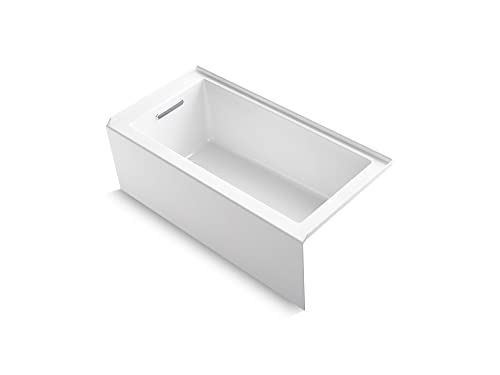
The Kohler Underscore is built to support a shower door or curtain rod above it, making it the right choice when a compact guest-facing bathroom needs the tub to double as a shower.
A tiny full bath being styled like a powder room rarely has space for both a separate tub and a shower, and when the single tub also needs to function as the daily shower, the Underscore is engineered specifically for that dual role. Its structural rim supports the weight and stress of a hinged glass shower door, which matters because many acrylic tubs are only rated for a lightweight curtain rod.
The integral apron front gives a clean, finished look on the exposed side without needing to tile a separate skirt, which keeps the small bathroom's installation simpler and its visual footprint tighter. Its 60-inch alcove dimension fits the same three-wall framing already common in small bathrooms, so it rarely requires structural changes.
When a compact bathroom only has room for one tub-shower fixture, the Underscore's shower door compatibility is the detail that actually matters. Confirm the door hardware you want is rated for this tub before ordering.

A budget enameled steel alcove tub that keeps a small guest-facing bathroom looking finished without a cast iron or premium acrylic price tag.
When a small bathroom renovation budget is being stretched across tile, vanity, and lighting to hit that style-forward guest-facing look, the Cadet delivers an enameled finish that reads nearly as clean as pricier cast iron once installed. It resists scratching and staining far better than a bare plastic tub, which matters in a room visitors will actually see up close.
Because it installs into standard 60-inch alcove framing, it drops into the same footprint most small bathrooms already have without requiring structural work, which keeps the project's overall cost and timeline manageable. It does not deliver the visual centerpiece effect of a freestanding tub, so it suits a bathroom prioritizing overall polish over a single showpiece fixture.
When the budget for a small guest-facing bathroom has to prioritize elsewhere, the Cadet is where we tell buyers they can save money without the room looking unfinished. The enamel finish is doing a lot of the work here.

The Kohler Archer brings the highest-end finish and heat retention on this list to a standard-width alcove, a strong pick when the small bathroom is meant to feel like a premium guest space.
Cast iron is the material that reads as premium at a glance, and the Archer brings that finish quality to the same standard 60-inch alcove footprint most small bathrooms are already framed for. For a guest-facing bathroom meant to impress visitors as much as function, the enameled cast iron surface has a weight and shine that acrylic simply does not replicate.
The tradeoff is the same one that applies to any cast iron tub: it can weigh well over 300 pounds empty, so confirming the subfloor can support that load is a necessary step before ordering, especially in an upper-floor small bathroom. For a ground-floor guest bathroom project with the budget to support it, it is the highest-end look available in this footprint.
If the small bathroom is meant to feel genuinely upscale rather than just space-efficient, cast iron is simply the better material for that impression, and the Archer is the most dependable mainstream option. Verify your subfloor first.

The American Standard Studio delivers a freestanding look at a lower cost than premium designer tubs, for a small bathroom with just enough space for a 66-inch footprint.
If the small bathroom has just a bit more room to work with than a truly cramped powder-adjacent layout, the Studio proves that freestanding style does not require a boutique price. It shares the same basic oval soaking shape as premium freestanding tubs at a meaningfully lower cost, which matters when the rest of a small bathroom remodel budget is going toward tile and vanity finishes that make the room feel finished.
At 66 inches, it is longer than the Woodbridge Oval, so it is only the right pick when the bathroom genuinely has the floor clearance for it. Owner reviews consistently describe it as a straightforward, no-surprises freestanding tub that looks the part without the fit-and-finish quirks sometimes seen in smaller import brands.
This is the tub we suggest when a small bathroom has slightly more square footage to work with and wants the freestanding look without stretching into premium designer pricing.

The largest tub on this list, worth considering only when the small bathroom's floor plan genuinely has room for a full-size freestanding centerpiece.
Not every small bathroom is equally small, and some projects labeled as a compact guest bath still have enough square footage for a full 67-inch freestanding tub. In that case, this Woodbridge model delivers the deepest soak and the most contoured comfort of anything on this list, functioning as a genuine centerpiece rather than a space-saving compromise.
It is included here specifically as the upper boundary of what still reads as appropriate for a compact, guest-facing bathroom, and buyers should measure their actual floor clearance carefully before choosing it over the shorter Woodbridge Oval. If the room cannot spare the extra eight inches of length plus clearance, the Oval is the safer choice.
We only recommend this size when a buyer has actually measured and confirmed the clearance. It is a beautiful tub, but it is the one pick on this list that can overwhelm a truly small room if the numbers do not work.
Across all six picks, the pattern for a compact, style-forward bathroom is consistent: prioritize footprint and visual presence over deep-soak comfort, since the room is judged more on how it looks to guests than how it performs during a long daily soak. Compact freestanding tubs suit a bathroom with a few feet of open floor space, while standard alcove tubs suit a room that still needs shower functionality in the same footprint.
Match the tub to the room's real dimensions and its role as a space visitors see.
A freestanding tub, even a compact one like the Woodbridge Oval, needs open floor clearance on at least two sides for both the visual effect and plumber access to the drain and filler. Measure the intended footprint plus at least 10 to 12 inches of clearance before ordering, since this is the single most common mistake in small bathroom tub projects.
If the small bathroom has room for a separate shower elsewhere, a compact freestanding tub can be chosen purely for style. If the tub is the only bathing fixture, choose an alcove tub rated for shower door hardware, like the Kohler Underscore, rather than a freestanding tub that was never engineered to support a glass door or heavy curtain track.
Cast iron tubs like the Kohler Archer can weigh over 300 pounds empty and considerably more filled. Before committing to a cast iron tub in a small bathroom, confirm with a contractor that the subfloor and joists are rated for the load, especially if the bathroom sits on an upper floor.
Not always. A true powder room skips the tub entirely, and many homeowners keep a small guest-facing bathroom shower-only to save space. A tub becomes worth adding when the household wants a bathing option for guests, children, or resale value, in which case a compact freestanding or standard alcove tub in the 54 to 60-inch range fits most small bathroom footprints without overwhelming the room.
The Woodbridge Oval Freestanding Acrylic Tub is the best overall pick for a compact, style-forward bathroom, delivering a genuine freestanding statement in a footprint small enough for a tight guest space. Choose the Kohler Underscore when the tub also needs to function as the daily shower, the American Standard Cadet for the most budget-friendly finished look, or the Kohler Archer for the highest-end alcove finish. Measure your floor clearance and confirm subfloor support before ordering, then check the current price on Amazon.
No. A true powder room by definition contains only a toilet and a sink. Homeowners searching for a powder room bathtub are usually planning a small full bath or half bath expansion styled with the same guest-facing, style-forward sensibility.
Standard alcove tubs run as short as 54 to 60 inches, and compact freestanding tubs like the Woodbridge Oval start around 59 inches, both of which hold enough water for a genuine bath despite the smaller footprint.
A compact freestanding tub gives a stronger visual statement and suits a room with a few feet of open floor space. An alcove tub is the better choice when the room needs to fit a fixed three-wall footprint or double as a shower.
Yes, if the room has clearance on at least two sides. Compact models like the Woodbridge Oval at 59 inches are built specifically for smaller footprints than the 66 to 72-inch tubs common in primary suites.
Enameled cast iron, like the Kohler Archer, has the most premium look and feel at a glance, though it comes with significant weight and a higher price than acrylic or enameled steel alternatives.
Yes, but only an alcove tub rated for shower door or curtain hardware, like the Kohler Underscore, should be used that way. Freestanding tubs are not engineered to support that additional structural load.
Plan for at least 10 to 12 inches of clearance beyond the tub's footprint on at least two sides, both for the visual effect and for plumber access to the drain and filler connections.
Enameled steel, like the American Standard Cadet, holds heat and resists scratching slightly better than basic acrylic at a similar price point, though acrylic remains lighter and easier to install.
Yes, drain rough-in location varies by tub model and must match the manufacturer's specifications. Always confirm the tub's rough-in diagram against your existing or planned plumbing before finalizing a small bathroom layout.
A crisp white or off-white finish in a simple, uncluttered shape tends to read as more intentional and finished to guests than a heavily textured or colored tub, which suits the style-forward goal of a guest-facing bathroom.
This varies by home and floor level. A cast iron tub filled with water and a person can weigh well over 800 pounds, so always confirm subfloor and joist capacity with a contractor before installing a heavy tub, especially above the ground floor.
It depends on the household's needs and resale goals. A shower-only small bathroom saves space, while adding a compact tub in the 54 to 60-inch range offers bathing flexibility for guests or children without overwhelming the room.
How we rank & our data sources
We do not run physical lab tests. Rankings are built from published, verifiable data and real owner feedback, never paid placement.
Researched by admin · Last updated July 11, 2026 · Our review method
Homeowners with hard water or well water often shop for a "hard water resistant vanity," but the honest answer is that the…
Read the guide
A vanity cabinet is not shaped like a kitchen cabinet, and organization products built for kitchens frequently do not fit a vanity's…
Read the guide
A primary bathroom vanity anchors the room's daily routine and its storage, which is why size, double-sink capacity, and drawer organization matter…
Read the guide