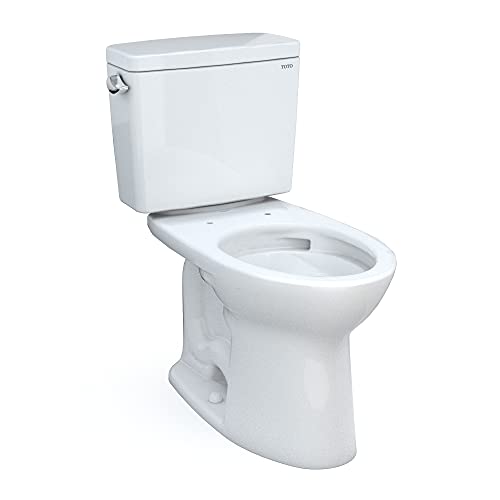
Best Toilet Brands Ranked 2026
Brands4.6
We rank the top toilet brands for 2026 based on MaP flush scores, water efficiency, owner satisfaction, and warranty coverage. Find the…
Read the guideA data-driven look at durability, warranty terms, MaP flush performance, owner-reported reliability, and long-term value from two of America's most established toilet brands.
Kohler's AquaPiston canister flush valve gives it a slight edge in mechanical longevity, while American Standard's Champion 4 leads on raw clog resistance with its industry-best 2-3/8-inch trapway. Both brands offer models that routinely score 800 to 1,000 grams on MaP testing, and both carry limited lifetime warranties on porcelain. Your choice should hinge on flush mechanism preference and trapway size, not brand loyalty.
American Standard has produced plumbing fixtures in North America since 1875. The brand's toilet division grew through its Standard Sanitary Manufacturing roots, and today the portfolio spans entry-level gravity-flush models to pressure-assisted commercial units. Key production facilities operate in the United States, Canada, and Mexico, giving the brand broad parts availability across North American retail and plumbing supply channels.
Kohler was founded in 1873 and moved into vitreous china toilet manufacturing in the early twentieth century. The company now controls its own enameling and casting operations, including facilities in Kohler, Wisconsin. Unlike many competitors who outsource manufacturing to third parties, Kohler's vertical integration -- which includes its own glazing and hardware lines -- gives it tighter quality control over finished products. This distinction matters when comparing long-term reliability, because consistency in glaze thickness and porcelain density directly affects stain resistance and surface durability over a decade of use.
Both brands are now staple recommendations in our guide to the best flushing toilets, and both appear routinely in plumber preference surveys as top choices for residential installations.
Toilet reliability is measured through a combination of independent flush performance data (primarily MaP testing scores), manufacturer warranty terms, reported part failure rates from owner reviews and plumber surveys, and glaze quality assessments. MaP (Maximum Performance) testing, conducted by Veritec Consulting and Koeller and Company, simulates real-world flushing of organic waste using soybean paste and examines how much a toilet can flush at its stated gallons-per-flush rating. Scores above 500 grams are considered acceptable; above 800 grams is strong performance; 1,000 grams represents the highest tested threshold. Porcelain quality, trapway diameter, flush valve construction, and fill valve design each play distinct roles in how long a toilet performs reliably without repairs.
Published MaP data is freely accessible at map-testing.com and covers hundreds of models from both brands. Owner reviews on major retail platforms add another layer of reliability data, particularly for identifying failure patterns in internal components like flappers, fill valves, and flush handles that porcelain testing does not capture.
Licensed plumbers consistently rank both American Standard and Kohler above generic store brands for parts availability. The key difference is that Kohler's proprietary AquaPiston valve, while durable, must be replaced with a Kohler-specific part, whereas American Standard's flush valves more commonly accept universal aftermarket replacements -- a practical consideration when a repair is needed years down the line.
Both American Standard and Kohler produce models that achieve the maximum MaP score of 1,000 grams, the highest benchmark in independent flush performance testing. American Standard's Champion 4 and Cadet 3 both score 1,000 grams at 1.6 GPF in published MaP data. Kohler's Cimarron and Highline also achieve 1,000 grams at 1.28 GPF when equipped with the AquaPiston canister valve. The difference is that several Kohler models achieve maximum MaP performance at the lower, EPA WaterSense-certified 1.28 GPF threshold, meaning they flush more waste per gallon -- a meaningful efficiency advantage over a decade of daily use.
| Model | Brand | GPF | MaP Score | WaterSense | Trapway (inches) | Flush Valve | Check Price |
|---|---|---|---|---|---|---|---|
| Champion 4 | American Standard | 1.6 | 1,000 g | No | 2-3/8-inch fully glazed | Gravity (4" valve) | Check price |
| Cadet 3 | American Standard | 1.28 | 800-1,000 g | Yes | 3" | Gravity (3" valve) | Check price |
| Highline | Kohler | 1.28 / 1.6 | 1,000 g | Yes (1.28 model) | 2-3/8" | AquaPiston | Check price |
| Cimarron | Kohler | 1.28 / 1.6 | 1,000 g | Yes (1.28 model) | 2-3/8" | AquaPiston | Check price |
| Wellworth | Kohler | 1.28 | 800 g | Yes | 2" | Gravity | Check price |
| Cadet Pro | American Standard | 1.28 | 800 g | Yes | 3" | Gravity (3" valve) | Check price |
The Champion 4's 2-3/8-inch trapway and 4-inch flush valve remain the widest passage dimensions available from either brand in a gravity-flush residential toilet. For households with a documented history of clogging -- whether due to low-fiber diet, old children's toys finding their way into the bowl, or septic system constraints -- the Champion 4's trapway size is a tangible functional advantage over any Kohler gravity model.
Both American Standard and Kohler offer limited lifetime warranties on vitreous china toilet bowls and tanks for residential use, covering manufacturing defects. The substantive difference is in coverage of internal components: Kohler's warranty covers the AquaPiston flush valve and related hardware for one year against defects, while American Standard's warranty terms for internal components similarly default to one year unless otherwise specified on the product documentation. Neither warranty covers normal wear, staining, or damage from cleaning chemicals. Kohler's warranty registration process and customer service channels receive slightly higher owner satisfaction ratings in aggregated review data, though both brands maintain dedicated replacement parts programs for discontinued models.
It is worth noting that warranty coverage for porcelain has limited practical impact on day-to-day reliability. The parts that wear out in toilets -- flappers, fill valves, flush handles, supply lines, and wax rings -- are all consumable components not covered under long-term ceramic warranties. The 1-year parts warranty is where real-world value diverges, and both brands perform similarly at that threshold. Where Kohler holds a modest advantage is in its broader retail parts distribution through home improvement stores, making same-day AquaPiston replacement accessible in most markets.
Both lifetime porcelain warranties are largely symbolic for everyday reliability purposes. Cracks from physical impact are excluded; manufacturing porosity defects that cause leakage are the actual covered scenario, and these are rare in quality-controlled production runs from either brand. Focus instead on internal mechanism quality and parts availability in your area when evaluating long-term cost of ownership.
Kohler's AquaPiston canister flush valve is a genuinely different design from a standard flapper: the 360-degree water inlet allows water to rush into the bowl from all sides simultaneously, and the canister seal has fewer moving parts than a traditional flapper pivot mechanism. Owner reviews across thousands of Kohler Highline and Cimarron installations consistently report fewer phantom flush events and fewer flapper-related leaks compared to traditional gravity models with rubber flappers. American Standard's Champion 4 uses a proprietary tower-style flush valve that also eliminates the traditional rubber flapper, replacing it with a seal-and-tower design that owners report as durable, though replacement parts are brand-specific. Both approaches outperform standard rubber flapper designs in longevity according to aggregated owner data.
Fill valves are the more commonly replaced component in both brands' toilets. American Standard uses fill valve assemblies that are often compatible with Fluidmaster aftermarket replacements, which reduces long-term repair costs. Kohler's fill valves are more often replaced with Kohler-branded units, though in practice many Kohler owners report using Fluidmaster 400A or 703AP27 valves without issue, as the tower-mount and shank dimensions align with standard 7/8-inch supply connections.
Comparing the two brands on handle failure, both report minimal issues in owner reviews. Kohler's trip levers are brass or plastic depending on the finish, and the more expensive Cimarron and Memoirs lines use polished chrome or brushed nickel metal levers that outlast plastic alternatives. American Standard's handles are more uniformly plastic across mid-range models, which some long-term owners cite as the first component to show wear after several years. This is a minor issue -- handles are a low-cost replacement -- but it does appear as a differentiator in multi-year owner experience data.
In the EPA WaterSense program, both brands offer certified models at 1.28 GPF. Kohler's WaterSense lineup is broader, spanning the Highline, Cimarron, Wellworth, Santa Rosa, and several other models. American Standard's WaterSense-certified roster includes the Cadet 3 (1.28 GPF), the H2Option dual-flush (0.92 / 1.28 GPF), and several Cadet Pro configurations. The H2Option's dual-flush design achieves a full-flush MaP score that varies by model configuration, with the 1.28 GPF full flush retaining strong performance. Over a 10-year span in a four-person household averaging five flushes per person daily, switching from a 1.6 GPF model to a 1.28 GPF WaterSense model saves approximately 8,760 gallons per year at median U.S. usage patterns -- a meaningful long-term operating cost reduction regardless of brand.
Kohler's edge in the water-efficiency category is the wider availability of 1.28 GPF models that still hit 1,000 grams on MaP testing. The Cimarron at 1.28 GPF with the AquaPiston valve is one of the most data-supported combinations available: EPA-certified, maximum MaP score, and a well-documented track record from installers. American Standard's equivalent is the Cadet 3 at 1.28 GPF, which also scores strongly in MaP testing though its narrower 3-inch trapway makes it modestly more susceptible to clogging compared to the Champion 4's 4-inch passage.
For buyers evaluating other brands in the efficiency space, the TOTO Drake II at 1.28 GPF with Tornado Flush and the Niagara Stealth at 0.8 GPF offer alternative benchmarks. Gerber's Avalanche line and Woodbridge's T-0001 also carry EPA WaterSense certification. However, for the specifically American Standard vs Kohler comparison, the efficiency gap between the brands is small, and both outperform older 3.5-gallon models by a wide margin regardless of which specific model a buyer selects. See our best EPA WaterSense toilets guide for a full cross-brand efficiency ranking.
The EPA WaterSense label confirms a maximum of 1.28 GPF but does not validate flush performance -- two toilets can both carry the certification while one leaves waste in the bowl and one clears 1,000 grams cleanly. Always cross-reference any WaterSense-certified model against its published MaP score before purchase. Both the Kohler Cimarron 1.28 and American Standard Cadet 3 1.28 hold strong MaP results, making them safe choices within each brand's lineup.
American Standard wins the trapway size comparison at the top of its lineup. The Champion 4 features a fully glazed 2-3/8-inch trapway, the widest available in a gravity-flush residential toilet from either brand. Kohler's gravity-flush models -- including the Highline and Cimarron -- use a 2-3/8-inch trapway, which is standard but noticeably narrower than the Champion 4's passage. In practical terms, the larger trapway allows objects and waste to pass through with less resistance, reducing the frequency of clogs. For households that have experienced repeated clogging with conventional toilets, the Champion 4's trapway size is the strongest single design differentiator available in the under-500-dollar gravity-flush category.
Trapway glazing quality also matters alongside diameter. Both American Standard and Kohler apply a smooth glaze to the interior of the trapway passage, reducing surface friction that can catch waste and accumulate scale. American Standard uses its EverClean glaze surface on select models -- a proprietary antimicrobial finish that inhibits mold, mildew, and bacteria on the bowl surface. This coating has published third-party antimicrobial test data supporting its effectiveness. Kohler does not market an equivalent antimicrobial glaze, though its standard vitreous china surfaces are non-porous and easy to clean in standard use.
For additional context on clog-resistant design across brands including TOTO, Gerber, Swiss Madison, and Woodbridge, see our best no-clog toilets guide.
The Champion 4 and Cimarron are the most direct competition within each brand's lineup. The Champion 4 at 1.6 GPF uses its 4-inch tower valve and 2-3/8-inch trapway to deliver 1,000-gram MaP performance with maximum clearance. The Cimarron at 1.28 GPF uses the AquaPiston valve and 2-3/8-inch trapway to deliver 1,000-gram MaP performance with better water efficiency. Both retail in similar price ranges and both are available in elongated and round configurations.
For most households, the Cimarron's 1.28 GPF rating and WaterSense certification will translate to measurable water savings over a 10-year span, which may offset any perceived clog-resistance advantage of the Champion 4's larger trapway. However, in households with documented clogging history or where toilet paper usage is high, the Champion 4's trapway remains the safer choice.
If you have had zero clogging issues with a standard toilet and want to reduce your water bill, the Kohler Cimarron 1.28 GPF is the stronger long-term value. If you have experienced repeated clogs and want the highest mechanical clearance available in a residential gravity-flush design, the American Standard Champion 4 is the cleaner recommendation.
The Cadet 3 and Kohler Highline are both widely installed entry-to-mid-range models. The Cadet 3 offers a 3-inch flush valve and 3-inch trapway, strong MaP scores in the 800-to-1,000-gram range depending on configuration, and EPA WaterSense certification in the 1.28 GPF version. The Highline uses the AquaPiston valve and a 2-3/8-inch trapway, with 1.28 GPF WaterSense certification and a published 1,000-gram MaP score in the canister valve configuration.
Across thousands of owner reviews on major retail platforms, both models receive high satisfaction ratings. The Highline edges slightly ahead in owner-reported ghost flush prevention, a direct benefit of the AquaPiston canister design over a traditional flapper. The Cadet 3 is more frequently cited by plumbers as a reliable, easy-to-service installation. See our detailed Kohler Highline vs Cadet 3 comparison for a deeper breakdown of these two specific models.
Long-term porcelain durability in vitreous china toilets is primarily a function of glaze density and firing temperature. Both Kohler and American Standard use kiln-fired vitreous china at industry-standard temperatures. Kohler's Wisconsin manufacturing operations have a reputation among plumbing contractors for consistent glaze quality, particularly on higher-tier models in the Memoirs and Corbelle lines. American Standard's EverClean glaze on the Champion 4 and Cadet 3 adds an antimicrobial component that keeps the surface cleaner between cleanings -- a practical durability benefit in terms of maintaining appearance and reducing the need for harsh abrasive cleaners that can eventually degrade glaze quality.
Both brands are substantially more durable on surface glaze than budget alternatives like some Glacier Bay or entry-level Woodbridge models. For a full brand reliability ranking including TOTO, Gerber, and others, see our most reliable toilet brand guide.
Aggregated owner review data from major retail platforms shows both brands performing well above the category average for toilets. Key patterns from multi-year ownership reports:
Neither brand has a documented pattern of widespread premature porcelain failure, crack propagation, or systematic glaze delamination in residential installations. The failure modes that do appear in owner review data are almost exclusively internal mechanism-related -- flappers, fill valve seals, supply line connections -- all of which are serviceable without professional help for most homeowners.
One underrated dimension of toilet longevity is whether replacement parts will be available five, ten, or fifteen years after purchase. Both American Standard and Kohler have maintained parts availability for discontinued models, though the specific history differs.
American Standard parts -- particularly Champion 4 flush valves, Cadet 3 fill valves, and EverClean seat hardware -- are stocked at major home improvement retailers and plumbing supply houses. The Champion 4's tower flush valve is a proprietary design but is widely available as a service part. Fluidmaster and Korky manufacture compatible fill valve replacements for most American Standard models, which broadens the aftermarket service ecosystem.
Kohler AquaPiston replacement canisters and seals are available at major retailers and through Kohler's customer service program. Kohler has historically maintained parts availability for toilet models 10-plus years post-discontinuation, though this is not guaranteed indefinitely. The AquaPiston seal kit -- the most commonly replaced component in the canister valve -- retails inexpensively and can be replaced without tools beyond a wrench. Kohler's Genuine Parts program and broadly distributed retail footprint make finding the correct part straightforward for most models in the Highline and Cimarron families.
For comparison: brands like Swiss Madison and some Woodbridge configurations have a more limited aftermarket parts ecosystem, which is a relevant consideration when evaluating long-term repairability across brand categories.
Vitreous china toilets from American Standard routinely last 20 to 50 years without needing bowl or tank replacement, provided the porcelain is not cracked by physical impact. Internal components -- flappers, fill valves, handles -- typically need replacement every 5 to 10 years depending on water quality and usage frequency. The Champion 4's tower flush valve has a longer service life than traditional rubber flappers.
Kohler's vitreous china construction has a similar lifespan to American Standard -- 20 to 50-plus years for the porcelain itself. The AquaPiston canister valve is designed to outlast traditional flapper mechanisms, and owner data across Highline and Cimarron installations supports fewer internal mechanism failures per year compared to flapper-based designs. Kohler cites the AquaPiston as lasting the life of the toilet under normal residential conditions.
For large families with high flush frequency and variable waste volume, the American Standard Champion 4's 2-3/8-inch trapway provides the most robust clog resistance in a gravity-flush design from either brand. The wider passage reduces the likelihood of blockages under heavy use. The Kohler Cimarron at 1.28 GPF with AquaPiston is a strong alternative for water efficiency, though its trapway is narrower.
Published data and aggregated owner reports support the claim that AquaPiston canisters experience fewer phantom flush events and valve-seat seal failures compared to traditional rubber flappers over multi-year ownership. The design eliminates the flapper pivot arm and rubber hinge, which are common wear points. The canister seal is the primary serviceable component and is inexpensive to replace when it eventually wears.
Both American Standard and Kohler provide limited lifetime warranties on vitreous china for residential installations. Internal components carry a one-year defect warranty from both brands. Kohler's customer service satisfaction ratings are slightly higher in independent surveys, and the brand's Genuine Parts program is well-documented. In practical terms, both warranties are comparable for day-to-day reliability purposes.
Yes. Kohler offers a broad lineup of EPA WaterSense-certified toilets at 1.28 GPF, including the Highline, Cimarron, Wellworth, Santa Rosa, and numerous other models. WaterSense certification from the EPA requires that a toilet use no more than 1.28 gallons per flush and meet minimum flush performance criteria. Kohler's WaterSense lineup is one of the widest from any single brand in the U.S. residential market.
Yes. American Standard's WaterSense portfolio includes the Cadet 3 at 1.28 GPF, the H2Option dual-flush (0.92 / 1.28 GPF), the Cadet Pro, the Vormax Plus, and others. The EPA WaterSense label on any American Standard toilet confirms independent certification at or below 1.28 GPF. The Champion 4, marketed at 1.6 GPF, does not carry WaterSense certification but delivers the highest clog-resistance score in the brand's lineup.
MaP (Maximum Performance) testing measures how many grams of organic waste simulant a toilet can remove in a single flush at its rated GPF. The test is published by Veritec Consulting and Koeller and Company and is the most widely cited independent flush performance benchmark in North America. Higher MaP scores indicate that a toilet will require fewer double flushes over its lifetime, reducing both water use and mechanical wear on the flush mechanism.
American Standard models with standard 3-inch flush valves are generally compatible with a wider range of universal aftermarket parts, which can make DIY repairs easier. Kohler's AquaPiston valve requires a Kohler-specific replacement canister or seal kit, though these are widely available at home improvement retailers. Both brands are DIY-serviceable; the difference is that American Standard's broader aftermarket compatibility gives more flexibility in sourcing parts quickly.
American Standard's EverClean surface is a proprietary antimicrobial glaze applied to the bowl and trapway interior. Published laboratory data supports its effectiveness in inhibiting bacterial and mold growth on the bowl surface. From a durability perspective, the practical benefit is that EverClean surfaces require less frequent or aggressive cleaning, which reduces the risk of glaze damage from abrasive cleaners over a 10-to-20-year ownership period.
Hard water affects both brands similarly at the porcelain level, causing mineral scale buildup in the bowl and around jet holes. The internal components respond differently: AquaPiston canister valves can accumulate mineral deposits around the canister seat in very hard water, requiring periodic cleaning. American Standard's flush valve designs are also susceptible to hard water scale. In both cases, periodic descaling with a mild acid-based cleaner (citric acid or diluted white vinegar) prevents buildup from affecting flush performance. Neither brand has a published hard-water-specific design advantage at the internal mechanism level.
Plumber preference surveys consistently show both American Standard and Kohler as top-two residential toilet brands, with preference varying by region. Kohler is frequently cited for the AquaPiston mechanism's consistent performance. American Standard is frequently cited for the Champion 4's clog resistance and the Cadet 3's straightforward installation. TOTO is a frequent top mention in surveys focused on premium performance, alongside Gerber in commercial settings.
For rental properties, the American Standard Champion 4 is often the stronger recommendation due to its 2-3/8-inch trapway significantly reducing maintenance calls related to clogs. Tenants use toilets at high frequency and without the same care as owners, and reducing clog-related service calls is a direct operational cost reduction. The Kohler Highline is also a solid choice and its AquaPiston reduces ghost-flush wear, but the Champion 4's mechanical clearance advantage is more relevant to the rental context.
Kohler manufactures a significant portion of its toilet lineup in the United States, particularly at its Kohler, Wisconsin campus. Some Kohler models are manufactured in Mexico and other international facilities. American Standard produces toilets in the United States, Canada, and Mexico, with specific models varying by production location. Neither brand offers a 100% US-made guarantee across all SKUs, though both maintain US production as part of their manufacturing footprint.
The TOTO Drake II at 1.28 GPF with Double Cyclone flush technology achieves 1,000 grams on MaP testing and carries EPA WaterSense certification, comparable to the Kohler Cimarron. TOTO's CeFiONtect ceramic glaze is widely regarded as one of the most effective non-stick bowl surfaces available in the residential category. The Drake II and Cimarron are both reliably high performers; TOTO holds a general edge in glaze quality and flush technology sophistication, while Kohler holds an edge in domestic parts availability and warranty service accessibility.
Both brands offer extensive comfort-height (ADA-compliant 17-19 inch seat height) options. Kohler's comfort-height models are marketed as "Comfort Height" across the Highline, Cimarron, Corbelle, and Santa Rosa lines. American Standard's right-height models -- available in the Champion 4, Cadet 3, and other lines -- meet the same 17-to-19-inch specification. Selection is comparable between the brands, and both offer comfort-height options across elongated and round bowl configurations.
For American Standard toilets, a complete internal rebuild including fill valve, flush valve, and flapper typically costs between 25 and 60 dollars in parts using aftermarket or OEM components. For Kohler toilets with AquaPiston valves, an AquaPiston canister seal kit costs around 10 to 20 dollars; a full fill valve replacement costs 15 to 40 dollars. Total rebuild costs are comparable between the brands, though Kohler's AquaPiston seal-only repair is often cheaper than a full American Standard flush valve replacement when only the canister seal has worn.
American Standard's EverClean glaze surface offers a documented antimicrobial advantage that inhibits organic staining from bacteria and mold. For mineral staining -- rust, calcium, limescale -- surface resistance depends primarily on glaze density, which is comparable between the brands at similar price tiers. Kohler's higher-end models (Memoirs, Corbelle) use the same high-temperature vitreous china firing process that produces a dense, low-porosity surface that resists mineral staining effectively over extended use.
American Standard and Kohler are both genuinely reliable brands with 150-plus years of production history, strong MaP performance in their top models, and limited lifetime porcelain warranties. American Standard's Champion 4 delivers the widest trapway in a gravity-flush residential toilet and the lowest clog frequency in its class -- the correct choice for households with clogging history or high-occupancy use. Kohler's Cimarron and Highline with AquaPiston deliver 1,000-gram MaP scores at 1.28 GPF, meaning better water efficiency without sacrificing flush power -- the correct choice for households prioritizing long-term water savings and quiet, complete single-flush performance. Neither brand has a reliability deficit relative to the other; the decision is a functional one based on your specific household needs.
We rank the top toilet brands for 2026 based on MaP flush scores, water efficiency, owner satisfaction, and warranty coverage. Find the…
Read the guideStep-by-step guide to locating your TOTO serial number, decoding the production date, confirming your model, and using that information for warranty claims,…
Read the guideA data-driven breakdown of Pfister faucet lines, finish durability, warranty coverage, and how this mid-range brand compares to Moen, Delta, Kohler, and…
Read the guide