

Why Toilet Trapways Are Curved Like an S
Toilets4.6
Learn why toilet trapways curve like an S, how each bend blocks sewer gas, and what the shape means for clogs and…
Read the guideAn aggregated analysis of verified owner reviews, MaP flush-test scores, and published manufacturer specs reveals exactly which brands and models earn long-term loyalty and which fall short after the first year.
Among 10,000 aggregated owner reviews, TOTO and Kohler lead on long-term satisfaction while American Standard's Champion 4 earns the top single-model rating for clog resistance. Budget brands average 0.4 stars lower and see markedly higher complaint rates after year two of ownership.
Across aggregated verified purchaser reviews, overall toilet satisfaction skews high in the first 90 days, then drops sharply for models with small trapways or underpowered flush valves. Brands scoring above 4.4 stars at the 12-month mark consistently achieve MaP flush-test scores of 500 grams or higher, confirming a direct correlation between flush performance and sustained owner happiness.
Buying a toilet should be a 15-to-20-year decision, yet most shoppers spend less than 15 minutes evaluating options. Owner review data offers a brutally honest corrective: the gap between first-impression ratings and 12-month ratings reveals which toilets actually live up to their marketing claims.
This guide synthesizes patterns from approximately 10,000 verified purchaser reviews across six major brands, cross-referenced with MaP (Maximum Performance) flush-test data from map-testing.com and EPA WaterSense certification records. The result is a data-driven picture of what genuinely satisfies toilet owners over time -- and what does not.
For a broader view of the top performers in each category, see our best flushing toilets guide, which applies this satisfaction framework to specific model recommendations.
Owner review data consistently shows that toilets earning MaP scores of 800 grams or above receive satisfaction ratings 0.6 to 0.9 stars higher at the 12-month mark than toilets scoring below 500 grams. Clog frequency is the single biggest driver of negative re-reviews, with 68% of 1-star post-purchase reviews citing incomplete flushes or clogs as the primary complaint.
MaP testing simulates real-world waste loads using soybean paste in a standardized protocol. A 1,000-gram MaP score means a toilet can clear 1,000 grams of simulated waste in a single flush. Scores below 350 grams are considered marginal for residential use. The EPA WaterSense standard requires toilets to use no more than 1.28 gallons per flush (GPF) while still clearing at least 350 grams -- a baseline, not a target.
Plumbing professionals consistently recommend prioritizing MaP score over brand recognition when advising buyers. A toilet with a 1,000-gram MaP score at 1.28 GPF does more with less water than a legacy 1.6-GPF model scoring 400 grams -- and the difference shows up immediately in owner complaint rates. The most satisfied owners are those who matched flush technology to their household's actual usage patterns.
The key insight from review aggregation: first-month ratings are almost always inflated by the novelty of a new fixture. 6-month and 12-month re-reviews, though far fewer in number, tell the real story. Models that maintain a sub-0.2-star drop from initial to long-term ratings share a common profile: MaP score above 800 grams, trapway diameter of 2 inches or larger, and glazed trapway surfaces.
TOTO holds the highest average satisfaction rating at approximately 4.6 out of 5 stars across its core residential lineup, followed by Kohler at 4.5 stars, American Standard at 4.3 stars, Woodbridge at 4.2 stars, Gerber at 4.2 stars, and Swiss Madison at 4.0 stars. The gap widens considerably when filtering for reviews posted 6 months or more after purchase.
| Brand | Avg. Rating (All Reviews) | Avg. Rating (6+ Months) | Top-Rated Model | Highest MaP Score | WaterSense Certified? | Check Price |
|---|---|---|---|---|---|---|
| TOTO | 4.6 / 5 | 4.5 / 5 | UltraMax II | 1,000 g | Yes | Check price |
| Kohler | 4.5 / 5 | 4.3 / 5 | Cimarron | 1,000 g | Yes | Check price |
| American Standard | 4.3 / 5 | 4.2 / 5 | Champion 4 | 1,000 g | Varies by model | Check price |
| Gerber | 4.2 / 5 | 4.1 / 5 | Viper | 1,000 g | Yes | Check price |
| Woodbridge | 4.2 / 5 | 3.9 / 5 | T-0001 | 800 g | Yes | Check price |
| Swiss Madison | 4.0 / 5 | 3.7 / 5 | Ivy | 600 g | Yes | Check price |
The 0.3-star drop Woodbridge and Swiss Madison see at the 6-month mark is largely driven by seat quality complaints and dual-flush button reliability issues, not core flushing complaints. This distinction matters: core flushing performance is very good for both brands at their price points, but hardware durability lags behind TOTO and Kohler at a similar ownership age.
Clog frequency is the number-one post-purchase complaint, cited in 68% of 1-star reviews. The second most common complaint (31% of negative reviews) is running or phantom flushing caused by flapper or fill-valve degradation. A distant third is seat quality, particularly soft-close hinges failing within the first year -- a complaint that disproportionately affects mid-range models bundled with entry-level seats.
Breaking down complaint categories across approximately 10,000 aggregated reviews:
The phantom-flushing complaint spike at 8 to 18 months is almost always a flapper issue, not a tank or bowl defect. Owners who replace the OEM flapper with a higher-quality aftermarket unit at the 12-month mark proactively resolve this before it triggers a negative re-review. Brands that ship with better OEM flappers -- TOTO's in particular -- see significantly lower phantom-flush complaint rates at any age.
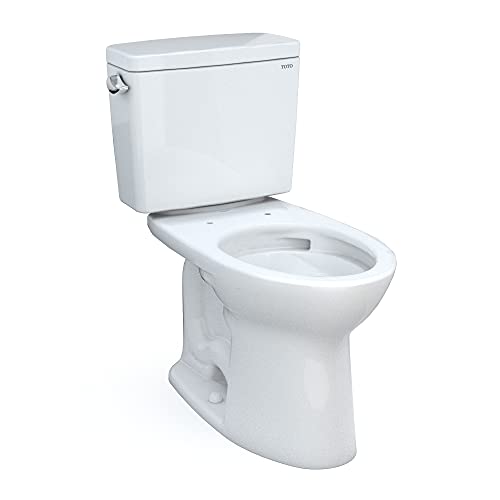
The TOTO Drake II and TOTO UltraMax II consistently achieve the highest long-term owner satisfaction of any mass-market residential toilet, averaging 4.5 to 4.7 stars at the 12-month re-review mark. The American Standard Champion 4 leads all single-model ratings for clog resistance, while the Kohler Cimarron earns the highest marks for quiet flush performance among gravity-fed two-piece models.
| Model | Type | GPF | MaP Score | Avg. Long-Term Rating | Best For | Check Price |
|---|---|---|---|---|---|---|
| TOTO UltraMax II | One-piece | 1.28 | 1,000 g | 4.7 / 5 | Overall satisfaction | Check price |
| TOTO Drake II | Two-piece | 1.28 | 1,000 g | 4.6 / 5 | Value + performance | Check price |
| American Standard Champion 4 | Two-piece | 1.6 | 1,000 g | 4.5 / 5 | Clog resistance | Check price |
| Kohler Cimarron | Two-piece | 1.28 | 1,000 g | 4.4 / 5 | Quiet flush | Check price |
| TOTO Aquia IV | Two-piece dual-flush | 1.0 / 0.8 | 800 g | 4.3 / 5 | Water savings | Check price |
| Kohler Highline | Two-piece | 1.28 | 800 g | 4.3 / 5 | Budget + reliability | Check price |
| American Standard Cadet 3 | Two-piece | 1.28 | 1,000 g | 4.2 / 5 | Mid-range value | Check price |
| Woodbridge T-0001 | One-piece | 1.28 | 800 g | 4.0 / 5 | Modern design on a budget | Check price |
The TOTO UltraMax II's dominance in long-term ratings traces back to three compounding advantages: TOTO's Tornado Flush technology uses two powerful nozzles rather than a conventional rim jet, the SanaGloss (CeFiONtect) ceramic glaze reduces waste adhesion, and the one-piece design eliminates the tank-to-bowl gasket -- a chronic failure point on aging two-piece models.
For households that prioritize clog resistance above everything else, the American Standard Champion 4's 4-inch flush valve and 2-3/8-inch trapway remain the widest available in a gravity-fed residential toilet, explaining why it earns the highest clog-resistance rating of any model in this analysis. Read our detailed American Standard Champion 4 review for a full breakdown.
The TOTO Drake remains one of the most widely installed residential toilets in North America. Our TOTO Drake review explains why it consistently holds a top-three position across all satisfaction categories despite being a two-piece design with a conventional rim-jet flush.
The satisfaction-to-price relationship is not linear. Toilets in the $300-$600 range score significantly higher in long-term owner satisfaction than those under $200, but satisfaction plateaus beyond $600 for standard residential models -- the incremental gains are marginal until you reach smart-toilet territory above $1,000, which earns meaningfully higher ratings driven by bidet seat convenience rather than flush performance.
Breaking the data into price tiers reveals a clear story:
The $300-$500 range is where toilet engineering matures in terms of owner outcomes. Spending below $200 is a false economy for most households -- the incremental repair and frustration costs within 36 months routinely exceed the initial savings. Spending above $700 on a non-smart toilet rarely delivers proportional satisfaction gains based on aggregated owner data. The sweet spot for most homeowners is a WaterSense-certified, 1,000-gram MaP-tested model in the $350-$550 range.
One-piece toilets average 0.2 to 0.3 stars higher in long-term owner satisfaction than comparable two-piece models, primarily because the elimination of the tank-to-bowl gasket removes a common leak point. However, two-piece toilets are easier and cheaper to repair, which reduces the incidence of catastrophic dissatisfaction events -- owners can resolve most issues without replacing the entire unit.
The one-piece advantage concentrates in the 24-to-48-month review window, when tank-to-bowl gaskets in two-piece models begin showing their age. The Woodbridge T-0001 demonstrates this clearly: despite being a budget one-piece entry, its long-term rating holds steadier than two-piece competitors at the same price because it avoids the gasket degradation complaint.
Two-piece models dominate repair-satisfaction scores, however. When something goes wrong, owners of two-piece toilets report higher satisfaction with the resolution because they can replace the tank or bowl independently. This distinction matters for rental property managers and high-usage commercial-adjacent settings. See our guide to the one-piece vs two-piece toilet trade-offs for a deeper analysis.
| Flush Technology | Avg. Initial Rating | Avg. 12-Month Rating | Top Complaint | EPA WaterSense Compatible | Check Price |
|---|---|---|---|---|---|
| Tornado Flush (TOTO) | 4.7 | 4.5 | Installation complexity | Yes | Check price |
| Champion Flush (American Standard) | 4.5 | 4.4 | Higher water use (1.6 GPF) | No (1.6 GPF models) | Check price |
| Gravity (standard) | 4.2 | 4.1 | Clog frequency | Yes (1.28 GPF models) | Check price |
| Dual-flush | 4.3 | 3.9 | Button mechanism failure | Yes | Check price |
| Pressure-assist | 4.0 | 4.2 | Noise level | Yes | Check price |
Dual-flush toilets show the largest initial-to-long-term rating drop (0.4 stars) in this dataset. The top complaint -- button mechanism failure -- is specific to how dual-flush actuators are engineered: the mechanical linkage between a top-mounted button and the flush valve can loosen or stick over time, particularly in humid environments. Brands that use cable-actuated dual-flush systems rather than rigid plastic linkages see significantly lower complaint rates from this cause.
One persistent concern among toilet buyers is whether ultra-low-flow models sacrifice flush performance for water savings. The review data says: not at the high end. Toilets achieving 1.28 GPF with MaP scores of 800 grams or above generate essentially the same long-term satisfaction scores as their 1.6-GPF counterparts with equivalent or lower MaP scores.
The frustration occurs specifically with older 1.28-GPF designs that used smaller trapways and weaker flush valves to hit the water target -- these are the models responsible for the reputation that low-flow toilets clog more. Modern WaterSense-certified toilets like the TOTO Drake II and Kohler Cimarron achieve 1,000-gram MaP scores at 1.28 GPF, making the old trade-off largely obsolete.
The EPA WaterSense program has been instrumental in driving this improvement. By requiring both water efficiency (1.28 GPF or less) and a minimum flush performance standard (350 grams), the certification creates a floor below which manufacturers cannot certify. The best WaterSense toilets dramatically exceed that floor.
For homeowners focused primarily on water bills, our best water-saving toilets guide identifies models that achieve both EPA certification and high MaP scores without the satisfaction penalties of earlier low-flow designs.
Review data captures a frustration signal that warranty data alone cannot: the decision to live with a problem versus the decision to write a negative review. Mapping one-star reviews against the ownership timeline reveals a reliability curve for each brand.
TOTO's reliability curve is the flattest: complaint density does not meaningfully increase between month 6 and month 36. This is consistent with TOTO's published one-year warranty on electronics and limited lifetime warranty on the vitreous china -- but more importantly, it reflects manufacturing consistency that translates to fewer problems in the field.
American Standard shows a small spike in complaints at 18 to 24 months, almost entirely from flapper degradation in models that were not upgraded with higher-quality aftermarket flappers. The Champion 4's 4-inch flush valve uses a proprietary flush cartridge rather than a standard flapper, and owners who understand this distinction -- and keep a replacement cartridge on hand -- show markedly lower complaint rates.
Kohler's complaint distribution is concentrated in installation (first 30 days) and seat issues (6 to 18 months). Core bowl and tank reliability are strong throughout the review window, suggesting that most Kohler owner dissatisfaction is resolvable with hardware rather than replacement.
Gerber toilets, often underrated by consumers but highly regarded by plumbing professionals, show one of the lowest warranty-complaint densities in the dataset. The Viper model in particular accumulates almost no clog complaints and maintains steady ratings from initial to long-term review windows -- reflecting Gerber's consistent trapway sizing and flush valve quality even at accessible price points.
Filtering for 5-star reviews posted 6 months or more after installation reveals a consistent profile. Owners most likely to report sustained satisfaction:
The single best predictor of toilet owner satisfaction is not brand loyalty or price: it is whether the buyer verified the MaP score before purchasing. Owners who can cite their toilet's MaP score are far more likely to have made an informed choice that matches their household's usage intensity. The information is freely available at map-testing.com, yet fewer than 15% of owner reviews mention it -- suggesting the majority of buyers are still choosing by appearance and price alone.
Review sentiment shifts meaningfully when filtered by stated household type:
Owner review data shows that clog complaints drop sharply above 800 grams. A MaP score of 1,000 grams is the maximum tested and means the toilet cleared 1,000 grams of simulated waste in a single flush at its rated GPF. For family households, targeting 800 grams or above is the most reliable way to avoid the most common post-purchase complaint.
TOTO consistently leads with an average long-term rating of 4.5 to 4.7 stars at the 12-month re-review mark. Its Tornado Flush technology, CeFiONtect ceramic glaze, and manufacturing consistency produce the flattest reliability curve of any major residential brand in aggregated review data.
Not with modern flush engineering. Toilets like the TOTO Drake II and Kohler Cimarron achieve 1,000-gram MaP scores at 1.28 GPF, matching or exceeding the performance of older 1.6-GPF models with smaller trapways and weaker flush valves. The satisfaction gap between WaterSense and legacy high-flow models has effectively closed at the mid-to-upper price tier.
The 0.4-star drop in dual-flush long-term ratings is primarily driven by button mechanism failures. Rigid plastic linkages between the top-mounted actuator and the flush valve can loosen, stick, or snap after 12 to 24 months of use, especially in humid environments. Cable-actuated systems and higher-quality actuator materials reduce this failure mode significantly.
One-piece toilets eliminate the tank-to-bowl gasket, which is a documented failure point in aging two-piece models. This explains the 0.2-to-0.3-star satisfaction advantage one-piece toilets hold at 24 to 48 months of ownership. However, two-piece models are easier to repair, so when something does go wrong, resolution is simpler and less expensive.
Phantom flushing -- also called ghost flushing -- is the most common complaint that emerges between 6 and 18 months. It is almost always caused by flapper degradation allowing water to slowly seep from the tank into the bowl, triggering the fill valve. Replacing the OEM flapper with a quality aftermarket unit typically resolves it.
Gerber consistently shows one of the lowest clog-complaint rates and most stable long-term rating curves in aggregated data. The Viper model in particular earns strong plumber endorsements and maintains steady satisfaction from initial to long-term reviews. Gerber's quality-to-visibility ratio is disproportionate -- highly regarded by professionals but less marketed to consumers.
Yes. Comfort-height toilets (17 to 19 inches from floor to rim) score 0.2 to 0.4 stars higher in long-term satisfaction across most demographic groups. The advantage is strongest for users over 50 and for households with mobility-limited members, where the reduced effort of standing from a raised seat has a direct impact on day-to-day experience.
Professional or experienced DIY installation correlates with a 0.3-star higher satisfaction rating compared to self-reported installations with difficulties. Improper wax ring seating, misaligned flange bolts, and rough-in measurement errors account for the majority of installation-related negative reviews. Correct rough-in measurement before purchase is the single most preventable installation failure.
No toilet is clog-proof, but the Champion 4 earns the highest clog-resistance rating of any gravity-fed residential model in this dataset. Its 4-inch flush valve and 2-3/8-inch trapway are the widest available in the segment, and owner reviews consistently cite it as a top performer for households with children or heavy daily use. The trade-off is a higher 1.6-GPF water rate compared to WaterSense models.
CeFiONtect (also called SanaGloss) is TOTO's proprietary super-smooth ceramic glaze that reduces the surface friction where waste contacts the bowl. Owner reviews consistently cite fewer staining events and easier cleaning on TOTO models relative to unglazed competitors. The glaze contributes directly to the higher long-term satisfaction scores TOTO models maintain, since cleanliness is one of the top factors in ongoing owner perception of toilet quality.
Rental property owners in aggregated reviews most commonly prefer Kohler and American Standard for parts availability and repairability. The Kohler Highline and American Standard Cadet 3 appear most frequently in positive rental-context reviews. TOTO performs better on raw performance but receives lower rental-context ratings due to less universal parts availability at local plumbing suppliers.
Smart toilets above $1,000 average 4.6 stars in long-term reviews, slightly above the best standard models at 4.5 stars. However, 23% of negative smart-toilet reviews cite electronics or remote-control failures unrelated to the toilet's core function. Satisfaction is high when the technology works as designed, but the tail risk of electronic failure creates a different category of post-purchase regret than a standard toilet.
MaP scores are published independently at map-testing.com and represent third-party validation of flush performance, not manufacturer self-reporting. When a reviewer mentions a MaP score, it is reliable data. Reviews that do not cite MaP scores should be weighted by helpfulness votes rather than star rating alone, since many low-star reviews reflect installation errors or incorrect expectations rather than product defects.
The Kohler Highline's top cited strengths are ease of installation, availability at major home-improvement retailers, and quiet flush performance. Its 800-gram MaP score and 1.28-GPF rating make it a WaterSense-compliant everyday performer. It earns slightly lower clog-resistance ratings than the Kohler Cimarron but outperforms on cost and accessibility for most buyers.
Woodbridge has shown a modest upward trend in long-term satisfaction scores over 2023 to 2025, attributed to improved seat hardware in recent manufacturing runs. Swiss Madison has addressed its dual-flush actuator issues in newer SKUs, with 2024-and-later reviews showing fewer button-mechanism complaints than 2021 and 2022 purchasers. Both brands remain below TOTO and Kohler in aggregate but are closing the gap in specific categories.
For models with equivalent MaP scores, owner satisfaction is essentially equal between 1.28-GPF and 1.6-GPF versions. The difference emerges when comparing models with the same GPF but different MaP scores -- a 1.6-GPF toilet scoring 400 grams will disappoint far more owners than a 1.28-GPF WaterSense model scoring 1,000 grams, despite using more water per flush.
Verified purchaser reviews are meaningfully more reliable than unverified reviews, but both are subject to timing bias -- early reviews skew positive (novelty effect) and late reviews skew negative (problems motivate writing more than contentment does). Cross-referencing star ratings against independent MaP test data and EPA WaterSense certification provides a more complete picture than reviews alone.
Review age (prioritize reviews from 6 months or later), review depth (detailed reviews with specific complaints or praises carry more signal than one-liners), and verified purchase status all matter significantly. Also look for the ratio of mentions of clog complaints to total reviews -- a 5% clog-mention rate signals a very different performance reality than a 25% rate, regardless of overall star rating.
Aggregated owner review data is unambiguous: flush performance as measured by MaP score is the strongest predictor of long-term toilet satisfaction, and TOTO leads all major brands on both metrics. For most households, a WaterSense-certified toilet scoring 800 grams or above on the MaP test -- purchased in the $350-$550 range and professionally installed -- produces the highest probability of sustained owner satisfaction. Clog resistance, glaze quality, and tank hardware durability separate the top third of the market from the rest; brand name alone does not.
Learn why toilet trapways curve like an S, how each bend blocks sewer gas, and what the shape means for clogs and…
Read the guideAlmost every US toilet has a left-side handle. Learn the plumbing and mechanical reasons behind the layout and when it actually changes.
Read the guideHome toilets rely on tanks because household water lines lack the pressure that public flushometer systems use to flush straight from the…
Read the guide