
Why Toilet Trapways Are Curved Like an S
Toilets4.6
Learn why toilet trapways curve like an S, how each bend blocks sewer gas, and what the shape means for clogs and…
Read the guideA cardboard toilet paper roll flushed by accident is a solid, non-dissolving obstruction that almost never clears on its own. This guide walks through why it gets stuck, exactly what to do in the next 30 minutes, and when to call a plumber -- so you avoid a flooded floor and an expensive service call.
A flushed toilet paper roll will not unclog itself. The cardboard tube is rigid and does not dissolve. It lodges in the trapway or drain line and must be physically removed with a toilet auger. Do not keep flushing -- each attempt risks overflow and pushes the roll deeper into the drain.
No. Unlike toilet paper tissue, which breaks down in water within minutes, cardboard is made from compressed cellulose fibers bonded with adhesive. Even after hours of soaking it retains enough structural rigidity to remain lodged. Waiting also risks slow drain overflow if a partial blockage turns into a full seal.
The only partial exception is a very thin, already-wet cardboard tube in a toilet with a large 2 3/8-inch fully glazed trapway and a high-GPF flush. In those rare cases the tube might deform enough to slip through -- but plumbing experts and manufacturers treat this as unpredictable and advise manual removal every time.
The cardboard toilet paper roll -- technically a paperboard core -- is the kind of object that makes plumbers say "it's always something rigid." Unlike a wad of tissue, which the EPA WaterSense program confirms disperses in roughly 30 seconds of agitation, a cardboard tube absorbs water slowly and stays dimensionally stable for hours. It is typically 1.5 to 1.75 inches in diameter. Most residential toilet trapways have an internal clearance of 1.75 to 2.375 inches. The roll can fit, and can also wedge.
The shape creates the real problem. A cylindrical tube entering an S-shaped or P-shaped trapway at an angle catches on the curve. Water pressure from flushing can rotate the tube further into the curve rather than push it through. Every additional flush compacts the wedge and may push the roll past the trapway into the drain line, making retrieval harder.
Cardboard cores are among the most common non-flushable foreign objects plumbers extract. Because the roll is rigid, it does not respond to enzyme treatments or chemical drain cleaners. The moment you realize a roll was flushed, stop flushing and reach for a toilet auger. Delay and additional flushes are the main reasons a DIY job becomes a service call.
When the toilet paper roll enters the trapway, it either passes through if the clearance is large enough, or catches on the curve and lodges. The trapway's narrowest point -- typically at the first bend -- acts as a catch point for any object close to its internal diameter. Once wedged, the tube allows water to drain past it slowly (partial blockage) or seals completely (full blockage).
A partial blockage is deceptive because the toilet may appear to flush weakly rather than overflow. Over the next several flushes the cardboard swells further with water absorption, converting a partial block into a full seal. Full seals cause bowl overflow within one or two additional flushes.
Toilet trapway geometry varies meaningfully across brands and models. Understanding it helps explain why some toilets are more forgiving than others when a foreign object is flushed:
| Toilet Model | Trapway Internal Diameter | Flush Type | Fully Glazed Trapway | MaP Score (g) | Check Price |
|---|---|---|---|---|---|
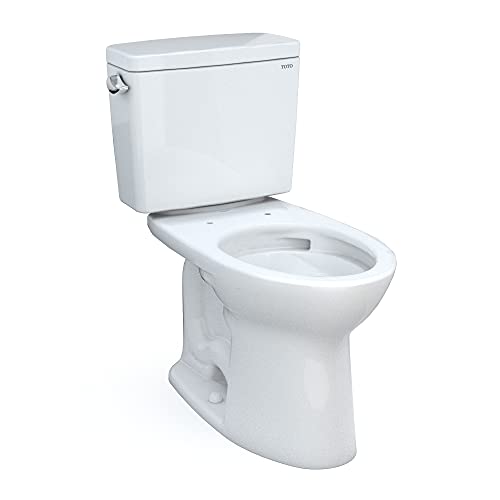
| TOTO Drake II (CST454CEFG) | 2 1/8 in | Double Cyclone / G-Max | Yes (CeFiONtect) | 1,000 | Check price |
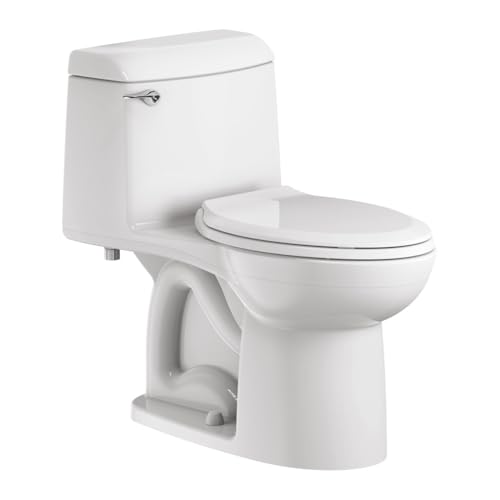
| American Standard Champion 4 | 2 3/8 in | Accelerator Flush | Yes (EverClean) | 1,000 | Check price |
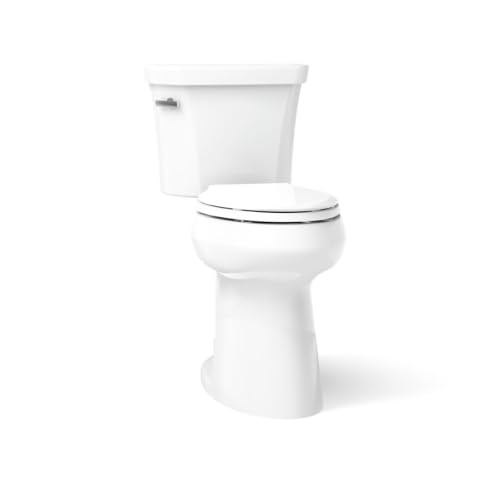
| Kohler Highline (K-3999) | 2 1/8 in | Gravity | Yes | 800 | Check price |
| TOTO UltraMax II | 2 1/8 in | Double Cyclone | Yes (CeFiONtect) | 1,000 | Check price |
| Kohler Cimarron (K-3609) | 2 1/8 in | AquaPiston | Yes | 1,000 | Check price |
| Gerber Viper (21-302) | 2 1/8 in | Gravity | Yes | 600 | Check price |
| Woodbridge T-0001 | 2 1/8 in | Dual Flush | Yes | 700 | Check price |
| Swiss Madison Well Made Forever | 2 in | Dual Flush | Yes | 500 | Check price |
The American Standard Champion 4 holds the largest certified trapway at 2 3/8 inches -- the widest available in a residential gravity toilet -- which is why it earns a 1,000-gram MaP score and is widely recommended by plumbers for clog-resistant performance. Even so, a 1.5-inch-diameter cardboard roll can still wedge at an angle inside any of these trapways, including the Champion 4. The trapway diameter is not a guarantee of clearance for rigid cylindrical objects.
The most effective DIY tool is a closet auger (toilet snake), a flexible cable with a coiled tip specifically designed for toilet trapways. Insert the auger, rotate to hook or break up the obstruction, and withdraw slowly. In many cases the coil hooks the cardboard roll and pulls it back out intact.
If you can see the roll near the drain opening, needle-nose pliers or a drain claw tool may retrieve it without an auger. Never use a wire coat hanger -- it can scratch the vitreous china and rarely generates enough reach or torque to dislodge a lodged cardboard tube.
Step 1: Stop all flushing immediately. Turn the shutoff valve clockwise (behind or below the toilet) to cut off the water supply. This prevents overflow and keeps the water level stable while you work.
Step 2: Assess the water level. If the bowl is full, bail water into a bucket until the level is 4 to 6 inches from the bottom. Working with a full bowl means any tool insertion will splash contaminated water on the floor.
Step 3: Check visually first. Shine a flashlight into the drain opening. If the roll is visible and close to the surface, needle-nose pliers or a drain retrieval claw may pull it out in under a minute. This is the cleanest, fastest option when it works.
Step 4: Use a toilet auger. A closet auger -- also called a toilet auger or toilet snake -- has a rubber sleeve to protect the porcelain and a flexible cable 3 to 6 feet long. Feed the coiled end into the drain, turning the handle clockwise. When you feel resistance, you have contacted the roll. Rock the handle back and forth to either hook the cardboard or break it into pieces small enough to flush. Withdraw the auger slowly, pulling the roll out with it if it is hooked.
Step 5: Test flush carefully. After retrieval, turn the shutoff valve back on, let the tank fill, and do a single flush while watching closely. A clear, fast drain confirms the blockage is gone. If drainage is slow, run the auger a second time -- a piece of soggy cardboard may still be partially blocking the trapway.
Step 6: If the auger does not clear it, stop. When the roll has been pushed past the trapway into the 3- or 4-inch drain line, a standard 3-foot auger may not reach it. This is the threshold for a professional service call. A plumber carries longer drum augers and may use a borescope camera to locate the object precisely before extraction.
Plunging is not the first tool to reach for when a solid cylindrical object is the blockage. A plunger creates hydraulic pressure that is more likely to push the roll further into the drain than to pull it back out. The toilet auger is the correct first tool because its hook retrieves the object rather than forcing it downstream. Reserve the plunger for paper and organic waste clogs where downstream movement is acceptable.
A plunger is unlikely to remove a cardboard roll and may make the situation worse. Plunger pressure pushes water and whatever is floating in it downstream. For a rigid tube already wedged in the trapway, downward pressure more often rotates and compresses the object deeper into the curve rather than dislodging it.
The one scenario where plunging might help is when the roll is only partially into the drain and has not yet seated on the curve -- in which case suction on the upstroke might shift it enough for manual retrieval. Even then, an auger or retrieval tool is safer and more controlled.
This is one of the most important distinctions in toilet clog repair: the right tool depends on the nature of the blockage, not just the symptom. For soft, dissolvable clogs (toilet paper wads, organic waste), a flange plunger is often the fastest fix. For rigid foreign objects (cardboard rolls, children's toys, toothbrush caps, wax seals), an auger that hooks and retrieves is almost always the right tool.
Related to this: chemical drain cleaners including Drano, which carry warnings against use in toilets in their own product labels, do nothing for a cardboard roll. Chemical products dissolve organic matter, not structural cardboard. Using them adds corrosive chemicals to the water without solving the problem and can damage fill valves, flappers, and wax seals over repeated exposure.
Plumber service call rates for a foreign object extraction from a toilet trapway typically range from $100 to $250 for a standard visit, depending on region, time of day, and how deeply lodged the object is. If the roll has traveled past the trapway into the main drain line and requires camera inspection or drain rodding, costs can reach $300 to $500.
A toilet auger purchased from a hardware store costs $20 to $60 and clears the large majority of foreign object clogs in under 15 minutes. For most homeowners, the auger pays for itself on the first use compared to a service call.
| Situation | Recommended Action | Urgency |
|---|---|---|
| Roll visible near drain, toilet not flushed again | Needle-nose pliers or drain claw retrieval | DIY now |
| Toilet will not drain, roll entered drain opening | 3- to 6-foot toilet auger | DIY within 30 minutes |
| Auger reached full length with no result | Call plumber; roll is in the drain line | Professional same day |
| Toilet overflowed onto floor | Stop water supply, clean up, call plumber | Professional emergency |
| Partial drainage but very slow | Auger attempt; if no improvement call plumber | DIY first, then professional |
| Multiple toilets draining slowly | Main line blockage -- call plumber | Professional urgent |
Not all augers are created equal for this job. The best options for a flushed cardboard roll are those with a bulb-head or coil tip that can hook the tube and pull it out rather than just breaking it up. A straight tip or cutting tip is designed for organic blockages and may shred the cardboard without retrieving it, leaving soggy fragments in the trapway.
A 3-foot auger handles the toilet trapway and the first foot of drain line. A 6-foot auger gives extra reach for rolls that have traveled further. If you have young children in the house -- whose curiosity often extends to flushing objects -- a 6-foot auger is worth buying and keeping under the sink.
If your toilet clogged from a flushed roll and you want to reduce the chance of future clogs from any cause, the toilet's MaP (Maximum Performance) score and trapway design are the numbers that matter. The best flushing toilets combine a fully glazed trapway with high-volume flush performance to move obstructions through rather than getting them lodged.
The TOTO Drake and Drake II use TOTO's G-Max or Double Cyclone flush system with a CeFiONtect-glazed trapway, earning consistent 1,000-gram MaP scores. The American Standard Champion 4 carries the largest certified trapway in residential gravity toilets at 2 3/8 inches. The Kohler Cimarron and Highline use the AquaPiston canister valve for 360-degree flush distribution that clears the entire bowl surface. These models do not guarantee that a rigid cardboard roll will pass through -- nothing does -- but they are significantly more forgiving than builder-grade toilets with narrow, unglazed trapways.
For households with young children, consider toilets built for clogging problems or installing a no-clog toilet that combines large trapway geometry with high MaP scores. You may also want to review what not to flush as a quick reference for the whole family.
After clearing a foreign object clog, run the toilet through three or four full flushes with nothing in the bowl and watch for slow drainage on any of them. A roll that was partially in the drain may have left soggy fragments behind that will compact into a soft clog over the next several days. Confirm full drainage now rather than discovering a partial blockage a week later.
Cardboard rolls end up in toilets in predictable ways: children drop them in, holders mounted directly over the bowl let rolls fall in during the flush wind, and adults reach for a roll during a flush and drop it. A few straightforward adjustments reduce the chance of recurrence:
These precautions add up. Most repeat foreign-object incidents happen because the physical environment makes accidents easy. Changing the holder position is a five-minute job that eliminates the most common drop scenario permanently.
You may also want to keep a toilet auger and a proper flange plunger within reach in each bathroom. Storing them under the sink or in a closed cabinet means they are available the moment you need them, without hunting through the garage. For best flushing performance upgrades and related repair guides, see our article on why toilets clog with toilet paper.
No. Cardboard toilet paper cores are made from compressed paperboard bonded with adhesive. They absorb water and soften over hours, but they do not dissolve. They remain structurally rigid enough to block a trapway for days without disintegrating on their own. Physical removal with an auger is required.
First, stop flushing and turn off the water supply valve. If you can see the roll near the drain opening, retrieve it with needle-nose pliers or a drain claw. If it has entered the trapway, insert a 3- to 6-foot toilet auger, rotate clockwise to hook the tube, and pull it out slowly. Most cases clear in under 15 minutes.
No. Drano and similar chemical drain cleaners are formulated to dissolve organic matter and grease. They have no effect on cardboard and can damage rubber toilet components including the flapper, fill valve seat, and wax ring seal. The Drano product label itself warns against use in toilets. Use a toilet auger instead.
In a single flush, a cardboard roll typically stays in the toilet trapway or just past it, within the first foot of the 3- or 4-inch drain line. Multiple flushes can push it further. A standard 3-foot toilet auger reaches the trapway and immediate drain line; if that does not retrieve the roll, a plumber with a longer drum auger is needed.
Standard cardboard cores measure about 1.5 inches in outer diameter and 4 to 4.5 inches long. Residential toilet trapways have internal clearances of 1.75 to 2.375 inches. The diameter technically allows passage, but the cylindrical shape causes the roll to wedge at the trapway's curves rather than pass straight through. This is why most flushed rolls lodge rather than clear.
Each additional flush adds water to a bowl that cannot drain efficiently, increasing overflow risk. The hydraulic pressure also rotates and compresses the roll further into the trapway curve, making it harder to retrieve and potentially pushing it past the trapway into the drain line where a standard auger cannot reach. Stop flushing immediately.
Almost never. Unlike tissue paper, cardboard does not disperse in water quickly enough to clear on its own within any practical timeframe. Even if the roll softens after prolonged soaking, the soggy fragments can recompact into a secondary soft clog. Physical removal is always the recommended approach.
The roll itself does not damage porcelain. However, repeated forceful plunging to try to dislodge it can crack the bowl's interior glaze or, in older toilets, the porcelain itself. Using a wire coat hanger as an improvised auger scratches the glazed trapway surface, which encourages future deposit buildup. Stick to a rubber-sleeved toilet auger.
A larger, fully glazed trapway like the 2 3/8-inch opening on the American Standard Champion 4 reduces resistance and makes it less likely that a paper roll catches on a rough surface. However, no trapway size guarantees that a rigid cylindrical object will pass through rather than wedge at the curve. Large trapways help primarily with paper and organic waste clogs.
After any retrieval attempt, flush the toilet once with nothing in the bowl and watch the drainage carefully. A clear, fast drain where water exits the bowl within 5 to 8 seconds indicates the blockage is gone. Slow, gurgling, or partial drainage means the trapway or drain line still has an obstruction. Run the auger a second time or call a plumber.
Slow drainage indicates a partial blockage -- the roll is wedged in a position that lets water pass but not freely. Do not use the toilet as normal; each flush risks converting the partial block to a full seal. Turn off the supply valve and use a toilet auger to hook and retrieve the roll before the blockage worsens.
For most cases: a toilet auger (closet auger) with a 3- to 6-foot cable, rubber gloves, a bucket, and old towels. If the roll is visible near the surface, needle-nose pliers or a drain retrieval claw tool can work without inserting an auger at all. A flashlight helps you see down the drain to assess the situation before choosing a tool.
Mount the toilet paper holder at least 18 inches from the toilet bowl on the side wall rather than directly over the fixture. Keep a small waste bin next to the toilet for empty rolls. For households with toddlers, install a childproof toilet seat lock that prevents the flush lever from engaging without adult pressure.
A standard service call for foreign object extraction from a toilet ranges from $100 to $250 depending on location and time of day. If the roll traveled into the main drain line and requires camera inspection or a drum auger, costs typically reach $300 to $500. A toilet auger purchased from a hardware store costs $20 to $60 and eliminates the service call for most cases.
Yes. Older builder-grade toilets with 1.6 GPF or higher-flush-volume but unglazed, narrow trapways trap foreign objects more readily than modern high-performance models. Toilets with MaP scores of 1,000 grams -- like the TOTO Drake II, TOTO UltraMax II, and American Standard Champion 4 -- generate more hydraulic force per flush, which provides a slightly better chance of moving a loose object through, but physical removal remains the correct approach regardless of flush performance.
If the roll is only in the toilet trapway, it will not cause a sewage backup in other fixtures. However, if repeated flushing has pushed the roll into the main drain line shared by other plumbing fixtures, a backup in sinks, tubs, or other toilets is possible. Multiple fixtures draining slowly after the incident is a sign the roll reached the main line and requires professional drain rodding.
No. Some premium toilet paper brands use a thin plastic or foam core. These are equally non-flushable and in some cases more dangerous because plastic does not soften in water at all, making retrieval harder and increasing the risk of scratching the trapway glaze. Never flush any type of roll core, cardboard, foam, or plastic.
Yes. After retrieval and water supply restoration, flush three to four times with nothing in the bowl and confirm each flush drains completely within 8 seconds. Then flush with a modest amount of toilet paper to confirm normal waste transport. Inspect the trapway with a flashlight to check for retained soggy fragments that could form a secondary clog over the following days.
A flushed toilet paper roll will not clear on its own and must be physically removed with a toilet auger. Stop flushing the moment you realize what happened, turn off the water supply, and use a 3- to 6-foot closet auger to hook and retrieve the roll. Most cases resolve in under 15 minutes with a $20 to $60 auger, avoiding a plumber service call of $100 to $250. If the roll has traveled past the trapway into the main drain line and a standard auger cannot reach it, call a licensed plumber. Going forward, mounting the toilet paper holder at least 18 inches from the bowl eliminates the most common accidental drop scenario. For long-term clog resistance on all fronts, consider upgrading to a toilet with a fully glazed 2 1/8-inch or larger trapway and a MaP score of at least 800 grams, such as the TOTO Drake II, Kohler Cimarron, or American Standard Champion 4.
Learn why toilet trapways curve like an S, how each bend blocks sewer gas, and what the shape means for clogs and…
Read the guideAlmost every US toilet has a left-side handle. Learn the plumbing and mechanical reasons behind the layout and when it actually changes.
Read the guideHome toilets rely on tanks because household water lines lack the pressure that public flushometer systems use to flush straight from the…
Read the guide