

Why Toilet Trapways Are Curved Like an S
Toilets4.6
Learn why toilet trapways curve like an S, how each bend blocks sewer gas, and what the shape means for clogs and…
Read the guideYour bathroom accounts for roughly 60 percent of indoor residential water use. These 40 research-backed strategies cover toilets, showers, faucets, leaks, and habits so you can cut that number significantly without sacrificing comfort.
The three highest-impact bathroom water-saving moves are replacing a pre-1994 toilet with an EPA WaterSense model (saves up to 13,000 gallons per year), fixing a running toilet immediately (can waste 200 gallons daily), and installing a WaterSense showerhead (saves 2,700 gallons annually for a family of four).
The average American household uses approximately 300 gallons of water per day, and EPA data shows that nearly 60 percent of that total flows through bathroom fixtures. Toilets alone account for about 30 percent of indoor household water consumption. With water rates rising steadily across the United States and drought conditions expanding in the Southwest, the Pacific Coast, and parts of the Southeast, reducing bathroom water use is both financially and environmentally significant.
This guide organizes 40 proven tips by fixture and behavior category. Each tip is grounded in published data from the EPA, plumbing industry standards, or manufacturer-verified specifications. You do not need expensive renovations to see results: many of the highest-impact changes cost nothing at all.
Replacing a toilet manufactured before 1994 with a current EPA WaterSense-certified model delivers the largest single fixture gain, cutting per-flush consumption from 3.5 to 6 gallons down to 1.28 GPF or less. Choosing a dual-flush model adds further flexibility, letting users select a 0.8 GPF reduced flush for liquid waste. These two upgrades together can save a four-person household more than 16,000 gallons per year.
1. Replace any pre-1994 toilet. Federal law did not cap toilet consumption at 1.6 GPF until 1994. Toilets installed before that year commonly use 3.5 to 7 gallons per flush. Swapping one out for a current 1.28 GPF WaterSense model saves up to 13,000 gallons per household per year, according to the EPA. See our guide to the best flushing toilets for vetted replacements.
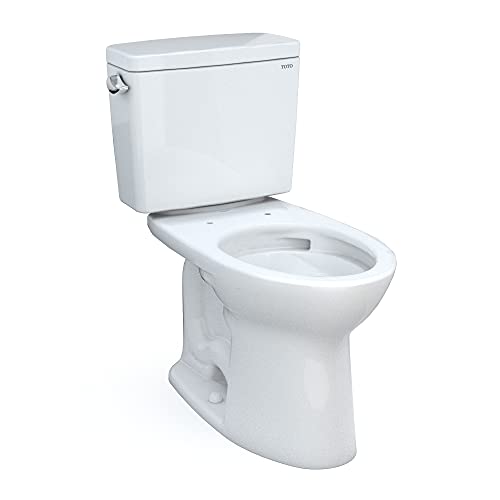
2. Choose an EPA WaterSense-certified toilet. The WaterSense label means the toilet uses no more than 1.28 GPF and has passed independent third-party performance testing. Certified models include the TOTO Drake II (1.28 GPF), TOTO UltraMax II (1.28 GPF), Kohler Cimarron (1.28 GPF), and American Standard Cadet 3 (1.28 GPF). The label guarantees efficiency without sacrificing flush performance.
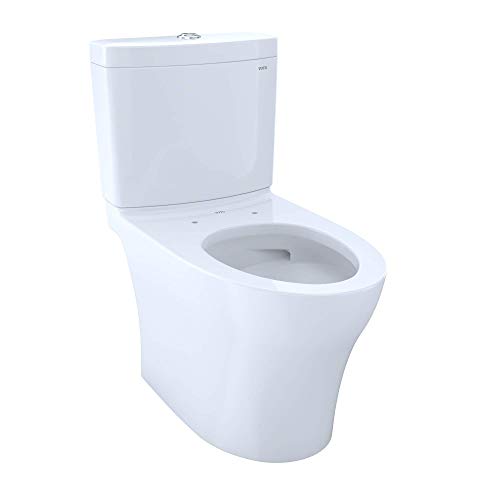
3. Step up to a high-efficiency toilet at 1.0 GPF or lower. Some models now flush at 0.8 to 1.0 GPF while maintaining MaP scores above 600 grams. The TOTO Aquia IV dual-flush delivers 0.9/1.28 GPF, and the Niagara Stealth uses 0.8 GPF. These models push water savings further for households with functional plumbing slopes that can move waste efficiently.
4. Install a dual-flush toilet. Dual-flush mechanisms offer a partial flush (typically 0.8 to 1.0 GPF) for liquid waste and a full flush (1.28 to 1.6 GPF) for solid waste. The Woodbridge T-0001 and Swiss Madison Ivy are popular dual-flush options with aggregated owner ratings above 4.0 stars. Used consistently, dual-flush systems can reduce toilet water consumption by 20 to 30 percent compared to a single 1.6 GPF toilet. Learn more in our dual-flush water savings breakdown.
5. Fix running toilets without delay. A toilet with a faulty flapper can leak 200 gallons per day silently, adding roughly 6,000 gallons per month to your bill. The dye test (drop food coloring in the tank and wait 15 minutes without flushing) reveals flapper leaks immediately. Flapper replacements cost under five dollars and take less than ten minutes.
6. Adjust the fill valve to lower the water level. Most toilet tanks are factory-set to fill within half an inch of the overflow tube. Lowering the float by one inch reduces per-flush water volume by approximately 0.2 to 0.5 gallons without impairing flush quality on modern efficient designs.
7. Replace an aging flapper proactively. Rubber flappers degrade with chlorine exposure and age, warping and failing to seal completely. Industry guidance from Fluidmaster and Korky recommends replacement every three to five years regardless of visible leaks, as invisible seepage through a partially-failed flapper can waste hundreds of gallons monthly.
8. Install a fill valve with an internal shut-off sensor. Modern fill valves such as the Fluidmaster 400A and Korky 528MP use float-controlled anti-siphon mechanisms that stop filling precisely at the set level. Older ballcock valves frequently allow overfill into the overflow tube, wasting water continuously.
9. Never use the toilet as a trash receptacle. Flushing tissues, cotton balls, flushable wipes (which are rarely truly flushable), or hair wastes a flush for every disposal event. A household that flushes small waste items four times daily wastes up to 1,900 extra gallons per year at 1.28 GPF. Keep a small wastebasket near every toilet.
10. Check local toilet rebate programs. Dozens of municipal water utilities across California, Colorado, Texas, Washington, and New York offer rebates of 50 to 200 dollars per qualifying high-efficiency toilet replacement. These programs effectively reduce payback periods to under one year in many cases. Check our toilet rebate guide for a current state-by-state summary.
Plumbing industry analysts consistently identify the toilet as the single most impactful fixture for household water reduction. A MaP score of 600 grams or higher confirms that a 1.28 GPF toilet handles real-world waste loads effectively, so efficiency and performance are not in conflict on well-engineered models from TOTO, Kohler, American Standard, and Gerber.
| Toilet Model | GPF | MaP Score | WaterSense | Flush Type | Check Price |
|---|---|---|---|---|---|
| TOTO Drake II | 1.28 | 1,000 g | Yes | Double Cyclone | Check price |
| TOTO UltraMax II | 1.28 | 1,000 g | Yes | Double Cyclone | Check price |
| TOTO Aquia IV | 0.9 / 1.28 | 800 g | Yes | Dual Tornado | Check price |
| Kohler Cimarron | 1.28 | 1,000 g | Yes | AquaPiston | Check price |
| American Standard Cadet 3 | 1.28 | 1,000 g | Yes | Siphon Jet | Check price |
| American Standard Champion 4 | 1.6 | 1,000 g | No | Siphon Jet | Check price |
| Woodbridge T-0001 | 1.0 / 1.6 | 600 g | Yes | Dual Flush | Check price |
| Gerber Avalanche | 1.28 | 1,000 g | Yes | Gravity Siphon | Check price |
A standard showerhead built before 1992 can deliver 5.5 gallons per minute (GPM), meaning a ten-minute shower uses 55 gallons. Replacing it with a WaterSense-certified showerhead capped at 2.0 GPM cuts that to 20 gallons -- saving 35 gallons per shower. The EPA estimates a WaterSense showerhead saves a family of four roughly 2,700 gallons per year, plus associated water-heating energy costs.
11. Install a WaterSense-certified showerhead. EPA WaterSense showerheads use a maximum of 2.0 GPM while meeting minimum spray force and coverage requirements. Older standard heads often run at 2.5 GPM, and pre-1992 models can exceed 4.0 GPM. The upgrade is one of the most cost-effective water-saving investments available.
12. Choose a high-pressure low-flow showerhead. Pressure-compensating showerheads use internal flow restrictors and aeration or narrow spray channels to maintain perceived pressure at 1.5 to 2.0 GPM. Models with adjustable spray settings let users balance comfort and efficiency. See our guide to the best water-efficient showerheads for rated options.
13. Take shorter showers. Every minute removed from a shower saves 2.0 gallons at WaterSense flow rates, or up to 5.5 gallons with an older high-flow head. A four-person household cutting average shower time from ten to seven minutes saves roughly 4,400 to 12,000 gallons per year depending on showerhead type.
14. Use a shower timer. Research by water utility conservation programs consistently shows that visible time feedback reduces shower duration by 1 to 4 minutes. Battery-powered suction-mount timers cost under ten dollars and produce measurable results within days.
15. Turn off the water while lathering. The Navy shower technique -- water on to wet, off while soaping, on to rinse -- can cut water use per shower by 50 to 70 percent. Even intermittent use of this method (for shampoo, conditioning, and shaving) produces meaningful savings.
16. Fix a dripping showerhead. A showerhead that drips at one drop per second wastes approximately 500 gallons per year. Worn O-rings and failed diverter valves are the most common causes, and both are inexpensive DIY repairs. Do not wait for a showerhead drip to worsen.
17. Do not pre-heat the shower excessively. Running water waiting for the temperature to rise wastes between one and five gallons per session depending on water heater distance and pipe diameter. Placing a bucket under the cold water to capture it for plant watering is a zero-cost solution while waiting for hot water to arrive.
18. Install a thermostatic mixing valve. A thermostatic mixing valve holds the shower at a preset temperature so there is no cold startup period once it reaches set point quickly. Paired with a hot water recirculation system, it can eliminate virtually all cold-water waste during warm-up.
19. Switch from baths to showers. A standard bathtub holds 35 to 50 gallons of water. A five-minute shower at 2.0 GPM uses only 10 gallons. Even a ten-minute shower at 2.5 GPM (25 gallons) uses significantly less than a full bath. Families with young children may find partial-fill baths (12 to 15 gallons) preferable when showers are impractical.
20. Install a recirculating pump for distant water heaters. In homes where the water heater is far from the bathroom, residents may run the shower for 60 to 90 seconds waiting for hot water. A dedicated hot water recirculation pump with a timer eliminates this wait and can save 12,000 or more gallons annually in larger homes.
Shower efficiency gains compound quickly in multi-person households. A family of four each saving three minutes per shower with a 2.0 GPM WaterSense head avoids 8,760 gallons of water annually compared to the same family showering with a 2.5 GPM head and no time reduction. The showerhead upgrade pays for itself in water and energy costs within months in most utility service areas.
Bathroom faucets that run while brushing teeth, washing hands, or shaving can waste 4 gallons per minute with a standard aerator, or up to 2 gallons per minute with a WaterSense-compliant 0.5 GPM bathroom faucet aerator. Turning off the tap while brushing teeth twice daily saves approximately 3,000 gallons per person per year. Replacing a faucet aerator is a two-dollar fix that reduces flow without reducing usability.
21. Replace standard aerators with WaterSense-rated models. Standard bathroom faucet aerators deliver 2.2 GPM. WaterSense-certified bathroom faucets and aerators are capped at 0.5 GPM, an 80 percent reduction. At typical bathroom hand-washing and tooth-brushing durations, this single part swap saves hundreds of gallons per person per year.
22. Turn the faucet off while brushing teeth. Brushing teeth for the ADA-recommended two minutes with the faucet running at 2.2 GPM wastes 4.4 gallons per session, or 8.8 gallons per day for twice-daily brushing. Turning the tap off wastes only the 0.25 gallons used to wet and rinse the brush, saving over 3,100 gallons per person annually.
23. Turn the faucet off while shaving. Shaving with the faucet running continuously for five minutes at 2.0 GPM wastes 10 gallons. Filling a small basin or cup and using that water for rinsing the blade uses approximately 1 gallon total.
24. Fix dripping faucets promptly. A faucet dripping at one drip per second wastes more than 3,000 gallons per year. A faucet dripping at ten drips per second -- which looks like a thin stream -- wastes over 12,000 gallons annually. Faucet washers and cartridge seals that cause drips typically cost under five dollars to replace.
25. Install a touchless or sensor faucet. Motion-sensor bathroom faucets activate only when hands are present and automatically shut off when withdrawn. Studies by the American Water Works Association found that automatic faucets in commercial settings reduced water consumption by 30 to 40 percent compared to manual faucets. Residential sensor faucets are increasingly affordable. See our best water-saving faucets guide for current options.
26. Use cold water for hand washing when appropriate. Hot water for hand washing requires the water heater to send water through pipes, wasting both water and energy during the warm-up period for short tasks. CDC guidance confirms that water temperature is not a significant factor in hand hygiene effectiveness; soap and friction are what matter.
27. Insulate hot water pipes. Insulating hot water supply pipes with foam pipe insulation reduces heat loss and means hot water arrives at the faucet faster, cutting the volume of cold water that runs before the hot arrives. This applies across all bathroom fixtures and reduces both water and energy consumption.
28. Install a water-efficient bathroom vanity faucet. When replacing a bathroom faucet, select one rated at 0.5 or 1.0 GPM. Widespread faucets and vessel sink faucets vary considerably in flow rate; verify the GPM on the product specification sheet before purchasing, as the style does not guarantee efficiency.
29. Do not leave the faucet running while waiting for it to get hot. Capture the cool water in a pitcher or basin and use it to water plants, fill a pet bowl, or rinse the sink. This zero-cost habit recovers water that would otherwise go directly down the drain.
30. Check supply line connections for seepage. The braided stainless or plastic supply lines that feed faucets and toilet tanks can develop slow weep leaks at compression fittings over time, particularly in areas with hard water that causes mineral buildup. Visually inspect and feel supply line connections monthly; damp fittings or white mineral deposits indicate a slow leak.
The two most reliable home detection methods are the toilet dye test (food coloring in the tank reveals a leaking flapper in 15 minutes without any tools) and the water meter test (shut off all fixtures and record the meter reading; a moving meter dial after 30 minutes confirms a leak somewhere in the supply system). The EPA estimates that household leaks collectively waste one trillion gallons of water nationwide every year, with toilets and faucets as the primary culprits.
31. Perform the toilet dye test every six months. Add five to ten drops of food coloring to the toilet tank. Do not flush for fifteen minutes. If color appears in the bowl, the flapper or flush valve seal is leaking. This test catches invisible leaks that waste hundreds of gallons monthly without any visible symptoms.
32. Monitor your water meter for hidden leaks. Locate your water meter (usually at the property line or curb) and record the reading. Do not use any water for 30 to 60 minutes, then read the meter again. Any movement confirms a supply-side leak. This test identifies leaks anywhere in the system, including behind walls and under slabs.
33. Inspect toilet tank internals annually. Remove the tank lid and visually inspect the flapper, fill valve, and overflow tube. The water level should sit approximately one inch below the top of the overflow tube. Water flowing into the overflow tube indicates the fill valve float is set too high and is continuously wasting water. This condition can waste thousands of gallons per month with no outward symptom.
34. Check showerhead and faucet connections for weeping. After turning off a showerhead or faucet, observe the connection point for 30 seconds. A continuing drip from the connection (not the spout) indicates a failed supply connection or worn seat washer, not just a worn aerator. These leaks worsen over time.
35. Replace shut-off valves that do not fully close. Bathroom shut-off valves under sinks and behind toilets should move smoothly from full open to full close. Valves that have not been operated in years can seize or fail to seal. Testing shut-off valves annually maintains their function and allows quick water isolation during leak repairs.
36. Review your water bill trend monthly. A sudden or gradual increase in water consumption without a change in household behavior is a strong indicator of a hidden leak. Many water utilities now offer online or app-based daily consumption data. Setting a usage alert threshold makes leak detection automatic.
The EPA's WaterSense Fix a Leak Week campaign consistently finds that household leaks waste an average of 10,000 gallons per year per home, and that 10 percent of homes have leaks wasting 90 gallons or more per day. A single running toilet or slow faucet drip accounts for most of these losses. Regular inspection costs nothing and prevents water bills from silently climbing for months.
Three behavioral changes save the most water at zero cost: turning off the faucet while brushing teeth (saves over 3,000 gallons per person per year), reducing shower time by three minutes (saves approximately 2,000 gallons per person per year with a standard 2.0 GPM head), and selecting the reduced flush on a dual-flush toilet for liquid waste. Combined, these habits can cut bathroom water use by 15 to 25 percent without spending a dollar.
37. Establish a household water-saving routine. Posting brief reminder notes near bathroom mirrors and toilets -- covering tooth brushing, flush selection, and shower timing -- reinforces habits until they become automatic. Water utility conservation research shows that visible cues reduce water use by 5 to 15 percent in the first 30 days.
38. Teach children water efficiency from an early age. Children who learn conservation habits before age ten carry those habits into adulthood. Simple rules like turning off the tap, short showers, and not over-filling the tub are easy to explain and have a lifetime compounding impact on water consumption.
39. Audit your bathroom fixtures against current efficiency standards. List every toilet, showerhead, and faucet in your home with its GPF or GPM rating. Any toilet above 1.6 GPF, showerhead above 2.5 GPM, or faucet aerator above 1.5 GPM is a candidate for upgrade. This audit takes less than one hour and creates a concrete prioritized action list with quantified potential savings.
40. Take advantage of utility rebate programs for fixtures and leak detection. Many water districts offer rebates for WaterSense toilets, showerheads, and faucet aerators. Some utilities also offer free home water audits where a technician inspects all fixtures, identifies leaks, and provides replacement parts at no charge. These programs are underutilized: surveys by the Alliance for Water Efficiency indicate that fewer than 15 percent of eligible households take advantage of available rebates each year.
Systemic household water efficiency requires a combination of hardware upgrades and behavioral change. Neither alone captures the full potential. The most water-efficient households typically have WaterSense fixtures throughout, zero visible leaks, and established habits around faucet use and shower duration. The cumulative annual savings for a four-person household that implements all three categories routinely reaches 30,000 to 40,000 gallons compared to a household with older fixtures and no conservation habits.
Current EPA WaterSense-certified toilets use a maximum of 1.28 gallons per flush. High-efficiency models such as the TOTO Aquia IV use as little as 0.8 or 0.9 GPF on the partial flush cycle. Standard 1.6 GPF toilets remain legal and widely sold. Pre-1994 toilets can use 3.5 to 7 gallons per flush.
MaP (Maximum Performance) testing measures how many grams of solid waste a toilet can clear in a single flush. A score of 600 grams is considered the minimum for reliable residential performance, while 800 to 1,000 grams is excellent. A high MaP score at low GPF confirms you do not need to double-flush, which undermines the water savings of a high-efficiency toilet.
A toilet with a failed flapper can leak 200 gallons per day, which amounts to 6,000 gallons per month and 72,000 gallons per year. Even a slow, silent seep through a partially-failed flapper can waste 30 to 50 gallons per day. The dye test is the most reliable way to detect this invisible waste.
EPA WaterSense is a voluntary labeling program that certifies toilets, showerheads, faucets, and other water-using products that meet efficiency and performance standards. For toilets, certification requires 1.28 GPF or less and passing independent performance testing. Look for the WaterSense label on the product box or spec sheet, or search the EPA WaterSense product database at epa.gov/watersense.
Modern low-flow toilets with MaP scores of 800 to 1,000 grams flush as effectively as or better than older 3.5 GPF toilets, because flush system engineering -- trapway diameter, water surface area, and bowl design -- has advanced considerably. The TOTO Drake, Kohler Cimarron, American Standard Cadet 3, and Gerber Avalanche all achieve 1,000-gram MaP scores at 1.28 GPF.
A standard bath requires 35 to 50 gallons to fill the tub. A five-minute shower at a WaterSense 2.0 GPM showerhead uses 10 gallons. A ten-minute shower uses 20 gallons. Showers are more water-efficient than baths in nearly all practical scenarios unless the shower runs considerably longer than ten minutes.
EPA WaterSense certifies showerheads at 2.0 GPM or lower. Many water-efficient models operate at 1.5 GPM. California's Title 20 energy and water efficiency standards require showerheads sold in the state to use no more than 1.8 GPM. The federal standard for showerheads is 2.5 GPM, so products between 2.0 and 2.5 GPM are compliant but not WaterSense-certified.
The EPA estimates that replacing all standard bathroom fixtures with WaterSense-certified alternatives saves the average household 3,000 gallons per year per person. For a family of four, that represents 12,000 gallons annually. At average U.S. water rates, the saving translates to 50 to 100 dollars per year in water costs, plus additional savings on water heating for hot-water fixtures.
Yes, if household members consistently use the reduced flush for liquid waste. In households where this habit is established, dual-flush toilets can reduce toilet water use by 20 to 25 percent compared to a single 1.28 GPF toilet, or 40 to 50 percent compared to an older 1.6 GPF toilet. The savings are real but require consistent behavioral compliance. Our dual-flush water savings guide covers the math in detail.
Add five to ten drops of food coloring to the toilet tank. Do not flush for 15 minutes. If color appears in the bowl, the flapper is leaking. Also listen for a hissing sound from the fill valve, which indicates it is running to compensate for a slow leak through the flapper. A toilet that cycles briefly without being flushed (phantom or ghost flush) is also a reliable sign of a flapper leak.
TOTO consistently leads in low-GPF performance due to its Tornado Flush and Double Cyclone technologies, which move water efficiently at 1.28 or 0.9 GPF. The TOTO Aquia IV at 0.9/1.28 GPF with a 1,000-gram MaP score is among the most water-efficient siphonic toilets available. Kohler, American Standard, and Gerber all offer strong 1.28 GPF options with 1,000-gram MaP scores.
Yes. Lowering the fill valve float reduces per-flush volume by 0.2 to 0.5 gallons. Fixing a leaking flapper eliminates waste entirely. Adding a toilet tank bank or displacement device (a sealed water-filled bag placed in the tank) can save 0.5 to 1.0 gallons per flush, though this is only advisable on older high-volume toilets with sufficient remaining flush power.
Flapper manufacturers and plumbing industry sources recommend replacement every three to five years, regardless of whether a visible leak is present. Rubber degrades with chlorinated water exposure and hard water mineral contact. Proactive replacement before failure prevents the invisible waste of a slow flapper leak.
Bowl shape (round vs. elongated) does not directly affect GPF rating, but it affects water surface area and trapway geometry, which influence flush effectiveness. Many elongated toilets have slightly larger water surface areas that aid waste clearance, allowing them to achieve high MaP scores at low GPF. Round bowls are more space-efficient but are available in equally water-efficient GPF ratings.
Pressure-assist toilets can flush effectively at 1.0 to 1.1 GPF because compressed air supplements water pressure. They are highly water-efficient and rarely require double flushing, but they are noisier than gravity models and require periodic pressure vessel maintenance. For residential use, modern gravity models with 1.28 GPF and 800 to 1,000-gram MaP scores deliver comparable real-world efficiency with lower noise and simpler maintenance.
The EPA estimates that toilets account for about 30 percent of indoor water use. For a family of four averaging 300 gallons per day total household use, toilet use is approximately 90 gallons per day, or 32,850 gallons per year. With older 3.5 GPF toilets and five flushes per person per day, a family of four uses approximately 25,550 gallons per year in toilet flushing alone. Upgrading to 1.28 GPF reduces that to 9,344 gallons annually.
A bidet seat or bidet attachment uses approximately 1/8 of a gallon per use for cleansing, which is less water than the toilet paper manufacturing process uses per equivalent use (toilet paper production requires approximately 37 gallons per roll). Bidets can also reduce double flushing by improving hygiene with a single clean flush cycle, providing indirect toilet water savings. See our bidet vs. toilet paper analysis for the full comparison.
Look inside the tank lid for a stamped or printed GPF rating -- most toilets manufactured after 1994 include this. Alternatively, check the model number stamped on the inside of the tank or the back of the bowl at the base and search the manufacturer's specification sheet. The model number is most commonly found as a two to four digit series (e.g., Drake = CST744, UltraMax II = MS604114) that links directly to published GPF data.
A properly designed 1.28 GPF toilet with a MaP score of 600 grams or higher should not require double flushing for normal waste loads. Double flushing is typically a sign that the toilet is mismatched to its drain slope, has a partial flapper failure reducing effective flush volume, or was not designed for efficient waste clearance at low GPF. Choosing a toilet with a 1,000-gram MaP score essentially eliminates this concern.
The three zero-cost actions with immediate impact are: perform the toilet dye test to rule out a silent leak, turn the faucet off while brushing teeth, and reduce shower time by two to three minutes. If you have a dual-flush toilet, commit to using the reduced flush for liquid waste. These four actions cost nothing and can reduce household water consumption by 5 to 15 percent within the first week.
Replacing pre-1994 toilets with EPA WaterSense-certified 1.28 GPF models is the single highest-impact bathroom upgrade, saving up to 13,000 gallons per toilet per year. Combined with WaterSense showerheads, low-flow faucet aerators, prompt leak repairs, and consistent behavioral habits, a four-person household can realistically reduce bathroom water consumption by 30,000 to 40,000 gallons annually. Start with the free steps -- the dye test, shorter showers, and turning off the faucet while brushing -- then layer in fixture upgrades in order of payback period using available rebate programs to reduce out-of-pocket costs.
Learn why toilet trapways curve like an S, how each bend blocks sewer gas, and what the shape means for clogs and…
Read the guideAlmost every US toilet has a left-side handle. Learn the plumbing and mechanical reasons behind the layout and when it actually changes.
Read the guideHome toilets rely on tanks because household water lines lack the pressure that public flushometer systems use to flush straight from the…
Read the guide