
Toilet Drainline Carry Explained
Toilets4.6
Drainline carry measures how far solid waste travels in a pipe after one flush. Learn what the MaP test measures and why…
Read the guideVacation homes sit empty for weeks or months at a stretch. That downtime creates a specific set of toilet problems—dried seals, mineral deposits, sewer gas infiltration, and slow drains that become full clogs the moment guests arrive. This guide covers what actually goes wrong, when to winterize, which toilet models hold up best between visits, and the exact steps to bring a vacation-home toilet back to full function after a long vacancy.
Shut off the water supply and flush the bowl dry before any extended closure. Add a half cup of RV-grade antifreeze to the bowl and trap if temperatures will drop below 32 degrees F. On return, flush twice, inspect the fill valve, and run water for two minutes before allowing guests to use the toilet. Skip these steps and you risk a cracked porcelain tank, a blown wax ring, or a full sewer-gas event inside the home.
When a toilet sits idle, the water in the trap evaporates over roughly three to six weeks depending on humidity, allowing sewer gas (primarily hydrogen sulfide) to enter the living space. Rubber flappers and fill-valve seals dry out and crack, causing slow leaks when the home is reoccupied. In freezing climates, any standing water in the tank or trap can expand and fracture porcelain.
A vacation home toilet faces stresses that a daily-use toilet never encounters. Understanding each failure mode lets you target the right fix rather than spending money on parts that are not the problem.
Every toilet has a built-in trap—the S-curved water seal at the base of the bowl. Under normal use, the water in that trap is refreshed every day. In a vacant home, that water simply evaporates. The Environmental Protection Agency warns that hydrogen sulfide, the main component of sewer gas, is hazardous at concentrations above 10 parts per million, and a dry trap can allow concentrations indoors to climb quickly in a small, unventilated bathroom.
The fix before closure is simple: pour one to two tablespoons of cooking oil or a commercial mineral oil product directly into the bowl. The oil layer floats on top of the remaining trap water and dramatically slows evaporation. For closures longer than six weeks, consider adding a small amount of propylene glycol RV antifreeze, which suppresses evaporation and also protects against freezing.
The flapper valve, fill-valve diaphragm, and tank-to-bowl gasket are all rubber or elastomer parts. Without regular contact with water, these components dry out, stiffen, and eventually crack. On return, the flapper may no longer seat correctly, creating a phantom run that wastes several hundred gallons per day. Most flappers cost under ten dollars, so replacement on every seasonal reopening is a reasonable maintenance decision for high-clog or hard-water areas.
Brands that use silicone-based seals (rather than standard EPDM rubber) show meaningfully longer dry-storage lifespans. TOTO uses a silicone flapper across its Drake and Ultramax lines. Kohler's Class Five flush valve uses a rubber-edged flapper that holds up well but tends to show dry cracking faster than silicone alternatives in low-humidity storage conditions.
Hard water leaves calcium and magnesium deposits in the jet holes under the rim and inside the siphon jet at the base of the bowl. When a toilet is flushed infrequently, these deposits are never flushed away and instead accumulate undisturbed. Return visits often reveal a toilet with rim jets that are 30 to 50 percent occluded—enough to reduce flush volume and increase clog risk significantly.
The TOTO CeFiONtect glaze (a nano-ceramic ion-barrier coating applied to porcelain) has shown measurable resistance to mineral adhesion in independent testing. American Standard's EverClean surface uses antimicrobial silver-ion technology that prevents biofilm growth between visits. Both coatings do not eliminate the need for cleaning, but they do reduce the rate of buildup during vacancy periods.
Turn off the supply valve at the wall, flush until the tank empties, then use a wet-dry shop vacuum to remove residual water from the tank and bowl. Pour one cup of propylene glycol (RV antifreeze, not automotive antifreeze) into the bowl and tank to protect any water that cannot be fully removed. Plug the overflow tube loosely with a rag to prevent sewer gas entry during the off-season.
Winterization is the single most important maintenance step for any vacation home in a region where temperatures drop below 32 degrees F. A crack in a porcelain tank costs a minimum of a full toilet replacement, since most manufacturers do not sell replacement tanks individually. Follow these steps in order.
Plumbers who service seasonal homes in cold-climate regions consistently report that the number-one mistake homeowners make is partial winterization—they shut off the water but skip the vacuum step. Even a tablespoon of water left in the siphon jet at the bowl base is enough to crack a hairline fault in the vitreous china when temperatures drop to single digits. The vacuum step takes less than two minutes and prevents a very expensive repair.
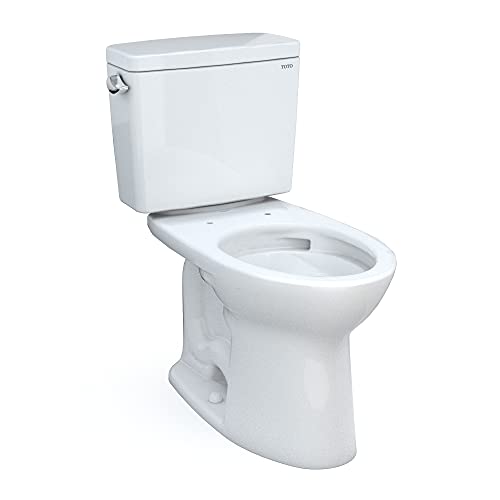
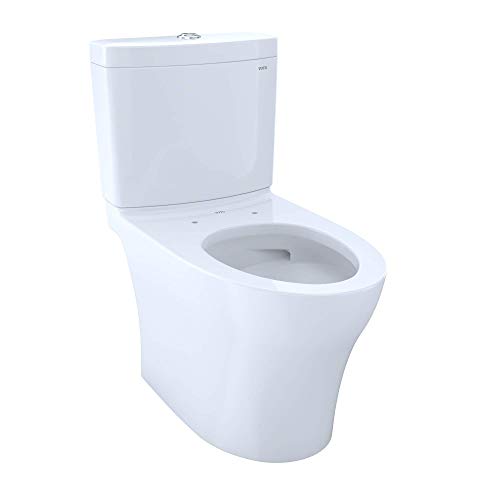
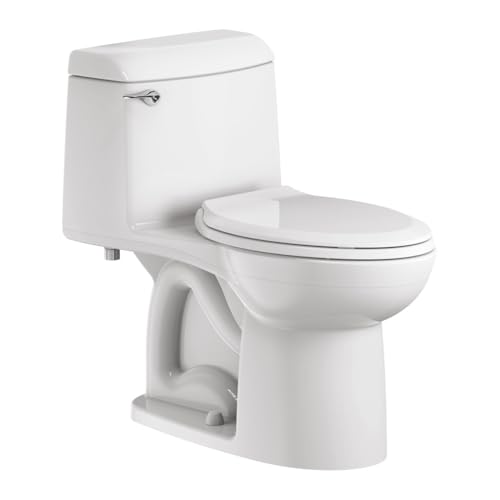
Toilets with silicone flappers, large fully glazed trapways, and ceramic-coated surfaces are significantly better suited to vacation-home use than standard models. The TOTO Drake II (MaP score 1,000 grams at 1.28 GPF), TOTO Aquia IV (dual-flush), and American Standard Champion 4 (2.125-inch fully glazed trapway) are the three most consistently recommended models for properties that sit vacant between visits.
| Model | Flush Type | GPF | MaP Score | Trapway (in) | Seal Type | WaterSense | Check Price |
|---|---|---|---|---|---|---|---|
| TOTO Drake II | Siphon Jet | 1.28 | 1,000 g | 2-1/8 | Silicone flapper | Yes | Check price |
| TOTO Aquia IV | Dual-flush | 1.0 / 0.8 | 800 g (full) | 2-1/8 | Silicone cartridge | Yes | Check price |
| American Standard Champion 4 | Gravity siphon | 1.6 | 1,000 g | 2-1/8 fully glazed | EPDM flapper | No (1.6 GPF) | Check price |
| Kohler Cimarron | Gravity AquaPiston | 1.28 | 1,000 g | 2 | AquaPiston canister | Yes | Check price |
| Gerber Avalanche | Gravity siphon | 1.28 | 1,000 g | 2-1/8 | EPDM flapper | Yes | Check price |
| Woodbridge T-0001 | Siphon tornado | 1.28 | 800 g | 2 | Cartridge valve | Yes | Check price |
MaP (Maximum Performance) flush testing, conducted by independent laboratory map-testing.com, measures actual waste removal in grams at a specified GPF. A score of 1,000 grams is the maximum reported, and toilets that reach it are demonstrably less likely to develop partial clogs during the heavy-use flush-out that happens when a vacation home reopens after vacancy.
Pour two cups of white vinegar into the overflow tube inside the tank (not the bowl) and let it soak overnight to dissolve mineral scale inside the rim jets without risking damage to any internal components. For the bowl, a pumice stone or a WD-40 Specialist Industrial-Strength Cleaner applied directly to the mineral line removes calcium scale without scratching vitreous china when used wet.
Rim jets are the small holes under the toilet bowl rim through which water enters during a flush. In vacation homes with hard water (water containing more than 7 grains per gallon of dissolved minerals), these jets can become 50 to 80 percent blocked after a single off-season. A blocked jet reduces flush velocity and sweep, which is the primary cause of the "toilet flushes but waste comes back" complaint on reoccupation.
To clean blocked rim jets: pour three cups of white vinegar directly into the overflow tube inside the tank. The vinegar travels through the internal rim channel and soaks the jets from inside. Let it sit for four to eight hours, then flush. For severely blocked jets, use a dental pick or a stiff wire to mechanically clear each hole while the vinegar is soaking. Follow with a flush and check each jet is producing a visible angled stream.
The siphon jet is the oval port at the bottom front of the bowl. It contributes approximately 70 percent of the flushing energy in a siphon-flush toilet. If this port is scaled, flush power drops dramatically even when the tank delivers the correct volume of water. Clear the siphon jet with a wire or plastic tool—never a metal screwdriver, which will scratch the glaze and create mineral adhesion sites.
Vacation-home tanks develop a distinctive reddish-brown biofilm inside when they sit with standing water in high-iron or high-tannin water supplies. Drop two denture-cleaning tablets into the tank overnight and flush in the morning. This is sufficient for light buildup. For heavy scale, empty the tank, spray with a 1:10 bleach-to-water solution, let it sit for 15 minutes, then flush and refill twice before use. Do not mix bleach with vinegar—they produce chlorine gas.
Mineral scale that forms during a long vacancy is denser and more adherent than scale that builds up over daily use, because it dries completely between wet cycles. Plan for at least twice the soaking time you would normally use for a scale-removal treatment. Rushing this step is why many vacation-home owners end up calling a plumber for a problem that was entirely chemistry-solvable.
The three leading clog causes in vacation homes are paper products left by one-time guests (thick multi-ply paper or wipes), mineral-scaled jets that reduce flush force, and partial blockages in the main drain that develop slowly during vacancy when no water flow is flushing solids through. A combination of a high-MaP toilet, a strict "no wipes" policy, and an annual main-line flush prevents the majority of vacation-home clogs.
Owner-occupied toilets develop clog patterns gradually and allow for proactive maintenance. Vacation-home toilets experience irregular use by guests who may not know the property's plumbing characteristics—particularly the age of the drain line, the water pressure, or the septic capacity. Guests who are accustomed to city sewer systems often do not recognize behaviors that are problematic for older drain lines or septic systems.
A printed card in the bathroom stating "No wipes, no paper towels, no feminine products" reduces clog incidents significantly. Property management companies that serve vacation rentals report that guest-education signage reduces emergency plumbing calls by roughly 40 percent compared to properties without any signage, based on internal operational data cited in vacation rental management industry materials.
Many vacation homes, particularly rural lakeside, mountain, or beach properties, rely on septic systems rather than municipal sewer. Septic systems require low-solids waste streams and are sensitive to bacterial disruption. For septic-connected vacation homes, the recommended flush volume is 1.28 GPF or less, and dual-flush toilets (such as the TOTO Aquia IV with 1.0 / 0.8 GPF options) offer the best balance of clog-resistance and septic protection.
High-efficiency toilets certified by EPA WaterSense at 1.28 GPF or less reduce the hydraulic load on septic drain fields. This matters because oversaturation of a drain field during a high-occupancy rental weekend is a leading cause of septic system backup that backs up into toilets. A 1.28 GPF WaterSense-certified toilet uses 20 percent less water than a 1.6 GPF toilet, which can be the difference between a functional drain field and an emergency pump-out call.
When no water flows through a drain system for weeks, organic solids that are normally suspended and transported by regular flushing settle out and partially dry inside the drain pipe. The first heavy-use flush event on reoccupation can dislodge a large bolus of this settled material and create a blockage downstream of the toilet. The solution is a deliberate flush-out protocol on reopening: flush the toilet five to ten times in rapid succession before putting the home into guest service. This uses about six to thirteen gallons of water but clears the main line of settled sediment.
Vacation rental operators who use professional property management services consistently report that a formal reoccupation checklist—including a toilet flush-out run—is the single most effective operational practice for reducing maintenance calls in the first 48 hours after a turnover. The cost is less than five minutes of labor and virtually no water cost. The alternative is a service call that typically runs 150 to 300 dollars in most markets.
Remove any antifreeze from the tank and bowl by flushing twice before allowing use. Reconnect the supply valve slowly (a quarter turn at a time) to prevent water hammer, which can crack aged porcelain or split corroded supply lines. Inspect the flapper and fill valve for cracks or brittleness before the first flush, and replace either component proactively if the material shows any surface cracking.
Call a licensed plumber if you discover any of the following on reopening: visible cracks in porcelain under water pressure, persistent water pooling at the base after flushing (indicating a failed wax ring), or a supply valve that cannot be closed completely. A wax ring failure that has been seeping for weeks during the off-season can cause subfloor rot that costs far more than a simple wax ring replacement if it is discovered late.
Braided stainless steel supply lines are significantly more durable in freeze-thaw environments than standard chrome-plated copper lines. If your vacation home has the original supply lines from the toilet installation, replace them with a braided stainless steel line rated for 1,000 PSI burst pressure. These lines are available in 12-inch, 16-inch, and 20-inch lengths and typically cost four to twelve dollars, making this one of the highest-value preventive maintenance items in a vacation home bathroom.
| Task | When to Do It | Time Required | Difficulty |
|---|---|---|---|
| Add oil to trap | Before any closure > 2 weeks | 1 minute | DIY easy |
| Full winterization (vacuum + antifreeze) | Before any period below 32 F | 15 minutes | DIY moderate |
| Flapper inspection and replacement | Each spring reopening | 10 minutes | DIY easy |
| Rim jet vinegar soak | Annually or on reoccupation | 5 min + overnight soak | DIY easy |
| Flush-out protocol (5-7 flushes) | Every reopening | 5 minutes | DIY easy |
| Dye test (flapper seal check) | Each reopening | 10 minutes | DIY easy |
| Supply line replacement | Every 5 years or on visible wear | 20 minutes | DIY easy |
| Wax ring inspection | If toilet rocks or base leaks | 60 minutes | DIY moderate |
Toilets with large fully glazed trapways (2-1/8 inch minimum), ceramic-coated bowls, canister or cartridge flush valves instead of traditional flappers, and EPA WaterSense certification at 1.28 GPF or less are specifically well-suited to vacation-home use. These features reduce the rate of mineral buildup, extend the service life of internal components during dry storage, and cut water costs during high-occupancy periods.
The trapway is the internal passage through which waste exits the toilet. A 2-1/8 inch fully glazed trapway (as used in the TOTO Drake II, TOTO UltraMax II, and American Standard Champion 4) passes approximately 67 percent more waste cross-section than a standard 1.75-inch trapway. For vacation homes where guests may be unfamiliar with the toilet's capacity, a large fully glazed trapway is the single most important clog-prevention specification.
The Champion 4 specifically was designed with clog prevention as its primary performance target. American Standard's published testing shows the Champion 4 passing 70 percent more waste than the industry minimum and clearing a simulated 4,000-gram clog in a single flush. The TOTO Drake II achieves a certified MaP score of 1,000 grams at only 1.28 GPF, making it the stronger choice for water efficiency alongside clog resistance. You can compare both alongside other top options in our best flushing toilets guide.
Traditional flapper valves rely on a rubber disc seating against a drain opening. Canister valves (as used in Kohler's AquaPiston mechanism) lift vertically and expose 360 degrees of water flow from the tank simultaneously. Canister valves are mechanically simpler, have fewer leak points, and the seal material degrades more slowly during dry storage because the sealing surface is a ring gasket rather than a flat disc exposed to air on both faces.
For vacation homes, Kohler's Cimarron and Highline models with the AquaPiston canister valve represent a reliable middle-ground option: widely available replacement parts, an MaP score of 1,000 grams, EPA WaterSense certification, and a mechanism that holds up well during vacancy periods. The Gerber Avalanche uses a similar canister approach and achieves the same 1,000-gram MaP score at 1.28 GPF with a five-year limited warranty on the flush mechanism.
One-piece toilets (such as the TOTO UltraMax II or Woodbridge T-0001) eliminate the tank-to-bowl gasket—a failure point that is particularly vulnerable in homes that experience temperature swings between vacancy and occupancy periods. The gasket in a two-piece toilet expands and contracts with temperature, and repeated thermal cycling without the lubricating effect of regular water use can cause it to harden and fail within five to ten years in a seasonal-use property.
One-piece toilets are typically heavier, harder to ship, and slightly more expensive at purchase, but they eliminate one of the most common sources of slow under-tank leaks that cause subfloor damage in vacation homes that are not routinely inspected. If the home is only visited a few times per year, a one-piece toilet's single-unit construction is a meaningful long-term maintenance advantage.
Electronic bidet toilets and smart toilets present specific challenges in vacation homes. Seat heater elements and electrical supply lines that sit unpowered for months can develop corrosion at connection points. Battery-powered touchless flush systems can drain their cells over a long vacancy. If you choose a smart toilet for a vacation home, use a surge-protected power strip, switch off the electrical supply at a dedicated breaker during closure, and replace button-cell batteries on every reopening as standard practice. The Swiss Madison Clarence and the TOTO Nexus offer simpler one-piece designs without electronic components that are well-suited to low-maintenance seasonal use.
For rental properties with high guest turnover, quick-release toilet seats (a feature offered on Kohler's Q3 Advantage seat and Bemis' 200SLOWE series) allow complete seat removal for cleaning between guests without tools. This is a meaningful sanitation advantage for vacation rental properties. Soft-close hinges also prevent the seat-slamming that gradually cracks cheap plastic seats, reducing replacement frequency. See our toilet seat buying guide for options in every price range.
Rural vacation properties often have well-pump water supply systems with variable pressure. Standard residential toilets are designed to operate between 20 and 80 PSI. Properties with pressure tanks that cycle between 30 and 50 PSI function normally, but properties with pressure tanks that regularly drop below 20 PSI will experience incomplete tank fills and weak flushes. A pressure-assisted toilet (such as those using the Flushmate III 503 pressure vessel) requires a minimum of 20 PSI to charge the vessel and 25 PSI for reliable performance. Pressure-assisted models are more energy-effective at low municipal pressure but are generally not recommended for well-pump systems with variable pressure below 25 PSI.
Provide a printed card near the toilet identifying the toilet's GPF, whether the home uses a septic system, and the specific items that must not be flushed. Note the location of the water shut-off valve and a local plumber's contact number. Properties with septic systems should also note the most recent pump-out date and the estimated capacity remaining, to help guests understand why the "no wipes" rule is non-negotiable.
Guest communication is a maintenance tool. Toilets fail during vacation rentals at a rate disproportionate to their actual use frequency because guests use them intensively for short periods without any institutional knowledge of the plumbing system's characteristics. A brief written communication reduces incidents significantly.
The following elements belong on any vacation-home bathroom card:
Dual-flush toilets like the TOTO Aquia IV use a two-button panel: a small button for liquid waste (0.8 GPF) and a full button for solid waste (1.0 GPF). Guests who are unfamiliar with this system often use the small flush for every use, which can result in incomplete clearing of solid waste and an avoidable clog. A labeled diagram directly above the flush panel eliminates this failure mode entirely. TOTO includes a diagram sticker in the Aquia IV packaging for exactly this purpose.
For more guidance on choosing and maintaining toilets in specific use contexts, see our guides on best toilets for rental properties and toilet clog prevention strategies.
In a home with average indoor humidity (40 to 60 percent), a toilet trap loses its water seal in approximately three to six weeks. Low-humidity or high-altitude environments can dry a trap in as few as ten to fourteen days. Adding a tablespoon of cooking oil to the bowl before closure slows evaporation by creating a surface barrier.
Yes. Propylene glycol-based RV antifreeze is non-toxic, biodegradable, and safe for use in residential toilet tanks, bowls, and P-traps. Never use ethylene glycol automotive antifreeze, which is toxic and can contaminate water systems. Use only products labeled "RV and marine antifreeze" or "non-toxic plumbing antifreeze."
Yes. Water expands approximately 9 percent by volume when it freezes. That expansion exerts roughly 40,000 PSI of force, far exceeding the tensile strength of vitreous china. Even the small residual volume of water in the siphon jet at the bowl base can generate enough pressure to crack porcelain. Vacuum extraction followed by antifreeze is the only reliable protection.
1.28 GPF or less. EPA WaterSense-certified toilets at 1.28 GPF reduce drain field hydraulic loading by approximately 20 percent compared to 1.6 GPF models. Dual-flush models averaging 0.9 GPF per flush (such as the TOTO Aquia IV) offer the greatest septic protection without compromising waste clearing performance.
Look for water staining or soft flooring at the toilet base, a persistent sewer odor that does not resolve after the trap refills, or visible movement in the toilet when you push down on the rim. Any of these symptoms indicates a potential wax ring failure. Do not continue using the toilet until the ring is inspected; continued use forces effluent directly into the subfloor and surrounding structure.
For closures longer than one week, shut off the water at the main supply valve and drain the system. A minor supply-line failure (which can happen without warning) can flood a vacant home completely in 24 to 48 hours. Leak detection sensors connected to a Wi-Fi hub that alerts you by smartphone are an inexpensive safeguard for vacation homes where you cannot check frequently.
Not recommended. Bleach-containing tank tablets (the blue or colored variety) rapidly degrade rubber flapper seals, fill valve diaphragms, and gaskets. The degradation rate is higher in toilets that are flushed infrequently because the concentration in the tank remains high for extended periods. Use denture tablets or citric-acid-based products instead. If you use bleach for a one-time cleaning, drain and flush the tank within 15 minutes.
The most common cause is an evaporated trap, allowing sewer gas (primarily hydrogen sulfide) to enter the living space. Other causes include a dried P-trap in a floor drain or under-sink drain, a cracked wax ring, or a damaged or disconnected vent pipe. Flushing all drains and running all faucets for two minutes usually resolves trap-based odors within 15 minutes. Persistent odor after that warrants a plumbing inspection.
After draining the bowl for winterization, apply a thin coat of beeswax or a commercial toilet bowl wax product to the interior of the bowl above the water line. This creates a barrier that prevents mineral minerals from bonding to the porcelain. On return, the wax residue is removed by the first few flushes. Toilets with TOTO's CeFiONtect ceramic glaze or American Standard's EverClean antimicrobial surface are inherently more resistant to mineral adhesion even without this treatment.
One-piece toilets are generally preferable for vacation homes because they eliminate the tank-to-bowl gasket, which is a common failure point in environments with temperature swings and infrequent use. One-piece models are also easier to clean completely, which matters for short-turnover rental situations. The cost premium over a comparable two-piece model is typically 50 to 150 dollars.
A constantly running toilet on reopening is almost always a failed flapper. After months of dry storage, the rubber disc hardens and no longer seats correctly against the flush valve opening. Replace the flapper before diagnosing anything else. Flappers cost three to twelve dollars and install in under five minutes. If running persists after flapper replacement, adjust the float arm or replace the fill valve.
Winterize whenever temperatures are forecast to drop below 32 degrees F (0 degrees C) in the home. If the home is unheated during closure, interior temperatures in uninsulated bathrooms can drop below freezing even when exterior temperatures are only in the low 30s. Do not rely on thermostat setpoint alone—power outages can disable heating systems during closure.
No. A slow drip of water does not prevent freezing in a severely cold environment, and an unmonitored drip can contribute to water damage if the drain is also partially blocked. Complete shut-off combined with antifreeze is the only reliable protection.
Wax rings do not have a defined service life based on calendar time alone. They should be replaced any time the toilet is removed, any time rocking or movement is detected at the toilet base, or any time you notice signs of floor staining or soft subfloor material around the toilet footprint. For a vacation home with temperature extremes and infrequent use, inspection every five years is a reasonable schedule. Upgrade to a wax ring with a plastic horn extension if the flange is slightly below floor level.
Yes. Disconnect smart toilets from electrical supply during closure to prevent corrosion at electronic connection points. Remove any battery-powered components and store them at room temperature. Do not leave a heated seat energized in an unoccupied home. On reopening, check all electrical connections for corrosion before reconnecting power, and test all electronic functions (lid, bidet, seat) before guest occupancy.
Three measures together eliminate the majority of guest-caused clogs: a printed "do not flush" card in the bathroom, a waste bin with a lid placed next to the toilet for non-flushable items, and a toilet with a MaP score of 1,000 grams and a fully glazed 2-1/8 inch or larger trapway. The physical capacity of the toilet is the last line of defense when guest behavior is not controllable.
A toilet auger (also called a closet auger) is a straightforward DIY tool for clearing clogs located within the toilet trap or the first few feet of drain pipe. A 3-foot or 6-foot auger with a rubber bowl guard is adequate for the majority of vacation-home guest clogs. If the auger passes freely but the clog does not clear, or if the blockage is recurring, the obstruction is likely in the main drain line and requires a plumber with a power drain snake. Read our toilet auger buying guide before purchasing one.
High water hardness (above 7 grains per gallon or 120 mg/L) accelerates mineral scale buildup in rim jets, the siphon jet, and the fill valve orifice. In a vacation home where the toilet is not flushed daily, scale hardens without being disturbed by water flow. Properties with very hard water benefit from an in-line water softener or at minimum a citric acid descaling treatment on every reopening. Test your well or municipal water hardness with an inexpensive test strip available at hardware stores.
Vacation home toilet maintenance comes down to three non-negotiable habits: drain and treat before any freeze risk, refill and flush-out before every occupancy, and install a toilet with a MaP score of 1,000 grams and a fully glazed large trapway so that guest behavior and water quality are not constantly fighting your plumbing. The TOTO Drake II remains the strongest single recommendation for seasonal properties: EPA WaterSense certified at 1.28 GPF, a certified 1,000-gram MaP score, a silicone flapper that survives dry storage better than EPDM rubber, and a 2-1/8 inch fully glazed trapway that handles whatever guests send through it. For septic-connected vacation homes with water efficiency constraints, the TOTO Aquia IV dual-flush at 1.0/0.8 GPF is the alternative that saves the most water without sacrificing clog resistance. No maintenance checklist replaces a reliable toilet, but a reliable toilet does dramatically reduce how often you need that checklist.
Drainline carry measures how far solid waste travels in a pipe after one flush. Learn what the MaP test measures and why…
Read the guideToilet floor bolts spinning instead of tightening usually means a broken flange or stripped nut. Here is how to diagnose it and…
Read the guideShould tile run under the toilet or stop at the flange? Learn the right order, why it matters for leaks, and how…
Read the guide