Best Toilet Flush Valve: How to Choose the Right One
Plumbing4.6
Which is the best toilet flush valve? Compare 2-inch, 3-inch, adjustable, and canister flush valves by fit and flush power, plus how…
Read the guideA toilet seat is the part of the bathroom you touch every day, yet most people only think about it when the old one cracks, stains, wobbles or starts slamming. The right replacement comes down to a handful of decisions buyers usually get wrong the first time: matching the bowl shape, since an elongated seat will overhang a round bowl and a round seat will leave a gap on an elongated one; choosing a material that wipes clean and resists yellowing, with molded wood and enameled wood holding heat better while solid polypropylene plastic cleans easiest and lasts longest; and picking the features that actually earn their keep, namely a slow-close hinge that stops the lid from slamming, quick-release hinges that pop the seat off for cleaning, and a sturdy mount that does not loosen and rock. We ranked the best toilet seats of 2026 by bowl-shape fit, material durability and stain resistance, hinge quality and slow-close action, mounting stability, and the patterns across thousands of aggregated owner reviews, so you can replace a worn seat in fifteen minutes with one that fits cleanly, stays put and stops slamming for years.
The best toilet seat is the Kohler Cachet Quiet-Close, a durable molded plastic seat with a slow-close lid, quick-release hinges for cleaning and a Grip-Tight bumper system that stays tight without rocking, sold in matched round and elongated versions. For the best value, the Mayfair Slow Close NextStep2 leads, and the Bemis 1500EC Wood is the best pick for an enameled-wood look that resists chips and stains.
A toilet seat is the hinged ring and lid that bolts to the back of the bowl, and replacing one is among the easiest home upgrades there is, usually two bolts and about fifteen minutes with no tools beyond a screwdriver. Yet a surprising number of replacements go wrong, almost always because the buyer guessed at the bowl shape, ordered a slow-close hinge that did not match the bolt spacing, or chose a cheap seat that loosened and started rocking within months. The seat you touch most and replace least deserves a few minutes of matching, because getting the shape, material and hinge right is the difference between a seat that fits flush and stays silent for years and one that overhangs, slams or wobbles.
We do not bolt and stress-test seats in a lab. Instead we compare published manufacturer specifications, the bowl shapes each seat is built for, the material and its rated stain and chip resistance, the hinge type and whether it offers slow-close and quick-release, the mounting hardware and how well it resists loosening, and the patterns across thousands of verified owner reviews. For seats specifically we weighted four things above all else: correct bowl-shape fit, since an elongated seat on a round bowl is the number-one cause of a return; material durability, because cheap plastic yellows and thin wood chips; hinge quality, since a slamming lid is the complaint owners voice most and slow-close fixes it; and a stable mount, because a seat that rocks is both annoying and a sign it will crack. If you would rather replace the whole toilet than keep swapping parts, see our pillar guide to the best flushing toilets.
Every pick here had to fit a clearly identified bowl shape, resist stains and chips, mount securely on the standard 5.5-inch bolt spacing without loosening, and offer the hinge features its category demands. We separated round and elongated fit so buyers match the right shape first, and we called out the molded wood, enameled wood and plastic materials by name rather than blurring them. We favored slow-close hinges that stop slamming and quick-release hinges that pop the seat off for cleaning over fixed plain hinges, sturdy mounts that resist rocking over thin hardware that loosens, and stain-resistant surfaces over cheap plastic that yellows. We weighted aggregated owner reports about fit, slamming, loosening and discoloration over marketing language, and we do not accept payment for placement.
| Seat | Best For | Fit | Material | Rating | Check Price |
|---|---|---|---|---|---|
| Kohler Cachet Quiet-Close | Best overall | Round and elongated | Molded plastic, slow-close | 4.8 | Check price |
| Mayfair Slow Close NextStep2 | Best value | Round and elongated | Plastic, slow-close | 4.6 | Check price |
| Bemis 1500EC Wood | Best wood seat | Round and elongated | Enameled wood | 4.7 | Check price |
| Brondell LumaWarm Heated | Best heated | Round and elongated | Plastic, heated, slow-close | 4.5 | Check price |
| Bemis 1200SLOWT | Best plastic slow-close | Round and elongated | Plastic, slow-close, quick-release | 4.6 | Check price |
| Mayfair NextStep2 Child Seat | Best for kids | Round and elongated | Plastic, built-in child seat | 4.6 | Check price |
| Toto SoftClose SS114 | Best premium | Elongated | Polypropylene, soft-close | 4.7 | Check price |
| Bath Royale BR606 | Best heavy-duty | Round and elongated | Polypropylene, slow-close | 4.6 | Check price |

The Kohler Cachet is the seat we recommend first because it solves the three things that decide whether an owner stays happy: a Quiet-Close hinge that lowers the lid silently, Quick-Release hinges that pop the seat off for cleaning, and a Grip-Tight bumper system that keeps the seat tight on the bowl instead of loosening and rocking, all in matched round and elongated versions.
The Cachet pairs the three features that matter most into one well-built seat. The Quiet-Close hinge catches the lid and lowers it slowly and silently, ending the slamming that is the single most common seat complaint, and the Quick-Release feature lets you unclip the whole seat from the bowl in seconds to clean the hinge area that traps grime. The Grip-Tight bumper system is the underrated part: the seat grips the bowl firmly so it does not slide or rock, which is both the comfort issue people notice daily and the stress that cracks cheaper seats over time. It is offered in matched round and elongated versions, so buying the right shape is simple.
Owners consistently report that the slow-close lid is silent, the seat stays tight where cheaper ones loosened within months, and the quick-release makes cleaning genuinely easy, with the molded plastic wiping down without yellowing. The two limits are scope rather than quality: it is a standard seat, so shoppers set on a warm wood look should choose the Bemis 1500EC, and anyone wanting a heated surface or bidet spray needs the Brondell LumaWarm instead. For the most common seat replacement, it is the standout, and it fits the elongated and round bowls covered in our guide to the best flushing toilets.
The Cachet is the seat we point most people to, because it nails the three things that actually decide satisfaction: the lid closes silently, the seat pops off for cleaning, and the Grip-Tight bumpers stop the rocking that ruins cheaper seats. Match the bowl shape, round or elongated, and for the vast majority of replacements this is the safe default that fits flush, stays put and stops slamming.
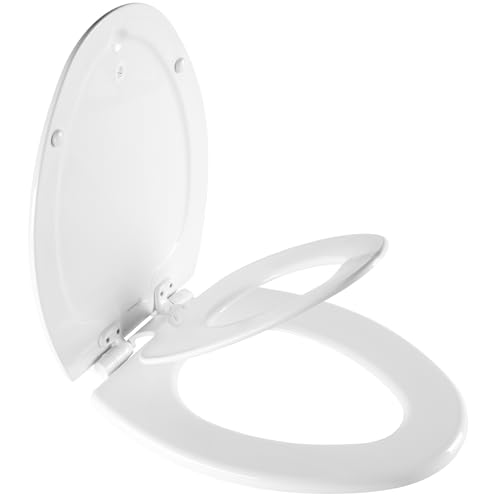
The Mayfair Slow Close is the pick for a dependable slow-close seat at the lowest sensible cost, pairing a quiet-close lid with the Easy-Clean and Whisper-Close hinges that let you lift the seat off and lower it silently, from a Bemis-owned brand that has stocked plumbing shelves for decades.
The Mayfair strips the upgrade to the essentials and does them well. The Whisper-Close hinge lowers the lid slowly so it never slams, the Easy-Clean feature lets the seat lift off for cleaning, and the Sta-Tite mounting system tightens by hand and is engineered to stay tight without loosening, which is the failure point on cheap seats. Mayfair is part of Bemis, the largest seat maker in North America, so the parts are proven across millions of installs and easy to find. It does not have the premium build of the Kohler, but for a straightforward slow-close replacement it does the job for the least money.
Owner reviews are strongly positive on the silent close, the easy tool-free install, and the Sta-Tite mount that holds firm where older seats loosened, with many noting it was the cheapest way to end a slamming lid. The tradeoffs are that the plastic is a step below the molded build of the Kohler and Toto, and it is a standard seat, so wood, heated or heavy-duty buyers should look elsewhere. For a buyer who wants a trusted, low-cost slow-close seat, it is the standout value, and it complements a fresh fill valve from our guide to the best toilet fill valves of 2026.
The Mayfair Slow Close is the seat we recommend when you just want to end a slamming lid for as little as possible. You give up some of the premium feel of a molded Kohler, but you keep the silent close, the lift-off cleaning and the Sta-Tite mount that actually stays tight. Match the bowl shape, tighten the hand nuts, and you are usually done in ten minutes. For a no-frills value upgrade, it is the smart buy.

The Bemis 1500EC is the pick for a classic wood-seat look that holds heat better than plastic, pairing a molded enameled-wood core with a hard, chip-resistant gloss finish and the Sta-Tite mounting system, in matched round and elongated versions from the largest seat maker in the country.
The 1500EC is the wood seat people picture when they think of a solid, substantial seat. Its molded enameled-wood core feels warmer to sit on than plastic, and the hard gloss enamel finish resists the chipping and staining that ruin cheaper wood seats, while the Sta-Tite mount tightens by hand and stays tight. Bemis is the dominant seat maker in North America, so the color match to white, biscuit and bone fixtures is reliable and the part is widely stocked. It is the seat to choose when you want the classic wood look and feel rather than a modern plastic seat, and the enamel makes it far more durable than bare painted wood.
Owners value the substantial wood feel that is warmer than plastic in winter, the durable gloss enamel that resists chips and cleans up well, and the Sta-Tite mount that holds firm. The tradeoffs are that the standard 1500EC is a plain-hinge seat rather than slow-close, so buyers who want a silent lid should look at Bemis slow-close wood variants or a plastic slow-close seat, and wood is heavier and a touch fussier to lift off than a quick-release plastic seat. For a buyer who wants the warm, classic wood look done durably, it is the standout, and it suits the traditional bowls in our guide to the best flushing toilets.
The 1500EC is the seat we recommend when someone wants the warmer feel and classic look of wood rather than plastic. The enameled finish is the key: bare painted wood chips and stains, but this hard gloss enamel holds up for years and matches white fixtures cleanly. Just know the standard version is a plain hinge, not slow-close, so if a silent lid is a must, pick a slow-close variant. For a durable wood seat, this is the trusted choice.

The Brondell LumaWarm is the pick for a warm seat without a full bidet, pairing an adjustable heated surface and a gentle illuminating nightlight with a slow-close lid, in a plug-in seat that replaces a standard one and fits both round and elongated bowls.
The LumaWarm adds the comfort a standard seat cannot: an adjustable heated surface with multiple temperature settings, so the seat is warm rather than shocking on a cold morning, plus a soft blue illuminating nightlight that helps you find the toilet at night without flipping on the harsh overhead light. It keeps the conveniences buyers expect, with a slow-close lid and seat that never slam, and it installs like a normal seat with the addition of plugging into a nearby outlet. It is the seat to choose when you want warmth and a nightlight but do not want the cost or plumbing of a full washlet bidet.
Owners in cold climates value the genuine comfort of a warm seat in winter, the adjustable temperature, and the nightlight that proves more useful than expected, with the slow-close lid a welcome bonus. The tradeoffs are that it is a powered seat, so it needs a GFCI outlet within reach of the toilet, which not every bathroom has, and it is more involved and costly than a plain seat. For a buyer who wants warmth without going to a bidet, it is the standout, and those who want a spray function as well should compare our guide to bathroom upgrade parts and bidet seats. For powered seats, confirm a proper grounded outlet is in reach first.
The LumaWarm is the seat we recommend for cold bathrooms where someone wants a warm seat but does not want a full bidet. The adjustable heat is the real draw in winter, and the nightlight is the feature people end up loving most. The one thing to confirm before buying is an outlet near the toilet, because it has to plug in. If you have that, it is the easiest way to add warmth to an existing toilet.

The Bemis 1200SLOWT is the pick for the best blend of slow-close and easy cleaning in a plastic seat, pairing a Whisper-Close hinge that lowers the lid silently with an Easy-Clean and Change feature that lifts the seat off in seconds, all on the proven Sta-Tite mount.
The 1200SLOWT is Bemis's well-rounded plastic seat, built around the two convenience features people want most. The Whisper-Close hinge catches the lid and lowers it slowly so it never slams, and the Easy-Clean and Change feature lets you lift the whole seat off the bowl without tools to clean the hinge area and the bowl rim underneath, then snap it back. The Sta-Tite mounting system tightens by hand and stays tight, which is the failure point on cheaper seats. The molded plastic is stain-resistant and wipes clean, making it a strong all-around alternative to the Kohler Cachet at a friendlier price.
Owners value the silent close, the genuinely useful lift-off cleaning in a busy family bathroom, and the Sta-Tite mount that holds firm where older seats wobbled, with the plastic staying white rather than yellowing. The tradeoffs are that it is a standard plastic seat, so wood buyers want the 1500EC and heavy-use commercial settings want the Bath Royale, and it offers no heat or bidet function. For a buyer who wants slow-close plus easy cleaning without paying premium, it is the standout, and it pairs well with the maintenance steps in our guide to the best toilet flappers of 2026.
The 1200SLOWT is the seat we recommend for a family bathroom, because it combines the two features that matter day to day: the lid closes silently and the whole seat lifts off for cleaning without tools. That lift-off feature is the one parents thank us for, because the hinge area is where grime hides. The Sta-Tite mount stays tight, the plastic does not yellow, and it costs less than the premium seats. For most households, it is a smart all-rounder.
The Mayfair NextStep2 is the pick for families with young children, building a smaller child-sized seat into a standard adult seat that magnetically stows in the lid when not in use, so one seat serves both potty training and adults without a separate plastic ring left lying around.
The NextStep2 solves the clutter of potty training. Instead of a separate child ring that ends up on the floor, a properly sized child seat is built into the adult seat and tucks up into the lid, held by magnets, when an adult uses the toilet, then folds down to the right size for a small child. The result is two correctly sized openings in one seat, with a slow-close adult lid and the Sta-Tite mounting system that stays tight. It is offered in round and elongated versions, and the molded plastic wipes clean, which matters in a kids bathroom.
Owners with toddlers value that the built-in child seat removes the separate ring entirely, that it stows cleanly in the lid so the toilet looks normal for adults, and that the slow-close lid and easy-wipe plastic suit a busy family bathroom. The tradeoffs are that the integrated child seat adds bulk and cost that is wasted once the kids outgrow it, and it is a single-purpose family seat rather than a minimalist one. For a household in the potty-training years, it is the standout, and it complements the family-friendly toilets in our guide to the best flushing toilets.
The NextStep2 is the seat we recommend the moment someone mentions potty training, because the built-in child seat that magnets up into the lid solves the problem of the loose plastic ring that lives on the bathroom floor. One seat covers both the toddler and the adults, the lid is slow-close, and the Sta-Tite mount holds. It is bulkier and only makes sense while you have small kids, but for those years it is genuinely the easiest answer.

The Toto SS114 is the pick for the highest build quality, pairing dense, dirt-resistant polypropylene with Toto's SoftClose hinge in a seat that is engineered to match Toto bowls exactly but fits standard elongated bowls, for buyers who want a seat that feels and lasts a tier above the rest.
The SS114 is Toto's premium seat and it shows in the materials. The dense polypropylene resists dirt, stains and discoloration better than ordinary plastic and has a noticeably more solid feel, and the SoftClose hinge is among the smoothest slow-close mechanisms made, lowering the lid silently and consistently for years. It is designed to color-match and fit Toto bowls precisely, which is why Toto owners choose it, but it fits standard elongated bowls on the 5.5-inch bolt spacing. For a buyer who wants the best-built seat rather than the cheapest, it is the benchmark, and the build quality is why it lasts well beyond cheaper seats.
Owners value the substantial, solid feel that cheaper seats lack, the silky SoftClose action that stays smooth over time, and the dense plastic that resists staining and yellowing, with Toto owners noting the exact color and fit match to their bowl. The tradeoffs are the higher cost and that the standard SS114 does not include a quick-release feature, so cleaning the hinge area takes more effort than the Kohler Cachet. For a buyer who wants the best build, especially on a Toto, it is the standout, and the Toto toilets it matches are covered in our guide to the best flushing toilets.
The SS114 is the seat we recommend when someone wants the best-built option, especially if they own a Toto. The polypropylene is denser and more stain-resistant than ordinary plastic, and the SoftClose hinge is the smoothest we know of, staying that way for years. You pay more and you give up a quick-release, but the build quality is a clear tier above. For a Toto owner or anyone who wants a seat to outlast several cheap ones, it is worth it.

The Bath Royale BR606 is the pick for a thick, heavy-duty seat that resists cracking and yellowing, pairing solid polypropylene with a slow-close lid, quick-release hinges and a no-slip mount, built to take more weight and abuse than a standard plastic seat.
The BR606 is built around durability. Its polypropylene is thicker and denser than the plastic on budget seats, which is what lets it hold more weight without flexing or cracking and resist the yellowing that plagues cheap plastic, making it a strong pick for heavier users and busy bathrooms. It keeps the conveniences buyers want, with a slow-close lid that never slams and quick-release hinges that pop the seat off for cleaning, and its top-tightening, no-slip mount holds firm and is easy to install from above without reaching behind the bowl. For a buyer who has worn out flimsy seats, it is the heavy-duty answer.
Owners value the substantial, solid feel and thickness, the slow-close and quick-release features that match pricier seats, and the no-slip top mount that stays tight and installs easily, with the polypropylene resisting stains and discoloration. The tradeoffs are that the thickness and weight are more than some buyers want, and like the others it offers no heat or bidet function. For a buyer who needs a tough seat that resists cracking and yellowing, it is the standout, and it suits the high-traffic and heavy-user scenarios in our guide to the best flushing toilets.
The BR606 is the seat we recommend when someone keeps cracking or yellowing cheap seats. The thicker polypropylene holds more weight without flexing and resists discoloration, and it still gives you slow-close and quick-release, which heavy-duty seats often skip. The top-tightening mount is a bonus because you do not have to reach behind the bowl. It is heavier than a basic seat, but for high-traffic bathrooms and heavier users, that heft is the point.
If we had to cover almost every bathroom with two seats, we would keep the Kohler Cachet Quiet-Close on hand for any standard replacement, because the silent slow-close lid, the quick-release for cleaning and the Grip-Tight mount that does not rock solve the three things owners actually complain about, and the Bath Royale BR606 for heavier users and high-traffic bathrooms where a thicker, crack-resistant polypropylene seat earns its keep. That pairing covers both the everyday swap and the heavy-duty case, and it keeps the slow-close and easy-cleaning features in both rather than dropping to a slamming, hard-to-clean basic seat. The only times we steer elsewhere are when someone wants the warmth of wood, the comfort of a heated seat, or a built-in child seat for potty training.
A seat succeeds on three things: fitting the bowl shape, staying tight without rocking, and closing without slamming. The Kohler Cachet optimizes all three, which is why it tops the list. Match your bowl shape first, round or elongated, then choose the material and features that suit your bathroom, and the rest is a fifteen-minute install.
Getting the shape right is what decides whether a seat fits flush. Before buying, measure the bowl length and confirm the bolt holes sit on the standard 5.5-inch spacing, which nearly all toilets use. For the toilets these seats fit, see our pillar guide to the best flushing toilets.
The only buyers who skip slow-close are those who want the absolute cheapest plain seat, and even then the gap is small. For a busy or quiet household, a slow-close seat like the Kohler Cachet or Mayfair Slow Close pays for itself the first time a lid does not slam at 2 a.m.
Material is really a choice between durability and feel. Polypropylene plastic wins on cleaning and longevity, while enameled wood wins on warmth and a classic look. Either lasts for years if you avoid the cheapest grades, so match the material to whether you prioritize easy cleaning or a warmer seat.
Buying the right seat comes down to four checks that general guides tend to skip: matching the bowl shape, choosing the material that suits your bathroom, deciding which hinge features you want, and confirming a mount that stays tight. Work through the sections below before you buy and you will land on a seat that fits flush, stays put and stops slamming for years, rather than one that overhangs, wobbles or yellows within months.
This is the first and most important decision, because the wrong shape will never fit flush. Measure from the centerline of the seat bolt holes at the back to the front edge of the bowl rim: about 16.5 inches is a round bowl and takes a round seat, while about 18.5 inches is an elongated bowl and takes an elongated seat. An elongated seat on a round bowl overhangs the front by a couple of inches, and a round seat on an elongated bowl leaves bare porcelain exposed at the front. A rare few decorative bowls use a unique French-curve or compact shape that needs a matched seat, so when in doubt measure the width and length, not just the length, before you buy.
Material decides how the seat feels, cleans and lasts. Dense plastic, especially polypropylene, is the easiest to wipe clean and the most resistant to stains, cracks and yellowing, which is why it dominates modern seats and suits busy bathrooms. Molded enameled wood feels warmer and more substantial and gives a classic look, with a hard gloss enamel that resists chips far better than bare painted wood, though it is heavier and the enamel can eventually chip if abused. If easy cleaning and longevity matter most, choose plastic; if warmth and a traditional look matter more, choose enameled wood, and avoid the cheapest grades of either, which discolor and crack first.
Match the mounting hardware to a seat that stays put. The standard toilet uses two bolt holes spaced 5.5 inches apart, which nearly every seat fits, but the quality of the fastening hardware decides whether the seat stays tight or starts rocking within months. Look for engineered systems like Kohler's Grip-Tight bumpers, Bemis's Sta-Tite mount or a top-tightening no-slip mount, all of which resist the loosening that makes a seat wobble and eventually crack. Top-mounting hardware also makes install easier because you tighten from above without reaching behind the bowl. Whatever you choose, snug the bolts firmly but do not overtighten and crack the porcelain. Buyers who would rather replace a constantly failing toilet altogether should compare our pick of the best flushing toilets, and those tackling a leak at the base should see the best toilet wax rings of 2026.
The mistake we see most often with seats is guessing at the bowl shape and ordering an elongated seat for a round bowl, so the new seat overhangs and gets returned. The order of priority is bowl shape first, then the material that suits your bathroom, then the hinge features you actually want, then a mount that stays tight. Measure the bowl length, confirm the 5.5-inch bolt spacing, and pick a slow-close hinge if you value a silent lid. Get those right and a fifteen-minute swap gives you a seat that fits flush and stays silent for years.
The Kohler Cachet Quiet-Close is the best toilet seat overall. It pairs a silent slow-close lid with Quick-Release hinges that pop the seat off for cleaning and a Grip-Tight bumper system that keeps the seat tight on the bowl instead of loosening and rocking, and it is sold in matched round and elongated versions. For the best value, the Mayfair Slow Close leads, and for a warm wood look the Bemis 1500EC enameled-wood seat is the pick.
Measure from the centerline of the two seat bolt holes at the back of the bowl to the front edge of the bowl rim. About 16.5 inches means a round bowl and takes a round seat, while about 18.5 inches means an elongated bowl and takes an elongated seat. Buying the wrong shape is the number-one cause of a returned seat, since an elongated seat overhangs a round bowl and a round seat leaves an exposed gap on an elongated one.
The difference is the shape of the bowl the seat covers. A round seat is roughly circular and fits a round bowl, measuring about 16.5 inches from the bolts to the front rim. An elongated seat extends forward into an oval and fits an elongated bowl, measuring about 18.5 inches. The two are not interchangeable: an elongated seat overhangs a round bowl, and a round seat leaves a gap of bare porcelain on an elongated bowl.
Yes, for most households. A slow-close, or soft-close, hinge catches the lid and lowers it slowly and silently, ending the slamming that is the most common seat complaint and the noise that wakes a sleeping house. It also protects the seat and bowl from the impact that loosens hinges and chips lids over time. The mechanism adds little cost and rarely fails, making it one of the easiest upgrades to justify.
It depends on your priority. Dense plastic, especially polypropylene, cleans easiest and lasts longest, resisting stains, cracks and yellowing, which is why it dominates modern seats. Molded enameled wood feels warmer and more substantial with a classic look, and its hard gloss enamel resists chips far better than bare painted wood. Choose plastic for easy cleaning and longevity, or enameled wood for warmth and a traditional look.
A good dense plastic seat generally lasts longest because polypropylene resists cracking, staining and the yellowing that affects cheaper plastic, and it wipes clean easily. Enameled wood is durable too, but the painted enamel can eventually chip if abused, and bare painted wood discolors fastest of all. Both materials last many years if you avoid the cheapest grades, so the choice often comes down to whether you prefer the cool, easy-clean feel of plastic or the warmer feel of wood.
The fix is a seat with an engineered mounting system and tightening the bolts correctly. Look for hardware like Kohler's Grip-Tight bumpers, Bemis's Sta-Tite mount or a top-tightening no-slip mount, all designed to resist the loosening that makes a seat rock. Snug the bolts firmly but do not overtighten and risk cracking the porcelain. If an old seat keeps loosening, replacing it with one of these stay-tight systems usually ends the problem for good.
Yes, it is one of the easiest home repairs. Remove the old seat by unscrewing the two bolts at the back of the bowl, often hidden under snap-up caps, set the new seat over the bolt holes, drop in the bolts and tighten the nuts from below, or tighten from above on a top-mount seat. The whole job takes about fifteen minutes and needs only a screwdriver, which is why upgrading a seat is among the most satisfying quick fixes there is.
A quick-release, or lift-off, seat uses hinges that let you unclip the entire seat from the bowl in seconds without tools, then snap it back on. The point is cleaning: the hinge area at the back of the bowl is where grime hides, and being able to pop the seat off makes that area, and the bowl rim underneath, far easier to clean. It is one of the more useful features in a family bathroom, found on seats like the Kohler Cachet and Bath Royale BR606.
Yellowing usually comes from low-grade plastic reacting to cleaning chemicals, urine, sunlight or hard-water minerals over time. Cheap thin plastic discolors fastest, while dense polypropylene resists yellowing far better, which is one reason it is worth choosing. Harsh bleach-based cleaners can accelerate the staining, so a gentler cleaner helps. If a seat has already yellowed deeply, replacement with a stain-resistant polypropylene seat is usually the only real cure.
A heated toilet seat has a warming element built into the seating surface, often with adjustable temperature settings, so the seat is comfortable rather than cold, especially in winter. Because it is powered, it must plug into an electrical outlet, ideally a GFCI outlet, within reach of the toilet. If your bathroom has no outlet near the toilet, a heated seat is not practical without adding one, so confirm an outlet is in reach before buying a seat like the Brondell LumaWarm.
Nearly all standard residential toilets use bolt holes spaced 5.5 inches apart, which is the spacing virtually every replacement seat is built for, so most seats fit most toilets of the right shape. A small number of older, imported or specialty toilets use a different spacing or a non-standard mount, so if your toilet is unusual, measure the distance between the bolt centers before buying. For typical round and elongated bowls, the 5.5-inch standard is safe to assume.
A quality plastic or enameled-wood seat typically lasts five to ten years or more, while cheap thin plastic can crack, loosen or yellow within a year or two. The hinge is often the first thing to fail on a slow-close seat if the mechanism wears, and loose mounting hardware that lets the seat rock shortens its life by stressing the plastic. Choosing a dense, well-mounted seat is the best way to push the lifespan toward the high end.
A seat with a built-in child ring, like the Mayfair NextStep2, is the best choice for potty training, because it puts a properly sized child seat inside the adult seat that stows up into the lid when not in use. That removes the clutter of a separate plastic ring and gives one toilet two correctly sized openings. For older kids who no longer need a smaller opening, a standard slow-close seat is fine.
Yes, in most cases. Bidet seats replace your standard seat and bolt onto the same 5.5-inch spacing, with non-electric models tapping the existing water supply and electric washlet models also needing a nearby outlet. Confirm your bowl shape, round or elongated, and the available space and connections before buying. A heated seat like the Brondell LumaWarm is the simpler step up if you want warmth without the spray function and plumbing of a full bidet.
The easiest way is a quick-release or lift-off seat, which pops off in seconds so you can wipe the hinge area and bowl rim that trap grime, then snaps back on. On a fixed-hinge seat, lift the seat fully and clean around the hinges with a small brush or cloth and a mild cleaner. Avoid harsh bleach that can yellow plastic over time. Cleaning the hinge area regularly is the main reason quick-release seats are worth choosing.
Replace just the seat when the bowl and tank are sound and only the seat is cracked, stained, loose or slamming, which is the case the vast majority of the time and a fifteen-minute, low-cost fix. Replace the whole toilet when the bowl itself is cracked, the toilet flushes poorly or wastes water, or you want a taller or more efficient model. For that bigger decision, compare our pick of the best flushing toilets.
For the best toilet seat overall, the Kohler Cachet Quiet-Close wins, pairing a silent slow-close lid with quick-release hinges for cleaning and a Grip-Tight mount that stays tight without rocking, in matched round and elongated versions. Choose the Mayfair Slow Close NextStep2 for the best low-cost upgrade, the Bemis 1500EC for a warm enameled-wood look, the Brondell LumaWarm for a heated seat, the Bemis 1200SLOWT for slow-close plus lift-off cleaning, the Mayfair NextStep2 child seat for potty training, the Toto SS114 for the best build, and the Bath Royale BR606 for a heavy-duty seat. Match your bowl shape first, round or elongated, then prioritize the material, hinge features and a mount that stays tight, and a fifteen-minute swap gives you a seat that fits flush and stays silent for years.
Which is the best toilet flush valve? Compare 2-inch, 3-inch, adjustable, and canister flush valves by fit and flush power, plus how…
Read the guideYes, flushing a toilet can make your shower go cold, hot, or lose pressure. Learn why it happens, how to diagnose it,…
Read the guideWhen you flush one toilet and another gurgles or bubbles, it usually means a venting or drain problem. Here are the causes,…
Read the guide