
Best French Toilets (2026)
Toilets4.6
Refined, softly curved one-piece and skirted silhouettes with a polished, Parisian-elegant profile, paired with verified MaP flush scores rather than a stylist's…
Read the guideA toilet that flushes without anyone touching the handle is almost always a worn flapper or faulty fill valve. This guide explains every confirmed cause, how to diagnose the exact culprit in under ten minutes, and the correct repair for each scenario, including when a full toilet replacement makes more financial sense.
Research updated June 2026.
A toilet that flushes on its own is almost always caused by a worn or misaligned flapper that allows water to slowly leak from the tank into the bowl. Once the water level drops enough, the fill valve triggers a refill cycle that sounds like a phantom flush. Replacing the flapper resolves roughly 80 percent of cases and costs under ten dollars in parts.
Before diagnosing a self-flushing toilet, it helps to understand the normal cycle. When you press the flush handle, a chain lifts the flapper off the flush valve seat at the bottom of the tank. Water rushes from the tank into the bowl, creating the siphon action that clears waste. When the tank empties, the flapper drops back onto the seat, sealing it. The fill valve then opens and refills the tank to a preset water level, usually 1 to 2 inches below the top of the overflow tube.
Two critical components are responsible for most phantom flush problems: the flapper, which must form a watertight seal against the flush valve seat, and the fill valve, which must accurately sense when the tank is full and stop the water flow. A failure in either part disrupts the balance and produces the characteristic sound of water suddenly rushing into the bowl with no one near the toilet.
According to the EPA WaterSense program, a leaking toilet can waste 200 or more gallons of water per day depending on the severity of the leak. A silent slow flapper leak that causes ghost flushing every 30 to 60 minutes can easily add up to 50 to 100 gallons of daily waste, inflating monthly water bills and putting unnecessary strain on municipal systems.
The most common cause is a deteriorated rubber flapper that no longer seals tightly against the flush valve seat, allowing water to slowly drain from the tank into the bowl. As the water level falls, the fill valve detects the drop and opens to refill the tank, producing the gurgling or whooshing sound homeowners describe as a phantom or ghost flush. Less commonly, a fill valve set too high can allow water to spill into the overflow tube continuously, triggering the same audible refill cycle.
Every confirmed case of a toilet flushing on its own traces back to one of six root causes. They are ranked below by frequency according to plumbing service data and aggregated owner reports from forums maintained by the Plumbing-Heating-Cooling Contractors Association (PHCC).
| Cause | Frequency | DIY Difficulty | Avg. Parts Cost | Time to Fix |
|---|---|---|---|---|
| Worn or warped flapper | ~75-80% | Easy | $4 - $12 | 10 - 15 min |
| Flapper chain too short / tangled | ~8-10% | Easy | $0 (adjustment) / $4 (new chain) | 5 min |
| Water level set above overflow tube | ~5-7% | Easy | $0 (adjustment) | 5 min |
| Faulty or worn fill valve | ~4-6% | Moderate | $10 - $25 | 30 min |
| Mineral deposits on flush valve seat | ~2-3% | Easy-Moderate | $0 - $5 (cleaner) | 20 min |
| Cracked or warped flush valve seat | ~1-2% | Moderate | $15 - $40 | 45 - 60 min |
Note: Frequency estimates are based on aggregated data from plumbing repair services and owner forums. Individual results vary by toilet age, water hardness, and usage patterns.
The standard diagnostic method is the dye test: drop a few drops of food coloring or a dye tablet into the tank without flushing, then wait 15 to 20 minutes and inspect the bowl. If color appears in the bowl without flushing, the flapper is leaking. To distinguish between a flapper issue and a fill valve or water level issue, also check whether water is trickling into the overflow tube, which indicates the water level is set too high or the fill valve is not shutting off properly.
Work through these steps in order. Most problems reveal themselves by step three.
Note when the phantom flush occurs. If it happens on a regular cycle, such as every 20 to 45 minutes, the flapper is leaking at a consistent rate. If it is random and less frequent, the chain or fill valve may be the issue. Also check whether the toilet hisses faintly between phantom flushes, which confirms water is continuously leaking past the flapper.
Remove the tank lid and add 5 to 10 drops of food coloring to the water. Do not flush. Wait 15 to 20 minutes and look at the toilet bowl. If dye appears in the bowl, you have a confirmed flapper leak. No dye means the flapper is likely sealing correctly, and you need to look at the fill valve or water level instead.
With the tank lid removed and the water running normally, look at the tall plastic tube in the center or side of the tank, called the overflow tube. Water should sit 1 to 2 inches below the top of this tube. If water is flowing into the tube or sitting right at the rim, the water level is set too high or the fill valve is not shutting off correctly.
The chain connecting the handle arm to the flapper needs between 0.5 and 1 inch of slack. Too little slack and the chain holds the flapper slightly open. Too much slack and the chain can slip under the flapper, preventing a proper seal. Adjust by clipping the chain at a different link.
With the water shut off and the tank drained, lift the flapper and examine the rubber sealing surface. A healthy flapper is soft and supple. If it feels rigid, cracked, or has visible warping or mineral deposits on the seating edge, it needs replacement. Also run your finger around the brass or plastic flush valve seat it rests on. Any roughness, chips, or mineral buildup will prevent a seal regardless of how new the flapper is.
Rubber flappers degrade from chloramine exposure in municipal water supplies, from bleach-based tank tablets, and from simple age. Most plumbers recommend replacing the flapper every three to five years as preventive maintenance, regardless of whether ghost flushing has started. The five-minute swap costs less than a dollar per year in parts and prevents gallons of daily water waste. Always match the replacement flapper to the flush valve seat diameter, which is most commonly 2 inches on standard gravity-flush toilets and 3 inches on larger-bore models from brands like TOTO and American Standard.
The fix depends on the diagnosed cause. A worn flapper is replaced by shutting off the water supply, flushing to empty the tank, unhooking the flapper from the overflow tube ears and disconnecting the chain, then snapping the new flapper in place and reconnecting the chain with appropriate slack. A water level that is too high is corrected by adjusting the fill valve's float mechanism downward so the water stops filling 1 to 1.5 inches below the overflow tube top. A faulty fill valve requires removal of the old valve and installation of a universal replacement such as the Fluidmaster 400A.
Tools needed: none. Parts needed: a replacement flapper matched to your toilet's flush valve seat diameter.
Flapper compatibility matters. TOTO toilets, including the Drake, Drake II, UltraMax II, and Aquia IV, often use proprietary flush valves that require brand-specific replacement parts. The TOTO THU175 flapper is the correct replacement for most Drake and UltraMax models. Kohler Highline and Cimarron models use a 3-inch flapper. American Standard Champion 4 and Cadet 3 toilets use a proprietary tower-style flush valve, not a traditional flapper. Woodbridge toilets generally use standard 3-inch flappers. Gerber toilets vary by model. Always photograph the existing flapper and flush valve before purchasing a replacement.
Avoid rubber flappers that contain red dye or any heavy chlorine treatment agent in the packaging. These additives accelerate rubber breakdown and lead to premature failure, sometimes within six months. Silicone flappers last significantly longer in hard water areas and resist chloramine degradation better than standard EPDM rubber, though they cost slightly more and require careful seat compatibility checks.
If the dye test came back clean but water continues trickling into the overflow tube, the water level is the culprit. On ball-float fill valves (the older ball-and-arm style), bend the float arm slightly downward so the ball sits lower and the valve shuts off sooner. On modern column-style fill valves, such as the Fluidmaster 400A or Korky 528T, twist or slide the float adjuster downward along the fill valve shaft. The goal is water stopping 1 to 1.5 inches below the top of the overflow tube. Mark the correct level on the inside of the tank with a pencil for future reference.
A fill valve that no longer shuts off reliably, makes constant hissing sounds, or fills the tank unevenly needs replacement. Universal fill valves from Fluidmaster and Korky fit most standard two-piece and one-piece toilets. The process takes about 30 to 45 minutes:
In hard water areas, calcium and magnesium carbonate deposits accumulate on the flush valve seat. Even a thin ridge of mineral buildup prevents the flapper from seating fully, causing a slow but constant leak. Shut off the water, drain the tank, and apply white vinegar or a commercial lime remover such as CLR directly to the seat. Let it soak for 20 to 30 minutes, then scrub with a nylon pad or old toothbrush. Rinse thoroughly. If the seat surface remains pitted or rough after cleaning, replacing the flush valve assembly is the more reliable long-term fix.
A cracked, chipped, or irreparably scored flush valve seat prevents any flapper from sealing regardless of quality. On most two-piece toilets, the flush valve can be replaced by draining the tank, disconnecting the water supply line, removing the tank bolts, lifting the tank off the bowl, and unbolting the old flush valve from inside the tank. Replacement valves for common platforms are available from the original manufacturers. This repair takes approximately 60 minutes and requires basic hand tools. If the toilet is more than 15 to 20 years old, comparing the cost of a new flush valve against a full toilet replacement is worth doing, particularly since current EPA WaterSense certified toilets use 1.28 GPF or less versus the 3.5 to 5 GPF older tanks consumed.
A flapper leak that causes phantom flushing every 30 minutes on a 1.6 GPF toilet wastes approximately 77 gallons per day, or about 2,300 gallons per month. At average US water rates of roughly $0.003 to $0.005 per gallon, that adds $7 to $11 per month in wasted water, or $84 to $135 per year, from a single toilet. A more severe leak with flushes every 15 minutes doubles that waste. The EPA WaterSense program classifies any toilet leaking more than a trickle as an actionable water waste issue.
The financial impact of a phantom flush problem scales directly with how often the phantom cycle triggers and how many gallons per flush the toilet uses.
| Phantom Flush Frequency | 1.28 GPF Toilet | 1.6 GPF Toilet | 3.5 GPF Toilet (older) |
|---|---|---|---|
| Every 60 min (24x/day) | 30.7 gal/day | 38.4 gal/day | 84 gal/day |
| Every 30 min (48x/day) | 61.4 gal/day | 76.8 gal/day | 168 gal/day |
| Every 15 min (96x/day) | 122.9 gal/day | 153.6 gal/day | 336 gal/day |
Daily waste estimates assume full tank refill per phantom flush cycle. Slow drip leaks produce lower volume but are more constant.
Owners of pre-1994 toilets with 3.5 or 5 GPF tanks face a particularly stark calculus. Fixing a phantom flush on a 3.5 GPF toilet stops the immediate waste, but the toilet still uses more than twice the water of a current EPA WaterSense certified model per intentional flush. The best flushing toilets available today achieve MaP scores of 800 to 1,000 grams at 1.28 GPF, eliminating both the leak problem and the ongoing high water use.
Toilet replacement makes economic sense when the flush valve seat is cracked or the porcelain tank or bowl is visibly cracked, when repeated repairs on the same toilet have accumulated to 30 to 50 percent of a new toilet's cost, or when the toilet is more than 20 years old and uses 3.5 GPF or more per flush. Upgrading to a current EPA WaterSense certified toilet eliminates the repair cost and can save 20 to 60 percent on toilet water use permanently.
Phantom flushing is almost always a cheap repair. However, certain circumstances make replacement the smarter financial and practical choice:
Brands worth considering for a full replacement include the TOTO Drake II (1.28 GPF, MaP score 1,000 grams, siphon jet flush), the Kohler Cimarron (1.28 GPF, EPA WaterSense certified, comfort height), the American Standard Champion 4 (1.6 GPF, trademarked EverClean surface, large 4-inch flush valve), the Woodbridge T-0001 (1.28 GPF, dual flush, one-piece design), and the Gerber Viper (1.28 GPF, 3-inch flush valve, WaterSense certified). Each of these is available through major retailers and has established owner review histories across thousands of verified purchases.
The Swiss Madison Ivy and the TOTO Aquia IV dual-flush models offer an interesting middle ground for replacement decisions. Both provide a 0.8/1.28 GPF dual-flush option with MaP scores above 600 grams on the full flush, EPA WaterSense certification, and straightforward flush valves with widely available replacement parts. For households focused on water conservation, either model offers meaningfully lower long-term operating costs than fixing and keeping a 1.6 GPF single-flush toilet.
Yes. "Phantom flush," "ghost flush," and "toilet flushing on its own" all refer to the same phenomenon, though plumbers occasionally use these terms to distinguish subtle variations in severity:
The dye test described above diagnoses all three variants correctly. For related sound-based problems, see our articles on toilet hissing noise fixes and ghost flushing causes and fixes.
Preventing phantom flushing is largely a matter of scheduled maintenance and avoiding products that accelerate rubber degradation inside the tank:
Even a flapper that is not yet visibly leaking will degrade internally. Scheduling a flapper replacement every three to five years costs about five dollars in parts and eliminates the most common root cause before it wastes water. Set a reminder and keep a spare flapper matched to your specific toilet model on hand.
Chlorine-based in-tank cleaning tablets such as 2000 Flushes Blue Plus Bleach are effective at suppressing bowl stains but directly expose the flapper, fill valve components, and tank washers to concentrated bleach. The Fluidmaster manufacturer specifically warns that continuous bleach exposure can void fill valve warranties and accelerate flapper failure. If you use in-tank tablets, inspect the flapper every six months rather than every year.
In hard water areas (water hardness above 170 mg/L or 10 grains per gallon), mineral deposits on the flush valve seat cause premature flapper wear by creating uneven contact surfaces. A whole-house water softener eliminates this problem at the source. Alternatively, a monthly citric acid soak inside the tank, using about one cup of food-grade citric acid powder dissolved in the tank water and left for two hours before flushing, dissolves carbonate deposits before they build up significantly. See our guide on best toilets for hard water for additional context.
Any time you replace a handle arm, a flapper, or a fill valve, recheck the chain slack. Replacement chains are sometimes longer than originals and can easily form a loop that catches under the new flapper. A chain that keeps the flapper even 1 to 2 millimeters off its seat will drain the tank slowly and produce phantom flushes within days of the repair.
The single most underrated preventive measure is the annual dye test. It takes thirty seconds and a few drops of food coloring. Running this test once per year on every toilet in the home catches slow flapper leaks before they generate significant water waste. A household with three toilets, all tested annually, is far more likely to catch and fix leaks before they become noticeable on the water bill. The EPA WaterSense Fix a Leak Week campaign, held annually each March, specifically promotes this test as its primary household action item.
Different toilet brands use different internal flush valve designs, and replacement part compatibility is not universal. The following notes reflect published manufacturer specifications and aggregated owner repair experiences.
TOTO's gravity-flush toilets use a proprietary 3D Tornado Flush system on newer models and a traditional siphon jet on older ones. The Drake and Drake II use a standard flapper-based flush valve. The correct replacement flapper for most Drake and Drake II models is the TOTO THU175. The UltraMax II uses a 3-inch flush valve and a corresponding larger flapper. The Aquia IV is a dual-flush model using a tower-style cartridge flush valve, not a traditional flapper, so phantom flush repairs on the Aquia IV require a cartridge seal replacement rather than a standard flapper swap. TOTO's CEFIONTECT glaze on the flush valve seat can make the seat surface unusually smooth and seal-friendly, which is why ghost flushing on TOTO toilets often points specifically to a chain or water-level issue rather than a seat-surface problem.
Kohler Highline and Cimarron models use a 3-inch canister-style flush valve on the majority of their Highline Arc and Cimarron AquaPiston iterations. The AquaPiston canister lifts entirely off its seat rather than hinging like a traditional flapper, giving it 360-degree water flow exposure. Phantom flush problems on AquaPiston toilets are often caused by a worn seal on the canister body itself rather than a flapper. Kohler sells the canister seal and associated parts as a service kit. Standard 3-inch flappers are not directly compatible with AquaPiston valves.
American Standard's Champion 4 uses a proprietary 4-inch tower-style flush valve. It does not use a traditional flapper at all. The entire tower-style cartridge lifts and reseats with each flush. Phantom flush issues on the Champion 4 are most commonly caused by debris on the tower seat or a worn tower seal. American Standard sells a Champion 4 flush valve replacement kit. The Cadet 3 uses a more conventional 3-inch flush valve and is compatible with standard 3-inch flappers from Korky and Fluidmaster.
Woodbridge toilets typically use dual-flush tower-style buttons and a canister valve rather than a traditional flapper. Phantom flush problems on Woodbridge toilets often stem from a debris-contaminated canister seal. The fix is to remove the canister, clean the rubber seal, inspect for damage, and reinstall. If the seal is cracked, Woodbridge sells replacement cartridge kits. The T-0001 specifically uses a standard 3-inch seal interface that also accepts some aftermarket replacement kits.
Gerber toilets use a range of flush valve sizes depending on the model. The Viper uses a 3-inch flush valve and is compatible with many standard 3-inch flappers. Gerber's Ultra Flush models use a 4-inch valve with a proprietary seal. Gerber publishes flush valve compatibility charts on their technical support site, which is the most reliable reference for identifying the correct replacement part by model number.
No, in the vast majority of cases it is not an emergency. A phantom flush indicates a slow internal water leak between the tank and the bowl, which is a nuisance and a water waste issue but does not pose an immediate structural or flooding risk. However, if the toilet is also overflowing, gurgling from multiple fixtures, or connected to a smell of sewage, those additional symptoms may indicate a drain or sewer problem requiring faster attention.
Rarely, but yes. Significant changes in household water pressure, such as a water hammer event from a washing machine valve slamming shut, can momentarily disturb the fill valve float and cause a partial refill that sounds like a flush. A partial flush triggered by external pressure is typically a single isolated event rather than a recurring cycle. Recurring cycles always point to an internal component failure.
Any recurring phantom flush pattern is worth addressing promptly because of water waste costs, even if it only happens once or twice per night. A toilet cycling every 30 minutes wastes roughly 76 to 80 gallons per day on a 1.6 GPF model. There is no safe or acceptable frequency for phantom flushing because the underlying cause will not self-correct and the waste accumulates continuously.
This is common and has a straightforward explanation. During the day, toilet use is frequent and the tank never sits full long enough for a slow flapper leak to drop the water level enough to trigger the fill valve. At night, with no intentional flushes for six to eight hours, even a very slow leak accumulates enough water loss to trigger the refill cycle. Nighttime-only phantom flushing almost always indicates a slow flapper leak rather than a fill valve problem.
A running toilet produces a continuous sound because the fill valve never shuts off, usually because water is entering the overflow tube or the fill valve diaphragm has failed. A toilet that flushes on its own produces periodic flush sounds separated by silence, because the tank partially empties slowly, then the fill valve detects the low water level and refills the tank, then goes silent until the flapper leaks the water down again. Both waste water but the running toilet typically wastes more per hour.
A flapper that is too small will not cover the flush valve seat opening and will leak constantly. A flapper that is too large may seat correctly but is more likely to trap under itself during a flush, causing incomplete closure after the flush cycle. Measure the diameter of the flush valve seat opening, typically 2 inches or 3 inches, before purchasing a replacement. If uncertain, bring the old flapper to the hardware store for a direct comparison.
A stuck or partially stuck flush handle can hold the flapper chain taut enough to prevent the flapper from seating fully after a manual flush, producing a continuous leak until the handle is josgled loose. A loose handle arm that sags can have the same effect if the chain drapes poorly. This is not a true phantom flush because it usually only occurs after a deliberate flush rather than on a timer, but the sound and water waste are identical. Inspect the handle arm for binding or corrosion if the phantom flush only happens directly after a normal flush.
Commercial sensor-flush toilets can misfire due to sensor misalignment, infrared interference from ambient light, or sensitivity drift in the sensor electronics. However, residential touchless flush models, which use proximity sensors rather than motion sensors, are designed with tighter false-trigger thresholds. If a residential touchless toilet is flushing unexpectedly, first check the sensor sensitivity adjustment, which is typically an accessible screw or dial on the flush unit. Then check the battery charge level, as low batteries in battery-powered sensor flush units can cause erratic activation.
A standard EPDM rubber flapper lasts four to six years under normal use with standard municipal water. In households with hard water, high chlorine levels, or in-tank cleaning tablets, the lifespan drops to two to three years. Silicone flappers last eight to twelve years under most conditions and resist chemical and mineral degradation better than rubber, though they are less widely available and cost slightly more.
The Fluidmaster 400A is a universal fill valve compatible with the vast majority of standard residential toilet tanks, including models from Kohler, American Standard, Gerber, Swiss Madison, Woodbridge, and many older TOTO platforms. It adjusts to tank height between 9 and 14 inches and has been the most widely sold replacement fill valve in North America for decades. TOTO toilets with the proprietary fill valve on the Washlet+ or Aquia IV integrated system may require brand-specific parts, so check compatibility before installing a universal valve on those models.
A clog in the drain line or vent stack cannot cause phantom flushing. However, a partial blockage can cause the bowl water level to be lower than normal, which might be visually confused with a slow leak. A complete drain blockage that results in water from another fixture backing up into the toilet bowl is a separate and more serious problem unrelated to the tank mechanism that causes phantom flushing.
Placing a filled plastic bottle in the tank to reduce water volume is a common water-conservation tip, but if the bottle displaces the flapper or interferes with the fill valve float arm, it can cause ghost flushing. A brick specifically is not recommended because it can crumble over time and deposit debris on the flapper seating surface, promoting flapper failure. If you want to reduce tank volume, adjusting the fill valve's water level setting downward is a cleaner and more reliable method.
Yes, consistently. A worn rubber flapper continues to degrade and the leak rate typically increases. What begins as a phantom flush every 60 minutes can progress to a flush every 15 minutes within months as the rubber warps further or mineral deposits widen the gap at the seat. The water waste and associated cost increase proportionally. Fixing the problem on first detection is always cheaper than waiting.
For the most common causes, flapper replacement and water level adjustment, calling a plumber is unnecessary. These repairs require no tools, no soldering, and no risk of property damage if performed carefully. A fill valve replacement is slightly more involved but still within DIY range for most homeowners. Professional plumber service is appropriate if the flush valve seat is cracked, if the porcelain tank or bowl is damaged, if the shut-off valve behind the toilet cannot be fully closed, or if the phantom flush is accompanied by sewage odors or drain backups indicating a larger problem.
The toilet hardware itself is not directly damaged by phantom flushing. However, continuous fill valve cycling accelerates wear on the fill valve diaphragm and float mechanism, potentially shortening the fill valve's service life. If the underlying flapper leak goes unaddressed for years, the fill valve may fail earlier than it otherwise would have, adding a second repair to the original problem. Additionally, the mineral deposits that cause flapper seal degradation can gradually score the flush valve seat surface, eventually requiring seat or valve replacement.
Yes. A toilet ghost flushing every 30 minutes on a 1.6 GPF model adds approximately 76 to 80 gallons per day in waste. At US average residential water rates of roughly $0.003 to $0.005 per gallon (combined water and sewer), this amounts to approximately $7 to $12 per month per affected toilet. Over a year that is $84 to $144 per toilet, which is significantly more than the $5 to $25 cost of the parts required to fix it.
The overflow tube is the tall pipe that stands in the center or side of the toilet tank. It serves as a safety drain: if the fill valve fails to shut off and the water level keeps rising, water spills into the overflow tube and drains into the bowl rather than overflowing the top of the tank. If the water level is set so high that it sits at or above the top of the overflow tube, water flows continuously into the tube, keeping the fill valve running and producing a constant running-toilet sound. This is distinct from flapper-based phantom flushing but is equally easy to fix by lowering the water level.
Several water leak detection devices can be placed under or near a toilet to detect overflow water, but these do not specifically identify internal tank leaks causing phantom flushing. Smart home water sensors from Moen (Flo by Moen), Phyn, and others monitor flow anomalies at the main line or shutoff valve level and can flag unusual patterns consistent with a running toilet. For tank-level monitoring, some newer smart fill valves in development include Bluetooth-connected sensors that can alert users via phone when the fill valve cycles more than a specified number of times per hour, effectively flagging phantom flush events.
The toilet seat cannot cause phantom flushing. The toilet bowl itself only shows symptoms of the tank leak by accumulating dye-colored water during the dye test. Phantom flushing originates entirely within the tank from the flapper, chain, fill valve, or water level setting. No amount of bowl cleaning, seat replacement, or external toilet modification will resolve a phantom flush caused by internal tank components.
The most accurate method is to find the toilet model number, typically stamped inside the tank or on the back of the bowl, and use the manufacturer's parts lookup tool or consult the flapper compatibility chart on their website. As a field shortcut, remove the old flapper, measure the circular sealing surface diameter (typically 2 inches or 3 inches), and bring the old flapper to a hardware store for a direct comparison against replacement options. Universal flappers from Korky and Fluidmaster cover many standard toilets, but proprietary flush valves such as Kohler's AquaPiston canister, American Standard's Champion 4 tower valve, and TOTO's Aquia IV cartridge require brand-specific replacement parts.
A toilet that flushes on its own is almost always a worn flapper causing a slow tank-to-bowl water leak. The dye test confirms the diagnosis in under 20 minutes, and replacing a flapper costs under $12 in parts. Work through the diagnostic steps in order, flapper first, then chain slack, then water level, then fill valve, before considering a flush valve seat replacement. If the toilet is more than 15 to 20 years old and uses more than 1.6 GPF, weigh the repair cost against a full replacement with a current EPA WaterSense certified model rated 1.28 GPF or less, which eliminates the repair problem and permanently reduces household water consumption.
How we rank & our data sources
We do not run physical lab tests. Rankings are built from published, verifiable data and real owner feedback, never paid placement.
Researched by Derek Whitman · Last updated May 13, 2026 · Our review method
Refined, softly curved one-piece and skirted silhouettes with a polished, Parisian-elegant profile, paired with verified MaP flush scores rather than a stylist's…
Read the guide
Clean, low-profile silhouettes with real MaP-verified flush performance and efficient dual-flush water use, sized for a minimalist Nordic bathroom without sacrificing function.
Read the guide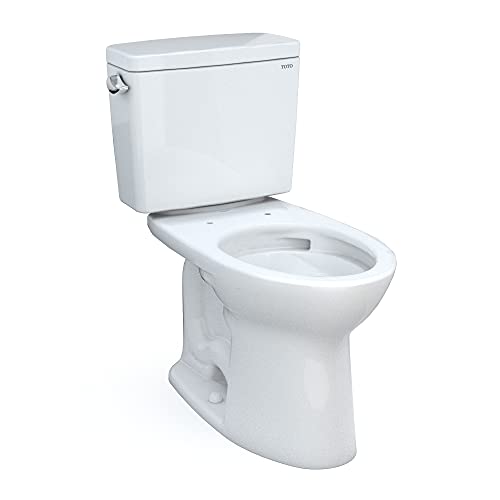
Classic two-piece toilets with tall tanks and elegant, understated proportions, the quiet country-house look that suits a traditional English bathroom without tipping…
Read the guide