

Why Toilet Trapways Are Curved Like an S
Toilets4.6
Learn why toilet trapways curve like an S, how each bend blocks sewer gas, and what the shape means for clogs and…
Read the guideHair clogs rank among the most common yet misunderstood bathroom drain problems. Learn exactly why hair accumulates in toilet drains, which removal methods actually work, and what toilet design features prevent the problem from returning.
Hair clogs in toilet drains respond best to a toilet auger (closet snake) inserted 3 to 4 inches into the drain opening. Manual extraction beats chemical drain cleaners, which rarely dissolve hair fully and can corrode toilet porcelain and PVC trap components over repeated use.
Toilet drain clogs from hair form differently than sink clogs because the toilet trap is a deep, curved S-bend or P-bend built into the porcelain, not a simple straight pipe with a screen. Hair strands entering the bowl during showering cross-contamination, or shed during personal grooming at the toilet, get pulled through the bowl rim jets and settle at the bend of the trapway, where they accumulate with toilet paper fiber and waste to form a dense mat. Unlike a sink trap that is easily accessed by unscrewing a drain plug, the toilet trapway is integral to the vitreous china body, so no direct physical access exists without specialized tools.
Hair is notably resistant to the water force generated during a standard flush. A 1.28 GPF EPA WaterSense-certified toilet produces significant hydraulic action, but hair strands form a mesh that catches other debris rather than releasing with the water flow. Over weeks, this mesh grows dense enough to restrict the toilet's 2-inch minimum trapway opening, slowing drainage noticeably.
The problem is compounded by the anatomy of modern low-profile trapways. Older toilets with larger 2.5-inch or wider trapways tolerated more debris before restriction became noticeable. High-efficiency models certified to the EPA WaterSense standard at 1.28 GPF or the ultra-efficient 1.0 GPF level generate excellent flushing velocity but slightly less sustained water volume per cycle, which can leave lighter debris like hair strands sitting at the trap curve rather than being swept fully through.
Plumbing industry guidance consistently points to the toilet auger as the first tool of choice for toilet-specific clogs, including hair blockages. Chemical drain products marketed for hair clogs contain sodium hydroxide (lye) or sulfuric acid, both of which can damage the wax ring seal at the toilet base and degrade rubber flapper and fill valve components when residue back-splashes into the tank. Save chemicals as an absolute last resort before calling a plumber, never a first response.
The clearest sign of a hair-based toilet clog is a slow drain after flushing: water rises higher than normal in the bowl, then drains over 30 to 90 seconds rather than the 5 to 10 seconds typical of an unobstructed toilet. A gurgling sound as the water finally exits, or bubbling in nearby shower or bathtub drains during a toilet flush, suggests the obstruction is further down the shared drain line rather than in the toilet trapway itself.
Hair clogs typically produce a gradual onset rather than a sudden complete blockage. You may notice the bowl water level sitting slightly higher after each flush over several weeks, then a noticeable rise, before a full overflow situation occurs. This gradual development is because hair mats grow incrementally as new strands attach to the existing clump.
Distinguishing a hair clog from a foreign-object clog or a main-line obstruction matters before choosing a removal method. A hair clog confined to the toilet trapway produces slow draining only in that toilet. A main sewer line clog produces slow draining or backflow in multiple fixtures simultaneously, and requires professional diagnosis rather than DIY auger work at the toilet.
| Symptom | Likely Location | Recommended Action | DIY-Friendly? |
|---|---|---|---|
| Single toilet drains slowly, no overflow | Toilet trapway (hair mat) | Toilet auger, then enzyme treatment | Yes |
| Toilet gurgles after flush, drains eventually | Toilet trapway or branch drain | Auger; if persists, inspect branch drain | Mostly yes |
| Multiple fixtures drain slowly or back up | Main sewer line | Professional hydro-jet cleaning | No |
| Toilet overflows immediately on flush | Complete trapway blockage | Plunger first, then auger; no water until cleared | Yes, carefully |
| Drain odor without slow draining | Hair mat decomposing in trap | Enzyme drain treatment, flush thoroughly | Yes |
Insert the toilet auger's rubber-coated tip into the drain hole at the base of the bowl, position the guide tube against the porcelain to prevent scratching, then crank the handle clockwise while applying gentle forward pressure until you feel resistance. Once the auger tip contacts the hair mat, rotate it to entangle the hair strands, then withdraw slowly while continuing to rotate to extract the clog. Follow with a full flush to clear residual debris.
A standard closet auger (the correct tool for toilets) has a cable 3 to 6 feet long with a 54-inch to 6-foot reach, which is sufficient to clear blockages in the toilet trapway and the immediate drain line. The rubber sleeve protecting the cable prevents the cable from scratching the glazed porcelain bowl surface, which is important because scratches provide sites for future stain and buildup accumulation.
A 3-foot hand-crank closet auger handles the vast majority of toilet hair clogs since most accumulation occurs in the first 12 to 18 inches of the trapway. A 6-foot drill-powered auger is useful if blockage has formed further down the branch drain pipe, but should be used carefully at low drill speed to avoid cable kinking inside the toilet trap curves.
A flange plunger (the kind with an extended rubber lip that seals inside the toilet drain opening, not a flat-bottom sink plunger) can loosen a partial hair clog by creating pressure waves that dislodge the mat, but it rarely extracts hair and often pushes the clog deeper into the drain line. Use a plunger as a first response if the toilet bowl is at risk of overflowing, then follow with an auger for actual removal.
The distinction between plunger types matters significantly for toilet use. A cup plunger (flat rubber dome) creates suction at the bowl surface but cannot seal inside the angled toilet trapway opening. A flange plunger or an accordion-style plunger creates a tight seal inside the drain and generates more effective pressure waves. For hair clogs specifically, even the correct plunger provides limited benefit because hair strands are flexible and compress under pressure rather than breaking apart or releasing cleanly.
Plunging technique for partial hair clogs: insert the flange plunger fully into the drain, establish a tight seal, then push down slowly to compress (not splash), and pull up sharply to create a vacuum pull on the clog. Repeat 10 to 15 times in a sustained rhythm. If the bowl begins to drain faster, the clog has partially loosened. If no improvement after 15 to 20 cycles, move to the toilet auger rather than continuing to plunge.
Chemical drain cleaners formulated for hair clogs typically contain sodium hydroxide (lye) or sulfuric acid. In toilets, these chemicals create two significant risks: they can soften or crack the wax ring seal between the toilet horn and drain flange when residual solution seeps down, and they generate substantial heat during the chemical reaction, which can thermally stress older vitreous china toilet bowls and cause hairline cracks. Enzyme-based biological drain cleaners are safe for toilets but work over hours to days, not minutes.
The EPA's guidance on household chemical drain cleaners notes that caustic formulas (sodium hydroxide-based) and acid-based formulas both require careful disposal because even diluted solution reaching wastewater treatment plants can interfere with the biological treatment processes those facilities depend on. For residential users, the mechanical alternative (auger) eliminates the chemical hazard entirely while delivering faster, more complete clog removal.
There is a secondary concern specific to toilets with rubber components in the tank: sodium hydroxide solutions that splash into the overflow tube or back-flow when flushing can reach the fill valve, flapper, and tank-to-bowl gasket. Rubber degrades in strongly alkaline environments, accelerating the need for tank component replacement. Manufacturers including TOTO, Kohler, and American Standard specifically state in their care and maintenance documentation that strong chemical drain cleaners void warranty coverage on rubber sealing components.
Enzyme drain maintainers sold specifically for toilets and septic systems are the only chemical option worth considering for hair-related toilet drain issues. Products containing Bacillus subtilis or other drain-safe bacterial cultures digest hair protein (keratin), soap scum, and organic waste over 8 to 24 hours without generating heat or damaging toilet materials. They work best as monthly preventive treatments rather than acute clog remedies.
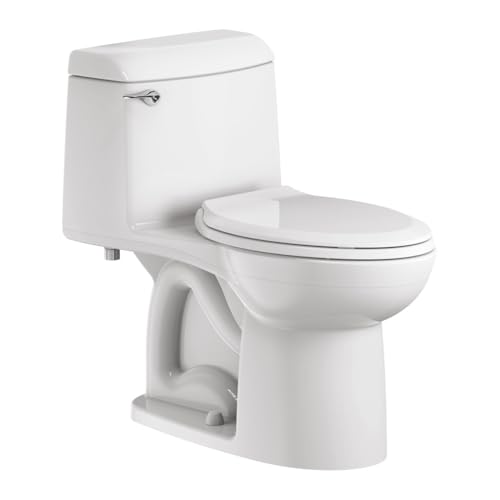
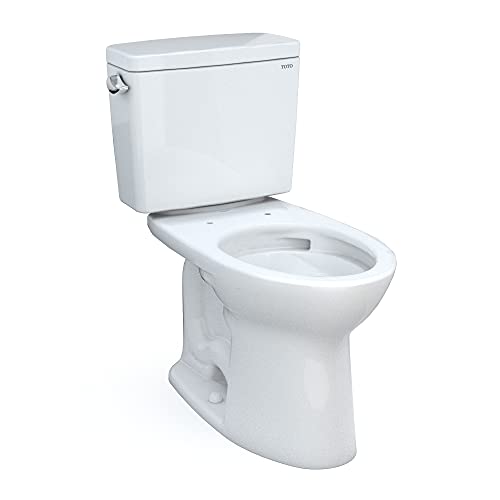
Toilets with fully glazed trapways of 2 3/8 inches or larger diameter, combined with high MaP flush-test scores of 800 grams or above, clear hair and organic debris most effectively. The TOTO Drake II (MaP score 1,000 grams) and American Standard Champion 4 (MaP score 1,000 grams, 2 3/8-inch fully glazed trapway) are frequently cited by plumbing professionals as benchmarks for clog resistance. Smooth glaze that extends through the entire trapway prevents hair from catching on rough ceramic surfaces.
Trapway glazing is the single most important design feature for hair clog resistance. An unglazed trapway interior has microscopic surface roughness that hair strands and soap scum can anchor to, building up over time. A fully glazed trapway -- where the manufacturer has applied the same smooth ceramic glaze coat inside the trap channel as on the exterior bowl -- presents a slick surface that shed hair and organic material cannot easily grip. TOTO refers to its version of this coating as CeFiONtect, an ion-barrier glaze applied to bowl and trapway surfaces that reduces adhesion of waste and buildup.
MaP (Maximum Performance) flush testing provides an objective benchmark for a toilet's ability to move solids through the drain in a single flush. Conducted by Veritec Consulting and MaP Testing LLC, the test uses standardized media at gram weights from 100g to 1,000g to measure single-flush clearing performance. Toilets scoring 800g or higher on MaP tests generate sufficient hydraulic action to carry along incidental hair accumulation with each flush, reducing the rate at which hair mats form in the trapway. You can compare MaP scores for specific models at map-testing.com.
The American Standard Champion 4 earns its reputation specifically from its 2 3/8-inch fully glazed trapway and PowerWash rim technology, which together produce a MaP score of 1,000 grams with 1.6 GPF. The Kohler Cimarron with AquaPiston technology achieves MaP 1,000g and features a 3/2-inch flush valve opening (significantly larger than the standard 2-inch valve) that produces a stronger, more concentrated flush with less tendency to leave lightweight debris behind.
For households where hair clogging is a recurring problem, upgrading to a high-performance toilet with a certified large trapway is a practical long-term solution. See our guide to the best flushing toilets for comprehensive MaP score comparisons across current models.
| Model | MaP Score | Trapway Size | Trapway Glazing | GPF | WaterSense | Check Price |
|---|---|---|---|---|---|---|
| American Standard Champion 4 | 1,000g | 2 3/8 in | Fully glazed | 1.6 | No (1.6 GPF) | Check price |
| TOTO Drake II | 1,000g | 2 1/8 in | CeFiONtect glaze | 1.28 | Yes | Check price |
| Kohler Cimarron | 1,000g | 2 1/8 in | Fully glazed | 1.28 | Yes | Check price |
| TOTO UltraMax II | 1,000g | 2 1/8 in | CeFiONtect glaze | 1.28 | Yes | Check price |
| American Standard Cadet 3 | 800g | 2 1/8 in | EverClean surface | 1.28 | Yes | Check price |
| Gerber Viper | 1000g | 2 1/8 in | Fully glazed | 1.28 | Yes | Check price |
| Woodbridge T-0001 | 800g | 2 1/8 in | Fully glazed | 1.28 | Yes | Check price |
Siphonic flush systems, which the majority of North American toilets use, create a siphon action that pulls waste and debris through the trapway rather than simply pushing it. This pull action is effective at drawing hair mats through the trapway during a flush, provided the clog has not fully blocked water flow. Washdown flush systems (more common in European markets) rely on a direct push of water and are generally more prone to leaving lightweight debris like hair strands in the trap.
Pressure-assisted toilets, which use compressed air stored in a sealed inner tank to force water into the bowl at high velocity, produce enough hydraulic energy to dislodge partial hair clogs that a gravity-flush toilet might not clear. Models from Gerber and American Standard with Flushmate pressure-assist systems achieve MaP scores of 1,000 grams with 1.0 GPF, generating exceptional flushing velocity. The tradeoff is audible flush noise (typically 80 to 90 dB) and higher tank component complexity.
Dual-flush toilets, including the TOTO Aquia IV and several Woodbridge models, use different water volumes for liquid waste (0.8 GPF) and solid waste (1.28 GPF) flushes. For households with hair clogging concerns, consistently using the full-flush (1.28 GPF) button rather than the half-flush when hair may be present in the bowl ensures maximum hydraulic action through the trapway.
The most effective prevention strategy has nothing to do with the toilet itself: it is keeping loose hair from entering the toilet bowl in the first place. The three primary entry points are showering (hair carried by water draining through the bathroom floor to shared plumbing), hair removal or grooming conducted over or near the toilet, and natural shedding during bathroom use.
Installing a mesh drain screen in the shower or bathtub that catches shed hair before it enters the floor drain is the highest-impact preventive action. The average person sheds 50 to 100 hairs per day according to dermatological research, and a significant portion of those shed during washing. A hair catcher screen in the shower prevents those strands from migrating through shared drain lines toward the toilet trap.
Monthly enzyme drain treatment poured into the toilet bowl and left overnight (with the toilet not used for several hours) digests accumulated organic debris including hair protein, soap residue, and biofilm that accumulates on trapway surfaces. This maintenance approach is recommended by plumbing professionals and drain product manufacturers alike as far less disruptive than reactive clog clearing after a full blockage has formed.
Plumbing codes in the United States require toilet trapways to be at least 2 inches in minimum cross-section dimension (per the Uniform Plumbing Code and International Plumbing Code). Most quality toilets from TOTO, Kohler, American Standard, Woodbridge, Gerber, and Swiss Madison exceed this minimum, with 2 1/8-inch to 2 3/8-inch trapways being standard on mid-range and premium models. The difference between a 2-inch and a 2 3/8-inch trapway cross-section represents approximately a 41% increase in flow area, which meaningfully reduces the accumulation rate of partial obstructions like hair mats.
DIY toilet auger work resolves the majority of toilet-confined hair clogs. Call a licensed plumber when any of the following apply: the toilet continues to drain slowly after two thorough auger treatments; multiple fixtures (sink, shower, bathtub) in the bathroom show slow drainage simultaneously; the toilet makes gurgling sounds when the washing machine drains; sewage odor is persistent and not localized to the toilet; or tree root intrusion (common in homes with mature trees) is suspected in the main sewer line.
A plumber's cable snake (power auger) reaches 25 to 50 feet down the drain line, covering the toilet trap, branch drain, and a portion of the main stack. Hydro-jetting, where a plumber uses high-pressure water (1,500 to 4,000 PSI) to scour the inside of drain pipes, is the definitive solution for heavy accumulation that has built up over years. Hydro-jetting removes hair, soap scum, and mineral deposits simultaneously and leaves pipe interiors in near-original condition.
The average cost of a plumber using a power snake to clear a toilet clog ranges from $100 to $250. Hydro-jetting costs $300 to $600 for a standard residential main line. For context, a persistent hair clog situation may indicate a trapway issue with the current toilet, making a toilet replacement an economically rational alternative to repeated professional service calls. See our guide to toilet clog prevention for a comprehensive look at long-term strategies.
Yes. Hair is one of the more common causes of gradual toilet drain restriction. Unlike large objects that cause immediate blockage, hair accumulates incrementally over weeks to months at the trapway curve, eventually forming a dense mat that traps toilet paper and other debris.
The timeline depends on how much hair enters the toilet and how often. In households where hair routinely enters the toilet bowl (during grooming, or migrating from shower plumbing), noticeable slowing of drainage typically occurs within 3 to 9 months. Monthly enzyme maintenance can extend this to years before any auger work is needed.
Plumbing professionals and municipal water authorities generally advise against flushing hair intentionally. Hair does not dissolve in water, resists decomposition in sewer systems, and can contribute to large accumulations called "fatbergs" in municipal sewer lines when combined with fats and greases. Dispose of shed hair in a waste bin.
A toilet auger (closet auger) has a rubber or vinyl sleeve protecting the cable, a curved guide tube designed to follow the toilet trapway angle, and a shorter 3 to 6-foot cable length. A standard drain snake is longer, lacks the protective sleeve, and can scratch porcelain if used directly in a toilet bowl. Always use a designated toilet auger for toilet drain work.
These products are not recommended for use in toilets. Caustic chemical drain openers can damage wax ring seals, rubber tank components, and in rare cases thermally stress older porcelain. Both manufacturers note on product packaging that use in toilets is not advised for some product lines. A toilet auger is safer and more effective for hair clogs.
If only one toilet drains slowly and all other fixtures in the bathroom drain normally, the clog is almost certainly in the toilet trapway or the first few feet of the branch drain. If two or more fixtures drain slowly, or if using one fixture causes backup in another, the clog is in the shared branch drain or main sewer line and requires professional clearing.
High MaP-score toilets reduce the rate of hair accumulation by generating more hydraulic force per flush, but they do not prevent hair from eventually accumulating in the trapway if hair regularly enters the bowl. The combination of a high-performance toilet with a fully glazed trapway and regular enzyme maintenance provides the best long-term resistance to hair-related clogging.
Look for enzyme drain treatments containing bacterial cultures (specifically Bacillus strains) listed as safe for septic systems and toilets. Products formulated specifically for bathroom drains digest keratin (hair protein) more effectively than general-purpose enzyme cleaners. Apply monthly as a preventive measure rather than waiting for a clog to develop.
If hair clogs recur every 6 months or more frequently after full auger clearing, establish a routine: auger the toilet annually and use enzyme drain treatment monthly. If clogs return faster than every 6 months despite this maintenance, the underlying cause is likely more hair entering the toilet system than typical, and source-control measures (shower hair catchers, changing grooming habits) will be more effective than more frequent augering.
Yes. WaterSense certification confirms a toilet uses 1.28 GPF or less and meets EPA performance requirements for clearing waste, but it does not guarantee immunity from gradual hair accumulation. The TOTO Drake, Drake II, and UltraMax II are all WaterSense certified with high MaP scores, yet they can develop hair clogs if hair regularly enters the bowl and no maintenance routine is in place.
Yes, a flange plunger used correctly in a toilet with a hair clog is safe and worth attempting before reaching for an auger. Use a flange plunger (the one with an inner rubber flap that extends into the drain opening) rather than a flat cup plunger. Vigorous plunging occasionally dislodges or breaks apart a partial hair mat enough to restore drainage.
A smooth glazed surface inside the trapway gives hair strands and soap scum fewer microscopic anchor points to grab onto. On unglazed ceramic surfaces, the porous texture allows initial hair strands to catch, and subsequent strands tangle with those, accelerating mat formation. A fully glazed trapway means the first strands pass through rather than anchoring, significantly slowing accumulation.
The American Standard Champion 4 is the benchmark for clog resistance in the American Standard lineup, with a 2 3/8-inch fully glazed trapway and 1,000-gram MaP score. The Cadet 3 and Cadet Pro use an EverClean antimicrobial surface treatment and achieve MaP scores of 800g to 1,000g at 1.28 GPF, offering a balance of water efficiency and solid waste clearing. Both are strong choices for problem clog situations. See our related guide to clog prevention strategies for additional comparisons.
The TOTO Drake II and TOTO UltraMax II both achieve 1,000-gram MaP scores with CeFiONtect fully glazed trapways at 1.28 GPF, making them among the best available for minimizing waste and hair accumulation. The TOTO Aquia IV offers dual-flush capability (0.8/1.28 GPF) with the same CeFiONtect glaze treatment. For households with persistent clogging problems, the full-flush setting on the Aquia IV matches the Drake II in flushing power.
A straightened wire coat hanger is not recommended for toilet drain use. Wire can scratch and chip the porcelain glaze inside the toilet trap, and the wire tip may become permanently lodged if it catches on a trapway curve. An inexpensive plastic drain snake or a purpose-built toilet auger is always the better choice and is available at hardware stores for under $20.
Lukewarm (not boiling) water poured from waist height into the toilet bowl sometimes helps loosen a partial hair clog by adding hydraulic pressure and slightly softening the soap scum that binds hair strands together. Boiling water should never be poured directly into a toilet bowl as the thermal shock can crack vitreous china. Water at tap temperature (below 140 degrees F) is safe; boiling is not.
The Kohler Highline Classic achieves 800g on MaP testing with a 2-inch trapway, while the Champion 4 reaches 1,000g with a wider 2 3/8-inch fully glazed trapway. For households with known hair clogging problems, the Champion 4's larger trapway and higher MaP score provide a meaningful advantage. The Kohler Cimarron is a closer competitor, matching the 1,000g MaP score at 1.28 GPF. Read our best no-clog toilets guide for a fuller comparison.
The baking soda and vinegar method produces a vigorous fizzing reaction that can dislodge minor partial clogs in sink drains, but in toilets the large water volume dilutes the reactants significantly before they reach the trapway clog. The method is not harmful to try (it is safe for all toilet materials), but it is unlikely to be effective against a fully formed hair mat. An auger remains the reliable mechanical solution.
The Woodbridge T-0001 and most current Woodbridge one-piece models feature fully glazed trapways with smooth surface finishes. Woodbridge toilet specifications confirm 2 1/8-inch trapway openings. For hair clog resistance, Woodbridge models occupy a solid mid-range position, performing comparably to mid-tier models from American Standard and Gerber. They are certified EPA WaterSense-compliant at 1.28 GPF.
Turn off the water supply valve immediately (clockwise, behind or beside the toilet base). Do not attempt another flush. Use towels or a wet-dry vacuum to remove overflow water from the floor to prevent water damage. Then address the clog with a flange plunger before restoring water supply; if plunging does not clear it within 10 to 15 attempts, use a toilet auger. Do not restore water supply until drainage is confirmed clear.
Hair clogs in toilet drains are a mechanical problem that demands a mechanical solution: a toilet auger clears the vast majority of hair mats in a single session, costs under $25, and causes no damage to toilet materials. Follow up with monthly enzyme drain treatment to prevent recurrence. If hair clogging is a persistent pattern in your household, upgrading to a toilet with a fully glazed trapway of 2 1/8 inches or larger and a MaP flush-test score of 800 grams or higher -- such as the TOTO Drake II, Kohler Cimarron, or American Standard Champion 4 -- addresses the root cause by generating enough flush energy to carry shed hair through the drain with each cycle rather than allowing it to accumulate.
Learn why toilet trapways curve like an S, how each bend blocks sewer gas, and what the shape means for clogs and…
Read the guideAlmost every US toilet has a left-side handle. Learn the plumbing and mechanical reasons behind the layout and when it actually changes.
Read the guideHome toilets rely on tanks because household water lines lack the pressure that public flushometer systems use to flush straight from the…
Read the guide