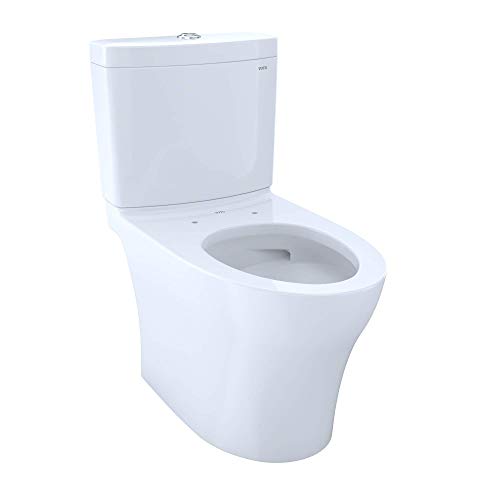


Why Toilet Trapways Are Curved Like an S
Toilets4.6
Learn why toilet trapways curve like an S, how each bend blocks sewer gas, and what the shape means for clogs and…
Read the guideWhen your dual flush button stops working, you are often looking at a stuck actuator, misaligned flush valve rod, or a worn seal rather than a full toilet replacement. This guide covers every common failure point, step-by-step fixes, and when to call a plumber.
A dual flush button that only partially works is almost always caused by a detached actuator rod, a warped flush seal, or mineral scale blocking the button travel. In the majority of cases the repair takes under 30 minutes and costs less than $20 in parts with no special tools required.
A dual flush button operates two separate actuator rods or cables inside the tank. The small button lifts a partial-flush valve that releases 0.8 GPF to 1.0 GPF for liquid waste, while the large button lifts a full-flush valve releasing 1.6 GPF for solid waste. When either rod loses connection to its valve seat, that flush mode fails entirely.
Most dual flush toilets sold today use a tower-style flush valve rather than the traditional rubber flapper used on single-flush designs. Instead of a flap that swings open, a cylindrical tower lifts straight up from the flush valve seat. The actuator buttons sit on top of the tank lid or on a plate mounted to the tank wall, and they connect to the tower's lift mechanism through threaded rods, plastic cables, or a scissor linkage depending on the brand.
Brands like TOTO, Kohler, American Standard, Woodbridge, Swiss Madison, and Gerber each use slightly different linkage designs, but the core failure points are the same: the connection between button and valve breaks, the valve seal degrades, or mineral deposits prevent the mechanism from moving freely.
Understanding which mode has failed -- small flush, large flush, or both -- is the fastest diagnostic shortcut. If the small (half-flush) button does nothing but the large (full-flush) works normally, the issue is almost always the small-flush rod or its attachment clip. If both buttons fail, the problem is usually further upstream: a jammed actuator plate, a broken fill valve, or a cracked tower body.
Plumbing industry guidance consistently identifies dual flush valve seal degradation as the single most common failure mode after five to seven years of use, particularly in households with hard water above 7 grains per gallon (120 mg/L). EPA WaterSense water efficiency standards require certified dual flush toilets to average no more than 1.28 GPF across both flush modes, which means a leaking or stuck valve directly undermines the water savings the toilet was designed to deliver.
The five most common causes are: a disconnected actuator rod or cable, a warped or corroded flush tower seal, mineral scale buildup on the button mechanism, a broken button clip or cracked button housing, and a float set too low that prevents enough water for a complete flush cycle. Rod disconnection accounts for roughly half of all reported failures in aggregated owner reviews.
Here is a breakdown of each failure point and how to identify it before you start disassembling anything:
| Symptom | Most Likely Cause | DIY Difficulty | Typical Part Cost |
|---|---|---|---|
| Small button does nothing | Half-flush rod disconnected or broken clip | Easy | $0 - $8 |
| Large button does nothing | Full-flush rod disconnected or tower stuck | Easy | $0 - $8 |
| Both buttons spongy / no flush | Jammed actuator plate or broken housing | Moderate | $12 - $35 |
| Button stuck down / will not release | Scale buildup on button shaft or linkage | Easy | $0 (descale) - $15 |
| Flush weak but button works | Float set too low / tower seal leaking | Moderate | $0 - $20 |
| Continuous running after flush | Tower seal worn / flush valve not seating | Moderate | $10 - $25 |
| Ghost flush triggered randomly | Button linkage too tight / water hammer | Moderate | $0 - $20 |
Remove the tank lid, press the button from inside the tank to confirm it moves freely without the lid restriction, then spray the button shaft with white vinegar or a food-safe descaling solution and let it soak for 20 minutes. If scale was the cause, the button should release after light scrubbing with an old toothbrush. If the shaft is physically cracked, the entire actuator plate assembly needs replacement.
Step-by-step process for a stuck or jammed button:
Step 1: Remove the tank lid carefully. On most dual flush toilets the tank lid is a two-part assembly -- a ceramic lid that lifts off first, and a separate plastic actuator plate beneath it that houses the buttons. Some models (Woodbridge T-0001, Swiss Madison models) have the actuator plate clipped into the lid itself. Check the owner manual or look up your model number before forcing anything.
Step 2: Identify which button is stuck. With the lid off, you can often see whether the button shaft is binding against scale deposits (white or tan mineral crust visible around the shaft collar) or whether the plastic housing has cracked and is pinching the shaft.
Step 3: Descale the shaft. Soak a cloth in undiluted white vinegar and wrap it around the button shaft for 20 to 30 minutes. Alternatively, apply a citric acid toilet descaler directly to the mechanism. After soaking, scrub with a toothbrush and test the travel. In hard water areas (above 150 mg/L TDS), descaling every 12 months prevents this problem from recurring.
Step 4: Check the actuator linkage alignment. Once the shaft moves freely, verify the actuator rod is seated in its correct slot on the flush tower. Many rods have a small J-hook or a clip that snaps into a hole on the tower lift arm. If this has popped out, the button travels but nothing happens inside the tank. Simply re-seat the hook or clip.
Step 5: Replace the actuator plate if the housing is cracked. Search for your model number plus "dual flush actuator" or "push button assembly." Most replacement actuator plates for TOTO Aquia IV, American Standard H2Option, Woodbridge T-0001, and Gerber models are available for $12 to $35. The part is typically four screws and a snap-in connection -- no tank draining required.
Mineral scale is far more aggressive on dual flush buttons than on traditional lever handles because the button shafts have tighter clearances. In regions where water hardness exceeds 200 mg/L (common in Arizona, Texas, and Southern California), aggregated owner review data from TOTO and Kohler product pages shows stuck button reports occurring two to three times more frequently than in soft-water markets. An annual wipe-down of the button mechanism with a vinegar-dampened cloth is the single most effective preventive measure.
Turn off the water supply, flush to empty the tank, then lift the actuator plate away from the tank. Each rod ends in either a J-hook, a bayonet clip, or a threaded collar that attaches to a lift post on the flush tower. Snap or thread the rod back onto its post, verify it moves smoothly when you press the button by hand, then refill the tank and test both flush modes before replacing the lid.
Actuator rod reconnection is the single most common repair call for dual flush toilets, and it is the most likely fix when a button suddenly stops working with no visible damage. The rods can vibrate loose over years of flushing, or a hard knock to the tank lid during cleaning can pop them off.
Tools needed: None, or at most a flathead screwdriver to release a clip. No plumbing experience required.
Identifying your rod type:
After reconnection: With the tank empty and the supply off, press each button by hand and watch the tower lift. The small button should raise the tower approximately one-third of its travel range; the large button should raise it fully. If the small button raises it fully too, the rods are reversed -- swap them.
Some models, particularly certain Swiss Madison Clarence and Ivy configurations, use a single button that controls both flush volumes through a timed-release mechanism rather than two separate rods. On these, prolonged button press equals full flush, brief press equals half flush. If the time-differentiation stops working, the entire flush valve cartridge needs replacement.
Replace the full flush valve when the tower seal is visibly warped or cracked, when the tower body itself has a hairline fracture, when repairs have been attempted more than twice in 12 months on the same component, or when the toilet is over 10 years old and flush performance has degraded below its original MaP score threshold. A complete flush valve replacement typically costs $20 to $60 in parts.
The flush tower in a dual flush toilet is designed to last 8 to 12 years under normal residential use. After that, the seal degrades even without visible damage. A worn seal causes several problems simultaneously: intermittent partial flushes, water running into the bowl continuously (which wastes more water than a pre-1994 toilet uses), and button travel that feels mushy or unresponsive.
Signs that replacement is the right call rather than another patch repair:
For brand-specific flush valve replacements:
| Brand / Model | Flush Valve Part | Replacement Difficulty | Notes | Check Price |
|---|---|---|---|---|
| TOTO Aquia IV | TOTO THU808S tower valve | Easy | Snap-fit tower, no tank removal needed | Check price |
| American Standard H2Option | AS 7381115-400.0070A | Moderate | Requires tank emptying; tower clips to flange | Check price |
| Kohler dual flush models | Kohler GP1083167 canister valve | Moderate | Canister style differs from tower; four-tab release | Check price |
| Woodbridge T-0001 | OEM Woodbridge replacement tower | Easy | Quarter-turn removal; tower sold as complete kit | Check price |
| Swiss Madison models | Swiss Madison SM-1T254 flush valve | Moderate | Bayonet lock base; gasket replacement often sufficient | Check price |
| Gerber dual flush | Gerber 99-788 tower seal kit | Easy | Seal-only kit available; full tower also sold separately | Check price |
Before ordering a replacement part, photograph your existing flush valve and note the part number stamped on the tower body -- it is usually visible with a flashlight once the tank lid is off. Using the wrong tower even from the same brand can result in incorrect water volumes that take the toilet out of EPA WaterSense compliance.
MaP flush testing (Maximum Performance testing, conducted by independent labs at map-testing.com) rates toilet flushing ability based on the weight of waste the toilet can clear in a single flush. A dual flush toilet with a degraded tower seal may still pass a single test but fails consistently on repeat flushes -- exactly the scenario that MaP's 1,000-gram standard is designed to expose. If your toilet started requiring double flushing, a failed tower seal is statistically the most likely explanation, and replacing the seal restores original MaP performance without replacing the entire toilet.
Yes. Universal single-flush conversion kits are available for under $15 that replace the dual flush tower and actuator with a standard flapper-and-lever system. This eliminates the dual button entirely but also eliminates the water savings of the half-flush mode. A better option is replacing only the failed actuator or seal rather than converting, since conversion permanently removes the toilet's EPA WaterSense dual-flush certification status.
Conversion kits are widely available and work on most standard 2-inch and 3-inch flush valve seats. The process involves removing the dual flush tower entirely and dropping in a standard rubber flapper, then connecting a replacement handle-and-lever to the side of the tank. The entire job takes about 20 minutes.
However, consider this carefully before converting. A functioning dual flush toilet that meets EPA WaterSense standards (maximum 1.28 GPF average) saves roughly 13,000 gallons per year versus a 1994-era 3.5 GPF toilet, and 4,000 to 7,000 gallons per year versus a standard single-flush 1.6 GPF toilet, based on EPA WaterSense published water savings data. Converting to single flush to avoid a $15 repair part eliminates those savings permanently.
If the repair proves genuinely impossible -- for example the toilet is an obscure import brand with no available parts -- upgrading to a new best flushing toilet that carries an EPA WaterSense certification is a better long-term choice than converting to single flush. TOTO's Aquia IV, for instance, achieves a MaP score of 1,000 grams on its full flush mode while averaging just 1.0 GPF across both modes, which is 37% more water efficient than the WaterSense maximum.
Also worth reviewing before any repair decision: dual flush vs single flush toilets for a full comparison of long-term costs, how dual flush toilets work mechanically, and other dual flush toilet problems beyond the button itself.
Install a water softener or in-line filter if your water hardness exceeds 150 mg/L, wipe the button mechanism monthly with a damp cloth to prevent scale accumulation, avoid pressing both buttons simultaneously, and inspect the actuator rod connections once a year during routine tank cleaning. These four steps eliminate the vast majority of repeat failures reported in aggregated owner feedback.
Preventive maintenance for dual flush buttons does not require professional service. Here is a practical annual maintenance checklist:
For households with well water or city water testing above 250 mg/L total dissolved solids, consider a whole-house water softener or at minimum a toilet tank tablet that buffers scale formation. American Standard, TOTO, and Gerber each publish service life data showing that flush valve component lifespan roughly doubles in soft water versus hard water environments.
Also check out the related guide on are dual flush toilets worth it if you are deciding whether to repair or replace your current unit, and review the dual flush water savings calculator to quantify how much a properly functioning dual flush system saves per year at your local water rate.
When only one button works, the actuator rod for the non-working mode has disconnected from the flush tower lift arm. Remove the tank lid and look inside -- one of the two rods will be dangling freely rather than hooked into the tower. Re-seating it takes about two minutes and requires no tools.
On virtually all dual flush toilets sold in North America, the larger button or the button marked with a larger symbol triggers the full flush (1.6 GPF). The smaller button or the one with a smaller wave symbol triggers the half flush (0.8 to 1.0 GPF). TOTO, Kohler, and American Standard consistently follow this convention. When in doubt, check the label molded into the actuator plate.
A spongy button usually means the actuator linkage has partially detached or the button return spring has failed. The button moves but does not have a solid mechanical connection to the flush tower. Open the tank, locate the actuator plate, and check that both rods are seated firmly in their mounting holes on the tower.
Yes, and it is one of the most common causes in hard water areas. The button shaft has very small clearance inside its housing -- sometimes less than 0.5 mm on each side. Scale deposits of that thickness are enough to physically lock the shaft in place. Soaking with white vinegar for 20 to 30 minutes dissolves calcium carbonate scale and typically restores full movement without any parts replacement.
Most actuator plates unscrew counterclockwise by gripping the plate and turning, or they release when you press a small tab on either side of the plate. On Woodbridge T-0001 and similar designs, the plate twists off. On TOTO Aquia IV, the ceramic lid and actuator plate separate from each other -- lift the ceramic lid first, then the plastic actuator plate lifts straight up after disconnecting the two actuator rods.
No. Pressing both buttons simultaneously stresses the actuator linkage and can cause one or both rods to pop off their mount points. Some dual flush designs also have interference between the two lift mechanisms when both are activated at once, which can result in the tower becoming lodged in an intermediate position. Use one button at a time.
Constant running after a button repair almost always means the flush tower is not returning to its fully seated position. Either the actuator rod is too short (if you replaced it with a non-OEM part), the rod is pushing the tower up even at rest, or the seal at the base of the tower is no longer seating cleanly because it was disturbed during the repair. Check that the rod length allows the tower to drop completely to its rest position when no button is pressed.
In most cases, no. The actuator plate, button housing, and rod dimensions are brand-specific and often model-specific. Using a Kohler actuator plate on a Woodbridge tank, for example, will result in incorrect fit and likely button failure. Always use OEM or an OEM-compatible replacement part listed specifically for your model number. Universal actuator kits exist but are rare and typically only compatible with certain import models.
The button mechanism itself -- the plastic housing and actuator plate -- typically lasts the lifetime of the toilet under normal residential use. The most common failure is the detachable rod or clip rather than the button housing itself. In hard water conditions without maintenance, scale damage to the button housing can occur within 5 to 8 years. The flush tower seal beneath the button mechanism is the first component that typically needs proactive replacement, usually after 7 to 10 years.
Hissing after a flush indicates the fill valve is working normally (refilling the tank) or, if the hiss continues indefinitely, that water is leaking past the flush tower seal into the bowl. The second scenario is related to the button problem if the button repair left the tower not fully seated. A continuous hiss combined with button malfunction strongly suggests the tower seal needs replacement. Check by adding food coloring to the tank -- if color appears in the bowl without flushing, the seal is leaking.
Look inside the tank. The model number is almost always printed on a sticker on the inside back wall of the tank, or molded directly into the ceramic on the inside of the tank. For TOTO, the model number appears on a sticker near the water line. Kohler prints the model on the bottom of the tank lid. American Standard typically places it inside the tank on the back wall. Once you have the model number, search for it plus "flush button" or "actuator plate" or "flush valve" to find the correct part.
A button stuck in the down position means either the return spring has failed or the shaft is binding with scale or physical damage. First try the vinegar soak method. If the button still will not return, check whether the spring inside the button housing is broken -- it will be visible once you remove the actuator plate. Replacement springs are sometimes sold separately, but in most cases replacing the entire actuator plate for $12 to $35 is faster and more reliable than sourcing a spring alone.
For a rod reconnection repair with no parts replacement, you do not technically need to turn off the water -- just lift the tank lid and re-seat the rod. However, for any repair involving removing the actuator plate from inside the tank, or replacing the flush valve tower, turning off the supply valve and flushing the tank empty is strongly recommended to avoid water splashing and to give clear access to the internal components.
Many import dual flush toilets use standardized OEM components sourced from a small number of Chinese manufacturers, most commonly Siamp, Geberit, and OLI flush mechanism suppliers. If you cannot find brand-specific parts, search for the part number stamped on the existing component. Alternatively, measure the tower diameter (typically 2 inches or 3 inches) and search for a universal dual flush tower replacement kit, which fits most import designs with some adjustment of the fill height.
EPA WaterSense certification is based on the toilet model's design and independently tested flush performance -- the certification does not lapse because of a broken button. Repairing the button with OEM or OEM-compatible parts that restore the original flush volumes brings the toilet back to its certified performance level. Using non-OEM parts that change the flush volume delivered by either mode is not recommended, as this can alter GPF delivery and void any remaining manufacturer warranty.
Dual flush buttons require slightly more force than a gravity-lever handle because the button mechanism lifts the tower vertically against water pressure rather than pivoting a lightweight arm. A firm, deliberate press is normal. However, if the button requires significantly more force than it did when new, or if it requires pressing multiple times, that is a sign of scale buildup or partial rod detachment that should be addressed.
Yes, in unheated spaces. Plastic components in the actuator mechanism become brittle at temperatures below 40 degrees Fahrenheit and can crack under normal pressing force. In vacation homes, cabins, or bathrooms adjacent to exterior walls in cold climates, a cracked actuator plate during winter is not unusual. The solution is either winterizing the toilet (draining the tank) or ensuring the bathroom stays above 45 degrees Fahrenheit when the building is unoccupied.
Weak flush after a button repair typically means the flush valve tower seal is leaking slowly (causing water level to drop before flush), the fill valve is not refilling the tank to its correct level, or the rim jets are clogged with mineral deposits. Check the float setting first -- the water line should be 1 inch below the top of the overflow tube. If the water level is correct but flush is still weak, inspect and clean the rim jets with a wire and vinegar, as this is a common secondary cause in hard water areas.
Dual flush toilets have more moving parts in the flush mechanism than single-flush designs, which means there are more potential failure points. However, the parts are inexpensive and most repairs are straightforward. Industry service data suggests dual flush flush valve components need attention 15% to 20% more often than standard flapper designs, but the water savings over the toilet's lifetime significantly outweigh the marginal additional maintenance cost in most households.
Dual flush button problems are almost always fixable without professional help and without replacing the toilet. A disconnected actuator rod takes two minutes to reattach. Scale buildup on the button shaft clears with a vinegar soak. A worn tower seal costs $10 to $25 to replace and restores original EPA WaterSense-certified flush performance. Only when the tower body itself is cracked or when the toilet is over 10 years old and parts are unavailable does replacement become the rational choice. Prioritize the repair -- the water savings a properly functioning dual flush toilet delivers are worth the small effort to keep the mechanism in working order.
Learn why toilet trapways curve like an S, how each bend blocks sewer gas, and what the shape means for clogs and…
Read the guideAlmost every US toilet has a left-side handle. Learn the plumbing and mechanical reasons behind the layout and when it actually changes.
Read the guideHome toilets rely on tanks because household water lines lack the pressure that public flushometer systems use to flush straight from the…
Read the guide