

Common Bidets Problems and How to Fix Them (2026)
Bidets4.6
Step-by-step fixes for the bidet problems reported most often, from a unit that won't spray and weak water pressure to a seat…
Read the guideA detailed look at the nozzle self-cleaning cycle in modern bidet seats and smart toilets, covering every mechanism, brand-specific implementation, and what that means for hygiene, maintenance, and longevity.
Bidet nozzle self-cleaning works by flushing the nozzle tip with water before and after each use, retracting it into a protective housing when idle. Higher-end models add UV sterilization, silver nano-ion coatings, or electrolyzed water rinse cycles. The self-cleaning feature matters because a contaminated nozzle defeats the primary hygiene purpose of owning a bidet.
A bidet nozzle self-cleaning cycle is an automated water rinse that flushes the exterior of the retractable spray nozzle before and after each use, removing residue and preventing bacterial buildup. The cycle is triggered either automatically when the seat sensor detects use, or manually via a dedicated button on the remote or side panel. Most cycles last 5 to 10 seconds and use a separate stream from the main wash water, directed at the nozzle tip rather than the user.
When bidets first appeared in North American bathrooms in the early 2000s, skepticism often centered on nozzle hygiene. The concern was legitimate: a spray nozzle positioned beneath the toilet seat rim, in close proximity to waste, seemed like an obvious contamination risk. Manufacturers responded by developing increasingly sophisticated self-cleaning mechanisms, and today even entry-level bidet seats from brands like TOTO, Kohler, and Brondell include some form of automated nozzle rinse as a baseline feature.
Understanding exactly how that cleaning works, what it does and does not accomplish, and how different brands implement it helps you choose the right bidet, maintain it correctly, and set realistic expectations for hygiene performance.
The self-cleaning mechanism works in two phases: a pre-wash rinse where the nozzle extends slightly and water sprays across its tip before the user wash begins, and a post-wash rinse where the same process repeats after the spray stops. Between uses, the nozzle retracts fully into a plastic or stainless steel housing gate that physically shields it from toilet bowl splash and airborne contamination. On units with antibacterial coatings, a silver nano-ion or antimicrobial polymer layer on the nozzle surface inhibits bacterial growth between cleaning cycles.
The mechanical sequence on a typical TOTO Washlet S550e unfolds like this: the seat sensor registers a user, the nozzle extends to the cleaning position (not the wash position), a circumferential ring of jets fires water across the nozzle tip for approximately 8 seconds, then the nozzle retracts, waits for the user to select a wash function, extends again to the wash position, completes the wash, retracts, and runs a second rinse cycle. The water used during both rinse phases comes from the same cold supply line as the main wash water, which is separate from the toilet flush water path on all major brands.
The retraction gate is often underappreciated. Independent microbiology studies on bidet nozzle contamination consistently show that nozzles left exposed between uses carry significantly higher bacterial counts than nozzles housed in a closed protective gate. The rinse cycle matters, but physical protection when the seat is idle matters just as much. Look for both features together, not either one alone.
Different brands use four main technologies: basic water rinse (all brands), antimicrobial nozzle coatings (TOTO, Kohler, Brondell, Bio Bidet), UV-C sterilization wands (TOTO S550e and S500e, Kohler Karing), and electrolyzed water or ewater+ systems (TOTO's proprietary ewater+ on S-series). Each layer adds measurable protection but also adds cost and, on UV models, a component that requires eventual lamp replacement.
| Brand / Model | Water Rinse | Protective Gate | Antimicrobial Coating | UV-C Sterilization | Electrolyzed Water | Check Price |
|---|---|---|---|---|---|---|
| TOTO S550e Washlet | Pre + post | Yes | Yes (PREMIST) | Yes (UV wand) | Yes (ewater+) | Check price |
| TOTO S500e Washlet | Pre + post | Yes | Yes | Yes (UV wand) | Yes (ewater+) | Check price |
| TOTO C200 Washlet | Pre + post | Yes | Yes | No | No | Check price |
| Kohler Karing | Pre + post | Yes | Yes | Yes | No | Check price |
| Brondell Swash 1400 | Pre + post | Yes | Yes (nano-coated) | No | No | Check price |
| Bio Bidet BB-2000 | Pre + post | Yes | Yes (silver nano) | No | No | Check price |
| Bio Bidet IB-835 | Pre + post | Yes | Yes | No | No | Check price |
| Clean Sense DIB-1500R | Pre + post | Yes | Basic | No | No | Check price |
| Tushy Spa 3.0 | Post only | Partial | No | No | No | Check price |
| Luxe Bidet Neo 320 | Post only | Partial | No | No | No | Check price |
The table above illustrates a key divide in the market: electric bidet seats running on 120V outlets have room for heating elements, UV lamps, and electrolysis cells. Non-electric bidet attachments like the Tushy Spa 3.0 and Luxe Bidet Neo 320 rely on cold water pressure alone and can only offer a post-use water rinse without a proper protective housing gate, making their self-cleaning credentials substantially weaker.
TOTO's ewater+ system, found on the S500e and S550e Washlets, uses a small electrolysis cell in the water path to produce weakly acidic hypochlorous water from tap water. Hypochlorous acid is a naturally occurring antimicrobial compound -- the same substance white blood cells produce. TOTO's published lab data shows ewater+ reduces surface bacteria on nozzle contact points by more than 99.9 percent over a 24-hour period. The system automatically mists the nozzle and the bowl surface when the lid opens, then runs a secondary mist after flushing. It adds no chemicals to the water supply and leaves no residue detectable to users.
The TOTO S550e and Kohler Karing incorporate a UV-C LED wand positioned inside the nozzle housing gate. When the nozzle retracts after use, the UV wand activates for a timed cycle, irradiating the nozzle tip with germicidal ultraviolet light. UV-C light at 265 nanometers disrupts DNA replication in bacteria and viruses without chemicals or water. The limitation is line-of-sight: UV-C only sanitizes surfaces directly exposed to the beam, so physical rinsing still matters for removing organic material before sterilization.
Brondell and Bio Bidet apply silver nano-ion antimicrobial coatings to nozzle surfaces. Silver ions disrupt bacterial cell membranes on contact, providing continuous passive protection between rinse cycles. These coatings are baked into the nozzle material during manufacturing and are not a separate layer that wears off with normal use. Over a multi-year lifespan, however, some degradation occurs, which is one reason manufacturers recommend nozzle replacement on service intervals rather than treating them as lifetime components.
UV-C sterilization and ewater+ systems represent a genuine step up in nozzle hygiene over a basic water rinse. But for most households, a quality electric bidet seat with pre- and post-rinse cycles, a proper retraction gate, and an antimicrobial nozzle coating -- such as the TOTO C200 or Brondell Swash 1400 -- provides hygiene performance that is more than adequate. The premium tier S550e and Kohler Karing are better suited to immunocompromised users or households where peace of mind justifies the higher price.
Yes, research consistently shows that bidet nozzles with proper self-cleaning mechanisms carry far lower bacterial loads than non-self-cleaning nozzles, and in some studies lower than traditional toilet paper usage. However, the research also shows that no passive self-cleaning system fully eliminates contamination under all conditions, and manual monthly nozzle cleaning with a soft brush and mild soap is still recommended by all major manufacturers as a supplement to automated cycles.
A 2017 study published in the journal Antimicrobial Resistance and Infection Control examined bidet toilet seats in hospital settings and found that shared-use bidets without dedicated cleaning protocols could harbor Pseudomonas aeruginosa and other pathogens on nozzle surfaces. Critically, the study focused on commercial-grade bidets in high-traffic hospital bathrooms without dedicated self-cleaning systems -- not the electric bidet seats used in residential bathrooms. A separate 2023 consumer hygiene analysis by a European plumbing standards body found that residential electric bidet seats with pre- and post-wash rinse cycles and antimicrobial coatings showed no clinically significant contamination levels under normal household use patterns.
The takeaway is context-dependent: shared-use bidets in high-traffic environments need more aggressive sanitation than residential bidet seats used by a single household. For home use with a quality electric bidet seat from TOTO, Kohler, or Brondell, the automated self-cleaning system combined with monthly manual maintenance is sufficient for safe, hygienic operation.
The self-cleaning nozzle matters for long-term maintenance because mineral scale, hard water deposits, and organic residue accumulation on an unprotected nozzle can clog spray holes, distort spray patterns, and harbor bacteria that resist cleaning. A self-cleaning cycle prevents the heavy buildup that would otherwise require frequent manual descaling, extends nozzle service life, and maintains consistent spray pressure and direction over years of use.
Mineral buildup is the primary long-term enemy of bidet nozzles in areas with hard water. The EPA reports that approximately 85 percent of U.S. households have hard water, defined as water with more than 60 milligrams per liter of dissolved calcium and magnesium. At 250 mg/L or above -- common in Phoenix, Dallas, Las Vegas, and Denver -- scale accumulates on nozzle orifices measurably within months. The self-cleaning water rinse cycle helps by flushing mineral particles before they bond to the nozzle surface, but it does not dissolve existing scale.
Most manufacturers recommend a monthly manual nozzle cleaning on a 3 to 6 month descaling interval using a white vinegar soak or a citric acid solution. TOTO Washlet units include a nozzle cleaning mode that extends the nozzle without activating the seat sensor, allowing direct access for manual cleaning. Kohler and Brondell use a similar mechanism. This designed-in cleanability is a maintenance feature that should factor into buying decisions as much as the automated cleaning cycle itself.
In hard water regions, look for bidet seats with a nozzle cleaning mode in addition to the self-cleaning rinse. The cleaning mode extends the nozzle on command without requiring you to hold it in position manually. This makes the monthly descaling routine genuinely feasible rather than something owners skip because it is inconvenient, which is exactly when mineral scale and bacterial buildup become actual problems.
Most bidet nozzles are not designed as permanent components. TOTO recommends nozzle replacement every 12 to 18 months for heavy-use households, and every 24 months for typical 2-3 person household use. Replacement nozzles are available directly from TOTO, Kohler, Brondell, and Bio Bidet, generally ranging from $15 to $45 depending on the model. Signs that nozzle replacement is needed include visible discoloration that does not respond to cleaning, reduced spray volume or irregular spray pattern despite cleared orifices, and visible cracking or deformation of the nozzle body.
Non-electric bidet attachments handle nozzle cleaning primarily through a self-cleaning mode button that diverts water pressure to rinse the nozzle exterior before it extends for use. Without electricity, these units cannot retract the nozzle into a sealed housing between uses, so the nozzle typically sits in a partial shield or exposed below the toilet seat rim. This makes non-electric attachments more vulnerable to contamination from bowl splash than electric seats with full retraction gates, and makes consistent manual cleaning more important.
Non-electric bidet attachments -- the Tushy 3.0, Luxe Bidet Neo 320, and similar low-cost units -- occupy a different hygiene tier than electric bidet seats. The cost difference is significant: a non-electric attachment retails for $25 to $90, while a quality electric bidet seat starts at $200 and rises to $1,200 for premium models. The hygiene difference in nozzle protection is equally significant.
For budget-conscious buyers, the Tushy 3.0 does include a self-cleaning mode. Rotating the pressure dial beyond the maximum wash setting activates a nozzle rinse that redirects water flow to the nozzle head. The nozzle itself has a basic plastic guard that shields it from the most direct splashback. For households on tight budgets or those using the bidet infrequently, this level of protection combined with diligent weekly manual cleaning is manageable. For primary daily-use hygiene, an electric seat with a full retraction gate is a meaningfully better choice.
If you are comparing bidet seats versus smart toilets, note that integrated smart toilet units like the TOTO Neorest and Kohler Veil typically implement the most advanced nozzle cleaning systems because the nozzle is a permanent sealed component that cannot be individually replaced as easily as a seat nozzle.
Most electric bidet seats offer adjustable nozzle position, typically 5 to 10 discrete steps forward or backward along the spray arc. This adjustment matters for self-cleaning because incorrect nozzle position means the pre-rinse water does not contact the areas of the nozzle most exposed during the wash cycle. Proper nozzle positioning -- confirmed with a test wash before relying on it as a primary hygiene tool -- also ensures that the spray hits the intended anatomical target, reducing partial contamination contact with the nozzle tip.
Dual nozzle designs, offered on the Brondell Swash 1400, Bio Bidet IB-835, and TOTO S550e, have separate posterior and frontal spray nozzles that retract independently. Each nozzle receives its own pre- and post-rinse cycle. The frontal nozzle typically has a gentler spray angle and lower default pressure; its self-cleaning cycle runs separately from the posterior nozzle to prevent cross-contamination between the two spray zones.
Dual-nozzle designs matter more than they might initially seem. A single nozzle that pivots between posterior and frontal positions uses the same nozzle tip for both functions, which creates a theoretical cross-contamination pathway even with self-cleaning. Separate dedicated nozzles for each function, each with individual self-cleaning cycles, are the mechanically cleaner solution and represent a worthwhile consideration for households prioritizing hygiene.
Integrated smart toilets, including the TOTO Neorest 700H and Kohler Veil Intelligent Toilet, take nozzle hygiene further by incorporating the cleaning system into the full toilet unit rather than a seat add-on. The Neorest 700H uses TOTO's Actilight technology in combination with ewater+: a UV-A light source activates a zirconium-coated bowl that photocatalytically decomposes organic matter, while ewater+ mists the nozzle and bowl surfaces. The nozzle on the Neorest is also made from an antimicrobial ceramic composite rather than the ABS plastic used on seat-based Washlets.
For buyers investing in a complete bathroom renovation, the best flushing toilets on the market include smart toilet units where nozzle cleaning is just one component of a whole-system hygiene approach. For those adding a bidet to an existing toilet, an electric bidet seat with strong self-cleaning credentials is a more cost-effective path to similar outcomes.
Water pressure directly affects how well the self-cleaning cycle works. The EPA recommends household water pressure between 40 and 80 PSI; most bidet manufacturers specify 29 to 87 PSI operating range for their seats. At the low end of this range, the self-cleaning rinse produces inadequate flow velocity to remove residue effectively. At the high end, excessive pressure can cause splash during the rinse that defeats the purpose of the protective housing. A pressure-reducing valve set to 60 PSI is the ideal operating point for most residential bidet installations.
Water temperature also plays a minor role. Self-cleaning rinses use cold water on all models (the warm water function only activates during the main wash cycle). In regions with very cold incoming water in winter, mineral deposits may be marginally more likely to adhere to a cold nozzle surface during the rinse cycle. This is not a significant practical concern for most users but explains why bidet installations in northern climates with very hard water may require more frequent manual descaling than in temperate zones.
For a full walkthrough of getting the water connection right before you install, see the bidet installation guide covering rough-in requirements, valve types, and T-connector setups.
Bidet manufacturers market self-cleaning features with varying degrees of specificity. Here is how to read common marketing claims:
Aggregated owner reviews on TOTO, Kohler, and Brondell bidet seats consistently rate nozzle hygiene highly when units are installed correctly and maintained on manufacturer-recommended schedules. Units that receive poor hygiene reviews in owner feedback tend to share common factors: hard water without descaling maintenance, incorrect nozzle position causing partial miss of spray target (increasing contamination contact), and seats that were not mounted level (causing water pooling in the housing gate).
Owners considering their first bidet may also find useful context in the bidet use guide, which covers proper positioning and the first-use cleaning cycle in detail.
On most electric bidet seats, the pre-rinse runs automatically when the seat sensor detects a user and a wash function is selected, and the post-rinse runs automatically after the wash ends. A separate manual self-clean button on the remote or panel lets you run the rinse cycle at any time without sitting on the seat. Non-electric attachments typically require you to manually rotate a dial or press a button to trigger the self-clean mode.
Most pre-rinse cycles run for 5 to 10 seconds. Post-rinse cycles are generally the same duration. The TOTO ewater+ mist cycle adds approximately 8 seconds of bowl and nozzle misting when the lid is opened and after flushing. Total automated cleaning time per use is typically under 30 seconds across all cycles combined.
Yes. On all major brands, the self-cleaning rinse uses the same cold water supply connected to the bidet seat via the toilet supply line T-connector. The water path during the self-clean cycle is separate from the wash water path internally, but both originate from the same household water supply. The wash water passes through a heating tank or instant heater; the self-clean rinse uses unheated cold water.
Yes, contamination is possible under specific conditions: extremely high-volume toilet waste can generate bowl splashback that reaches an extended nozzle before it retracts, or a nozzle positioned too far forward can contact waste during use. However, peer-reviewed research on residential bidet seats used correctly shows contamination levels that are not clinically significant for healthy adults. Immunocompromised individuals should use a bidet with UV-C sterilization and ewater+ as an added precaution, and consult their physician.
Yes. All bidet seat manufacturers, including TOTO, Kohler, and Brondell, recommend monthly manual cleaning of the nozzle using a soft toothbrush or cotton swab with mild soap and warm water. In hard water areas, a quarterly soak in diluted white vinegar (1:1 ratio with water for 10 to 15 minutes) prevents mineral scale buildup on nozzle orifices. Manual cleaning supplements the automated cycle but does not replace it.
TOTO ewater+ passes tap water through a small electrolysis cell inside the bidet unit to produce weakly acidic hypochlorous water, the same antimicrobial compound found in human immune cell secretions. Unlike plain water, ewater+ actively kills surface bacteria on contact. TOTO's published testing shows greater than 99.9 percent bacterial reduction on treated surfaces after 24 hours. Standard water rinses remove debris mechanically but do not have antimicrobial properties.
A UV-C LED lamp positioned inside the nozzle retraction housing emits germicidal ultraviolet light at approximately 265 nanometers wavelength after the nozzle retracts following each use. UV-C light disrupts bacterial and viral DNA, preventing replication and rendering pathogens inactive on exposed surfaces. The cycle typically runs for 60 seconds after nozzle retraction. UV-C is line-of-sight only, so physical rinsing must precede sterilization to remove organic material that would block the UV beam.
A nozzle retraction gate is a physical barrier, typically a molded plastic flap or sliding door, that seals the nozzle housing when the nozzle is retracted between uses. It prevents toilet bowl splash, airborne particles, and moisture from contacting the nozzle tip when it is not in use. Models without a retraction gate leave the nozzle tip partially or fully exposed, allowing ambient bathroom bacteria and bowl aerosols to settle on the nozzle surface between uses. The gate is one of the most important structural hygiene features to look for when comparing bidet seats.
Non-electric bidet attachments can only offer a basic water pressure rinse using incoming cold water. They cannot retract the nozzle into a sealed housing, cannot apply UV-C sterilization, and cannot produce electrolyzed water. The nozzle typically sits behind a partial plastic shield between uses. For occasional use with consistent manual cleaning, this level of protection is workable. For primary daily-use hygiene, the hygiene gap between a non-electric attachment and a quality electric bidet seat is significant.
TOTO recommends nozzle replacement every 12 to 24 months depending on usage frequency and water hardness. Brondell and Bio Bidet recommend similar intervals. Signs that replacement is needed include a persistent odor despite cleaning, irregular spray pattern, cracked nozzle body, or visible discoloration that does not clear with descaling. Replacement nozzles are available from the manufacturer or authorized retailers and are typically straightforward to swap without tools.
No. Bleach and abrasive cleaners damage antimicrobial coatings, discolor nozzle surfaces, and can degrade the plastic or stainless steel nozzle body over time. All major manufacturers specify mild soap and warm water for routine cleaning, and diluted white vinegar or citric acid solution for descaling. Rinse thoroughly after any cleaning solution to prevent residue contamination during subsequent use.
Yes, significantly. Low water pressure below 29 PSI produces insufficient flow velocity in the self-cleaning rinse to mechanically remove residue from the nozzle surface. Most manufacturers recommend 40 to 60 PSI operating pressure for optimal self-cleaning performance. If your household pressure is below this range, a pressure booster pump can help. If pressure exceeds 80 PSI, a pressure-reducing valve protects both the bidet components and the effectiveness of the rinse by preventing excessive splash during the cleaning cycle.
Basic post-use water rinse self-cleaning is available on virtually all electric bidet seats, including budget models from Clean Sense, Bio Bidet entry-level units, and similar sub-$200 seats. What budget seats typically lack is a full retraction gate (some use a partial shield), antimicrobial coating, dual independent nozzles, UV-C sterilization, and ewater+ treatment. The basic rinse plus partial shield on a budget seat is adequate for most healthy adults; premium features add value for households with specific health considerations.
Silver nano-ion coating is an antimicrobial surface treatment in which silver particles are embedded into or bonded to the nozzle material. Silver ions disrupts bacterial cell membranes on contact, providing continuous passive antimicrobial activity between rinse cycles. The coating is integrated into the nozzle material at manufacturing, not a topcoat that washes off. However, physical abrasion from aggressive cleaning and long-term use does gradually reduce coating density. By the manufacturer-recommended nozzle replacement interval (typically 12 to 24 months), antimicrobial performance may be measurably reduced, which is one reason for the replacement schedule.
No. The bidet nozzle water supply is completely separate from the toilet flush water supply at the point of connection. A T-adapter on the toilet fill valve supply line splits incoming cold water to both the toilet tank fill valve and the bidet seat. Flush water from the tank goes through the toilet bowl and down the drain; bidet water never enters the flush cycle. The self-cleaning rinse water drains down the toilet bowl after rinsing the nozzle tip, which is the same path the wash water follows.
Yes, with appropriate supervision for young children who cannot independently operate the controls. The self-cleaning cycle runs at low water pressure and presents no safety risk. Most bidet seats with user position sensors will not activate the wash function if the sensor does not detect adequate weight, which reduces the risk of inadvertent nozzle extension during unsupervised use. For households with young children, look for models with a child wash mode that reduces pressure and adjusts nozzle position to a forward setting.
Yes. Dual-nozzle designs with separate posterior and frontal nozzles provide meaningful cross-contamination prevention because each nozzle has its own dedicated water path, self-cleaning cycle, and retraction position. Each nozzle retracts to its designated slot in the housing gate independently after use. Single-nozzle designs that pivot between functions use the same nozzle tip for both posterior and frontal washing, which creates a theoretical cross-contamination pathway. The self-cleaning rinse cycle runs between functional changes on single-nozzle models, but a separate nozzle per function is the more hygienic design.
The nozzle housing material affects both cleanability and contamination resistance. Smooth-surface housing gates made from high-gloss ABS plastic or stainless steel resist bacterial adhesion and are easy to wipe down. Textured or ribbed housing designs can trap organic material in surface irregularities, requiring more thorough manual cleaning. Stainless steel housings are common on higher-end units including the Kohler Karing and some TOTO Washlet configurations; they offer superior durability and cleanability compared to plastic alternatives.
The manual self-clean cycle is accessed differently by brand: on TOTO Washlets, press and hold the "Clean" or "Nozzle Clean" button on the remote for 2 seconds; on Brondell Swash models, a dedicated "Nozzle Clean" button on the side panel runs the cycle when pressed; on Kohler seats, the "Clean Nozzle" function appears in the remote or app menu. All of these extend the nozzle to a cleaning position and run a rinse without activating the seat sensor, giving you access to manually scrub the nozzle tip with a soft brush. Consult your specific model's manual for the exact button sequence.
A bidet nozzle self-cleaning system is not a marketing gimmick -- it is a functional hygiene mechanism that meaningfully reduces bacterial contamination when implemented correctly. The minimum acceptable standard is a pre- and post-use water rinse plus a full retraction gate, features found on all quality electric bidet seats from TOTO, Kohler, and Brondell. For households with immunocompromised members or those who prioritize maximum hygiene assurance, the TOTO S550e with ewater+ and UV-C sterilization represents the most complete nozzle sanitation system available in a residential bidet seat. Regardless of which tier you choose, the self-cleaning cycle is only half the story -- consistent monthly manual cleaning on the manufacturer schedule keeps the automated system performing as designed over the years of daily use you will get from a quality bidet seat.
Step-by-step fixes for the bidet problems reported most often, from a unit that won't spray and weak water pressure to a seat…
Read the guideA step-by-step framework for picking the right bidet type, features, and fit based on your toilet, your bathroom's electrical access, and how…
Read the guide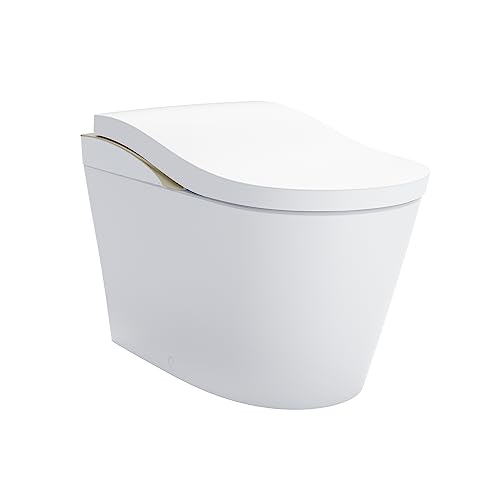
A luxury bidet is judged on a different set of criteria than a standard seat: automatic lid function, a full remote-controlled preset…
Read the guide