Common Bidets Problems and How to Fix Them (2026)
Bidets4.6
Step-by-step fixes for the bidet problems reported most often, from a unit that won't spray and weak water pressure to a seat…
Read the guideHow a 17th-century French furniture piece became the world’s most sophisticated personal hygiene appliance — and why the United States is finally catching up.
The bidet originated in France around 1700 as a low-basin washing fixture. Japan transformed it into an electronic washlet in 1980. Today, brands like TOTO, Kohler, and Bio Bidet offer models ranging from simple cold-water attachments to full seat systems with heated water, air drying, and deodorization.
The bidet was invented in France around 1700, most likely by furniture maker Christophe Des Rosiers, who designed a low porcelain basin riders could straddle to wash after removing from a horse. The word “bidet” itself is the French word for pony, a direct reference to that straddling posture. Early models were simple ceramic bowls placed in bedchambers, used by French nobility long before indoor plumbing made bathroom fixtures practical.
Court records and furniture inventories from the Palace of Versailles document bidets in private chambers as early as 1710. King Louis XIV and his court considered the bidet an essential hygiene accessory, and its presence in royal apartments signaled wealth and refinement. At this stage, the device was entirely manual: servants filled it with warm water carried from kitchens, and users washed themselves by hand before toweling dry.
The fixture spread through European aristocracy during the 18th century. Italian, Spanish, and Portuguese noble households adopted it, and it gradually moved from the bedroom to purpose-built water closets as plumbing systems developed in the late 1700s. By the early 19th century, bidets with hand pumps appeared, allowing users to propel water upward without buckets. This was the first iteration of what we now recognize as directional spray.
The bidet’s long association with France is grounded in fact, but its adoption across Southern Europe was equally thorough. By 1900, Italy, Portugal, and Spain had integrated bidets into standard residential bathroom layouts in ways France itself never fully standardized. The cultural divergence between Northern and Southern Europe on bidet use persists into modern building codes today.
The bidet spread through Europe during the 1800s as indoor plumbing became standard, shifting from a bedroom luxury to a bathroom fixture permanently connected to water supply and drainage. Italy, Portugal, and Spain incorporated bidets into residential construction codes, making them a legal requirement in new builds. By mid-century, European plumbing manufacturers were producing bidets in mass quantities alongside toilets as paired fixtures.
The Industrial Revolution transformed bidet manufacturing just as it did every other household fixture. Cast iron replaced wood and ceramic frames. Improvements in porcelain glazing, pioneered by British companies like Twyfords and later adopted by Continental manufacturers, produced smoother surfaces that resisted staining and were easier to clean. Fixed spray nozzles fed by building water pressure replaced the manually pumped versions of the early 1800s.
By 1900, the bidet was fully domesticated in Southern and Eastern Europe. Italian building regulations dating to the mid-20th century actually mandated bidet installation in all new residential bathrooms with more than one room, a requirement still reflected in Italian construction standards today. In France, while the bidet remained common, it was never codified as a legal requirement the way it was further south. Germany, Scandinavia, and the United Kingdom remained largely resistant, a pattern historians attribute partly to Protestant cultural associations between hygiene and modesty that discouraged open discussion of personal washing routines.
The two World Wars shaped bidet attitudes in unexpected ways. American soldiers stationed in Europe encountered bidets in brothels and military brothels, and this association colored how the United States would view the device for generations. The bidet became associated with promiscuity in American cultural consciousness, an unfair legacy that slowed adoption by decades.
Italy’s legal requirement for bidets in residential construction, encoded in national law since the 1970s, explains why the country maintains one of the highest bidet penetration rates in the world at over 97 percent of households. The legal mandate normalized the fixture as a public health necessity rather than a luxury, demonstrating how policy shapes hygiene culture more effectively than marketing.
Japan fundamentally transformed the bidet in 1980 when TOTO introduced the Washlet, an electronic toilet seat that combined a built-in wash wand, warm water spray, heated seat, and warm air dryer into a single unit. The Washlet was not the first electronic toilet seat, that distinction belongs to American Medical Bidet, a 1960s product designed for post-surgical care, but TOTO’s version was the first designed for mass residential adoption, and it succeeded spectacularly. Within two decades, Washlets became more common in Japanese homes than personal computers.
TOTO’s engineering team spent years perfecting the Washlet before its 1980 launch. Key challenges included water temperature control that felt comfortable rather than shockingly cold or scalding, nozzle self-cleaning to prevent bacterial buildup, and water pressure calibration gentle enough for daily use. The original model, the Washlet G Series, addressed all three. Its internal water heater provided steady warm water, a ceramic-coated self-cleaning nozzle retracted after each use, and spray pressure was adjustable through simple side panel controls.
Japan’s toilet culture accelerated rapidly from that point. By the 1990s, Japanese manufacturers including Panasonic, INAX (now part of LIXIL), and Toshiba had entered the electronic toilet seat market. Competition drove features forward: heated seats arrived to address Japan’s cold winters, deodorization systems using carbon filters or UV light neutralized odors, and posterior wash functions split into separate modes for different anatomy.
| Year | Event | Manufacturer | Significance |
|---|---|---|---|
| 1964 | First electric bidet seat (medical use) | American Medical Bidet | Designed for post-surgical patients; not mass market |
| 1980 | TOTO Washlet G Series launched | TOTO | First mass-residential electronic bidet seat; redefined the category |
| 1990 | Heated seat + air dryer combined | Multiple Japanese brands | Created the “smart toilet seat” concept |
| 1997 | Electronic bidet in 27% of Japanese homes | TOTO / INAX | Mass-market penetration confirmed |
| 2011 | Bio Bidet and Brondell enter US market | Various | First serious American retail channel push |
| 2020 | COVID-19 toilet paper shortage drives US adoption | Industry-wide | Google searches for “bidet” up 1,400%; Amazon stock depleted |
| 2024 | TOTO Washlet+ integrated toilet systems mainstream in US | TOTO | Full toilet-seat combinations available at major US retailers |
By 2022, the Japanese Cabinet Office reported that over 80 percent of Japanese households with flush toilets had an electronic bidet seat installed. Japan Airlines and most major hotel chains in Japan standardized electronic bidet seats across their entire property portfolios. The National Tourism Organization of Japan began including toilet feature guides in visitor resources to help international tourists unfamiliar with the controls. Japan had, within 40 years, transformed from a country with no bidet culture to one where the device was considered a basic comfort.
The United States resisted bidet adoption for most of the 20th century due to a combination of cultural associations formed during World War II, inadequate plumbing infrastructure in existing homes, high fixture costs, and lack of retail availability. American bathrooms typically lacked the dedicated plumbing connection and floor space that standalone European bidets require, and until the 2010s, electronic bidet seats were rarely stocked by major US retailers. The 2020 COVID-19 toilet paper shortage became the unexpected catalyst for mass American discovery of bidet attachments.
The infrastructure barrier was real and significant. Most American bathrooms were designed for a toilet, sink, and shower or tub without any additional fixture space. Unlike Italian or Portuguese apartments built with bidet plumbing as standard, retrofitting a standalone bidet into an American bathroom typically required adding a water supply line, a drain connection, and enough floor space for a second fixture beside the toilet, a renovation project costing thousands of dollars.
Electronic bidet seats solved the infrastructure problem elegantly. They attach to the existing toilet bowl, connect to the existing cold-water supply line at the toilet shutoff valve, and require only an electrical outlet nearby for heating functions. No tile work, no drain installation, no contractor required. Installation typically takes 15 to 30 minutes with basic tools. This form factor was the key to American adoption once consumers became aware it existed.
The toilet paper shortage of March 2020 exposed millions of Americans to bidet seats and attachments for the first time. Amazon reported bidet search volume increasing by over 1,400 percent in the first two weeks of March 2020. Several bidet brands sold out entirely within days. TOTO, Kohler, Bio Bidet, Brondell, and TUSHY all saw multi-week backorders. When customers received their units, many reported never returning to paper-only use. The crisis created a permanent shift in American hygiene habits that has continued growing since.
The 2020 bidet surge was a permanent market shift, not a temporary trend. Retail scanner data from major home improvement chains shows bidet seat sales have held at three to four times their 2019 baseline through 2024 and 2025. Consumers who tried a bidet during the shortage became loyal customers, and word-of-mouth referrals from existing owners continue driving new buyer entry at a rate that would have been unimaginable before 2020.
Modern bidet brands have advanced beyond TOTO’s original 1980 Washlet through features like tankless instant-heat water systems that eliminate warm-up wait times, stainless steel nozzles with oscillating and pulsating spray modes, auto-open and auto-close lids triggered by user proximity sensors, night lights, UV sterilization of nozzles, and app or remote control operation. Water pressure and temperature are now adjustable across dozens of gradations, and child wash modes with softer spray patterns are standard on premium models.
TOTO itself has continued innovating its Washlet line since 1980. The current TOTO Washlet+ S550e integrates with TOTO’s Aquia IV toilet, creating a single unified unit with no exposed wiring or hoses. Its ewater+ system mists the bowl and wand with electrolyzed water that reduces bacteria without chemical cleaners. The S550e also includes an automatic deodorizer, a premist function that coats the bowl before use to prevent waste adhesion, and a remote control with memory settings for two users.
Kohler entered the advanced bidet market with its Veil and Innate lines. The Kohler Innate includes a bidet wand with three spray modes, a heated seat with five temperature settings, an integrated nightlight, and emergency battery backup that allows lid operation during power outages, a practical feature in hurricane-prone American markets. Kohler designs its bidet seats to pair with its Veil one-piece toilet for a seamless visual profile.
Bio Bidet and Brondell serve the mid-market with seats like the Bio Bidet BLISS BB-2000 and the Brondell Swash 1400. Both offer stainless steel nozzles, warm air drying, heated seats, multiple spray modes, and wireless remote controls at price points significantly below TOTO’s premium lines. These brands have driven mainstream American adoption by making electronic bidet functionality accessible without requiring a luxury appliance budget.
Simple non-electric bidet attachments from brands like TUSHY and Luxe Bidet occupy the entry-level market. These attach under the toilet seat, connect to the cold-water supply, and deliver a single spray mode without any electronic features. Prices start under 40 dollars. These attachments were the primary products that sold out during the 2020 shortage and introduced millions of first-time users to bidet hygiene before many upgraded to full electronic seats.
For consumers considering how bidet features interact with toilet bowl design, understanding trapway geometry and flush performance becomes relevant because a well-flushing toilet prevents residue that makes frequent bidet use more effective. Our guide to the best flushing toilets covers how MaP testing scores, trapway diameter, and flushing technology combine to affect daily performance alongside bidet use. See also our best bidet toilet combo guide for units where the bowl and seat are engineered together.
| Type | Warm Water | Air Dry | Heated Seat | Plumbing Required | Best For |
|---|---|---|---|---|---|
| Standalone bidet fixture | Yes (with hot water line) | No | No | Dedicated drain + supply | New construction with space |
| Non-electric attachment | Cold only (unless T-splitter to sink) | No | No | Cold supply only | Budget entry-level users |
| Electronic bidet seat (tank-heat) | Yes (limited tank capacity) | Yes | Yes | Cold supply + outlet | Mid-range users |
| Electronic bidet seat (instant-heat) | Yes (unlimited) | Yes | Yes | Cold supply + outlet | Premium daily use |
| Integrated smart toilet | Yes (instant-heat) | Yes | Yes | Cold supply + outlet | Full bathroom renovation |
Bidets reduce toilet paper consumption by an estimated 75 to 80 percent for regular users, which translates to meaningful reductions in both paper manufacturing demand and septic or sewer load. Medically, bidets are recommended by gastroenterologists for patients with hemorrhoids, anal fissures, post-surgical recovery, and inflammatory bowel conditions because gentle water cleansing reduces irritation from wiping. Dermatologists also note that water cleansing is less abrasive than paper for individuals with sensitive skin conditions.
The environmental calculation for bidets centers on water versus paper. Producing a single roll of toilet paper requires approximately 37 gallons of water across its manufacturing lifecycle, including wood pulp processing, bleaching, and papermaking. A single bidet wash session uses roughly 0.1 to 0.13 gallons of water. A household using toilet paper exclusively for cleansing after each toilet visit over one year consumes substantially more water in paper production than it would save by switching to bidet use, even accounting for the wash water.
The American Sewer and Wastewater Council has noted that reduced toilet paper use also benefits municipal sewer systems. Toilet paper, even the flushable-labeled variety, contributes to fatbergs and clogs in older sewer infrastructure. Cities with aging pipe networks have begun public education campaigns around reducing paper flushes, and bidet adoption supports those goals. This aligns with EPA WaterSense goals around overall water system efficiency, even though WaterSense does not yet rate bidet seats specifically.
From a medical standpoint, the benefits are well documented in gastroenterological literature. A 2017 study published in the Journal of Wound, Ostomy and Continence Nursing found bidet use significantly reduced pain and bleeding in patients with hemorrhoids compared to dry toilet paper. Japanese hospital surveys of post-operative colorectal patients consistently recommend bidet use during recovery. The American Society of Colon and Rectal Surgeons includes bidet use in post-surgical care recommendations for patients recovering from anorectal procedures.
Water efficiency in the broader bathroom context connects bidet toilet seat selection to toilet flush performance. EPA WaterSense certified toilets using 1.28 GPF or less are now the standard for new installations, and pairing a WaterSense toilet with a bidet seat that replaces most paper use represents the most resource-efficient modern bathroom configuration available. Our water efficient toilet guide explains how to read WaterSense labels and MaP flush scores together when selecting a new toilet for a bidet-equipped bathroom.
The water-versus-paper debate sometimes obscures a simpler point: bidets improve personal hygiene independent of environmental claims. Water is objectively more thorough at removing residue than dry paper. The environmental benefits are a bonus, not the primary justification. Users who adopt bidets for health or cleanliness reasons tend to stay converted permanently, while those who adopt for environmental reasons alone show higher abandonment rates if the product experience disappoints.
Today’s integrated smart toilet systems, led by TOTO’s Washlet+ Aquia IV and Kohler’s Veil Intelligent Toilet, offer features unimaginable in the original 1980 Washlet: instantaneous water heating with no tank warm-up, UV nozzle sterilization between uses, bowl premist systems, personalized spray memory for multiple household users, Bluetooth connectivity for app control, and auto-flush triggered by user proximity. What took the original G Series four minutes of warm-up to deliver is now available instantly, and the list of functions has expanded from four to over twenty on premium models.
TOTO’s current top-tier offering, the Washlet+ S550e paired with the TOTO Aquia IV, eliminates the separate-component look entirely. The seat and toilet bowl share a single design language, and all water supply connections are concealed inside the unit. TOTO’s ewater+ system, an electrolyzed water mist applied to the bowl and wand before and after use, represents a genuine innovation over the original Washlet: it reduces bacteria on contact surfaces without requiring users to apply any chemical cleaners.
Kohler’s Veil Intelligent Toilet takes a different engineering path. Rather than a toilet-plus-seat combination, the Veil is a single-unit elongated toilet with bidet functions fully integrated into its structure. There is no visible separate seat component. Kohler designed the internal water pathways to maximize spray precision while minimizing the unit’s external profile, making it compatible with smaller contemporary bathroom layouts. The Kohler Veil supports voice control through Amazon Alexa, a feature with no analog in 1980.
American Standard has entered the smart toilet category with its Advanced Clean 100 SprayWash Seat, a more affordable bidet seat compatible with its ActiClean and Cadet 3 toilet lines. The Advanced Clean 100 offers five spray modes, adjustable water temperature and pressure, a warm air dryer, and a nightlight. American Standard positions this as an accessible first step into electronic bidet use without requiring full toilet replacement.
Woodbridge, a brand that has grown significantly in the US market, offers its T-0001 smart toilet as a one-piece integrated unit with built-in bidet functions at a price point between American Standard’s entry-level offerings and TOTO’s premium lines. The Woodbridge T-0001 has accumulated strong owner review scores across major retail platforms, with users consistently noting ease of installation and intuitive remote control design. See our Woodbridge T-0001 review for a detailed breakdown of its flush performance and bidet feature set.
For those shopping standalone bidet seats to pair with an existing toilet, compatibility matters. Elongated bowls accept most bidet seats, but round bowls require specific round-compatible models. Seat dimensions from brands like Kohler, American Standard, and TOTO follow the same basic footprint, but checking manufacturer fit guides before purchasing prevents mismatches. Our best bidet seats guide covers compatibility matching in detail.
The bidet is most commonly credited to French furniture maker Christophe Des Rosiers around 1700, though the exact inventor is debated. The earliest documented bidets appear in French court records from the early 18th century.
Bidet is the French word for pony or small horse. The name describes the straddling posture users adopt when using a traditional standalone bidet fixture, similar to sitting on a horse.
Yes. Italian Presidential Decree 896 of 1971 required bidets in all residential bathrooms, establishing Italy as one of the few countries with a legal mandate for the fixture. Italian building codes still reflect this requirement.
TOTO launched the Washlet G Series in 1980. It was the first electronic bidet seat designed for mass residential use, featuring warm water spray, a heated seat, and warm air drying in a single toilet seat unit.
American soldiers encountered bidets in European brothels during World War II, creating a cultural association with promiscuity that persisted for decades. Additional barriers included lack of dedicated plumbing in American bathrooms and minimal retail availability of bidet products before the 2010s.
The COVID-19 pandemic caused a widespread toilet paper shortage in March 2020. Consumers who could not find paper turned to bidet searches online, with Google reporting search volume increases of over 1,400 percent. Many users who tried bidets during the shortage adopted them permanently.
A typical bidet wash cycle uses approximately 0.1 to 0.13 gallons of water. By comparison, producing a single roll of toilet paper requires an estimated 37 gallons of water across its manufacturing lifecycle.
Standalone bidet fixtures require a dedicated water supply and drain connection. Electronic bidet seats and non-electric attachments connect to the existing toilet cold-water supply line and need no new plumbing. Electronic seats also require a grounded electrical outlet within reach.
As of 2022, over 80 percent of Japanese flush toilet households had an electronic bidet seat installed, according to Japan Cabinet Office data. Japan has maintained the world’s highest rate of electronic bidet penetration since the 1990s.
TOTO Washlet models, particularly the S550e and S500e lines, consistently rank at the top of professional and consumer bidet evaluations for feature completeness, build quality, and nozzle hygiene systems. Brands like Kohler, Bio Bidet, and Brondell offer strong alternatives at various price points.
Bidet seats are designed for either elongated or round bowl shapes. Most premium electronic bidet seats from TOTO, Kohler, and Bio Bidet offer both versions. Compatibility also depends on bowl width and the presence of a French curve or skirted trapway that might affect mounting hardware. Always verify the manufacturer fit guide before purchasing.
A bidet attachment is a thin non-electric unit that mounts between the existing toilet seat and bowl, connected only to the cold-water supply. A bidet seat replaces the existing toilet seat entirely and typically includes electronic features like warm water heating, air drying, and a heated seat.
Yes. The American Society of Colon and Rectal Surgeons recommends bidet use for patients recovering from anorectal surgery. Gastroenterologists and dermatologists also recommend bidets for patients with hemorrhoids, anal fissures, inflammatory bowel disease, and sensitive skin conditions where paper friction causes irritation.
Bidets reduce toilet paper use significantly, which directly reduces the volume of paper entering the drain. Since toilet paper is one of the most common contributors to partial clogs and slow drains, bidet use can reduce clog frequency in homes with older or narrower drain pipes.
As of mid-2026, EPA WaterSense does not have a specific certification category for bidet seats. WaterSense certifies toilets based on flush performance and gallons-per-flush efficiency. Pairing a WaterSense-certified toilet with a bidet seat remains the recommended approach for maximizing bathroom water efficiency.
Water temperature control and adjustable pressure are the most cited comfort factors in owner reviews. Instant-heat systems that provide immediate warm water without a tank delay are rated significantly higher than tank-heat models in long-term satisfaction surveys. Heated seats are valued most in colder climates and during winter months.
Most electronic bidet seats include a self-cleaning nozzle mode that flushes the wand with water before and after use. For periodic deep cleaning, manufacturers recommend extending the nozzle manually using the control panel and wiping it with a damp cloth. Avoid harsh chemical cleaners that can damage nozzle coatings.
TOTO, Kohler, American Standard, Bio Bidet, and Brondell are the most consistently reviewed brands for electronic bidet seat reliability. TOTO’s build quality is widely considered the industry benchmark, but Bio Bidet and Brondell offer strong mid-market reliability at lower cost based on aggregated owner review data.
Yes. Most electronic bidet seats are designed for DIY installation. The process involves removing the existing toilet seat, mounting the bidet seat bracket, connecting the T-valve to the toilet shutoff supply line, and plugging into a nearby GFCI outlet. Most manufacturers report average installation times of 15 to 30 minutes.
The Woodbridge T-0001 is an integrated smart toilet combining a one-piece bowl with built-in bidet functions, representing the current category that TOTO pioneered with the Washlet. The T-0001 includes remote-controlled spray, air drying, heated seat, and auto-flush in a design that continues the trajectory from TOTO’s 1980 innovation toward fully integrated smart bathroom fixtures.
The bidet traveled from a French nobleman’s bedchamber in 1700 to a Japanese engineering laboratory in 1980 to an American homeowner’s bathroom in 2020, each transition driven by a different combination of cultural shift, technical innovation, and external pressure. Today, brands like TOTO, Kohler, American Standard, Woodbridge, and Bio Bidet offer options across every budget and installation complexity. The core value proposition, water-based cleansing that is gentler, more thorough, and less wasteful than paper alone, has not changed in 300 years. The technology delivering it has changed beyond recognition. For most American households, an electronic bidet seat paired with a high-performing, EPA WaterSense-certified toilet represents the most significant hygiene upgrade available without a full bathroom renovation.
Step-by-step fixes for the bidet problems reported most often, from a unit that won't spray and weak water pressure to a seat…
Read the guideA step-by-step framework for picking the right bidet type, features, and fit based on your toilet, your bathroom's electrical access, and how…
Read the guide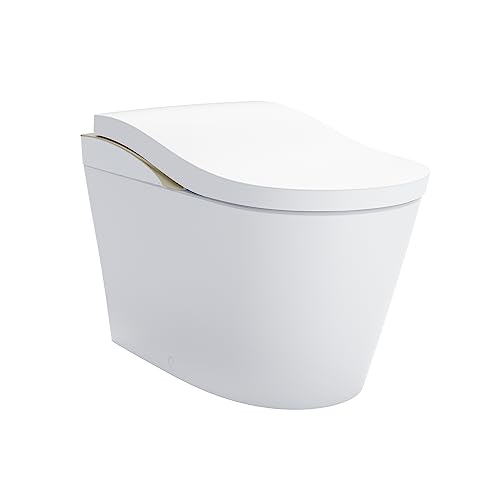
A luxury bidet is judged on a different set of criteria than a standard seat: automatic lid function, a full remote-controlled preset…
Read the guide