Common Bidets Problems and How to Fix Them (2026)
Bidets4.6
Step-by-step fixes for the bidet problems reported most often, from a unit that won't spray and weak water pressure to a seat…
Read the guideA practical, tool-by-tool walkthrough covering bidet seats, non-electric attachments, handheld sprayers, and T-valve connections — so you get a leak-free, properly seated install the first time.
Most non-electric bidet attachments and handheld sprayers install in 15 to 30 minutes using only an adjustable wrench. Electric bidet seats take 30 to 60 minutes and require a grounded GFCI outlet within reach. Neither type needs a plumber for a standard residential toilet connection.
For a non-electric bidet attachment or handheld sprayer you need an adjustable wrench, plumber's tape (PTFE), a bucket, and a towel. Electric bidet seat installs additionally require a GFCI-protected outlet within 4 feet of the toilet, plus a Phillips screwdriver to remove the old seat.
No soldering, no new water lines, and no wall penetration is needed for any standard bidet type. Most manufacturers ship all necessary hardware inside the box.
| Item | Non-Electric Attachment | Electric Bidet Seat | Handheld Sprayer |
|---|---|---|---|
| Adjustable wrench | Required | Required | Required |
| PTFE plumber's tape | Recommended | Recommended | Recommended |
| Phillips screwdriver | Not needed | Required (seat removal) | Not needed |
| GFCI outlet nearby | Not needed | Required | Not needed |
| Bucket and towels | Recommended | Recommended | Recommended |
| Teflon washers | Included in kit | Included in kit | Included in kit |
| T-valve (metal-braided) | Included in most kits | Included in most kits | Included in kit |
Always replace any plastic T-valve that comes in a budget kit with a stainless-braided metal version. Plastic T-valves are the single most common source of bidet leaks, particularly when installed on toilets that use 80 PSI or higher supply pressure. The upgrade costs under $10 and takes the same amount of time to install.
Turn off the toilet's shut-off valve, flush to empty the tank, then disconnect the supply line from the fill valve inlet. Thread the T-valve onto the fill valve, reconnect the supply line to the bottom of the T-valve, and run the bidet's short braided hose to the attachment nozzle unit seated under the toilet seat. Tighten all connections hand-tight plus a quarter turn with a wrench, restore water, and check for leaks.
The entire process takes most homeowners 15 to 25 minutes. No wall penetration or hot-water line access is needed for a cold-water-only attachment.
The number-one install error is over-tightening the plastic nozzle housing. Cracked nozzle bodies account for a large share of warranty claims on budget bidet attachments. Finger-tight plus a quarter turn is always sufficient at that joint; the rubber washer seat is designed to compress, not to be crushed.
An electric bidet seat replaces your existing toilet seat entirely. After confirming a grounded GFCI outlet is within reach, you remove the old seat, mount the bidet's mounting plate to the bowl bolt holes, slide the seat unit onto the plate, and connect the T-valve water supply the same way as a non-electric attachment. Most brands like TOTO, Kohler, and Brondell include all hardware and require no hard-wiring.
The full install typically takes 30 to 60 minutes. The electrical outlet must be on a dedicated or bathroom-rated circuit; using an extension cord violates most bidet seat warranties and NEC guidelines.
TOTO's Washlet line specifies that the mounting plate should be tightened to approximately 3 Nm (26 in-lb) to avoid cracking the porcelain mounting holes on thinner bowl flanges. If the bowl has hairline cracks around existing seat bolt holes, address those before installing a heavier electric seat. TOTO, Kohler, and Bio Bidet all publish torque specs in their installation manuals.
A handheld bidet sprayer connects to the same T-valve as other bidet types, but instead of a nozzle unit on the seat, a flexible braided hose runs to a pistol-grip sprayer that hangs on a hook mounted to the toilet tank or wall. Installation involves the T-valve connection plus drilling or adhesive-mounting the sprayer holder.
Handheld sprayers are the most flexible option for irregularly shaped bowls and work on skirted toilets where a seat attachment cannot be anchored. They are popular on toilets like the Swiss Madison Ivy or the Woodbridge T-0001 where clean skirted lines make under-seat attachment impractical.
The most common errors are using the plastic T-valve included in budget kits at high water pressure, skipping PTFE tape on threaded connections, and plugging an electric bidet seat into a non-GFCI outlet. A secondary common mistake is failing to confirm bowl shape compatibility before purchasing an elongated seat for a round bowl.
Overtightening nozzle housing connections and supply hose fittings is also frequently reported in aggregated owner reviews for brands including Luxe, TUSHY, and Bio Bidet. Manufacturer torque guidance is always the authoritative source for each fitting type.
| Symptom | Likely Cause | Fix |
|---|---|---|
| Drip at T-valve connection | Missing or pinched washer; no PTFE tape | Shut off water, disassemble, add PTFE tape and reseat washer, reassemble hand-tight plus quarter turn |
| Spray pressure too low | Partially closed shut-off valve; kinked hose | Open shut-off valve fully; straighten hose routing |
| Seat rocks after install | Mounting plate loose; bowl bolt holes misaligned | Re-center mounting plate and re-tighten bolts evenly |
| Nozzle does not retract | Debris in nozzle; low water pressure (below 25 PSI) | Clean nozzle per manual; confirm minimum PSI at valve |
| Electric seat shows no power | GFCI outlet tripped; extension cord in use | Reset GFCI; plug directly into wall outlet |
| Water temperature cold on warm-water seat | Tank not fully heated; cold-water-only T-valve on dual-inlet seat | Wait 5 minutes for tank reheat; verify hot-water T-valve connection if model requires it |
| Bidet Type | Install Time | Outlet Needed | Warm Water | Bowl Compatibility | Typical Price Range |
|---|---|---|---|---|---|
| Non-electric attachment | 15 to 25 min | No | Cold only (unless dual-inlet) | Round and elongated | $30 to $100 |
| Electric bidet seat (tank-style heater) | 30 to 45 min | Yes, GFCI | Yes (tank, slight delay) | Round or elongated (model-specific) | $150 to $600 |
| Electric bidet seat (on-demand heater) | 30 to 60 min | Yes, GFCI | Instant, unlimited | Round or elongated (model-specific) | $400 to $1,200+ |
| Handheld sprayer | 20 to 35 min | No | Cold only (standard) | All bowls including skirted | $20 to $60 |
| Integrated smart toilet-bidet | Professional recommended | Yes, GFCI | Yes | Requires full toilet replacement | $800 to $5,000+ |
Some non-electric bidet attachments include a second inlet port designed to connect to the hot-water supply line beneath the sink. This requires a longer braided hose (usually 48 to 60 inches, sold separately) routed along the baseboard from the sink shutoff. Tushy Spa 3.0 and Luxe Bidet Neo 320 are two widely reviewed dual-inlet models. Note that the water from this connection is not thermostatically controlled; actual temperature depends on how far the sink is from the toilet and ambient pipe temperature.
Most bidet attachments are rated for operating pressures between 25 PSI and 110 PSI. Standard US residential water pressure is 40 to 80 PSI, which falls comfortably within that range. If your home uses a pressure-reducing valve (PRV) set below 30 PSI, nozzle retraction and spray strength may be inadequate. EPA WaterSense-certified toilets are tested at 60 PSI, which is also a common baseline assumption for bidet hardware compatibility testing.
The following popular toilet models are confirmed compatible with standard T-valve bidet installations based on published specifications and aggregated owner reports:
For more on choosing the right toilet to pair with a bidet, see our complete guide to the best flushing toilets along with our detailed reviews of best bidet toilet seats, best bidet attachments, and bidet vs toilet paper.
Standard bidet installs do not require a plumber. However, you should contact a licensed plumber if: the shut-off valve is corroded and cannot be turned, the supply line threads are stripped or corroded, the bowl bolt holes are cracked, an electrical outlet does not exist near the toilet and needs to be added, or you are installing an integrated bidet-toilet that requires a new drain rough-in location. Gerber and Swiss Madison both publish installation notes recommending a licensed plumber for any fixture that requires moving the rough-in.
If the existing shut-off valve is the old multi-turn brass ball type and has not been operated in years, test it before beginning any bidet install. Turn it clockwise gently. If it feels seized or begins weeping around the stem packing, replace the valve before connecting any bidet hardware. A failed shut-off valve during install turns a 20-minute job into a household emergency.
Bidet attachments and seats require minimal maintenance but benefit from monthly nozzle cleaning. Most electric bidet seats (TOTO Washlet, Kohler Karing, Brondell Swash) include an auto-cleaning nozzle cycle. For manual-nozzle models, extend the nozzle using the wash function and wipe with a soft cloth and mild cleaner. Do not use bleach-based cleaners directly on the nozzle seals; bleach degrades the rubber faster than normal use would. The T-valve and supply hose connections should be inspected every 6 months for mineral buildup or slow drip; most manufacturers recommend replacing braided hoses every 5 years as a preventative measure, consistent with IAPMO guidance on braided supply lines.
Bidet attachments use approximately 0.125 gallons of water per use cycle, based on published nozzle flow rates from leading brands. This compares to the production footprint of conventional toilet paper, which averages 37 gallons of water per roll according to data published in the Pacific Institute's water footprint research. EPA WaterSense focuses on toilet and faucet flush efficiency (1.28 GPF or less) rather than bidet use directly, but bidet adoption supports household water sustainability goals by reducing toilet paper production impact. Toilets certified under the EPA WaterSense program, such as the TOTO Drake II (1.28 GPF) and American Standard Cadet 3 (1.28 GPF), pair well with bidet attachments for an overall efficient bathroom setup.
In the United States, replacing a toilet seat with a bidet seat or adding an attachment to an existing toilet supply line is not a permitted activity in most jurisdictions, because no structural, drainage, or new supply-line work is involved. Adding a new GFCI electrical outlet does require an electrical permit in most states. Check with your local building department if your jurisdiction has unusual plumbing code provisions. International Plumbing Code (IPC) and Uniform Plumbing Code (UPC) do not classify bidet seat T-valve connections as a plumbing fixture addition.
No. Most electric bidet seats and all non-electric bidet attachments are designed for homeowner installation using only a wrench and screwdriver. A plumber is only needed if the existing shut-off valve is seized, corroded, or missing, or if a new electrical outlet must be added for an electric seat.
A non-electric bidet attachment typically takes 15 to 25 minutes. An electric bidet seat replacement takes 30 to 60 minutes for most homeowners. A handheld sprayer falls in the middle at 20 to 35 minutes. First-time installers may take slightly longer on the T-valve connection step.
A T-valve (also called a T-adapter or tee fitting) is a three-port brass or plastic fitting that threads between your toilet's fill valve and existing supply line. It splits the incoming water so one branch continues to the toilet and the other feeds the bidet. Yes, all bidet types that connect to the toilet supply line (attachments, handheld sprayers, and most electric seats) require a T-valve. Integrated bidet toilets are the exception, as they have built-in plumbing.
Yes, but you must purchase a model rated for round bowls specifically, or a universal model. Round bowls measure approximately 16.5 inches from the seat bolt holes to the front rim. Most bidet brands such as TUSHY, Luxe Bidet, and Bio Bidet offer both round and elongated configurations. Installing an elongated seat on a round bowl leaves a gap at the front and may affect water-spray direction.
Yes, with a compatibility check. One-piece toilets like the TOTO UltraMax II and Woodbridge T-0001 have a tapered rear junction between tank and bowl that can limit mounting plate clearance. Check the bidet manufacturer's compatibility chart before buying. TOTO publishes bowl-specific compatibility data for every Washlet model on their website.
Dedicated circuit is ideal but not always required. NEC guidelines specify that bathroom outlets should be on a 20-amp circuit. Most electric bidet seats draw 1,250 to 1,400 watts at peak (seat heat + wash + dry simultaneously), which is below 20-amp capacity at 120V. However, they must be plugged into a GFCI outlet; an extension cord violates both NEC requirements and most manufacturer warranties.
A three-prong grounded GFCI (Ground Fault Circuit Interrupter) outlet, which is required by code in all US bathrooms built or remodeled since 1975. The outlet must be within 4 feet of the toilet to reach the bidet's power cord. Adapters to bypass the third prong are not safe and not permitted by any major manufacturer including TOTO, Kohler, or Brondell.
TOTO, Bio Bidet, and Kohler all recommend unplugging the seat during severe electrical storms, consistent with standard appliance safety guidance. The GFCI outlet provides protection from in-circuit faults but not from surge events caused by a direct or nearby lightning strike.
Most bidet products require 25 to 110 PSI. Standard US residential water pressure is 40 to 80 PSI. If your home has a pressure-reducing valve (PRV) set very low, use a simple pressure gauge (available at hardware stores for under $15) at the toilet supply shutoff. A reading below 25 PSI will result in weak spray and possible nozzle retraction failure.
Yes. The bidet T-valve does not increase demand on the fill valve during toilet use, because bidet spray is a separate function used after flushing. However, a slow fill valve (one that takes more than 2 to 3 minutes to refill the tank) should be replaced regardless of bidet installation, as it indicates a worn or clogged valve. Fluidmaster's 400A and 703AP27 are widely used replacement fill valves compatible with all bidet T-valve setups.
Yes, with a dual-inlet non-electric attachment. Models like the Luxe Bidet Neo 320 and TUSHY Spa 3.0 include a second port for connection to the sink hot-water supply line. The water temperature is not thermostatically controlled; it varies based on ambient temperature of the supply pipe. Dedicated warm-water control requires an electric bidet seat with a tank-style or on-demand water heater.
Tank-style heater seats maintain a small reservoir of warm water (typically 30 to 40 oz). After that reservoir is used, the water runs cold until the tank reheats. On-demand seats heat water as it flows, providing unlimited warm water. TOTO's Washlet C5 and S500e use on-demand heating; the Brondell Swash 300 and Bio Bidet BB-600 use tank-style heaters. On-demand seats cost more but are better suited for multi-user households.
Yes. An electric bidet seat is a full toilet seat replacement; the old seat must be removed first. Non-electric under-seat attachments typically work with the existing seat reinstalled on top, but some thin attachment designs require temporary seat removal during installation.
For electric bidet seats with auto-cleaning nozzles (TOTO Washlet, Kohler Karing), activate the self-clean cycle from the remote monthly. For manual nozzles, extend the nozzle using the wash mode, then wipe with a soft cloth dampened with mild soap or diluted white vinegar. Avoid bleach, abrasive pads, and alcohol-based cleaners directly on nozzle tips, as these degrade silicone seals.
An electric bidet seat can be installed on most skirted toilets since the mounting plate attaches to the standard rear bowl bolt holes, which are accessible even on skirted designs like the Woodbridge T-0001, Swiss Madison Ivy, or American Standard Studio S. Under-seat non-electric attachments are more challenging on skirted bowls because the skirt limits side access to the seat bolt area; handheld sprayers are the most practical choice for fully skirted designs.
Adding a T-valve to the supply line connection generally does not void a toilet manufacturer's warranty because no modification is made to the toilet itself. However, any mechanical damage to the fill valve threads caused by improper T-valve installation would be considered user damage. TOTO, Kohler, American Standard, and Gerber all specify that damage from aftermarket connections is not covered under the vitreous china warranty.
Most modern bidet seats use a quick-release mounting plate. Press or slide the release button or lever (usually on the rear underside of the seat body) and slide the seat forward off the plate. The mounting plate stays on the toilet. Reinstall by sliding the seat backward until it clicks. This feature is standard on TOTO Washlet, Kohler C3, and Brondell Swash 1400.
The Kohler Highline uses a standard elongated bowl and 7/8-inch fill valve connection, making it compatible with virtually all elongated bidet attachments. Kohler's own C3-230 bidet seat is engineered to match Highline aesthetics. Third-party options from Bio Bidet and TUSHY also install cleanly on the Highline's standard rear seat-bolt spacing of 5.5 to 6 inches.
Yes. The T-valve connects to the toilet's water supply line upstream of the fill valve, so it does not interact with the pressure-assist flush mechanism at all. American Standard Champion 4 and Kohler's pressure-assist Cimarron variants both accept standard bidet T-valve connections without modification.
Published nozzle flow rates across major brands average 0.1 to 0.15 gallons per 30-second wash cycle. This is significantly less water than a single toilet flush (1.28 GPF on EPA WaterSense-certified toilets). Over a year of daily use, a single bidet attachment uses roughly 9 to 18 gallons for wash cycles, a fraction of the water embedded in conventional toilet paper production.
A bidet attachment or handheld sprayer is one of the most accessible bathroom upgrades available, requiring no professional help, no permits, and no specialized tools for the vast majority of standard toilet installations. Swap the included plastic T-valve for a stainless-braided metal alternative, apply PTFE tape to all threaded fill valve connections, and confirm GFCI power availability before purchasing an electric seat. Paired with a well-flushing toilet such as the TOTO Drake II, Kohler Highline, or American Standard Champion 4, a bidet adds hygiene value while keeping water use in check alongside EPA WaterSense-rated plumbing fixtures.
Step-by-step fixes for the bidet problems reported most often, from a unit that won't spray and weak water pressure to a seat…
Read the guideA step-by-step framework for picking the right bidet type, features, and fit based on your toilet, your bathroom's electrical access, and how…
Read the guide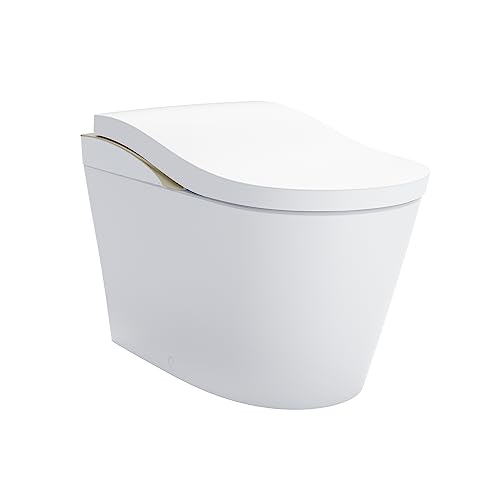
A luxury bidet is judged on a different set of criteria than a standard seat: automatic lid function, a full remote-controlled preset…
Read the guide