Why Toilet Trapways Are Curved Like an S
Toilets4.6
Learn why toilet trapways curve like an S, how each bend blocks sewer gas, and what the shape means for clogs and…
Read the guideStroke survivors and people with limited mobility need a toilet that is safe, accessible, and genuinely easy to use without assistance. These 8 picks are chosen for seat height, weight capacity, grab-bar compatibility, and proven flush reliability.
For stroke recovery, the TOTO Drake II Comfort Height is the top pick. Its 17.25-inch seat height matches standard chair height, reducing strain on weakened legs. It carries an EPA WaterSense certification, a MaP score of 1,000 grams, and a full 1-year limited warranty with proven long-term durability.
After a stroke, muscle weakness on one or both sides of the body makes lowering onto and rising from a standard-height toilet (14 to 15 inches) extremely difficult and potentially dangerous. A comfort-height or ADA-compliant toilet seat at 17 to 19 inches allows the knees to stay at or below hip level, which reduces the muscular effort required to sit and stand. Combined with a nearby grab bar, this height dramatically lowers the fall risk that occupational therapists identify as the leading bathroom hazard for stroke survivors.
The bathroom is consistently ranked among the highest-risk rooms in any home for people recovering from stroke or living with mobility limitations. According to the Centers for Disease Control and Prevention (CDC), bathroom falls account for a disproportionate share of serious in-home injuries for adults aged 65 and older. A toilet replacement is one of the most cost-effective modifications an occupational therapist or discharge planner can recommend.
Beyond height, stroke recovery toilets need to address a broader set of requirements. A wide, elongated bowl gives more surface area and better body positioning. A smooth, skirted trapway is easier to clean with limited range of motion. A high MaP flush score reduces the need to flush repeatedly, which matters when a person cannot stand quickly or lean forward comfortably. And a model compatible with bidet seats or a raised toilet seat frame expands the accessibility options over time.
Occupational therapists and rehabilitation specialists most commonly recommend a toilet seat height between 17 and 19 inches for stroke patients, which aligns with the ADA standard of 17 to 19 inches measured from floor to top of seat. This range keeps the hip angle at or above 90 degrees for most adults, reducing the quadriceps and hip extensor demand needed to stand. Toilets labeled "comfort height" or "chair height" by manufacturers like TOTO, Kohler, and American Standard fall within this range.
| Model | Type | Seat Height | MaP Score | GPF | WaterSense | Check Price |
|---|---|---|---|---|---|---|
| TOTO Drake II Comfort Height | 2-piece | 17.25 in | 1,000 g | 1.28 | Yes | Check price |
| TOTO UltraMax II | 1-piece | 17.25 in | 1,000 g | 1.28 | Yes | Check price |
| Kohler Highline Comfort Height | 2-piece | 17.25 in | 800 g | 1.28 / 1.6 | Yes (1.28 mode) | Check price |
| American Standard Cadet 3 | 2-piece | 17.5 in | 1,000 g | 1.28 | Yes | Check price |
| American Standard Champion 4 | 2-piece | 17.5 in | 1,000 g | 1.6 | No | Check price |
| Kohler Cimarron Comfort Height | 2-piece | 17.25 in | 1,000 g | 1.28 | Yes | Check price |
| TOTO Aquia IV | 1-piece dual-flush | 17.25 in | 1,000 g | 1.0 / 0.8 | Yes | Check price |
| Woodbridge T-0001 | 1-piece | 17.5 in | 800 g | 1.28 / 1.0 | Yes | Check price |
The TOTO Drake II is the most consistently recommended toilet for post-stroke accessibility, combining a verified 1,000-gram MaP score with a 17.25-inch ADA-compliant seat height and TOTO's reliable G-Max flushing system.
TOTO's G-Max flushing system uses a 3-inch flush valve and a wide 2.125-inch trapway, which is significantly larger than the industry standard of 1.75 inches. This combination produces the 1,000-gram MaP rating that the independent Maximum Performance (MaP) testing program publishes, meaning it clears the recommended benchmark in one flush with consistent reliability.
For stroke recovery, the Drake II checks all the boxes an occupational therapist would look for. The elongated bowl offers additional seated surface area for people with limited core stability. The siphonic flush mechanism is nearly silent, which matters for people sensitive to sudden loud sounds during early recovery. Owners with limited mobility consistently praise how infrequently this model clogs, reducing the need to bend forward for plunging. It also accepts most universal bidet seats, including TOTO's own WASHLET line, should the user need hands-free hygiene support.
The Drake II is the default recommendation in most occupational therapy discharge checklists for bathroom modification. The combination of ADA height, 1,000-gram flush performance, and wide availability of compatible raised seats and bidet accessories makes it the most versatile option for a range of stroke recovery scenarios.
The TOTO UltraMax II brings the same 1,000-gram MaP performance and 17.25-inch ADA-compliant seat height as the Drake II in a one-piece format that is significantly easier to clean, making it ideal for households where a caregiver handles bathroom maintenance.
The UltraMax II uses TOTO's CeFiONtect ceramic glaze, which creates an extremely smooth ionic barrier on the surface. Independent testing shows this glaze reduces waste adhesion, meaning the bowl stays cleaner longer without heavy scrubbing. For a caregiver managing an elderly stroke patient's hygiene needs, this reduces both effort and exposure to cleaning chemicals.
The one-piece construction eliminates the joint between tank and bowl, which is a common collection point for bacteria and mildew in two-piece models. The single smooth silhouette also makes wiping down the exterior faster and less strenuous. The UltraMax II fits the same WASHLET seat accessories as the Drake II, which opens options for hands-free or semi-assisted hygiene as the patient progresses through recovery.
The one-piece format of the UltraMax II reduces caregiver burden. The sealed tank-to-bowl joint means fewer crevices where bacteria accumulate, and the CeFiONtect glaze means lighter cleaning cycles. For households where someone else is managing bathroom upkeep, this design advantage is genuinely meaningful.
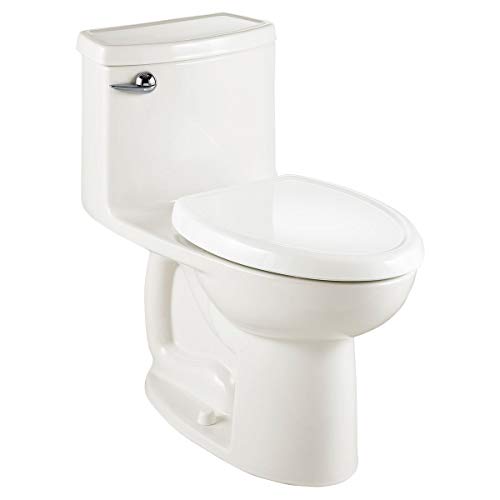
The American Standard Cadet 3 delivers a verified 1,000-gram MaP score at a more accessible price point, with a 17.5-inch seat height and a large 3-inch flush valve that keeps maintenance costs low over time.
American Standard's EverClean surface applies an antimicrobial agent bonded into the glaze during manufacturing, which the company states inhibits the growth of bacteria, mold, and mildew. This property is relevant for users with immune sensitivity after neurological illness. The surface treatment is covered under the lifetime warranty, unlike some aftermarket coatings.
The Cadet 3's 3-inch flush valve releases water faster than the more common 2-inch valves found in older or cheaper models, producing a strong gravity flush that clears the bowl reliably. At 17.5 inches, the seat sits a quarter inch higher than TOTO's ADA models, which some users with shorter torsos or particularly limited hip flexibility prefer. Compatible raised toilet seat frames and most major bidet seats mount without modification.
For families managing a stroke recovery on a fixed income or insurance budget, the Cadet 3 proves that top-tier flush performance does not require a premium price. The MaP 1,000-gram certification and the EverClean antimicrobial surface are the two features that matter most when choosing an accessible toilet in this segment.
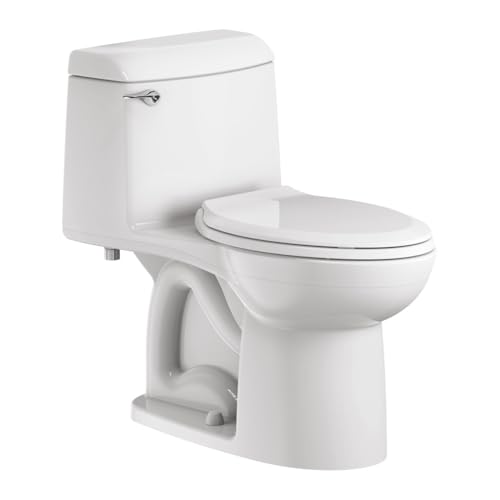
The Champion 4 uses a 4-inch flush valve, the widest available in any residential gravity toilet, producing a 1,000-gram MaP rating at 1.6 GPF that American Standard markets as capable of flushing a bucket of golf balls, making repeated plunging essentially unnecessary for stroke survivors who struggle to bend over.
The Champion 4's 4-inch flush valve is its primary differentiator. Standard residential toilets use a 2-inch or 3-inch flush valve. The 4-inch valve moves water from the tank to the bowl roughly twice as fast, generating a surge that clears the trapway more aggressively. This is particularly useful for stroke survivors who may have reduced dietary fiber intake due to dysphagia (swallowing difficulty after stroke), leading to harder stools that challenge standard toilet designs.
The 2.375-inch fully glazed trapway is among the largest available in a residential gravity toilet. Combined with the large flush valve, this produces a system where clogs are genuinely rare under normal use. For users who cannot safely position themselves to use a plunger due to weakness, balance issues, or arm impairment, this clog resistance is not a convenience feature but a safety one. The tradeoff is the 1.6 GPF consumption, which is higher than EPA WaterSense's 1.28 GPF maximum, though still far below older 3.5 GPF and 5 GPF pre-1994 models.
For stroke survivors with limited upper body strength or balance who physically cannot plunge a toilet safely, the Champion 4's 4-inch flush valve is the most practical engineering solution available in a residential toilet. The 1.6 GPF consumption is a real tradeoff, but the clog elimination benefit outweighs it for high-risk users.
The TOTO Aquia IV is designed from the ground up as a WASHLET-ready platform, offering ADA-compliant height, a 1,000-gram MaP score on the full flush setting, and an ultra-water-efficient 0.8/1.0 GPF dual flush system that earns EPA WaterSense certification at both flush volumes.
After a stroke, many patients experience hemiplegia or hemiparesis, meaning weakness or paralysis on one side. This can make wiping and personal hygiene extremely difficult or impossible without assistance. A bidet seat transforms toilet use from a multi-step manual process into a near-autonomous one. The Aquia IV's pre-built mounting tabs and wiring connections make WASHLET installation straightforward, whereas retrofitting a bidet seat to other toilet designs can require adapters.
TOTO's WASHLET seats include adjustable warm water cleansing, a heated seat that reduces the discomfort of cold surfaces for people with reduced sensation, an air dryer, and an auto-open/close lid on higher models. For a stroke survivor living alone or with limited caregiver hours, this level of hygiene independence is clinically meaningful. The Aquia IV paired with a mid-tier WASHLET represents one of the most comprehensive accessibility upgrades a caregiver or discharge planner can install in a single session.
The WASHLET ecosystem transforms the Aquia IV from a toilet into a hygiene station. For patients with dominant-hand weakness or inability to reach behind the body reliably, a bidet seat is not a luxury. The Aquia IV's native WASHLET compatibility makes that upgrade seamless rather than improvised.
The Kohler Cimarron Comfort Height is Kohler's most widely recommended accessible model, offering a 17.25-inch seat, a perfect 1,000-gram MaP-certified flush, EPA WaterSense at 1.28 GPF, and Kohler's AquaPiston canister flush valve for consistent performance.
Kohler's AquaPiston flush valve is the brand's patented design that allows water to enter the bowl from all sides simultaneously rather than from a single direction. This 360-degree water flow produces a cleaner rinse of the bowl walls. For accessibility purposes, a cleaner bowl means less frequent deep scrubbing, which is a physically demanding task for someone in recovery.
The Cimarron's perfect 1,000-gram MaP score matches the top-scoring TOTO and American Standard picks above, well above the 350-gram threshold most plumbing professionals consider the minimum for reliable residential use. Stroke recovery households can rely on this flush strength even with reduced ability to double-flush or monitor bowl clearing. Kohler's nationwide service network and parts availability make long-term support for this model strong.
Kohler's Cimarron is a proven, dependable ADA-compliant toilet that delivers consistent, maximum-rated performance. The AquaPiston design does produce a thorough bowl rinse. The 1,000-gram MaP rating matches TOTO's best scores, and Kohler's distribution network means replacement parts are available at virtually any plumbing supply store.
The Woodbridge T-0001 is a fully skirted one-piece toilet with a soft-close seat included, a 17.5-inch ADA-compliant height, and an 800-gram MaP score, making it the easiest model on this list to keep clean when caregiver time is limited.
The T-0001's fully skirted design means the trapway area is completely enclosed by smooth ceramic walls. There are no exposed bolts, crevices, or protruding surfaces at floor level. For a caregiver cleaning around the base of the toilet or for a stroke survivor who must occasionally lean on or touch the toilet exterior for balance, this smooth surface is both easier to clean and less likely to catch or scratch.
At 17.5 inches, the T-0001 has the highest seat among the picks on this list, which benefits taller users or those whose rehabilitation has left them with especially limited hip flexion. The included soft-close seat prevents the sharp noise and impact of a dropped lid, which matters for users with auditory sensitivity or for nighttime use. The dual-flush button on the flat top of the tank is easy to locate and press without fine motor precision.
The Woodbridge T-0001's fully skirted design is the most caregiver-friendly form factor on this list. The enclosed trapway means bathroom cleaning takes minutes rather than careful scrubbing around exposed ceramic and metal components. The included soft-close seat is a small detail with real quality-of-life impact for nighttime use.
The Kohler Highline Comfort Height has been one of the most installed ADA-compliant toilets in the United States for over a decade, with a known structural track record, a 17.25-inch seat, an AquaPiston flush valve, and broad compatibility with accessible accessories including safety frames and raised seat risers.
The Kohler Highline's longevity in the market is itself an accessibility feature. Nearly every toilet safety rail, raised seat riser, and transfer bench is designed and spec'd around common models, and the Highline is at or near the top of every compatibility list. A stroke patient who uses a transfer board or a wall-mounted grab bar system benefits from equipment that is confirmed to fit without modification.
For heavier users, the Kohler Highline's vitreous china construction and the Kohler brand's quality control reputation provide confidence in long-term structural integrity. The standard elongated bowl footprint also means it fits in most pre-existing rough-in configurations of 12 inches, which is the most common dimension in US residential bathrooms. When planning a bathroom modification for stroke recovery, this standardization reduces installation complexity and cost.
The Highline's decade-long market presence means that every plumber, every home health equipment supplier, and every accessibility product manufacturer has calibrated their products around it. That ubiquity is a tangible advantage when planning a stroke recovery bathroom over a multi-year recovery timeline.
Beyond ADA-compliant seat height, the most clinically relevant features for a stroke recovery toilet are: an elongated bowl for added seated surface area and stability, a high MaP flush score (750 grams or above) to minimize clog risk, a smooth or skirted exterior for easier cleaning by caregivers, and compatibility with grab bars or safety frames. Bidet seat compatibility is increasingly recommended by occupational therapists for patients with dominant-hand weakness or limited reach.
An elongated bowl measures approximately 18.5 inches from mounting bolts to front rim, compared to roughly 16.5 inches for a round bowl. The additional length provides more contact area for the user, which improves seated stability for people with reduced core muscle control on one side. This extra support surface is particularly meaningful in the first months after stroke when balance during sitting is actively compromised.
Round bowls are sometimes preferred for smaller bathrooms where space is limited, but for stroke recovery purposes, the 2-inch difference in bowl length is worth accommodating if the bathroom size allows. For related guidance on bowl shape selection, see our article on best flushing elongated toilets.
No toilet purchase for stroke recovery should be planned without simultaneously planning for grab bars. The American National Standards Institute (ANSI) A117.1 standard recommends side-wall grab bars at 33 to 36 inches above the finished floor, positioned within reach of the seated user. The toilet itself must be positioned to allow wall-mounted bars to be within 12 inches of the toilet centerline on the side toward which the patient transfers.
Some users opt for freestanding toilet safety frames that bolt directly to the toilet mounting bolts and flange. These frames do not require wall anchoring and can be installed without a contractor, making them suitable for rental properties or temporary recovery situations. They must be matched to the specific toilet model for bolt spacing compatibility, which is why the Highline and Cadet 3's universal compatibility is a practical advantage.
Occupational therapists conducting home assessments after stroke almost always recommend a toilet height modification as the highest-impact single change in a bathroom. The combination of a comfort-height toilet plus a wall-mounted grab bar on the stronger-side wall is the standard evidence-based recommendation for fall prevention in this population.
Raised toilet seats are a faster and lower-cost modification than replacing the toilet, but they carry meaningful drawbacks: they reduce stability, shift the user's center of gravity, and can rotate or shift during use if not bolted securely. A comfort-height toilet installed at the correct ADA height is structurally integrated and does not move, making it the safer long-term solution. Raised seats are appropriate for short-term recovery or rental situations where permanent modification is not possible.
Raised toilet seats add 2 to 6 inches to any existing toilet, effectively converting a standard 14-inch seat to the ADA-compliant 17 to 19-inch range. The primary advantage is cost and speed of installation: a raised seat can be fitted in minutes without tools and costs a fraction of a new toilet. For post-hospitalization discharge where a toilet modification must happen within 24 to 48 hours, a raised seat is often the only practical immediate solution.
However, raised seats introduce a gap between the seat and the bowl rim that can trap waste and bacteria. They also sit above the seat hinges, which means the seat's pivot point changes and stability during sitting and standing shifts. For permanent or long-term mobility limitations following stroke, a properly specified comfort-height toilet is the recommended investment. Our guide to best toilets for mobility issues covers this comparison in additional detail.
For older adults whose mobility issues precede the stroke, a comfort-height toilet was likely already a consideration. The best toilets for seniors covers overlapping accessibility considerations with specific attention to hip replacement recovery and arthritis.
Yes, flush type matters specifically because stroke survivors with limited hand strength or fine motor control need a flush mechanism they can operate reliably. Side-mounted levers are the most accessible for most users, as they can be operated with a closed fist or wrist pressure rather than a pinch grip. Top-mounted buttons (common on dual-flush one-piece models) are acceptable if the button surface is large and requires low activation force. Pressure-assisted toilets add a second benefit: their stronger flush reduces the number of flushes needed, which reduces the number of handle activations required.
For users with significant hand weakness, occupational therapists sometimes recommend a long-handle flush lever, which provides additional mechanical advantage. These are available as aftermarket replacements for most standard side-mount tank trips. For the very small subset of stroke survivors with no usable hand function, automatic flush sensors (common in commercial models and some smart toilets) eliminate the need for any manual activation.
Gravity-flush toilets, which all eight picks on this list use, require zero infrastructure modification beyond the toilet itself. Pressure-assisted models (not covered here) add flushing power but produce a louder activation sound that can startle some stroke survivors. See our overview of best flushing toilets to compare flush types across the full product landscape.
The Americans with Disabilities Act (ADA) specifies a toilet seat height of 17 to 19 inches measured from the finished floor to the top of the seat. Most comfort-height toilets from TOTO, Kohler, and American Standard fall between 17.25 and 17.5 inches, which meets this standard.
MaP (Maximum Performance) is an independent testing program that measures how many grams of solid waste a toilet can flush in a single attempt. A score of 1,000 grams is the maximum. For stroke survivors who cannot easily plunge a toilet, a high MaP score is a safety feature: it reduces the likelihood of a clog that requires physical intervention.
Most elongated one- and two-piece toilets accept standard bidet seats without modification. TOTO WASHLET seats require a specific mounting rail and an electrical outlet within 4 to 6 feet. Verify your toilet model against the bidet seat's compatibility list before purchasing. Round-bowl toilets require round-specific bidet seats.
One-piece toilets are generally better for stroke recovery bathrooms because they have no exposed joint at the base of the tank, fewer crevices to clean, and a streamlined profile that is easier to wipe down. Two-piece models offer lower cost and easier parts replacement but require more cleaning effort around the tank-to-bowl joint.
Standard toilets sit at 14 to 15 inches from floor to seat. Comfort-height or chair-height toilets sit at 17 to 19 inches, matching a typical dining chair height. The difference of 2 to 5 inches significantly reduces the leg and hip strength required to stand from a seated position, which is directly relevant to stroke recovery.
Grab bars require a solid wall stud or blocking within 12 inches of the toilet centerline. A contractor or occupational therapist can tap or use a stud finder to locate studs. If studs are not in the right position, backing boards can be installed inside the wall during a renovation to provide a secure mount anywhere needed.
EPA WaterSense certifies that a toilet flushes effectively at 1.28 GPF or less, meaning it meets a minimum performance threshold while using less water. For stroke recovery users, WaterSense models that also carry high MaP scores (such as the TOTO Drake II and American Standard Cadet 3) deliver full performance at reduced water cost.
Yes, a raised toilet seat is a valid short-term modification. However, they are less stable than a purpose-built comfort-height toilet, require regular checks for tightness, and have a gap at the bowl rim that is harder to clean. For long-term or permanent mobility limitations, replacing the toilet is the safer and more hygienic solution.
A long-handle flush lever extender can be installed on any standard side-mount tank trip without tools and allows operation with a palm, fist, or wrist rather than a pinch grip. For patients with no usable hand function, automatic flush adapters are available that trigger via motion or a large push paddle.
Wall-hung toilets can be installed at any height and offer a fully open floor that makes wheelchair transfers and bathroom cleaning easier. However, they require a significant in-wall carrier frame installation that is expensive and disruptive. They are an excellent option in new construction or major renovations but rarely practical as a post-stroke retrofit.
Wheelchair transfers require the toilet to be positioned at the same height as the wheelchair seat, which is typically 17 to 19 inches. The toilet also needs clear floor space on the transfer side: ANSI A117.1 recommends 60 inches of clear space to the side. A wall-hung toilet at the precise wheelchair seat height is the ideal solution in a dedicated accessible bathroom.
Soft-close seats are a meaningful comfort feature for stroke recovery. The sudden loud bang of a dropped lid can startle stroke survivors, some of whom have heightened sensitivity to sudden sounds after a neurological event. Soft-close seats also prevent the impact that can chip vitreous china over time.
Standard Medicare Part B generally does not cover toilet replacements as durable medical equipment. However, if a raised toilet seat or commode chair is prescribed by a physician, it may qualify under Part B as DME. State Medicaid programs and some supplemental insurance plans have broader coverage. Veterans Affairs (VA) benefits may cover home modification costs including accessible toilets for eligible veterans.
A straightforward toilet replacement on a standard 12-inch rough-in typically takes a plumber 1 to 2 hours. If the job includes adding a grab bar or any structural modification, plan for a half-day project. Many home improvement retailers offer next-day installation services for a toilet purchase, which can be important for patients returning from a rehabilitation facility.
Yes. An elongated bowl typically extends about 2 inches further from the wall than a round bowl. In a bathroom where every inch matters, this can affect door swing clearance or transfer space beside the toilet. Measure the available space from the back wall (or tank) to any obstruction before selecting an elongated model.
Most vitreous china toilets from TOTO, Kohler, and American Standard are designed to support at least 1,000 pounds, which far exceeds the requirements for residential use. Raised toilet seat frames and safety rails have their own weight ratings, typically 250 to 400 pounds, and those specifications should be checked separately for any accessory equipment.
TOTO's comfort-height models (Drake II, UltraMax II, Aquia IV) generally score higher on MaP flush testing, reaching 1,000 grams compared to Kohler's typical 800 grams. TOTO also offers the WASHLET bidet seat ecosystem, which is one of the most complete hands-free hygiene platforms available for stroke survivors. Kohler offers broader parts availability in smaller markets and multiple design options. For pure accessibility and hygiene performance, TOTO leads; for parts and service accessibility in rural areas, Kohler may be the practical choice.
Dual-flush toilets use a two-button or two-mode mechanism that requires the user to select between a partial and full flush. For stroke survivors with fine motor impairment or cognitive effects from stroke, a simpler single-flush lever may be easier to operate reliably. If dual-flush is preferred for water efficiency, choose a model with a large, clearly differentiated button layout such as the TOTO Aquia IV.
The vast majority of US residential bathrooms have a 12-inch rough-in, measured from the finished wall to the center of the floor drain flange. All eight models on this list are available in a 12-inch rough-in version. If your bathroom has a 10-inch or 14-inch rough-in, confirm the specific model you choose is available in that dimension before ordering.
One-piece and skirted designs (TOTO UltraMax II, Woodbridge T-0001) require the fewest cleaning steps because they have no exposed tank-to-bowl joint and no trapway crevices. Ceramic glazes like TOTO CeFiONtect and American Standard EverClean reduce waste adhesion, meaning lighter cleaning effort maintains a hygienic bowl. An automatic toilet bowl tablet dispenser in the tank can also reduce manual scrubbing frequency.
For most stroke recovery situations, the TOTO Drake II Comfort Height is the strongest single recommendation: it combines a 17.25-inch ADA-compliant seat, a 1,000-gram MaP flush score, EPA WaterSense certification at 1.28 GPF, and full WASHLET bidet seat compatibility. Users who need maximum clog prevention and cannot plunge safely should consider the American Standard Champion 4 and its industry-exclusive 4-inch flush valve. For households focused on hands-free hygiene, the TOTO Aquia IV paired with a WASHLET seat is the most complete accessibility upgrade available in residential toilet design. Whichever model you choose, pair it with a wall-mounted grab bar on the patient's stronger-side wall before discharge from the rehabilitation facility.
Learn why toilet trapways curve like an S, how each bend blocks sewer gas, and what the shape means for clogs and…
Read the guideAlmost every US toilet has a left-side handle. Learn the plumbing and mechanical reasons behind the layout and when it actually changes.
Read the guideHome toilets rely on tanks because household water lines lack the pressure that public flushometer systems use to flush straight from the…
Read the guide