Best Toilets for Disabled Users (ADA and Accessible)
For a wheelchair user, an amputee, someone with multiple sclerosis or anyone who transfers sideways onto the seat, a standard 15 inch toilet is the wrong height, the wrong shape and rarely positioned for a safe transfer. ADA-compliant toilets place the seat between 17 and 19 inches from the floor, level with most wheelchair seats, so a lateral or pivot transfer needs far less lifting and far less risk. We ranked the best toilets for disabled users using published seat-height specs, MaP flush-test scores, EPA WaterSense data and patterns across thousands of aggregated owner reviews, weighting ADA seat height, base stability and transfer-friendly design alongside flush reliability.
Quick Answer
The best toilet for most disabled users is the TOTO Drake (Universal Height). Its bowl finishes inside the 17 to 19 inch ADA seat range once a seat is added, so a wheelchair-to-toilet transfer is nearly level, and its top 1000 gram MaP flush clears the bowl in one pass on 1.28 GPF, removing the bend-and-reflush problem for limited-mobility households.
Accessibility in the bathroom is not a single number, but seat height is where it starts. For a person who uses a wheelchair, a standard toilet that sits about 15 inches from the floor forces a downhill transfer onto a surface lower than the chair, then an uphill push to get back up, which is exactly the motion that causes slips, missed transfers and falls. The Americans with Disabilities Act defines an accessible toilet seat as sitting 17 to 19 inches from the finished floor, close to the height of most wheelchair seats, so the transfer happens across a near-level plane. That single change makes independent toileting possible for many people who otherwise need assistance.
True ADA compliance covers far more than the toilet itself, including grab-bar placement, clear floor space, flush-control reach and lever side. The fixture is only one piece of that system, but choosing the right one matters because the wrong seat height or an unstable base undermines every other safety feature. Below we compare real models on the numbers that count for accessible bathrooms, then explain how to build a genuinely ADA-compliant setup around the toilet you pick. If raw clearing power is your main concern, our guide to the best flushing toilets goes deeper on MaP scores and trapway design.
A note on ADA height terms. Brands name the accessible seat range differently. Kohler calls it Comfort Height, American Standard calls it Right Height, and TOTO lists the bowl height in inches or labels it Universal Height. The ADA seat-height window is 17 to 19 inches measured to the top of the seat, so a bowl listed around 16.5 to 18 inches, before you add the seat, lands in or near the compliant range. The seat itself adds roughly half an inch, so a 16.5 inch bowl finishes near 17 inches, the bottom of the ADA window.
How we research and rank. We do not physically test toilets. Instead we compare published manufacturer specs (seat height, rough-in, bowl shape, weight rating, warranty), independent MaP flush-test scores, EPA WaterSense certification and the patterns that show up across thousands of verified owner reviews. For this accessibility-focused list we weighted ADA seat height, base stability and transfer-friendly design alongside flush strength and reliability, and we do not take payment for placement.
Comparing the best toilets for disabled users
Every toilet below sits at or near the ADA 17 to 19 inch seat range, carries a strong flush rating and shows consistently positive owner feedback on stability and reliability. Bowl heights are listed before the seat, which adds about half an inch. Use the table to scan the trade-offs, then read the full analysis for each pick underneath.
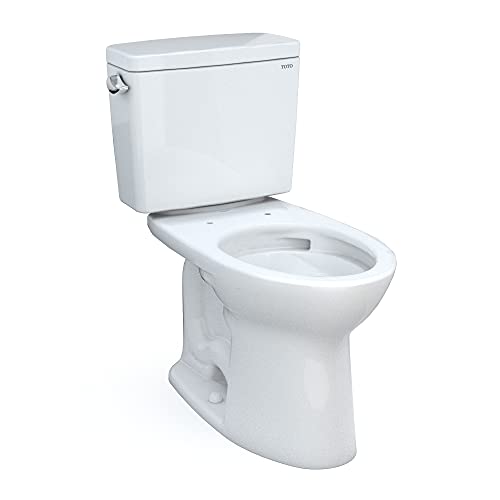
The Drake is the toilet we recommend to most disabled users because its universal-height bowl lands in the ADA seat range once a seat is added, giving a near-level wheelchair transfer, and its flush is dependable enough that nobody has to twist back to push the handle twice.
Flush TypeG-Max siphon jet
GPF1.28
MaP Score1000 g
Bowl Height16.125 in
Warranty1 year limited
Best For
Wheelchair users who transfer onto a near-level seat
Households where odor and repeat maintenance must stay low
Caregivers who want a proven, low-clog fixture
Not Ideal For
Anyone needing a fully skirted side for lateral transfers
Buyers who want a seamless one-piece body to clean
The G-Max siphon jet posts a top 1000 gram MaP score and moves a large volume of water quickly, so it clears heavy loads in a single flush with very few reported clogs. For a disabled user that means no twisting back down to reflush and far less worry about blockages between visits from family or a caregiver. The exposed two-piece sides also leave room to mount grab bars and a transfer rail close to the bowl.
Owner reviews repeatedly praise the elongated bowl for the extra front-to-back support it gives during a pivot or lateral transfer, and the two-piece design keeps replacement parts cheap and widely stocked. The seat is usually sold separately, which is an advantage here because you can fit a raised ADA seat, a transfer-aid seat or a bidet seat of your choice.
Editorial Take
If you are equipping one accessible bathroom and do not want to overthink it, this is the safe default. Add an elongated seat sized to land at 17 to 19 inches, mount grab bars per the ADA layout, and you have covered transfer height, flush reliability and safety in one affordable, parts-friendly package.
Bottom Line: The most balanced accessible toilet you can buy, combining an ADA-range seat with a flush that almost never quits.
2
Highest ADA Seat
Kohler Highline Comfort Height
4.7Best for taller wheelchairs
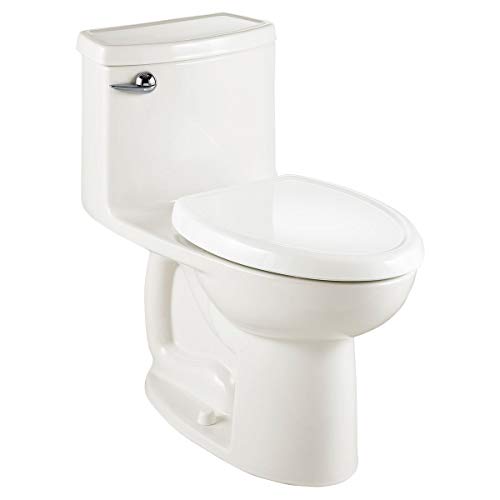
When a user transfers from a taller wheelchair or power chair and needs the seat near the top of the ADA window, the Highline Comfort Height is the one to compare, finishing close to 17.5 inches at the seat for a level or slightly downhill transfer.
Flush TypeClass Five canister
GPF1.28
MaP Score1000 g
Bowl Height16.5 in
Warranty1 year limited
Best For
Users transferring from a taller chair seat
Anyone who wants the seat near 17.5 inches
Buyers who want strong brand support and easy parts
Not Ideal For
Very short users whose feet would dangle
People who dislike cleaning a two-piece tank seam
The Class Five flushing system clears the bowl with a strong, reliable rinse and a near perfect 1000 gram MaP score, so a single flush handles normal use without reaching for the handle twice. The canister flush valve resists the slow leaks that plague old flapper designs, which means fewer repair calls for a household that may not handle them easily.
The elongated bowl supports a body during a lateral transfer, and the smooth glazed surface wipes clean quickly. Owners consistently note how solidly the Highline bolts down, which is critical when a user bears weight on the rim or an adjacent grab bar during a transfer. The seat is sold separately, so you can match the exact seat height and style the user needs.
Editorial Take
Choose the Highline over the Drake when the transfer comes from a taller chair and you want the seat near the upper end of the ADA range. Confirm a shorter household member can still plant their feet, since a seat this tall can feel high for someone petite.
Bottom Line: The pick when you want the seat near the top of the ADA window and a near flawless single flush in one fixture.
3
Best Value
American Standard Cadet 3 Right Height
4.5Best for tight budgets
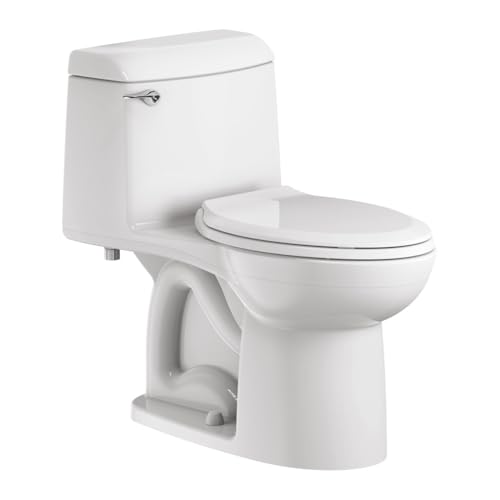
The Cadet 3 proves you do not have to spend a lot to give a disabled user a compliant, comfortable, reliable toilet, making it the natural choice for a multi-unit retrofit, a rental accessibility upgrade or a quick aging-in-place project.
Flush Type3 in valve, siphon
GPF1.28
MaP Score1000 g
Bowl Height16.5 in
Warranty10 year on china
Best For
Budget accessibility upgrades and rentals
Caregivers fitting several bathrooms at once
Anyone who wants less scrubbing thanks to EverClean
Not Ideal For
Buyers who want premium styling
People who prefer a one-piece, seamless body
It posts a high 1000 gram MaP score and uses an efficient 1.28 gallons per flush, so the bowl clears cleanly in one pass and odor stays low between cleanings. The long, EPA WaterSense certified track record means owners rarely report flush trouble, and the 10 year china warranty is reassuring for a fixture that may see heavy assisted use.
The EverClean antimicrobial surface resists the stains and bacteria that cause odor, which means less scrubbing for a caregiver short on time. The elongated bowl adds support during a transfer, and the 16.5 inch Right Height seat reaches the bottom of the ADA window at a far friendlier position than premium picks.
Editorial Take
This is the toilet we suggest when budget leads the decision or when several accessible bathrooms need fitting at once. The 10 year china warranty quietly outdoes pricier rivals, and the EverClean surface genuinely cuts the cleaning burden in an assisted-care setting.
Bottom Line: The best value accessible toilet, pairing an ADA-range seat and strong flush with a long warranty and low maintenance.
4
Easiest to Clean
TOTO UltraMax II
4.7Best low-maintenance pick
If a caregiver wants the accessible seat height in a shell that is as easy to wipe down as possible, the seamless one-piece UltraMax II is the pick, with a glaze that keeps the bowl visibly cleaner between washes.
Flush TypeDouble Cyclone
GPF1.28
MaP Score800 g
Bowl Height16.125 in
Warranty1 year limited
Best For
Care settings where cleaning effort must stay minimal
Light sleepers, thanks to the quiet flush
Buyers who want a sleek, seamless one-piece body
Not Ideal For
DIY installers, since the heavy one-piece needs help
Anyone who needs the absolute highest ADA seat
The one-piece body has no joint between tank and bowl to wipe around, removing one of the hardest-to-reach cleaning spots, and TOTO's CeFiONtect glaze gives dirt and mineral buildup fewer places to cling. In a household managing incontinence or frequent assisted use, that lower cleaning burden is a daily benefit and a hygiene win.
The Double Cyclone flush is notably quiet and efficient while still clearing the bowl reliably, which is welcome for nighttime use in a shared accessible bathroom. The main trade-off is weight, so plan to have help during installation. This model also features in our look at the best toilets of 2026 for its blend of looks and low upkeep.
Editorial Take
Pick the UltraMax II when keeping the bathroom hygienic with minimal effort matters as much as the seat height. The seamless body and quiet flush suit an assisted-care or incontinence-aware setting, just budget for an installer to set the heavy one-piece.
Bottom Line: The easiest accessible toilet to keep clean, with a quiet flush ideal for nighttime and shared use.
5
Skirted Transfer Pick
TOTO Vespin II
4.6Best for lateral transfers
The Vespin II pairs a true universal-height seat that sits squarely in the ADA range with a fully skirted side, so a wheelchair or transfer board can slide in close to the bowl without snagging on an exposed trapway.
Flush TypeTornado / Double Cyclone
GPF1.28
MaP Score1000 g
Bowl Height~17.25 in
Warranty1 year limited
Best For
Wheelchair users who do lateral or board transfers
Bathrooms that need a smooth, snag-free side
Anyone wanting an ADA seat and a 1000 gram flush together
Not Ideal For
DIY installers, given the heavy two-piece skirted body
Tight rough-ins, so confirm the measurement first
The skirted design hides the bowl curves behind a flat side, which removes the gap and exposed trapway where a transfer board or chair footrest can catch, making the slide across smoother and safer. The seat finishes near the middle of the ADA window, so the transfer plane is close to level for most chair users.
Flush strength is not sacrificed for the looks, with a strong 1000 gram MaP rinse and 1.28 GPF efficiency that clears the bowl in one pass. The skirted side is also far easier to wipe down than an exposed trapway, a real benefit in an accessible bathroom. Confirm your rough-in before ordering, since skirted models are less forgiving of an unusual measurement.
Editorial Take
This is the one to specify when the user does lateral or transfer-board moves and you want a clean, snag-free side. The flat skirt removes a genuine catch point that exposed-trapway toilets leave in the transfer path, and the flush gives nothing away.
Bottom Line: The best transfer-friendly pick, combining an ADA seat, a snag-free skirted side and a top-tier flush.
6
Most Clog-Free
American Standard Champion 4 Right Height
4.5Best for clog-free peace of mind
The Champion 4 is built around an unusually wide trapway and a large flush valve, which is why owners say it almost never clogs, a genuine relief for a disabled user who cannot wield a plunger or wait for help.
Flush Type4 in valve, wide trapway
GPF1.6
MaP Score1000 g
Bowl Height16.5 in
Warranty10 year on china
Best For
Users who cannot manage a plunger or a clog
Busy multigenerational or shared-care homes
Buyers who want a long 10 year china warranty
Not Ideal For
Households focused on the lowest water bills
Small bathrooms, given its larger footprint
The 4 inch flush valve and wide trapway move waste through in one strong pass, and the 1000 gram MaP score backs up the clog-free reputation. The Right Height version raises the 16.5 inch bowl to the bottom of the ADA range, so you get the accessible seat alongside that reliability.
It uses more water than the most efficient picks, at 1.6 gallons per flush, so it is not the choice if low water bills top your list, and it is not EPA WaterSense certified. But for sheer peace of mind in a household where a blockage would be a real problem for a limited-mobility user to clear, it is hard to beat, and it overlaps with our picks for the best toilets for large families.
Editorial Take
If your biggest worry is a disabled user facing a clog alone, this is the toilet that removes that fear. Accept the higher 1.6 GPF water use as the price of taking the plunger out of the equation in a limited-mobility home.
Bottom Line: The most clog-resistant accessible toilet, trading some water efficiency for genuine peace of mind.
7
Compact One-Piece
Kohler Santa Rosa Comfort Height
4.6Best for small accessible baths
The Santa Rosa packs an accessible-height seat and an elongated bowl into a compact one-piece footprint, which helps free up the clear floor space a wheelchair needs to approach and turn in a small bathroom.
Flush TypeAquaPiston canister
GPF1.28
MaP Score800 g
Bowl Height16.5 in
Warranty1 year limited
Best For
Tight baths needing wheelchair clearance and turning space
Users who want a seamless, easy-clean one-piece
Owners who value a leak-resistant canister flush
Not Ideal For
DIY installers, given the heavy one-piece body
Buyers who want the very highest MaP score
The AquaPiston canister moves water into the bowl from all sides at once for a thorough rinse, and the compact elongated bowl gives a user the support of an elongated shape without the full floor space it usually demands. The canister valve also resists the slow leaks of old flapper designs, cutting down on repairs in a household that may not handle them.
Because it is a one-piece, there is no tank-to-bowl seam to scrub, and owners praise how solid and stable it feels once bolted down, which matters when a user bears weight during a transfer. In a cramped bathroom where a wheelchair, transfer bench and grab bars all compete for space, that smaller footprint can be the deciding factor for an accessible remodel.
Editorial Take
This is the one to specify when the bathroom is genuinely tight but you still need an accessible seat and a seamless body. The compact footprint frees up the clear floor space and turning radius an ADA-minded layout needs for a wheelchair and grab bars.
Bottom Line: The best accessible pick for small bathrooms, combining an ADA-range seat with a space-saving one-piece body.
8
Modern One-Piece
Woodbridge T-0019
4.4Best for an easy-clean modern look
The Woodbridge T-0019 delivers a designer, skirted one-piece look at a far friendlier position than the premium brands, sits in the accessible-height range and includes a soft-close seat that closes gently instead of slamming.
Flush TypeSiphon, dual flush
GPF1.28
MaP Score800 g
Bowl Height~16.5 in
Warranty5 year limited
Best For
Users who want a modern, low-maintenance fixture
Bathrooms that value an included soft-close seat
A skirted side that wipes down easily
Not Ideal For
Buyers who want the widest possible parts network
DIY installers, given the heavy one-piece body
The skirted, seamless body has no exposed trapway curves or tank seam, making it one of the easier toilets to wipe down and removing a snag point in the transfer path, which suits a user or caregiver who tires quickly. The included soft-close seat removes a part you would otherwise buy and avoids a startling lid slam, a small but real comfort.
The siphon flush clears the bowl quietly for nighttime use, and the 800 gram MaP score is solid for everyday loads. Brand support is smaller than TOTO or Kohler, so factor in long-term parts availability, but for an accessible bathroom that wants a modern, low-maintenance fixture, it is a strong value choice.
Editorial Take
Choose the Woodbridge when looks and the included soft-close seat matter and you are comfortable with a smaller brand. The seamless skirt is a genuine cleaning and transfer win, just keep TOTO or Kohler in mind if guaranteed long-term parts are a priority.
Bottom Line: A modern, easy-clean one-piece with a soft-close seat included, ideal for an updated accessible bathroom.
9
Style on a Budget
Swiss Madison St. Tropez
4.3Best budget modern style
The Swiss Madison St. Tropez brings a sleek, skirted modern one-piece into the accessible-height range at an approachable position, a good fit for an accessible remodel that wants contemporary looks without premium spend.
Flush TypeSiphon, dual flush
GPF1.28 / 0.8
MaP Score600 g
Bowl Height~16.5 in
Warranty1 year limited
Best For
Style-focused accessible remodels on a budget
A seamless, easy-clean skirted side
Owners who like a dual-flush water-saving option
Not Ideal For
Heavy-use households needing the strongest flush
Buyers who want a long warranty and big parts network
The dual-flush button offers a 0.8 gallon option for liquids and a 1.28 gallon full flush, with EPA WaterSense certification keeping water bills low. The skirted one-piece body is quick to wipe clean and snag-free along the side, and the bowl reaches the bottom of the accessible range.
The trade-off is a more modest 600 gram MaP score, fine for a lighter-use bathroom but not the choice for a heavy household, plus a top-mounted button that some users with limited grip find easier than a side lever. For a budget remodel that values looks and water savings it is a reasonable pick, though step up to the Drake or Vespin II if flush strength is critical.
Editorial Take
This is a styling-and-budget play, not a flushing powerhouse. The top button is genuinely easier for limited-grip hands than a side lever, but if the household is heavy-use, spend up on a 1000 gram MaP model instead.
Bottom Line: A stylish, water-saving budget one-piece whose top button suits limited-grip hands, best in lighter-use bathrooms.
Editorial Take
Across these nine, the pattern is clear: an ADA-range seat plus a 1000 gram MaP flush plus a stable base covers almost every disabled user. Spend extra only where a specific need points you there, a skirted Vespin II for lateral transfers, the Champion 4 for clog fears, or the Santa Rosa for a cramped layout. The fixture is only one part of an accessible bathroom, so budget for grab bars, the right seat and proper clearances too.
How to choose an ADA-compliant toilet for a disabled user
The right model depends on the user's mobility, how they transfer, the bathroom layout and who handles cleaning. These five checks cover the decisions that matter most for accessibility.
Get the ADA seat height right
This is the heart of an accessible toilet, so read the spec carefully. The ADA defines a compliant seat as 17 to 19 inches from the finished floor to the top of the seat. Manufacturers list bowl height, the distance from the floor to the top of the porcelain rim, and the seat adds about half an inch on top. So a 16.5 inch bowl finishes near 17 inches at the seat, the bottom of the window, while a 17.25 inch bowl like the Vespin II lands in the middle. Match the seat height to the user's wheelchair seat so the transfer is as level as possible, since a downhill or uphill transfer is harder and less safe.
How to read the spec. Compare bowl height plus the seat, not the total height to the top of the tank. Bowl height is what determines the transfer plane, since the seat adds a consistent half inch across brands. A toilet listed at 15 inches bowl height is a standard model and falls below the ADA range. Anything labeled 16.5 inches or more, or named Comfort Height, Right Height or Universal Height, lands in or near the 17 to 19 inch window once the seat is added.
Match the design to how the user transfers
How a person moves onto the seat changes which toilet fits best. For a lateral or transfer-board move from a wheelchair, a skirted side like the Vespin II or Woodbridge removes the exposed trapway that a board or footrest can catch on. For a standing pivot, base stability matters more than the side profile, so confirm the toilet bolts down rock-solid. Elongated bowls give more support during any transfer, and you should leave room beside the bowl for the grab bars and transfer rails the user relies on. Whatever the design, the toilet must never rock when leaned on.
Do not trade away flush strength
An accessible seat is only part of the job. Look for a MaP score of 800 grams or more, ideally 1000, so the bowl clears in a single flush, which spares a user twisting back to reflush and keeps odor low between cleanings. Efficient models pair that strength with 1.28 gallons per flush and an EPA WaterSense label, so you get clearing power without high water bills. If the household runs heavy or a clog would be hard to clear, our guide to the best toilets for home covers dependable everyday workhorses in more detail.
Plan grab bars, flush controls and reach
The toilet alone does not make a bathroom ADA-compliant; the surrounding hardware does. The ADA calls for a grab bar on the rear wall and one on the side wall closest to the toilet, mounted at the specified heights and anchored into studs or solid blocking, not drywall. Flush controls should be operable with a closed fist and located on the open, wide side of the toilet so a seated user can reach them. If the toilet's lever is on the wrong side, a left-hand or universal trip lever, or a dual-flush top button, can solve the reach problem. A bidet seat further reduces the twisting and reaching that wiping demands.
Measure rough-in and clear floor space
Before ordering, measure from the finished wall behind the toilet to the center of the floor bolts. Most homes are 12 inches, but 10 and 14 inch rough-ins exist, and buying the wrong size is the most common avoidable mistake, especially with skirted models that are less forgiving. Then confirm the clear floor space the user needs to approach and transfer, which for a wheelchair means room to pull alongside and turn. Accessible one-piece toilets are heavy, so arrange a professional for installation and make sure the floor flange is solid so the fixture sits rock-steady. If the user is also a larger adult, our guide to the best toilets for seniors covers sturdier comfort-height picks.
Editorial Take
The single highest-value step after seat height is correct grab-bar placement, screwed into studs or solid blocking, with a rear bar and a side bar at the ADA heights. An ADA-range toilet plus compliant grab bars plus a flush control on the reachable side solves the great majority of accessibility complaints, and a bidet seat is the best optional add-on for independence.
Which Toilet Is Best for a Wheelchair User?
The best toilet for most wheelchair users is the TOTO Drake (Universal Height), whose bowl lands in the 17 to 19 inch ADA seat range once a seat is added, making a near-level transfer possible. For lateral or transfer-board moves, the skirted TOTO Vespin II is better because its flat side removes the exposed trapway that a board or footrest can catch on.
What Is the ADA Toilet Height Requirement?
The ADA requires an accessible toilet seat to be between 17 and 19 inches from the finished floor to the top of the seat. This range matches most wheelchair seat heights so transfers happen across a near-level plane. Bowl height is listed about half an inch lower than seat height, so a bowl around 16.5 to 18.5 inches lands in the compliant window once the seat is added.
What Makes a Toilet ADA-Compliant?
A toilet is ADA-compliant when the seat sits 17 to 19 inches high, flush controls are operable with one closed fist and mounted on the open side, and the bathroom provides the required clear floor space and grab bars. The fixture supplies the seat height and control placement, but full compliance also depends on grab-bar position, clearances and the side the trip lever is on.
What Is a Good MaP Score for an Accessible Toilet?
A good MaP (Maximum Performance) flush score for an accessible toilet is 800 grams or higher, with 1000 grams being the practical top tier. A score in that range means the bowl clears in a single flush, so a disabled user avoids twisting back to reflush and odor stays low between cleanings, both of which matter in a limited-mobility or assisted-care household.
Do You Need Grab Bars With an ADA Toilet?
Yes. An ADA-height toilet provides the correct seat height but nothing to push or pull against, so grab bars are required for true compliance: one on the rear wall and one on the side wall nearest the toilet, anchored into studs at the specified heights. Together with the accessible seat they make a safe transfer possible and sharply cut the risk of falls.
Top recommendations at a glance
If you would rather skip straight to a decision, these three picks cover the most common needs for an accessible bathroom.
Best Overall
TOTO Drake Universal Height
ADA-range seat plus clog-busting flush
4.8
A universal-height bowl that finishes in the ADA range, a top 1000 gram MaP flush and a very low clog rate make this the safe default for most disabled users.
The ADA requires an accessible toilet seat to sit between 17 and 19 inches from the finished floor to the top of the seat. That range matches most wheelchair seat heights so a transfer happens across a near-level plane. Because the seat adds about half an inch, a bowl listed around 16.5 to 18.5 inches lands in the compliant window once the seat is on.
? Are comfort-height and ADA toilets the same thing?
They overlap but are not identical. Comfort Height, Right Height and Universal Height are brand names for a tall seat that usually finishes in the 17 to 19 inch range, the same window the ADA uses. The difference is that full ADA compliance also covers flush-control reach, grab bars, clear floor space and lever side, not just the seat height. A comfort-height toilet is the right fixture, but the surrounding setup makes the bathroom compliant.
? What is the best toilet for a wheelchair user?
The TOTO Drake (Universal Height) is the best default because its bowl reaches the ADA seat range once a seat is added, allowing a near-level transfer. If the user does lateral or transfer-board moves, the skirted TOTO Vespin II is better, since its flat side removes the exposed trapway that a board or chair footrest can catch on during the slide across.
? Can a toilet be too high for a disabled user?
Yes. A seat above the 17 to 19 inch range, or simply taller than the user's wheelchair, forces an uphill transfer and can leave a shorter person's feet dangling, which is its own stability risk. The goal is to match the seat to the wheelchair so the transfer is level, and to keep feet supported. For a short user, choose the lower end of the ADA range rather than the tallest models.
? What does it mean for a flush control to be ADA-compliant?
An ADA flush control must be operable with one closed fist, without tight grasping, pinching or wrist twisting, and it must be mounted on the open, wide side of the toilet so a seated user can reach it. A standard side lever can fail this if it is on the wall side or needs a firm grip, in which case a universal or left-hand trip lever, or a top-mounted dual-flush button, solves the problem.
? Do I need a skirted toilet for transfers?
Not always, but it helps for lateral and transfer-board moves. A skirted side, such as on the TOTO Vespin II or Woodbridge T-0019, hides the curved trapway behind a flat panel, removing a catch point in the slide path and making the side easier to wipe clean. For a standing pivot transfer, base stability matters more than the skirt, so an exposed-trapway model like the Drake is still fine.
? Are elongated or round bowls better for disabled users?
Elongated bowls are usually better because the extra length gives more room and support during a transfer. Round bowls only make sense when floor space is genuinely tight and a wheelchair needs more clearance to approach. Whichever shape you choose, make sure the toilet is bolted down firmly so it never rocks when a user bears weight on it during a transfer.
? How much clear floor space does an accessible toilet need?
An ADA-compliant toilet typically needs a clear floor space of about 60 inches wide and 56 inches deep for a floor-mounted unit so a wheelchair can approach and transfer, with the toilet centered 16 to 18 inches from the side wall. In a tight bathroom a compact one-piece like the Kohler Santa Rosa frees up room for that approach and turning space.
? Where do grab bars go around an ADA toilet?
The ADA specifies a grab bar on the rear wall behind the toilet and a longer bar on the side wall closest to it, both mounted 33 to 36 inches above the floor and anchored into studs or solid blocking. The side bar should start near the front of the bowl so a user can reach it while transferring. Drywall anchors are not strong enough; bars must be fastened to framing.
? Can I make a standard toilet ADA-compliant with a raised seat?
A raised toilet seat that adds two to four inches can bring a standard bowl up into the 17 to 19 inch range as a fast, low-cost fix, which is useful for rentals or temporary needs. It is less stable and less seamless than a built-in accessible bowl, though, and it does not address flush-control reach or grab bars. For a permanent setup, a true ADA-height toilet plus proper grab bars is better.
? Would a bidet seat help a disabled user?
Often yes. A bidet seat reduces the twisting, reaching and wiping that can be painful or impossible for someone with limited hand function, spinal cord injury or arthritis, supporting independence and dignity. Many add-on bidet seats fit standard elongated bowls, so you can pair one with most ADA-height toilets on this list. Confirm the bowl shape and that a nearby outlet is available for heated or electronic models.
? Is a one-piece or two-piece toilet better for accessibility?
A one-piece is easier to clean because there is no tank-to-bowl seam, which helps in assisted-care or incontinence-aware settings, and a compact one-piece frees up wheelchair clearance. A two-piece is lighter to install, cheaper to repair and leaves the sides open for grab-bar and rail mounting. For low maintenance pick a one-piece like the TOTO UltraMax II; for value and easy parts the two-piece TOTO Drake is the practical default.
? What is the most clog-resistant toilet for a disabled user who cannot use a plunger?
The American Standard Champion 4 Right Height stands out, thanks to a 4 inch flush valve and an unusually wide trapway that owners say almost never clogs. It uses more water at 1.6 gallons per flush, but for a user who could not clear a blockage or wait for help, that clog resistance is worth the trade-off in water use.
? Is a top-mounted flush button easier for limited hand function?
For many people with limited grip or wrist motion, yes. A large top-mounted button, common on dual-flush models like the Swiss Madison St. Tropez and Woodbridge T-0019, can be pressed with a flat hand, forearm or closed fist, which better fits the ADA closed-fist standard than a stiff side lever. If grip strength is a concern, a dual-flush top button or a lever extender is worth considering.
? Should I get a soft-close seat for an accessible toilet?
A soft-close seat is a worthwhile small upgrade. It lowers the lid slowly instead of slamming, which removes a pinch hazard and avoids startling a user with limited reaction time, and it reduces wear. Some toilets, such as the Woodbridge T-0019, include one; for others you can add an elongated soft-close seat sized to keep the finished seat height inside the 17 to 19 inch ADA range.
? Do these toilets meet EPA WaterSense as well as accessibility needs?
Most picks on this list are EPA WaterSense certified at 1.28 gallons per flush, with the Champion 4 the main exception at 1.6 gallons. Their accessible-height bowls also sit in the 17 to 19 inch ADA seat window once a seat is added. Remember that the toilet meeting WaterSense and seat-height specs is only part of full ADA compliance, which also depends on grab bars, clearances and control placement in the whole bathroom.
Manufacturer published specifications (TOTO, Kohler, American Standard)
Our Verdict
The TOTO Drake (Universal Height) is the toilet we would put in most accessible bathrooms thanks to its balance of an ADA-range seat once a seat is added, a top-tier 1000 gram single flush and a rock-solid reliability record, with open sides that leave room for grab bars. Choose the TOTO Vespin II when the user does lateral or transfer-board moves and you want a flat, snag-free skirted side, or the American Standard Cadet 3 Right Height for the best value with a long warranty. Whichever you pick, remember the fixture is only one part of ADA compliance: read the seat-height spec rather than the total height, match the seat to the user's wheelchair, confirm a MaP score of 800 grams or more, and add properly anchored grab bars, a reachable flush control and the right clearances to make the bathroom genuinely accessible.
Marcus compiles bathroom-fixture data, MaP flush scores, GPF ratings, trapway and flush-valve specs, and weighs them against thousands of verified owner reviews to build our rankings. He does not run physical lab tests; every verdict is sourced from published specifications, certifications (MaP, EPA WaterSense) and real owner feedback.
Updated August 2026 · Toilets
Keep reading
Related guides
Why Toilet Trapways Are Curved Like an S
Toilets
4.6
Learn why toilet trapways curve like an S, how each bend blocks sewer gas, and what the shape means for clogs and…