Why Toilet Trapways Are Curved Like an S
Toilets4.6
Learn why toilet trapways curve like an S, how each bend blocks sewer gas, and what the shape means for clogs and…
Read the guideWhen standing, sitting and transferring are hard, the wrong toilet turns a routine trip into a daily struggle and a real fall risk. The right one solves it with a single spec list: a tall ADA-friendly bowl near 17 to 19 inches at the seat for a near-level transfer, an elongated shape that supports the body during the move, a flush you can trigger with little force and that almost never needs a second push, and a stable, well-bolted base that grab bars and frames can work around. We ranked the best toilets for mobility issues and limited movement using published bowl-height and rough-in specs, ADA compliance, independent MaP flush-test scores, EPA WaterSense certification and the patterns that repeat across thousands of aggregated owner reviews, weighting seat height, transfer stability, flush effort and clog resistance most heavily.
The best toilet for mobility issues for most people is the TOTO Drake (Universal Height). Its 16.125 inch bowl takes a thick comfort seat to reach an ADA-friendly 17 to 18 inch transfer height, while its G-Max flush posts a top 1000 gram MaP score and triggers with a light handle push, so a single flush clears the bowl without the force, the second push or the deep squat that low toilets demand.
Mobility issues change what matters in a toilet. For an able-bodied buyer, flush strength and water efficiency lead the list. For someone with arthritis, a recent hip or knee replacement, limited leg strength, a balance disorder or a wheelchair, the toilet stops being a background fixture and becomes a piece of safety equipment. The seat height decides how far the body has to drop and lift, the bowl shape decides how supported the move feels, the flush effort decides whether weak hands can operate it, and the base stability decides whether grab bars and frames have something solid to work with. Get those wrong and the bathroom becomes the single most dangerous room in the home, where the CDC notes a large share of older-adult falls happen.
The good news is that nearly every problem maps to a published spec you can check before buying. A bowl height of 16.5 inches or more, sometimes labeled ADA, chair height, right height, universal height or comfort height depending on the brand, brings the seat near the height of a normal chair so the legs do far less work. An elongated bowl gives longer thighs and a transferring body more to rest on. A light-action flush valve or a flush button placed on top lets a person with weak grip operate it without straining. And a heavy, well-bolted two-piece or one-piece base resists the side loading that grab bars and toilet safety frames put on the fixture. Below we compare real models on those numbers, then explain how to choose, where grab bars and raised seats fit in, and how to fine-tune the final height. If raw clearing power is your main concern, our guide to the best flushing toilets goes deeper on MaP scores and clog resistance.
A note on height terms and ADA. Brands label tall toilets differently. Kohler calls it Comfort Height, American Standard calls it Right Height, and TOTO usually lists the bowl height in inches or labels it Universal Height. The ADA specifies a seat height of 17 to 19 inches measured to the top of the seat, not the bowl rim. Since a seat adds roughly half an inch, a 16.5 inch bowl finishes near 17 inches and just clears the bottom of the ADA range, while a 16.125 inch bowl needs a slightly thicker seat to get there. For deeper transfers, a thick comfort seat or a raised toilet seat can add one to four more inches on top of any bowl.
How we research and rank. We do not physically test toilets. Instead we compare published manufacturer specs (bowl height, rough-in, bowl shape, flush valve, warranty), ADA compliance claims, independent MaP flush-test scores, EPA WaterSense certification and the patterns that show up across thousands of verified owner reviews. For this mobility list we weighted seat height, transfer stability, flush effort and elongated bowl length alongside reliability, and we do not take payment for placement.
Every toilet below sits in the comfort or chair height range, carries a strong flush rating that rarely asks for a second push, and shows consistently positive owner feedback on stability and reliability. Bowl heights are listed before the seat, which adds about half an inch. Use the table to scan the trade-offs, then read the full analysis for each pick underneath.
| Toilet | Best For | MaP | GPF | Bowl Height | Rating | Check Price |
|---|---|---|---|---|---|---|
| TOTO Drake (Universal Height) | Most people | 1000 g | 1.28 | 16.125 in | 4.8 | Check price |
| TOTO Vespin II | Highest transfer seat | 1000 g | 1.28 | 17.25 in | 4.6 | Check price |
| Kohler Highline Comfort Height | Light flush effort | 1000 g | 1.28 | 16.5 in | 4.8 | Check price |
| American Standard Cadet 3 Right Height | Best value | 1000 g | 1.28 | 16.5 in | 4.6 | Check price |
| Kohler Santa Rosa Comfort Height | Small bathrooms | 800 g | 1.28 | 16.5 in | 4.6 | Check price |
| American Standard Champion 4 Right Height | Clog-free heavy use | 1000 g | 1.6 | 16.5 in | 4.5 | Check price |
| TOTO UltraMax II | Easiest to clean | 800 g | 1.28 | 16.125 in | 4.7 | Check price |
| Kohler Cimarron Comfort Height | Classic styling | 1000 g | 1.28 | 16.5 in | 4.6 | Check price |
| Woodbridge T-0019 | Modern one-piece value | 800 g | 1.28 | ~17 in | 4.4 | Check price |
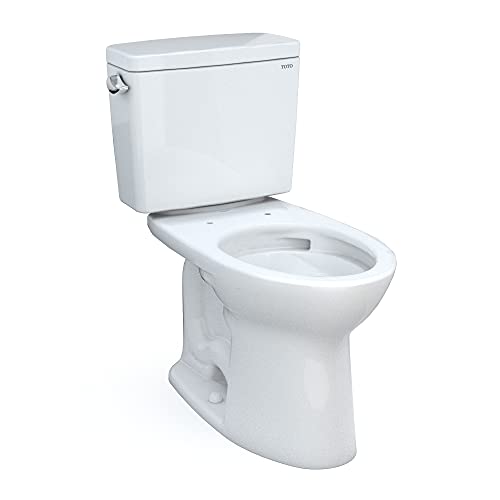
The Universal Height Drake is the toilet we point most mobility buyers to because its separate seat lets you dial in an exact ADA transfer height while its G-Max flush triggers with a light push and clears the bowl in one pass, so weak hands and tired legs both get an easier trip.
The G-Max siphon jet posts a top 1000 gram MaP score and moves a large volume of water quickly, so it clears heavy loads in a single flush with one of the lowest clog rates of any model. That matters for mobility because reaching back down to flush a second time, or bending to plunge a blockage, is exactly the motion these buyers are trying to avoid, and owners repeatedly note how rarely the Drake demands either.
The 16.125 inch bowl sits just under the ADA seat range on its own, but because the seat is sold separately you can fit a thick comfort seat to land cleanly at 17 to 18 inches, then add a raised toilet seat later if needs change. The famously solid two-piece body bolts down firm, which gives a grab bar or toilet safety frame a stable fixture to work alongside, and TOTO's cheap, everywhere parts keep it serviceable for decades.
The separate seat is the reason this beats fixed-height rivals for mobility. You can match the exact transfer height a physical therapist recommends, raise it again with a thicker seat or riser if mobility declines, and you get the most proven single flush in the category behind it. Pair it with a floor-anchored safety frame rather than a tank-mounted rail for the steadiest support.

For buyers who want the tallest fixed seat without stacking on a riser, the Vespin II is the standout, with a 17.25 inch bowl that finishes near 18 inches once the seat is on, near the top of the ADA range and ideal for a near-level wheelchair transfer.
The Double Cyclone flush feeds water through two nozzles for a strong, efficient rinse and a top 1000 gram MaP score, clearing the bowl in one quiet pass that is easy to trigger. The skirted design hides the trapway behind a smooth side panel, which removes the awkward curves that are hardest to reach and wipe for someone with limited bending or reach.
The headline is the height. At 17.25 inches the bowl is already taller than most comfort-height rivals before the seat, so it lands near the top of the ADA 17 to 19 inch window without a riser, which keeps the seat firmly attached and the surface stable for a sideways slide from a wheelchair. Owners praise the solid feel and the clean skirted look, and it overlaps with our picks for the best toilets for seniors for the same reasons.
This is the one to specify when you need maximum height built into the fixture rather than added by a removable riser, which is the safer setup for transfers since nothing can shift. Confirm the chosen wheelchair seat height first, since you want the toilet within an inch of it for the easiest slide across.

The Highline pairs a true chair-height seat with Kohler's light-action canister flush, so a person with arthritis or limited hand strength can trigger a full, clog-free flush with a gentle push, and a left-hand trip lever option suits those who reach more easily from that side.
The Class Five canister flush clears the elongated bowl with a strong, reliable rinse and a top 1000 gram MaP score, so a single light push of the lever handles normal use with very few reported clogs. The canister valve also resists the slow leaks of old flapper designs, which keeps long-term maintenance, and the bending it would require, to a minimum.
At 16.5 inches the bowl finishes near 17 inches once the seat is on, squarely in the ADA range, and the elongated shape gives a transferring body solid support. Owners consistently note how firmly the Highline bolts down, which gives nearby grab bars a stable reference point, and because the seat is sold separately you can fit a thicker one to push the height higher if needed.
Choose the Highline when flush effort is the real barrier, since the light Class Five lever asks for far less force than a stiff older flapper handle. It hits the heart of the ADA height range, flushes near flawlessly and bolts down rock-steady, which is why it is our default for hand-strength concerns.
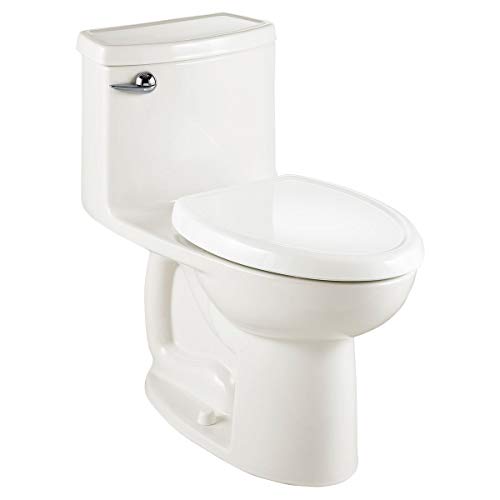
The Cadet 3 Right Height proves you do not have to spend a lot for a properly tall, stable and reliable mobility toilet, making it the natural choice for outfitting a guest bath, a recovery room or a whole-house accessibility update at once.
It posts a high 1000 gram MaP score and uses an efficient 1.28 gallons per flush, so the bowl clears cleanly in one pass and odor stays low between cleanings, which suits a household that cannot manage frequent deep scrubbing. The long, EPA WaterSense certified track record means owners rarely report flush trouble, and the 10 year china warranty is reassuring for a fixture that needs to last.
The 16.5 inch Right Height bowl delivers the easier chair-height sit-and-rise at a far friendlier position than premium picks, and the EverClean antimicrobial surface resists the stains and bacteria that cause odor, which means less bending and scrubbing. It overlaps with our list of the best toilets for home, and the wide parts availability keeps it serviceable.
This is the toilet we suggest when budget leads or several bathrooms need fitting at once, such as preparing a home for a returning patient. The 10 year china warranty quietly outdoes pricier rivals, and at 16.5 inches it matches the height of premium models for a fraction of the spend.

The Santa Rosa packs a comfort-height seat and elongated bowl into a compact one-piece footprint, ideal for a small or crowded bathroom that still needs chair height and room for a walker, wheelchair or helper to maneuver.
The AquaPiston canister moves water into the bowl from all sides at once for a thorough rinse and triggers with a light lever action, while the compact elongated bowl gives the support of an elongated shape without the full floor space it usually demands, freeing up turning room for mobility aids. The canister valve resists the slow leaks of old flapper designs, cutting down on repairs and bending.
Because it is a one-piece, there is no tank-to-bowl seam to scrub, which removes one of the hardest spots to reach for someone with limited bending, and owners praise how solid and stable it feels once bolted down. In a cramped bathroom the compact footprint frees up elbow room while keeping the seat in the comfortable 16.5 inch ADA range.
Specify this when the bathroom is genuinely tight but you still need chair height and clearance for a walker or wheelchair. The compact elongated footprint is hard to match, just budget for help on install since the one-piece body is heavy.
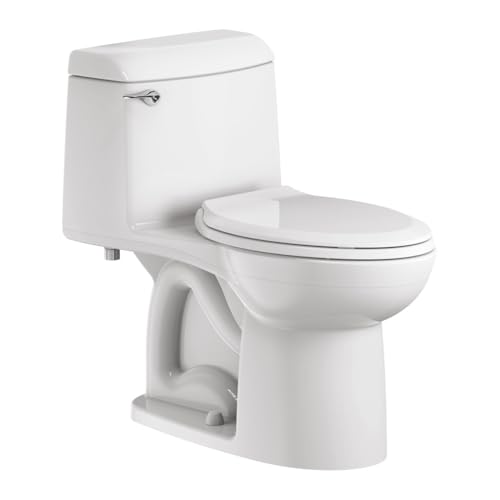
The Champion 4 is built around an unusually wide trapway and a large flush valve, which is why owners say it almost never clogs, and the Right Height version raises that flush-proof bowl into the comfortable ADA range so no one has to bend and plunge.
The 4 inch flush valve and wide trapway move waste through in one strong pass, and the 1000 gram MaP score backs up the clog-free reputation. For a mobility household that matters because clearing a blockage means bending, kneeling and force that many of these buyers simply cannot manage, so a toilet that rarely clogs removes a real hazard.
The Right Height 16.5 inch bowl delivers the easier ADA sit-and-rise alongside that reliability, so you get accessible height and the lowest realistic clog rate in one fixture. It uses more water at 1.6 gallons per flush and is not EPA WaterSense certified, so it is not the choice if low water bills lead, but for a household that cannot risk a plunger it overlaps with our picks for the best toilets for large families.
If a clog would be a genuine crisis because no one in the home can plunge it, this Right Height model removes that worry better than any other pick here. Accept the higher 1.6 GPF water use as the price of taking the plunger out of the equation entirely.

If wiping the toilet down is itself a strain, the seamless one-piece UltraMax II is the pick, with a glaze that keeps the elongated bowl visibly cleaner between washes and no tank seam to reach around.
The one-piece body has no joint between tank and bowl to wipe around, removing one of the hardest-to-reach cleaning spots, and TOTO's CeFiONtect glaze gives dirt and mineral buildup fewer places to cling, so the bowl needs scrubbing far less often. The Double Cyclone flush is notably quiet and easy to trigger while still clearing the bowl reliably, which is welcome for late-night trips.
At 16.125 inches the bowl sits at the lower end of comfort height, so a thicker seat or a riser is worth adding to reach the full ADA range, but for buyers who struggle with cleaning the seamless, low-maintenance shell is the draw. The main trade-off is weight, so plan to have help during installation. It also features in our look at the best toilets of 2026 for its blend of looks and low upkeep.
Pick the UltraMax II when keeping the bathroom clean with minimal bending matters as much as the height itself. The seamless body and quiet flush are the appeal, and a thick comfort seat closes the small height gap versus taller bowls.

The Cimarron brings a more traditional, tailored profile to chair height, pairing an ADA-range bowl with the same light canister flush family as the Highline for buyers who want classic styling without losing accessibility or performance.
The AquaPiston canister flush feeds water into the bowl from a full 360 degrees, triggers with a light lever and posts a top 1000 gram MaP score, so the elongated bowl clears in a single pass on an efficient 1.28 gallons. The canister design seals better than a flapper, so the Cimarron rarely develops the slow phantom leaks that waste water and invite maintenance over time.
At 16.5 inches the bowl lands right in the ADA range, and the Cimarron's softer, more classic lines suit traditional bathrooms that the squarer Highline can look too plain in, so accessibility does not force a styling compromise. Owners report it as a quiet, dependable everyday workhorse, and Kohler's wide parts network keeps repairs simple years down the line.
Choose the Cimarron over the Highline largely on looks, since the flush performance and light lever are the same 1000 gram canister system. If the bathroom leans traditional, this is the accessible-height toilet that fits the room without compromise.

The Woodbridge T-0019 delivers a tall, skirted, modern one-piece with a soft-close seat and a flush button on top of the tank, an easy reach for someone who cannot twist to a side lever, all at a friendlier spend than the premium brands.
The dual-flush button sits flat on top of the tank, which is an easier target than a side trip lever for someone who cannot twist or reach down, and the soft-close seat removes the lid slam that can startle or pinch. The 800 gram MaP score is solid rather than class-leading, clearing the elongated bowl reliably on an efficient 1.28 gallon full flush.
The bowl sits around 17 inches, landing in the ADA range without a riser, and the fully skirted one-piece body has no trapway nooks or tank seam to scrub, which suits limited reach. Owners praise the modern look and value, with the main caveats being the smaller parts network and shorter porcelain warranty versus TOTO, Kohler or American Standard.
Consider the T-0019 when a top-mounted flush button is the deciding accessibility feature, since it suits hands that cannot work a side lever. Just go in knowing you are trading a major brand's parts support for the lower spend and the easier button reach.
Across all nine picks, the height you transfer to and from matters more than any other spec for safety, so size the seat to the user before anything else. For most people the TOTO Drake with a thick comfort seat hits the sweet spot because you can set and later adjust the exact height, and it flushes with little force. If you need maximum built-in height for a wheelchair transfer, the Vespin II is the cleaner answer than stacking a riser. Whatever you choose, plan grab bars and the toilet together, since a wall-anchored or floor-mounted bar is far steadier than anything that clamps to the tank.
The ADA Standards for Accessible Design specify a 17 to 19 inch seat height because that range lets most adults sit and rise with their feet flat and their thighs near level, which is the position that demands the least leg strength. A standard toilet sitting at 14 to 15 inches forces a controlled fall to sit and a hard push to stand, exactly the motion that fails when leg strength, balance or joint health declines. Match the seat height to the user's needs: a returning surgery patient or a wheelchair user usually wants the higher end, while a shorter person with mild stiffness may do better near 17 inches so their feet still reach the floor.
For the large majority of mobility buyers, the taller seat is the single most helpful change, which is why comfort and ADA height have become the default for accessible bathrooms. The one caveat is fit. If the seat is so high that the user's feet hang above the floor, they lose the stable base that makes standing and balance easier, and a footrest or a slightly lower model is the better answer. This is why we recommend matching the height to the person rather than always reaching for the tallest bowl, and why the adjustable Drake earns the top spot over fixed-height rivals.
If you are renovating or replacing the toilet anyway, building the height into the fixture is the better choice because there is no removable part to loosen, and the seat is the genuine toilet seat rather than a clip-on. Raised seats and risers still have a place: they are ideal for a short-term recovery after surgery, for renters who cannot replace the fixture, or for stacking extra inches onto a comfort height bowl when someone needs a very high seat. If you use a riser, choose a bolt-on model that locks to the bowl rather than a friction-fit clamp, and check it regularly.
Hand strength is an underrated accessibility factor. A worn flapper-style handle can need a firm, sustained press that arthritic hands struggle with, while a modern canister valve releases water with a light, short motion. The Kohler Highline and Cimarron use this lighter action, and TOTO's lever-operated G-Max and Double Cyclone systems are also easy to trigger. Where twisting or reaching to a side lever is the problem, a toilet with the flush control on top of the tank, like the Woodbridge T-0019, lets the user press down with an open hand instead of gripping and turning.
Grab bars and safety frames. A toilet is only half of an accessible setup. Pair it with wall-mounted grab bars anchored into studs or solid blocking, rated to support the user's full weight, or a floor-mounted toilet safety frame that surrounds the bowl. Avoid bars that clamp only to the tank, since the tank is not built to take side loading and can crack. Plan the bar locations before installing the toilet so the bowl sits where the bars can do the most good, and have a professional confirm anchoring if studs are not where you need them.
We started from the spec that matters most for this audience, bowl height, and kept only models that reach the ADA 17 to 19 inch seat range either on their own or with a thicker seat. From there we layered in flush effort and reliability, favoring light-action canister valves and lever or button controls that weak hands can operate, then weighted MaP flush-test scores and clog resistance because a blockage is a hazard for anyone who cannot bend to plunge. We checked EPA WaterSense certification for water savings, read aggregated owner reviews for patterns around stability and how solidly each model bolts down, and confirmed elongated bowl shapes for transfer support. Brand reliability, parts availability and warranty length broke any remaining ties, since an accessible fixture needs to keep working for years. We do not physically test toilets and we do not take payment for placement.
The most frequent error is buying the tallest possible toilet for a shorter user, which leaves the feet dangling and actually reduces stability. The second is forgetting flush effort, since a perfect height means little if arthritic hands cannot work the handle. A third is mounting grab bars to the tank rather than the wall or floor, which puts dangerous side loads on porcelain that is not built for them. Buyers also overlook the rough-in measurement, the distance from the wall to the floor bolts, and order a toilet that will not fit the existing drain. Finally, many forget that a strong, clog-free flush is itself an accessibility feature, because clearing a blockage demands exactly the bending and force these buyers are trying to avoid. Sizing the height to the person, checking flush effort and rough-in, and planning grab bars separately avoids all five.
For most people it is the TOTO Drake in Universal Height, because its separate seat lets you set an exact ADA transfer height, its G-Max flush triggers with little force and rarely clogs, and the solid two-piece base gives grab bars a stable fixture to work around. For the highest fixed seat, the TOTO Vespin II at 17.25 inches is the better answer.
A seat height near the top of the ADA range, around 18 to 19 inches, is usually recommended after hip or knee replacement so the patient avoids deep bending of the joint. You can reach that with a tall bowl like the Vespin II or by adding a thick comfort seat or raised seat to a comfort height toilet, and a physical therapist can confirm the exact target.
The ADA specifies a seat height of 17 to 19 inches measured to the top of the seat, not the bowl rim. Since a seat adds about half an inch, a bowl of roughly 16.5 inches or more falls into the compliant range. Several picks here, including the Vespin II and Woodbridge T-0019, reach it without any riser.
They overlap but are not identical. Comfort height, chair height, right height and universal height all describe taller bowls near 16.5 inches and up, while ADA-compliant specifically means the finished seat lands between 17 and 19 inches. Most comfort height toilets meet ADA seat height once a seat is fitted, but always check the published bowl height to be sure.
Elongated bowls are generally better for limited mobility because the longer shape gives the body more to rest on during the sit, rise and transfer, and suits taller users. Round bowls save a couple of inches of floor space, which can matter in a very tight bathroom that needs clearance for a walker or wheelchair, so weigh support against room.
Yes, to a point. A bolt-on raised toilet seat adds height, and a floor-mounted safety frame or wall grab bars add support, which together can make a standard toilet usable. But the added seat is a clip-on rather than a built-in surface, so for ongoing needs a true comfort height toilet is steadier and more comfortable.
Toilets with a light-action canister valve, like the Kohler Highline and Cimarron, or with a top-mounted dual-flush button like the Woodbridge T-0019, are easiest with arthritis. They need far less grip and force than a stiff older flapper handle, and a top button can be pressed with a flat hand instead of a twisting grip.
No. Grab bars should anchor into wall studs or solid blocking, or be part of a floor-mounted safety frame that surrounds the bowl. Bars that clamp only to the tank put side loads on porcelain that is not designed for them and can crack the tank, so use a wall or floor anchor rated for the user's full weight.
Both work, and the better choice depends on the priority. One-piece toilets like the UltraMax II and Santa Rosa have no tank seam to scrub, which helps anyone with limited bending or reach. Two-piece toilets like the Drake and Highline are lighter to install, cheaper to repair and let you swap the seat freely to fine-tune height.
Aim for a MaP score of 600 grams or higher, with 800 to 1000 grams being excellent. A high MaP rating means the bowl clears in a single flush, which matters for mobility because a clog forces the bending and force needed to plunge, so several picks here post a top 1000 gram score.
It is not required for accessibility, but WaterSense certification confirms the toilet uses 1.28 gallons per flush or less while still passing flush-performance tests, which saves water and money. Most picks here are certified; the American Standard Champion 4 is the exception at 1.6 gallons, traded for its top-tier clog resistance.
Measure the rough-in, the distance from the finished wall to the center of the floor bolts that hold the toilet down, which is usually 12 inches but can be 10 or 14. Order a toilet that matches, then confirm there is enough clearance in front and to the sides for the user and any mobility aid before buying.
Wall-hung toilets can be set at a custom height during installation and free up floor space, which helps clearance for a wheelchair, but they require in-wall carrier support and a more involved install. For most homes a floor-mounted comfort or ADA-height toilet is simpler, cheaper and just as accessible.
Look for a tall, stable, clog-resistant toilet with clear floor space on at least one side so the caregiver can stand and assist. The American Standard Champion 4 Right Height suits this well for its near clog-free flush, paired with a floor-mounted safety frame and adequate side clearance for the helper.
Often yes. A bidet seat reduces the reaching and twisting that wiping requires, which can be difficult with limited shoulder or hand movement. Choose a model with a side panel or remote that the user can operate easily, and confirm it fits the chosen toilet's elongated bowl.
ADA guidance calls for a clear floor space of at least 60 inches wide and 56 inches deep around the toilet for a wheelchair approach, though a private home can often work with less. The key is enough room beside the toilet for a side transfer and for any safety frame, so plan the layout, not just the fixture.
Comfort and ADA-height toilets are widely available across budgets, and value models like the American Standard Cadet 3 Right Height and Woodbridge T-0019 deliver accessible height without a premium. The bigger added cost is usually the grab bars, safety frame or professional install, not the toilet itself.
Yes. On any two-piece toilet with a separate seat, such as the Drake or Highline, you can swap to a thicker comfort seat or add a bolt-on raised seat to gain one to four inches later. That adjustability is why we favor models with separate seats for changing mobility needs.
For mobility issues and limited movement, the spec that protects against falls and strain is seat height, so size it to the user first. The TOTO Drake (Universal Height) is the best pick for most people because its separate seat lets you set and later adjust an exact ADA transfer height, while its light-action G-Max flush clears the bowl in one pass with little force. Choose the TOTO Vespin II when you need maximum built-in height for a wheelchair transfer, the Kohler Highline when weak hands make flush effort the barrier, and the American Standard Cadet 3 Right Height when budget leads. Whatever you choose, plan grab bars or a floor-mounted safety frame alongside the toilet, since the fixture is only half of a safe, accessible bathroom.
Learn why toilet trapways curve like an S, how each bend blocks sewer gas, and what the shape means for clogs and…
Read the guideAlmost every US toilet has a left-side handle. Learn the plumbing and mechanical reasons behind the layout and when it actually changes.
Read the guideHome toilets rely on tanks because household water lines lack the pressure that public flushometer systems use to flush straight from the…
Read the guide