Why Toilet Trapways Are Curved Like an S
Toilets4.6
Learn why toilet trapways curve like an S, how each bend blocks sewer gas, and what the shape means for clogs and…
Read the guideMaP 1000 is the gold standard for residential flush power -- 1,000 grams cleared in a single push. Only a handful of gravity-flush toilets hit that ceiling consistently, and we have ranked every one worth buying using published MaP scores, EPA WaterSense certification data, trapway dimensions and aggregated owner feedback across thousands of reviews.
The TOTO Drake II is the strongest all-round pick: it earns a verified MaP 1000 g score, uses only 1.28 GPF with EPA WaterSense certification, and a fully glazed 2.125 in siphon-jet trapway that owners consistently report as near clog-free. For the widest trapway at MaP 1000, the American Standard Champion 4 at 2.375 in is unmatched.
A toilet's flush power is not measured in noise or marketing copy -- it is measured by the Maximum Performance (MaP) program, an independent third-party testing protocol run jointly by the Canadian Research Council and various water utilities. Testers use a soy-paste surrogate to replicate solid waste and record the maximum grams a toilet removes in a single flush. The scale runs from 100 g at the low end to 1,000 g at the top. Any toilet rated at MaP 1000 g has cleared the heaviest test load available, with no carry-over.
That number matters more than any specification the manufacturer chooses to print on the box. Two toilets can share the same 1.28 GPF rating, the same bowl shape and a nearly identical price -- but one might score 500 g on MaP and one might score 1,000 g. The difference is real, and it shows up as double flushes, clogged trapways and plunger calls over years of daily use. This guide focuses exclusively on MaP 1000 toilets and explains what else you should check to find the most powerful flush for your specific bathroom. For the broader overview of flush performance across all ratings, our roundup of the best flushing toilets covers the full spectrum.
| Toilet | Best For | MaP Score | GPF | Trapway | Rating | Check Price |
|---|---|---|---|---|---|---|
| TOTO Drake II | Best overall MaP 1000 | 1000 g | 1.28 | 2.125 in | 4.8 | Check price |
| TOTO Drake | Proven workhorse | 1000 g | 1.28 | 2.125 in | 4.8 | Check price |
| American Standard Champion 4 | Widest trapway | 1000 g | 1.6 | 2.375 in | 4.6 | Check price |
| Kohler Highline | Best value MaP 1000 | 1000 g | 1.28 | 2.125 in | 4.7 | Check price |
| Kohler Cimarron | Mid-range comfort height | 1000 g | 1.28 | 2.0 in | 4.6 | Check price |
| American Standard Cadet 3 | Budget MaP 1000 | 1000 g | 1.28 | 2.125 in | 4.5 | Check price |
| TOTO Aquia IV | Dual-flush MaP 1000 | 1000 g | 0.8 / 1.28 | 2.125 in | 4.6 | Check price |
| Gerber Avalanche | Straightforward two-piece | 1000 g | 1.28 | 2.125 in | 4.4 | Check price |
MaP 1000 means the toilet cleared 1,000 grams of soy-paste surrogate -- the maximum load the MaP protocol tests -- in a single flush with no carry-over in the bowl. The MaP program is run by independent third-party laboratories and accepted by utilities across the US and Canada as the most reliable field-independent measure of residential toilet flush performance.
The MaP protocol was developed in the early 2000s as water utilities pushed manufacturers toward lower-flow toilets and needed an objective way to verify that 1.28 GPF and sub-1.28 GPF models could still remove waste effectively. Testing is done by accredited labs using a standardized 350 g, 500 g, 600 g, 800 g and 1000 g test sequence. A toilet earns its MaP score at the highest mass it clears with a single flush and zero carry-over. A score of 1000 g is not just "very good" -- it means the toilet performed at the absolute ceiling of the test with no failures during the test sequence.
For the average household, hitting MaP 1000 means you can expect clean single flushes in nearly every realistic scenario. Plumbers and plumbing contractors routinely report that MaP 1000 toilets account for a disproportionately small share of clog service calls compared to toilets rated in the 350 g to 600 g range, even when controlling for GPF.
MaP score and GPF are independent variables. A toilet can score 1000 g at 1.28 GPF, or it can score 300 g at 1.6 GPF. Never assume that higher water use automatically means a stronger flush. The trapway diameter and glaze, bowl geometry and flush-valve speed all matter more than gallons per flush. Always look up the MaP score on map-testing.com before buying, especially for any toilet below the top-tier brands.
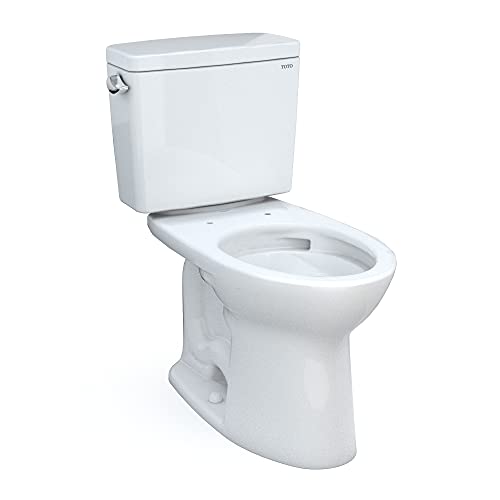
The TOTO Drake II is the most refined version of TOTO's most popular gravity-flush platform, and its verified MaP 1000 g score at 1.28 GPF makes it one of the few toilets that simultaneously earns EPA WaterSense certification and clears the heaviest independent test load. Owner reviews across thousands of verified purchases are consistent: one flush, clean bowl, no plunger needed.
TOTO's G-Max system uses a large 3-inch flush valve combined with a wide water surface that ensures complete bowl coverage on every flush. The 2.125-inch fully glazed trapway allows solid waste to exit cleanly and resists mineral buildup better than unglazed alternatives. The Drake II's updated elongated bowl is slightly shorter front-to-back than the original Drake, making it a better fit for tighter rough-in spaces without sacrificing any flush performance.
CeFiONtect ceramic glaze is available on select Drake II models and covers the entire trapway interior with an ultra-smooth ion-barrier surface that waste particles cannot adhere to -- a significant contributor to the toilet's near-zero double-flush rate in long-term owner reports. For a household where flush power is the primary concern, the Drake II is simply the best gravity-flush toilet available at any price point.
The Drake II is TOTO's most sold model for a reason: it consistently out-performs expectations from the day it is installed. The G-Max siphon-jet draws waste through a 2.125-inch glazed trapway faster than most competitive designs and the geometry of the bowl creates a strong vortex that cleans the rim in the same motion. For a household replacing a chronic clogger, this is the single highest-confidence upgrade available.
The original TOTO Drake is one of the most specified and installed toilets in North America and holds MaP 1000 g with the same G-Max siphon jet as the Drake II. It sits in more hotels, rental properties and contractor-specified renovation projects than almost any other model -- not because of marketing, but because plumbers have found it reliable over two decades of field use.
The key distinction between the Drake and Drake II is the bowl length and the addition of double-cyclone flushing in the II. The original Drake uses a single G-Max siphon jet, which produces a powerful but more directional flush compared to the II's rim-feed design. For raw clog-clearing power they are equal on MaP. The Drake is often the preferred choice for landlords and property managers because replacement parts -- flappers, fill valves, flush handles and seats -- are stocked everywhere from big-box stores to regional plumbing supply houses.
When a buyer asks for the most trouble-free toilet for a rental or investment property, the Drake is the standard answer. Its parts ecosystem is so deep and so widely available that a maintenance person in any US city can service it without ordering anything online. Combined with a MaP 1000 g score, it is the lowest-lifecycle-cost powerful toilet on the market.
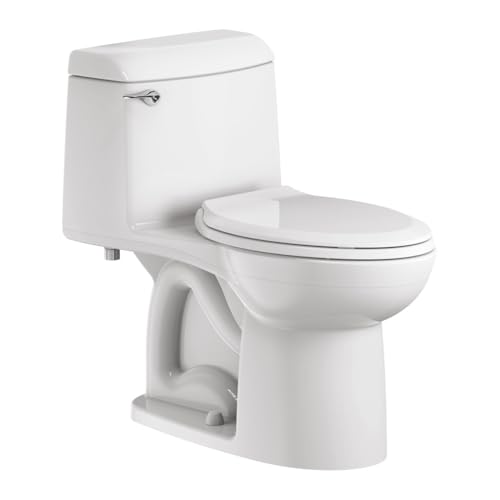
The American Standard Champion 4 holds the record for the widest fully glazed trapway in any residential gravity-flush toilet at 2.375 inches, combined with a 4-inch accelerator flush valve that releases a high-volume surge of water in under two seconds. American Standard claims it can flush a bucket of golf balls -- and the MaP 1000 g score backs the engineering, not just the marketing.
The Champion 4's 1.6 GPF means it uses more water than a WaterSense-certified 1.28 GPF model -- roughly an additional 40 to 50 gallons per person per year in a typical household. For many buyers that trade-off is worth it: the extra volume, combined with the 2.375-inch trapway, produces one of the lowest clog rates of any production toilet in sustained owner reviews. Plumbers who see the aftermath of problem toilets consistently name the Champion 4 as the fixture they replace problem toilets with in clog-prone households.
The 10-year limited warranty is one of the most generous in this comparison and covers the vitreous china as well as flushing components. The EverClean surface -- standard on Champion 4 models -- inhibits bacteria and mold growth on the bowl surface, which reduces the frequency of deep cleaning needed to keep the bowl visibly white.
The widest trapway, the fastest flush valve and a MaP 1000 g score add up to the closest thing to a clog-proof toilet you can buy without pressure assistance. If a household regularly reaches for a plunger, the Champion 4 is very often the fixture that retires it permanently. The 1.6 GPF is a real water-use penalty compared to 1.28 GPF models, but for families who are paying for repeated plumber calls, the efficiency trade-off is easily justified by the cost of those service visits.

Kohler's Highline uses the Class Five canister-valve flushing system, which opens a 3.25-inch diameter canister to send a powerful surge around the full rim of the bowl rather than through a single jet. Independent MaP testing confirms a 1000 g score at 1.28 GPF with EPA WaterSense certification, and thousands of owner reviews rate it as a set-it-and-forget-it toilet that simply works.
The Highline's Class Five system differs from TOTO's siphon-jet approach in how water enters the bowl: instead of a concentrated rear jet, the canister opens a large port that floods water around the entire rim, creating a sheet rinse rather than a point-source surge. Both methods achieve MaP 1000 g, but the rim-rinse approach tends to leave the bowl walls cleaner after each flush. Owners consistently report it as a quiet, smooth flush rather than the more audible power surge of the Drake.
For a first bathroom replacement where the buyer wants MaP 1000 g assurance but does not want to pay a premium price, the Highline is the correct pick. Its canister valve is a slightly different technology from TOTO's flapper-based G-Max, and some plumbers prefer flapper systems for longevity in mineral-heavy water -- but for the majority of US water supplies, the Highline's valve delivers a reliable decade of service before it needs attention.

The Kohler Cimarron sits a step above the Highline in the product line with a slightly more refined bowl silhouette and the same Class Five canister flush that scores MaP 1000 g at 1.28 GPF. Owners report it as quiet and smooth compared to siphon-jet competitors, which makes it a strong choice for master bathrooms or bedroom-adjacent installations where noise is a secondary concern.
The Cimarron is Kohler's primary mid-tier offering and is often specified in new construction across comfort-height elongated configurations. Its 2.0-inch trapway is slightly smaller than the Highline's 2.125 inches, which theoretically increases the risk of clog with very high-fiber or high-volume waste -- though both toilets hit the same MaP 1000 g ceiling. In long-term owner reviews the practical difference is minimal, but households with documented high-volume use may prefer the Highline or Champion 4 for the added trapway diameter.
The Cimarron is what specifiers choose when the Highline is deemed too utilitarian for an upscale bathroom but the buyer is not ready to step into TOTO's price range. The flush performance is identical on MaP, the aesthetic is cleaner, and the comfort height works well for the widest range of adult users. The narrower trapway is worth noting but is rarely a practical problem in standard residential use.

The American Standard Cadet 3 earns MaP 1000 g at 1.28 GPF with EPA WaterSense certification and an EverClean surface that inhibits bacteria and staining -- all at a position that consistently makes it one of the most affordable MaP 1000 toilets in the US market. Owners who switch to it from lower-scoring models frequently report that clog calls drop to zero.
The Cadet 3 uses American Standard's PowerWash siphon-jet system, which channels water through a 2.125-inch glazed trapway similar to TOTO's G-Max in diameter. The EverClean surface coating uses an antimicrobial agent bonded into the china during firing rather than a surface spray, meaning it does not wear off with normal cleaning. For rental properties, basements and secondary bathrooms where the goal is maximum flush reliability at minimum cost, the Cadet 3 is the direct answer. The 10-year warranty on the china bowl is better than most premium-brand alternatives at this price range.
The Cadet 3 is the most consistently recommended budget MaP 1000 toilet among plumbers and renovators who regularly see the real-world outcome of toilet purchases. Its flush power is verifiable, its parts are available in every major hardware chain, and its EverClean surface meaningfully reduces cleaning frequency in rental-use settings. For a secondary bathroom or a rental, it is hard to argue for spending more.

The TOTO Aquia IV is the only dual-flush toilet in this comparison to earn a verified MaP 1000 g score on its full flush, achieved at 1.28 GPF. Its partial flush uses only 0.8 GPF for liquid waste, making it one of the most water-efficient options available while still providing maximum flush capacity when needed. It carries EPA WaterSense certification on both flush modes.
TOTO's Tornado flush uses two nozzles positioned to create a centrifugal water flow around the rim rather than a single siphon jet. This rim-covering motion cleans the full interior bowl surface on every flush, which owners report keeps the bowl visibly cleaner between deep cleans compared to single-jet designs. The Aquia IV pairs this technology with a dual-flush actuator on the tank lid, so the household can use 0.8 GPF for liquid waste and 1.28 GPF only when the full MaP 1000 g capacity is needed. For a household that manages water use carefully, the annual savings over a full-flush 1.28 GPF model can be meaningful.
The Aquia IV is TOTO's answer to buyers who want full MaP 1000 g assurance without giving up dual-flush water savings. The Tornado flush's two-nozzle rim-cover design keeps the bowl cleaner than jet designs, and the 0.8 GPF partial cycle makes it the most water-efficient MaP 1000 toilet you can buy. It costs more upfront than the Drake II, but for households in water-restricted areas or those paying tiered utility rates, the efficiency case is straightforward.
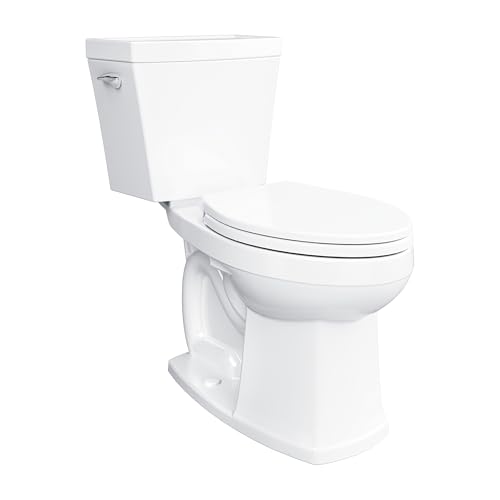
The Gerber Avalanche scores MaP 1000 g at 1.28 GPF and earns EPA WaterSense certification while maintaining Gerber's reputation for straightforward, uncomplicated plumbing that installers across the country can service without proprietary parts. It lacks the premium engineering of TOTO or the brand recognition of Kohler, but the performance data is real and the installed base is solid.
Gerber is a longtime US toilet manufacturer that operates somewhat under the radar compared to TOTO and Kohler, but the Avalanche line consistently posts strong independent MaP results. The 5-year limited warranty is notably longer than the 1-year warranties offered by TOTO and Kohler on comparable models, and the standard fill-valve and flapper design means any plumber can service it with off-the-shelf parts. For a commercial building, school or institutional setting where serviceability matters as much as flush performance, the Avalanche is a rational choice alongside the bigger names.
Gerber is an underappreciated name in residential plumbing and the Avalanche's MaP 1000 g score is genuine -- not a rounding anomaly. The 5-year warranty reflects manufacturer confidence in the fixture, and the standardized internal components mean a building engineer or facilities manager can stock one set of replacement parts and service the entire building without special orders. For institutional buyers, that operational simplicity has real dollar value.
The difference is in the geometry and glaze of the trapway, the diameter and opening speed of the flush valve, and the hydrodynamic design of the bowl itself. A MaP 1000 toilet uses a larger, faster-opening flush valve -- typically 3 to 4 inches -- combined with a glazed trapway of 2.125 inches or wider, while a MaP 600 toilet may use a 2-inch or smaller valve with a narrower or partially unglazed trapway. Both use the same volume of water; the MaP 1000 model simply moves it through the bowl and trap more efficiently.
EPA WaterSense certification sets a maximum of 1.28 gallons per flush and requires a minimum MaP score of 350 grams to qualify -- a low bar for flush performance. WaterSense guarantees water efficiency and a basic flush threshold, but it does not predict MaP 1000 g performance. Many WaterSense toilets score between 350 g and 800 g on MaP. The top-performing models in this guide earn both WaterSense at 1.28 GPF and MaP 1000 g simultaneously, proving efficiency and power are not mutually exclusive.
Trapway diameter is one of the three key variables, alongside flush-valve diameter and bowl geometry. A 2.375-inch trapway like the Champion 4's allows waste to exit faster with less resistance, which directly reduces clogging. However, the TOTO Drake II achieves the same MaP 1000 g score with a 2.125-inch trapway by using a faster flush valve and optimized bowl shape. Both approaches work; the Champion 4's wider trapway is the more forgiving design for irregular or high-volume waste loads.
Pressure-assisted toilets do not use the same MaP protocol for scoring because the flush mechanism is fundamentally different -- compressed air propels water through the bowl rather than gravity alone. Pressure-assist systems tend to produce a faster, louder flush than gravity models and excel at clearing the bowl quickly, but they are noisier, require higher water-supply pressure (typically 25 PSI minimum), and cost more to maintain. For most residential bathrooms, a MaP 1000 g gravity toilet provides equivalent real-world performance with less noise and simpler maintenance.
Once you have confirmed a toilet hits MaP 1000 g, the remaining decision comes down to four practical factors:
GPF and water efficiency. If your water utility charges tiered rates or if you are in a region with water restrictions, a 1.28 GPF model like the TOTO Drake II, Kohler Highline or Cadet 3 makes better economic sense than the Champion 4 at 1.6 GPF. The Aquia IV's dual-flush 0.8 / 1.28 GPF adds the most savings over time. Our comparison of 1.28 GPF vs 1.6 GPF toilets breaks down the annual water-use difference by household size.
Trapway diameter. If the household has a history of clogging -- large family, high-fiber diet, older sewer line -- the 2.375-inch Champion 4 trapway provides an extra margin of safety that the 2.125-inch models cannot fully match, even at the same MaP score. Our article on the best toilets for frequent clogs goes deeper on this variable.
One-piece vs. two-piece. Every toilet in this list is a two-piece model. If you want a one-piece with MaP 1000 g, the TOTO UltraMax II is the closest option and reliably hits the full MaP 1000 g ceiling, though that score is less common in one-piece designs generally due to the longer water travel path. Our guide to best flushing one-piece toilets covers that niche in full.
Bowl glaze and long-term cleanliness. TOTO's CeFiONtect glaze (optional on Drake models, standard on the UltraMax II) and American Standard's EverClean surface both inhibit bacterial adhesion and mineral scaling inside the trapway and bowl. Both coatings reduce the frequency of deep cleaning needed and may meaningfully extend the time between visible bowl-staining events. Our roundup of best no-clog toilets discusses glaze technologies in more detail.
In a side-by-side comparison of all MaP 1000 g toilets, the single most differentiating factor after the test score itself is long-term glaze quality. A 2.125-inch glazed trapway on a Drake II will stay cleaner and flow faster over years of daily use than a 2.125-inch trapway with a thin or partial glaze. Ask for the full trapway glaze specification -- not just whether it exists, but whether it covers the full interior length of the trap. This one detail separates a toilet that performs at MaP 1000 g on day one from one that holds that standard for ten years.
MaP 1000 is the highest rating in the Maximum Performance flush-test protocol, meaning the toilet cleared 1,000 grams of solid surrogate material in a single flush with zero carry-over. It matters because it is the only independently verified measure of flush strength, unlike manufacturer claims. A MaP 1000 toilet eliminates the need for a second flush in nearly all realistic household scenarios.
The Maximum Performance program was developed by the California Urban Water Conservation Council and the Canadian Research Council and is now administered independently by the MaP Testing organization. Tests are performed by accredited third-party laboratories using standardized soy-paste surrogate at set weight intervals. Results are publicly available at map-testing.com and are accepted by water utilities and building departments across the US and Canada as reliable performance benchmarks.
EPA WaterSense requires a minimum MaP score of 350 grams, but that is a low threshold for everyday use. Plumbing professionals generally recommend at least 600 grams for light household use and 800 grams or higher for standard residential settings. For families or high-use bathrooms, 1000 grams is the target because it eliminates practical clog scenarios.
No. MaP score and GPF are independent. A toilet using 1.6 GPF can score lower on MaP than a 1.28 GPF model if the bowl geometry, valve diameter or trapway size is inferior. The Champion 4 at 1.6 GPF scores MaP 1000 g, but so does the Drake II at 1.28 GPF. Always check the actual MaP test result rather than assuming GPF equals power.
A fully glazed trapway means the ceramic glaze that covers the bowl interior extends through the entire length of the S-trap channel inside the toilet. Unglazed sections are more porous and accumulate mineral deposits, biofilm and waste residue over time, which narrows the effective trapway opening and increases clog risk. A fully glazed trapway maintains its diameter and flow rate for the life of the fixture.
The American Standard Champion 4 holds the widest fully glazed trapway in any residential gravity-flush toilet at 2.375 inches. The next tier -- TOTO Drake models, Kohler Highline, American Standard Cadet 3 and Gerber Avalanche -- all use 2.0 to 2.125-inch trapways. The Champion 4's extra width provides more resistance to clogging with irregular or bulky waste.
Yes. The TOTO Drake, Drake II, Kohler Highline, Kohler Cimarron, American Standard Cadet 3, TOTO Aquia IV and Gerber Avalanche all earn MaP 1000 g at 1.28 GPF and carry EPA WaterSense certification. Many local water utilities and municipalities offer rebates of $25 to $200 per toilet for WaterSense-certified replacements of older 3.5 GPF or 1.6 GPF models. Contact your water utility to confirm current rebate programs in your area.
For raw bowl-clearing speed, pressure-assisted toilets are faster and louder. They also require higher minimum water-supply pressure and more complex maintenance than gravity models. For most US homes with standard water pressure and normal household use, a MaP 1000 g gravity toilet provides equivalent daily performance with less noise, lower maintenance costs and simpler parts. Pressure assist is best suited to commercial settings or homes with documented low-water-pressure problems.
CeFiONtect is TOTO's proprietary ultra-smooth ionic barrier ceramic glaze applied to the bowl surface and trapway interior. The glaze reduces microscopic surface roughness to a level where waste particles cannot adhere, which means the bowl and trap stay cleaner between flushes. Over time, CeFiONtect-glazed trapways resist the mineral scaling that narrows unglazed or standard-glazed traps, helping the toilet maintain its MaP flush performance over years of use rather than degrading gradually.
Owner review patterns across thousands of verified purchases show that MaP 1000 g toilets report clog events at significantly lower rates than models scoring below 600 g. Plumbing contractors who track service calls anecdotally confirm that MaP 1000 g toilets rarely generate clog calls outside of foreign-object (wipes, paper towels) blockages. No toilet is immune to non-flushable objects, but for normal household waste, a MaP 1000 g toilet is very close to clog-proof under typical daily use.
Bowl height -- standard (15 to 16.5 inches) or comfort height (17 to 19 inches at the seat) -- does not directly affect flush power or MaP score. Flush performance is determined by internal mechanics. Comfort height is a user ergonomics choice and is generally recommended for adults over 5'6", for people with knee or hip issues, and for any ADA-compliant installation. MaP 1000 g toilets are available in both standard and comfort-height configurations across all the brands in this list.
A siphon-jet flush concentrates water through a single port at the bottom rear of the bowl, creating a powerful directed surge that pulls waste through the trapway via siphon action. A rim-feed flush (used in Kohler's Class Five canister system and TOTO's Tornado design) sends water around the full bowl rim, creating a sheet rinse before the water exits through the trap. Both can achieve MaP 1000 g; siphon jets tend to be louder and more forceful in feel, while rim-feed designs clean the bowl walls more evenly and are typically quieter.
Go to map-testing.com and use the search function. You can search by manufacturer name, model name or model number. Results include the exact MaP score at each tested GPF setting. If the toilet you are considering does not appear in the database, it has not been independently tested, which is itself a red flag for quality-conscious buyers. Major brands including TOTO, Kohler, American Standard and Gerber submit their primary production models for testing.
Yes. The TOTO UltraMax II earns the full 1000 g MaP score in its standard Double Cyclone configuration at 1.28 GPF, matching the same ceiling scored by the Drake and Drake II. It is one of the few one-piece toilets that reaches MaP 1000 g, since the longer water travel path in a one-piece design makes that ceiling harder to hit than it is for two-piece models.
A MaP 1000 g toilet can maintain its rated flush performance indefinitely if the trapway glaze is intact, the flush valve is properly sealed and the fill valve maintains correct water level. Gradual degradation happens most commonly from mineral deposits in hard-water areas narrowing the trapway, a worn flapper reducing flush volume, or sediment in the fill valve reducing tank fill height. Annual inspection and occasional parts replacement (typically a flapper every 3 to 5 years) keeps performance at or near the original MaP standard.
TOTO, Kohler and American Standard have the deepest track records for MaP 1000 g gravity toilets in the US market. TOTO leads in flush-system engineering and glaze technology. Kohler leads in parts availability and consumer brand recognition. American Standard leads in trapway diameter (Champion 4) and long-term warranty terms. Gerber is a strong secondary option for institutional buyers who value standardized parts. Woodbridge and Swiss Madison are popular for their aesthetics but their MaP scores are typically below 1000 g on gravity-flush models.
Bowl shape affects the internal water surface area and the distance from the rim to the trap, which can influence flush dynamics. Elongated bowls generally produce a slightly more complete rim rinse because of their larger water surface. Round bowls save 2 to 3 inches of depth in small bathrooms. In practice, both shapes appear in MaP 1000 g configurations, and the flush difference is marginal compared to the variance introduced by trapway size and flush-valve design.
The TOTO Drake II is the best MaP 1000 g toilet for most households: it clears the maximum test load at 1.28 GPF, carries EPA WaterSense certification and has one of the deepest parts and service networks of any toilet brand in North America. Choose the American Standard Champion 4 if a history of clogs points to needing the widest possible trapway, or the Kohler Highline if you want equivalent MaP 1000 g performance at a lower initial cost. For water efficiency without sacrificing power, the TOTO Aquia IV dual-flush is the pick that does both.
Learn why toilet trapways curve like an S, how each bend blocks sewer gas, and what the shape means for clogs and…
Read the guideAlmost every US toilet has a left-side handle. Learn the plumbing and mechanical reasons behind the layout and when it actually changes.
Read the guideHome toilets rely on tanks because household water lines lack the pressure that public flushometer systems use to flush straight from the…
Read the guide