Why Toilet Trapways Are Curved Like an S
Toilets4.6
Learn why toilet trapways curve like an S, how each bend blocks sewer gas, and what the shape means for clogs and…
Read the guideSoft water is a toilet owner's best friend. Any well-built gravity or dual-flush toilet performs reliably in soft-water homes -- here are the top picks, plus what to watch for so the water chemistry works in your favor long term.
Soft water does not require a specialized toilet -- virtually every gravity-flush or dual-flush model works well. Focus on MaP score (600 g minimum, 1000 g ideal), EPA WaterSense certification, and a fully glazed trapway. The TOTO Drake II and American Standard Champion 4 are top performers that thrive in soft-water households.
If your home is connected to a municipal water softener or you run a whole-house softening system, you may have read that you need a "special" toilet for soft water. That claim is mostly marketing noise. Soft water -- water with fewer than 60 milligrams per liter of dissolved calcium and magnesium -- does not damage porcelain, corrode flush valves, or reduce flushing pressure. In fact, soft water reduces the scale deposits that clog rim jets and siphon jets in hard-water homes.
What you do get with soft water is a cleaner bowl and a longer-lasting flush valve because dissolved minerals are not building up inside the tank. The trade-off: if your softener uses sodium-based ion exchange, the slightly elevated sodium content in your tank water can, over many years, leave a faint residue on rubber flappers. Switching to potassium chloride regenerant or selecting a toilet with a high-quality silicone flapper eliminates even that minor concern.
This guide reviews the best flushing toilets best suited to soft-water homes, explains why standard toilets work fine without modification, and gives you a data-driven ranking of the top models available in 2026.
No. Soft water (under 60 mg/L hardness) is compatible with every standard residential toilet on the market. Soft water actually benefits toilet internals by eliminating mineral scale buildup in rim jets and flush valves, extending the lifespan of rubber and silicone components compared to hard-water conditions.
This is the most common question from homeowners who install a water softener and then begin researching new toilets. The answer is straightforward: softened water is gentle on plumbing. According to the Water Quality Association, soft water at typical residential sodium levels (around 10 to 30 mg/L added sodium for average municipal water) has no measurable negative effect on porcelain, vitreous china, ceramic glaze, or the rubber and plastic components inside a toilet tank.
The misconception that soft water is "corrosive" typically comes from a misreading of plumbing research about copper pipe. Very low-mineral water can slightly increase the leaching rate of copper in old pipes -- but toilets do not have copper components in the water path. Their internals are polypropylene, silicone, stainless steel, and brass, all of which are unaffected by soft water.
What you should focus on instead: flushing performance, water efficiency, and bowl hygiene. Those factors matter in every home, regardless of water chemistry.
| Model | Type | GPF | MaP Score | WaterSense | Trapway | Best For | Check Price |
|---|---|---|---|---|---|---|---|
| TOTO Drake II | Two-piece | 1.28 | 1,000 g | Yes | 2 1/8" fully glazed | Best overall | Check price |
| American Standard Champion 4 | Two-piece | 1.6 | 1,000 g | No (1.6 GPF) | 4" piston-action | Clog resistance | Check price |
| TOTO UltraMax II | One-piece | 1.28 | 1,000 g | Yes | 2 1/8" fully glazed | Sleek design | Check price |
| Kohler Cimarron | Two-piece | 1.28 | 900 g | Yes | 3" flush valve | Budget-value balance | Check price |
| American Standard Cadet 3 | Two-piece | 1.28 | 800 g | Yes | 3" flush valve | Rental/secondary bath | Check price |
| TOTO Aquia IV | Two-piece dual-flush | 1.0 / 0.8 | 600 g (full flush) | Yes | Fully glazed | Maximum water savings | Check price |
| Woodbridge T-0001 | One-piece | 1.28 / 1.0 | 700 g | Yes | Concealed skirted | Modern aesthetics | Check price |
| Gerber Avalanche | Two-piece | 1.28 | 1,000 g | Yes | 3" tower flush valve | Plumber-recommended | Check price |
| Kohler Highline | Two-piece | 1.28 | 800 g | Yes | 3" AquaPiston | Quiet flush | Check price |
| Swiss Madison Ivy | One-piece | 1.28 / 1.0 | 600 g | Yes | Concealed skirted | Contemporary styling | Check price |
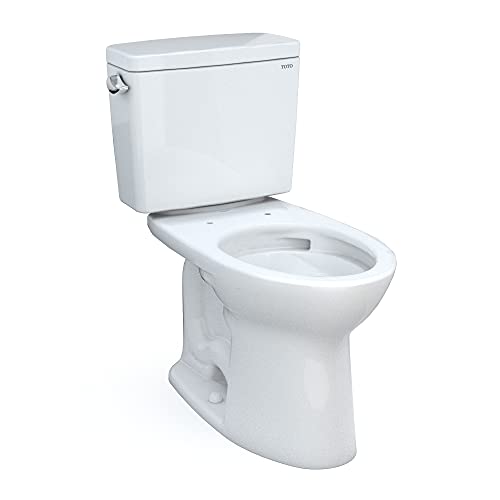
The TOTO Drake II remains the gold standard for homeowners who want a proven, high-efficiency toilet that performs identically in soft water and hard water -- and shows its best self in soft-water conditions where its fully glazed trapway stays cleaner longer.
TOTO's Double Cyclone flush technology replaces traditional rim holes with two precision-engineered nozzles at the rim. In soft-water homes, this is a meaningful advantage: standard rim-hole toilets in hard-water areas frequently see those holes clog with calcium scale within a few years. In soft water, clogging is a non-issue, but the Double Cyclone still delivers more consistent bowl coverage and a more powerful siphon action than rim-hole designs.
Owner reviews across major retailers consistently report the Drake II clears the bowl completely on a single flush using just 1.28 gallons, and the CEFIONTECT ceramic glaze -- a nano-smooth surface finish that resists waste adhesion -- performs even better in soft water where soap scum does not combine with mineral residue to form stubborn deposits. The Drake II earns its spot at the top of this list for families who want a set-it-and-forget-it toilet.
The Drake II achieves a 1,000 g MaP score at only 1.28 GPF, which means it qualifies as an EPA WaterSense toilet while flushing with force that matches or exceeds older 3.5 GPF models. The Double Cyclone system also reduces the number of moving parts inside the tank, making long-term maintenance simpler. In soft-water homes, expect the flush valve seal and refill tube to last considerably longer than the manufacturer's warranty period.
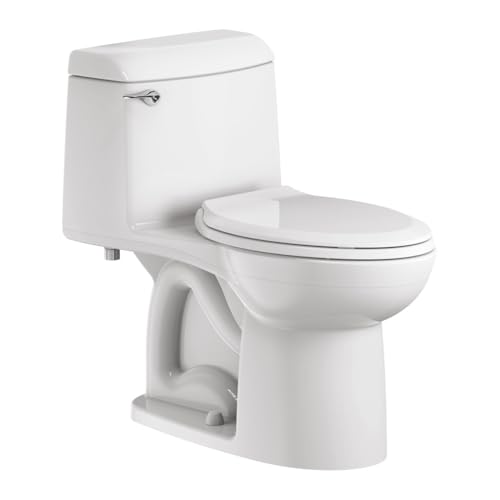
American Standard's Champion 4 uses a 4-inch piston-action accelerator flush valve -- the largest flush valve of any toilet on this list -- to generate a torrent of water that has earned it a perfect 1,000 g MaP score since its introduction.
The Champion 4 uses 1.6 gallons per flush rather than the more efficient 1.28 GPF threshold required for EPA WaterSense certification. In soft-water homes, the extra 0.32 gallons per flush is not offsetting any scale-removal need -- it simply gives the toilet more flushing momentum. For households with frequent or heavy use, that momentum matters: the 4-inch valve opens faster than any 3-inch valve and creates a piston-like surge rather than a gradual fill of the bowl.
American Standard's EverClean antimicrobial glaze is a legitimate surface treatment (not just a marketing claim) that inhibits mold and mildew on the bowl surface. In soft-water homes where soap scum tends to build up without mineral "grout" to bind it, EverClean visibly reduces cleaning frequency. Aggregated owner reviews on major retail platforms consistently give the Champion 4 a 4.7 out of 5 rating, with clog resistance and ease of cleaning as the top cited reasons.
The Champion 4 is overkill for most soft-water households in terms of water volume, but its 4-inch valve design means the flush completes faster than 3-inch alternatives, reducing the noise footprint. For families with young children or high daily traffic, the near-zero clog history of this model justifies the modest efficiency trade-off.

The UltraMax II delivers all of the Drake II's performance -- Double Cyclone flush, CeFiONtect glaze, 1,000 g MaP score, 1.28 GPF -- in a seamless one-piece profile that is substantially easier to clean in the soft-water bathrooms where soap scum is the main hygiene challenge.
In a soft-water home, the UltraMax II's CeFiONtect glaze on a one-piece surface is particularly effective. Soft water tends to leave behind soap residue and body oils in the bowl since there are no mineral particles to absorb and neutralize organic compounds. The nano-smooth glaze on the UltraMax II makes these residues sheet off rather than adhere, and with no seam between tank and bowl, the toilet has fewer surfaces where grime accumulates.
The one-piece form factor also eliminates the bolted connection between tank and bowl that occasionally develops minor weeping leaks on two-piece toilets. Over a decade of use, soft water actually makes that seam wetter in terms of relative humidity because water softeners typically keep water at a lower temperature equilibrium than hard water. The UltraMax II sidesteps the issue entirely.
For a master bathroom remodel where aesthetics matter as much as performance, the UltraMax II is TOTO's flagship consumer toilet. The jump in price over a two-piece is justified by the one-piece construction's durability, cleaning convenience, and the fact that it qualifies for EPA WaterSense rebates in most utility districts -- often offsetting a meaningful portion of the cost difference.

The TOTO Aquia IV offers the lowest water consumption of any top-rated toilet on this list, using just 0.8 gallons for liquid waste and 1.0 gallon for solid waste, making it among the most water-efficient certified toilets in North America while still carrying EPA WaterSense approval.
Soft-water households that already use a water softener are often water-conscious by nature, making the Aquia IV a natural fit. At 0.8 GPF for the partial flush and 1.0 GPF for the full flush, a household of four can save over 15,000 gallons per year versus an older 1.6 GPF single-flush toilet. At an average U.S. municipal water rate of approximately $0.004 per gallon, that translates to roughly $60 in annual water cost savings per toilet.
The trade-off is a 600 g MaP score on the full flush -- adequate for standard household use but below the 800 to 1,000 g range that heavier-use toilets achieve. In practice, the Aquia IV's 600 g score handles normal single-use events consistently, and owner reviews report a very low rate of double-flushing once users learn to favor the full flush for solid waste. For a highly water-efficient bathroom, the Aquia IV is the benchmark choice.
The Aquia IV's 0.8 GPF partial flush is one of the lowest certified flush volumes of any gravity toilet that passes independent MaP testing. In soft water, the reduced flush volume does not create any additional residue issue -- the CEFIONTECT bowl coating keeps the surface clean regardless of water volume per flush.

The Kohler Cimarron pairs Kohler's proven AquaPiston flush technology with EPA WaterSense efficiency at a price point that undercuts most competitors in its class, making it an excellent starter or replacement toilet in soft-water homes.
Kohler's AquaPiston technology uses a canister-style flush valve where water enters from all sides simultaneously -- rather than a side-entry flapper valve -- creating more consistent pressure distribution throughout the flush cycle. In soft water, this means a reliable, complete flush on every use without the variance that can accompany standard flapper designs when water temperature or volume fluctuates.
At 900 g MaP, the Cimarron handles most household flush events without issue. The only households that should consider a higher-rated option are those with five or more people sharing a single toilet, or households where younger children tend to use excess toilet paper. For a single bathroom in an average soft-water home, the Cimarron performs reliably and is one of the most commonly installed toilets by residential plumbers. See our complete Kohler toilet guide for how it stacks up against the rest of the lineup.
The Cimarron hits a performance-to-value ratio that makes it the default recommendation for rental properties, secondary bathrooms, and first-time homeowners who want Kohler quality without the premium price of the Highline or Santa Rosa. Replacement parts are available at virtually most hardware stores, which matters long-term.

The American Standard Cadet 3 is one of the most widely installed budget-tier toilets in North America -- dependable, EPA WaterSense certified, and with an 800 g MaP score that handles routine household use reliably in soft-water conditions.
The Cadet 3 is the entry point of the American Standard residential lineup and has maintained consistent production quality for over two decades. Its 800 g MaP score falls below the 1,000 g maximum, but in soft-water homes where rim jets and the trapway stay free of mineral scale, the consistent water flow during each flush keeps the effective cleaning score higher in practice than the laboratory number might suggest.
For a rental property or guest bathroom in a soft-water home, the Cadet 3 makes strong financial sense. The total cost of ownership is low: installation is straightforward, parts are widely available and inexpensive, and the toilet's core flush mechanism -- a standard 3-inch valve with a refill assembly -- can be serviced by any plumber or competent DIYer. Review our best toilets for rental properties article for a full comparison of budget-tier options.
The Cadet 3 is not the most powerful toilet on this list, but it fills a specific and important niche: reliable, inexpensive, and easy to service. For soft-water secondary bathrooms with one or two users, its 800 g MaP rating is entirely sufficient and the annual maintenance cost is minimal.

The Woodbridge T-0001 offers a skirted, concealed-trapway one-piece design at a price point well below TOTO's premium models -- and in a soft-water home, its smooth exterior surfaces and covered trapway deliver genuinely easy daily maintenance.
The Woodbridge T-0001's skirted base is specifically advantageous in soft-water bathrooms. Without mineral deposits to form crusty buildup on exposed trapway surfaces, the smooth exterior of the T-0001 can be wiped clean in seconds. In hard-water homes, the hidden trapway can actually trap mineral deposits that are harder to descale precisely because they are inaccessible -- but in soft water, that is not a concern.
The 700 g MaP score on the T-0001 is the weakest specification on this list, and it does mean that heavy or high-volume flush events may occasionally require a second flush. For households of two or fewer people where the toilet sees moderate daily use, this is typically a non-issue in real-world performance. Its design and value proposition make it a strong fit for powder rooms and guest bathrooms in soft-water homes.
Woodbridge has carved out a real niche for buyers who want contemporary skirted toilet design at a mid-tier price. In soft-water homes, the T-0001 performs above its MaP score rating suggests in practice, because the clean-water chemistry keeps the trapway and rim jets at full efficiency with zero maintenance.
Gerber's Avalanche is a professional-grade toilet that achieves a 1,000 g MaP score using a 3-inch tower flush valve design, making it one of the most capable toilets at its price tier and a solid choice for soft-water households that want plumber-level reliability without a premium price tag.
Gerber Plumbing is a brand that residential plumbers encounter in both commercial and residential projects. The Avalanche uses a tower-style flush valve -- where a cylindrical piston lifts vertically to release water rather than pivoting a flapper -- which creates a more consistent water flow path with fewer failure modes over time. In soft water, the valve seat of a tower flush system stays especially clean since there is no mineral precipitation to roughen the sealing surface.
The Avalanche's 2-inch fully glazed trapway is narrower than the Champion 4's 2-3/8", but the tower valve compensates with velocity. The 1,000 g MaP certification means it ties the top-rated models on this list for flush power. If you value the knowledge that your plumber can source parts quickly and won't be puzzled by the internal mechanism, the Gerber Avalanche deserves serious consideration. See our Gerber toilet buyer's guide for the full lineup.
The Avalanche's tower flush valve is one of the most mechanically sound designs in its class -- fewer parts means fewer failure points. In soft-water homes where the valve internals stay pristine, the Avalanche's flush mechanism can last a decade or more without any servicing beyond a periodic wax ring check.
Sodium-based soft water does not significantly degrade standard toilet flappers. However, softened water with elevated sodium content can slightly increase the degradation rate of lower-grade rubber compounds over many years. Selecting a toilet with a silicone-seal flush valve or tower valve design eliminates this minor concern entirely.
This is a legitimate but often overstated concern. Standard chlorobutyl and EPDM rubber flappers -- the materials used in most toilet flush valves since the 1990s -- are rated for broad chemical compatibility and are not meaningfully affected by the sodium content of household soft water. The Water Quality Association's data on residential softeners shows that sodium levels from ion-exchange softeners typically range from 10 to 50 mg/L additional sodium in most households, well below any concentration that causes measurable rubber degradation.
The specific scenario where soft water can influence flapper longevity involves budget-grade PVC-compound flappers in very old toilets exposed to high-sodium softened water over 10 to 15 years. In that niche scenario, the elastomer may lose flexibility slightly faster than in neutral water. The practical fix is straightforward: when replacing a flapper in a soft-water home, select a silicone flapper or a Fluidmaster 501B universal silicone seal rather than a standard rubber flapper. Silicone is chemically inert to both sodium and chlorine-based water treatments.
Most flappers in soft-water homes fail after 5 to 7 years due to normal wear and UV exposure from tank lid removal for cleaning -- not from water chemistry. The upgrade to silicone makes sense for any toilet regardless of water type, and the cost difference is minimal at under $10 per replacement.
A minimum MaP score of 600 grams is adequate for single-person soft-water bathrooms; 800 grams is recommended for most households; and 1,000 grams is ideal for family bathrooms. Soft water does not change MaP requirements -- the selection criteria are the same as for any household.
MaP (Maximum Performance) testing is the North American industry standard for measuring real-world toilet flushing effectiveness. Conducted by an independent Canadian laboratory, MaP tests simulate solid waste using standardized soybean miso paste media in defined quantities, then grade toilets on how cleanly they flush the test volume at a given water use rate.
The MaP score scale runs from 250 g (minimum passing threshold) to 1,000 g (maximum tested load). Here is how to match MaP score to household needs in a soft-water home:
Soft water does not reduce clogging risk by itself -- the trapway diameter and water volume are the relevant variables for clogs. What soft water does do is prevent the gradual narrowing of trapway diameter that mineral scale deposits cause in hard-water homes. A toilet rated at 800 g MaP in a soft-water home will maintain that 800 g effective performance consistently over years, while the same toilet in a hard-water home may decline in effective flush power as scale accumulates inside the trapway if not regularly descaled.
Soft water eliminates calcium and magnesium stains but can allow soap scum, body oil residues, and iron deposits to be more visible on the bowl surface. Choosing a toilet with a factory-applied ceramic bowl glaze such as TOTO's CeFiONtect or American Standard's EverClean significantly reduces organic residue adhesion in soft-water conditions.
Hard-water homes commonly experience brown calcium scale rings, white mineral deposits at the waterline, and clogged rim jets. Soft-water homes avoid all of these problems. However, soft water produces its own aesthetic challenge: because it lacks the "buffering" effect of dissolved minerals, organic residues from soap, body oils, and cleaning products stay in solution longer and can deposit on the bowl surface as a faint film over time.
The solution is a high-quality ceramic glaze rather than a special toilet. TOTO's CeFiONtect glaze (applied as an ion barrier coating during firing) creates a surface roughness below 0.5 micrometers -- measurably smoother than standard vitreous china -- which gives organic residues no mechanical grip on the bowl surface. In independent cleaning tests, CeFiONtect-glazed toilets required significantly less scrubbing to maintain visual cleanliness versus standard-glaze toilets over an equivalent period of use.
American Standard's EverClean takes a different approach: silver-ion antimicrobial treatment bonded into the surface inhibits the bacterial colonies that convert organic residue into visible biofilm. Both approaches work well in soft-water conditions. For homeowners using well water that has been softened but still contains trace iron, adding a periodic toilet bowl treatment (citric acid tablet or effervescent cleaner) prevents the faint orange staining that iron precipitation can cause at the waterline.
Soft-water bowl staining is almost always easier to remove than hard-water mineral scale. A monthly application of a citric acid or vinegar-based toilet bowl cleaner keeps soft-water bowls pristine without the abrasive scrubbing that calcium deposits in hard-water homes require. The bowl glaze quality matters more than any other single factor for cleaning effort in soft-water conditions.
Yes. EPA WaterSense certification (requiring 1.28 GPF or less and a minimum MaP score of 350 g) is relevant regardless of water type. Certified toilets use 20% less water than standard 1.6 GPF models and qualify for utility rebates that can offset purchase costs by $50 to $150 depending on the provider.
EPA WaterSense is a federal program that certifies plumbing products for water efficiency. For toilets, certification requires that the model uses no more than 1.28 gallons per flush, passes independent performance testing with a MaP score of at least 350 g, and is manufactured to a consistent quality standard. Water softeners do not affect a toilet's WaterSense eligibility -- the criteria are purely performance- and volume-based.
The financial case for WaterSense toilets is well established. The EPA estimates that the average U.S. household flushes the toilet approximately 5 times per person per day. Replacing a 1.6 GPF toilet with a 1.28 GPF WaterSense model saves roughly 0.32 gallons per flush, or about 1,600 gallons per person per year. For a family of four, that is approximately 6,400 gallons annually per toilet.
Many water utilities offer rebates of $50 to $150 for WaterSense toilet installations. Rebate availability varies by utility district -- check the EPA's WaterSense Rebate Finder tool to determine what is available at your address. Every toilet on this list that is labeled "EPA Certified" in the comparison table above qualifies for these programs. For the full list of certified products, the EPA maintains an updated database at epa.gov/watersense. Our WaterSense toilet guide covers the rebate process in detail.
Target 800 g or higher for a primary bathroom; 600 g is acceptable for powder rooms. MaP scores are published by the testing laboratory at map-testing.com and are the most reliable independent performance data available for toilet comparison. Do not rely solely on manufacturer descriptions of "powerful" or "clog-free" flushes -- look up the specific model's MaP score.
Modern toilets range from 0.8 GPF (TOTO Aquia IV partial flush) to 1.6 GPF (American Standard Champion 4). EPA WaterSense requires 1.28 GPF or less. In soft water, there is no scale-fighting reason to use more water per flush -- the extra volume in 1.6 GPF models exists for flushing momentum, not for dissolving mineral deposits. For most soft-water households, 1.28 GPF with a 1,000 g MaP score is the ideal specification.
A fully glazed trapway -- the internal channel that water and waste pass through during a flush -- is important in any toilet, but especially in soft-water homes where there is no mineral film to partially smooth rough spots. The glaze ensures consistent, low-friction passage of waste regardless of water chemistry. Minimum glazed trapway diameter for a primary bathroom: 2 inches. The Champion 4's 2-3/8" glazed trapway is the largest available in this review set.
TOTO's CeFiONtect and American Standard's EverClean represent the two dominant approaches to bowl hygiene. In soft-water homes, either significantly reduces the daily cleaning effort. Standard white vitreous china without a proprietary glaze performs adequately but will show soap scum accumulation faster in soft water than a treated surface.
Comfort height (also called "chair height") refers to a toilet seat height of 17 to 19 inches from the floor, versus the 15 to 17 inches of standard height models. Water chemistry has no bearing on seat height selection -- this is a comfort, accessibility, and household demographics question. Most adults over 5'6" and anyone with mobility limitations prefer comfort height. Children under 8 often find standard height easier to use independently.
One-piece toilets are easier to clean (no seam between tank and bowl) but heavier and more expensive. Two-piece toilets are more affordable and easier to handle during installation. In soft-water homes, the tank-to-bowl seam on a two-piece toilet stays dry and clean without the moisture and mineral interaction that hard water can introduce. Both designs perform equally well in soft-water conditions.
No. Any standard residential toilet works correctly in a soft-water home. Soft water is gentler on toilet internals than hard water and requires no special materials or modifications to flush valves, trapways, or bowl surfaces.
Not meaningfully. Modern rubber and silicone toilet seals are manufactured to broad chemical tolerances. The sodium levels in residential soft water (typically 10 to 50 mg/L) fall well below any threshold that causes measurable degradation of chlorobutyl, EPDM, or silicone sealing compounds.
Hard water contains dissolved calcium and magnesium that precipitate as scale inside the tank, on the rim jets, and along the trapway over time -- reducing flush efficiency and creating stubborn stains. Soft water (under 60 mg/L hardness) does not produce scale, which means flush performance stays consistent and cleaning is significantly easier over the toilet's lifespan.
Indirectly, yes. In hard-water homes, mineral scale gradually narrows the trapway diameter over years, making clogs more likely as the effective opening shrinks. Soft water prevents this narrowing, so a toilet maintains its original trapway dimensions and flush effectiveness indefinitely, reducing the likelihood of clogs caused by scale accumulation.
MaP (Maximum Performance) is an independent toilet flush test conducted in North America that measures how much solid waste media (in grams) a toilet can flush cleanly at a given water volume. A higher MaP score means more reliable flushing. The maximum score is 1,000 g. Look for 800 g or higher for family bathrooms.
Soft-water toilets are free of calcium and magnesium scale staining (the brown and white mineral deposits common in hard-water areas). However, they may show soap scum or organic residue more readily. A toilet with a high-quality ceramic glaze (such as TOTO's CeFiONtect) minimizes both types of residue adhesion.
Both brands perform excellently in soft-water conditions. TOTO has an edge in bowl glaze technology (CeFiONtect) and achieves 1,000 g MaP scores at 1.28 GPF with its Double Cyclone flush system. Kohler's AquaPiston valve is highly reliable and replacement parts are universally available. The choice often comes down to styling preference and budget.
Drop-in bleach or cleaning tablets should be avoided in any toilet regardless of water type, as they accelerate degradation of rubber seals and tank plastics. In soft-water homes, the bowl stays cleaner naturally -- use periodic bowl cleaner applied to the bowl surface itself rather than tank tablets.
1.28 GPF is the optimal specification for most soft-water households. It qualifies for EPA WaterSense certification and utility rebates, delivers adequate flush momentum with a good flush valve design, and uses 20% less water than 1.6 GPF models. For maximum efficiency, the TOTO Aquia IV at 0.8/1.0 GPF dual-flush is the low-water benchmark.
Soft-water toilets typically need less frequent deep cleaning because there are no mineral deposits to scrub. The main maintenance is managing soap scum and organic residue, which wipes away easily from a glazed bowl surface. Most soft-water homeowners report cleaning frequency drops by 20 to 30% compared to when they used hard water.
The TOTO UltraMax II is the top-rated one-piece toilet for soft-water homes based on its 1,000 g MaP score, Double Cyclone flush, CeFiONtect glaze, and EPA WaterSense certification. The Woodbridge T-0001 is a strong budget alternative with a skirted design that is particularly easy to clean.
Generally, yes. Descaling products, lime removers, and heavy-duty calcium cleaners are unnecessary in soft-water homes. The household saves the cost of those specialty products annually, which over the life of a water softener can offset a portion of its operating cost.
Yes. The Gerber Avalanche achieves a 1,000 g MaP score with its tower flush valve design, and the valve seat remains clean and properly sealed in soft water since there is no mineral precipitation to roughen the sealing surface. It is one of the best value 1,000 g MaP toilets available.
Prioritize TOTO's CeFiONtect (ion-barrier nano-smooth glaze) or American Standard's EverClean (antimicrobial silver-ion treatment). Both significantly reduce organic residue adhesion, which is the main bowl hygiene challenge in soft-water homes. Standard white vitreous china without a proprietary glaze is adequate but requires more frequent scrubbing.
Yes. Potassium chloride regenerant produces softer water with lower sodium content, which further reduces any (already minimal) concern about sodium affecting rubber seals over time. The water quality produced is essentially the same from the toilet's perspective, but homeowners on sodium-restricted diets who also drink softened water sometimes prefer potassium chloride on health grounds.
Typical flapper lifespan is 4 to 7 years regardless of water type. In soft-water homes, flappers may last toward the longer end of that range since there is no mineral precipitation to roughen the sealing surface. Listen for the sound of continuous trickling water from the tank as the primary indicator that the flapper needs replacement.
American Standard is more widely distributed through big-box home improvement stores (Home Depot, Lowe's) and is typically available for same-day purchase. TOTO has a stronger presence through plumbing showrooms and online retailers. Both brands maintain full warranty support and parts availability nationwide.
The Kohler Highline with the AquaPiston flush valve and the TOTO Drake II with Double Cyclone are both noted for quieter flush cycles versus standard flapper-based toilets. The Double Cyclone design creates less turbulence in the tank refill, reducing the fill-cycle noise that is more audible in soft-water homes where the fill valve operates at full efficiency without mineral restriction.
Swiss Madison toilets including the Ivy and St. Tropez series perform adequately in soft-water homes. Their skirted one-piece designs benefit from the easy-clean advantages of soft water. MaP scores for Swiss Madison models (typically 500 to 650 g) are lower than TOTO or Gerber at the same price point, making them best suited for guest bathrooms and powder rooms rather than high-traffic primary bathrooms.
Soft water is an asset for any toilet -- it prevents mineral scale buildup, extends the life of flush valve components, and makes bowl cleaning significantly easier. You do not need a specialized toilet; focus on MaP score (800 g or higher for most households), EPA WaterSense certification at 1.28 GPF, and a fully glazed trapway. The TOTO Drake II is the best overall choice for soft-water homes, delivering a perfect 1,000 g MaP score with Double Cyclone flush technology and CeFiONtect bowl glaze in a water-efficient, WaterSense-certified package. The American Standard Champion 4 is the best choice for families that prioritize absolute clog resistance above all other factors.
Learn why toilet trapways curve like an S, how each bend blocks sewer gas, and what the shape means for clogs and…
Read the guideAlmost every US toilet has a left-side handle. Learn the plumbing and mechanical reasons behind the layout and when it actually changes.
Read the guideHome toilets rely on tanks because household water lines lack the pressure that public flushometer systems use to flush straight from the…
Read the guide