Common Shower Problems and How to Fix Them (2026)
Showers4.6
Step-by-step fixes for the shower problems homeowners run into most often, from weak water pressure and temperature swings to leaking valves, slow…
Read the guideA practical framework for deciding between a shower head, a full shower system, and an enclosure upgrade, plus how to match flow rate, pressure, and configuration to your actual plumbing before you buy anything.
Start by testing your home's static water pressure and confirming whether you are replacing just the shower head or the whole valve and enclosure. A pressure gauge at a hose bib takes 30 seconds and determines whether a rainfall or multi-function system will even work. From there, match GPM to your water heater capacity and choose the simplest configuration that covers how your household actually showers.
Shopping for a shower upgrade gets complicated fast because the term covers everything from a five-minute shower head swap to a full valve, panel, and enclosure renovation. Before comparing brands or flow rates, it helps to work through a short sequence of questions: what are you actually replacing, what is your real water pressure, and what does your household need day to day versus what looks appealing in a showroom. This guide walks through that sequence so you land on the right category before spending money on the wrong one.
This guide sits alongside our coverage of bathroom water efficiency. If you are also evaluating toilet performance, see our best flushing toilets roundup for the same research-driven approach applied to toilet MaP scores and GPF ratings.
Most shower upgrades fall into one of three scopes: a simple head swap on an existing arm, a handheld or dual-function conversion using the same valve, or a full system replacement involving a new valve, panel, or enclosure. The scope you need determines both the cost and the skill level required, so identify this first rather than starting with product features.
If your existing shower arm and valve work fine and you simply want better pressure, a water-saving upgrade, or a different spray pattern, you only need a new head. This is a five to ten minute DIY task requiring no plumbing changes, no permit, and no water shutoff for most installs.
If you want the flexibility of a handheld unit in addition to or instead of a fixed head, you are looking at either a combo head that integrates both in one fixture, or a separate handheld on a slide bar with its own hose. Both still thread onto the existing shower arm and do not require valve replacement, though a slide bar needs secure wall anchoring.
A rainfall head on a ceiling mount, a multi-function panel with body jets, or a new shower valve entirely are plumbing projects, not head swaps. These require opening the wall for supply access, in some cases a ceiling outlet box, and typically a licensed plumber. This scope is only worth pursuing during a broader bathroom renovation, not as a standalone weekend project.
Before buying a rainfall or multi-jet system, check your home's static water pressure with an inexpensive gauge at a hose bib. Published specs below 45 PSI will result in a weak, unsatisfying experience regardless of what the product page claims. Most city water supplies run between 45 and 80 PSI, but older homes with corroded supply pipes often see 30 to 35 PSI at the fixture, which rules out a full system upgrade until that is addressed.
Static water pressure below 45 PSI will make a rainfall head or multi-function panel feel weak regardless of brand or price, since these designs depend on adequate supply pressure to spread water evenly across a wide face or multiple jets. A basic pressure gauge threaded onto an outdoor hose bib gives an accurate reading in under a minute and should be checked before shopping for anything beyond a standard fixed head.
Most municipal water supplies deliver 45 to 80 PSI at the fixture. Readings below 40 PSI indicate either a partially closed supply valve, corroded older piping, or a naturally low-pressure well system, any of which will undermine a wide-face rainfall or multi-jet system's performance. A standard fixed or handheld head with a well-engineered nozzle, such as Delta's H2Okinetic pattern, can still perform acceptably at lower pressure because it concentrates flow through smaller orifices rather than spreading it wide.
If your reading comes back under 40 PSI, first confirm the main shutoff valve and any in-line valves are fully open, since a partially closed valve is a common and free fix. If pressure is still low after that check, a pressure-concentrating head designed for low-pressure homes, rather than a wide rainfall style, is the more realistic choice until any underlying plumbing issue is addressed by a professional.
| Static Pressure | What Works Well | What to Avoid |
|---|---|---|
| Below 35 PSI | Pressure-concentrating fixed or handheld head | Rainfall, multi-function panels |
| 35 to 44 PSI | Standard fixed or handheld heads | Wide rainfall heads (underwhelming below 45 PSI) |
| 45 to 80 PSI | Any head type, including rainfall and dual systems | Not applicable, this is the target range |
| Above 80 PSI | Any head type, consider a pressure-reducing valve | None, though very high pressure can shorten fixture life |
EPA WaterSense-certified shower heads use 2.0 GPM or less at 80 PSI, and most efficient models are rated between 1.5 and 1.8 GPM. Choose the lowest flow rate that still feels satisfying to your household, and check whether your state mandates a specific maximum, since California, Colorado, and New York all cap new installations below the federal 2.5 GPM limit.
Modern low-flow nozzle engineering achieves a satisfying feel by increasing water velocity through smaller orifices rather than relying on sheer volume. Delta's H2Okinetic technology, for example, uses irregularly spaced nozzles to create larger, slower-moving droplets that feel more forceful than a conventional stream at the same GPM. If your only goal is water savings, a well-engineered 1.8 GPM head will outperform a poorly designed 2.5 GPM head in perceived pressure.
A higher-GPM system, especially a dual head running fixed and handheld simultaneously, draws more hot water per minute than your water heater's recovery rate may support, particularly in a tank-style system feeding multiple bathrooms. If you are moving to a higher-flow rainfall or multi-jet system, factor in whether your water heater can keep pace, or budget for a tankless upgrade alongside the shower project.
California Title 20 limits new shower heads to 1.8 GPM. Colorado limits to 2.0 GPM. New York City mandates 2.0 GPM. All other states allow up to the federal 2.5 GPM maximum, though EPA WaterSense-certified products cap at 2.0 GPM regardless of state. Confirm the rated GPM on the product label before purchase if you are in a regulated state.
If you remove the flow restrictor from a WaterSense-certified shower head to get more pressure, you void any water-efficiency claims and may violate local code. A better approach is to check whether your supply pressure is adequate first. Many weak-shower complaints are actually pressure problems at the supply valve or a corroded shower arm, not a head problem that a restrictor removal would fix anyway.
A fixed wall-mount head suits a household that showers standing in one position. A handheld or dual system suits households with young children, pets that need bathing, or anyone who prefers a targeted rinse. A rainfall head suits a household prioritizing a spa-like experience over pressure-focused rinsing, and only performs well with adequate supply pressure and a properly positioned arm.
Fixed heads are the simplest, least expensive, and easiest to install option, screwing directly onto the existing shower arm. They suit any household without a specific secondary need like child bathing or a rainfall preference, and are the right default when in doubt.
A handheld unit on a hose can be lifted from its dock for targeted rinsing, making it the practical choice for bathing children or pets, or for anyone with mobility considerations who benefits from directing water without repositioning their whole body. Look for a braided stainless hose over vinyl, since vinyl hoses commonly kink or crack within a year of regular use.
Combo heads that integrate a removable handheld into the face of a fixed head, such as Delta's In2ition design, let you use either or both simultaneously without reaching for a separate diverter valve. This suits a household that wants handheld flexibility without giving up the option of standing under a fixed overhead spray.
Rainfall heads deliver a wide, gentle, immersive spray that a conventional head cannot replicate, but only at adequate supply pressure, generally 45 PSI or higher, and only when positioned on an extended arm that puts the head above your shoulders rather than behind you at a standard arm's angle. Confirm both conditions before choosing this type, since it is the configuration most likely to disappoint if either is missed.
The In2ition-style combo head is one of the few designs where using both fixed and handheld simultaneously does not require a pressure sacrifice through a diverter. For households torn between a fixed head and a handheld, this removes the need to choose one over the other.
In hard water areas, silicone nozzles resist mineral scale far better than fixed plastic nozzles and can be cleaned with a simple thumb-wipe rather than a vinegar soak. Chrome is the most durable and easiest finish to maintain across water conditions, while matte black and oil-rubbed bronze show water spots more visibly and require more frequent wiping in daily-use showers.
Silicone nozzles, standard on mid-range and above heads from Delta and Moen, flex slightly under pressure, which inhibits calcium carbonate buildup and lets you clear scale with a finger swipe. Fixed plastic nozzles on entry-level heads require a vinegar soak to clear buildup, which becomes a monthly task rather than an annual one in hard water areas above roughly 150 mg/L total dissolved solids.
Chrome is the industry-standard baseline, resisting water spots and corrosion well while remaining the easiest and least expensive to match across brands. Brushed nickel hides water spots and fingerprints better than polished chrome, which matters more in a high-traffic daily-use shower. Matte black delivers strong visual impact but shows spots more than any lighter finish, so factor in more frequent wiping if you choose it for a heavily used bathroom.
Living finishes like oil-rubbed bronze are explicitly excluded from fade and wear warranty coverage by most manufacturers, since the patina developing over time is considered part of the design rather than a defect. Read the finish warranty separately from the functional warranty before buying, particularly for a premium finish.
The most common shower buying mistakes are choosing a rainfall head without checking supply pressure first, buying a wide-face head expecting kitchen-sink-style water pressure at every nozzle, skipping the PTFE tape during installation, and assuming a handheld hose is included when some configurations sell it separately.
This is the single most common regret in aggregated owner reviews for rainfall heads. A gauge costs little and takes thirty seconds to read, and skipping that step is the fastest way to end up disappointed with an otherwise well-reviewed product.
A wider spray disc spreads the same total water volume across more nozzles, which can mean weaker pressure at each individual nozzle, especially toward the edges, if supply pressure is not high enough to fill the whole disc uniformly. Bigger is not automatically better without the pressure to support it.
The most common installation mistake is skipping plumber's tape at the arm connection, which causes a slow drip that can go unnoticed behind a curtain and cause water damage over time. Two to three wraps of PTFE tape, applied clockwise, prevents this.
Some handheld and combo configurations sell the hose separately from the head, which is an easy detail to miss when comparing prices. Check the listed package contents before assuming everything needed for installation is included.
Brand matters less for the spray head itself and more for the cartridge and valve components if you are replacing a full shower system. For a simple shower head swap onto an existing arm, any major brand will outlast its warranty period with normal use. The finish warranty is where cheaper brands typically fail first, since chrome over zinc alloy pits faster than chrome over solid brass.
Replacing a standard shower head on an existing arm is a 5 to 10 minute DIY task. Unscrew the old head counterclockwise, clean the arm threads, wrap 2 to 3 layers of PTFE tape clockwise, and hand-tighten the new head followed by one-half turn with a wrench. Avoid overtightening, which can crack the connection nut. Turn water on and check for drips at the connection.
You need PTFE thread-seal tape, an adjustable wrench or channel-lock pliers, and a cloth to protect the finish from the wrench jaws. If you are installing a ceiling mount for the first time, that scope expands to include a ceiling outlet box, supply pipe, and potentially drywall patching, which typically calls for a plumber.
Any project involving a new valve, relocating supply lines, or a ceiling-mount rainfall installation without existing plumbing access should go to a licensed plumber. A simple head swap or slide-bar handheld conversion onto an existing arm is within reach of most DIYers.
For additional guidance on adjacent bathroom fixtures, see our bathroom faucet buying guide and bathroom plumbing rough-in guide for measurement and clearance references.
Delta, Moen, Kohler, and Hansgrohe consistently lead in build quality and warranty support. Delta and Moen offer lifetime limited warranties on most residential models. Hansgrohe and its premium line Axor are German-engineered with strong durability records but at a higher price. Budget brands like Waterpik and AquaDance perform adequately at lower price points but with shorter warranties and more plastic internals.
Delta's H2Okinetic spray technology differentiates its line at the mid-market level, and its In2ition combo models are among the best-reviewed dual-function units in their price range. Delta backs most residential shower heads with a lifetime limited warranty covering function and finish.
Moen's Engage Magnetix series uses magnetic docking for handheld heads, eliminating the alignment frustration of a traditional slide bar. This is a genuinely useful detail for one-handed docking, particularly for elderly users or anyone holding a child while showering.
Kohler's lineup spans from the entry-level Forte through the premium Statement Oval series. For a straightforward, reliable replacement with strong parts availability, the mid-range Forte line is a dependable choice without chasing spray-technology innovation.
Hansgrohe holds numerous patents in spray technology, including AirPower, which mixes air into the water stream for a softer feel. Its Raindance series is among the most-cited rainfall heads in professional plumbing forums, but it requires adequate supply pressure to perform as intended.
Speakman's Anystream technology concentrates flow through adjustable internal chambers, making it a strong choice specifically for low-pressure homes where other brands underperform. It is frequently the brand professional plumbers recommend when a full valve replacement is not in the budget.
If your existing arm and valve work correctly and you just want better pressure, water savings, or a different spray pattern, a head swap is sufficient. If you want a rainfall or multi-jet configuration requiring a different arm position or additional valves, that is a plumbing project requiring wall access.
Most manufacturers recommend a minimum of 45 PSI static supply pressure for satisfactory rainfall performance. Below that threshold, rainfall heads often produce a weak, uneven spray regardless of brand or price.
1.8 GPM is the recommended target for most households. It meets EPA WaterSense requirements, complies with current state flow rate mandates including California's 1.8 GPM limit, and with modern nozzle engineering still provides satisfying pressure.
Yes. Replace the head with a model engineered for pressure concentration, confirm the supply valve behind the wall is fully open, or check for corrosion in an older shower arm. Low pressure is often a supply-side issue rather than a head problem.
A handheld or combo unit is generally better for households bathing young children or pets, since it allows targeted rinsing without repositioning the child. A dual system that includes both a fixed head and a handheld gives the most flexibility.
Most manufacturer warranties do not explicitly void for flow restrictor removal, but doing so to exceed the rated GPM in a state with flow regulations may violate local plumbing code, and it removes any WaterSense certification claim.
All standard U.S. residential shower heads and arms use 1/2-inch NPT male thread on the arm and female thread on the head connection, a universal standard that means any U.S.-market head fits any U.S.-market arm without adapters.
This depends on your water hardness and nozzle material. Silicone nozzles in moderately hard water need only a quarterly finger-wipe, while plastic nozzles in hard water may need a vinegar soak every two to three weeks to maintain full flow.
Standard shower arms position the head at roughly shoulder height, which is too low for a rainfall head to spray effectively over your head. Most rainfall installations need an S-curve or ceiling-drop extension arm to position the head correctly.
Smart features occupy a niche segment, and aggregated owner feedback suggests the electronic components often have shorter lifespans than the mechanical spray function itself. Evaluate the price premium against expected feature longevity before choosing this over a conventional head.
The shower head is the spray-delivery device at the end of the arm. The shower faucet, or valve, is the control mechanism inside the wall that mixes hot and cold water. These are separate components replaced independently, and a new head does not affect valve function or vice versa.
A quality head from a major brand should last 10 to 20 years with normal use. Entry-level plastic-body units typically last 3 to 7 years before nozzle clogging, finish wear, or connection failure becomes a problem.
Work through scope, pressure, flow rate, and configuration in that order and the right shower type becomes obvious before you compare a single brand. Test your static pressure first, since it rules out entire categories on its own. For most households, a fixed or handheld head from Delta, Moen, Kohler, or Hansgrohe at 1.8 GPM covers daily needs without requiring plumbing work, while a rainfall or full system upgrade is worth pursuing only once adequate pressure and a broader remodel budget are both confirmed.
Step-by-step fixes for the shower problems homeowners run into most often, from weak water pressure and temperature swings to leaking valves, slow…
Read the guide
A water-saving showerhead has to solve the same problem a water-saving faucet does, cutting flow without leaving the spray feeling thin, since…
Read the guide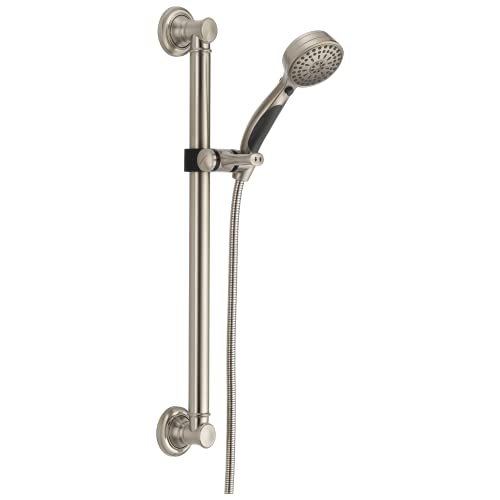
An accessible shower is judged on different terms than a standard one: fall risk, one-hand operation, scald protection, and compatibility with grab…
Read the guide