
Best Water-Saving Showers (2026)
Showers4.6
A water-saving showerhead has to solve the same problem a water-saving faucet does, cutting flow without leaving the spray feeling thin, since…
Read the guideStep-by-step fixes for the shower problems homeowners run into most often, from weak water pressure and temperature swings to leaking valves, slow drains, and moldy caulk, so you know what you can handle yourself and when to call a plumber.
Most shower problems fall into five categories: low water pressure, inconsistent temperature, valve or showerhead leaks, slow or clogged drains, and mold or mildew around caulk and grout. Weak pressure is usually a clogged showerhead or a partially closed shut-off valve, temperature swings usually point to a worn cartridge inside the shower valve, and most drain and caulk issues are straightforward DIY jobs. Anything involving the shower valve body itself, cutting into a wall, or the water heater is where hiring a licensed plumber becomes the safer call.
A shower gets used every single day, often more than once per household member, which means small problems compound quickly into daily annoyances. Weak pressure turns a five-minute rinse into a ten-minute chore. A valve that swings from scalding to freezing makes every shower an event you brace for. This guide walks through the shower problems reported most often, explains what is actually happening behind the tile, and gives a clear repair path for each one so you know what is a simple fix and what calls for a professional.
The most common shower problems are low water pressure, temperature swings during use, a leaking showerhead or valve, a slow-draining shower floor, and mold or mildew developing along caulk lines and grout. Pressure and temperature issues are usually caused by mineral buildup or a worn valve cartridge, while drain and mold issues are typically maintenance problems that get worse the longer they are ignored.
Before diagnosing anything further, it helps to separate problems that are isolated to the showerhead from problems that involve the valve inside the wall. A showerhead issue is almost always something you can fix yourself in under an hour with basic tools. A valve issue, especially one involving temperature regulation or a leak from inside the wall cavity, often calls for opening the wall or bringing in a plumber, since these parts are rated for pressure and temperature safety and installed to code.
The single most under-diagnosed shower problem is a partially closed shut-off valve, either at the shower itself on some installations or at the main water line feeding that bathroom. Before assuming a showerhead or valve cartridge has failed, confirm every accessible shut-off is fully open. This costs nothing and rules out the simplest possible cause first.
Low shower water pressure is most often caused by mineral deposits clogging the small holes in the showerhead, a partially closed shut-off valve, or a flow restrictor that has become blocked with sediment. In homes with hard water, calcium and lime buildup inside the showerhead is by far the most common cause and is also the easiest to fix without any tools.
Step-by-step fix for low shower pressure:
For a full walkthrough of pressure fixes and the tools that help, see our guide to how to increase shower water pressure and our dedicated shower pressure fix guide.
| Symptom | Likely Cause | DIY Fix | Difficulty |
|---|---|---|---|
| Weak spray, uneven pattern | Mineral buildup in showerhead | Soak in vinegar solution | Easy |
| Low pressure only on hot side | Sediment in hot water line or valve | Clean or replace cartridge | Moderate |
| Pressure dropped suddenly, whole house | Main shut-off partially closed or pressure regulator failing | Check main valve; call plumber if regulator suspected | Professional |
| Pressure fine at sink, weak at shower only | Clogged flow restrictor or showerhead | Clean or replace showerhead | Easy |
Shower temperature swings, including sudden hot or cold spikes when a toilet flushes or another fixture runs, are usually caused by a worn or failing pressure-balancing or thermostatic cartridge inside the shower valve. These cartridges are designed to compensate for pressure changes elsewhere in the house, and once the internal seals wear out, they stop regulating temperature correctly.
Modern shower valves fall into two categories: pressure-balancing valves, which react to changes in water pressure, and thermostatic valves, which react to actual water temperature using a wax or metal element that expands and contracts. Both use a cartridge that wears out over years of use, typically every 8 to 15 years depending on water quality and usage.
Diagnosing and fixing temperature swings:
Replacing a shower valve cartridge is one of the more approachable in-wall plumbing repairs for a confident DIYer, because most valve bodies are designed so the cartridge pulls straight out after removing the handle and trim, without needing to cut into the wall. The part that trips people up is water shutoff. If there is no dedicated stop valve behind the access panel, you may need to shut off water to the whole house, which is a good moment to weigh whether a plumber's visit is worth the convenience.
A leaking showerhead is usually caused by a worn washer or deteriorated plumber's tape at the connection to the shower arm, while a leak from the valve handle or the wall behind the tile points to a worn cartridge O-ring or, in more serious cases, a cracked valve body or failed connection inside the wall.
Fixing a leaking showerhead:
Diagnosing a leak from the valve or wall:
If you notice water pooling at the base of the shower or tub enclosure itself rather than from the fixture, see our guide to diagnosing leaks at a fixture base for the general troubleshooting logic that applies across bathroom fixtures.
A slow or clogged shower drain is almost always caused by a buildup of hair, soap scum, and skin cells forming a mass inside the drain pipe or trapped in the stopper mechanism. This buildup narrows the pipe gradually, so drainage slows down over weeks rather than failing all at once, which is why many people do not notice until the clog is significant.
Clearing a slow shower drain:
The mechanics of a shower drain clog are similar to what shows up in a bathroom sink; see our guide to fixing a bathroom sink drain clog for the same tools used on a smaller drain.
| Drain Symptom | Likely Cause | First Fix to Try |
|---|---|---|
| Water drains slowly, pools around feet | Hair and soap scum near the drain opening | Remove stopper, pull out hair with a hook tool |
| Water backs up, drains only after standing awhile | Clog further down the pipe | Drain snake through the opening |
| Gurgling sound when draining | Partial blockage or venting issue | Snake the drain; call a plumber if gurgling persists |
| Bad smell from drain | Trapped organic buildup or dry P-trap | Clean drain; run water regularly if unused |
Mold and mildew grow on shower caulk and grout because both surfaces stay damp between uses and provide a porous surface for spores to take hold, especially in bathrooms without adequate ventilation. Once mold penetrates the surface of caulk rather than sitting on top of it, cleaning products can lighten the appearance but often cannot fully remove it, which means replacement is the more reliable long-term fix.
Addressing shower mold and mildew:
For the full re-caulking process with drying times and product notes, see our guide to shower caulk replacement and our dedicated breakdown on mold in the shower.
Fresh caulk needs a full 24 hours of cure time without any water contact before the shower is used again, and most manufacturers recommend waiting even longer for a full cure in a humid bathroom. Rushing this step is the most common reason a re-caulking job fails within weeks, since water exposure before the caulk fully sets prevents proper adhesion.
A shower that squeals, hums, or bangs during use is typically caused by a partially closed valve creating turbulence, a worn valve cartridge, or loose pipe straps allowing pipes to vibrate against framing. A single bang when the water shuts off, known as water hammer, is caused by a pressure shockwave and is usually fixed with a water hammer arrestor.
Diagnosing shower noise:
Call a licensed plumber for any repair that requires opening a wall to access plumbing, any leak whose source cannot be identified from outside the wall, valve replacement in a shower with unknown or older piping, and any job where you cannot locate or confirm a reliable water shut-off. Showerhead cleaning, caulk replacement, and stopper-level drain clearing are safe, straightforward DIY jobs for most homeowners.
Water damage from an unresolved leak is expensive to repair once it reaches subflooring or wall framing, so the cost-benefit of a plumber's visit shifts quickly once a leak is suspected inside a wall rather than visible at a fixture connection. When in doubt about whether a valve or pipe repair is within your skill level, a diagnostic visit from a plumber is inexpensive relative to the cost of a failed DIY attempt that causes water damage.
This is normal to some degree in most homes, since water pressure is shared across fixtures. A dramatic drop, however, suggests either a pressure-balancing valve that is not functioning correctly or a supply line that is undersized or partially restricted. If the drop is severe, a plumber can check the valve and supply line sizing.
In areas with hard water, cleaning the showerhead every one to two months with a vinegar soak prevents significant mineral buildup. In areas with soft water, every three to four months is usually sufficient. Visible spray pattern changes are a reliable sign it is time to clean regardless of schedule.
Yes. Most shower valve cartridges are rated for roughly 8 to 15 years of typical household use before internal seals wear enough to cause temperature or pressure inconsistency. Hard water and heavy daily use shorten this range.
It is best to avoid chemical drain cleaners for hair clogs, since they are less effective on hair than on grease and can damage certain pipe materials, rubber gaskets, and stopper mechanisms with repeated use. Mechanical removal with a hook tool or drain snake is more effective and safer for the plumbing.
A pressure-balancing valve reacts to changes in water pressure between the hot and cold supply to keep the mix ratio consistent. A thermostatic valve reacts directly to water temperature using an internal element, giving more precise and consistent temperature control. Thermostatic valves are more common in higher-end installations and multi-outlet shower systems.
A sulfur or rotten egg smell from hot water specifically often points to a reaction inside the water heater's anode rod, particularly in homes on well water. If the smell is present in cold water too, it may be related to the water supply itself and worth having tested. This is not a shower valve or drain issue.
A drip at the showerhead or handle is a minor, easily fixed issue. Water stains on a ceiling below the bathroom, a spongy or soft feeling floor near the shower, or a musty smell without visible mold are signs of a more serious leak that needs prompt professional attention before it causes structural damage.
Many homeowners successfully replace a shower valve cartridge themselves, since most modern valves are designed for cartridge access through the trim without opening the wall. The key requirement is a reliable way to shut off water to that valve. If there is no accessible shutoff, this becomes a job better suited to a plumber.
This is usually related to the distance between the water heater and the shower, not a defect. Longer pipe runs take longer to purge cold water sitting in the line. A recirculating pump can shorten this wait significantly if it becomes a persistent annoyance, though it is an added-cost upgrade rather than a repair.
Squeegee glass doors after every use, leave shower curtains extended rather than bunched to dry faster, and run the exhaust fan for at least 20 minutes after showering. Vinyl curtain liners can usually be machine washed periodically or replaced inexpensively if mold has set in.
A basic kit covers most shower maintenance: an adjustable wrench, plumber's tape, a drain-clearing hook tool or hand snake, white vinegar for descaling, a caulk removal tool, and mold-resistant silicone caulk. This handles showerhead cleaning, minor leak fixes, drain clearing, and caulk replacement without specialty tools.
A slow drain that still empties is worth addressing before it becomes a full clog, since standing water and trapped debris create the right conditions for odor and further buildup. Clearing it early is a simpler job than dealing with a complete blockage later.
No. Replacing a showerhead is one of the simplest bathroom fixture swaps and requires only an adjustable wrench and plumber's tape. Most replacements take less than 15 minutes.
The great majority of shower problems trace back to a small set of causes: mineral buildup restricting flow, a worn valve cartridge affecting temperature and pressure, hair and soap scum slowing the drain, and humidity feeding mold along caulk lines. Most of these are approachable DIY fixes with basic tools and a little patience. The line to hire a plumber is clear: anything requiring you to open a wall, anything involving a leak you cannot fully see, or any repair where you cannot confirm a safe water shutoff is worth the cost of a professional visit rather than a guess.
A water-saving showerhead has to solve the same problem a water-saving faucet does, cutting flow without leaving the spray feeling thin, since…
Read the guideA practical framework for deciding between a shower head, a full shower system, and an enclosure upgrade, plus how to match flow…
Read the guide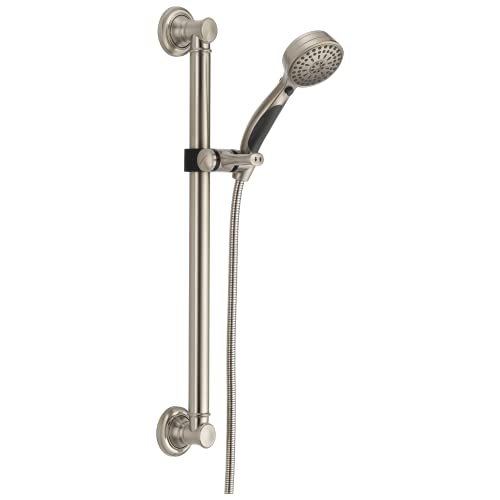
An accessible shower is judged on different terms than a standard one: fall risk, one-hand operation, scald protection, and compatibility with grab…
Read the guide