

Why Toilet Trapways Are Curved Like an S
Toilets4.6
Learn why toilet trapways curve like an S, how each bend blocks sewer gas, and what the shape means for clogs and…
Read the guideThe bathroom accounts for roughly 50 percent of all indoor home water use. These 15 evidence-based strategies -- from upgrading your toilet to fixing a silent leak -- can cut that figure by 30 to 50 percent without sacrificing comfort or performance.
Replacing an old 3.5 GPF toilet with an EPA WaterSense-certified 1.28 GPF model saves roughly 13,000 gallons per person per year. Combine that swap with low-flow showerheads, faucet aerators, and a weekly leak check to cut total bathroom water use by 30 to 50 percent with no loss in daily comfort.
According to the EPA, the average American household uses about 300 gallons of water per day, and roughly 50 percent of that occurs in the bathroom -- toilets alone account for nearly 27 percent of all indoor residential water use. A pre-1994 toilet using 3.5 gallons per flush multiplied across five flushes per person per day adds up to more than 6,300 gallons per person annually above what a modern 1.28 GPF model would consume.
Breaking down bathroom water consumption by fixture helps prioritize where to act first. The EPA's WaterSense program and the Alliance for Water Efficiency both publish fixture-level benchmarks that give a clear picture:
| Fixture | Average Use Per Day (1 person) | Efficient Target | Potential Daily Saving |
|---|---|---|---|
| Toilet (pre-1994, 3.5 GPF) | 17.5 gal (5 flushes) | 6.4 gal (1.28 GPF) | ~11 gal |
| Shower (standard 2.5 GPM, 8 min) | 20 gal | 12 gal (1.5 GPM) | ~8 gal |
| Bathroom faucet (2.2 GPM, 2 min) | 4.4 gal | 1.6 gal (0.8 GPM) | ~2.8 gal |
| Bath (full tub) | 36 gal (when used) | Shower instead | ~16-24 gal |
| Leaky toilet (silent flapper) | 200+ gal | 0 gal (fix leak) | 200+ gal |
Toilets represent the single biggest lever because every household has at least one, most are used five or more times daily, and the efficiency gap between old and new technology is dramatic. That is why the strategies below start with the toilet and work outward.
Replacing an old high-volume toilet with an EPA WaterSense-certified 1.28 GPF model delivers the largest single-fixture water reduction available in any bathroom -- up to 13,000 gallons per person per year. WaterSense certification also requires the toilet to pass MaP flush-testing at a minimum of 350 grams, ensuring strong performance is not sacrificed for efficiency.
The 15 strategies below are ordered roughly by impact. You do not need to implement all of them; even three or four changes will produce meaningful savings on your water bill.
Federal law mandated a 1.6 GPF maximum for new toilets starting in 1994, but the EPA's WaterSense label -- launched in 2006 -- goes further, certifying toilets at 1.28 GPF or less while requiring a minimum MaP flush score of 350 grams. Many WaterSense models score 800 to 1,000 grams, meaning you get a cleaner, more forceful flush at 20 percent less water than the 1.6 GPF standard.
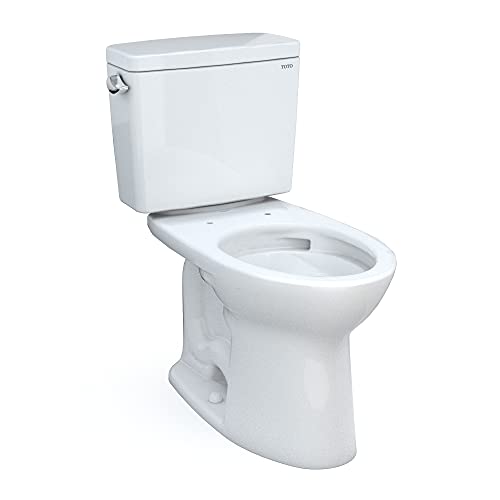
Leading WaterSense-certified models worth considering include the TOTO Drake II (1.28 GPF, MaP 1,000 g), the Kohler Cimarron (1.28 GPF, MaP 1,000 g), the American Standard Cadet 3 (1.28 GPF, MaP 800 g), and the Woodbridge T-0001 (1.28 GPF). See our full guide to the best flushing toilets for side-by-side comparisons across all categories.
The MaP testing program at map-testing.com independently verifies toilet flush performance using soybean paste in standardized weights. A toilet scoring 1,000 grams on the MaP test at 1.28 GPF offers the ideal combination of water savings and genuine clog resistance. When shopping, filter by WaterSense certification first, then MaP score second -- do not rely on manufacturer marketing claims alone.
Dual-flush toilets offer two flush volumes: typically 0.8 GPF for liquid waste and 1.28 GPF for solid waste. The TOTO Aquia IV is a leading example, carrying WaterSense certification at an average effective flush volume well below 1.28 GPF when users select the partial flush appropriately. Gerber's Viper dual-flush and several Swiss Madison models also perform well in this category.
Real-world savings depend on user behavior. Studies by the Alliance for Water Efficiency found that dual-flush toilets save between 15 and 25 percent more water than single-flush 1.28 GPF models when used correctly, but savings drop if residents default to the full flush for all waste types. Learn more in our detailed look at whether dual-flush toilets are worth it.
A worn flapper valve -- the rubber seal at the bottom of the tank -- can waste 200 or more gallons per day without any audible drip. The EPA estimates that 10 percent of U.S. homes have toilet leaks wasting 90 or more gallons per day each. The detection method is simple: add 10 drops of food coloring to the toilet tank, wait 15 minutes without flushing, and check the bowl. If color appears in the bowl, the flapper is leaking.
Flapper replacement costs under $10 at any hardware store. Korky and Fluidmaster produce the most widely compatible aftermarket flappers. If the flapper checks out, inspect the fill valve for a slow, continuous hissing -- this often indicates the float is set too high and water is overflowing into the overflow tube, another common source of silent waste.
A single leaky toilet flapper wasting 200 gallons per day adds roughly 73,000 gallons to annual water consumption -- more than the combined savings of every other bathroom fixture upgrade combined. Leak detection should come before any purchase decision. Fix leaks first, then evaluate efficiency upgrades.
Standard showerheads flow at 2.5 gallons per minute (GPM). EPA WaterSense-certified showerheads must flow at 2.0 GPM or less, and high-efficiency models reach 1.5 GPM without a noticeable pressure drop due to improved nozzle geometry and air-entrainment technology. At 8 minutes per shower and 1.5 GPM, daily water use drops from 20 gallons to 12 gallons -- a saving of nearly 3,000 gallons per person annually.
Look for showerheads labeled WaterSense and rated at 1.5 to 1.8 GPM. Models from Kohler, Moen, and Delta all produce WaterSense-certified options with strong pressure scores in consumer testing. Avoid ultra-low models below 1.5 GPM unless your home already has strong static water pressure (above 60 psi), as performance can suffer at lower supply pressures. Visit our guide to the best low-flow showerheads for model-specific data.
Standard bathroom faucets flow at 1.5 to 2.2 GPM. A screw-on aerator costing $2 to $8 reduces that to 0.5 to 1.0 GPM by mixing air into the stream, maintaining a full, comfortable feel while cutting water use by 30 to 60 percent. The EPA estimates that installing WaterSense-labeled faucets and aerators in U.S. homes could save 700 billion gallons of water per year nationally.
Check your existing faucet's flow rate by placing a measuring cup under the tap for exactly 10 seconds and multiplying by 6. If the result exceeds 1.5 GPM, a replacement aerator is one of the fastest-payback investments available in any home. Most standard faucets use either a 15/16-inch or 55/64-inch thread -- check the underside of the faucet spout before ordering. Aerators with a flow rate of 0.5 GPM are suitable for bathroom sinks; kitchen sinks typically need 1.0 to 1.5 GPM for rinsing and filling.
Silent leaks from a worn flapper or misadjusted float are the most common form of hidden toilet water waste, detectable through a simple dye test: add food coloring to the tank, wait 15 minutes, and check the bowl for color transfer. A second method is reading your water meter before bed and after an overnight period of no water use -- any increase indicates a leak somewhere in the system.
Many toilets are installed with the float set higher than necessary, causing the tank to fill to a level that triggers overflow into the tube -- effectively wasting water on every cycle. The overflow tube should sit about 1 inch below the top of the fill valve. If water is running into the overflow tube during the fill cycle, lower the float by turning the adjustment screw on the fill valve (Fluidmaster 400A models) or bending the float arm downward on older ballcock-style valves.
Reducing the fill level by just 1 inch in a standard tank saves approximately 0.5 gallons per flush. On a household of four people flushing five times daily each, that is 10 gallons per day or 3,650 gallons per year from a zero-cost adjustment.
The average shower in the U.S. runs 8 minutes according to EPA data. Research from water utilities consistently shows that a bathroom timer or a shower timer app reduces average shower time to 5 to 6 minutes. At 2.5 GPM, cutting 2 minutes saves 5 gallons per shower -- 1,825 gallons per person per year with no hardware purchase required. Pair this with a low-flow showerhead for compounding savings.
A standard bathtub holds 36 to 50 gallons of water when full. A 5-minute shower with a 1.5 GPM showerhead uses only 7.5 gallons. Even an 8-minute standard shower at 2.5 GPM (20 gallons) uses roughly half the water of a full bath. Households that bathe children or adults multiple times per week can save 1,000 to 2,000 gallons monthly by substituting showers for the majority of bath routines.
A running faucet at 1.5 GPM wastes 1.5 gallons per minute. A 2-minute tooth brushing session with the tap running wastes 3 gallons. For a family of four brushing twice daily, that totals 24 gallons per day or 8,760 gallons per year -- from a behavioral change that costs nothing. Wet the brush, turn off the tap, brush for two minutes, then rinse briefly. The same principle applies to electric shaver pre-rinse and post-shave washing.
The EPA's WaterSense program estimates that turning off the tap while brushing teeth saves approximately 8 gallons per person per day. Multiplied across a four-person household, that is 11,680 gallons annually -- comparable in scale to replacing a 1.6 GPF toilet with a 1.28 GPF model. Behavioral habits and hardware upgrades are both worth pursuing, and neither requires the other.
Fill valves control water flow into the tank after a flush. Over time the diaphragm seal inside the valve degrades, causing slow hissing, prolonged fill times, or continuous refilling. A malfunctioning fill valve can waste 30 to 60 gallons per day in less visible ways than a leaky flapper. Fluidmaster 400A and Korky QuietFILL are the two most widely recommended aftermarket fill valves, both priced under $15 and installable without a plumber in about 20 minutes.
Signs of a failing fill valve include the toilet hissing between flushes, the tank taking more than 3 minutes to refill, or water sounds when no one has flushed. Our guide on how to fix a running toilet covers fill valve diagnosis and replacement step by step.
TOTO leads water-efficient toilet manufacturing with its Double Cyclone and Tornado Flush technologies, which use two nozzles to create a centrifugal rinse at 1.28 or 1.0 GPF while achieving MaP scores of 1,000 grams. Kohler, American Standard, Gerber, and Woodbridge all produce WaterSense-certified 1.28 GPF models with strong MaP scores between 800 and 1,000 grams. Swiss Madison offers budget-friendly WaterSense-certified one-piece models that score well in owner-review aggregation.
| Brand / Model | GPF | MaP Score | WaterSense | Flush Tech | Check Price |
|---|---|---|---|---|---|
| TOTO Drake II (CST454CEFG) | 1.28 | 1,000 g | Yes | Double Cyclone | Check price |
| TOTO UltraMax II (MS604114CEFG) | 1.28 | 1,000 g | Yes | Double Cyclone | Check price |
| TOTO Aquia IV (CST446CEMFG) | 0.8 / 1.28 | 800 g | Yes | Dual-flush Tornado | Check price |
| Kohler Cimarron (K-3589) | 1.28 | 1,000 g | Yes | AquaPiston | Check price |
| Kohler Highline (K-3493) | 1.28 | 800 g | Yes | AquaPiston | Check price |
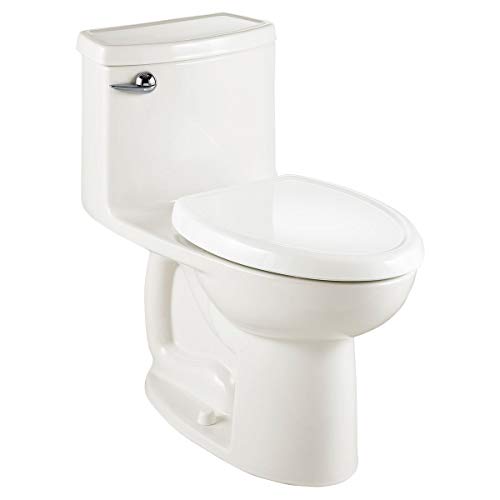
| American Standard Cadet 3 (2383.216) | 1.28 | 800 g | Yes | PowerWash rim | Check price |
| American Standard Champion 4 (2034.014) | 1.6 | 1,000 g | No | 4-in Champion valve | Check price |
| Woodbridge T-0001 | 1.28 | 800 g | Yes | Siphon jet | Check price |
| Gerber Viper (21-302) | 0.8 / 1.6 | 600 g | No | Dual-flush gravity | Check price |
Note that the American Standard Champion 4 uses 1.6 GPF and is not WaterSense-certified, though it is renowned for clog resistance. If your primary goal is water conservation, the Cadet 3 at 1.28 GPF is the better American Standard choice. Read our detailed comparison of best EPA WaterSense toilets for the full shortlist.
Every time you turn on a hot water tap, cold water already sitting in the pipe runs out before hot water arrives. In a 30-foot pipe run with 0.5-inch pipe, that can be 0.3 to 0.5 gallons wasted per event. A household turning on the shower or sink 10 times daily for hot water may waste 1,000 to 1,800 gallons per year simply waiting for temperature. Pipe insulation wraps (foam sleeve type, sold by the foot) reduce heat loss and shorten wait times, cutting that run-off waste significantly.
Thermostatic shower valves maintain a pre-set temperature so water reaches the desired warmth in seconds rather than minutes of adjustment. Many models include a pause or shut-off button that lets you stop flow while soaping up, then resume at the same temperature. Used consistently, the pause feature alone can save 1 to 3 gallons per shower. At daily use over a year, that is 365 to 1,095 gallons per person.
Place a bucket in the shower or under the bathroom sink while waiting for hot water to arrive. The collected water can water plants, fill a pet's bowl, or be used for cleaning -- turning what is typically wasted water into productive use. This costs nothing and requires only a habit change. A family of four capturing 0.5 gallons daily per fixture use recovers over 700 gallons per year.
Water recapture strategies like bucket collection are especially valuable in drought-prone regions or for households on well water where pumping costs add up. The water captured during lead-off warming is clean potable water. Plant irrigation alone can reduce municipal water meter charges if a household waters a garden or container plants regularly.
Water that escapes at the toilet base through a failing wax ring does not just waste water -- it can cause structural subfloor damage over months. A soft floor around the toilet base, a faint sewer odor, or discoloration of grout near the toilet base are signs the wax ring may be compromised. While this is a more involved repair requiring toilet removal and reinstallation, a leaking wax ring can waste dozens of gallons per week while simultaneously causing thousands of dollars in floor damage if left unchecked. Our guide on toilet leaking at base covers diagnosis and repair in detail.
Yes, the payback period for replacing a pre-1994 3.5 GPF toilet with a 1.28 GPF WaterSense model is typically 2 to 5 years based on average U.S. water rates of $0.005 to $0.008 per gallon, with annual savings of $50 to $130 per toilet depending on household usage. Many water utilities also offer rebates of $25 to $200 per qualifying toilet, which can reduce payback to under two years.
The EPA WaterSense website maintains a database of utility rebate programs searchable by zip code. Before purchasing any water-efficient toilet, check your local utility's rebate portal -- in many regions the rebate covers 30 to 60 percent of the toilet cost, making the economics compelling even for newer 1.6 GPF models that could be upgraded to 1.28 GPF.
Monitoring your meter at the same time each month -- or using a smart meter app if your utility provides one -- creates a baseline that makes leaks and inefficiencies visible. A sudden month-over-month increase of 20 percent or more without a change in household size or habits almost always points to a leak. The meter method is also the most reliable way to verify that a toilet replacement or showerhead swap is actually delivering expected savings. Most residential meters are located at the street near the property line and display usage in cubic feet (multiply by 7.48 to convert to gallons) or directly in gallons.
The EPA estimates the average American uses 80 to 100 gallons of water per day total, with roughly 50 gallons occurring in the bathroom across toilet flushes, showering, and sink use. Toilets alone account for about 17.5 gallons at 5 flushes per day using a 3.5 GPF toilet.
The EPA WaterSense program certifies toilets at 1.28 GPF or less, compared to the federal 1.6 GPF maximum. Some dual-flush models use as little as 0.8 GPF for liquid waste. Anything at or below 1.28 GPF qualifies as high-efficiency when paired with a MaP score of 350 grams or higher.
Yes. WaterSense certification requires a minimum MaP flush score of 350 grams, and many certified models score 800 to 1,000 grams -- equal to or better than older 1.6 or 3.5 GPF toilets. TOTO Drake II and Kohler Cimarron both achieve 1,000 grams at 1.28 GPF, making them excellent performers despite the lower water volume.
Add 10 drops of food coloring to the toilet tank and wait 15 minutes without flushing. If color appears in the bowl water, the flapper is leaking. You can also listen for hissing sounds, check for ripples on the bowl water surface between flushes, or read your water meter before and after an 8-hour no-use period overnight.
A slow flapper leak can waste 30 to 200 gallons per day. A more severe "running toilet" where water continuously flows into the bowl can waste 1,000 or more gallons per day. The EPA estimates that 10 percent of homes have leaks wasting at least 90 gallons daily, totaling 1 trillion gallons nationally per year.
Dual-flush toilets can save an additional 15 to 25 percent over single-flush 1.28 GPF models when used correctly -- meaning residents use the half-flush (0.8 GPF) for liquid waste. In households where occupants default to the full flush out of habit, actual savings may be close to those of a single-flush 1.28 GPF model. Single-flush 1.28 GPF models like the TOTO Drake II tend to have higher MaP scores and fewer mechanical parts to maintain.
MaP (Maximum Performance) testing, conducted independently by the map-testing.com program, measures how many grams of soybean paste a toilet can flush in a single attempt. The test ensures that lower-GPF toilets actually clear waste effectively. A score of 800 to 1,000 grams is considered excellent; 350 grams is the minimum for WaterSense certification. A high MaP score reduces the likelihood of double-flushing, which negates efficiency gains.
Modern WaterSense-certified showerheads at 1.5 to 2.0 GPM use air-entrainment and optimized nozzle geometry to create a full, pressure-rich spray despite lower water volume. At supply pressures of 50 psi or above, most users report no perceptible difference from 2.5 GPM models. Performance decreases more noticeably below 1.5 GPM or in homes with supply pressure under 40 psi.
An aerator mixes air into the water stream, maintaining volume and pressure perception while delivering less actual water. A 0.5 GPM aerator uses 77 percent less water than a 2.2 GPM standard faucet but delivers a full, consistent stream suitable for handwashing, face washing, and rinsing. The pressure sensation comes from aeration, not from the water volume itself.
Many U.S. water utilities offer rebates of $25 to $200 per qualifying WaterSense-certified toilet. The EPA WaterSense website provides a rebate finder tool searchable by zip code. Some municipalities also offer rebates for low-flow showerheads and faucet aerators. Rebate availability and amounts vary significantly by region and utility.
WaterSense-certified toilets range from around $150 for builder-grade models from American Standard or Woodbridge to $400 to $800 for TOTO and Kohler mid-range options. Professional installation typically adds $150 to $300. Utility rebates can offset $25 to $200 of the cost. Payback from water savings typically occurs within 2 to 5 years at average U.S. water rates.
Yes. Lowering the fill level by 0.5 inch in a standard toilet tank reduces per-flush water use by approximately 0.25 to 0.5 gallons without affecting flush performance on modern toilets with tower-style flush valves. On older ball-float fill valves, lowering the arm reduces the fill height. This adjustment is most effective when combined with a complete flush check to ensure bowl clearing remains adequate at the lower fill level.
The math depends on household size and water rates. For a family of four flushing 20 times daily, moving from 1.6 to 1.28 GPF saves 6.4 gallons per day -- roughly 2,336 gallons per year. At $0.006 per gallon, that is about $14 per year in savings. The savings are modest unless you also factor in utility rebates, multiple toilets, or regions with high water rates. The upgrade is most compelling when replacing toilets 10 or more years old where flapper and fill valve wear may be adding waste on top of the base GPF.
Running the tap while brushing teeth (3 gallons per 2-minute session), taking full baths instead of showers (20 to 30 gallons more per event), long showers over 8 minutes, and ignoring silent toilet leaks are the top behavioral water wasters. Fixing a leaky flapper and turning off the tap while brushing are the two highest-impact habit changes with zero hardware cost.
Turn off all water-using appliances and fixtures in the home, then read the meter display and note the exact reading. Wait 1 to 2 hours with no water use, then read the meter again. Any movement in the reading confirms a leak somewhere on the property. For bathroom-specific isolation, close the main shut-off valve, open it, then check each toilet and faucet individually using the dye test or listening method.
Yes. Foam pipe insulation maintains residual heat in the pipe between uses, reducing the volume of cold water that must purge before hot water arrives at the fixture. In homes with long pipe runs from the water heater to the bathroom, insulating the hot water supply line can cut wait-related water waste by 30 to 60 percent at those fixtures, adding up to hundreds of gallons annually.
Tankless water heaters heat water on demand rather than maintaining a stored tank. They do not inherently reduce water waste at the fixture -- a long pipe run still requires the same purge volume regardless of the heater type. However, tankless heaters eliminate standby heat loss, which improves energy efficiency. For water savings specifically, a tankless heater combined with a recirculation loop that keeps hot water in the pipe delivers the largest reduction in run-off waste.
CeFiONtect is an ion-barrier glaze applied to TOTO toilet bowls that creates an ultra-smooth, low-friction surface. Waste and mineral deposits adhere less readily, reducing the need for double-flushing and chemical cleaning. Indirectly, it supports water conservation by ensuring that a single 1.28 GPF flush clears the bowl completely, eliminating the additional 1.28 gallons that a second flush would consume.
1.0 GPF ultra-high-efficiency toilets use 22 percent less water than 1.28 GPF models and are available from TOTO (Eco Drake at 1.28 GPF can be ordered at 1.0 GPF) and a few other manufacturers. However, MaP scores at 1.0 GPF are typically lower -- often 500 to 800 grams versus 1,000 grams at 1.28 GPF -- and performance depends heavily on trapway design and bowl shape. For most households, 1.28 GPF offers the best balance of efficiency and consistent single-flush clearing.
Children's baths typically use 10 to 20 gallons rather than the 36 to 50 gallons of an adult full bath, due to lower fill levels. Even so, three children bathed per week adds 30 to 60 gallons of weekly bath water above what short showers would use once children are old enough. For younger children requiring immersive bathing, filling the tub only 4 to 6 inches deep rather than to the midpoint reduces volume by 40 to 50 percent with no impact on the wash routine.
The fastest path to meaningful bathroom water savings is: fix any silent toilet leaks first, then upgrade the oldest or highest-GPF toilet in the home to a WaterSense-certified 1.28 GPF model with a strong MaP score (800 grams or above). Add low-flow showerheads and faucet aerators next, then layer in behavioral habits like tap-off brushing and shorter showers. Done in sequence, these steps can cut bathroom water use by 30 to 50 percent within one budget cycle -- with top brands like TOTO, Kohler, American Standard, and Woodbridge all offering proven, reliable options at every price point.
Learn why toilet trapways curve like an S, how each bend blocks sewer gas, and what the shape means for clogs and…
Read the guideAlmost every US toilet has a left-side handle. Learn the plumbing and mechanical reasons behind the layout and when it actually changes.
Read the guideHome toilets rely on tanks because household water lines lack the pressure that public flushometer systems use to flush straight from the…
Read the guide