Lift the lid of a toilet tank and you will see what looks like a tangle of plastic and rubber. It is not. There are six clearly defined components, each with a specific job, and they work in a relay: you push the handle, the flapper or canister opens, stored water drops into the bowl through the flush valve, the float senses the falling water level, the fill valve opens, the tank refills, and the float shuts everything off when the water line hits its mark. When one part fails, the whole relay breaks.
Understanding those six parts by name, function and failure mode is the fastest way to diagnose a running toilet, a weak flush, a ghost flush or a slow fill. It also makes shopping for a new toilet more informed, because the tank hardware is exactly where the quality difference between a budget toilet and a TOTO Drake or Kohler Cimarron actually lives. This guide walks every part in logical order, the same order water encounters them in a real flush, then compares how leading brands engineer each one for longevity and flush strength.
How to use this guide. Read the section on each part in sequence the first time through, then use the comparison table and the FAQ to troubleshoot specific problems. Hyperlinks within the guide point to dedicated repair walkthroughs for each component so you can go deeper on any part that is currently failing.
What Are the Main Parts Inside a Toilet Tank?
A toilet tank contains six main parts: the flush valve (the opening through which water leaves the tank), the flapper or canister seal (which plugs the flush valve between flushes), the fill valve (which refills the tank after each flush), the float (which tells the fill valve when to stop), the handle and lift chain (which trigger the flush), and the tank-to-bowl gasket with mounting bolts (which seal the tank to the porcelain bowl). All six work together as a single timed sequence every time you flush.
The six parts are arranged around the tank's two vertical pillars: the flush valve sits near the center-rear of the tank, and the fill valve sits to one side, usually the left when facing the toilet. The handle arm projects through the front or side of the tank, the lift chain connects the arm to the flapper, and the float either clips onto the fill valve body (ball-cock style) or floats on a vertical rod next to the fill valve (cup-float style). The tank-to-bowl gasket and two or three mounting bolts are hidden underneath, sealing the joint at the base.
Recommended toilets in this guide
Part 1: The Flush Valve
The flush valve is the central tower inside the toilet tank, typically made of plastic, that sits at the bottom of the tank and connects to the bowl through a hole in the tank base. When you flush, the flapper or canister seal lifts off the valve seat and water drops through the valve into the bowl. The valve diameter, either 2 inch for older toilets or 3 inch for most modern high-efficiency models, is the single biggest factor in how fast water enters the bowl and therefore how powerful the flush is.
The flush valve is sometimes called the overflow tube because it doubles as a safety overflow: if the fill valve malfunctions and the water level keeps rising, the excess water flows down through the center of the flush valve and into the bowl rather than onto your floor. This is why the correct tank water level should sit about one inch below the top of the overflow tube.
Valve diameter matters enormously for flush performance. A 2-inch flush valve was the long-standing standard and is still found on many American Standard Cadet 3 and Gerber Viper models. A 3-inch flush valve allows roughly 2.25 times more water to exit per unit of time, creating the fast surge that clears the bowl in a single flush on EPA WaterSense-qualified toilets using only 1.28 gallons per flush (GPF). TOTO's G-Max and Tornado Flush systems, Kohler's Class Five, and American Standard's VorMax all use 3-inch valves. The Woodbridge T-0001 and Swiss Madison St. Tropez use large-diameter flush valves as well, contributing to their strong flush at 1.28 GPF.
Flush valve failure sign. If water trickles from the tank into the bowl when the handle is not being pressed, and replacing the flapper does not stop it, the flush valve seat may be warped, cracked or coated with mineral deposits. A universal flush valve seat saver kit or a full flush valve replacement is the fix.
How Flush Valve Size Affects MaP Score
The Maximum Performance (MaP) flush test measures how many grams of solid waste a toilet clears in a single flush. A 3-inch valve creates the surge velocity needed to move heavy loads. The TOTO Drake and TOTO UltraMax II each earn a 1,000-gram MaP score on 1.28 GPF, which is the maximum tested value and directly tied to TOTO's G-Max 3-inch canister valve. Kohler Cimarron and Highline toilets using the Class Five 3-inch system also reach 1,000 grams. Compare that to some 2-inch valve toilets that may only reach 500 to 700 grams at the same GPF, and the difference in practical clearing ability is significant.
Part 2: The Flapper and Canister Seal
The flapper is a rubber or silicone seal that sits on the flush valve seat and lifts when you flush, releasing tank water into the bowl, then drops back to reseal the valve so the tank refills. A canister seal serves the same purpose but in a different form: instead of a hinged flap, it is a cylinder that lifts straight up off the valve, opening 360 degrees for a faster, more complete water release. TOTO and Kohler use canister seals on their 3-inch flush valves, which is why those toilets flush harder and more consistently than models with conventional hinged flappers.
The flapper is the most commonly replaced toilet tank part because it degrades faster than any other component. Chlorinated water, especially combined with in-tank bleach tablets, hardens rubber flappers in two to three years. A hardened flapper cannot seal tightly, which lets water trickle constantly from the tank into the bowl, running the fill valve and wasting hundreds of gallons per week. The US Environmental Protection Agency estimates that a leaking toilet can waste up to 200 gallons of water per day, and the flapper is the first thing to check.
Standard 2-inch rubber flappers fit most older toilets and are a few dollars to replace. Chlorine-resistant or silicone flappers cost marginally more and last considerably longer. For 3-inch valves, the flapper grows to match, and for TOTO's canister-style valves, the replacement is a model-specific rubber gasket that snaps onto the base of the canister tower rather than a hinged flap at all. Using a wrong-size or wrong-style flapper is the most common DIY repair mistake: a 2-inch flapper on a 3-inch valve seats loosely and leaks immediately. For a full sizing guide and material comparison, our dedicated toilet flapper guide covers every detail.
Flapper vs Canister: How TOTO and Kohler Differ From the Field
Most gravity toilets from American Standard (Champion 4, Cadet 3), Gerber (Viper, Avalanche), Woodbridge (T-0001, T-0019) and Swiss Madison (St. Tropez) use hinged flappers. The flapper lifts from one edge, and water exits the valve as the flap swings up. TOTO's G-Max and Tornado Flush valves use a cylindrical canister that lifts straight up, opening the entire 360-degree circumference of the valve simultaneously for a faster surge. Kohler's Class Five system uses a similar canister concept. That engineering decision, flapper versus canister, is one of the clearest differentiators between a toilet that earns a 700-gram MaP score and one that earns 1,000 grams at the same water volume.
Part 3: The Fill Valve
The fill valve, sometimes called the ballcock or refill valve, is the mechanism on the side of the tank that opens after each flush to refill the tank with fresh water, then shuts off when the water level reaches the correct height. Modern fill valves are tall plastic towers with an internal diaphragm or piston that the float controls. An older brass ballcock uses a ball float on an arm to do the same job. A fill valve that hisses, fills slowly, or lets the tank overflow usually needs cleaning or replacement, and modern universal fill valves fit most toilet brands.
The fill valve connects to the household water supply through the shutoff valve and supply line behind the toilet. When the flapper opens and tank water drops, the float falls with it, which opens the fill valve and lets fresh water in. Water refills the tank through the valve body and also sends a small trickle down the refill tube into the overflow tube, which tops off the bowl at the same time. When the water level rises back to the set mark, the float reaches its upper limit and signals the fill valve to close.
Types of Fill Valves
There are three main fill valve styles in use today:
- Ballcock with ball float: The original design. A large plastic or rubber ball on a horizontal arm floats on the water surface. Found in older toilets and considered outdated for new installations.
- Cup-float fill valve: The current standard. The float slides up and down on the fill valve body itself, making the unit compact and adjustable with a simple turn of the float clip. Compatible with most modern toilets from Kohler, American Standard, Woodbridge and Gerber.
- Internal float fill valve: The float mechanism is sealed inside the valve body for a sleeker look and quieter operation. TOTO's fill valves use a variation of this design in several Aquia IV and Vespin II models to reduce noise.
When a fill valve hisses or takes more than 90 seconds to fill a standard 1.28 GPF tank, either the diaphragm inside is worn or mineral scale has partially blocked the inlet. Most fill valves can be cleaned by shutting the water, holding the cap, and turning it to release the diaphragm for a quick rinse. If that does not solve it, a universal replacement fill valve from Fluidmaster, Korky or the toilet manufacturer fits most tanks. Our guide on how to replace a toilet fill valve walks through the full swap in detail.
Part 4: The Float
The float is the component that monitors the water level in the tank and tells the fill valve when to stop. In modern toilets it is a plastic cup or cylinder that rides up and down on the fill valve body. As water enters the tank, the float rises, and when it reaches the set water level it triggers the fill valve to close. Adjusting the float up or down raises or lowers the tank water level, which directly affects how much water is available for each flush.
Getting the float set correctly is one of the most impactful simple adjustments a homeowner can make. The manufacturer's target is usually about one inch below the top of the overflow tube, which is marked by a "water line" embossed on the inside of most tanks. If the float is too high, water spills into the overflow tube constantly, the toilet never stops running, and you waste water without any visible leak. If the float is too low, the tank does not hold enough water for a full flush, which weakens flush performance even if the flapper and flush valve are in perfect condition.
On a cup-float fill valve, the adjustment is a plastic clip or a rotary knob that moves the float up or down the valve shaft. On an older ballcock, bending the float arm slightly up or down achieves the same result. For exact steps and the right target water line for specific models, our walkthrough on how to adjust toilet water level covers both fill valve types.
Float Settings and Flush Strength
A float set two inches below the overflow tube instead of one inch can reduce available flush volume by 10 to 15 percent on a 1.28 GPF toilet, turning a toilet that would otherwise clear a 900-gram load into one that struggles with 750 grams. This is one of the overlooked reasons that toilets with good flush valves and new flappers still flush weakly. Always confirm the water line before blaming the toilet itself.
Part 5: The Handle and Lift Chain
The flush handle is the lever on the outside of the tank that activates the flush. Inside the tank, the handle arm connects via a lift chain to the flapper or canister. Pressing the handle lifts the chain, which lifts the flapper off the valve seat and starts the flush. The chain length is critical: too much slack and the flapper does not lift fully, producing a weak flush; too little slack and the flapper cannot seal, causing the toilet to run constantly.
The handle assembly is the most visible toilet tank part and also the most underestimated source of performance problems. The correct chain length leaves about a half inch of slack between the handle arm at rest and the top of the flapper. With proper slack, pressing the handle pulls the chain taut and lifts the flapper fully off its seat in one motion. The flapper then floats up, held by the buoyancy of the escaping water, and stays open until the tank is nearly empty before dropping back to reseal.
A chain that is too long collects on the flush valve seat under the flapper and prevents a complete seal, which causes a constant trickle and a perpetually cycling fill valve. A chain that is too short does not allow the flapper to drop and seal at all. Most homeowner flapper installations that "leak anyway" after a correct flapper is installed turn out to have a chain length problem.
Handle Styles: Side, Top and Touchless
Standard side-mount handles are universal across most two-piece toilet tanks and most toilet brands. Top-mount handles sit on the lid rather than the front wall of the tank; the TOTO Aquia IV in its dual-flush configuration uses a top-mounted two-button actuator that triggers either a 0.8 GPF partial flush or a 1.28 GPF full flush by lifting a dual-flush valve with two separate chains. American Standard's H2Option dual-flush uses a similar two-button top design. Touchless flush kits are aftermarket accessories that replace the handle with an infrared sensor and a motorized chain puller; several Kohler and American Standard models offer factory-installed touchless options as upgrades.
Part 6: Tank-to-Bowl Gasket and Mounting Bolts
The tank-to-bowl gasket is a large rubber donut-shaped seal that sits between the bottom of the tank and the top of the bowl, preventing water from leaking at that joint. Two or three mounting bolts pass through the tank base, through the gasket and bowl inlet, and tighten with nuts underneath the bowl lip to clamp the tank in place. A tank that drips at the base of the tank rather than at the floor is almost always caused by a deteriorated gasket or loose mounting bolts.
The tank-to-bowl gasket is the only part of the tank assembly that you cannot see without removing the tank. Made of rubber or sponge neoprene, it compresses slightly when the mounting bolts are tightened to form a watertight seal. Over years of temperature cycling and mineral exposure, it hardens and may crack or flatten past its sealing ability. The first sign is water pooling underneath the back of the toilet, or a wet ring on the floor behind the bowl. This is not the same as a wax ring leak at the floor flange, which originates from the base of the bowl.
Replacing the gasket requires removing the tank, which sounds intimidating but involves only shutting off the water, draining the tank, unhooking the supply line and unbolting two or three mounting bolts. Tank-to-bowl gaskets are sold by size (the most common is a 2-inch diameter spud washer for most two-piece toilets) and also in brand-specific kits that include replacement bolts, nuts and washers. The TOTO Drake II, Kohler Highline, American Standard Champion 4 and Gerber Avalanche all use standard bolt patterns that accept universal replacement kits.
Additional Tank Parts: Refill Tube, Trip Lever and Tank Bolts
Three smaller components complete the tank assembly. The refill tube is the thin flexible hose that clips onto the overflow tube and directs a small amount of water into the bowl during the fill cycle to top off the bowl water seal. If the refill tube slips into the overflow tube instead of clipping above it, the toilet may run constantly because the tube siphons water out of the tank. The trip lever is the internal arm that connects the handle to the chain; it can corrode on older brass handles and should be replaced with the handle as a unit. Tank lid materials vary: most production toilets use vitreous china lids that match the tank, while some smart-toilet and touchless-flush models use lids with integrated electronics, as in higher-end TOTO Washlet-compatible smart seats.
How All Six Parts Work Together During a Single Flush
During a flush, all six tank parts act in a timed sequence: pressing the handle pulls the lift chain, which raises the flapper off the flush valve seat. Tank water rushes through the flush valve into the bowl, and the float drops as the water level falls. Once the water exits, the flapper drops back onto the valve seat and seals it. The falling float opens the fill valve, which refills the tank while the refill tube simultaneously tops off the bowl. When the water rises back to the set level, the float closes the fill valve, and the tank is ready for the next flush.
The whole cycle takes 30 to 90 seconds depending on household water pressure and the fill valve design. At 40 to 60 PSI of normal residential water pressure, a standard 1.28 GPF tank refills in about 45 to 60 seconds. Very low water pressure, below 25 PSI, can extend refill time to two minutes or more and also reduces flush effectiveness by slowing the speed at which water enters the bowl during the flush. If your toilet refills slowly, check both the fill valve and the shutoff valve behind the toilet, which is sometimes turned only partially open by accident after a repair.
How Tank Parts Differ Across Major Brands
TOTO differentiates itself with 3-inch canister-style flush valves (G-Max and Tornado Flush), which open 360 degrees for a faster, more powerful flush than a hinged flapper, and with internal-float fill valves designed for quiet operation. Kohler uses a similar 3-inch canister on its Class Five system in the Cimarron, Highline and Memoirs. American Standard's Champion 4 uses a 4-inch accelerator flush valve, the widest in the industry, for its most powerful flush. Gerber and Woodbridge use more conventional 2-inch and 3-inch flapper systems. Swiss Madison St. Tropez uses a siphonic flush with a large flush valve for a clean one-piece design.
The table below compares how each major brand engineers the most important tank parts across their flagship models so you can see at a glance which design choices produce which outcomes.
Expert TakeThe single most useful thing to understand about toilet tank parts is that flush power lives in the flush valve diameter and seal design, not in the brand name on the outside. A 3-inch canister valve releases water faster than a 2-inch hinged flapper regardless of price point, and that speed is what drives a high MaP score. When comparing toilets, look at the valve diameter before anything else. Everything downstream, the flapper material, the fill valve brand, the chain adjustment, matters only if the valve gives the water a big enough opening to move through quickly.
Toilet Tank Parts Most Likely to Need Replacement
Tank parts do not all wear at the same rate. Here is a realistic replacement timeline based on published manufacturer service guidance and the patterns found across owner reviews.
The practical takeaway: a homeowner who replaces the flapper and fill valve every five to seven years will almost never need to touch the flush valve or the tank-to-bowl hardware. These are the two cheap, easy parts that handle the most mechanical stress and the most chemical exposure. Letting a failing flapper run unchecked for a year, by contrast, can waste enough water that the water bill alone exceeds the cost of a new toilet.
What Is the Most Important Toilet Tank Part for Flush Performance?
The flush valve is the most important tank part for flush performance because its diameter and design determine how fast water enters the bowl. A 3-inch flush valve with a canister seal moves roughly 2.25 times more water per second than a 2-inch valve, which is why modern high-efficiency toilets using 3-inch or larger valves reach MaP scores of 800 to 1,000 grams on just 1.28 GPF. After the valve, the fill valve, float setting and flapper condition determine whether the toilet consistently delivers that potential on every flush.
This hierarchy matters for diagnosis. If a toilet used to flush well and now does not, suspect the flapper or the water level (float setting) first, because those are the parts that wear and drift over time. If the toilet was never a strong flusher, the issue is almost certainly the flush valve diameter and design, which cannot be improved by replacing a flapper. A 2-inch valve toilet that flushes weakly needs to be replaced, not repaired. For a ranked comparison of toilets that consistently outperform on flush strength, our guide to the best flushing toilets organizes models by MaP score and flush system.
How Do I Know Which Tank Parts to Buy for My Toilet?
To buy the correct replacement tank part, find the toilet's model number stamped inside the tank, usually on the back wall or underneath the lid, then look up the manufacturer's parts diagram online. The model number tells you the valve diameter (2 inch or 3 inch), the seal type (flapper or canister), and the compatible fill valve. For flappers, you also need to know the valve seat diameter, which you can measure by emptying the tank and measuring the opening the flapper covers. Universal fill valves from Fluidmaster and Korky fit most tanks, but flappers and canister seals must match the valve size exactly.
The model number is the fastest route to the right part. On TOTO toilets, the model code is stamped on the underside of the tank lid and often on a sticker inside the tank. On Kohler, it appears as a four-digit number after "K-" on the tank's back wall. American Standard model numbers appear on a sticker inside the tank or bowl. Once you have the model number, the manufacturer's website lists every compatible replacement part with part numbers you can then search at any plumbing supplier or on Amazon. For step-by-step guides to fixing specific tank part failures, our dedicated walkthroughs cover fixing a running toilet and replacing a fill valve.
Top Toilets With Reliable Tank Hardware
The best measure of tank hardware quality is how long a toilet runs without needing any internal repair. The picks below represent models with documented long service lives, strong flush performance, and readily available replacement parts, all based on published specifications and aggregated owner review data.
Best Overall Tank Reliability
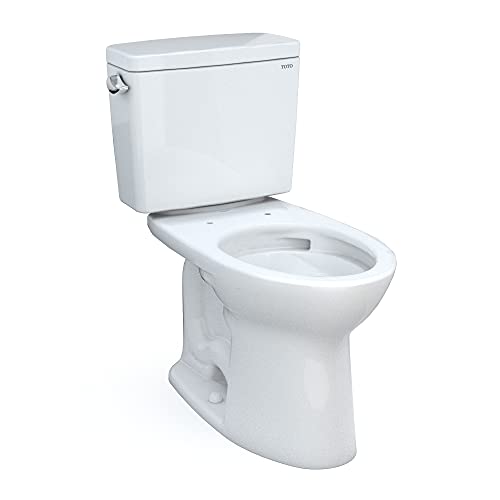
TOTO Drake II (CST454CEFG)
Long-term dependability
The Drake II uses TOTO's 3-inch G-Max canister valve and a quiet fill valve that owners consistently report running for years without internal maintenance. Its E-Max flush system earns a 1,000-gram MaP score on 1.28 GPF with EPA WaterSense certification.
Check price on Amazon
Best Kohler Tank System
Kohler Cimarron K-3609
Class Five flush + easy parts
The Cimarron's 3-inch Class Five canister delivers a 1,000-gram MaP score, and Kohler's fill valve is widely praised in owner reviews for fast, quiet refills. Replacement canisters and fill valves are stocked at most hardware retailers.
Check price on Amazon
Best Budget Tank Hardware
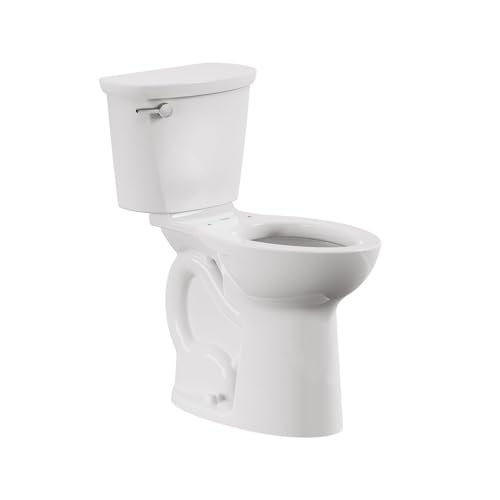
American Standard Cadet 3
Widely available parts
The Cadet 3 uses a 3-inch flapper-style flush valve with a durable EverClean glaze and tank hardware that accepts universal replacement flappers and fill valves. Its 1,000-gram MaP score is exceptional for its price tier, and every part is easy to source.
Check price on Amazon
Expert TakeWhen choosing a toilet based on tank reliability, the question is not which brand uses the fanciest parts, it is which toilet has the most accessible and affordable replacement parts five years from now. TOTO and Kohler both win on hardware engineering, but the canister seals they require are brand-specific, meaning you cannot grab a two-dollar rubber flapper from any hardware store and be done. American Standard's flapper-based system accepts universally available parts, which is a real advantage for landlords, rental properties and anyone who wants a repair that can be completed on a Sunday afternoon without ordering online. For advice on which toilet type best fits your situation, our guide to choosing a toilet and our complete toilet buying guide both walk through the decision framework in detail.
Which Toilet Parts Are Covered Under Warranty?
Toilet warranties generally cover the porcelain tank and bowl for life or for one to five years, while tank hardware (fill valve, flush valve, flapper, handle) is covered for a shorter period, typically one to five years for manufacturer defects. Normal wear items like flappers and fill valves are rarely covered past the first year because they are considered consumable maintenance parts. TOTO offers a one-year limited warranty on tank hardware, Kohler offers a one-year limited warranty, and American Standard offers a limited lifetime warranty on the vitreous china with a one-year warranty on tank parts.
The practical implication: if a fill valve fails in the first year and causes water damage, the manufacturer's warranty may cover the part but generally not consequential water damage. Replacing tank hardware at the first sign of trouble, rather than running a leaking flapper for months, is both cheaper and cleaner than dealing with a warranty claim. The fill valve and flapper together cost less than $25 from any hardware store and take under an hour to replace. For decisions about whether to repair or replace an aging toilet, our analysis of how long toilets last puts the numbers in perspective.
Frequently Asked Questions
? What are the parts inside a toilet tank called?
The six main parts inside a toilet tank are the flush valve, the flapper or canister seal, the fill valve, the float, the handle and lift chain, and the tank-to-bowl gasket with mounting bolts. Smaller components include the refill tube, the trip lever arm and the overflow tube, which is part of the flush valve assembly.
? What is the rubber thing inside a toilet tank?
The rubber component most people notice first is the flapper, the round or domed rubber seal that sits at the bottom of the tank and lifts when you flush. There is also a rubber tank-to-bowl gasket underneath the tank and a small rubber seal inside the fill valve. All three can deteriorate over time and cause leaks or running water.
? What is the tall plastic tube in the toilet tank?
That is the overflow tube, which is the vertical standpipe in the center of the tank. It is part of the flush valve assembly. If the fill valve malfunctions and overfills the tank, water flows down through the overflow tube and into the bowl instead of spilling onto the floor. The fill valve, which is a separate tall tube on the side, refills the tank after each flush.
? What is the difference between a flush valve and a fill valve?
A flush valve releases tank water into the bowl when you flush. A fill valve refills the tank with fresh water after each flush. Both are tall vertical mechanisms, but the flush valve is usually centered in the tank and has the flapper or canister seal at its base, while the fill valve is positioned to the side and connects to the water supply line below the tank.
? What is a flapper versus a canister seal?
A flapper is a hinged rubber seal that pivots up from one edge when you flush, letting water past. A canister seal is a cylindrical tower that lifts straight up off the valve seat, opening 360 degrees at once for a faster, more powerful water release. TOTO uses canister seals on its G-Max and Tornado Flush toilets; Kohler uses a similar canister design on its Class Five system. Most American Standard, Gerber and Woodbridge toilets use conventional hinged flappers.
? Why does my toilet keep running after I flush?
A continuously running toilet after flushing almost always means water is leaking from the tank into the bowl through the flush valve. The most common cause is a flapper or canister seal that is worn, warped or not sealing tightly. A flapper that is the wrong size for the valve, or a chain that is too long and gets trapped under the flapper, can cause the same issue. Replace the flapper first and confirm the chain has about half an inch of slack.
? Why does my toilet tank fill slowly?
A slow-filling tank is usually caused by a worn fill valve diaphragm, a partially closed shutoff valve behind the toilet, or mineral buildup restricting the fill valve inlet. Check the shutoff valve first to confirm it is fully open. If the fill is still slow, clean or replace the fill valve. Low household water pressure, below 25 PSI, can also make every appliance in the home fill more slowly.
? What causes ghost flushing?
Ghost flushing is the sound of a toilet refilling on its own without being flushed. It is almost always caused by water leaking past a worn flapper into the bowl. When the tank level drops enough, the fill valve opens to refill it, producing the familiar refill sound. A food coloring test confirms it: add a few drops to the tank and check the bowl after ten minutes without flushing. Color in the bowl means the flapper is leaking.
? What does the toilet float do, and how do I adjust it?
The float monitors the tank water level and signals the fill valve to stop when the water reaches the correct height, typically about one inch below the top of the overflow tube. On a modern cup-float fill valve, adjust the float by squeezing the clip on the float and sliding it up to raise the water level or down to lower it, or by turning a rotary adjustment knob on the fill valve body. The correct water line is usually marked inside the tank.
? How do I know if my flush valve needs to be replaced?
If replacing the flapper with a correct-size part does not stop a running toilet, press down on the flapper firmly while the toilet is running. If the sound stops, the valve seat is fine and the old flapper was simply not sealing. If the sound continues even with firm pressure, the flush valve seat itself may be warped or cracked and the valve assembly needs replacement.
? What is the tank-to-bowl gasket, and when does it need replacing?
The tank-to-bowl gasket is the large rubber seal between the bottom of the tank and the top of the bowl that prevents water from leaking at that joint. It needs replacing when water drips directly from the underside of the tank, not from the floor below the bowl. Replacing it requires removing the tank, which involves shutting off the water, draining the tank, disconnecting the supply line and unbolting the two or three mounting bolts underneath.
? Can toilet tank parts from one brand fit another brand's toilet?
Fill valves from Fluidmaster, Korky and similar manufacturers are designed as universal fit and work with most standard toilet tanks by adjusting the valve height to match the tank depth. Flappers must match the flush valve diameter (2 inch or 3 inch) regardless of brand, and many 2-inch flappers are universal. Canister seals used by TOTO and Kohler are brand-specific and model-specific, so a TOTO canister seal will not fit a Kohler valve and vice versa.
? How long do toilet tank parts last?
Standard rubber flappers last two to five years with normal use, while chlorine-resistant and silicone flappers last five to ten years. Fill valves typically need replacement every five to seven years. TOTO and Kohler canister seals often last five to ten years or more. The flush valve and tank-to-bowl gasket can last twenty years or longer if not damaged. The handle and chain are rarely the first things to fail but may need attention after a decade of use.
? What is the correct water level in a toilet tank?
The correct water level in a toilet tank is approximately one inch below the top of the overflow tube. Most tanks have a water level mark printed or embossed on the inside back wall. Water above that mark runs continuously into the overflow tube and wastes water; water below it means a smaller flush volume, which can produce a weaker flush. Adjust the float to hit the one-inch-below mark.
? Does a 3-inch flush valve always mean a stronger flush?
A 3-inch flush valve creates a faster water release than a 2-inch valve at the same GPF, which generally produces a stronger flush. However, the bowl trapway design, the flapper or canister quality, the fill level and the water pressure in the house all contribute. TOTO Drake, Kohler Cimarron and American Standard Cadet 3 all use 3-inch or larger valves and all reach 1,000-gram MaP scores, confirming the advantage. But a well-engineered 2-inch valve toilet can still outscore a poorly designed 3-inch valve toilet.
? What is a dual-flush toilet valve?
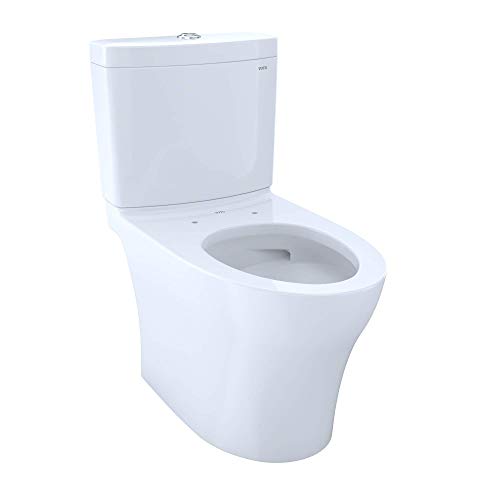
A dual-flush toilet valve, like the one in the TOTO Aquia IV, has two separate actuators: a partial-flush button that releases about 0.8 GPF for liquid waste and a full-flush button that releases 1.28 GPF for solid waste. Inside the tank, two separate chains connect the actuators to either a half-flush or full-flush mechanism on the canister valve. EPA WaterSense certifies dual-flush toilets based on a weighted average of 0.9 to 1.0 GPF, making them among the most water-efficient options available.
? Which tank parts should I replace when buying a used toilet?
When buying a used toilet or moving into a home with a toilet of unknown age, replace the flapper or canister seal and the fill valve as a precaution. Both are inexpensive, and both are the parts most likely to be near the end of their service life. While the tank is open, inspect the chain for any kinks, check the float setting and look at the flush valve seat for mineral scale or cracks. The tank-to-bowl gasket and the mounting bolts are worth inspecting visually but generally do not need automatic replacement unless there is visible damage.
? Do one-piece toilets have the same tank parts as two-piece toilets?
One-piece toilets like the TOTO UltraMax II, Woodbridge T-0019 and Swiss Madison St. Tropez contain the same functional tank parts as two-piece toilets: a flush valve, a flapper or canister seal, a fill valve, a float, a handle and chain. The difference is that the tank is permanently fused to the bowl in the ceramic, so there is no tank-to-bowl gasket or mounting bolts to worry about. Tank access is through the lid, and all internal parts are replaced the same way as in a two-piece design. For a full comparison of the two configurations, our article on one-piece vs two-piece toilets covers performance, maintenance and cost differences.
? What does EPA WaterSense certification mean for toilet tank parts?
EPA WaterSense certification means the toilet as a complete system, including its tank hardware, has been independently tested and confirmed to use no more than 1.28 GPF while meeting a minimum performance threshold for waste removal. The fill valve, flush valve and flapper or canister must all work together to deliver the certified flush volume precisely. Toilets like the TOTO Drake II, Kohler Cimarron and American Standard Cadet 3 carry WaterSense certification, confirming that their tank hardware reliably delivers both the efficiency and the performance the certification requires.