
Why Toilet Trapways Are Curved Like an S
Toilets4.6
Learn why toilet trapways curve like an S, how each bend blocks sewer gas, and what the shape means for clogs and…
Read the guideToilet repairs range from a three-dollar flapper swap you can do in ten minutes to a full flange rebuild that costs several hundred dollars in plumber labor and materials. The difference between them is rarely the brand of toilet, it is whether you diagnose the problem correctly before spending a cent. This guide breaks down every common toilet repair by true cost, explains the parts behind each fix, and tells you when a repair is smarter than a full replacement and when it is not.
Most toilet repairs cost between $5 and $250 in parts when done yourself. A flapper or fill valve costs $5 to $20 and is the source of most running-toilet complaints. A plumber's service call plus parts typically runs $100 to $350 for standard repairs. Only a cracked bowl, corroded flange, or toilet older than 20 years on a failing wax seal makes a full best flushing toilets replacement smarter than a repair.
Toilet problems fall into a shorter list than most homeowners expect. The tank runs and wastes water. The flush is weak and fails to clear the bowl. The toilet rocks or leaks at the base. The fill takes too long or makes noise. The bowl drains slowly even with no clog. In every one of these cases, the part responsible is small, cheap, and accessible without a plumber. The fill valve, flapper, flush valve, wax ring, supply line, shut-off valve, and handle are the moving parts that cover the vast majority of toilet repairs in 2026, and they are sold at every hardware store and major online retailer.
The decision that determines whether a repair is worth doing is not the part cost. It is the age and condition of the toilet itself. A TOTO Drake, Kohler Cimarron, or American Standard Cadet 3 at 5 to 10 years old with a solid vitreous china bowl and a working flange is always worth repairing. A builder-grade toilet at 20 years with a slow flush, a hairline crack at the base, and a fill valve that has already been replaced twice is approaching the point where a replacement pays better over a five-year horizon. This guide gives you the data to make that call correctly.
A running toilet is almost always caused by one of three parts: the flapper, the fill valve, or the float. The flapper is the rubber seal at the bottom of the tank that opens to let water into the bowl when you flush and re-seals afterward. When it warps, hardens, or develops mineral deposits, it no longer seals and allows water to flow continuously into the bowl. A universal replacement flapper costs $5 to $12 and installs by unhooking two ears from the overflow tube and reattaching the chain to the handle arm. No tools required. The fill valve is the tall component in the left or rear of the tank that refills the tank after a flush. When it wears out, it may run constantly, cycle on and off (ghost flushing), or hiss. A new Fluidmaster 400A or korky-style fill valve costs $9 to $18 and installs with one nut under the tank. The float, if it is a ball float on an older toilet, may need bending downward to reduce the water level below the overflow tube height. If water runs into the overflow tube, the bowl fills perpetually and wastes hundreds of gallons per day. The repair is a float adjustment or replacement of the fill valve on any toilet with this design.
Plumber cost for a running toilet: $85 to $175 total, including parts, because the diagnosis and replacement typically takes 30 to 45 minutes of a plumber's time. Doing it yourself with a $12 flapper and a $15 fill valve is a total parts spend of under $30, completed in under 30 minutes with no prior plumbing experience required. The annual water savings from fixing a leaking flapper often pays for the part cost in a single day.
A weak flush that does not clear the bowl in a single pass has four possible causes: a flapper that closes too early cutting off water flow, a clogged rim, a blocked trapway, or insufficient water in the tank. The flapper is checked by holding it open manually during a flush to see if the power improves, which confirms the flapper as the culprit and a replacement flapper costs $5 to $12. Rim jets clogged with mineral deposits, common in hard-water areas, are cleaned with a bent wire or a mirror inspection and toilet cleaner, a zero-parts-cost repair. A partial trapway blockage not cleared by a plunger may require a toilet auger, which costs $20 to $45 as a purchase or can be rented. Water level in the tank should sit within half an inch of the overflow tube top; if it sits lower, adjusting the float or fill valve restores flush power. The guide to improving toilet flush power covers each fix in step-by-step detail.
Plumber cost for a weak flush repair: $100 to $200, depending on whether the fix is a quick flapper or fill valve swap versus a thorough rim-jet descaling or an auger for a deeper blockage. A DIY toilet auger job costs $25 to $45 in parts and avoids the service call entirely for a blockage that is in the trapway rather than the drain line.
Water pooling at the base of the toilet after a flush almost always indicates a failed wax ring, the seal between the toilet horn and the closet flange. The repair requires shutting off the water, emptying the tank and bowl, disconnecting the supply line, removing the closet bolts, and lifting the toilet straight up to expose the old wax ring. A replacement wax ring costs $4 to $10; a waxless rubber seal, which allows repositioning during the set and is recommended for first-time replacers, costs $12 to $20. Both install the same way: press the seal onto the closet flange and lower the toilet straight down until the bowl seats on the floor, then reinstall the bolts, supply line, and seat. New closet bolts cost $3 to $6 and are always worth replacing during a wax ring swap since the old ones are typically corroded and may shear if reused. A small amount of clear caulk around the base, left open at the rear to allow future leak detection, finishes the job. The guide to fixing a toilet leaking at the base covers the exact procedure.
Plumber cost for a wax ring replacement: $100 to $220, which includes labor to remove the toilet, replace the seal, reset the toilet, and verify the seal through several flushes. If the closet flange itself is cracked or corroded and must be repaired or replaced, add $75 to $200 more depending on flange material, flange condition, and floor access. DIY cost for a clean flange is under $30 in parts.
A rocking toilet has three possible causes: loose closet bolts, a cracked flange, or an uneven floor. Loose closet bolts are diagnosed by grasping the bowl and rocking gently to feel whether the movement is from the bolt caps at the base; tightening the bolts with a wrench, alternating sides and stopping before the porcelain cracks, often eliminates the wobble entirely. Bolt caps pop off with a flat screwdriver and the bolts underneath accept a small wrench. Tightening bolts costs nothing and takes five minutes. If the bolts are already tight and the rocking persists, the closet flange may be cracked or sitting below the finished floor, which requires flange repair spacers, available for $8 to $18, or a partial flange replacement. A rocking toilet that is ignored is not merely annoying; it slowly destroys the wax seal beneath it, leading to the base leak described above, and a compressed and failed seal beneath a rocking toilet is what converts a five-minute bolt-tightening job into a wax ring replacement. See the toilet rocking fix guide for the complete diagnosis sequence.
Plumber cost for a rocking toilet: $75 to $150 for bolt tightening and a basic diagnosis. If the flange is cracked and requires replacement, total cost rises to $150 to $350 depending on flange depth, floor material, and whether the sub-floor has been damaged by a long-running slow leak.
Ghost flushing, in which the toilet spontaneously refills as though someone flushed, indicates that water is slowly leaking from the tank into the bowl past the flapper, dropping the tank level until the fill valve triggers. The food-coloring test described above confirms ghost flushing caused by a flapper leak in 10 minutes. A new flapper costs $5 to $12 and is always the first part to try. If a new flapper does not stop the ghost flushing, the flush valve seat, the porcelain or plastic ring the flapper presses against, may be pitted or corroded. A pitted seat can sometimes be polished with ultra-fine steel wool, but a corroded or chipped seat requires either a seat repair kit ($8 to $16) or, if the flush valve itself is damaged, a full flush valve replacement ($15 to $35 for the part). The ghost flushing fix guide covers each step of the diagnosis tree.
A tank that takes two or more minutes to refill fully is either a fill valve nearing end of life or low water pressure at the shutoff valve. The shutoff valve behind or beside the toilet controls supply pressure to the fill valve, and a valve that is only partially open, common on valves that have not been moved in years, dramatically slows fill speed. Turning the shutoff valve fully counterclockwise is a zero-cost first check. If the valve is fully open and fill is still slow, the fill valve float setting may be too high, causing the valve to slow as it approaches the maximum water level, or the valve itself may have debris in the seat from a municipal supply line flush. Cleaning or replacing the fill valve costs $9 to $18 and is typically a 20-minute job. A shutoff valve that weeps or does not close fully when isolated needs replacement, which, unlike a fill valve swap, requires shutting off the main water supply to the building: a task best delegated to a plumber if main shutoff access is difficult. The slow fill after flush guide walks through each fix in order.
A toilet that overflows or drains slowly is the most common repair call homeowners make and the one most often resolved without any parts at all. A standard cup plunger, which should be a flange plunger designed for toilet drains, clears most soft clogs with 10 to 15 firm strokes. A flange plunger costs $8 to $18 and is a permanent household tool, not a single-use expense. Clogs that do not yield to plunging are in one of two places: further down the trapway, reachable with a 3-foot toilet auger ($20 to $45), or in the main drain line, which requires a plumber with a snake or hydro-jet. The distinction is whether other drains in the house are also slow or bubbling when the toilet is used, which indicates a main line blockage rather than a toilet-specific clog. A plumber's clog clearing in the main line typically costs $150 to $350 depending on depth and access.
A hairline crack in the tank is the only toilet damage reliably repaired without replacement. Waterproof epoxy rated for porcelain, applied to a clean dry surface, seals hairline tank cracks with a durable bond. Parts cost $6 to $18 for the epoxy. A crack in the bowl, particularly at or below the water line or at the bolt holes, is not safely repaired. Porcelain under water pressure cannot be patched to a standard that holds long-term, and a bowl crack at the base can release suddenly and flood the floor. Any crack in the bowl is a replacement signal. At that point, the choice between repair-in-place and replacement shifts decisively toward a new toilet, and matching the rough-in measurement to a high-MaP model like the TOTO Drake II, Kohler Cimarron, or American Standard Cadet 3 ensures the install is a simple drop-in rather than a costly plumbing relocation.
| Repair Type | DIY Parts Cost | Plumber Total Cost | Time (DIY) | Difficulty |
|---|---|---|---|---|
| Flapper replacement | $5 to $12 | $85 to $150 | 15 min | Beginner |
| Fill valve replacement | $9 to $18 | $100 to $175 | 25 min | Beginner |
| Wax ring replacement | $12 to $28 | $100 to $220 | 60 to 90 min | Intermediate |
| Closet bolt tightening | $3 to $6 | $75 to $150 | 10 min | Beginner |
| Flush valve replacement | $15 to $35 | $110 to $200 | 30 min | Intermediate |
| Clog (plunger) | $0 (owned tool) | $90 to $175 | 10 min | Beginner |
| Toilet auger (trapway clog) | $20 to $45 | $120 to $200 | 20 min | Beginner |
| Flange repair or replacement | $18 to $65 | $150 to $350 | 2 to 4 hrs | Advanced |
| Main drain line clearing | Not DIY | $150 to $400 | N/A | Plumber |
| Full toilet replacement | $80 to $500+ (fixture) | $250 to $700+ | 90 to 120 min | Intermediate |
Fixing a running toilet yourself costs $5 to $30 in parts: a replacement flapper ($5 to $12) handles most cases, and a fill valve ($9 to $18) covers the remainder. A plumber's service call for the same repair typically totals $85 to $175 including labor and parts. The annual water savings from repairing a leaking flapper often exceeds $200 on a standard residential water bill, making the repair economically essential regardless of how it is done.
A toilet repair becomes less economical than replacement when the bowl is cracked, the porcelain is more than 20 years old and the flush is chronically weak, or when two or more internal components have failed within the same year. A replacement toilet from TOTO, Kohler, or American Standard with a 1.28 GPF WaterSense rating and a MaP flush score above 600 grams will outperform an aging builder-grade toilet on every metric for the next 15 to 20 years, with total cost of ownership lower than repeated repairs on a deteriorating unit.
The most common toilet repair parts are the flapper ($5 to $12), fill valve ($9 to $18), flush valve ($15 to $35), wax ring ($4 to $20), closet bolts ($3 to $6), and supply line ($6 to $14). Together these six parts cover approximately 90 percent of all standard toilet repairs. All are available at hardware stores and online retailers, and all install without specialized tools. Universal-fit versions from brands like Fluidmaster, Korky, and Danco work across most TOTO, Kohler, American Standard, Woodbridge, Swiss Madison, and Gerber models.
Plumbers typically charge a service call or trip fee of $75 to $150 plus labor billed at $50 to $120 per hour depending on region. A standard toilet repair that takes 30 to 45 minutes, such as a flapper or fill valve replacement, totals $100 to $250 including parts. A wax ring replacement, which requires removing and resetting the toilet, typically runs $150 to $300. A flange repair or replacement is the most labor-intensive standard repair and ranges from $200 to $500 depending on flange condition and floor material access.
Brand affects repair cost primarily through parts availability. TOTO, Kohler, and American Standard stock repair parts widely through retail channels, keeping costs at universal-market rates. Proprietary or imported brands with limited North American distribution can make replacement flappers, fill valves, or flush valves difficult to source, raising parts cost significantly when the correct fit is required. Woodbridge and Swiss Madison have improved their parts availability in recent years. Gerber and American Standard use largely universal-compatible components that minimize repair sourcing friction.
The single repair homeowners most often overpay for is a running toilet. A plumber's service call for a flapper or fill valve replacement is $100 to $175 for a $12 parts job that takes 20 minutes with no prior experience. If a toilet runs, do the food-coloring test to confirm the flapper, buy a universal flapper at any hardware store, replace it yourself, and apply the $150 savings to the next repair that actually requires a professional. The cases that genuinely require a plumber are a damaged closet flange set in concrete, a shutoff valve that will not close, and a main-line clog confirmed by multiple slow drains across the house. Everything else inside the toilet tank is legitimate DIY territory in 2026.
A toilet that is genuinely past repair, whether from a cracked bowl, a deteriorated flange in a problematic floor, or a chronically weak flush from an aging low-MaP design, deserves careful selection when it is replaced. The trap is overspending on a feature-laden model that exceeds the bathroom's actual needs or underspending on a builder-grade low-MaP toilet that repeats the original problem. The replacement decision has three variables that matter more than any other: rough-in compatibility, flush performance measured by MaP score, and water efficiency measured by GPF against the EPA WaterSense 1.28 GPF benchmark.
Rough-in is the distance from the wall behind the toilet to the center of the drain hole in the floor. The near-universal standard is 12 inches, which is what TOTO, Kohler, American Standard, Woodbridge, and Swiss Madison all assume unless a model name specifies otherwise. Measure your own rough-in before ordering any toilet, because a 10 or 14 inch rough-in, common in older homes, requires ordering the correct model variant. Getting this wrong means the toilet does not fit without moving the flange, which transforms a clean swap into a significant plumbing job.
MaP, the Maximum Performance flush test, measures how many grams of solid waste a toilet clears in a single flush. The MaP program tests toilets under laboratory conditions using a standardized soybean-paste simulant and publishes scores at map-testing.com. A score of 500 grams is the minimum that qualifies as acceptable for residential use. A score of 600 to 800 grams covers most households reliably. A score of 1000 grams is the maximum achievable and marks a toilet as suitable for high-demand or commercial applications. The TOTO Drake scores 800 grams MaP at 1.28 GPF, the American Standard Cadet 3 scores 1000 grams MaP, and the Kohler Cimarron scores 1000 grams MaP, all at 1.28 GPF. Choosing a high-MaP toilet when replacing eliminates the weak-flush complaint that often drove the original repair diagnosis.
The EPA WaterSense label certifies that a toilet flushes at 1.28 GPF or less while meeting minimum performance standards. Pre-2005 toilets typically used 3.5 to 5 gallons per flush. The post-1992 federal standard set the limit at 1.6 GPF. WaterSense-certified toilets at 1.28 GPF represent a further 20 percent improvement over the federal standard, saving roughly 13,000 gallons per year per household versus an older 3.5 GPF toilet. The Kohler Cimarron, TOTO Drake, TOTO UltraMax II, American Standard Cadet 3, and Gerber Avalanche all carry WaterSense certification at 1.28 GPF. The TOTO Aquia IV achieves 1.0 or 0.8 GPF in dual-flush mode. Replacing an old toilet at replacement time with a WaterSense model is one of the highest-return water-efficiency upgrades available in a residential bathroom.
The MaP score is the one specification that eliminates post-replacement regret. A toilet at 1000 grams MaP and 1.28 GPF, like the American Standard Cadet 3 or Kohler Cimarron, costs roughly the same at retail as a builder-grade toilet with a MaP score in the 300 to 400 gram range, but it clears the bowl in a single flush without adjustment, without maintenance, and without the slow-flush complaints that drove many homeowners to the repair page in the first place. Always check the MaP listing before choosing a toilet, and treat a score below 500 grams as a disqualifier regardless of brand recognition or visual design. The MaP database at map-testing.com is publicly searchable and free to use.
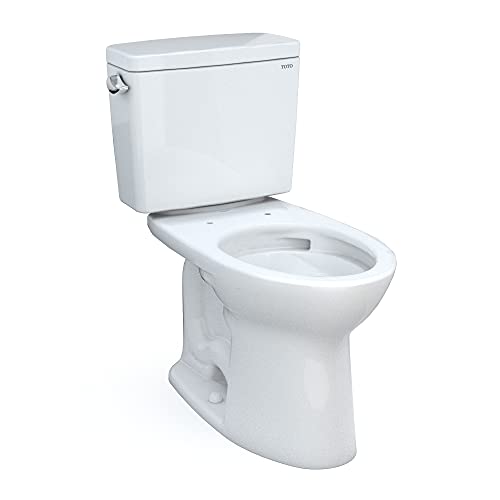
The Drake II uses TOTO's Double Cyclone flush technology, a 1.28 GPF G-Max derivative with a double-nozzle rim that delivers 800 grams MaP and EPA WaterSense certification, in a standard 12-inch rough-in two-piece that drops into most existing plumbing without a single plumbing change.
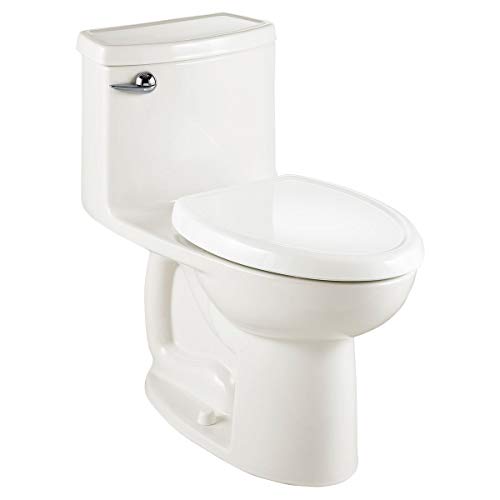
Check price on AmazonAmerican Standard's Cadet 3 achieves a maximum 1000-gram MaP score at 1.28 GPF with a fully glazed trapway that resists clogs, EPA WaterSense certification, and wide parts availability through both big-box retailers and independent plumbing suppliers, making it the strongest-flushing budget replacement in 2026.
Check price on AmazonThe Kohler Cimarron Comfort Height delivers 1000-gram MaP performance and ADA-compliant seat height in a vitreous china bowl with Kohler's Class Five flush technology, WaterSense certification at 1.28 GPF, and a Comfort Height bowl that eliminates the low-seat complaint that comes with standard-height replacements.
Check price on AmazonThe boundary between a legitimate DIY toilet repair and one that genuinely requires a licensed plumber is narrower than most homeowners assume, and wider than most plumbers prefer to advertise. The practical standard is not your prior experience but whether the repair requires working on the water supply line past the shutoff valve, which is the point at which a mistake affects more than the toilet itself.
Every repair described as "inside the tank" is legitimate DIY work in 2026. Flappers, fill valves, float arms, flush valves, trip levers and handles are all tank-interior components. They connect by hand, by a single plastic nut under the tank, or by a clip. They cost between $5 and $35. Replacing any one of them requires shutting off only the toilet's own supply valve, emptying the tank, and swapping the part. The fill valve replacement guide and the flapper replacement guide walk through each of these in full.
Wax ring replacement, which requires removing and resetting the toilet, is also within DIY range for a careful homeowner, particularly with a waxless rubber seal that allows repositioning. The heaviest toilets, particularly one-piece models from Woodbridge, Swiss Madison, or TOTO, weigh 90 to 120 pounds and are easier to set with two people. A standard two-piece like the TOTO Drake, Kohler Highline, or American Standard Cadet 3 separates at the tank-to-bowl junction for easier one-person handling. Plunging and toilet-auger work for trapway clogs are both DIY without qualification.
A plumber is justified when: the closet flange is cracked, corroded, or sitting below a tiled floor and requires a structural repair rather than a gasket swap; the supply shutoff valve does not fully close and must be replaced, since that job requires isolating the main water supply and may involve copper or CPVC work; the drain blockage does not clear with a toilet auger and may be a main-line root intrusion or a belly in the drain line, diagnosable only with a camera; or the subfloor under the toilet is soft or damaged, which means a flooring contractor is involved before a plumber can set a new toilet. These are real, common scenarios, particularly in homes built before 1990 with original cast-iron or galvanized plumbing.
Every toilet repair has a carrying cost if left unfixed. A leaking flapper wastes 200 or more gallons of water per day, which adds measurably to a monthly utility bill. A rocking toilet slowly destroys its wax seal, converting a $5 closet-bolt tightening into a $150 wax ring replacement. A slow trapway clog that becomes a complete blockage at a peak-use moment means an emergency plumber call at premium weekend rates rather than a midweek scheduled visit at standard pricing. The repair costs in this guide assume a timely response. Deferred repairs consistently cost more than the original fix, and occasionally cost more than the toilet itself.
A replacement flapper costs $5 to $12 at any hardware store or online retailer. A plumber typically charges $85 to $150 total, including the service call, for this repair. Most homeowners can replace a flapper in 15 minutes with no tools and no prior plumbing experience.
A plumber's total charge for a running toilet, including the service call, diagnosis, parts, and labor, typically falls between $85 and $200 depending on whether the fix is a flapper alone or a combined flapper and fill valve replacement. The same repair done yourself costs $12 to $30 in parts.
Repair is cheaper in almost every situation except a cracked bowl, persistent chronic clogging from a low-MaP toilet, or a toilet more than 20 years old with multiple failing components. A replacement toilet plus installation costs $250 to $700 or more; most common repairs cost $5 to $200. The exception is when a weak-flushing old toilet is costing water waste and repeated plumber calls.
A flapper replacement takes 10 to 15 minutes. A fill valve replacement takes 20 to 30 minutes. A wax ring replacement, including removing and resetting the toilet, takes 60 to 90 minutes for an experienced DIYer and 30 to 45 minutes for a plumber. A flange repair adds 1 to 3 hours depending on access and flange condition.
If a new flapper does not stop a running toilet, the most likely cause is a pitted or worn flush valve seat that the new flapper cannot seal against, or water level in the tank rising above the overflow tube and draining continuously into the bowl. Check the water level first, then inspect the flush valve seat for mineral deposits or cracks. A seat repair kit ($8 to $16) or a full flush valve replacement ($15 to $35) is the next step.
Fixing a toilet leaking at the base requires replacing the wax ring, which costs $4 to $20 in parts and 60 to 90 minutes of DIY time. A plumber typically charges $100 to $220 including labor. If the closet flange underneath is also damaged, add $150 to $300 for the flange repair, bringing total plumber cost to $250 to $500.
Toilet rocking is most commonly caused by loose closet bolts, which are tightened with a small wrench in under 10 minutes. It can also result from a cracked or low-set closet flange, an uneven floor under the toilet base, or both. Loose closet bolts cost nothing to fix; a cracked flange costs $150 to $350 including plumber labor.
Universal flappers from brands like Fluidmaster and Korky fit most standard gravity-flush toilets including common models from TOTO, American Standard, Kohler, Woodbridge, and Gerber. Toilets with pressure-assist tanks, including Flushmate-equipped models, and dual-flush toilets use proprietary components that require brand-specific replacements. Check your toilet's model number if a universal flapper does not seat correctly.
Flappers typically last 3 to 5 years before the rubber degrades enough to allow leakage, though hard-water mineral deposits can shorten this to 2 years. Fill valves last 5 to 10 years. Wax rings last the life of the toilet if the toilet never rocks. If you have owned a toilet for more than 7 years and it is running intermittently, replacing the flapper and fill valve as a set is cost-effective preventive maintenance.
Most gravity-flush toilets accept universal-fit parts for the flapper and fill valve. TOTO uses a 3-inch flapper on models like the Drake and UltraMax II rather than the standard 2-inch, so a TOTO-specific or correctly sized universal flapper is needed. Kohler's flush valves are often proprietary by model. When in doubt, note your toilet's model number from inside the tank lid and cross-reference at the parts retailer before purchasing.
The fill valve is the component on the left or rear of the toilet tank that opens when the tank drains and refills it to the set water level after each flush. A Fluidmaster 400A, the most widely used replacement fill valve in North America, costs $9 to $13. A Korky QuietFILL Platinum costs $14 to $18. Both are universally compatible with most residential toilets and install with one hand-tightened nut under the tank.
Clearing a toilet clog yourself with a plunger costs nothing beyond the plunger, which is $8 to $18 as a one-time tool purchase. A toilet auger for deeper trapway clogs costs $20 to $45. A plumber's clog clearing, depending on whether the blockage is in the toilet or the main drain line, costs $90 to $350. Main-line hydro-jetting, for root intrusion or severe buildup, runs $300 to $600.
Basic toilet repairs require: an adjustable wrench for the supply line connection and tank nuts, a sponge and bucket to empty the tank, slip-joint pliers, rubber gloves, and a cloth or towel for water on the floor. A toilet auger costs $20 to $45 if needed for a trapway clog. No soldering equipment, pipe cutter, or specialty plumbing tools are required for any in-tank repair or wax ring replacement.
Ghost flushing, in which the toilet spontaneously refills as if someone flushed, is caused by a slow leak from the tank into the bowl past a worn flapper. Fixing it typically costs $5 to $12 for a replacement flapper. If a new flapper does not stop it, the flush valve seat needs attention, adding $8 to $35 in parts. A plumber's fix for ghost flushing typically runs $85 to $175 total.
Hairline cracks in a toilet tank above the water line can be sealed with waterproof porcelain epoxy for $6 to $18 in parts, a repair that is durable and reliable. Cracks below the water line in the tank are less reliably repaired and often indicate that the porcelain is weakening overall. A cracked bowl, including any crack below or at the floor level, cannot be safely repaired and requires full toilet replacement.
Signs of a failed wax ring include water pooling at the base of the toilet after a flush, a persistent sewer smell from the base even after cleaning, or a toilet that rocks. Water staining on the ceiling of the floor below is a more serious sign. Note that condensation on a cold toilet tank can also drip to the floor and mimic a base leak; confirm the source is from the base after a flush by drying the floor completely and flushing once, then inspecting immediately.
A toilet with a leaking flapper or faulty fill valve can waste 100 to 400 gallons of water per day depending on the severity of the leak. At average US residential water rates, this adds $30 to $120 to a monthly water bill. Over a year, a single leaking toilet can waste 35,000 to 145,000 gallons of water and cost $360 to $1,400 in unnecessary utility charges, far exceeding the cost of a $12 flapper and a 15-minute repair.
Universal toilet repair kits that bundle a flapper, fill valve, and handle assembly cost $18 to $35 and represent a reasonable purchase for a toilet that has not had any component replaced in 7 or more years. Replacing all three at once eliminates the common scenario of fixing the flapper only to have the fill valve fail three months later. Brands like Fluidmaster's 400CRP Complete Repair Kit and Korky's Duo-Flush kit offer reliable components in a single purchase.
The closet flange is the ring-shaped fitting embedded in the floor that connects the toilet drain horn to the home's drain line and provides the mounting points for the toilet bolts. A PVC repair flange or spacer ring, which fits over a low or cracked flange, costs $8 to $18 in parts. A full flange replacement in a concrete floor, which requires breaking concrete, removing the old fitting, and setting a new one, is a plumber's job costing $200 to $500 depending on access, concrete depth, and drain-line condition.
Most toilet problems in 2026 are solved with a $5 to $20 part and 20 minutes of effort. A leaking flapper, ghost flushing, a slow fill, or a rocking toilet all have documented, reliable DIY fixes that cost a fraction of a plumber's service call. Reserve a professional for a cracked or low closet flange, a supply shutoff that will not close, or a main-line blockage confirmed by multiple slow drains across the house. If the toilet is more than 20 years old, genuinely failing, or has a cracked bowl, replacing it with a high-MaP WaterSense model from TOTO, Kohler, or American Standard costs less over five years than repeated repairs on a deteriorating fixture, and eliminates the weak-flush frustration that drives most replacement searches in the first place.
Learn why toilet trapways curve like an S, how each bend blocks sewer gas, and what the shape means for clogs and…
Read the guideAlmost every US toilet has a left-side handle. Learn the plumbing and mechanical reasons behind the layout and when it actually changes.
Read the guideHome toilets rely on tanks because household water lines lack the pressure that public flushometer systems use to flush straight from the…
Read the guide