

Why Toilet Trapways Are Curved Like an S
Toilets4.6
Learn why toilet trapways curve like an S, how each bend blocks sewer gas, and what the shape means for clogs and…
Read the guideA rimless toilet removes the hollow, enclosed rim channel found inside a conventional bowl and replaces it with one or two open jets that sweep water across the entire inner surface on every flush. No hidden cavity means nowhere for limescale, mold or bacteria to hide and nowhere your cleaning brush cannot reach. This guide explains how the open-rim flush works, what it trades away, how the best rimless toilets compare by MaP score, GPF and glaze, and which certified models pair the hygiene benefit of an open rim with the flush power to back it up.
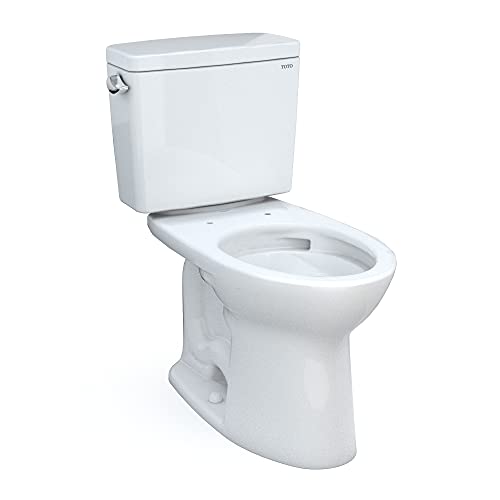
The TOTO Drake II with Tornado Flush is the best rimless toilet for most homes: its two open nozzles swirl water around the full bowl with no hidden rim channel to trap grime, and it posts a 1,000-gram MaP flush score at 1.28 GPF with CeFiONtect glaze, so the open rim delivers on both hygiene and flush power simultaneously.
A rimless toilet is defined by what it removes from the inside of the bowl. On a conventional toilet, water travels from the tank into a hollow channel that runs around the full circumference of the rim. That channel is sealed, invisible from above and pierced by small holes, the rim jets, that trickle water downward to rinse the walls. The channel collects scale, mold and bacteria where neither the flush nor a cleaning brush can reach, and clogged holes weaken the rinse over time. A rimless toilet removes the channel entirely and pushes water instead through one or two open nozzles, usually at the rear, that direct a fast swirl or sheet around the complete inner surface in a single pass. Every square centimeter of the bowl is now visible, rinsed on each flush and accessible to a brush or cloth.
The term appears on spec sheets as rimless, rim-free and open-rim. TOTO rarely uses the word, branding its open-jet system Tornado Flush, with two angled nozzles that spin water centrifugally. Older TOTO models use the Double Cyclone name for a similar two-jet approach. Kohler markets an open swirl as Revolution 360. Swiss Madison, Woodbridge, Horow and other value brands describe a 360-degree swirl without a proprietary name. The marketing language differs; the underlying principle is the same. To confirm a toilet is genuinely rimless, find a photo looking straight down into the bowl: open nozzles and a smooth, uninterrupted wall confirm it; a ring of small holes under a lip means it is a conventional rimmed design whatever the label says.
If you want the broadest ranking across all performance categories, start with the guide to the best flushing toilets, which covers rimless and rimmed models side by side. This article focuses on the rimless design specifically: what it changes, what it does not, and which models get the most from the open-rim concept when you pair it with a strong, documented flush.
The structural difference is smaller than the impact. A rimmed bowl has two water pathways from the tank: a large one to the rim channel and a smaller siphon-jet feed at the base. The rim channel does the bowl-wall rinse, but it divides the water among dozens of holes and the flow through each is gentle, uneven and partly blocked by scale as the toilet ages. When that channel is gone, all of the rinse water passes through one or two large open ports. The flow stays concentrated, moves faster and sweeps the bowl in a single rotation rather than a slow trickle through dozens of holes.
What rimless does not change is everything else about the toilet. It is not a separate flush mechanism: a rimless bowl can be gravity-fed, dual-flush or pressure-assisted, just like a rimmed one. It can be elongated or round, one-piece or two-piece, comfort height or standard height, and it connects to the same 12-inch rough-in with the same floor flange. Rimless is a single attribute layered on top of the rest. That means you still need to verify the rough-in, bowl shape, seat height and flush rating separately even after confirming the open-rim design. See our complete toilet buying guide for a full checklist of specs to match before you buy.
The difference in how the water moves is visible if you flush both types and watch. A rimmed toilet sends water trickling down through rows of small holes; the rinse creeps down the walls slowly and often misses patches. A rimless toilet sends a fast, visible sheet of water around the bowl from back to front, completing the circuit before much water has drained. That speed and evenness of coverage is the engineering advantage of the open-rim system, and it is why the stronger rimless designs, especially TOTO's Tornado Flush, can match the flush power of the best rimmed bowls while using the same or less water.
The MaP (Maximum Performance) score is the clearest independent measure of how well this translates into actual flush power. MaP tests how many grams of solid waste a toilet clears in a single flush, with 350 grams as the residential pass threshold and 1,000 grams as the published maximum. The TOTO Drake II with Tornado Flush reaches 1,000 grams at 1.28 gallons per flush. The TOTO UltraMax II also reaches 1,000 grams at 1.28 gallons. Both are EPA WaterSense certified. Those scores prove that eliminating the rim channel costs nothing in flush power when the nozzle geometry is engineered properly. The trap for buyers is assuming that all rimless bowls flush as well: a cheap open-rim design with poorly aimed jets can still flush weakly, which is why the MaP score remains the mandatory check even after confirming the open-rim structure.
Open the product listing and find a photo taken straight down into the bowl. A genuine rimless toilet shows a smooth, uninterrupted inner wall with one or two visible nozzles at the rear and no ring of small holes under the lip. A conventional bowl shows that ring of holes and a lip whose underside you cannot see. If the listing only shows the toilet from the outside, check the flush-system name: TOTO Tornado Flush, TOTO Double Cyclone and Kohler Revolution 360 confirm an open-rim design reliably, while a plain "rim-wash" or "rim-jet" description usually means a traditional enclosed rim.
The hygiene case is the strongest argument for rimless and the easiest to confirm without any test. Look at the underside of the rim on any toilet that has been in service for a year or more and you will find the darkest, most persistent staining on the entire bowl, because that is where water trickles slowly through clogged holes, scale accumulates in the channel and the brush cannot reach. A rimless bowl has none of that. The inner wall is continuous and smooth, the nozzles are open and easy to inspect, and a short sweep with a brush covers the whole surface.
The benefit amplifies in hard-water homes. On a rimmed toilet, dissolved minerals in the water deposit inside the rim holes and the hidden channel over months and years, eventually blocking some holes, weakening the flush and making the scale impossible to reach with descaler. A rimless bowl avoids that entirely: the open nozzles are visible and accessible, so any scale that forms is easily removed, and the flush stays at its original strength. Pairing rimless with a slick glaze amplifies the benefit further. TOTO's CeFiONtect ion-barrier coating and American Standard's EverClean antimicrobial surface make the smooth, fully reachable bowl wall harder for scale and biofilm to grip in the first place. For hard-water households in particular, that combination of open rim plus antimicrobial glaze eliminates nearly every condition a stubborn stain needs to take hold.
These three models represent what a well-executed rimless design delivers: an open bowl with no hidden channel to scrub, paired with a flush strong enough to clear the bowl every time. Each has a documented MaP score and EPA WaterSense certification, so easy cleaning is not the trade-off for performance.
TOTO's Tornado Flush delivers a two-nozzle open swirl that fully rinses the bowl on every flush, and the CeFiONtect ion-barrier glaze makes the smooth, exposed surface nearly stain-proof. At 1,000-gram MaP and 1.28 GPF, this is the clearest proof that an open rim costs nothing in flush strength.
Check price on AmazonA seamless one-piece body with Tornado Flush and CeFiONtect glaze gives you no tank-to-bowl seam, no rim channel and no rough external surfaces to scrub, making the easy-clean concept complete inside and out. WaterSense certified at 1.28 GPF with a 1,000-gram MaP score.
Check price on AmazonAn affordable rimless one-piece with a 360-degree open swirl, a skirted glazed exterior and dual-flush at 1.1 and 1.6 gallons, delivering the full cleaning benefit of the open rim at a price point that makes the design accessible to budget-conscious buyers.
Check price on AmazonThe most common mistake when shopping for a rimless toilet is treating the open-rim label as a guarantee of flush power. It is not: rimless describes how water is distributed inside the bowl, not how forcefully it is expelled. A poorly designed cheap open-rim bowl can still flush weakly and still splash. The right order of checks is: confirm the open-rim design by looking into the bowl, then confirm the flush by checking the published MaP grams (800 minimum, 1,000 for heavy use), then verify the model in the EPA WaterSense database. TOTO's Tornado Flush models pass all three checks together, which is why they dominate this category despite being priced above budget alternatives.
| Toilet | Best For | MaP Score | GPF | Flush System | Rating | Check Price |
|---|---|---|---|---|---|---|
| TOTO Drake II | Best overall rimless | 1,000 g | 1.28 | Tornado Flush | 4.8 | Check price |
| TOTO UltraMax II | Best one-piece rimless | 1,000 g | 1.28 | Tornado Flush | 4.7 | Check price |
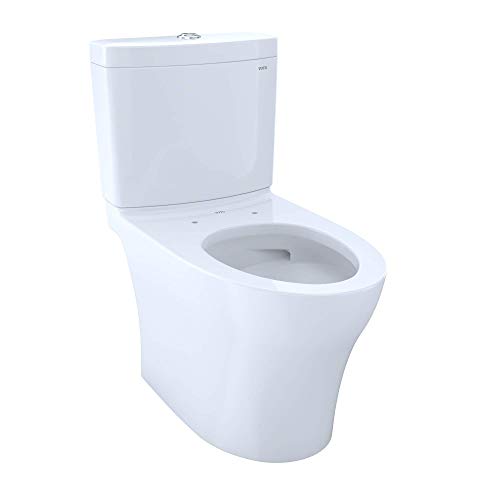
| TOTO Aquia IV | Best dual-flush rimless | 900 g | 0.8 / 1.28 | Tornado Flush | 4.6 | Check price |
| Swiss Madison St. Tropez | Best value rimless | 800 g | 1.1 / 1.6 | 360-degree swirl | 4.4 | Check price |
| Woodbridge T-0001 | Best budget one-piece | 800 g | 1.28 | Open swirl | 4.3 | Check price |
| Kohler Cimarron (Rev 360) | Best Kohler open-swirl | 1,000 g | 1.28 | Revolution 360 | 4.6 | Check price |
| Conventional rimmed bowl | Lowest upfront cost | 600-1,000 g | 1.28-1.6 | Rim-hole rinse | 4.2 | Check price |
The comparison is more useful framed as a question of what each design trades away rather than which is better in every dimension. A rimless toilet trades the enclosed rim, and with it the dirtiest hiding place for grime, and in its most important downgrade it occasionally costs slightly more at equivalent build quality. A rimmed toilet trades the easy-clean open bowl but offers more models, especially at lower prices, and the familiar design that plumbers and installers work with daily. The flush differences, where they exist at all, depend entirely on how well each particular bowl is engineered, not on whether the rim is open or enclosed.
Choose a rimless toilet if: hygiene and easy cleaning are priorities, you live in a hard-water area where scale blocks rim holes over time, your bathroom sees heavy use, or you are installing a toilet you expect to keep for a decade or longer and want it to clean as well at year ten as at year one. Also choose rimless if you are pairing a bidet seat, since the smooth open bowl is easier to keep hygienic alongside a seat-mounted wash nozzle. For the full decision framework that covers bowl shape, seat height and flush type alongside the rimless question, see our guide on how to choose a toilet.
Choose a rimmed toilet if: your budget is tight and you need the widest selection of models below a specific spend, or you are replacing a toilet in a rental or secondary bathroom where long-term maintenance is a lower priority, or a specific style or rough-in you need only comes in a rimmed design. The rimmed bowl is not a wrong choice; it is simply the design that has a hidden surface to scrub, and the one whose flush can weaken over years as scale builds in the rim holes.
MaP testing is the most reliable published data for comparing flush power between models. The test uses a standardized soybean-paste media at various weights to simulate real waste and records the maximum weight cleared in a single flush. A score of 350 grams passes the residential minimum; 500 to 800 grams covers everyday household use with a margin; 1,000 grams is the maximum published score and comfortably handles the heaviest residential demand. The TOTO Drake II with Tornado Flush reaches 1,000 grams at 1.28 GPF, the same ceiling as the best rimmed gravity toilets, and it does so with an open-rim bowl that fully rinses the walls simultaneously.
The TOTO Aquia IV deserves a separate mention because it stretches the rimless concept into ultra-efficient territory: its dual-flush posts 900 grams at 0.8 gallons on the full flush and is WaterSense certified, making it one of the most efficient powerful-flushing toilets on the market. For a large household that wants to cut water consumption without sacrificing flush reliability, the Aquia IV's open-rim Tornado Flush is an unusually good combination. Gerber's Viper and Avalanche models are strong rimmed alternatives that reach high MaP scores, but they use conventional rim-hole rinses, so they lack the cleaning advantage of the open-jet designs.
Clog resistance has three real drivers. First is trapway diameter: a wider, fully glazed channel passes waste with less friction. The TOTO Drake II uses a 2.125-inch trapway and coats it with CeFiONtect, which reduces adhesion at the walls. American Standard's Champion 4 uses a fully glazed 2.375-inch trapway, the widest commonly available, and reaches 1,000 grams with a conventional rimmed bowl, which demonstrates that trapway and flush power matter more than rim design for clog resistance. Second is MaP score: a higher score means more mass is cleared in a single flush with less risk of partial passage. Third is glaze quality on the trapway interior: unglazed ceramic grips waste; smooth glazed surfaces let it pass. None of these three factors are changed by removing or keeping the rim channel.
Where the rimless design does indirectly help with clogs is in hard-water homes. On a rimmed toilet, scale that builds in the rim holes reduces the flow of rinse water, which reduces the bowl water level and can make the flush less effective over time, increasing the risk of partial clears and eventual clogs. An open-rim bowl avoids that degradation: the jets stay clear, the flush delivers full power on flush number ten thousand exactly as on flush number one, and the bowl water level stays consistent. So in a hard-water house, a rimless toilet is indirectly more clog-resistant in the long term because its flush does not weaken the way a scale-blocked rimmed toilet does.
The rimless label gets you an easy-clean open bowl, but five measurable specs separate a model that fits your bathroom and flushes reliably from one that disappoints. Check each one before you buy.
Not every toilet labeled rimless is genuinely rim-free, and some brands use the term loosely to describe a shallower rim rather than an absent one. Find a photo taken straight down into the bowl in the manufacturer listing. A true open-rim toilet shows a smooth, continuous inner wall with one or two open nozzles at the rear and no ring of small holes under the lip. The flush-system name is a reliable shortcut: TOTO Tornado Flush, TOTO Double Cyclone and Kohler Revolution 360 each confirm an open-rim rinse. A listing that only shows the exterior and describes a plain rim wash or rim jet is almost certainly a conventional enclosed rim.
Because rimless describes the bowl rinse and not the flush mechanism, flush power is a separate question requiring a separate check. MaP scores are published at map-testing.com and in manufacturer data sheets for most major models. Use 800 grams as the floor for a household of two to four people, 1,000 grams for large families, frequent clogs or heavy use. The TOTO Drake II (1,000 g at 1.28 GPF) and TOTO Aquia IV (900 g at 0.8 GPF) set the standard. Any rimless model that does not publish a MaP score should be treated with suspicion, because the open rim alone does not guarantee strong clearing power.
WaterSense certification means the toilet uses 1.28 gallons per flush or less and passed a third-party performance test. Confirm the exact model number in the EPA database at epa.gov/watersense rather than relying on the box label alone, because not every variant in a product family carries the same certification. Most leading rimless models, including the TOTO Drake II, UltraMax II and Aquia IV, are WaterSense certified. Dual-flush rimless options like the Aquia IV and the Swiss Madison St. Tropez drop the light flush below 1.1 gallons, so you gain both the easy-clean bowl and meaningful water savings. For a full breakdown of efficiency options, see our guide to the best water saving toilets.
Rimless is one attribute: confirm the rest independently. Rough-in is the distance from the finished wall to the center of the floor-drain bolts, usually 12 inches in most US homes but sometimes 10 or 14 inches in older construction; always measure before ordering. Elongated bowls are more comfortable for most adults; round bowls save up to two inches of depth, which matters in a small bathroom. Comfort-height bowls at 16 to 18 inches from floor to seat rim make sitting and standing easier for tall adults and those with joint issues. One-piece bodies like the TOTO UltraMax II have no tank-to-bowl seam and pair naturally with the easy-clean theme of an open rim; two-piece models like the Drake II are lighter and usually cheaper to ship. See our comparisons of round vs elongated toilets and one piece vs two piece toilets for the full trade-off analysis.
The open rim removes the worst hiding place for grime, but the rest of the bowl wall still benefits from a slick surface. TOTO's CeFiONtect is an ion-barrier glaze applied at the molecular level that reduces the electrical attraction between the ceramic and the charged particles in hard-water scale and biofilm. American Standard's EverClean is an antimicrobial coating that inhibits bacteria, mold and mildew from taking hold. Both make the smooth, fully reachable rimless bowl wall substantially harder to stain and much faster to clean. When two rimless models are otherwise close in MaP score and GPF, the one with a documented antimicrobial or ion-barrier glaze will deliver more of the easy-clean promise over a five-year or ten-year ownership period.
Five checks cover almost every rimless toilet purchase correctly: look into the bowl to confirm the open-rim design, check the MaP grams separately (800 minimum, 1,000 for heavy use), verify the exact model number in the EPA WaterSense database, measure your rough-in before ordering, and choose a glazed surface to extend the cleaning advantage long-term. Stick to TOTO, Kohler, Swiss Madison and Woodbridge for the rimless open-rim class; the no-name imports where splashing complaints cluster most often are where those five checks reveal problems. A rimless toilet from a reputable brand that passes all five checks will stay cleaner, flush reliably and need less maintenance than a conventional rimmed bowl across a decade of normal use.
A rimless toilet is a toilet with no enclosed rim channel around the inside of the bowl. Instead of feeding water through a ring of small holes hidden under a closed lip, it uses one or two open jets at the back of the bowl that throw water around the entire inner surface in a fast swirl or sheet. This removes the hidden cavity where scale, mold and bacteria accumulate, so the full bowl is both rinsed on every flush and reachable with a cleaning brush.
Water is released from one or two open nozzles, normally at the rear of the bowl, that direct a fast swirl or sheet of water around the complete inner wall in a single pass before draining through the trapway. Because the flow is concentrated through large open ports rather than divided among dozens of small rim holes, it moves faster and rinses the bowl more evenly. TOTO's Tornado Flush uses two angled nozzles to create a centrifugal spin that wraps the full bowl.
Effectively yes. Tornado Flush is TOTO's branded name for its open-rim design, which uses two nozzles to swirl water around the bowl with no enclosed rim channel, which is exactly the definition of rimless. TOTO rarely uses the word rimless in its marketing, but any Tornado Flush or Double Cyclone bowl behaves as a rimless toilet because it has no sealed rim cavity and no ring of rim holes.
Yes. With no hidden rim channel, there is no area where grime collects out of reach of the brush or the flush. The complete inner wall is exposed and smooth, a single pass with a toilet brush covers everything, and the open-jet rinse washes the whole surface on each flush. Owner reviews of open-rim models consistently cite reduced under-rim staining and faster weekly cleaning as the most noticeable practical benefit.
Yes. Removing the enclosed rim cavity removes the dirtiest, least accessible part of a conventional toilet: the area just under the rim where bacteria, biofilm, mold and limescale build up beyond the reach of the flush or a cleaning brush. With no hidden channel, there is nowhere for that buildup to hide, so a rimless bowl stays more hygienic and is far less likely to develop the under-rim staining and odor that accumulate in conventional bowls over time.
Yes, when well designed. The best rimless models reach the same 1,000-gram MaP ceiling as the strongest conventional toilets. The TOTO Drake II with Tornado Flush achieves 1,000 grams at 1.28 GPF, matching the top rimmed bowls. The open rim describes how water is distributed, not how forcefully it is pushed, so flush strength depends on the underlying flush mechanism and nozzle geometry, not on the rim design itself.
For most homes, yes. The open rim removes the single dirtiest, hardest-to-reach part of a toilet, cutting cleaning time and improving hygiene with no flush penalty on well-engineered models. It is most worthwhile in hard-water homes, busy bathrooms and any household that wants a fixture that cleans as easily at year ten as at install day. The caveats are a small price premium on some models and occasional splashing on cheap, poorly aimed designs.
Quality models from TOTO, Kohler and Swiss Madison do not splash outside the bowl, because the nozzles are engineered to direct water inward at angles that keep the swirl contained. Some cheap imported designs with poorly aimed jets can let water escape near the rim. Sticking to proven open-jet systems like TOTO Tornado Flush and Kohler Revolution 360 avoids the splashing complaints that appear in reviews of no-name rimless imports.
Aim for at least 800 grams for everyday household use and 1,000 grams for a large family, frequent clogs or heavy use. MaP (Maximum Performance) testing measures grams of solid waste cleared in a single flush, with 350 grams as the minimum residential pass threshold. Because rimless describes the bowl rinse, not the flush strength, confirm the MaP score separately rather than assuming the open rim guarantees strong clearing power.
TOTO leads with Tornado Flush and Double Cyclone open-rim designs on the Drake II, UltraMax II, Aquia IV and Vespin II. Kohler offers Revolution 360 swirl flushing on several Cimarron and Highline variants. Swiss Madison, Woodbridge and Horow offer affordable rimless and 360-degree-swirl one-piece bowls. American Standard's EverClean-glazed models are strong gravity performers but use conventional rim-jet rinsing rather than a fully open rim.
Yes, they are one of the best design choices for hard water. Dissolved minerals in hard water deposit inside conventional rim holes and the hidden rim channel over months, eventually blocking the holes and weakening the flush. A rimless bowl has open jets that do not scale up the same way, and the exposed inner wall is easy to reach for descaling. Pairing rimless with a CeFiONtect or EverClean glaze further resists mineral staining in high-hardness areas.
Rimless does not inherently prevent clogs: clog resistance comes from trapway diameter, flush strength and glaze, not from the rim design. However, in hard-water homes a rimless toilet prevents the long-term flush degradation that happens when scale blocks rim holes in a conventional bowl, so it indirectly preserves clog resistance over years of use. Always check the MaP score and trapway specs for the actual clog-prevention assessment.
No. A rimless toilet installs the same way as any standard bowl: it bolts to the same floor flange, connects to the same water supply and fits the same rough-in. The open rim changes only the inside of the bowl, not the plumbing connections, the flange mount or the rough-in distance. A plumber or a confident DIYer installs a rimless toilet in the same time and with the same tools as any other model.
They can, though rimless and water use are independent attributes. Most rimless models from TOTO, Kohler and Swiss Madison are WaterSense certified at 1.28 GPF. Many rimless dual-flush bowls, including the TOTO Aquia IV, drop the light flush to 0.8 gallons, achieving significant savings without sacrificing the hygienic open-rim rinse. So a rimless toilet typically uses the same or less water than a conventional bowl while delivering a faster, more even rinse.
Look into the bowl from above. A rimless toilet shows a smooth, continuous inner wall with one or two visible nozzles, usually at the back, and no ring of small holes under the lip. A conventional toilet shows that ring of rim holes and a lip whose underside hides a channel you cannot see. The flush-system brand name is a reliable shorthand: Tornado Flush, Double Cyclone and Revolution 360 each confirm a genuine open-rim design.
A one-piece rimless toilet like the TOTO UltraMax II has no tank-to-bowl seam, which pairs naturally with the easy-clean philosophy of the open rim and gives a streamlined look. A two-piece like the Drake II is lighter, less expensive to ship, easier to move through a doorway during install and still delivers the same Tornado Flush performance. Choose one-piece for aesthetics and maximum ease of cleaning; choose two-piece for cost and ease of installation.
Yes. Rimless is independent of seat height, so most open-rim models are available in both comfort height (seat rim at 16 to 18 inches from the floor) and standard height (14 to 15 inches). The TOTO Drake II and UltraMax II are offered in Universal Height, TOTO's name for comfort height, so you can combine the easy-clean open rim with the easier-sitting taller bowl.
Rimless describes the inside of the bowl: no hidden rim channel, open-jet rinse. Skirted describes the outside of the toilet: a smooth apron that covers the base and trapway to remove the external curves and crevices that collect dust and grime. Many toilets combine both, offering an open-rim rinse inside and a skirted exterior outside, such as the TOTO UltraMax II, for maximum ease of cleaning both inside and out.
Gravity-fed rimless bowls tend to be quieter than pressure-assisted designs, and the smooth swirl of a Tornado Flush can sound gentler than the trickle through dozens of rim holes in a conventional bowl. Some open-jet designs produce a brief rushing sound as water sheets around the bowl. If quiet flushing is a priority, a gravity rimless model is the right choice; pressure-assisted designs are louder regardless of whether the rim is open or enclosed.
Some are, but not all. A decade ago rimless designs were primarily found in European import lines at premium prices. Today, value brands including Swiss Madison, Woodbridge and Horow offer rimless and open-swirl one-piece bowls at budget-accessible prices, while TOTO's Tornado Flush models sit in the mid to upper range. The open rim is no longer a luxury-only feature and can be found across most price points.
A rimless toilet is the smarter default for almost any bathroom that gets cleaned by a real person. Removing the hidden rim channel removes the dirtiest, least accessible part of a conventional bowl, so it stays fresher with less scrubbing, far less under-rim staining and no odor from a cavity that water and brushes never reach. On well-engineered models the open rim costs nothing in flush power: the TOTO Drake II with Tornado Flush posts a full 1,000-gram MaP score at 1.28 gallons, the same ceiling as the best rimmed bowls. Because rimless describes the bowl rinse, not the flush mechanism, always confirm the design by looking into the bowl and check the MaP grams as a separate step. For most homes, the TOTO Drake II is the single best rimless choice: Tornado Flush, CeFiONtect glaze and a verified 1,000-gram flush in a two-piece that fits standard 12-inch rough-in. The TOTO UltraMax II adds a seamless one-piece body for buyers who want the easy-clean theme to extend outside the bowl as well. The Swiss Madison St. Tropez brings dual-flush rimless down to a budget price. Choose any of the three, verify the model in the EPA WaterSense database, confirm your rough-in, and you will have a toilet that cleans fast, flushes hard and keeps both promises for the life of the fixture.
Learn why toilet trapways curve like an S, how each bend blocks sewer gas, and what the shape means for clogs and…
Read the guideAlmost every US toilet has a left-side handle. Learn the plumbing and mechanical reasons behind the layout and when it actually changes.
Read the guideHome toilets rely on tanks because household water lines lack the pressure that public flushometer systems use to flush straight from the…
Read the guide