

How to Remove Rust Stains From a Toilet Bowl
Cleaning & Maintenance4.6
Orange and rust-brown streaks in a toilet bowl are iron oxide, a mineral deposit that bleach cannot dissolve and often intensifies. This…
Read the guideClean a toilet fully once a week, wipe the handle and seat with a disinfecting cloth two to three times between weekly cleans, and do a deeper descaling every one to two months. That baseline keeps every job easy: a fresh deposit lifts in seconds while a set-in ring fights you for ten minutes. Heavy-use family bathrooms, hard or well water, illness in the household and low-flow bowls all push the schedule up. A rarely used guest bathroom can stretch to every two weeks for the bowl. This guide gives you exact frequencies for every scenario, explains why cleaning and disinfecting are different tasks with different schedules, lays out a practical daily, weekly and monthly routine, names the products that make each step take less time, and covers the toilet features and habits that keep a bowl cleaner between scrubs.
Clean a standard household toilet fully once a week using a clinging bleach gel like Clorox Toilet Bowl Cleaner with Bleach, wipe the seat and handle with a disinfecting cloth two to three times per week, and do an acid descaling with Lime-A-Way every four to six weeks if you have hard water. During illness, clean and disinfect the entire toilet every 24 hours, not just the bowl.
The reason once a week is the right baseline comes down to how stains form and bond. Bacteria, mineral deposits, limescale and organic film all start as a thin invisible layer that a toilet brush removes in one pass. Within about ten days without a clean, that layer thickens and begins to bond to the glaze. Within three weeks it sets hard enough that no bowl cleaner lifts it without extended dwell time and real scrubbing effort. By keeping to once a week you permanently stay on the easy side of that threshold. The bowl never reaches the state where a quick clean becomes a battle.
We do not run our own cleaning trials. We compare published manufacturer safety data and active ingredients, EPA WaterSense and public-health hygiene guidance on high-touch surface disinfection frequency, the chemistry of each stain type and how fast each sets on glazed porcelain, and the patterns across thousands of verified owner reviews. We also factor in the toilet models themselves: a TOTO bowl with CeFiONtect glaze holds fewer bacteria and resists stain adhesion better than uncoated porcelain, which genuinely extends the time before visible buildup forms. For the fixtures behind this routine, see the full guide to the best flushing toilets.
| Bathroom Type | Bowl Clean Frequency | Disinfect Wipe Frequency | Acid Descale |
|---|---|---|---|
| Main family bathroom (3+ people) | Weekly | 2 to 3x per week | Every 4 to 6 weeks |
| Two-person household | Weekly | 1 to 2x per week | Every 6 to 8 weeks |
| Guest bathroom (rarely used) | Every 10 to 14 days | Weekly | Every 8 to 12 weeks |
| Hard or well water home | Weekly | 2 to 3x per week | Every 2 to 3 weeks |
| During household illness | Daily | After every use if possible | Normal schedule |
| Rental or commercial bathroom | Daily | Multiple times daily | Every 2 to 4 weeks |
| Toddler/young-child household | Twice weekly | Daily | Every 4 to 6 weeks |
Most people treat cleaning and disinfecting as the same action, and that is why the handle of a toilet is often one of the most germ-dense surfaces in a home even in bathrooms that look clean. The flush handle is touched immediately before, during and immediately after using the toilet, often without hand washing in between. The seat surface and the underside of the seat lid also accumulate aerosol bacteria every time a toilet flushes without the lid closed, a phenomenon microbiologists sometimes call toilet plume.
Cleaning with a wet cloth removes physical dirt and reduces bacterial count by dilution and physical removal. Disinfecting with a registered product like Clorox Disinfecting Wipes or Lysol All-Purpose Cleaner requires the surface to stay visibly wet for the dwell time listed on the label, usually four to five minutes, to achieve the claimed kill rate. Wiping the surface dry immediately after applying a disinfectant cleans it but does not disinfect it. That gap between cleaning frequency and disinfection frequency is the one most home cleaning routines miss: the bowl may get scrubbed weekly while the handle, which is touched dozens of times daily, only gets wiped down when the whole toilet does.
The flush handle and the seat hinge area need disinfecting more often than the bowl needs scrubbing. A bowl that is not visibly dirty is not accumulating bacteria at the same rate as a handle that fifty fingers touch each day. Keep a small container of disinfecting wipes under or beside the toilet and do a thirty-second handle-seat-lid wipe two or three times a week without touching the bowl at all. That one habit closes the biggest hygiene gap in most household bathroom routines.
Hard water is classified by the US Geological Survey as water with more than 120 milligrams of dissolved minerals per liter, and the majority of American homes fall in the moderate-to-very-hard range. Every flush leaves a thin mineral film at the waterline. In soft water this is slow enough that monthly descaling keeps it managed. In hard water, visible scale can form in as little as one to two weeks and bonds aggressively to the glaze.
The chemistry matters here. A bleach gel like Clorox does not dissolve calcium carbonate or magnesium deposits. It whitens organic stains and kills bacteria, but the chalky white or gray waterline ring in a hard-water home is entirely mineral. You need an acid: hydrochloric acid in Lime-A-Way Toilet Bowl Cleaner, citric acid in Seventh Generation Toilet Bowl Cleaner, or oxalic acid in Bar Keepers Friend. Apply after the bleach product has fully flushed away and the bowl is dry enough for the acid to cling, never combine bleach and acid in the same bowl simultaneously as this produces chlorine gas.
Well water adds iron to the problem. Iron from a private well leaves orange-brown streaks below the rim and at the waterline that neither bleach nor standard acid cleaners remove efficiently. Iron OUT Rust Stain Remover, which uses sodium hydrosulfite, is the right product for iron stains and typically works in five to ten minutes of dwell time. For homes on well water, build an iron-stain treatment into the routine every three to four weeks regardless of visible staining to prevent it from bonding fully.
Norovirus is the clearest case where normal cleaning frequency genuinely does not protect other household members. The CDC notes that norovirus can remain infectious on environmental surfaces for days and that it takes only a very small number of particles to cause infection in another person. A toilet that a sick person uses is an active transmission risk until the illness has resolved and a full disinfecting clean has been completed.
During a GI illness, use a disinfectant specifically labeled for norovirus. Not all disinfectants kill norovirus efficiently. Bleach-based products at household dilutions are among the most effective. Lysol Disinfecting Wipes and Clorox Disinfecting Wipes are EPA-registered against norovirus when the dwell time on the label is observed. Alcohol-based wipes are generally less effective against norovirus than bleach. Clean the bowl, under the rim, the seat top, the seat bottom, the lid, the handle, the tank lid, and the exterior surfaces of the toilet and the flush button or handle each time you clean. Wash your hands with soap and water rather than hand sanitizer after cleaning, since norovirus is also resistant to alcohol-based sanitizers at typical concentrations.
After the sick household member recovers, do one final thorough bleach-based clean of the entire bathroom before returning to the normal weekly schedule.
Several specific features determine how quickly a toilet gets visibly dirty between cleans:
TOTO's CeFiONtect is an ion-barrier glaze applied at the factory that creates an extremely smooth, non-porous surface. Bacteria and organic particles find fewer microscopic surface irregularities to adhere to, and water sheets off more completely after each flush. TOTO offers CeFiONtect on the TOTO Drake, Drake II, UltraMax II, Aquia IV and Vespin II, among others. Kohler's DryLock surface on the Cimarron Comfort Height and Highline provides a similar benefit. American Standard's EverClean surface uses an antimicrobial additive in the glaze to actively inhibit the growth of stain and odor-causing bacteria. Woodbridge and Swiss Madison St. Tropez do not specify a proprietary antimicrobial glaze but use standard vitreous china, which still benefits from smooth factory finishing. On an older toilet with a worn or scratched glaze, film adheres faster and more stubbornly than on any current model with a modern surface treatment.
A toilet that achieves a 1,000-gram MaP score, the maximum in the Maximum Performance (MaP) flush-test protocol conducted by an independent third-party laboratory, clears the bowl completely in a single flush and leaves minimal residue on the porcelain surface between flushes. The TOTO UltraMax II is rated at 1,000 grams MaP. The American Standard Champion 4 is also rated at 1,000 grams. The Gerber Viper and Avalanche are both rated at 1,000 grams. The Kohler Highline Classic and Kohler Cimarron both achieve 1,000 grams. A toilet that scores 600 to 800 grams MaP is still well above the 350-gram minimum the EPA WaterSense program requires for certification, but it leaves more residue in the bowl that forms the base layer of the bacterial and organic film that requires weekly cleaning. High MaP scores do not eliminate the need to clean, but they reduce the volume of organic material left in the bowl after each flush, and that does translate to slightly slower visible buildup.
A 1.28 GPF (gallons per flush) EPA WaterSense certified toilet, which is the standard for most current TOTO, Kohler and American Standard models, fills the bowl to a specific waterline height. That waterline is where the mineral deposit and the organic film concentrate, because it is the evaporation boundary. A toilet that uses 1.6 GPF typically fills to a slightly higher waterline, which shifts the ring zone upward. A dual-flush toilet like the TOTO Aquia IV or the Woodbridge T-0019 uses 0.8 GPF for liquid waste and 1.28 GPF for solid waste, and in households where the 0.8 GPF flush is used frequently, the lower waterline can concentrate mineral and organic deposits in a narrower band that appears more prominently. The cleaning task itself is the same, but the location and concentration of the ring shifts.
If you are replacing a toilet and you hate cleaning, the two specifications to prioritize for reduced cleaning burden are a 1,000-gram MaP score and an antimicrobial glaze. The TOTO Drake II with CeFiONtect or the American Standard Champion 4 both earn a 1,000-gram MaP rating, clear the bowl fully in one flush and leave the porcelain visibly cleaner between scrubs than a mid-range model scoring 600 to 700 grams. You still clean once a week, but the difference in how much effort the clean takes is real and owner reviews consistently reflect it.
Wipe the flush handle, the seat lid and the top of the tank with a disinfecting cloth. Keep a container of wipes beside or under the toilet for this. This step takes under a minute and is the single most important hygiene action for a bathroom used by multiple people, because the handle accumulates the highest bacterial density of any surface in the room and is the most likely transmission point for illness. This is not a cleaning task, it is a disinfection task. The bowl does not need attention at this frequency under normal household conditions.
Put on gloves. Apply a clinging bowl gel like Clorox Toilet Bowl Cleaner with Bleach under the rim and let it dwell for five to ten minutes. While it dwells, wipe down the seat top and bottom, seat lid top and bottom, tank exterior, bowl exterior and base using a disinfecting wipe or a cloth and all-purpose disinfectant spray. Work from the cleanest surface toward the dirtiest: handle first, then lid, then seat, then exterior bowl and base. Then scrub the bowl with a toilet brush, working under the rim and down to the trap. Flush while the brush is in the bowl to rinse it. The entire process takes ten minutes when the routine is kept weekly. If the clean is skipped for two or more weeks, the scrubbing time roughly doubles because the film has begun to bond. For the best brushes to make this easier, see our picks for the best toilet brushes of 2026.
This is the acid descaling session. After the normal weekly clean and after the bleach has fully flushed from the bowl, apply a hydrochloric acid product like Lime-A-Way Toilet Bowl Cleaner under the rim and at the waterline, let it dwell for the time on the label (typically five to fifteen minutes), scrub and flush. In very hard water or well water, do this every three to four weeks. In average municipal water, every four to six weeks is sufficient. Also wipe the tank lid interior and check the fill valve and flapper for any mineral buildup, cleaning with a white vinegar-soaked cloth if needed. For a complete guide to the tank, see how to clean a toilet tank.
Separately, clean under the rim with a dedicated under-rim brush or an extended-reach brush once a month. The underside of the rim has the most sheltered surface in the bowl, and jet ports and the rim channel accumulate black or pink mold and mineral deposits faster than the visible bowl surface. Standard toilet brushes often cannot reach fully into the rim channel. A dedicated under-rim brush or a flex-neck brush addresses this. For the full method, see our guide to how to clean under the toilet rim.
Matching the product to the stain type is the most important decision in the routine. Using the wrong chemistry either fails to remove the stain or takes three times as long as the right product would.
Clorox Toilet Bowl Cleaner with Bleach is the standard choice: thick enough to cling under the rim, effective on organic grime and film, disinfects as it cleans, and rinsed clean by a standard flush. Lysol Toilet Bowl Cleaner is an acid-based alternative that both disinfects and handles light mineral deposits, making it useful in moderate hard-water areas. For households that cannot use bleach, Better Life Natural Toilet Bowl Cleaner uses plant-based acids and is labeled septic-safe and safe for porcelain.
Lime-A-Way Toilet Bowl Cleaner uses hydrochloric acid and is specifically formulated for toilet bowl mineral deposits. It dissolves calcium and lime rings that bleach cannot touch. Seventh Generation Toilet Bowl Cleaner uses a milder citric acid, effective for light to moderate scale. Never mix an acid cleaner with a bleach cleaner in the same bowl at the same time.
Iron OUT Rust Stain Remover uses sodium hydrosulfite and is the most effective widely available product for iron and rust staining from well water. Bar Keepers Friend powder, which uses oxalic acid, also removes rust with light scrubbing and is safe on porcelain when rinsed promptly.
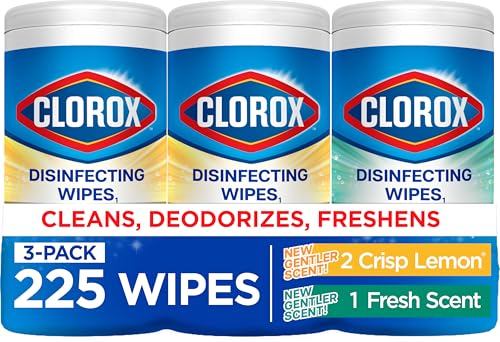
Clorox Disinfecting Wipes or Lysol Disinfecting Wipes are EPA-registered disinfectants for hard surfaces and are practical for the daily handle-and-seat wipe. The key is observing the dwell time on the label so the surface stays wet long enough to achieve the labeled kill rate. For the full range of bathroom surface cleaners, see the best bathroom cleaners of 2026.
If the bowl empties slowly and cleaning has not improved it, the trapway or the drain line may have partial buildup. An enzyme-based drain cleaner is gentler on the toilet seal and trap than a chemical clog remover. For options, see our guide to the best drain cleaners of 2026.
4.8 / 5
Thick clinging gel that clings under the rim, whitens and disinfects organic stains, and rinses clean in one flush. The angled neck reaches the hard-to-coat band where bacterial film hides.
Check price on Amazon4.6 / 5
Hydrochloric acid formula that dissolves calcium and lime deposits that bleach-based cleaners cannot touch. Apply after the bowl has been rinsed of any bleach product, let dwell, scrub and flush.
Check price on Amazon4.8 / 5
EPA-registered against norovirus and other hard-surface pathogens. The practical choice for the daily handle and seat wipe. Keep a container beside the toilet so the step actually gets done.
Check price on AmazonSeveral habits reduce how quickly a toilet gets dirty between weekly cleans. None of them eliminates cleaning, but they do determine whether the weekly clean takes three minutes or ten.
Toilet plume, the aerosol spray generated by flushing, distributes bacterial particles upward and outward from the bowl. A 2022 study published in Scientific Reports using laser sheet imaging found that particles from a flush rise above the rim within seconds and disperse into the surrounding air. Closing the seat lid before flushing contains most of this spray in the bowl. It does not eliminate all aerosol but measurably reduces the bacterial load that settles on the seat exterior, seat hinge, surrounding walls and surfaces near the toilet, which are the surfaces that drive the disinfection frequency.
Keeping a toilet brush accessible and doing a ten-second swish of the bowl after use when visible marks are left does more for bowl appearance than any product substitution. This is not a cleaning or disinfecting step, it is a maintenance habit that prevents any single deposit from getting enough time to bond to the glaze before the weekly clean arrives.
Blue or bleach-infused drop-in tank tablets continuously release cleaner into the bowl between flushes and seem like the solution to constant cleaning, but most plumbers and toilet manufacturers, including TOTO and Kohler, advise against them. The bleach and dye in many tablets degrades rubber flappers and valve seals faster than normal wear, which leads to running toilets and early part replacements. If you want a between-flush cleaning boost without tank tablets, a clip-on under-rim gel dispenser like those by Scrubbing Bubbles or Bref is a safer alternative because it does not contact the tank components.
If hard water is driving constant descaling, a point-of-use water softener or a whole-house softener addresses the problem at the source rather than treating the symptom at the bowl. This is a significant investment but it reduces mineral buildup throughout the entire home, not just the toilet. For households on well water with high iron, a dedicated iron filter or sediment pre-filter substantially reduces the iron staining load before water enters fixtures.
This is a long-term decision, not a maintenance habit, but it is relevant when a toilet is being replaced. The TOTO Drake II with CeFiONtect, the Kohler Cimarron Comfort Height with DryLock, and the American Standard Champion 4 with EverClean surface all resist stain adhesion better than standard vitreous china. The difference over a year of weekly cleaning is real: with a CeFiONtect bowl, the weekly scrub is lighter and the monthly descale involves less effort because the mineral deposit bonds less aggressively to the smoother surface.
The single highest-return habit for keeping a toilet clean between scrubs is closing the lid before every flush. It takes no additional time, requires no product, and measurably reduces the bacterial aerosol that settles on the seat exterior and surrounding surfaces, which is the main driver of why disinfecting wipes are needed more than once a week. Every other habit is incremental. This one actually changes the load you are managing.
Once every seven to ten days for a full bowl clean is sufficient for a single-person household under normal conditions. The seat and handle still benefit from a disinfecting wipe two or three times per week, because the handle is a high-touch surface regardless of how many people use the bathroom.
Yes, in average municipal water. A weekly clean keeps the organic film and light mineral deposits in the easy-to-remove zone. In hard water, a once-weekly bleach clean handles the organic component but a monthly or bimonthly acid descaling is also needed to prevent the mineral ring from bonding to the glaze.
For the bowl, cleaning more often than necessary is wasteful but not harmful if you use a safe formula. Cleaning the porcelain daily with an acid product could theoretically degrade the glaze over years, but occasional over-cleaning with a mild bleach gel or plant-based cleaner will not damage a properly glazed toilet. Overusing harsh chemicals in the tank, however, does degrade flapper and fill valve rubber.
Clean the inside of the toilet tank once every three to six months under normal conditions. In a hard-water home, check it every two to three months. Mineral buildup on the fill valve, flapper and flush valve causes running toilets and ghost flushing. A vinegar-soaked cloth removes light buildup from the internal components without damaging rubber or plastic.
Replace a toilet brush every six to twelve months, or sooner if the bristles are visibly matted, splayed or discolored. A brush that cannot reach under the rim or into the trap is not cleaning the surfaces that matter most. Silicone-head brushes are easier to rinse clean and dry faster between uses than traditional nylon-bristle brushes.
For an organic brown or gray ring, apply a thick bleach gel under the rim, let it dwell for ten minutes without scrubbing, then scrub firmly and flush. For a chalky white or gray mineral ring, use an acid cleaner like Lime-A-Way after flushing out any bleach residue. For a rust-orange ring, use Iron OUT Rust Stain Remover. Matching the product to the stain type is the difference between a five-minute fix and an hour of scrubbing with the wrong product.
Yes. Research using laser sheet imaging has documented that aerosol particles from a toilet flush rise above the rim within seconds of flushing and travel upward and outward into the bathroom. Closing the lid before flushing does not eliminate all aerosol but substantially reduces the bacterial load that settles on the seat exterior, the nearest wall surfaces and items stored near the toilet. It is the single lowest-effort hygiene improvement available in a bathroom.
Yes, using a standard bleach-based bowl cleaner like Clorox Toilet Bowl Cleaner weekly is safe for porcelain and glazed vitreous china when used as directed and rinsed completely. The concern with bleach is in the tank, not the bowl: bleach that sits in the tank water degrades rubber flappers and valve seals. Bowl bleach that is applied and flushed away after dwell time does not reach the tank components in concentrations that cause damage.
Apply a thick clinging bowl gel under the rim and let it dwell for the full time on the label, usually five to ten minutes. For fresh deposits, the chemistry does most of the work and a light swish with the brush is sufficient to finish. No cleaning method eliminates scrubbing entirely for set-in deposits, but matching the right product to the stain and allowing the full dwell time minimizes the physical effort required.
The flush handle should be disinfected at least two to three times per week in a household bathroom and daily in a bathroom used by someone who is sick. The handle is typically the highest-germ-density surface on the toilet because it is touched before, during and immediately after toilet use, and it rarely gets the same cleaning attention as the visible bowl surface.
Higher water volume per flush does not directly reduce cleaning frequency, but it does influence residue levels after each flush. A toilet that completely clears the bowl in one flush at 1.28 GPF leaves less organic residue than one that leaves visible waste marks after flushing. A 1,000-gram MaP score is a better predictor of bowl clearance than GPF alone, because MaP measures actual performance, not just water volume.
EPA WaterSense certification means the toilet uses no more than 1.28 GPF and meets flushing performance standards, including a minimum 350-gram MaP score in single-flush testing. WaterSense certification does not address cleaning requirements directly, but toilets that flush more efficiently at lower water volumes tend to be engineered with better bowl rinse geometry, which can reduce the residue layer that accumulates between cleans.
Replace a toilet seat every five to seven years, or sooner if the surface is cracked, scratched or stained in ways that cleaning cannot address. A scratched seat surface harbors bacteria in the micro-cracks even after disinfecting, because the disinfectant cannot reach into the texture. Soft-close seats with plastic hinges typically outlast standard slam seats by several years.
White vinegar (5 percent acetic acid) can dissolve light mineral deposits and remove mild staining when poured into the bowl and allowed to dwell for thirty to sixty minutes. It is not a registered disinfectant at household concentrations, so it should not be used as a substitute for a disinfecting product on the seat and handle. For moderate to heavy mineral rings, a purpose-formulated acid cleaner like Lime-A-Way is significantly more effective than vinegar.
A proper weekly clean takes eight to twelve minutes when done consistently. The bulk of that time is the five-to-ten-minute dwell time for the bowl cleaner, during which you clean the seat, lid and exterior surfaces, so most of the work runs in parallel. A toilet that has not been cleaned for two or more weeks takes fifteen to twenty minutes because the film has bonded to the glaze and requires more scrubbing and possibly a repeat application of cleaner.
The pink ring in a toilet is caused by a bacteria called Serratia marcescens, which thrives in moist environments and feeds on mineral deposits and soap residue at the waterline. It forms faster than other toilet stains, often appearing within days in susceptible bathrooms. Weekly bleach cleaning prevents it from establishing, but in bathrooms where it appears quickly, twice-weekly application of a bleach gel at the waterline is often necessary to keep it from returning.
Before a shower if possible, because you will wash off any chemical contact during your shower. More practically, cleaning the toilet first in the bathroom routine and then cleaning the shower and sink means you are not stepping out of a clean shower to reach for a toilet brush. The sequencing within a bathroom clean matters less than the sequencing within the toilet clean itself: apply bowl cleaner first, clean the seat and surfaces during the dwell time, then scrub and flush.
A toilet in a guest bathroom that has not been used still needs cleaning every two to three weeks, because dust and ambient bathroom humidity create a thin film on the seat and exterior surfaces, and the waterline inside the bowl can develop mineral staining from the standing water even without biological use. A quick bowl swish and wipe-down is sufficient for the maintenance clean of an unused toilet.
One-piece toilets with skirted trapways like the Woodbridge T-0001 or the Swiss Madison St. Tropez are the easiest to wipe down because there are no external trapway ridges or exposed connections to clean around. Add a CeFiONtect or EverClean glaze and a 1,000-gram MaP flush score and you have the lowest-maintenance combination available: a smooth exterior, a stain-resistant interior surface, and a powerful enough flush to clear the bowl completely each time. The TOTO UltraMax II meets all three criteria.
Clean the bowl fully once a week with a clinging bleach gel, wipe the handle and seat with a registered disinfectant two to three times a week, and descale with an acid product every four to six weeks in average water or every two to three weeks if your water is hard. During illness, shift the entire schedule to daily disinfection until recovery. The main variable that changes everything else is your water quality: if you have hard or well water, mineral deposit management is not an optional monthly add-on, it is a core part of the weekly routine. And if you are replacing the toilet, choosing a model with a 1,000-gram MaP score and an antimicrobial glaze like the TOTO Drake II with CeFiONtect or the American Standard Champion 4 with EverClean genuinely reduces how hard the weekly clean is, because less residue bonds between scrubs. For the full cleaning product recommendations, see our guide to the best toilet bowl cleaners of 2026.
Orange and rust-brown streaks in a toilet bowl are iron oxide, a mineral deposit that bleach cannot dissolve and often intensifies. This…
Read the guide
The toilet tank sits out of sight and out of mind until the flush goes weak, the bowl develops a mystery ring,…
Read the guide
Cleaning a toilet the right way is a ten-minute task when you match the chemistry to the stain and follow the correct…
Read the guide