Why Toilet Trapways Are Curved Like an S
Toilets4.6
Learn why toilet trapways curve like an S, how each bend blocks sewer gas, and what the shape means for clogs and…
Read the guideADA-compliant toilets must seat between 17 and 19 inches from the finished floor, extend at least 60 inches of clear floor space from the side wall, and position the flush control on the open side. Height alone does not finish the job -- the surrounding clearances, grab-bar placements and floor space together create a genuinely accessible setup. This guide covers every published ADA measurement, explains how to verify compliance before you buy, and names the proven models from TOTO, Kohler, American Standard and others that meet the standard and flush reliably.
The TOTO Drake (Universal Height) is the top ADA-compliant pick: its 16.125 in bowl reaches 17 to 17.5 in at the seat, scores a perfect 1000 g MaP flush at 1.28 GPF (EPA WaterSense certified), and its two-piece design leaves clear lateral space for grab-bar mounting and wheelchair transfers -- all at a price that beats comparable TOTO one-piece options.
An ADA-compliant toilet is not simply a taller bowl. The Americans with Disabilities Act Accessibility Standards and the parallel ICC A117.1 standard define a complete spatial system: seat height within a specific window, fixed centerline distance from walls, clear floor dimensions that let a wheelchair user maneuver and transfer, grab-bar positions at exact heights, and a flush-control placement reachable from the open side. Every element is measurable, and every element must be met for a space to pass accessibility inspection. Miss one number and the installation can fail code, even if the fixture carries an "ADA" label.
This guide translates the published standard into plain dimensions, explains how the seat changes the bowl-height math, shows which real models hit the required window, and covers the surrounding layout measurements so you can plan a complete accessible bathroom -- not just buy an ADA-tagged fixture. For a broader look at raw flushing performance, our roundup of the best flushing toilets compares MaP scores and trapway sizes across all categories.
The ADA 2010 Standards for Accessible Design, Section 604.4, set the toilet seat height at 17 to 19 inches measured from the finished floor to the top of the seat. Manufacturer spec sheets list the bowl rim height, not the seated height. A standard toilet seat adds roughly 0.5 to 1.0 inch, so a bowl listed at 16.5 inches finishes close to 17 to 17.5 inches with a seat installed. To land at the top of the ADA window near 19 inches, you generally need a bowl rim above 18 inches or a raised/thick seat on a shorter bowl. Always add the seat before making the compliance call.
The ADA standard for a toilet compartment covers far more than seat height. The measurements below are drawn from the 2010 ADA Standards for Accessible Design and the closely aligned ICC A117.1-2017 standard. All dimensions apply to the finished, installed condition.
| Requirement | ADA / ICC A117.1 Dimension | Notes |
|---|---|---|
| Seat height | 17 to 19 in from floor | Measured to top of seat, not bowl rim |
| Centerline from side wall | 16 to 18 in | Open (transfer) side must be accessible |
| Clear floor width | 60 in minimum | Measured from the side wall |
| Clear floor depth (wall-mounted) | 56 in minimum | Measured from the rear wall |
| Clear floor depth (floor-mounted) | 59 in minimum | Measured from the rear wall |
| Rear grab bar height | 33 to 36 in from floor | Minimum 36 in length, centered on toilet |
| Side grab bar height | 33 to 36 in from floor | Minimum 42 in length, starts within 12 in of rear wall |
| Flush control height | Max 44 in from floor | Must be on the open (transfer) side |
| Toilet paper dispenser | 7 to 9 in in front of bowl | Between 15 and 48 in from floor |
The centerline-to-wall measurement is one of the most commonly violated specs in residential ADA retrofits. Confirm the wall-to-drain-center distance before ordering any fixture -- if the drain is less than 16 inches from the side wall, relocating it is the only compliant path.
The ADA requires the toilet seat to sit between 17 and 19 inches from the finished floor, measured to the top of the installed seat. Most manufacturer spec sheets list the bowl rim height, not the seated height; add 0.5 to 1 inch for the seat. A bowl rim of 16 to 18 inches typically lands in the compliant range once a standard seat is fitted.
Beyond seat height, the ADA regulates how the toilet fits in its space. The centerline must fall 16 to 18 inches from the nearest finished side wall, keeping the open transfer side accessible for a wheelchair. A standard elongated bowl projects roughly 28 to 31 inches from the rear wall, so with a 12-inch rough-in the front of the bowl lands about 28 to 30 inches from the rear wall -- comfortably within the 59-inch clear-floor-depth requirement. The ADA does not specify bowl shape, but elongated is preferred for the additional transfer support it provides. Our guide to round vs elongated toilets covers the dimensional differences in full.
A toilet sold as "ADA height" or "comfort height" may list a bowl rim of 16.125 to 17.25 inches. That puts the installed seat at roughly 16.75 to 18 inches -- mostly within the 17 to 19 inch ADA window. But a thin seat (0.5 in) on a 16.125 in bowl finishes at only 16.625 in, just below the 17 in floor. Always verify: bowl rim + your specific seat thickness = final seated height. For borderline bowls, a 1-inch-thick or raised seat closes the gap.
ADA standards require at least 60 inches of clear floor width from the side wall, with the toilet centerline positioned 16 to 18 inches from that wall. The clear floor depth must be at least 59 inches from the rear wall for a floor-mounted toilet, or 56 inches for a wall-hung model. These dimensions allow a wheelchair user to approach, position and transfer safely.
Every major brand offers at least one ADA-height model, but published bowl heights vary enough that some sit at the low edge of the compliant window and others clear it with room to spare. The toilets below are drawn from published specs, independent MaP flush-test data from the National Research Council's Maximum Performance program and EPA WaterSense certification records. MaP scores measure how many grams of solid waste a toilet removes in a single flush; 350 g is the minimum pass, 800 g is good, 1000 g is the maximum tested score.
| Toilet | Best For | MaP | GPF | Bowl Height | Rating | Check Price |
|---|---|---|---|---|---|---|
| TOTO Drake (Universal Height) | Best overall ADA pick | 1000 g | 1.28 | 16.125 in | 4.8 | Check price |
| Kohler Highline Comfort Height | Highest seat in ADA window | 1000 g | 1.28 | 16.5 in | 4.7 | Check price |
| American Standard Champion 4 Right Height | Best clog resistance | 1000 g | 1.6 | 16.5 in | 4.6 | Check price |
| American Standard Cadet 3 Right Height | Best value ADA | 1000 g | 1.28 | 16.5 in | 4.6 | Check price |
| TOTO UltraMax II | One-piece, easy-clean | 1000 g | 1.28 | 16.125 in | 4.7 | Check price |
| TOTO Vespin II | Skirted ADA model | 1000 g | 1.28 | ~17.25 in | 4.6 | Check price |
| Kohler Cimarron Comfort Height | Mid-range two-piece | 1000 g | 1.28 | 16.5 in | 4.6 | Check price |
| Gerber Avalanche | Budget ADA two-piece | 800 g | 1.28 | ~16.5 in | 4.4 | Check price |
The picks below represent the strongest combination of verified ADA seat height, flush performance (MaP score), water efficiency (GPF and EPA WaterSense certification) and aggregated owner satisfaction. Each is currently produced and available in the US market.

The TOTO Drake in Universal Height combines a 16.125 in bowl (reaching 17 to 17.5 in at the seat), a perfect 1000 g MaP flush on just 1.28 GPF and a two-piece design that leaves the sides fully open for grab-bar mounting and wheelchair transfer -- making it the strongest all-round ADA-compliant toilet in the current market.
TOTO's G-Max siphon-jet draws waste through a 2.125 in glazed trapway and scores the maximum 1000 g MaP rating, meaning a single flush clears even heavy loads without a reflush -- critical for users with limited mobility or reach. The two-piece design keeps grab-bar mounting positions fully clear on both rear and side walls, and replacement parts (flappers, fill valves, trip levers) are widely available. EPA WaterSense certification at 1.28 GPF adds water-bill savings over the life of the fixture.
This is the default recommendation for a permitted ADA bathroom renovation. Pair it with a 1-inch-thick soft-close elongated seat to push the seated height to 17.125 in, mount a 42-inch side grab bar 33 to 36 in from the floor on the open transfer side, and add a 36-inch rear grab bar centered on the drain. That combination satisfies both the ADA standard and the ICC A117.1 residential accessibility requirements with one proven, widely stocked fixture.

The Kohler Highline Comfort Height posts a 16.5 in bowl that seats near 17.5 in, putting it solidly in the middle of the ADA window and making it the strongest pick when the user transfers from a taller power wheelchair or needs to minimize any downward angle during transfer.
Kohler's Class Five canister valve opens a full 3.25-inch diameter, sending water around the entire rim in one surge and scoring 1000 g on MaP. Owner reviews describe the flush as powerful and quiet -- an advantage in a bedroom-adjacent accessible suite. For an ADA installation, the two-piece elongated version keeps grab-bar positions clear, and the default left-side trip lever places the flush control on the open transfer side in the typical ADA layout.
If the user transfers from a power chair that seats near 19 inches, the Highline's extra 0.375 inch of bowl height over the Drake is meaningful -- it brings the seated surface closer to level with the chair, which is exactly what the ADA is trying to achieve. For manual chairs at standard 18 inch seat height, both models work equally well.
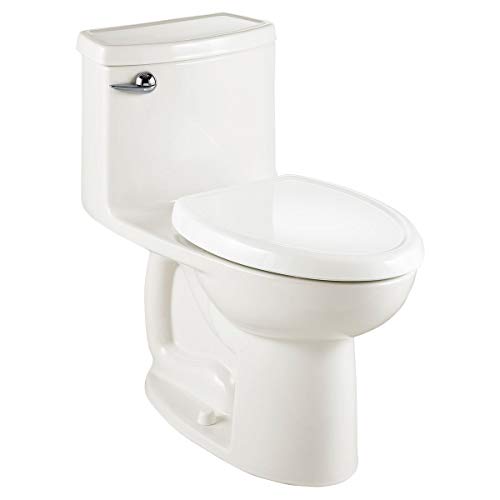
The American Standard Cadet 3 Right Height delivers a verified 1000 g MaP score and a 16.5 in bowl that lands cleanly in the ADA seat range at a price point well below TOTO and Kohler equivalents, making it the logical choice for accessible bathroom projects with a tight budget.
American Standard's PowerWash siphon jet scores 1000 g on MaP and the EverClean surface treatment inhibits bacteria and mold growth, reducing cleaning frequency for caregivers. The 10-year limited warranty on vitreous china and flushing components is the most generous in this comparison. At 1.28 GPF, it qualifies for EPA WaterSense and for water-conservation rebates in many US utility districts, offsetting installation costs in accessible renovation budgets.
For a multi-unit accessible renovation or a rental property where code compliance matters more than premium flush feel, the Cadet 3 Right Height is the rational pick. The 10-year warranty backs the installation against defect claims for far longer than competitors at the same price, and the MaP 1000 g score means clog calls will be rare even in heavy-use settings.
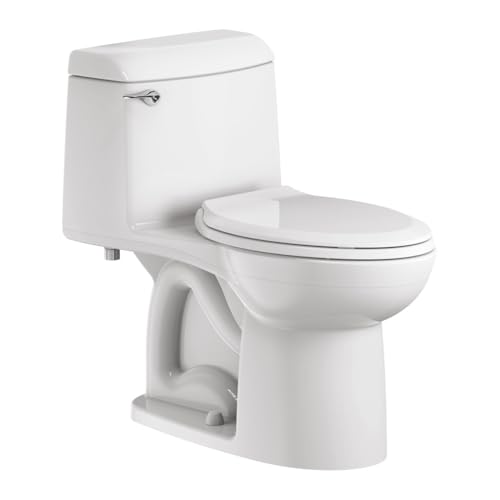
American Standard's Champion 4 Right Height carries the largest trapway in this comparison at 2.375 inches fully glazed and scores 1000 g on MaP at 1.6 GPF, making it the most clog-resistant ADA-height toilet available -- critical for users who cannot lean forward to plunge.
The 2.375-inch fully glazed trapway is the widest in any gravity-flush toilet at this price point; paired with a 4-inch accelerator flush valve that releases water faster than the standard 2-to-3-inch alternatives, it handles the MaP maximum test load in one pass. The trade-off is 1.6 GPF versus 1.28 GPF for WaterSense models, adding roughly 125 gallons per year per person. For users who cannot independently operate a plunger, that water premium is justified. Note that some state WaterSense-only districts may require a variance for commercial accessible installations.
Disability-related medications including opioids, certain antidepressants and MS treatments commonly affect bowel function. For a user in that situation, the Champion 4 Right Height is the single most important upgrade available at the fixture level. Its clog rate in long-term owner reports is negligibly low, and that reliability translates directly into independence for people who cannot manage a plunger alone.

The TOTO UltraMax II brings the same 16.125 in bowl height as the Drake in a seamless one-piece body that eliminates the tank-to-bowl seam -- reducing cleaning time to a single wipe of the exterior and making it a strong choice for users or caregivers who need a low-maintenance accessible bathroom.
The UltraMax II uses TOTO's G-Max siphon jet and MaP scores it at a perfect 1000 g -- comfortably above the 350 g minimum pass and among the strongest clearing power available. CeFiONtect (SanaGloss) glaze is available on select configurations, creating an ion-barrier coating that resists staining and bacterial buildup between cleans. The one-piece body distributes weight to the floor as a single rigid unit, which owner reviews consistently describe as the most stable transfer base in the TOTO lineup. Installation requires two people; the unit weighs 90 to 110 pounds.
If the priority is hygiene and minimum-effort cleaning for a caregiver, the UltraMax II justifies the higher price over the Drake. One-piece toilets simply have fewer surfaces to clean. For a user who manages their own bathroom care independently, that cleaning advantage comes with no MaP score trade-off, since both toilets reach the same perfect 1000 g score. Pair it with SanaGloss for the highest-hygiene accessible toilet configuration TOTO offers.
Match the toilet to the user's wheelchair seat height. Chair at 17 to 17.5 in -- choose the Drake or Cadet 3. Chair at 18 to 19 in -- the Kohler Highline's extra bowl height is worth it. Independent plunging not possible -- Champion 4 Right Height is non-negotiable. Caregiver-managed cleaning is the priority -- UltraMax II's one-piece body saves real time.
Among ADA-compliant toilets, the TOTO Drake (Universal Height) and the Kohler Highline Comfort Height both score 1000 g on MaP testing, the highest possible score. The American Standard Champion 4 Right Height also scores 1000 g and adds the widest fully-glazed trapway at 2.375 inches, making it the most clog-resistant option even though it uses 1.6 GPF rather than 1.28 GPF. For pure flush power in an ADA-height toilet, these three lead the category.
The ADA does not specify bowl shape; both elongated and round bowls are permissible. In practice, elongated bowls are strongly preferred for accessible bathrooms because they provide more front-to-back seating surface, which gives better support during a lateral or pivot wheelchair transfer. Most ADA-rated models available from major brands default to elongated, and the ICC A117.1 commentary supports elongated as the accessibility-preferred configuration.
Spec sheets list the bowl rim height, not the seated height. Add your specific seat thickness (typically 0.5 to 1 inch) to confirm the installed seat falls between 17 and 19 inches. A 16.125 in bowl with a 0.5-inch seat finishes at 16.625 in -- just outside the ADA floor. A 16.125 in bowl with a 1.25-inch raised seat reaches 17.375 in -- cleanly compliant. Always confirm the seated total, not the listed bowl height alone.
Rough-in is the distance from the finished rear wall to the drain centerline -- 12 inches is standard in most US homes; older homes may have 10 or 14 inches. ADA models are available in all three rough-in sizes; order the correct one or the tank will not fit flush to the wall. Our complete toilet buying guide covers rough-in measurement step by step.
The ADA requires the toilet centerline to sit 16 to 18 inches from the nearest side wall. In existing bathrooms, this is fixed by the drain location. If it falls outside that range, relocating the drain is the only path to true compliance -- plan this measurement before specifying any fixture.
Grab bars mount at 33 to 36 inches from the floor, a height that rarely aligns with standard studs. Add 2x8 or 2x10 horizontal blocking between studs behind the drywall before finishing. In a tile installation, blocking must go in before the substrate. Installing it during renovation costs a fraction of reopening finished tile later.
Two-piece toilets (separate tank and bowl) ship lighter, cost less and allow grab bars to mount flush against the wall without the tank blocking positions. One-piece toilets have a lower overall profile, eliminate the tank-to-bowl seam for easier cleaning and feel more stable during transfers because the weight is distributed as a single unit. For most accessible bathrooms, the two-piece is the practical default; the one-piece is the right choice when hygiene is the primary caregiver concern. Our comparison of one-piece vs two-piece toilets covers the full dimensional trade-offs.
Comfort height is a marketing term used by toilet manufacturers (Kohler uses "Comfort Height," American Standard uses "Right Height," TOTO uses "Universal Height") to describe bowls in roughly the 16 to 17.25 inch rim range. ADA height is a regulatory measurement: the installed seat must sit 17 to 19 inches from the floor per the 2010 ADA Standards. Most comfort-height bowls fall within or just below the ADA seat window once a standard seat is added; a comfort-height label does not automatically guarantee ADA compliance. Always verify the seated height, not just the marketing term.
The toilet fixture is only one part of an ADA-compliant restroom. Grab bars are equally critical. A rear grab bar must be installed at 33 to 36 inches from the floor and extend at least 36 inches wide, centered on the toilet centerline. A side grab bar on the transfer wall must be at least 42 inches long, begin within 12 inches of the rear wall and sit at 33 to 36 inches from the floor. Bars must support 250 pounds per ADA structural requirements -- standard drywall alone cannot do this, requiring wall blocking or direct stud mounting. Grab-bar diameter must be 1.25 to 2 inches. Do not substitute decorative towel bars; they are not rated for transfer loads.
The single most common ADA bathroom error outside of seat height is mounting grab bars into drywall without blocking. A standard drywall anchor fails at a fraction of the 250-pound load required by code, and a failed grab bar during a transfer is a fall risk. If blocking was not installed during the renovation, surface-mounted grab-bar systems that anchor through the wall into a welded metal plate can provide a compliant retrofit without opening the drywall -- verify the product's load rating before specifying.
The ADA requires the toilet seat to sit 17 to 19 inches from the finished floor (Section 604.4, 2010 ADA Standards). Spec sheets list the bowl rim, which is 0.5 to 1 inch lower; always add your seat thickness before confirming compliance.
Not automatically. Comfort height describes a bowl rim in the 16 to 17.25-inch range. After adding a seat (0.5 to 1 inch), the seated height often falls within the ADA 17 to 19-inch window -- but verify with the specific bowl and seat combination, not the marketing label alone.
The ADA requires 60 inches of clear floor width (measured from the side wall), with the toilet centerline 16 to 18 inches from that wall. Clear floor depth must be at least 59 inches from the rear wall for a floor-mounted toilet, or 56 inches for a wall-hung toilet.
The flush control must be on the open (transfer) side of the toilet and no higher than 44 inches from the floor. Standard two-piece toilets with a left-side trip lever satisfy this in the typical ADA layout where the open side faces into the room.
Yes. The ADA requires a rear grab bar (36 in wide minimum, 33 to 36 in from the floor) and a side grab bar on the transfer wall (42 in long minimum, starting within 12 in of the rear wall, same height). The toilet fixture alone does not create ADA compliance without these bars installed correctly.
The toilet centerline must be 16 to 18 inches from the finished side wall, keeping the open transfer side at 42 to 44 inches of clear width for wheelchair approach and positioning.
Yes -- the ADA does not require an elongated bowl. Elongated is strongly preferred because the longer front-to-back dimension provides better seating support during wheelchair transfers, and most major brands default to elongated for their ADA-height models.
MaP (Maximum Performance) testing measures grams of solid waste cleared in one flush. The minimum pass is 350 g; 800 g is solid; 1000 g is the maximum score. For accessible bathrooms where reflusing is difficult, aim for 800 g minimum and 1000 g if budget allows.
Wall-hung toilets offer one key ADA advantage: height adjustability. Most carriers allow mounting from 15 to 19 inches, so the seat can be matched precisely to the user's wheelchair. The trade-off is higher installation cost and a reinforced wall carrier. For a permanent single-user accessible bathroom this is worth the investment; for multi-user or budget projects, a floor-mounted ADA model is more practical.
Measure from the finished floor to the top of the installed seat. Before installation, add the published bowl rim height to your seat thickness: a 16.5-inch bowl with a 0.75-inch seat finishes at 17.25 inches, inside the 17 to 19-inch ADA window.
TOTO, Kohler and American Standard all produce ADA-compliant models with verified MaP scores and EPA WaterSense certification. TOTO leads on glaze technology and flush consistency; Kohler's Class Five valve is praised for power and quietness; American Standard's Champion 4 has the widest trapway. Woodbridge, Gerber and Swiss Madison offer ADA-height models at lower price points.
Yes. Rough-in (finished rear wall to drain centerline) is 12 inches in most US homes built since the 1980s. ADA compliance does not require a special rough-in -- it requires seat height, centerline placement and clearances. Confirm your rough-in and order the matching model.
Yes, within limits. A raised seat adding 2 to 4 inches can bring a standard 15-inch bowl into the ADA range. The seat must lock securely to the bowl and be rated for lateral transfer load. A permanently installed ADA-height bowl is more reliable long-term, but a quality raised seat is a legitimate short-term compliance strategy.
EPA WaterSense certifies toilets that flush at 1.28 GPF or less and pass minimum performance standards. Most ADA models from TOTO, Kohler and American Standard carry WaterSense. The American Standard Champion 4 (1.6 GPF) is the notable exception -- best clog resistance, but not WaterSense certified.
Measure from the floor to the top of the seat with a seat installed: 17 to 19 inches passes. Then check centerline-to-side-wall (16 to 18 inches), confirm grab bars at 33 to 36 inches on rear and transfer walls, and verify the flush control is on the open side at 44 inches or lower. All four must pass.
The 17 to 19-inch seat-height requirement is the same for both commercial and residential ADA. However, residential buildings covered by the Fair Housing Act may follow ANSI A117.1 Type B, which varies slightly on clearances. Confirm which standard your local jurisdiction enforces before specifying a permitted residential renovation.
The ADA requires the dispenser to be 7 to 9 inches in front of the toilet rim and between 15 and 48 inches from the floor, without obstructing the side grab bar. Recessed dispensers integrated into the grab bar are permissible if they meet those reach and clearance requirements.
Neither is required. Two-piece models install more easily, cost less and leave grab-bar positions clear. One-piece models have no tank-to-bowl seam, reducing cleaning time -- an advantage in caregiving setups. Both can achieve ADA-compliant seat height.
ADA compliance is a system, not a single purchase. The 17 to 19-inch seat height is the starting point, but the centerline-to-wall distance, clear floor dimensions, grab-bar placement and flush-control position are equally mandatory. For the fixture itself, the TOTO Drake (Universal Height) is the most balanced ADA-compliant toilet available -- verified 1000 g MaP flush, 1.28 GPF WaterSense efficiency, a bowl height that lands in the ADA window with a standard seat, and a two-piece design that cooperates with every grab-bar configuration. The Kohler Highline Comfort Height is the pick for users transferring from taller power chairs, and the American Standard Champion 4 Right Height is the right choice when clog independence is the overriding priority. Plan the full clearance layout before you order any fixture -- the surrounding dimensions define whether the installation is genuinely accessible or just ADA-labeled.
Learn why toilet trapways curve like an S, how each bend blocks sewer gas, and what the shape means for clogs and…
Read the guideAlmost every US toilet has a left-side handle. Learn the plumbing and mechanical reasons behind the layout and when it actually changes.
Read the guideHome toilets rely on tanks because household water lines lack the pressure that public flushometer systems use to flush straight from the…
Read the guide