


Best 30-Inch Bathroom Vanities (2026)
Bathroom Remodeling4.6
Thirty inches is the sweet spot between a cramped 24-inch vanity and a full 36-inch cabinet, giving a single-sink bathroom real drawer…
Read the guideWhite bathrooms look stunning on day one and can look just as good five years later -- if you make smart material, fixture, and maintenance choices from the start. This guide covers every decision point from tile selection and grout color to fixture finishes and cleaning routines.
An all-white bathroom stays clean with matte-finish tiles, large-format formats that minimize grout lines, bright white fixtures from brands like TOTO and Kohler, epoxy grout in light gray, and a weekly wipe-down routine. Texture and layering prevent the space from feeling sterile while keeping maintenance predictable.
White bathrooms consistently rank among the most searched bathroom styles because they photograph well, increase perceived square footage in small spaces, and pair with virtually any accent color the homeowner may want to add later. A 2024 Houzz bathroom survey found that white or near-white palettes appeared in 62 percent of bathroom renovation projects, making it the single most common primary color choice across all bathroom sizes.
The appeal is practical as well as aesthetic. White surfaces reflect light, which reduces the need for supplemental lighting in bathrooms with limited natural windows. Lighter walls also make soil and buildup more visible, which sounds like a disadvantage but actually forces regular cleaning that prevents the deep staining that discolors grout and caulk over months and years.
The challenge is not keeping white bathrooms white in theory -- it is choosing materials and fixtures that hold their color without yellowing, absorbing stains, or requiring professional-grade cleaning products every week. That is where material science, grout selection, and fixture glazing matter far more than the shade of white you pick from a paint chip.
Contractors and tile setters who specialize in high-end bathroom renovations consistently recommend against bright-white unsanded grout in high-traffic bathrooms. The reason is simple: unsanded grout in joints narrower than 1/8 inch compresses unevenly and develops micro-cracks that trap soap scum. Epoxy grout costs 30 to 50 percent more at installation but typically outlasts sanded or unsanded cement grout by 10 to 15 years without sealing. For a white bathroom where grout visibility is high, that upfront investment changes the long-term maintenance equation entirely.
Porcelain tiles rated PEI 3 or higher with a matte or satin finish are the easiest white tiles to maintain in a bathroom because they resist water absorption (less than 0.5 percent porosity), do not show water spots as aggressively as polished surfaces, and hide fine scratches better than high-gloss finishes. Large-format tiles (24x24 inches or larger) also reduce the number of grout lines, which are the primary maintenance point in any tiled bathroom.
Here is how the main tile types compare for a white bathroom renovation:
| Tile Type | Porosity | Stain Resistance | Yellowing Risk | Maintenance Level | Best Use |
|---|---|---|---|---|---|
| Porcelain (matte) | <0.5% | Excellent | None | Low | Floors and walls |
| Ceramic (glazed) | 0.5-3% | Good | Minimal | Low-Medium | Walls only |
| Porcelain (polished) | <0.5% | Excellent | None | Medium (water spots) | Feature walls |
| Natural marble | 0.2-2% | Poor (etches) | Low-Medium | High | Dry accent areas |
| Subway tile (ceramic) | 3-7% | Good (glazed surface) | Grout yellows | Medium | Walls with epoxy grout |
| Engineered quartz panels | <0.1% | Excellent | None | Very Low | Wet areas, shower surrounds |
The clear winner for a low-maintenance all-white bathroom floor is a large-format matte porcelain tile with a coefficient of friction (COF) rating of 0.42 or higher, which meets the Americans with Disabilities Act recommendation for wet area safety. For shower walls, glazed ceramic is adequate, but large-format porcelain panels that eliminate grout entirely in vertical shower surrounds are now widely available at major tile suppliers and significantly reduce weekly cleaning.
Light gray grout (rather than bright white) is the most practical choice for an all-white bathroom because it remains visually neutral from a distance while hiding the gradual discoloration that occurs from hard water minerals and soap residue. Bright white grout shows staining within weeks in most households and requires bleach cleaning that degrades cement grout binders over time. Epoxy grout in a light silver or pearl gray shade is the long-term optimal solution.
Grout color choice is one of the most underestimated decisions in a white bathroom project. Here is the practical breakdown:
Tile installers with experience in white bathroom renovations note that the grout-to-tile color contrast determines how unforgiving the space will be to maintain. A zero-contrast look (white tile, white grout) requires the highest maintenance and the most careful product selection to avoid staining. A low-contrast look (white tile, light gray grout) is forgiving enough for most households without looking intentionally designed around concealment. A high-contrast look (white tile, dark grout) is the most maintenance-friendly but requires clear design intent -- it does not suit every style of white bathroom.
The best white toilets for long-term color stability use vitreous china with a fired glaze that is baked at temperatures above 2,000 degrees Fahrenheit, which produces a glass-like surface that resists mineral deposit staining and does not yellow from UV exposure or cleaning chemicals. Brands that consistently receive high marks for glaze durability include TOTO with its CeFiONtect glaze, American Standard with its EverClean surface, and Kohler with its Class Five flushing system -- all of which also address the maintenance side through superior flushing performance that reduces residue buildup.
Fixture color is not a trivial detail in an all-white bathroom. A toilet that yellows while the tile stays crisp white creates a visual mismatch that is expensive to correct -- replacement is typically the only real fix because refinishing vitreous china is rarely cost-effective. Choosing the right toilet upfront avoids that problem.
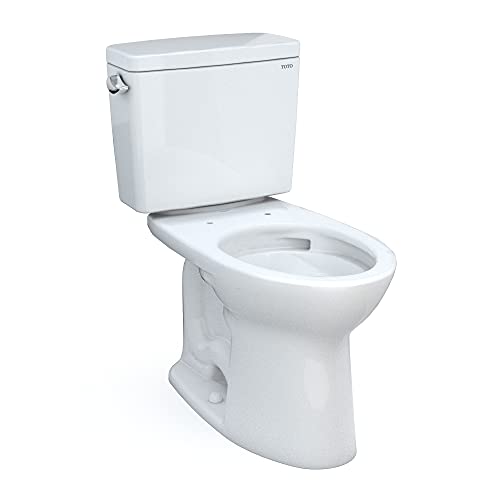
The TOTO Drake II (CST454CEFG) is the most widely cited toilet for glaze longevity in owner reviews. Its CeFiONtect glaze ionically bonds to the china surface, creating a nano-smooth finish that reduces the surface area available for organic waste, mineral deposits, and bacteria to adhere. The Drake II also carries an EPA WaterSense certification at 1.28 gallons per flush and a verified MaP flush score of 1,000 grams -- the maximum achievable score -- which means less residue per flush and fewer cleaning cycles overall. For an all-white bathroom where the toilet is a visible focal point, that combination of surface quality and flush efficiency is the best available at its price point. You can check current availability for the TOTO Drake II to compare configurations.
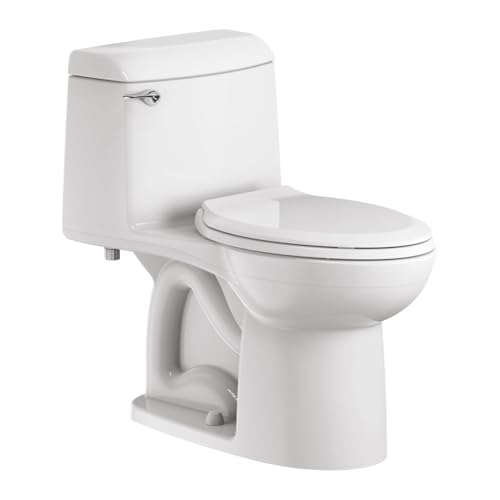
The American Standard Champion 4 is another strong choice, particularly for households with older drain lines that are prone to clogging. Its 2-3/8-inch trapway is the widest fully glazed trapway available in a consumer toilet, and its EverClean surface uses antimicrobial protection built into the porcelain glaze. The Champion 4 does not carry EPA WaterSense certification -- it flushes at 1.6 GPF rather than the 1.28 GPF WaterSense threshold -- but its flushing reliability in clog-prone homes has been consistently rated highly in aggregated owner reviews. See the best flushing toilets guide for a full comparison of MaP scores and GPF ratings across the major brands.
For a more design-forward white bathroom with wall-mounted or skirted profiles, the Woodbridge T-0001 and Swiss Madison Chateau series offer modern silhouettes in gloss-white finishes that photograph well and integrate cleanly into a contemporary all-white design scheme. Both use standard vitreous china construction and carry EPA WaterSense certification at 1.28 GPF. The Woodbridge T-0001 in particular has strong aggregated owner ratings for fit and finish consistency -- an important factor in a white bathroom where any color variation between the toilet and surrounding tile is visible.
| Toilet Model | Glaze Technology | GPF | MaP Score | WaterSense | Style | Check Price |
|---|---|---|---|---|---|---|
| TOTO Drake II (CST454CEFG) | CeFiONtect | 1.28 | 1,000g | Yes | Two-piece, elongated | Check price |
| TOTO UltraMax II | CeFiONtect | 1.28 | 1,000g | Yes | One-piece, elongated | Check price |
| American Standard Champion 4 | EverClean | 1.6 | 1,000g | No | Two-piece, elongated | Check price |
| Kohler Cimarron | Standard china glaze | 1.28 | 1,000g | Yes | Two-piece, elongated | Check price |
| Woodbridge T-0001 | Standard vitreous china | 1.28 | 800g | Yes | One-piece, skirted | Check price |
| Gerber Avalanche | Standard vitreous china | 1.28 | 1,000g | Yes | Two-piece, elongated | Check price |
Visual interest in an all-white bathroom comes from texture variation, not color contrast. Combining matte floor tiles with a low-sheen wall tile and a high-gloss fixture creates distinct visual planes that prevent the space from looking flat. Adding organic texture through white oak vanities, natural stone accessories, or woven textile accents introduces warmth while keeping the color palette unified. Lighting temperature is also critical -- warm white LED fixtures (2700K to 3000K) prevent the cool, clinical feel that all-white bathrooms develop under neutral or cool light.
The most common design mistake in all-white bathrooms is using the same finish on every surface. When floor tiles, wall tiles, fixtures, cabinetry, and trim all share the same gloss level and the same temperature of white, the room loses depth and reads as institutional rather than refined. The solution is deliberate finish layering:
For paint on any remaining wall surfaces, Benjamin Moore Chantilly Lace (OC-65) and Sherwin-Williams Pure White (SW 7005) are consistently cited in designer recommendations as the most versatile bright whites that read clearly white under both natural daylight and incandescent lighting without shifting blue or yellow. For trim, Benjamin Moore White Dove (OC-17) has slightly more warmth and pairs well with cooler tile whites to prevent a jarring mismatch between painted and tiled surfaces.
Interior designers working on high-end bathroom renovations frequently note that buyers underestimate how many different shades of white exist in a bathroom simultaneously -- the tile, the grout, the paint, the fixture, the bathtub, the trim, and the ceiling can all be distinctly different temperatures of white. Reconciling those undertones before installation is the single most important step in achieving a cohesive all-white look. Bringing physical samples of tile, paint, and fixture finishes together under the bathroom's actual lighting conditions before purchasing prevents the most common and expensive mismatch errors.
The most effective weekly cleaning routine for an all-white bathroom focuses on preventing mineral deposit and soap scum accumulation rather than removing it after it has hardened. A weekly wipe-down with a diluted white vinegar solution (one part white vinegar to three parts water) on tile and chrome surfaces, combined with a squeegee on shower glass and walls after every use, prevents the buildup that requires aggressive chemical cleaning. Grout should be spot-cleaned with a soft brush and a hydrogen peroxide solution (3 percent concentration) monthly to maintain color.
Consistency is more effective than intensity in maintaining an all-white bathroom. A five-minute daily wipe and a fifteen-minute weekly clean prevents the need for the two-hour deep clean that becomes necessary when mineral deposits and soap scum are left to cure on surfaces.
Daily (2-5 minutes):
Weekly (10-20 minutes):
Monthly:
Products to avoid in an all-white bathroom include any cleaner containing chlorine bleach on colored fixtures (bleach can pit the vitreous china surface around the trapway opening over time), abrasive scrubbing pads on polished tile (they introduce micro-scratches that trap soil), and undiluted vinegar on natural marble or limestone (acid etches calcium-based stone permanently).
For deeper context on fixture cleaning that preserves glaze quality, see the bathroom cleaning schedule guide and the bathroom cleaner selection guide. If you are also considering the toilet itself as part of your renovation, the ADA-compliant toilet guide covers height and access requirements that affect both comfort and resale value.
Adequate ventilation is the most important non-aesthetic factor in maintaining a white bathroom's appearance over time because persistent humidity causes the yellowing of grout, caulk, and some fixture finishes, and creates conditions for mold growth that permanently stains grout lines. The Home Ventilating Institute recommends a bathroom exhaust fan rated at a minimum of one CFM per square foot of bathroom area, with the fan running for at least 20 minutes after each shower to reduce relative humidity below 50 percent.
Humidity management is where many white bathroom renovation projects fall short. Homeowners invest in premium tile and fixtures but install a marginal exhaust fan, and within twelve to eighteen months the grout has developed a mold-gray tinge that no cleaner will fully remove without damaging the grout structure.
For a standard 5x8 foot bathroom (40 square feet), a 50 CFM fan is the minimum effective rating. For a 10x10 foot (100 square foot) bathroom, 100 CFM is appropriate. Bathrooms with a separate shower enclosure should have a fan rated for the full room volume rather than just the shower space, since humidity distributes throughout the space during and after showering.
Fan placement matters as well. Installing the exhaust fan directly above or immediately adjacent to the shower enclosure removes steam at the source before it can condense on cool tile surfaces and grout lines. Fans installed at the opposite end of the bathroom from the shower are less effective because the humid air has already distributed through the space before it reaches the exhaust point.
Humidity sensors or timer controls are a practical addition for white bathrooms where occupants may not remember to run the fan long enough after showering. Timer switches set to 20-minute intervals are inexpensive to install and eliminate the most common humidity management failure in residential bathrooms.
White bathrooms typically appear larger than they are because white surfaces reflect light and reduce the visual weight of walls and floors. This effect is most pronounced in bathrooms with limited natural light, where white tile and white paint amplify the available light and prevent the room from feeling compressed. Dark grout lines can visually segment the floor and counteract this effect to some degree, which is why large-format tiles with minimal grout lines maximize the space-expanding benefit of white.
Benjamin Moore Chantilly Lace (OC-65) and Sherwin-Williams Pure White (SW 7005) are the most consistently recommended whites for bathroom walls because they read as clean white under both daylight and incandescent lighting without shifting blue or cream. If the tile in the bathroom has a warm undertone, Benjamin Moore White Dove (OC-17) or Sherwin-Williams Alabaster (SW 7008) can better match the warmth and prevent a jarring cool-warm contrast between wall and tile.
The most reliable way to prevent white grout from yellowing is to use epoxy grout rather than cement-based grout, since epoxy is non-porous and does not absorb the iron compounds in hard water that cause yellowing. If using cement grout, seal it within 72 hours of installation and reseal every twelve to eighteen months. Avoiding chlorine bleach cleaners on grout also helps, as repeated bleach exposure gradually degrades cement grout binders and accelerates discoloration over time.
Natural marble looks exceptional in white bathrooms but requires significantly higher maintenance than porcelain alternatives. Marble is calcium-based and etches (develops dull spots) when exposed to acidic substances including vinegar, citrus-based cleaners, and some common bathroom products. It also stains from iron-rich water and absorbs colored liquids if not sealed properly. For a lower-maintenance alternative with a similar appearance, large-format porcelain tiles with marble-look printing are nearly indistinguishable at arm's length and require no sealing.
TOTO's CeFiONtect glaze and American Standard's EverClean surface are consistently rated the highest for long-term white color retention in owner reviews. Both use proprietary glaze technologies fired at high temperatures to produce a surface that resists the mineral deposit staining that causes vitreous china to appear yellow over time. Kohler's standard porcelain glaze performs adequately in most water conditions, while budget toilets with thinner glaze applications are more susceptible to staining from iron-rich or hard water.
Diluted chlorine bleach (one part bleach to ten parts water) is safe for use on standard glazed ceramic and porcelain tile and effective for killing mold in grout lines. However, regular bleach use on cement-based grout accelerates its erosion, and bleach should never be used on natural marble, travertine, or other natural stone surfaces. Hydrogen peroxide at 3 percent concentration is a safer alternative for grout cleaning that achieves similar whitening results without the surface damage risk of repeated bleach applications.
Squeegeeing shower walls and glass doors immediately after use removes the water droplets that form mineral deposits as they dry, which is the single most effective prevention strategy. Applying a water-repellent treatment to shower glass (such as Rain-X or similar silicone-based products) causes water to bead and run off rather than spreading into flat sheets that leave mineral deposits when dry. For chrome and nickel fixtures, drying with a microfiber cloth after each use prevents the characteristic white ring deposits around faucet bases.
Silicone caulk with mold-inhibiting additives is the correct choice for wet areas in a white bathroom, specifically at the tub-to-wall and shower-floor-to-wall junctions. Silicone remains flexible as the structure moves slightly with temperature changes, which prevents the cracking that allows water to penetrate behind tile. Avoid sanded or latex caulk in wet zones -- both absorb moisture and develop mold colonization in white bathrooms where any discoloration is visible. Replace silicone caulk every three to five years before it develops staining that cannot be cleaned.
One-piece toilets are easier to clean in an all-white bathroom because they eliminate the crevice between the tank and bowl where mineral deposits and bacteria accumulate in two-piece models. The skirted or concealed trapway design available in many one-piece toilets (including the TOTO UltraMax II and Woodbridge T-0001) also removes the external trapway curves that collect dust and require additional cleaning. The tradeoff is cost -- one-piece toilets typically cost 30 to 60 percent more than comparable two-piece models at the same quality tier.
A mid-range all-white bathroom renovation for a standard 5x8 foot bathroom typically ranges from $8,000 to $15,000 for materials and labor, with costs driven primarily by tile selection (porcelain vs. natural stone), fixture quality, and local labor rates. Premium renovations using large-format porcelain, engineered quartz countertops, a quality one-piece toilet, and custom cabinetry regularly exceed $20,000 to $30,000. The biggest cost variables are the tile and labor -- large-format tiles require skilled installation with tighter tolerances that can add 20 to 40 percent to tiling labor costs compared to standard subway tile.
Contrary to the traditional advice that small rooms require small tiles, 24x24 or 24x48 inch tiles actually make small bathrooms appear larger by reducing the number of grout lines that visually segment the floor. The condition is that the installation must be highly accurate -- large tiles on an imperfectly leveled subfloor will rock or crack, and lippage (height variation between adjacent tiles) is more visible with large formats. For floors smaller than 30 square feet, 12x24 inch tiles offer a good balance of the space-expanding effect without requiring the subfloor precision of 24x48 installations.
EPA WaterSense certified toilets flush at 1.28 GPF or less and must pass independent flushing performance tests to earn the certification. Most major manufacturers' current WaterSense-certified models, including the TOTO Drake II, TOTO Aquia IV, Kohler Highline, and American Standard Cadet 3, achieve MaP scores of 800 grams or higher -- sufficient for household use. A well-performing toilet reduces residue buildup per flush, which directly reduces the frequency of bowl cleaning needed to keep a white toilet's interior looking clean.
Yes -- towels, bath mats, soap dispensers, plants, and art are all easily swappable color elements that allow homeowners to change the accent color of a white bathroom without touching the walls or fixtures. This is actually one of the practical advantages of an all-white base palette: any accent color works against it, so the bathroom can be updated seasonally or completely transformed with accessory replacements rather than a renovation. Navy, sage green, terracotta, and soft blush are currently popular accent choices against white bathroom palettes in design publications.
Mold in bathroom grout requires three things to establish: moisture, organic material (soap residue, body oils), and limited light exposure. Addressing moisture through adequate ventilation (minimum 50 CFM exhaust fan running 20 minutes post-shower) removes the primary condition. Monthly cleaning of grout lines with 3 percent hydrogen peroxide removes organic material before mold colonies establish. Re-grouting with epoxy grout eliminates the porous substrate that supports mold growth in the first place -- epoxy grout does not support mold colonization because it has no accessible pores.
Skirted or concealed-trapway toilets (such as the Woodbridge T-0001, TOTO Aquia IV, and Swiss Madison Chateau) have a smooth, flat exterior that is significantly easier to clean than a standard toilet's external trapway curves. In an all-white bathroom where the toilet is prominent, the clean silhouette of a skirted toilet also contributes to the streamlined aesthetic. The installation consideration is that skirted toilets may require a different floor bolt configuration than standard toilets -- verify the rough-in dimension (typically 12 inches) and check whether the manufacturer provides a skirted installation kit before purchase.
Warm white LED lighting in the 2700K to 3000K color temperature range is recommended for all-white bathrooms because it prevents the blue-gray cast that 4000K or 5000K cool-white light sources produce on white surfaces. Color temperatures above 3500K are commonly used in commercial restrooms and produce the institutional look that most homeowners are trying to avoid in a residential white bathroom. For makeup and grooming accuracy at the vanity mirror, a high CRI rating (90 or above) matters more than color temperature -- high CRI sources render skin tones accurately at any color temperature.
Dual-flush toilets such as the TOTO Aquia IV (0.8/1.28 GPF) and American Standard H2Option offer water savings beyond standard 1.28 GPF WaterSense models and can reduce household water consumption by 20 to 30 percent compared to older 1.6 GPF toilets. For a white bathroom where the toilet is part of a complete renovation, a dual-flush toilet is a practical choice -- the button or lever interface is the only visible difference from a standard toilet, and the water savings over a 10-year period typically offset the modest price premium. See the dual-flush toilets guide for a detailed cost-benefit analysis.
White silicone caulk in a bathroom should be replaced every three to five years or immediately when it shows any of three warning signs: visible black mold that does not respond to cleaning, cracking or lifting at edges, or loss of adhesion to the tile or tub surface. These signs indicate that the caulk's barrier function has failed and water is likely penetrating behind the tile. Waiting longer than necessary to replace failing caulk risks water damage to the tile backer, subfloor, and wall framing that turns a $30 caulking job into a $2,000 to $10,000 water damage repair.
For regular maintenance of a white porcelain toilet bowl, a gel-formula toilet bowl cleaner applied under the rim and left for five to ten minutes before brushing is more effective than liquid splash-in formulas because the gel clings to the vertical surface rather than running immediately to the bottom of the bowl. For mineral ring deposits at the waterline, a pumice stone (used wet and gently) removes calcium carbonate deposits without scratching vitreous china -- this is only safe on china surfaces, not on acrylic or fiberglass toilet bowls. For toilets with CeFiONtect or EverClean glazes, standard bowl cleaner and a soft brush is sufficient for routine maintenance.
An all-white bathroom is one of the most achievable and durable design choices available when the material decisions are made correctly. The key variables are not paint color or fixture brand -- they are tile porosity and format (large-format matte porcelain for ease of maintenance), grout type (epoxy in a light gray for longevity without staining), and toilet glaze technology (CeFiONtect from TOTO and EverClean from American Standard are the two proven leaders for long-term white color retention). Add adequate ventilation with a fan rated for the room's square footage, a weekly wipe routine, and monthly grout maintenance, and a well-built all-white bathroom will look as clean in year five as it did at installation. The upfront material investment in epoxy grout and quality fixtures pays back immediately in reduced maintenance time and avoided rework costs over the life of the renovation.
Thirty inches is the sweet spot between a cramped 24-inch vanity and a full 36-inch cabinet, giving a single-sink bathroom real drawer…
Read the guide
Cast iron is the material homeowners choose when heat retention and permanence matter more than installation weight, and Kohler remains the brand…
Read the guideStep-by-step fixes for the bathroom vanity problems that show up most often, from misaligned drawers and doors to water damage at the…
Read the guide