Toilet Flapper Guide: Types, Sizing and Replacement
The flapper is the rubber or silicone seal that sits on top of the flush valve and lifts every time you flush, and a worn or wrong-sized flapper is the single most common cause of a toilet that runs, ghost flushes, wastes water or flushes weakly. This guide explains exactly what a flapper does, how 2 inch and 3 inch flappers differ from canister seals, how to identify your correct size, which materials and adjustable designs last longest, how the flapper affects flush strength and water use, and which proven TOTO, Kohler, American Standard, Woodbridge, Swiss Madison and Gerber toilets use each style, all from published specifications and aggregated owner reviews rather than guesswork.
Quick Answer
Match the flapper to your flush valve, not the brand: a 2 inch valve takes a 2 inch flapper and a 3 inch valve takes a 3 inch flapper or canister seal. For most 2 inch gravity toilets, a Korky 2 inch universal flapper made of chlorine-resistant rubber is the most reliable, longest-lasting fix, while TOTO and Kohler 3 inch models need their model-specific seal.
When a toilet hisses through the night, refills itself for no reason, wastes hundreds of gallons a week, or simply will not deliver a strong flush, the culprit is almost always a part that costs only a few dollars: the flapper. It is the rubber or silicone seal that covers the flush valve opening at the bottom of the tank. When the flapper seals tightly, the tank holds a full charge of water ready to flush. When it warps, hardens or no longer matches the valve, water leaks past it and the toilet misbehaves in a dozen frustrating ways.
Most homeowners replace a flapper at least once in the life of a toilet, yet many buy the wrong size or style and end up with a part that leaks worse than the one they removed. This guide is built the way we research every part and product on this site. We do not physically install or test toilets. Instead we compare published manufacturer flapper and flush valve specifications, EPA WaterSense efficiency standards, and the patterns that surface across thousands of verified owner reviews. By the end you will know exactly what a flapper does, how to identify your correct size and style, which materials last longest, how the flapper ties into flush strength, and which dependable toilets use 2 inch flappers, 3 inch flappers and canister seals.
Read this first. A flapper is matched to the flush valve underneath it, not to the toilet brand. The two questions that decide which part you need are the valve diameter (2 inch or 3 inch) and the seal style (hinged flapper or lift-up canister). Measuring the opening or reading the model number takes one minute and prevents the most common replacement mistake: buying a "universal" flapper that does not actually fit your valve.
What Does a Toilet Flapper Actually Do?
A toilet flapper is the flexible rubber or silicone seal that covers the flush valve opening at the bottom of the tank. When you press the handle, a chain lifts the flapper so the stored tank water rushes into the bowl, then the flapper drops back down to reseal the valve so the tank can refill. A flapper that no longer seals tightly causes running, ghost flushing and wasted water.
Inside a standard gravity toilet tank, the flush valve is the vertical opening at the base, and the flapper rests on its seat like a stopper in a bathtub drain. The handle connects to a lift chain, and the chain connects to the flapper. Pressing the handle pulls the chain, raises the flapper, and lets gravity send the full tank of water down through the valve and into the bowl. Once the tank empties, the flapper falls back onto its seat, seals the opening, and the fill valve refills the tank to the set water line.
That simple up-and-down motion is the heart of every flush. The flapper has to do two opposing jobs well: open fully and stay open long enough to release the whole tank for a strong flush, then seal completely so not a single drop leaks while the tank sits full. Over years of chlorine exposure and constant flexing, the rubber hardens, warps or develops a film, and it stops doing both jobs. A flapper that opens sluggishly weakens the flush, while a flapper that no longer seals lets water trickle into the bowl, which triggers the fill valve to cycle and wastes water. If you want the full picture of which toilets turn a clean seal into real-world flush strength, our guide to the best flushing toilets ranks the strongest flushers.
What Are the Different Types of Toilet Flappers?
The main flapper types are the 2 inch flapper, the 3 inch flapper, the adjustable flapper and the canister seal. The 2 inch flapper is the long-time standard on most toilets, the 3 inch flapper covers the larger valve on many newer high-efficiency models, the adjustable flapper lets you tune flush volume with a dial or float, and the canister seal is a lift-up cylinder used by TOTO and Kohler instead of a hinged flapper.
Flappers fall into a small set of categories, and knowing them makes shopping far faster. The differences are not cosmetic; each style seals a different valve and behaves differently during the flush. The table below summarizes how the common types compare so you can match the right one to your tank.
Flapper type
Best for
Valve size
Seal style
Reliability
2 inch flapper
Most standard and older toilets
2 inch
Hinged
Strong
3 inch flapper
Newer high-efficiency two-piece toilets
3 inch
Hinged
Strong
Adjustable flapper
Dual-flush and water-tuning needs
2 or 3 inch
Hinged, tunable
Good
Canister seal
TOTO and Kohler 3 inch valves
3 inch
Lift-up cylinder
Very strong
Tank ball (legacy)
Very old toilets
2 inch
Rod-lifted ball
Dated
The takeaway is straightforward. A 2 inch hinged flapper remains the most common part and fits the majority of toilets in service today. A 3 inch hinged flapper covers the larger valve found on many newer high-efficiency toilets that flush harder on less water. An adjustable flapper adds a dial or float so you can fine-tune how long it stays open and therefore how much water each flush uses. A canister seal is not a flapper at all but a lift-up cylinder that opens 360 degrees, used by TOTO and Kohler on their 3 inch valves for an even faster release. Old tank-ball mechanisms still turn up on vintage toilets and are usually worth converting to a modern flapper.
What Size Flapper Do I Need for My Toilet?
You need a flapper that matches your flush valve size, which is either 2 inch or 3 inch. Measure the diameter of the round opening at the bottom of the tank: a 2 inch valve is roughly the size of a baseball or an orange, while a 3 inch valve is noticeably wider, closer to a grapefruit. The owner's manual and the manufacturer's spec sheet also list the valve and flapper size directly.
Sizing a flapper comes down to one measurement and one observation. First, turn off the water supply, flush to empty the tank, and look at the round opening the flapper sits on. Measuring the inside diameter of that seat tells you the valve size. Two inches across, about the diameter of a baseball, means a 2 inch flapper. Roughly three inches across, closer to a grapefruit, means a 3 inch flapper or canister. The overflow tube the flapper attaches to is another clue, since 3 inch valves usually have a visibly thicker overflow tube.
Second, look at the existing seal style. A hinged rubber flap that pivots on two ears at the base of the overflow tube is a flapper, and you replace it with the same size flapper. A tall cylinder that lifts straight up off the valve is a canister seal, and it is not interchangeable with a flapper. Buying the model-specific canister for a TOTO or Kohler is the safest route there. When in doubt, the fastest path is to read the toilet's model number, usually stamped inside the tank or under the lid, and look up the manufacturer's parts diagram, which names the exact flapper or seal part number.
Common mistake. Buying a 2 inch "universal" flapper for a toilet that actually uses a 3 inch valve or a canister seal. The part will sit loosely on a too-large valve and leak immediately, or it will not seat at all on a canister-style tower. Always confirm the valve size and seal style before buying, and for TOTO and Kohler 3 inch toilets, match the manufacturer's part rather than a generic flapper.
Which Flapper Material Lasts the Longest?
Chlorine-resistant rubber and silicone flappers last the longest, typically four to five years or more, while standard rubber flappers harden and warp in as little as two to three years in chlorinated or treated water. If you use in-tank cleaning tablets that contain bleach or chlorine, a chlorine-resistant flapper is essential because chlorine is the fastest thing that degrades the seal.
Flapper lifespan is mostly a story about chlorine. The constant chemical exposure from municipal water, and especially from in-tank bleach tablets, is what hardens a flapper, makes it brittle, and leaves the telltale black residue on your fingers when you touch a failing one. Standard red or black rubber flappers are the cheapest but degrade fastest, often needing replacement every two to three years. Chlorine-resistant rubber and modern silicone flappers cost a little more but resist that breakdown and commonly last four to five years or longer.
The practical advice is simple. If your water is heavily chlorinated, or if you drop a bleach tablet in the tank, choose a chlorine-resistant or silicone flapper and skip the cheapest generic. Many owner reviews trace a toilet that "started running again after a year" directly back to a budget flapper paired with bleach tablets, a combination that destroys seals quickly. Replacing the flapper is also one of the cleanest ways to stop water waste, which our explainer on how much water a toilet uses puts in real gallons-per-day terms.
Editorial Take
If we had to give one piece of flapper advice, it would be to buy a chlorine-resistant flapper and stop using in-tank bleach tablets. The cheap rubber flapper plus a bleach puck is the fastest way to a running toilet, and people replace that pairing two or three times before realizing the tablet is the problem. Spend the extra dollar or two on a chlorine-resistant or silicone seal, drop the tablets, and the same toilet will go years without another leak.
How Do I Replace a Toilet Flapper?
To replace a toilet flapper, turn off the water supply valve, flush to empty the tank, unhook the old flapper from the overflow tube ears and the chain from the handle, then snap the new matching flapper onto the same ears and reconnect the chain. Turn the water back on, let the tank refill, and test the flush. The whole job takes about ten minutes and needs no tools.
Replacing a flapper is one of the easiest plumbing repairs in a home. Start by turning the shutoff valve behind the toilet clockwise to stop the water, then flush and hold the handle to drain the tank as much as possible. Sponge out any remaining water if you want a dry workspace. Unhook the lift chain from the flush handle arm, then slide or unclip the old flapper off the two ears on either side of the overflow tube. Bring the old flapper to the store, or better, know your valve size in advance so you buy the correct match.
Install the new flapper by snapping its ears onto the same posts at the base of the overflow tube, then reconnect the chain to the handle arm with about half an inch of slack. Too much slack and the flapper will not open fully, weakening the flush; too little and the flapper cannot seal, causing a leak. Turn the water back on, let the tank fill, and watch for a clean seal with no trickle into the bowl. A quick test is to add a few drops of food coloring to the tank and check the bowl after ten minutes; color in the bowl means the flapper still leaks. If problems persist after a new flapper, our guides on a toilet that keeps running and fixing ghost flushing walk through the chain, water level and fill valve checks worth making.
How Does the Flapper Affect Flush Strength?
The flapper affects flush strength by controlling how much water leaves the tank and how long the valve stays open. A flapper that drops too early, has too much chain slack, or does not open fully cuts the flush short and weakens it. A flapper that stays open the full cycle lets the entire tank charge release for a strong, complete flush, which is why a worn or mis-set flapper is a common cause of weak flushing.
It is easy to think of the flapper only as a seal, but its timing directly shapes flush power. For a strong flush, the flapper must open fully and remain open until the tank is nearly empty, releasing the entire stored volume in one fast surge. If the chain has too much slack, the flapper will not lift high enough and falls back early, cutting the flush short before the bowl clears. If the flapper is warped or waterlogged, it can sink prematurely for the same effect. Either way, you get a weak, incomplete flush that may need a second pull.
This is why a fresh, correctly adjusted flapper is one of the first fixes for a toilet that has gradually lost flush power. The flush valve diameter sets the maximum potential, but the flapper controls whether the toilet actually delivers it. On 3 inch valves, a canister seal opens 360 degrees and tends to release water faster and more completely than a hinged flapper, which is one reason TOTO and Kohler favor it on their strong flushers. If your flush has weakened over time, our walkthroughs on improving toilet flush power and fixing a weak flush cover the flapper, chain, water level and rim-jet checks in order.
Flapper, chain and water level work as a set
The flapper never works alone. The lift chain sets how high it opens, the water level sets how much charge the tank holds, and the flapper seal decides whether that charge stays put between flushes. Chasing one in isolation can mislead you, so it pays to read them together. A new flapper on a tank with a low water line still flushes weakly, and a perfect water level behind a leaky flapper still wastes water. The table below shows the targets that make the system work.
What you want
Target setting
Why it matters
Flapper material
Chlorine-resistant / silicone
Resists hardening, lasts years longer
Flapper size
Match valve (2 or 3 in)
Seals fully, no trickle leak
Chain slack
About 1/2 inch
Full lift for power, full drop for seal
Water level
1 in below overflow top
Full tank charge for a strong flush
Seal style
Match valve type
Flapper and canister are not interchangeable
For the full checklist of specs to weigh when buying a toilet whose parts stay easy to service, including valve size, height and rough-in, our complete toilet buying guide lays the whole process out step by step, and our walkthrough on how to choose a toilet puts fit, parts availability and performance in the right order.
Top Flapper and Seal Recommendations
These three choices represent the most reliable matches across the common valve types, from the universal 2 inch flapper that fits most homes to the model-specific 3 inch canister seals that TOTO and Kohler toilets require. Each is a part where matching the size and style to your valve is what keeps the toilet leak-free for years. Confirm the exact valve size and model number on your tank before ordering.
Best 2 Inch Universal
Korky 2 Inch Flapper
Most standard toilets
4.7
A chlorine-resistant 2 inch flapper that fits the vast majority of standard toilets, with an adjustable dial to fine-tune flush volume and a material that resists the bleach-tablet hardening that kills cheap flappers.
The model-specific rubber seal for TOTO's 3 inch G-Max and Tornado canister valves, which lift straight up to open 360 degrees, restoring the fast full release that gives TOTO toilets their strong flush.
The genuine replacement seal for Kohler's 3 inch canister valves used in Class Five toilets like the Cimarron, a simple snap-in part that restores a clean seal without replacing the whole valve assembly.
Knowing which proven toilets use 2 inch flappers, 3 inch flappers and canister seals makes both shopping and repairs far easier, because the parts you will eventually buy depend on it. The picks below group dependable models by their seal style so you can weigh long-term serviceability alongside flush power and price. Always confirm the exact valve size and part number on your specific unit, since some lines offer more than one configuration.
1
Best 3 Inch Canister Toilet
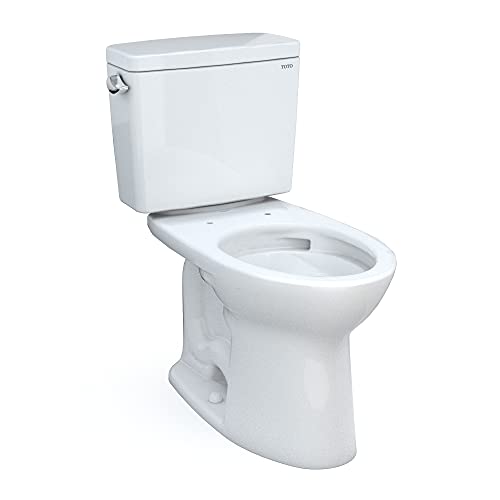
TOTO Drake
4.7Long-life seal
The TOTO Drake uses a 3 inch G-Max canister seal rather than a hinged flapper, lifting straight up to open the whole valve at once for the fast surge that earns its top flush rating.
Flush TypeGravity, 3 in G-Max canister
GPF1.28
MaP Score1000 g
Bowl HeightStandard / Comfort options
Warranty1 year limited
Best For
Buyers who want a long-lasting canister seal
Maximum clog resistance on low water
Wide availability of TOTO replacement seals
Not Ideal For
Anyone expecting a generic flapper fix
Buyers wanting a seamless one-piece look
Because the Drake uses a canister rather than a flapper, its seal opens 360 degrees and releases the tank faster than any hinged flap, which is part of why it reaches a 1,000 gram MaP score on just 1.28 gallons. When the seal eventually wears, the model-specific TOTO canister gasket is a quick snap-in replacement.
Owner reviews repeatedly note that the canister seal outlasts a typical rubber flapper, often running many years before it needs attention, and that genuine TOTO seals are easy to source online when the day comes.
Editorial Take
If you want a toilet whose seal you almost never think about, the Drake's canister is the design we trust most. It opens fully for a strong flush and lasts far longer than a hinged flapper, and when it finally wears, the genuine TOTO seal is a five-minute swap.
Bottom Line: The Drake's 3 inch canister seal opens fully for a strong flush and outlasts a standard flapper.
2
Best Kohler Canister
Kohler Cimarron
4.5Comfort plus seal life
The Kohler Cimarron pairs a 3 inch canister seal with the Class Five flushing system, delivering a strong clean flush in a comfort-height body, with a seal that lasts longer than a hinged flapper.
Flush TypeGravity, 3 in canister, Class Five
GPF1.28
MaP Score1000 g
Bowl HeightComfort height
Warranty1 year limited
Best For
Taller and older users wanting an easier seat
A canister seal that outlasts a flapper
Power plus WaterSense efficiency
Not Ideal For
Buyers wanting a removable-flapper repair
Small children who need a lower bowl
The 3 inch canister seal lifts straight up and opens fully around the valve, feeding the Class Five system for a clean rinse and strong siphon at 1.28 gallons. When service is needed, the Kohler-specific seal snaps in without replacing the whole valve tower.
Owner reviews praise the balance of a powerful flush, low water use and a comfortable seat height, and frequently single out the canister seal for lasting longer than the traditional flapper it replaced in older toilets.
Editorial Take
The Cimarron is the canister-seal toilet we recommend when a taller seat matters too. You get the full MaP ceiling and WaterSense efficiency, and the genuine Kohler seal is a simple part to keep on hand for the rare day it wears.
Bottom Line: A 3 inch canister seal and comfort height make the Cimarron a balanced power-and-serviceability pick.
3
Best Proprietary Flush Valve
American Standard Champion 4
4.4Heavy waste
The Champion 4 uses an oversized 4 inch flush valve with a proprietary tower seal rather than a generic flapper, moving a huge volume of water fast enough to defeat stubborn clogs.
Flush TypeGravity, 4 in tower valve
GPF1.6
MaP Score1000 g
Bowl HeightComfort height
Warranty10 year limited on china
Best For
Households with heavy waste and frequent clogs
Buyers who prioritize raw force
A self-contained flush tower assembly
Not Ideal For
Buyers wanting a cheap universal flapper fix
Water-conscious buyers wanting 1.28 GPF
The Champion 4 replaces the simple flapper with a tall flush tower, and its rubber seal is part of that proprietary assembly. The trade-off is that repairs use the American Standard tower kit rather than a generic flapper, but the seal rarely needs attention because the tower lifts cleanly off the oversized valve.
Owner and plumber feedback is unusually consistent, calling it the toilet they install when nothing else stops clogs, and noting that the flush tower seal is durable, with American Standard repair kits readily available when needed.
Editorial Take
The Champion 4 is the exception to the universal-flapper rule. Its proprietary tower seal is the price of that oversized 4 inch valve and maximum clog clearing, so keep the American Standard repair kit in mind rather than reaching for a generic flapper.
Bottom Line: The Champion 4's proprietary tower seal trades generic-flapper convenience for unmatched clog clearing.
4
Best 3 Inch Flapper Value
Woodbridge T-0001
4.5Value power
The Woodbridge T-0001 uses a large 3 inch flush valve with a hinged flapper seal in a modern skirted one-piece, hitting the 1,000 gram MaP ceiling for a lower outlay than the premium brands.
Flush TypeGravity, 3 in valve, flapper
GPF1.28
MaP Score1000 g
Bowl HeightComfort height
Warranty5 year limited (varies)
Best For
Value buyers wanting maximum flush power
A modern skirted look with hidden trapway
A simple 3 inch flapper repair path
Not Ideal For
Buyers who want a long-established brand
Anyone needing local same-day parts
The 3 inch valve and hidden trapway give the T-0001 the same clog resistance as far pricier one-pieces, and its hinged 3 inch flapper means repairs use a straightforward replacement rather than a proprietary tower. The main compromise is ordering Woodbridge parts online rather than finding them locally.
Owner reviews consistently praise the flush strength and modern look for the money, noting that the 3 inch flapper is easy to swap and that the toilet matches established names at a noticeably lower price.
Editorial Take
The T-0001 is the value play for a 3 inch flush with a serviceable flapper. You get maximum clog resistance in a modern skirted shell, and when the flapper wears, a standard 3 inch replacement does the job without a proprietary kit.
Bottom Line: The T-0001 brings a 3 inch flapper valve and 1,000 gram flush into a value-priced skirted one-piece.
5
Best Budget Flapper Toilet
Gerber Viper
4.3Budget repairs
The Gerber Viper uses a standard flush valve and an easily sourced flapper to post a full 1,000 gram MaP score at one of the lowest prices in the category, which is why plumbers favor it for rentals.
Flush TypeGravity, standard valve, flapper
GPF1.28
MaP Score1000 g
Bowl HeightStandard / Comfort options
Warranty5 year limited on china
Best For
Rentals and heavy-use bathrooms on a budget
Cheap, widely stocked flapper parts
Trade-grade durability
Not Ideal For
Buyers wanting premium fit and finish
Anyone needing a seamless one-piece
The Viper's conventional flush valve takes a common flapper, so when it wears, a landlord or plumber can grab an inexpensive replacement at any hardware store. Gerber's plumbing-trade pedigree means it holds up under the kind of heavy use that breaks cheaper builder specials.
Owner and plumber reviews repeatedly cite the Viper as a dependable, no-frills workhorse whose flapper is cheap and quick to replace, with a flush that punches well above its price point in apartments and rentals.
Editorial Take
For a budget toilet with the simplest possible repair path, the Viper is the one we trust. Its flapper is a standard, widely stocked part, so a running toilet is a few-dollar fix, and Gerber's trade roots mean it survives heavy use that breaks cheaper toilets.
Bottom Line: The Viper pairs a strong flush with the cheapest, easiest flapper repair in the category.
6
Best Dual-Flush Seal
Swiss Madison St. Tropez
4.3Dual-flush style
The Swiss Madison St. Tropez uses a dual-flush valve with a push-button seal rather than a traditional hinged flapper, delivering a strong adjustable flush in a low, modern skirted one-piece.
Flush TypeDual flush, button valve seal
GPF1.1 / 1.6 dual
MaP Score800 g (varies)
Bowl HeightComfort height
Warranty1 year limited
Best For
Modern bathrooms wanting a low skirted look
Dual-flush water savings
A seamless, easy-clean body
Not Ideal For
Buyers who want a simple flapper repair
Anyone needing the very highest MaP score
The dual-flush button operates a cartridge seal rather than a hinged flapper, letting you choose a lighter rinse for liquids and a full flush for solids. That seal is a Swiss Madison part rather than a generic flapper, so repairs are ordered to match the model.
Owner reviews praise the modern style and the strong flush, with the usual newer-brand caveat that the dual-flush cartridge seal is sourced online from Swiss Madison rather than found on a hardware store shelf.
Editorial Take
The St. Tropez is for buyers who want dual-flush efficiency and a modern shape, accepting that its button-operated seal is a model-specific part. Keep the matching Swiss Madison cartridge in mind rather than expecting a generic flapper to fit.
Bottom Line: The St. Tropez pairs dual-flush efficiency with a button-operated cartridge seal in a modern skirted one-piece.
7
Best One-Piece Canister
TOTO UltraMax II
4.6Seamless design
The UltraMax II carries the same 3 inch canister seal and Double Cyclone rinse as the Drake II into a seamless one-piece body that is genuinely easier to keep clean.
Flush TypeGravity, 3 in canister, Double Cyclone
GPF1.28
MaP Score1000 g
Bowl HeightComfort height
Warranty1 year limited
Best For
Buyers who want a seamless, easy-clean body
A long-life canister seal in a one-piece
Modern bathrooms valuing a clean look
Not Ideal For
Tight budgets, since one-pieces cost more
Anyone expecting a generic flapper fix
The 3 inch canister seal drives the Double Cyclone rinse, which uses two nozzles instead of rim holes to wash the bowl and feed the siphon, helping the toilet hold its 1,000 gram rating as it ages. The canister tends to outlast a hinged flapper, and the genuine TOTO seal is an easy replacement.
Owner reviews highlight how easy the seamless body is to clean and how consistently strong the flush stays over time, with the canister seal earning the same long-life reputation as the rest of TOTO's lineup.
Editorial Take
If you want a long-life canister seal in a seamless body, the UltraMax II is the one we point people to. It brings TOTO's durable seal and Double Cyclone engineering into a one-piece that is easier to keep clean than most buyers expect.
Bottom Line: The UltraMax II delivers a long-life 3 inch canister seal in a seamless, easy-clean one-piece shell.
Why Does My Toilet Run After Replacing the Flapper?
If your toilet still runs after a new flapper, the most common causes are too much chain slack holding the flapper slightly open, a flapper that does not match the valve size or style, a worn flush valve seat the flapper cannot seal against, or a water level set above the overflow tube. Check the chain length and valve seat first, since those fix most cases.
A fresh flapper that still leaks is almost always a fit or adjustment problem rather than a defective part. Start with the chain: if it is too short or tangled, it holds the flapper a hair off its seat and water trickles past continuously. Leave about half an inch of slack so the flapper drops fully closed. Next, confirm the new flapper truly matches the valve, since a 2 inch flapper perched on a 3 inch valve, or a generic flapper on a canister tower, will never seal no matter how new it is.
If the size and chain are correct and it still leaks, run a finger around the valve seat the flapper rests on. A pitted, mineral-crusted or grooved seat lets water sneak past even a perfect flapper, and the fix is to clean the seat or, in stubborn cases, replace the flush valve or add a seal-repair ring. Finally, check that the tank water level sits about an inch below the top of the overflow tube; a level set too high drains continuously into the overflow, which mimics a flapper leak. Our guides on a toilet that keeps running and fixing ghost flushing cover each of these checks in order.
Editorial Take
The mistake we see most often is shoppers blaming the flapper for every running toilet and ignoring the rest of the system. The order that actually matters is correct flapper size and style first, then half an inch of chain slack, then a clean valve seat, then the water level. A perfect flapper on a pitted seat or above an over-filled overflow still runs, so work through the four in that order and most leaks disappear without buying a single extra part.
Putting It All Together
The flapper is the cheapest part in your tank and the one most likely to cause trouble, so getting it right pays off fast. Match the seal to the flush valve, not the brand: a 2 inch valve takes a 2 inch flapper, a 3 inch valve takes a 3 inch flapper, and TOTO and Kohler 3 inch toilets take their model-specific canister seal. Choose a chlorine-resistant or silicone material, skip the in-tank bleach tablets that destroy seals, leave about half an inch of chain slack, and set the water level an inch below the overflow. Do that, and the same flapper that used to fail every couple of years can run for half a decade while delivering a full, strong flush every time. When you buy a new toilet, weigh how easy its seal is to service alongside its flush power, since a strong flusher with a simple, widely stocked flapper is the easiest to live with for the long haul.
A toilet flapper is the flexible rubber or silicone seal that covers the flush valve opening at the bottom of the tank. When you press the handle, a chain lifts the flapper so the stored tank water rushes into the bowl, then it drops back to reseal the valve while the tank refills. A worn or wrong-sized flapper is the most common cause of a toilet that runs or wastes water.
? What size flapper do I need for my toilet?
You need a flapper that matches your flush valve size, which is either 2 inch or 3 inch. Turn off the water, remove the tank lid, and measure the round opening at the bottom of the tank. About 2 inches across, roughly the size of a baseball, means a 2 inch flapper, while about 3 inches, closer to a grapefruit, means a 3 inch flapper or canister. The owner's manual lists the size too.
? How do I know if my flapper is 2 inch or 3 inch?
Measure the diameter of the valve opening the flapper sits on, or compare it to common objects: a 2 inch valve is about the size of an orange or baseball, while a 3 inch valve is noticeably larger, like a grapefruit. The overflow tube is another clue, since 3 inch valves usually have a thicker tube. You can also look up your model number in the manufacturer's parts diagram for the exact size.
? What is the difference between a flapper and a canister seal?
A flapper is a hinged rubber seal that swings open on two ears to release water, common on 2 inch valves. A canister seal is a cylinder that lifts straight up and opens 360 degrees around the valve at once, common on 3 inch valves from TOTO and Kohler, and it releases water faster than a flapper. They are not interchangeable, so a replacement must match both the valve size and the seal style.
? How often should I replace a toilet flapper?
Most flappers last three to five years, though cheap rubber flappers can fail in as little as two years, especially in chlorinated water or when in-tank bleach tablets are used. A chlorine-resistant or silicone flapper often lasts four to five years or longer. Signs it is time to replace include a running toilet, ghost flushing, a hardened or warped flap, or black residue when you touch it.
? Why does my toilet keep running after I replaced the flapper?
A new flapper that still runs usually has too much chain slack holding it slightly open, the wrong size or style for the valve, or a pitted valve seat it cannot seal against. A water level set above the overflow tube can also mimic a flapper leak. Check the chain for about half an inch of slack, confirm the flapper matches the valve, clean the valve seat, and verify the water level.
? Can I replace a toilet flapper myself?
Yes, replacing a flapper is one of the easiest plumbing repairs and needs no tools. Turn off the water supply valve, flush to empty the tank, unhook the old flapper from the overflow tube ears and the chain from the handle, then snap on the new matching flapper and reconnect the chain with about half an inch of slack. Turn the water back on, refill, and test. It takes about ten minutes.
? What kind of flapper lasts the longest?
Chlorine-resistant rubber and silicone flappers last the longest, often four to five years or more, because they resist the chemical breakdown that hardens standard rubber. If you have heavily chlorinated water or use in-tank bleach tablets, a chlorine-resistant flapper is essential. The cheapest generic rubber flappers degrade fastest and are a common reason a toilet starts running again after a year.
? Do bleach tablets damage toilet flappers?
Yes, in-tank bleach or chlorine tablets are one of the fastest ways to destroy a flapper. The concentrated chlorine sits in contact with the rubber and hardens, warps and crumbles it within months. If you want to use cleaning tablets, place them in the bowl rather than the tank, or choose a chlorine-resistant flapper. Many running-toilet problems trace directly back to a bleach tablet in the tank.
? Does the flapper affect flush strength?
Yes. For a strong flush, the flapper must open fully and stay open until the tank is nearly empty, releasing the whole charge in one fast surge. Too much chain slack, a warped flap, or a waterlogged flapper makes it drop early and cuts the flush short, causing a weak or incomplete flush. A fresh, correctly adjusted flapper is one of the first fixes for a toilet that has lost flush power.
? What is a universal toilet flapper?
A universal flapper is a generic replacement designed to fit a range of standard 2 inch flush valves, often with an adjustable dial to tune flush volume. It works well for most common toilets, but it is not truly universal: it will not fit 3 inch valves or canister-style seals. Always confirm your valve is a standard 2 inch type before relying on a universal flapper, and match TOTO and Kohler 3 inch models to their specific seals.
? How much chain slack should a flapper have?
Leave about half an inch of slack in the lift chain between the flapper and the handle arm. Too much slack and the flapper will not lift high enough to open fully, weakening the flush. Too little and the chain holds the flapper slightly open, causing a continuous leak and a running toilet. Adjust the chain link by link until you have roughly half an inch of give with the flapper fully closed.
? Why does my flapper close too early and weaken the flush?
A flapper that drops early usually has too much chain slack, is warped or waterlogged so it loses buoyancy, or is the wrong shape for the valve. Some adjustable flappers also have a dial set to release too little water. Check that the chain allows a full lift, replace a heavy or distorted flapper with a fresh matching one, and adjust any flush-volume dial toward a longer open time for a stronger flush.
? Are all toilet flappers the same?
No, flappers vary by valve size (2 inch or 3 inch), seal style (hinged flapper versus lift-up canister), material (standard rubber, chlorine-resistant rubber or silicone), and design (fixed or adjustable). Using the wrong type is the leading cause of a replacement that leaks. Match the part to your valve size and seal style, and for TOTO and Kohler 3 inch toilets, use the manufacturer's specific seal rather than a generic flapper.
? How do I test if my flapper is leaking?
Add a few drops of food coloring to the tank water, then wait about ten minutes without flushing. If colored water appears in the bowl, the flapper is leaking and needs replacement or adjustment. This dye test is the quickest way to confirm a slow leak that is too small to hear. A leaking flapper can waste hundreds of gallons a week, so it is worth fixing promptly.
? Will the wrong flapper waste water?
Yes, a flapper that does not match the valve size or style cannot seal completely, so water trickles into the bowl continuously and the fill valve cycles to top off the tank. This silent leak can waste hundreds of gallons a week and raise your water bill. Matching the flapper to the exact valve size and style, and confirming a clean seal with a dye test, is the cleanest way to stop the waste.
? Can a flapper cause ghost flushing?
Yes, ghost flushing, where the toilet refills on its own without anyone flushing, is most often caused by a flapper that no longer seals tightly. Water leaks slowly into the bowl, the tank level drops, and the fill valve kicks on to refill, mimicking a phantom flush. Replacing a worn flapper with a matching chlorine-resistant one, and checking the valve seat for pits, usually stops ghost flushing entirely.
? Do TOTO and Kohler toilets use flappers?
Most of TOTO's and Kohler's higher-performance toilets use a 3 inch canister seal rather than a hinged flapper. The canister lifts straight up and opens 360 degrees for a fast full release, which helps these toilets reach high MaP scores. When the seal wears, you replace the model-specific TOTO or Kohler canister gasket rather than a generic flapper, so it is worth keeping the part number handy.
? Is a flapper the same as a flush valve?
No, they are different parts. The flush valve is the fixed opening and overflow tube at the bottom of the tank that water passes through, while the flapper is the removable seal that covers that opening and lifts to release water. The flapper is the part that wears out and gets replaced most often. The valve itself lasts much longer and is only replaced when its seat becomes pitted or cracked.
Our Verdict
The flapper is the cheapest fix for the most common toilet problems, but only if you match it correctly. For most standard toilets, a 2 inch chlorine-resistant flapper like a Korky is the most reliable, longest-lasting choice, while TOTO Drake and Kohler Cimarron owners need the model-specific 3 inch canister seal instead. Skip in-tank bleach tablets, leave about half an inch of chain slack, set the water level an inch below the overflow, and confirm the seal with a dye test. Match the size and style to your valve, then check the current price on Amazon before you order.
N
Researched by Nadia Okafor
Nadia tracks EPA WaterSense certification, GPF and long-term water-saving performance, focusing on fixtures that cut water use without sacrificing flush power. All findings come from published efficiency data and verified owner reviews, not lab testing.
Updated August 2026 · Buying Guides
Keep reading
Related guides
Where Does Toilet Water Go After You Flush
Buying Guides
4.6
When you flush, where does it go? Follow toilet water from the bowl through the trap, drain, and stack to a septic…