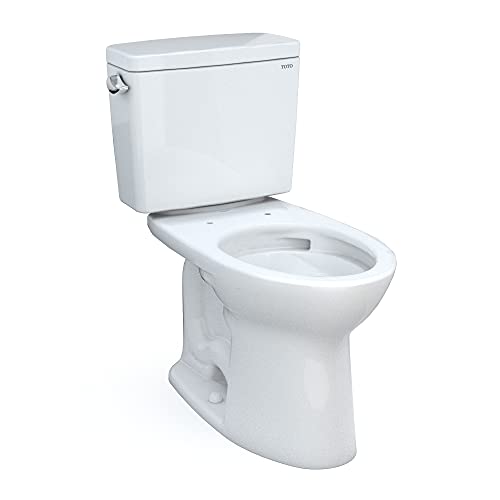
Bowl shape is one of the first specs you pick when buying a toilet, and it is also one of the most consequential for daily comfort. Almost every residential toilet sold in North America comes in one of two bowl shapes, round or elongated, and the choice changes how the toilet feels to sit on, how much floor space it occupies, how easy it is to wipe down and, in tight bathrooms, whether the door even clears it. What it does not change, contrary to a common belief, is flush power. A round and an elongated version of the same toilet line almost always use the same tank, flush valve and trapway, so they post the same MaP flush-test scores and the same gallons per flush.
This guide compares round and elongated toilets the honest way. We line up the published dimensions, MaP (Maximum Performance) gram scores, gallons per flush, EPA WaterSense listings and aggregated owner ratings, then walk through every real trade-off so you can match the bowl shape to your space and your household. If you want the broadest view of flush strength across every toilet type and shape, our pillar guide to the best flushing toilets ranks the strongest models regardless of bowl shape. This page is focused specifically on round versus elongated, and how to choose between them.
How we research and compare
We do not test toilets in a lab. We compare manufacturer specifications, published MaP flush-test gram scores, gallons per flush, EPA WaterSense listings, bowl and rough-in dimensions, trapway design and aggregated owner ratings across major retailers. For the round versus elongated question specifically, we weigh seating comfort, floor footprint, cleaning, door clearance and price, since those are the factors bowl shape actually affects. Where one shape clearly suits a use case better, we say so rather than declaring a universal winner.
What Is the Difference Between a Round and Elongated Toilet?
The only structural difference is bowl length. A round bowl measures about 16.5 inches from the mounting bolts to the front of the rim, while an elongated bowl runs roughly 18 to 18.5 inches, giving an oval, chair-like seating surface. Both shapes use the same flush systems and water volume in a given line, so bowl shape affects comfort, footprint and cleaning, not flush power.
Picture the seat looking down from above. A round toilet has a nearly circular opening, and an elongated toilet has an egg or oval shape that extends further toward the front. That extra length, usually about two inches, is the entire physical difference. It is measured from the center of the two mounting bolts at the back to the outermost point of the front rim, which is why elongated toilets project further into the room. Manufacturers list this on every spec sheet, so you can confirm the exact figure before you buy rather than guessing from a photo.
Because the difference is confined to the front of the bowl, everything behind it, the tank, the rough-in distance from the wall to the drain, the flush valve and the trapway, can be identical between the two versions of a line. TOTO, Kohler and American Standard all sell round and elongated variants of the same models, and the round version is simply the shorter-bowl option, not a weaker or cheaper-flushing one.
Are Elongated Toilets More Comfortable Than Round Toilets?
Yes. The longer 18 to 18.5 inch elongated bowl provides a larger seating surface that most adults find noticeably more comfortable, closer to sitting in a chair. Round bowls, at about 16.5 inches, feel more cramped for grown adults but are well sized for small children. Comfort is the single biggest reason elongated has become the default in modern homes.
The extra two inches of an elongated bowl translates into more contact area and better weight distribution, which is why the format dominates new construction and remodels. The benefit is most pronounced for taller and larger adults, and for anyone who has mobility concerns, since the longer bowl is easier to lower onto and rise from. Pairing an elongated bowl with a comfort-height seat, around 17 to 19 inches off the floor, produces the most accessible standard toilet you can buy. We cover that seat decision in our guide to comfort height vs standard height toilets, which layers on top of the bowl-shape choice.
Round bowls are not uncomfortable so much as smaller. For a powder room used briefly by guests, a child's bathroom, or any space where a few minutes of seating is all anyone needs, the difference matters far less. The trade-off only becomes a real comfort penalty in a primary bathroom that adults use every day. That is why most buyers who have the floor space choose elongated for main bathrooms and reserve round for secondary or space-constrained rooms.
Measure before you choose elongated. An elongated bowl projects about two inches further into the room than a round bowl on the same rough-in. Before you commit, measure from the wall behind the tank to where the front of the bowl would sit, then confirm the door, a vanity or a side wall still clears it with comfortable room to stand. If you have less than about 24 inches of clearance in front of the toilet, a round bowl is the safer fit.
Do Round and Elongated Toilets Flush Differently?
No. Flush power comes from the tank water volume, the flush valve and the trapway, none of which change with bowl shape. The round and elongated versions of the same toilet line almost always post identical MaP scores and gallons per flush. The TOTO Drake, for example, reaches up to 1,000 grams on MaP in both round and elongated configurations.
This is the most persistent myth in bowl-shape shopping. Buyers sometimes assume the larger elongated bowl needs more water or flushes weaker because there is more surface to rinse, but the engineering does not work that way. The flush is driven by the same tank, the same G-Max, Tornado, AquaPiston or Cadet flush system, and the same trapway diameter in both shapes. The bowl rim is simply longer at the front. The objective measure to trust is the MaP test, which records how many grams of solid waste a toilet clears in a single flush, and that score is published per model, not per bowl shape, in nearly every line.
If flush strength is your top priority, ignore the bowl shape entirely and read the MaP score and the gallons per flush. Aim for at least 600 grams of MaP clearance for everyday reliability, and 800 grams or more for a heavy-use household, then pick the round or elongated version of that model based on space and comfort. For a deeper walkthrough of flush systems and the specs that actually predict performance, see our complete guide to choosing a toilet.
At a glance
Round vs Elongated Toilets Compared
A side-by-side look at how the two bowl shapes differ on the factors that matter. These are general tendencies that hold across brands. Specific models vary, so always confirm the spec sheet of the exact toilet you are considering. The winner column is tinted where one shape has a clear practical edge.
What Is a Round Toilet Best For?
A round toilet is best for small bathrooms, powder rooms and any space where floor depth is tight, since it saves about two inches over an elongated bowl. It is also a sensible choice for children's bathrooms, because the smaller bowl suits smaller bodies. Round bowls usually cost slightly less and fit doors and vanities that an elongated bowl would block.
The case for round is space, plain and simple. In a half bath, a closet-sized powder room, an RV or a basement bathroom carved out of a corner, the two inches an elongated bowl projects can be the difference between a door that swings freely and one that bumps the toilet. Round bowls let you tuck a toilet into a tighter footprint and still leave comfortable standing room in front. Builders favor them in compact secondary bathrooms for exactly this reason, and they remain widely available across every brand from TOTO and Kohler to American Standard, Gerber and Swiss Madison.
Round also has a quiet edge for households with young children, since the smaller opening is better scaled to a child's body. And because round versions of a line typically carry a slightly lower price, they are a sound value pick where a longer bowl would add cost without adding usable comfort. The TOTO Drake, Kohler Highline and American Standard Cadet 3 all offer round configurations that flush exactly as hard as their elongated siblings.
What Is an Elongated Toilet Best For?
An elongated toilet is best for primary bathrooms and any space adults use daily, because the longer oval bowl is more comfortable and easier to keep clean. It suits larger adults, taller users and anyone with mobility concerns, especially when paired with a comfort-height seat. The only requirement is roughly 24 inches of clearance in front of the toilet.
Elongated is the modern default for good reason. The extra seating length makes the toilet feel like a piece of furniture rather than a fixture, and that comfort compounds over thousands of daily uses in a main bathroom. The open oval also gives a cleaner line of sight for hygiene and slightly fewer cramped angles to wipe down. For accessibility, the longer bowl is easier to sit on and stand up from, which is why aging-in-place remodels almost always specify elongated, comfort-height toilets.
The only real constraint is room depth. As long as the bathroom has the clearance, an elongated bowl is the safer comfort bet for adults. Nearly every premium and mid-range line leads with its elongated version, so you also get the widest model selection. The TOTO Drake II, Kohler Cimarron, American Standard Champion 4 and Woodbridge T-0001 are strong elongated picks that combine the roomier bowl with high MaP scores and WaterSense efficiency.
Which Bowl Shape Is Easier to Clean?
Cleaning is close, but elongated bowls are marginally easier because the open oval shape has fewer tight interior angles to scrub, even though there is slightly more surface area. The bigger cleaning factors are unrelated to shape: a fully glazed trapway and a skirted, smooth-sided design reduce buildup and wipe-down time far more than round versus elongated does.
If easy maintenance is a priority, focus less on bowl shape and more on the bowl's finish and exterior. A fully glazed trapway, branded as CeFiONtect on TOTO and by similar names elsewhere, resists waste buildup inside the bowl so you scrub less often. A skirted design, where a smooth panel conceals the contoured trapway on the side of the bowl, removes the ridges that collect dust on the outside. Either feature does more for cleaning than the round-versus-elongated decision. We break down the exterior choice in our toilet buying guide for 2026.
Top recommendations
Three Strong Picks, One per Use Case
One proven elongated comfort pick, one proven round space-saver, and one model that offers both shapes in the same strong-flushing line. Each rates well on the MaP flush test, carries WaterSense efficiency and earns high aggregated owner ratings.
Best Elongated
TOTO Drake II
Roomy comfort and a 1,000 g flush
An elongated, comfort-height two-piece with the quiet Double Cyclone siphon, rating a full 1,000 grams on MaP at 1.28 GPF. The longer bowl and glazed trapway make it comfortable and low-maintenance.
Check price on Amazon
Best Round (Compact)
Kohler Highline (Round)
Small bathrooms and powder rooms
The round version of Kohler's reliable Highline saves about two inches of depth while keeping the Class Five flush. A smart space-saver for tight rooms that still flushes as hard as its elongated sibling.
Check price on Amazon
Both Shapes, One Line
TOTO Drake
Same power in round or elongated
A two-piece legend sold in both round and elongated, both reaching up to 1,000 grams on MaP with the G-Max flush. Proof that bowl shape is a comfort and space choice, not a flush-power one.
Check price on Amazon
Editorial TakeIf you have the floor space, default to elongated for any bathroom adults use daily, and treat round as the targeted answer to a depth problem rather than a downgrade. The smartest move we see owners make is to confirm the exact bowl-length spec and front clearance with a tape measure before buying, then pick the strongest-flushing model available in whichever shape fits. Bowl shape is a comfort and footprint decision, so let the MaP score and WaterSense rating, not the shape, decide which specific toilet you carry home.
Round vs Elongated: How to Choose
Choose a Round Toilet If
Pick round if your bathroom is small, the toilet sits close to a door, a vanity or a side wall, or you have less than about 24 inches of clearance in front of the fixture. Round bowls are the right call for powder rooms, basement and corner bathrooms, RVs, and children's bathrooms where the smaller bowl actually fits the user better. You usually save a little money, and because the flush system is identical to the elongated version, you give up nothing on performance. The round TOTO Drake, Kohler Highline and American Standard Cadet 3 are dependable space-saving picks.
Choose an Elongated Toilet If
Pick elongated if the room has the depth and adults use it daily. The longer oval bowl is more comfortable, easier to clean and the better fit for larger or taller users and anyone with mobility needs, especially paired with a comfort-height seat. Elongated is the right choice for primary bathrooms, accessible remodels, and any space where comfort outranks saving two inches. The TOTO Drake II, Kohler Cimarron, American Standard Champion 4 and Woodbridge T-0001 are strong elongated options with high MaP scores. The bowl-shape decision also pairs with the body-style choice in our guide to one piece vs two piece toilets.
Editorial TakeThe bowl-shape decision interacts with three other specs, so make them together rather than one at a time. Decide round versus elongated by your floor depth, seat height (standard versus comfort) by who uses the toilet, and one-piece versus two-piece by cleaning and budget, then choose the actual model by its MaP flush score and WaterSense rating. Buyers who treat all four as a single checklist end up with a toilet that fits, feels right and flushes hard, instead of regretting one spec after install.
Sources
- EPA WaterSense, epa.gov/watersense
- MaP (Maximum Performance) flush testing, map-testing.com
- Manufacturer published specifications (TOTO, Kohler, American Standard)
Our Verdict
For most bathrooms, an elongated toilet is the better buy. The longer 18 to 18.5 inch bowl is more comfortable, friendlier for larger and older adults, and a touch easier to clean, all without costing a single gram of flush power. Reserve round bowls for the situations they genuinely win: small bathrooms, powder rooms, kids' rooms and any space where front clearance is tight. Crucially, bowl shape never determines how hard a toilet flushes. The round and elongated versions of the same line share the same flush system and MaP score, so set the shape by comfort and space, then pick the exact model by its MaP rating, gallons per flush and WaterSense certification. The elongated TOTO Drake II is our top all-round recommendation, and the round Kohler Highline is the compact answer when space runs short.
FAQ
Frequently Asked Questions
? Do elongated toilets flush better than round toilets?
No. Flush power comes from the tank water volume, the flush valve and the trapway, none of which change with bowl shape. The round and elongated versions of a given line use the same flush system and post identical MaP scores and gallons per flush. The TOTO Drake reaches up to 1,000 grams on MaP in both shapes.
? How much longer is an elongated bowl than a round one?
About two inches. A round bowl measures roughly 16.5 inches from the seat mounting bolts to the front of the rim, while an elongated bowl runs about 18 to 18.5 inches. That extra length projects further into the room, which is the main reason round bowls suit tight spaces.
? Are elongated toilets more comfortable?
For most adults, yes. The longer oval seating surface distributes weight better and feels more like a chair, and it is easier to lower onto and rise from. The benefit is greatest for taller and larger users and anyone with mobility concerns, especially when paired with a comfort-height seat.
? Is a round toilet better for a small bathroom?
Yes. A round bowl saves about two inches of floor depth, which can be the difference between a door or vanity that clears the toilet and one that bumps it. Round bowls are the standard choice for powder rooms, half baths, basement bathrooms and any space where front clearance is limited.
? How much clearance do I need in front of an elongated toilet?
Aim for at least about 24 inches of clear space in front of the bowl so you can stand and turn comfortably, and check that the bathroom door swings without hitting it. If you have less than that, a round bowl is the safer fit. Always measure before you buy.
? Do round and elongated toilets use the same amount of water?
Yes. Water use is set by the flush system, not the bowl shape, so the round and elongated versions of a line both run at the same gallons per flush, typically 1.28 or 1.6 GPF. Both can carry EPA WaterSense certification when they meet the 1.28 GPF efficiency standard.
? Is a round or elongated toilet easier to clean?
They are close. The elongated bowl has slightly more surface but fewer cramped interior angles, giving it a marginal edge. The bigger cleaning factors are a fully glazed trapway and a skirted, smooth-sided design, both of which matter far more than the round-versus-elongated choice.
? Which bowl shape is better for children?
Round bowls are often the better fit for young children because the smaller opening is scaled closer to a child's body. For a bathroom used mainly by kids, a round, standard-height toilet can feel more secure and comfortable than a large elongated, comfort-height model.
? Do elongated toilets cost more than round ones?
Usually a little. For the same brand and flush system, the elongated version typically carries a small premium over the round version because the bowl uses slightly more material. The difference is modest, and flush performance is identical, so most buyers choose by comfort and space rather than price.
? Can I replace a round toilet with an elongated one?
Often yes, as long as the rough-in distance matches and you have enough front clearance for the longer bowl. Most toilets use a standard 12-inch rough-in. Measure the room depth and door swing first, since an elongated bowl projects about two inches further than the round model it replaces.
? Does bowl shape affect the rough-in measurement?
No. The rough-in is the distance from the finished wall to the center of the drain bolts, and it is the same for round and elongated versions of a line, usually 12 inches. The bowl shape only changes how far the front of the bowl extends into the room.
? Are elongated toilets harder to install?
No. Installation is the same process for both shapes, using the same wax ring, flange and bolts. The only practical difference is making sure the longer elongated bowl fits the space and clears the door before you set it. Weight is driven by one-piece versus two-piece construction, not bowl shape.
? Can I put an elongated seat on a round toilet?
No. Toilet seats are shaped to match the bowl, so a round bowl needs a round seat and an elongated bowl needs an elongated seat. Always buy a seat that matches your bowl shape, since an elongated seat will not sit correctly on a round bowl and vice versa.
? Which shape is best for ADA or accessible bathrooms?
Elongated bowls, paired with a comfort-height seat around 17 to 19 inches, are generally specified for accessible and aging-in-place bathrooms because they are easier to sit down on and stand up from. The longer bowl and taller seat reduce strain for users with limited mobility.
? Do all toilet brands offer both round and elongated?
Most major lines offer both, though premium and designer models sometimes come only in elongated. TOTO, Kohler, American Standard, Woodbridge, Gerber and Swiss Madison all sell round and elongated configurations across many of their popular lines, with the round version typically the space-saving option.
? What is a good MaP score regardless of bowl shape?
Aim for at least 600 grams of MaP clearance for reliable everyday performance, and 800 grams or more for a heavy-use household. Strong models reach up to about 1,000 grams. This score is published per model and applies to both the round and elongated versions, so use it to pick the toilet, then choose the shape by space.
? Is bowl shape or seat height more important for comfort?
Both matter, and they work together. Bowl shape (round versus elongated) affects seating area, while seat height (standard versus comfort) affects how far you sit and stand. For maximum comfort, an elongated, comfort-height toilet combines the two. Choose them together rather than treating either in isolation.
? Does an elongated bowl waste more water to rinse?
No. The rinse uses the same gallons per flush as the round version because the tank and flush valve are identical. The longer bowl is engineered around the same water volume, so an elongated toilet is exactly as water-efficient as its round counterpart at 1.28 or 1.6 GPF.
Keep reading
Related guides