
TOTO UltraMax II
Seamless cleaning, strong flush4.7
A seamless one piece with the Tornado flush, a strong MaP score and an efficient 1.28 gallon flush, so you get easy cleaning without giving up power.
Check price on AmazonA one piece toilet fuses the tank and bowl into a single seamless casting, while a two piece bolts a separate tank onto the bowl. The choice changes how the toilet looks, how easily it cleans, how much it costs and how you handle it during install. We compare both designs on real specs, MaP flush-test scores, water use and the patterns in aggregated owner reviews so you can pick the right body style with confidence.
Choose a one piece toilet if you want the easiest cleaning, a lower modern profile and no tank-to-bowl gasket to ever leak. Choose a two piece toilet if you want lower cost, lighter handling during install and cheaper repairs. Body style does not change flush power, so pick on cleaning, budget and looks, then choose the model on MaP score.
Every toilet in a showroom is built one of two ways. A two piece toilet is the familiar design most homes have: a bowl bolted to the floor with a separate tank that sits on top, joined by a rubber gasket and two or three bolts. A one piece toilet casts the tank and bowl as a single continuous unit of vitreous china, with no seam between them and no exposed bolts where they meet. From a few feet away both flush the same way and use the same gravity or pressure-assist mechanics, yet the two body styles diverge on cleaning, price, weight, repairs and the way they look in a room.
The encouraging part is that this is one of the lower-stakes toilet decisions, because the thing buyers care about most, flush performance, is not controlled by body style at all. Flush strength, clog resistance and water use come from the trapway, the flush valve and the bowl engineering, so a strong one piece and a strong two piece from the same brand post nearly identical MaP flush-test scores and the same gallons per flush. That means you get to choose the body on cleaning, cost and looks, then choose the model on the numbers. For the wider picture beyond body style, our complete guide to choosing a toilet covers every spec in order.
The only structural difference is whether the tank and bowl are cast together or bolted together, but that single choice ripples into cleaning, weight, cost and repairs.
In a two piece toilet the tank and bowl are made and shipped separately, then assembled at install with a sponge-rubber tank-to-bowl gasket and tank bolts sealing the joint. This is the design that has dominated for a century because it is cheaper to manufacture, easier to ship and lighter to carry. The tradeoff is the seam: a horizontal gap between tank and bowl, plus the bolt heads, that collects dust and grime and is fiddly to wipe.
A one piece toilet is fired as a single piece of vitreous china, so the tank flows into the bowl with no joint, no gasket and no exposed bolts. That seamless shell is the entire selling point. It wipes clean in seconds, hides no crevices and removes the one connection point on a two piece toilet that can eventually weep or drip. The cost is real, though: one piece units are heavier, pricier and, when something inside fails, the whole fixture is the repair unit rather than a swappable tank.
Tip: Body style is independent of bowl shape and bowl height. You can get a one piece or two piece toilet in round or elongated, and in standard or comfort height. Settle the body style here, then confirm the model comes in the shape and height you need.
How the two body styles compare on the factors buyers ask about most. Flush specs assume the same model line offered in both styles.
| Factor | One Piece | Two Piece |
|---|---|---|
| Cleaning ease | Seamless, fastest to wipe | Seam and bolts to clean |
| Typical price | Usually higher | Usually lower |
| Leak points | No tank-to-bowl gasket | Gasket can weep over time |
| Weight (handling) | Heavier, one bulky unit | Lighter, two parts |
| Repairs | Whole unit if china cracks | Swap tank or bowl alone |
| Profile / looks | Lower, sleek, modern | Taller, traditional |
| Typical MaP flush score | Same as two piece | Same as one piece |
| Gallons per flush | 1.28 or 1.0 available | 1.28 or 1.0 available |
| Best for | Easy cleaning, modern baths, accessibility | Budget, easier install, simpler repairs |
This is where the one piece earns its premium, and for many buyers it settles the decision.
The cleaning advantage of a one piece toilet is the single most cited reason owners choose it. The seamless shell means there is no horizontal gap where the tank meets the bowl, no recessed bolt caps and no rubber gasket edge for dust, hair and cleaner residue to gather. Aggregated owner reviews repeatedly praise how fast a one piece wipes down, which matters in a fixture cleaned weekly for years. Many one piece models also come skirted, meaning a smooth panel hides the trapway curves on the side of the bowl, removing the other awkward cleaning zone on a traditional toilet.
A two piece toilet is not hard to clean, but it has more places to reach. The tank-to-bowl seam, the bolt heads inside the bowl rim area and the exposed trapway contours on an unskirted model all take a little extra attention. None of this is a dealbreaker, and a good brush handles it, but over the lifespan of the toilet the one piece simply asks for less effort. If cleaning time and a streamlined look are high on your list, the one piece is the clear pick. For buyers who also want the easiest-to-clean side profile, pairing a one piece with a skirted design is worth reading about in our skirted versus exposed trapway comparison.
Two piece wins on upfront cost and on the cost of future repairs, which is why it still dominates new construction.
Body style is the second-biggest driver of toilet price after the flush mechanism, and two piece toilets are consistently the more affordable of the two. They use less material per unit to mold and fire, ship as two smaller boxes rather than one heavy carton, and fit the high-volume manufacturing that keeps builder-grade pricing low. That is why the vast majority of homes and new builds use two piece toilets, and why brands like American Standard, Kohler and Gerber stock so many reliable two piece models at modest price points.
The value gap continues into ownership. If a two piece toilet's tank cracks or its internals fail beyond a simple flapper swap, you can often replace just the tank and keep the bowl, or vice versa, since parts are standardized within a model. With a one piece toilet, a cracked tank or bowl means replacing the whole fused unit, which is both pricier and heavier to handle. For rentals, secondary baths and tight budgets, the two piece is the sensible value choice. For exact figures, check the current price on Amazon for the specific model in each style, since the spread varies by brand and finish. If maximizing flush per dollar is your real goal, our roundup of the best flushing toilet for the money ranks strong performers across both body styles.
Value tip: Do not pay the one piece premium for a rarely used powder room or a rental. Put that budget into flush performance instead, a higher MaP score and a proven trapway, and choose a reliable two piece. Save the one piece for a primary bathroom you clean often and want to look modern.
Short version: no, and you should not base a flush decision on it.
It is a common assumption that a one piece toilet flushes harder because it looks more premium, or that a two piece flushes harder because the tank sits higher. Neither holds up. The drop height from the tank water surface to the bowl is set by the flush valve and tank fill line, not by whether the joint is a seam or a casting, and both styles use the same gravity, dual flush or pressure-assist mechanisms. When TOTO offers the Drake as a two piece and the UltraMax II as a closely related one piece, the flush engineering and MaP scores land in the same strong range.
If raw clog-clearing force is your priority, focus on the MaP score and the flush technology rather than the body style. A model rated at 800 to 1000 grams will handle a busy household whether it is one piece or two piece. TOTO's Tornado and Double Cyclone systems, American Standard's Champion 4 flush and Kohler's class-five and AquaPiston valves all appear in both body styles. For a deeper look at the numbers that actually predict performance, our pillar roundup of the best flushing toilets ranks real models by MaP score and water use, and many are sold in both one piece and two piece configurations.
No. Efficiency is a certification question, not a body-style question.
Water efficiency is governed by the federal 1.6 gallon maximum and the voluntary EPA WaterSense standard, which certifies toilets that use 1.28 gallons or less while still passing flush performance tests. Both one piece and two piece toilets are sold in WaterSense-certified versions, and high-efficiency and dual flush options exist in both styles. The Swiss Madison St. Tropez is a one piece that sips as little as 0.8 gallons on its light flush, while the TOTO Drake two piece runs 1.28 or 1.6 gallons depending on configuration. The body style tells you nothing about water use, so check the GPF and the WaterSense label on the spec sheet, and read our explainer on WaterSense toilets if you want to understand exactly what the certification guarantees.
The two piece is friendlier to a solo DIY install, mostly because of weight.
The mechanics of setting a toilet are the same for both styles: set a wax ring or seal on the flange, lower the bowl onto the closet bolts, level and secure it, then connect the water supply. The difference is weight and handling. A two piece toilet lets you carry the lighter bowl into place by itself, set it, then add the tank, which one person can manage. A one piece toilet is a single dense casting, frequently in the ninety-plus pound range, so most people will want a helper to avoid cracking the china or straining a back during the lift.
Both styles use the same standard rough-in, wax ring and supply connection, so neither is harder once the fixture is in place, and neither locks you into special parts. If you are installing yourself and lifting solo, a two piece is the more forgiving choice. If you have a helper or a professional installer, the one piece's weight is a non-issue and the seamless cleaning benefit carries the day. Our toilet installation guide walks through the full process for either body style.
The honest way to choose is to ignore the marketing about which style flushes better, because they flush the same, and decide on the two things that actually differ in daily life: cleaning and budget. If you clean your main bathroom often and want it to look modern and wipe down in seconds, pay for a one piece. If you are outfitting a rental, a basement bath, a kids' bathroom or several toilets at once, the two piece saves real money upfront and on repairs with zero penalty to flush power. Then, in both cases, spend your attention on the MaP score, not the seam.
One piece reads modern and premium; two piece reads traditional and standard. Neither hurts resale.
One piece toilets sit lower and present a smooth, continuous silhouette that designers favor in contemporary bathrooms, especially when paired with a skirted base. That low profile and seamless look is part of why one piece units carry a premium and why they show up in higher-end remodels and accessible designs, where the lower tank and uninterrupted surface also make the toilet feel less bulky in a small room. A two piece toilet has a taller tank and a visible seam, which reads as the familiar, traditional look that suits classic and transitional bathrooms perfectly well.
For resale, neither style is a liability. A clean, modern one piece can be a nice touch in a primary suite, while a quality two piece in any bathroom is completely expected and raises no concerns with buyers or inspectors. The body style matters far less to resale than overall condition, a reputable brand and a comfortable bowl height. If you are weighing the broader look-and-comfort decisions alongside body style, our comparisons of comfort height versus standard height and round versus elongated bowls cover the choices that move the needle most.
Both are reliable; they fail in different, predictable ways.
Long-term reliability is close between the two styles, but the failure modes differ. The one piece toilet removes the single most common slow leak on a traditional toilet, the tank-to-bowl gasket, which can harden and weep after years of service. With no gasket and no tank bolts at that joint, there is simply nothing there to fail. The flush internals, the flapper or canister, the fill valve and the supply line are the same serviceable parts found in any toilet, so routine maintenance is identical.
The two piece toilet's advantage is reparability. Because the tank and bowl are separate, a cracked tank or a damaged bowl can sometimes be replaced individually within a model line, and the standardized parts are easy to source. The risk you accept is that aging gasket, which is a cheap and well-documented fix when it eventually drips. Across major brands, both styles deliver years of dependable service, so reliability should not be the deciding factor. Choose the body style on cleaning and budget, then choose a model from a brand with a solid warranty and strong MaP performance.
After comparing published specs, MaP scores and aggregated owner reviews across both styles, our recommendation is simple. For a primary bathroom you want low-maintenance and modern, buy a one piece such as the TOTO UltraMax II or Kohler Santa Rosa and enjoy the seamless cleaning and the missing gasket. For everywhere else, and for any budget-driven project, buy a proven two piece such as the TOTO Drake or American Standard Cadet 3. Both routes give you the same flush power, so let the room and the budget decide the body, and let the MaP score decide the model.
Three reliable models, one seamless one piece, one value two piece and one modern compact one piece, each with a strong MaP flush so you keep the power whichever style you choose.
A seamless one piece with the Tornado flush, a strong MaP score and an efficient 1.28 gallon flush, so you get easy cleaning without giving up power.
Check price on Amazon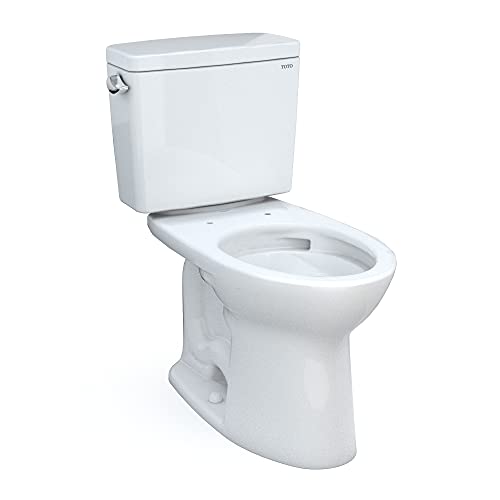
A two piece workhorse with a near top MaP flush and a 1.28 gallon option, the smart value pick when budget and simple repairs matter.
Check price on Amazon
A compact one piece with the AquaPiston flush, a low modern profile and a 1.28 gallon flush, a clean look that fits smaller bathrooms.
Check price on AmazonTwo short checklists settle the question for almost every bathroom.
You clean the bathroom often and want the fastest, seamless wipe-down with no seam or bolts; you want a lower, modern profile, especially in a primary suite or a small room where a skirted one piece looks tidy; you want to eliminate the tank-to-bowl gasket as a future leak point; or you value accessibility and a streamlined look over upfront cost. You have a helper or installer for the heavier lift. Strong picks: TOTO UltraMax II, Kohler Santa Rosa, Swiss Madison St. Tropez, Woodbridge T-0001.
Budget is a real factor, or you are buying for a rental, a basement, a kids' bath or several bathrooms at once; you want the easiest solo DIY install thanks to the lighter two-part design; you want cheaper, simpler repairs where you can replace the tank or bowl alone; or you simply prefer the traditional taller-tank look. Strong picks: TOTO Drake, American Standard Cadet 3, Kohler Highline, Gerber Viper.
A one piece toilet casts the tank and bowl as a single seamless unit with no joint between them. A two piece toilet bolts a separate tank onto the bowl with a rubber gasket. The flush mechanics are the same; the difference is the seam, the weight, the price and how easy each is to clean.
Neither is universally better. A one piece is easier to clean, has no tank-to-bowl gasket to leak and looks more modern, but costs more and is heavier. A two piece costs less, installs more easily and is cheaper to repair. Both flush identically, so choose on cleaning, budget and looks.
No. Flush power comes from the flush valve, trapway and bowl design, not the body style. When a model is offered in both styles, the one piece and two piece versions carry the same or nearly identical MaP flush-test scores and the same gallons per flush.
Yes. Because the tank and bowl are seamless with no exposed bolts or gasket, there are no crevices to trap grime, so a one piece wipes down in seconds. A two piece has a seam and bolt heads that collect dust and take more effort to keep clean.
Generally yes. Within the same model line a two piece costs less to manufacture and ship, so it typically carries a lower price. Repairs are also cheaper because the tank and bowl can be replaced separately rather than swapping the whole fixture.
A two piece is easier for most DIYers because it comes as two lighter parts you set separately. A one piece is a single heavy unit, often ninety pounds or more, that usually needs two people to lift and set safely onto the flange.
One piece toilets are typically heavier than two piece models, frequently in the eighty to over one hundred pound range as a single fused casting. That weight is why a helper is recommended for installation, even though the flush specs match a comparable two piece.
They remove one common leak point. A one piece has no tank-to-bowl gasket, which is the joint that can harden and weep on an aging two piece toilet. Other parts like the fill valve and flapper are the same in both styles and can still need routine service.
Yes, you can service the internal parts of a one piece toilet, including the flapper or canister, fill valve and supply line, just like a two piece. The limitation is that if the china tank or bowl cracks, you replace the entire fused unit rather than a single part.
Yes. Water use depends on the gallons-per-flush rating and the flush design, not the body style. Both are available with EPA WaterSense certification at 1.28 gallons per flush, and some models in each style go lower to 1.0 or 0.8 gallons.
Both last for years with proper care, and the difference is in failure mode rather than lifespan. A one piece removes the gasket leak point, while a two piece lets you replace the tank or bowl individually if one part is damaged. Brand quality and warranty matter more than body style.
Usually yes in overall height, because the tank on a one piece is integrated and sits lower, giving a sleeker profile. This is independent of bowl height, since both styles come in standard and comfort height bowls for seating comfort.
Yes. Body style is independent of bowl shape and height, so one piece toilets are widely available in elongated bowls and at comfort height. Models like the TOTO UltraMax II and Kohler Santa Rosa offer elongated, comfort-height one piece configurations.
Many installers find two piece toilets easier to carry and set solo because of the lighter two-part design, and easier to repair later. One piece toilets are valued for fewer leak points and faster cleaning. Both use the same standard rough-in and connections.
It is worth it in a primary bathroom you clean often and want to look modern, where seamless cleaning and the missing gasket justify the premium. For rentals, secondary baths or tight budgets, a quality two piece delivers the same flush power for less money.
A one piece with a skirted, low profile often suits small bathrooms because it looks less bulky and cleans easily in tight quarters. That said, fit is driven by rough-in, bowl shape and clearance, so confirm the dimensions on the spec sheet before choosing.
It varies by model and brand. Many premium one piece toilets, including several TOTO and Kohler models, include a matched soft-close seat, while many two piece models sell the seat separately. Check the product listing to confirm whether a seat is included.
TOTO, Kohler and American Standard lead both categories with strong MaP scores and WaterSense options. Woodbridge and Swiss Madison offer well-reviewed modern one piece designs, while Gerber and American Standard are dependable value choices in two piece.
Body style does not change how a toilet flushes, so let cleaning and budget decide it. Pick a one piece like the TOTO UltraMax II or Kohler Santa Rosa for seamless cleaning, a modern profile and no gasket to leak, ideal in a primary bath. Pick a two piece like the TOTO Drake or American Standard Cadet 3 for lower cost, easier solo install and cheaper repairs. In both cases, choose the actual model on its MaP score, gallons per flush and WaterSense certification, then confirm it comes in the bowl shape and height you need.
When you flush, where does it go? Follow toilet water from the bowl through the trap, drain, and stack to a septic…
Read the guideDo toilets need electricity to flush? Most do not. Learn which toilets use power, how a standard flush works, and how to…
Read the guideFind out how many gallons per flush an old toilet really uses, how to check your own tank, and how much water…
Read the guide