The rough-in is the single number that decides whether a new toilet bolts down flush against the wall or rocks with a gap behind it. It is the distance from the finished wall to the center of the drain, and it is almost always 12 inches, though older homes hide 10 inch and 14 inch surprises. This guide shows you exactly how to measure it in under two minutes, how to read it on a listing, and which models offer the 10 inch and 14 inch versions you need if your measurement does not land on the standard 12.
Quick Answer
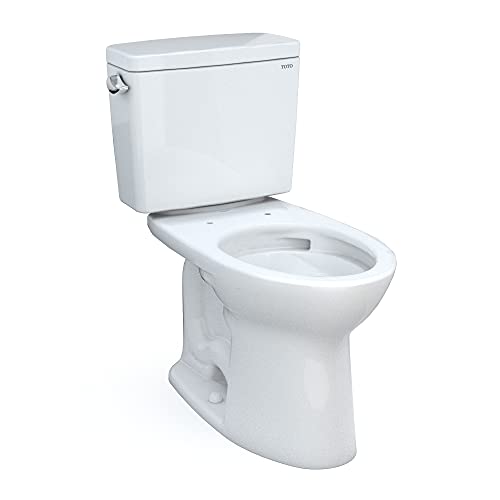
Measure from the finished wall behind the toilet to the center of the rear floor bolts, ignoring the baseboard. That distance is your rough-in, almost always 12 inches. If it reads close to 10 or 14, you need a model built for that size, such as the TOTO Drake, which ships in 10 inch, 12 inch and 14 inch versions with a 1000 g flush.
Most toilet-buying regret traces back to one skipped step. People shortlist by flush power, water use and styling, then order a unit that physically cannot reach the drain in their bathroom. The fixture arrives, the installer sets it on the flange, and there is a two inch gap behind the tank or the bowl will not bolt down at all. None of that is a defect. It is a rough-in mismatch, and it is completely avoidable with a single measurement that takes less time than reading this paragraph.
We do not install fixtures in a bathroom of our own. Everything here is built from published manufacturer specifications, plumbing-code rough-in conventions, EPA WaterSense certification records and the consistent patterns that surface across thousands of aggregated owner reviews, where "did not fit my rough-in" is one of the most common one-star complaints. Once you have the number, our roundup of the best flushing toilets ranks the strongest models, and the broader How to Choose a Toilet: the complete 2026 guide walks every other spec in order. Brands referenced throughout include TOTO, Kohler, American Standard, Woodbridge, Swiss Madison and Gerber.
Start here
What "rough-in" actually means
The rough-in is the distance from the finished wall behind the toilet to the center of the closet drain, the pipe the toilet bolts onto. On an installed toilet, that drain center sits directly under the caps covering the rear floor bolts, so you can measure to the bolts instead of pulling the toilet. The three standard sizes are 10 inches, 12 inches and 14 inches. Roughly nine out of ten homes are 12.
How to measure rough-in with the toilet still installed
You do not need to remove the existing toilet to get the number. The rear floor bolts, the ones with the small plastic or ceramic caps on each side of the base near the wall, sit on the same axis as the center of the drain. Measuring to them gives you the rough-in without touching a wrench.
Put the end of a tape measure flat against the finished wall behind the tank. Pull it straight out to the center of one of the rear bolt caps. Read the number where it crosses the center of that cap. If your toilet has two bolts on each side (four total), measure to the rearmost pair. That reading, rounded to the nearest standard size, is your rough-in. A measurement of 11-1/2 to 12-1/2 inches is a standard 12 inch rough-in. Around 10 inches means a 10 inch rough-in, and around 14 inches means a 14 inch.
Quick tip
Measure to the wall, not the baseboard
This is the mistake that throws the number off. Measure from the hard finished wall surface, not the front of the baseboard or trim. The baseboard can add half an inch or more, which is enough to push a true 12 inch rough-in into the wrong category and send you ordering the wrong model. Push the tape behind the trim if you have to.
How to measure rough-in on a bare floor during a remodel
If the old toilet is already pulled, or you are roughing in plumbing for a new bathroom, you measure to the drain itself. With the toilet gone, you will see the closet flange, the round metal or plastic ring bolted to the floor where the toilet sits. Measure from the finished wall to the dead center of that flange opening. That center is the same point the bolts ride on, so the result matches the installed-toilet method.
If the wall is still open framing and not yet drywalled, account for the thickness of the wall finish you plan to add. Standard half-inch drywall means you measure to the center of the flange and add the finish thickness to the stud-face reading to get the true finished-wall rough-in. When in doubt, set the flange so the center lands 12-1/2 inches off the bare stud, which leaves a clean 12 inch finished rough-in after half-inch drywall. Getting this right at rough plumbing stage is far cheaper than discovering a mismatch after tile goes down.
Your Measurement
Rough-In Size
How Common
What To Do
~10 in (9.5 to 10.5)
10 inch
Older / small homes
Buy a 10 inch model
~12 in (11.5 to 12.5)
12 inch
~90% of homes
Almost any toilet fits
~14 in (13.5 to 14.5)
14 inch
Some older homes
Buy a 14 inch model
What if my measurement lands between sizes?
Real bathrooms are not perfect, so your tape may read something like 11-1/4 or 12-3/4 inches. The rule is simple: a true rough-in is the nominal pipe location, and toilets are built with a little forgiveness around it. A measurement within roughly half an inch of 12 is a standard 12 inch rough-in. If it lands clearly between 10 and 12, treat it as the smaller standard size and verify with the manufacturer's minimum-clearance spec, because a toilet needs the drain to fall within its design window to seat correctly.
When you genuinely cannot tell, round toward more clearance, not less. A toilet that sits a quarter inch further from the wall than ideal looks completely normal and bolts down fine. A toilet whose drain falls outside its rated rough-in either will not reach the flange or leaves an ugly gap. The cost of guessing wrong is a return shipment of a 100 pound porcelain box, so measure twice and confirm the spec before you order.
Worth knowing
Watch side clearance too
Rough-in is the front-to-back number, but plumbing code also wants at least 15 inches from the drain center to any side wall or vanity, and a minimum of 21 inches of clear floor in front of the bowl. A toilet can have the right rough-in and still feel cramped if the side clearance is tight, so check those two numbers while you have the tape out.
Where the rough-in appears on a product listing
Every reputable toilet listing states the rough-in in its specifications, usually written as "12 in. rough-in" or simply "Rough-In: 12"." If a listing does not show it, treat that as a reason to look elsewhere, because it is the one number you cannot guess. Many popular lines sell more than one rough-in under the same model name, so read the exact variant before you click buy. The TOTO Drake, for example, exists in 10 inch, 12 inch and 14 inch versions, and the Kohler Highline offers a 10 inch variant alongside the standard 12.
Pressure-assisted and skirted models can be less flexible because their internal tanks and ceramic side panels are built around a fixed drain position. If you have a non-standard 10 inch or 14 inch rough-in, confirm availability before falling for a specific design, since the variant you need may sell out faster than the common 12 inch.
Make it easy
Top recommendations
Three proven models that cover the most common rough-in situations. Each balances a strong MaP flush with efficient 1.28 GPF water use, and each is widely stocked so any plumber can service it.
Best for Any Rough-In
TOTO Drake
10, 12 and 14 inch versions
4.7
A 1000 g MaP flush at 1.28 GPF that ships in all three standard rough-in sizes, so odd 10 inch and 14 inch bathrooms still get top flush power. The safe pick when your measurement is not 12.
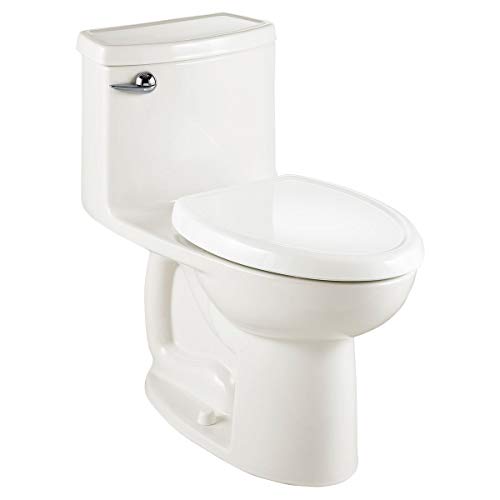
A widely stocked workhorse offered in a 10 inch rough-in variant with comfort height and a strong Class Five flush. The easy answer for older homes that measure 10 inches.
A 1000 g MaP rating at 1.28 GPF with the stain-resistant EverClean surface, built for the standard 12 inch rough-in that most homes have. The value pick when you measure 12.
If you take one thing from this page, make your first move with the new toilet a tape measure against the wall, before you read a single flush spec. The rough-in is the only number on the page you cannot adjust, return-proof or live with. Confirm it, write it down, and only then shortlist by MaP score and water use. We see more wasted shipping fees from skipped measurements than from any flush complaint.
Common rough-in measuring mistakes
A handful of errors account for almost every wrong measurement, and each is easy to avoid once you know it exists. Getting the number right the first time saves a return and a second install day.
Measuring from the baseboard
The most frequent mistake. The tape must start at the finished wall, not the trim in front of it. A baseboard adds anywhere from a quarter to three quarters of an inch, which is enough to misclassify a standard 12 inch rough-in. Slide the tape behind the baseboard or measure from the wall above it.
Measuring to the wrong bolt
Some toilets have two bolts per side. The drain center aligns with the rearmost pair, the ones closest to the wall, so measure to those. Measuring to a forward bolt gives a short, misleading reading and points you to a too-small rough-in.
Forgetting wall finish during a remodel
When framing is open, the bare stud is not the finished wall. Account for the drywall and any tile or backer board you will add, or set the flange so the center lands 12-1/2 inches off the stud to net a clean 12 inch finished rough-in. Skip this and a perfectly placed flange ends up an inch off after the wall is finished.
Common questions
How Do You Measure the Rough-In for a Toilet?
To measure a toilet rough-in, run a tape measure from the finished wall behind the toilet to the center of the rear floor bolts that hold the toilet down, ignoring the baseboard. That distance is the rough-in, almost always 12 inches, sometimes 10 or 14 in older homes. If the toilet is removed, measure instead from the wall to the center of the closet flange opening on the floor.
What Is the Standard Toilet Rough-In Size?
The standard toilet rough-in is 12 inches, used in roughly 90 percent of homes. The two non-standard sizes are 10 inches, common in older or smaller bathrooms, and 14 inches, found in some older houses. A toilet built for one rough-in will not seat correctly on another, so the size must match before you buy.
Do You Measure Rough-In to the Bolts or the Drain?
You measure to whichever is visible. On an installed toilet, measure to the center of the rear floor bolts, which sit directly over the drain center. On a bare floor, measure to the center of the closet flange opening. Both give the same rough-in number because the bolts ride on the drain axis.
What Happens If the Rough-In Is Wrong?
If the toilet's rated rough-in is larger than your drain spacing, the bowl will not bolt down because the drain falls outside its design window. If it is smaller, the toilet seats but leaves a visible gap between the tank and the wall. Either way the fixture must be returned, so confirming the rough-in before ordering avoids a costly return of a heavy porcelain unit.
Can You Put a 12 Inch Toilet on a 10 Inch Rough-In?
No, not properly. A toilet built for a 12 inch rough-in needs the drain centered 12 inches from the wall. On a 10 inch rough-in the drain sits two inches closer, so the toilet cannot bolt down without modification. Buy a model offered in a 10 inch version, such as the TOTO Drake or Kohler Highline, instead.
After the rough-in: the rest of the fit checklist
The rough-in gets the toilet onto the drain, but a few more measurements decide whether it lives comfortably in the room. Confirm at least 15 inches from the drain center to each side wall or vanity, and at least 21 inches of clear floor in front of the bowl per common code. Note the toilet's overall depth so a swinging door or a tight corner does not collide with it. None of these change flush power, but they decide whether the finished install feels right. Our wider Toilet Buying Guide (2026): everything you need to know covers each clearance with real numbers.
Once the fit is locked, the choices that actually affect daily use are flush power and water efficiency. Look for a MaP score of 800 grams or higher and a 1.28 GPF rating with EPA WaterSense certification, then decide on bowl shape and seat height. Our comparisons of one piece vs two piece toilets: which is better? and round vs elongated toilets: how to choose handle the comfort and styling decisions that come after the rough-in is settled. Brands like TOTO, Kohler, American Standard, Woodbridge, Swiss Madison and Gerber all offer strong options once your number is confirmed.
Editorial Take
Treat the rough-in as a gate, not a tiebreaker. Measure first, write the number on the listing, and reject any toilet that does not offer your size, no matter how good its flush data looks. We have watched shoppers fall for a 1000 g unit, ignore a 10 inch rough-in, and end up reordering anyway. The strongest flush in the world is useless if the bowl cannot reach the drain, so let the tape measure veto the shortlist before flush power even enters the conversation.
FAQ
Frequently asked questions
? What is a toilet rough-in?
The rough-in is the distance from the finished wall behind the toilet to the center of the closet drain the toilet bolts onto. It determines whether a given toilet will physically fit your bathroom. The three standard sizes are 10, 12 and 14 inches, with 12 inches by far the most common.
? How do I measure rough-in without removing the toilet?
Measure from the finished wall to the center of the rear floor bolts that secure the toilet, ignoring the baseboard. Those bolts sit directly over the drain center, so the reading equals your rough-in. If there are two bolts per side, measure to the rearmost pair closest to the wall.
? What is the most common rough-in size?
Twelve inches is the standard rough-in and is used in roughly nine out of ten homes. Almost every toilet on the market is built for a 12 inch rough-in, so if your measurement confirms 12, you have the widest possible choice of models.
? Do I measure from the wall or the baseboard?
Always measure from the finished wall, not the baseboard. The baseboard sits in front of the wall and can add half an inch or more, which is enough to misclassify your rough-in. Slide the tape behind the trim or measure from the wall surface above it.
? How do I measure rough-in on a bare floor?
With the toilet removed, measure from the finished wall to the center of the closet flange opening on the floor. That flange center sits on the drain axis, so the result matches the measurement you would get from the bolts of an installed toilet.
? My measurement is between 10 and 12 inches, what now?
Treat it as the smaller standard size and verify against the manufacturer's minimum-clearance spec before buying. When you genuinely cannot tell, round toward more clearance rather than less, since a toilet sitting slightly off the wall is fine but one that cannot reach the drain is not.
? Can I install a 12 inch toilet on a 10 inch rough-in?
No. A 12 inch toilet needs its drain centered 12 inches from the wall, but a 10 inch rough-in places the drain two inches closer, so the toilet cannot bolt down properly. Choose a model offered in a 10 inch version, such as the TOTO Drake or Kohler Highline.
? Which toilets come in a 10 inch rough-in?
The TOTO Drake and Kohler Highline both offer 10 inch rough-in variants, and several other lines do too. Because the 10 inch version is a less common variant, confirm it is in stock before committing to a specific model or finish.
? Which toilets come in a 14 inch rough-in?
The TOTO Drake is available in a 14 inch rough-in version, and a few other manufacturers offer 14 inch models for older homes. As with 10 inch, the 14 inch variant is less common, so verify availability before falling for a particular design.
? Where do I find the rough-in on a product listing?
Look in the specifications section, where it is listed as "12 in. rough-in" or similar. If a listing does not state the rough-in, treat that as a reason to shop elsewhere, since it is the one number you cannot afford to guess.
? Does rough-in affect flush power?
No. Rough-in is purely a fit dimension and has no bearing on how strongly a toilet flushes. Flush power depends on the MaP score, trapway size and flush valve. You can get a top 1000 g flush in 10, 12 or 14 inch rough-in versions of the same model.
? How much side clearance does a toilet need?
Common plumbing code requires at least 15 inches from the center of the drain to any side wall or vanity, giving 30 inches of total width for the fixture. Check this alongside the rough-in, because a toilet can fit the drain yet still feel cramped against a side wall.
? How much space is needed in front of the toilet?
Code generally calls for at least 21 inches of clear floor in front of the bowl, measured from the front edge to the nearest wall, door or fixture. This is separate from the rough-in but worth confirming so the finished bathroom is comfortable to use.
? What if my wall is open framing during a remodel?
Account for the wall finish you plan to add. Measure to the flange center and add the finish thickness to a stud-face reading, or set the flange so its center is 12-1/2 inches off the bare stud, which nets a clean 12 inch rough-in after half-inch drywall.
? Is rough-in the same as the toilet footprint?
No. The rough-in is only the drain-to-wall distance. The footprint is the overall area the toilet occupies, including its depth and width. A toilet with the correct rough-in can still be too deep for a tight space, so check overall dimensions separately.
? Can a plumber adjust the rough-in?
Moving the drain to change the rough-in is a major job that involves opening the floor and rerouting the closet bend, so it is rarely worth it. The practical fix is to buy a toilet built for your existing rough-in size, which is far cheaper and faster.
? Do pressure-assisted toilets come in non-standard rough-ins?
Less often. Pressure-assisted and heavily skirted designs are built around a fixed drain position, so 10 inch and 14 inch versions can be scarce. If you have a non-standard rough-in and want pressure assist, confirm the variant exists before settling on a model.
? How accurate does my measurement need to be?
Within about half an inch is enough to classify the rough-in, because toilets are built with some forgiveness around the nominal drain location. A reading of 11-1/2 to 12-1/2 inches is a standard 12 inch rough-in. Measure twice to confirm before ordering a heavy fixture.
Manufacturer published specifications (TOTO, Kohler, American Standard)
Our Verdict
Our Verdict
Measure before you shop. Run the tape from the finished wall to the center of the rear bolts, ignore the baseboard, and round to the nearest standard size. A 12 inch reading opens almost the entire market. If you land on 10 or 14, the TOTO Drake covers all three sizes with a 1000 g flush, the Kohler Highline handles 10 inch homes, and the American Standard Cadet 3 is the value pick for standard 12 inch rooms. Confirm the number, then chase flush power.