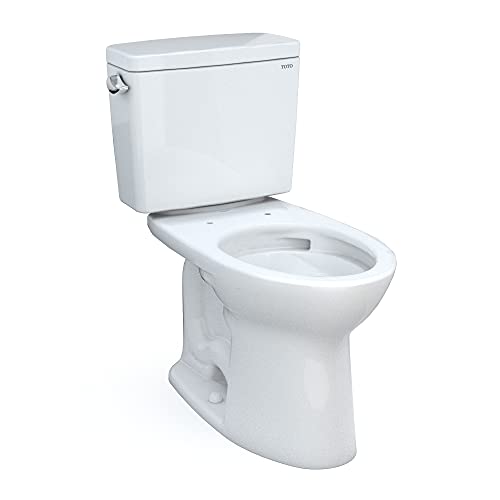

TOTO Drake Two-Piece Toilet vs Kohler Highline Two-Piece Toilet: Which Should You Buy?
Comparisons4.6
We compared the TOTO Drake and Kohler Highline two-piece toilets: both hit MaP 1000 at 1.28 GPF. See flush systems, verified specs…
Read the guideSeat height affects posture, joint stress, flush ergonomics, and accessibility compliance. Here is exactly what the research shows so you choose right the first time.
Comfort height (16 to 18 inches rim height) mirrors chair height and reduces knee strain for adults over 5 feet 4 inches or anyone with joint issues. Standard height (14 to 15.5 inches) supports better squat-angle colon alignment and suits children and shorter adults. Neither is universally superior; the right choice depends on user height, mobility, and household composition.
The debate between comfort height and standard height toilets is one of the most searched toilet questions online, and for good reason: a wrong choice can mean daily discomfort, difficulty rising from the seat, or compromised elimination posture for years. This comparison draws on published anthropometric research, ADA accessibility guidelines, gastroenterology literature on anorectal angles, and verified manufacturer specifications from TOTO, Kohler, American Standard, Woodbridge, Swiss Madison, and Gerber to help you decide with confidence.
Comfort height toilets have a rim (bowl top edge, excluding seat) measuring 16 to 18 inches from the floor, placing the seated position at roughly 17 to 19 inches with a standard seat added. Standard height toilets measure 14 to 15.5 inches at the rim, resulting in a seated height of about 15 to 17 inches. The difference of roughly 2 to 4 inches mirrors the shift from a low chair to a standard dining chair.
Manufacturers and marketers use several overlapping terms for the same concept. "Comfort height," "chair height," "ADA height," "right height" (American Standard), "universal height," and "tall height" all describe the same 16-to-18-inch rim range. TOTO uses "Universal Height" on models like the Drake II and UltraMax II. Kohler labels the feature "Comfort Height" on the Highline and Cimarron. American Standard calls it "Right Height" on models including the Champion 4 and Cadet 3. Swiss Madison markets "Comfort Height" explicitly. All refer to the same measurement standard rooted in ADA compliance requirements.
Standard height is sometimes called "regular height," "traditional height," or simply left unlabeled because it was the only option for most of toilet history. If a listing does not state a height category, always check the specification sheet for the actual rim dimension before purchasing.
When reviewing toilet specs, always measure rim height in the published spec sheet rather than relying on marketing terms alone. A model labeled "comfort height" by one brand might measure 16.1 inches while another measures 17.5 inches. That 1.4-inch difference is significant for shorter users.
The Americans with Disabilities Act Accessibility Guidelines (ADAAG) require accessible toilet seats to be between 17 and 19 inches from the floor, which translates to a rim height of approximately 16 to 18 inches. This is why comfort height toilets are often marketed as "ADA compliant" or "ADA height." Standard height toilets at 14 to 15.5 inches do not meet ADA specifications for accessible stalls.
ADA compliance matters beyond commercial buildings. Many homeowners choose comfort height toilets specifically to "age in place," anticipating that mobility will decline and that avoiding the risk of a fall while rising from a very low seat is worth the investment. According to the CDC, falls are the leading cause of injury-related death among adults aged 65 and older, and difficulty rising from low surfaces is a documented contributing factor.
For households where a family member uses a wheelchair, walker, or cane, comfort height toilets reduce the arc of transfer, minimizing strain on caregivers and the individual. Certified aging-in-place specialists (CAPS) routinely specify comfort height as baseline for any bathroom remodel intended to serve a resident through later decades. If you are planning an accessible bathroom remodel, comfort height is almost always the right starting point.
ADA guidelines set a floor (17 inches finished seat height), not a ceiling. Some users with longer legs prefer 18 to 19 inches. Check actual published seat height -- rim height plus seat pad thickness -- not just the rim spec.
Published gastroenterology research indicates that a more acute hip-to-torso angle (closer to squatting) straightens the anorectal angle, which can ease defecation and may reduce straining. Standard height toilets naturally place users in a slightly more acute angle than comfort height models. However, a toilet stool or footrest can replicate this angle on any toilet, largely offsetting the posture disadvantage of comfort height.
A 2019 study published in the Journal of Clinical Gastroenterology examined defecation posture and bowel movement duration across three positions: squatting, standard seated, and a simulated elevated seated position. The squat and standard positions outperformed the elevated position for evacuation time and completeness. However, the study noted that the practical difference was modest for otherwise healthy adults, and that accessories such as squatty-style footrests restored favorable anorectal angle even from elevated seats.
For users with chronic constipation, irritable bowel syndrome, or hemorrhoids, the posture question carries more weight. Colorectal surgeons often recommend a footrest regardless of toilet height. The takeaway for most buyers: if elimination ease is your primary concern, a standard height toilet with a toilet stool gives you the best of both worlds, but a comfort height toilet with a stool is nearly as effective and much easier to rise from.
Ergonomic research on seating suggests that ideal seat height equals approximately 95 to 100 percent of the user's popliteal height (the distance from the floor to the back of the knee). For most adults between 5 feet 4 inches and 6 feet 2 inches, comfort height (17 to 19 inches finished seat) aligns well with popliteal measurements. For adults under 5 feet 3 inches, children, and older adults with shorter leg proportions, standard height is ergonomically better aligned.
Popliteal height data from the U.S. Army anthropometric survey (ANSUR II) shows the 50th-percentile popliteal height for U.S. adult men is approximately 16.9 inches and for U.S. adult women is 15.5 inches. These figures suggest that standard height toilets may actually be ergonomically appropriate for the median American woman, while comfort height better serves the median American man. Households containing both men and women, especially those with significant height differences, face a genuine tradeoff.
Children between ages 3 and 10 are significantly better served by standard height toilets. A 4-year-old standing 3 feet 7 inches tall will dangle their feet entirely on a comfort height toilet, a position that creates pelvic floor strain and discourages relaxation. If your household includes young children, either choose standard height or plan for a step stool.
| User Profile | Recommended Height | Finished Seat Height | Key Reason |
|---|---|---|---|
| Adults 5'4" to 6'2", typical mobility | Comfort Height | 17 to 19 in | Chair-height ergonomics, easier to rise |
| Adults under 5'3" | Standard Height | 15 to 17 in | Popliteal alignment, feet reach floor |
| Seniors or mobility-limited users | Comfort Height | 17 to 19 in | ADA compliant, reduces fall risk |
| Children ages 3 to 10 | Standard Height | 15 to 17 in | Prevents foot dangling, pelvic floor support |
| Digestive health priority | Standard + footstool | 15 to 17 in + stool | Best anorectal angle, easy straining reduction |
| Mixed household (tall adults + children) | Comfort Height + step stool | 17 to 19 in | Serves taller adults; stool helps kids |
MaP (Maximum Performance) flush testing measures grams of solid waste a toilet can clear in a single flush, with 600 grams as the baseline pass threshold and 1000 grams representing the highest rating. Among comfort height models, the TOTO Drake II scores 1000g MaP, as does the American Standard Champion 4. Among standard height models, the Gerber Viper and TOTO Drake (non-II) both achieve 1000g. EPA WaterSense certification (1.28 GPF or lower) is available across both height categories.
The following comparisons cover the most widely reviewed models in each category based on MaP test data, EPA WaterSense certification status, aggregated owner review scores, and published specifications.
| Model | Rim Height | Flush Volume | MaP Score | WaterSense | Trapway Size | Check Price |
|---|---|---|---|---|---|---|
| TOTO Drake II (CST454CEFG) | 16.5 in | 1.28 GPF | 1000g | Yes | 2.125 in | Check price |
| TOTO UltraMax II (MS604114CEFG) | 16.5 in | 1.28 GPF | 1000g | Yes | 2.125 in | Check price |
| Kohler Highline Comfort Height (K-3999) | 16.5 in | 1.28 GPF | 800g | Yes | 2 in | Check price |
| American Standard Champion 4 (Right Height) | 16.5 in | 1.6 GPF | 1000g | No | 2-3/8-inch trapway | Check price |
| Woodbridge T-0001 (Comfort Height) | 16.25 in | 1.28 / 0.8 GPF dual | 800g | Yes | 2.125 in | Check price |
| Swiss Madison SM-1T254 Château | 16.5 in | 1.1 / 1.6 GPF dual | 700g | No | 2 in | Check price |
| Kohler Cimarron Comfort Height (K-3609) | 16.5 in | 1.28 GPF | 1000g | Yes | 2 in | Check price |
| Model | Rim Height | Flush Volume | MaP Score | WaterSense | Trapway Size | Check Price |
|---|---|---|---|---|---|---|
| TOTO Drake (CST744E) | 14.75 in | 1.28 GPF | 1000g | Yes | 2.125 in | Check price |
| Gerber Viper (21-302) | 14.5 in | 1.6 GPF | 1000g | No | 2.25 in | Check price |
| American Standard Cadet 3 (Standard) | 14.5 in | 1.28 GPF | 1000g | Yes | 3 in | Check price |
| Kohler Highline (K-3493) | 14.625 in | 1.28 GPF | 800g | Yes | 2 in | Check price |
| American Standard H2Option (Standard) | 15 in | 0.92 / 1.28 GPF dual | 800g | Yes | 3 in | Check price |
For deeper analysis of flush performance rankings across both height categories, the best flushing toilets guide covers MaP scores and owner reliability data for over 30 models.
MaP scores are the most objective single metric for flush power comparison. A 1000g-rated toilet can clear 2.2 pounds of solid waste per flush -- virtually eliminating clogs under normal household use. Both comfort height and standard height models can achieve maximum MaP scores; height does not affect flush mechanism performance.
Flush volume is independent of toilet height. Both comfort height and standard height toilets are manufactured with 1.28 GPF (EPA WaterSense compliant), 1.6 GPF (older standard), and dual-flush configurations. The EPA WaterSense program certifies toilets that use 1.28 gallons per flush or less and maintain a MaP score of at least 350 grams. Most top-rated models in both height categories now carry this certification.
For households looking to minimize water bills and qualify for utility rebates, WaterSense-certified 1.28 GPF models in both height categories are readily available. The TOTO Drake II and TOTO Drake, for example, are identical in flush mechanism -- the same E-Max flushing system and 1000g MaP -- differing primarily in rim height (16.5 vs 14.75 inches). If water efficiency is a priority, read the full 1.28 GPF vs 1.6 GPF comparison for rebate eligibility details.
Clog resistance is a function of trapway diameter, flush power (MaP score), and bowl coating technology -- not seat height. A comfort height toilet with a large-diameter fully glazed trapway will outperform a standard height toilet with a narrow unglazed trapway regardless of height category. Consumers comparing clog resistance should focus on trapway specifications and MaP scores rather than height category.
American Standard's Champion 4 uses a 4-inch flush valve (the largest in the residential market) and a fully glazed 2.375-inch trapway, making it the benchmark for clog resistance in the comfort height category. TOTO's EMax and Tornado flush systems use rim jets to create a centrifugal bowl wash that resists buildup regardless of height. For households with documented clog problems, the best toilets for not clogging guide provides a ranked breakdown by trapway diameter.
Toilet height (rim height) is independent of rough-in distance, which is the measurement from the finished wall to the center of the floor drain. The most common rough-in in North American homes is 12 inches, though 10-inch and 14-inch rough-ins exist in older construction. Both comfort height and standard height toilets are manufactured in all three rough-in sizes. Always confirm your rough-in before ordering any toilet regardless of height preference.
The TOTO Drake and Drake II, for example, share the same 12-inch rough-in footprint. Switching between them -- which is essentially switching between standard and comfort height while keeping all other specs identical -- requires no rough-in modification and only a few minutes of installation time difference. For full installation guidance, the toilet rough-in guide covers measurement methods and common mistakes.
If you are replacing an existing toilet and want to switch from standard to comfort height (or vice versa), the only structural factor to verify is that the toilet footprint covers the existing bolt holes. Most two-piece and one-piece replacement units cover the standard 5.5-inch bolt spread. No floor modifications are needed for a height change alone.
Comfort height toilets sit taller and can appear more imposing in small bathrooms. The visual mass difference is most apparent in one-piece designs like the TOTO UltraMax II versus a compact two-piece standard height unit. In powder rooms with high ceilings or open floor plans, the height difference is largely invisible. In compact half-baths, a comfort height unit can appear to dominate the space.
From a cleaning standpoint, the extra height of comfort height toilets can make it slightly harder to clean under the bowl rim from a kneeling position. However, rimless bowl designs -- now available from TOTO (Aquia IV), Swiss Madison, and Woodbridge -- eliminate the internal rim entirely regardless of height, making under-rim cleaning a non-issue.
In most product lines, comfort height and standard height versions of the same model are identically priced or differ by less than 5 percent. The TOTO Drake (standard) and Drake II (comfort height) -- which differ primarily in rim height and bowl shape -- are close in price at most retailers. The Kohler Highline and its Comfort Height sibling follow the same pattern. The height choice adds no meaningful cost premium in the current market.
Where cost differences do appear, they typically reflect additional features bundled into a particular SKU (such as a SoftClose seat in the comfort height version) rather than the height itself.
Aggregating owner reviews across major retail platforms reveals consistent patterns by user demographic. Comfort height models receive their highest praise from buyers aged 55 and older, those who explicitly mention knee or hip problems, and households with only adults. Negative reviews from comfort height buyers most commonly mention that shorter household members or young children struggle with the elevated seat.
Standard height models receive strong positive reviews from buyers who prioritize compact bathrooms, households with young children, and buyers who describe themselves as shorter adults. Negative reviews of standard height models cluster around difficulty rising from the seat among older buyers and those with joint problems. This review pattern confirms the ergonomic data: neither height is universally optimal.
In households where one person has significant mobility limitations, comfort height is the right call even if other household members would prefer standard. A shorter adult with good mobility adapts to comfort height far more easily than a person with arthritis adapts to a standard height seat they must rise from multiple times daily.
Standard (traditional) toilet rim height is 14 to 15.5 inches from the finished floor. Adding a typical toilet seat (which adds approximately 0.5 to 1 inch) results in a finished seat height of 15 to 16.5 inches. This has been the residential baseline in North America for over a century.
Comfort height toilets have a rim measuring 16 to 18 inches from the floor. With a seat, the finished seated height is 17 to 19 inches, matching the height of a standard dining or office chair. ADA guidelines require a minimum finished seat height of 17 inches for accessible fixtures.
Yes, for most seniors. The higher seated position reduces the range of motion required to stand and sit, which is particularly beneficial for those with hip replacements, knee arthritis, lower back pain, or general leg weakness. Certified aging-in-place specialists routinely specify comfort height as a baseline for senior-friendly bathrooms. Grab bars installed beside the toilet further reduce fall risk.
Generally no. For adults under approximately 5 feet 2 inches, comfort height often means feet do not rest flat on the floor, which creates ergonomic strain and may worsen elimination posture. Short users are typically better served by standard height toilets. If comfort height is required for accessibility reasons, a toilet stool footrest partially compensates.
Standard height is better for children. A comfort height toilet leaves young children's feet dangling, which creates pelvic floor tension and can make relaxation during bowel movements difficult. Children under 10 are generally better served by standard height toilets, possibly with a step stool for mounting. Potty training typically uses a separate low-profile toilet or seat insert.
No. Flush performance is determined by the flush valve size, trapway diameter, water volume (GPF), and bowl design -- none of which are related to rim height. Both standard and comfort height models can achieve perfect 1000g MaP scores. TOTO's Drake and Drake II, for example, use identical flushing systems despite differing in rim height by nearly two inches.
Not precisely, but raised toilet seats (bolt-on risers) and elevated toilet seat frames can add 2 to 6 inches to any standard height toilet. These are common temporary solutions for post-surgical recovery or interim accessibility needs. Permanent solutions are better served by replacing the toilet, as bolt-on risers can reduce stability and may void some warranties.
ADA height refers to the Americans with Disabilities Act requirement that accessible toilet seats measure 17 to 19 inches from the finished floor. This corresponds to comfort height rim measurements of 16 to 18 inches. ADA-compliant toilets are required in accessible stalls in commercial buildings and are increasingly preferred in residential aging-in-place design.
The original TOTO Drake (CST744E and variants) is standard height with a rim of approximately 14.75 inches. The TOTO Drake II (CST454CEFG and variants) is comfort height (universal height in TOTO terminology) with a rim of 16.5 inches. Both share the same E-Max flushing system and 1000g MaP score. The Drake II also features a fully skirted trapway for easier cleaning.
Kohler makes both versions. The K-3493 is a standard height Highline. The K-3999 is labeled "Comfort Height" with a 16.5-inch rim. Both carry EPA WaterSense certification at 1.28 GPF. Kohler's Comfort Height branding is distinct and consistently applied across their product line, so the label is reliable for identifying the taller option.
Most orthopedic surgeons recommend a minimum seat height of 18 to 20 inches following hip replacement surgery to prevent exceeding the 90-degree hip flexion restriction. A comfort height toilet (rim 16 to 18 inches, seat approximately 17 to 19 inches) may still be too low immediately post-surgery. A raised toilet seat or elevated toilet safety frame is often prescribed during recovery before transitioning to a permanent comfort height unit.
Bowl shape and rim height are independent specifications but are often bundled in product lines. Comfort height models are more frequently paired with elongated bowls because both features target adult users. Round bowls save 2 to 3 inches of depth, which is valuable in tight bathrooms. Standard height toilets are available in both shapes, as are comfort height models. Choose bowl shape based on bathroom footprint; choose height based on user ergonomics.
Some gastroenterology literature suggests that the squatting position -- approximated better by standard height -- improves anorectal angle and may ease elimination. However, the practical effect for most healthy adults is minimal, and a toilet stool placed under the feet compensates effectively. For users with chronic constipation or straining issues, a footrest accessory on a comfort height toilet is a reasonable solution that maintains both accessibility and posture benefits.
Guest bathrooms serve diverse users, including elderly visitors, children accompanying parents, and adults of varying heights. Standard height serves a broader user range without adaptation. However, if the primary household occupants are adults with mobility concerns, comfort height is the right choice even for a guest bathroom. There is no single correct answer; consider who is most likely to use the room regularly.
American Standard's "Right Height" branding denotes their comfort height product line, with rims at 16.5 inches. Models including the Champion 4 Right Height, Cadet 3 Right Height, and Boulevard Right Height fall under this category. The Champion 4 Right Height is notable for its 4-inch flush valve and 1000g MaP score, making it one of the strongest-flushing comfort height options from any manufacturer.
Yes. The Woodbridge T-0001 has a rim height of approximately 16.25 inches and a finished seat height around 17 to 17.5 inches with the included soft-close seat. It is a one-piece dual-flush design with a fully concealed trapway, EPA WaterSense certified at 1.28/0.8 GPF dual flush. It carries MaP scores around 800g, which is solid for a dual-flush mechanism.
TOTO's "Universal Height" is their proprietary term for comfort height, indicating a rim measurement of approximately 16.5 inches. TOTO applies this label to several flagship models including the Drake II, UltraMax II, and Aquia IV. The terminology choice reflects TOTO's positioning of the height as suitable for a wide range of users rather than exclusively for accessibility needs.
Height has essentially no effect on installation time. The same supply line, wax ring, and floor bolt placement is used for both height categories. The additional 1.5 to 2.5 inches of height in a comfort height model requires no special tools, fittings, or structural modifications. Total installation time for a typical two-piece toilet replacement is 30 to 60 minutes regardless of height.
Yes. If a user's feet do not rest flat on the floor when seated, the toilet is ergonomically too tall. Suspended feet create pelvic floor tension and can worsen straining. Very tall comfort height models (18-inch rim, 19-inch finished seat height) can be inappropriately high for adults under 5 feet. Users near this boundary should measure their own popliteal height -- distance from floor to behind-knee -- and compare to the toilet's finished seat height before purchasing.
Official MaP flush test scores are published at map-testing.com. The database is searchable by manufacturer, model number, and flush rating. Scores are updated as new models are tested. Both standard and comfort height versions of the same model typically appear as separate listings if they have distinct flush specifications; otherwise a single listing covers both height variants since flush performance is height-independent.
Comfort height toilets are the stronger default choice for most American households: they meet ADA standards, reduce fall risk, ease rising for anyone with joint issues, and match the ergonomics of adults taller than 5 feet 4 inches. Standard height remains the right answer for households with young children, users under 5 feet 3 inches, or anyone prioritizing optimized elimination posture without a footstool accessory. When the household includes both mobility-limited adults and young children, choose comfort height and add a step stool -- the accessibility benefit to the adult outweighs the inconvenience to the child. MaP scores, WaterSense certification, and trapway diameter matter far more for long-term satisfaction than the 2-inch height difference between categories.
We compared the TOTO Drake and Kohler Highline two-piece toilets: both hit MaP 1000 at 1.28 GPF. See flush systems, verified specs…
Read the guideHome / Comparisons / TOTO Drake vs TOTO Drake II TOTO Drake Two-Piece Toilet vs TOTO Drake II Two-Piece Toilet: Which Should…
Read the guideA data-driven look at resale impact, long-term availability, and which color choice makes more sense for your bathroom and your budget.
Read the guide