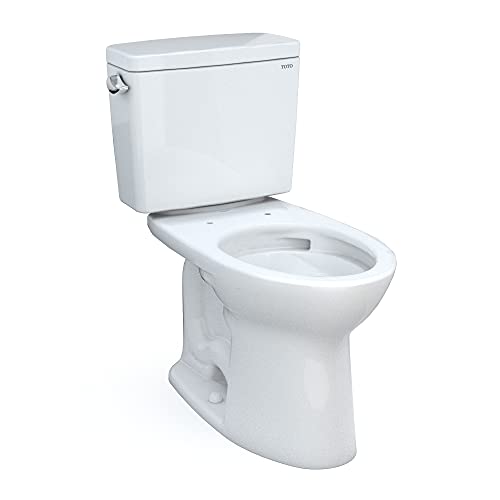
TOTO Drake II
Best for most homes4.8
A 1,000-gram MaP flush on 1.28 gallons through a quiet Double Cyclone siphon, with cheap parts and a low clog rate.
Check price on AmazonA clear, honest breakdown of every toilet flush system you can buy, from gravity-fed siphons to pressure-assisted vessels and dual-flush valves, compared on published MaP flush-test scores, GPF water use, EPA WaterSense status, noise and repair cost, so you can match the right mechanism to your bathroom before you buy.
For most homes the gravity flush wins, and the TOTO Drake II is the strongest example, reaching a 1,000-gram MaP score on just 1.28 gallons with a quiet siphon and cheap parts. Choose pressure-assisted only for very heavy or commercial use, and dual-flush when cutting water bills matters most.
Every toilet on the shelf clears the bowl using one of a handful of flush mechanisms, and that mechanism shapes almost everything you will live with: how powerfully it clears waste, how loud it is, how much water it uses, how often it clogs and how much a repair costs. Yet the flush type is the one spec most buyers skip past, partly because the labels are confusing. Gravity, pressure-assisted, dual-flush, siphonic, washdown, tornado, double cyclone, electronic flush: these terms get used loosely and overlap in ways that make them hard to compare. This guide cuts through that. It explains each real flush system in plain language, shows what it does well and badly, and pairs every claim with the published MaP (Maximum Performance) gram score, GPF rating and EPA WaterSense status that actually predict how a toilet performs.
The headline is simple. There are really three flush categories that matter for a home: gravity flush, pressure-assisted flush and dual-flush. Everything else (siphonic versus washdown, double cyclone, tornado flush, the rimless bowl) is a variation on how a gravity toilet moves water inside those categories. Understanding the three big families first, then the variations underneath them, is the fastest way to choose well. For the broadest cross-type ranking of flush power across every mechanism, the pillar guide to the best flushing toilets compares them side by side. This page stays focused on explaining the systems themselves so you can decide which one belongs in your bathroom.
We do not test toilets in a lab. We compare manufacturer specifications, published MaP flush-test gram scores, EPA WaterSense listings, flush-valve and trapway dimensions, owner-reported noise and aggregated ratings across major retailers. Where one flush type clearly suits a use case better, we say so plainly rather than declaring a single universal winner.
A side-by-side look at the three main flush families using a strong representative model of each. Higher MaP grams means more waste cleared per flush. The tinted row marks the gravity flush as the best all-around choice for most homes.
| Flush type | Best for | Representative model | MaP | GPF | Rating | Check Price |
|---|---|---|---|---|---|---|
| Gravity flush | Most homes, quiet daily use | TOTO Drake II | 1,000 g | 1.28 | 4.8 | Check price |
| Pressure-assisted | Heavy traffic, commercial use | Gerber Avalanche / Flushmate | 1,000 g | 1.28-1.6 | 4.4 | Check price |
| Dual-flush | Lowest water bills | TOTO Aquia IV | 800 g | 0.8 / 1.28 | 4.5 | Check price |
| Single-flush siphonic | Clean rinse, quiet | TOTO UltraMax II | 1,000 g | 1.28 | 4.7 | Check price |
| Washdown | Compact and modern bowls | Swiss Madison St. Tropez | 600 g | 0.8 / 1.1 | 4.3 | Check price |
A toilet flush type is the engineering method a toilet uses to move water from the tank into the bowl and carry waste out through the trapway into your drain line. It is not the same thing as the bowl shape, the seat height or the tank style. Two toilets can look identical from the outside and flush in completely different ways. The flush type determines four things you cannot change after you buy: how many grams of waste a single flush clears, how much water that takes, how loud the process is and how complex (and expensive) the internal parts are to repair when something fails.
This matters because flush type is where the largest real-world differences between toilets live. The gap between a strong flush and a weak one is not about brand prestige or price; it is about whether the mechanism generates a fast, sustained siphon or a brief, low-energy rinse. The independent MaP flush test exists precisely to measure this, scoring how many grams of solid waste a toilet clears in one flush. A toilet's flush type is the single biggest factor behind that score. Before you compare bowl shapes or finishes, decide which flush family fits your home, because that choice quietly governs how often you reach for a plunger.
The gravity flush is the oldest and still the most common toilet mechanism, and for good reason. When you press the lever, a flapper or canister valve opens at the bottom of the tank and lets the stored water drop into the bowl by gravity alone. That sudden inflow raises the water level past the top of the internal trapway bend, which starts a siphon: water rushing over the bend pulls the entire bowl contents after it, clearing waste in one continuous motion before air breaks the siphon and the bowl refills. There is no motor, no pump and no sealed pressure vessel, which is why gravity toilets are quiet, run on ordinary water pressure and have so few parts to break.
The flush strength of a gravity toilet comes from how fast and how completely the tank empties, which is governed by the flush-valve diameter and the bowl shape. Older 2-inch valves released water slowly and produced the weak flushes that gave low-flow toilets a bad name in the 1990s. Modern designs use 3-inch or larger valves that dump the tank fast, plus computer-shaped bowls that start the siphon almost instantly. That is how a TOTO Drake II clears 1,000 grams on 1.28 gallons. For a deeper look at this category and the models that lead it, our guide to the strongest gravity options pairs well with this section, and the broader how to choose a toilet complete 2026 guide walks through matching a flush type to your whole bathroom.
On a gravity toilet, the flush-valve diameter tells you a lot about flush strength. A 3-inch or 4-inch valve empties the tank far faster than a legacy 2-inch valve, starting a stronger siphon. TOTO's G-Max and Double Cyclone, Kohler's Class Five canister and American Standard's Champion all use oversized valves, which is why they reach 1,000-gram MaP scores. If a spec sheet hides the valve size, treat it as a warning sign.
Pressure-assisted toilets solve a specific problem: clearing the bowl with maximum force in settings where a clog is unacceptable. Instead of relying on falling water, they store energy. As your home's water line refills the tank, it pushes water into a sealed inner vessel (the most common is the Flushmate cartridge) and compresses the air trapped inside. When you press the flush button, that compressed air releases and shoves the water out at high velocity, so the bowl empties in a fast, forceful surge rather than a gentle siphon. Brands like Gerber, with the Avalanche, and American Standard build pressure-assisted lines, and Flushmate supplies the internal vessel for many of them.
The trade-offs are real and worth understanding before you buy. The blast of compressed air makes pressure-assisted toilets distinctly louder than any gravity model, often startling in a quiet house, which is why they suit offices, restrooms and busy households more than a master bathroom next to a bedroom. The sealed cartridge also costs more to service than a simple flapper, and if it fails you typically replace the whole vessel rather than a cheap part. The upside is genuine clog resistance and a flush that does not weaken with use. If your priority is never plunging in a high-traffic bathroom, the toilet buying guide for 2026 covers how to weigh that power against the noise and repair cost.
The single most common owner complaint about pressure-assisted toilets is noise. The flush is a loud whoosh that can wake a sleeping household. If anyone in your home is a light sleeper or the toilet sits near a bedroom, a top gravity model that reaches the same 1,000-gram MaP score will clear waste just as well while staying quiet. Reserve pressure-assist for bathrooms where raw flush power outweighs everything else.
Dual-flush is less a separate mechanism than a smarter water-delivery strategy layered onto a gravity or washdown bowl. The tank holds a special two-stage valve connected to a split button or lever. Press the small side and the valve releases only a partial charge of water, enough to rinse away liquid; press the large side and it releases the full volume to clear solids. Because the majority of daily flushes are liquid only, the averaged water use over a week falls well under what a single-flush 1.28 GPF toilet would consume, which is why dual-flush is the go-to choice for the lowest water bills and for buyers chasing the deepest efficiency.
The TOTO Aquia IV is among the most refined dual-flush toilets, pairing a strong full flush with a genuinely effective reduced flush, and the Swiss Madison St. Tropez and Kohler dual-flush designs are popular too. The honest caveat is that many dual-flush bowls use a washdown action rather than a deep siphon, which can leave more skid marking and occasionally needs the bowl wiped, and the two-piece flush valve has more parts than a simple flapper. Even so, for water savings the format is hard to beat. Our roundup of the best dual-flush toilets digs into the models that flush cleanly, and the broader efficiency picture sits alongside our coverage of EPA WaterSense certified options.
Within the gravity family, the two competing bowl actions are siphonic and washdown, and the distinction explains a lot about how a toilet feels to use. A siphonic toilet has a narrow, curved trapway engineered to fill completely during the flush, which creates suction that pulls waste down. This gives a strong, quiet flush, a large standing water surface that resists skid marks and odor, and the clean rinse North American buyers expect. Almost every leading gravity toilet sold in the United States (the TOTO Drake II, UltraMax II, Kohler Highline and Cimarron) is siphonic. The cost is a slightly narrower trapway, which on lesser designs can be more clog-prone, though wide glazed siphonic trapways largely solve that.
A washdown toilet uses a wider, straighter trapway and simply pushes waste out with the force of incoming water rather than building suction. It is the dominant style in Europe and shows up on many compact and modern bowls, including a number of dual-flush models. Washdown bowls clog less easily because the trapway is wide and short, and they use very little water, but they hold a smaller water spot, so they can mark more and sometimes need a quick brush. Neither action is universally better: siphonic wins on a clean, quiet, low-maintenance bowl, while washdown wins on compactness, water thrift and raw passage width. Knowing which one a toilet uses tells you more about daily life with it than almost any other spec.
If easy cleaning and quiet operation top your list, choose a siphonic gravity toilet with a large water surface, like the TOTO Drake II or UltraMax II. If you need a slim, water-thrifty bowl for a small or modern bathroom and do not mind an occasional brush, a washdown or dual-flush bowl such as the Swiss Madison St. Tropez fits better. Match the action to the room, not the brand.
These branded names are manufacturer marketing for refined gravity siphonic systems, not separate flush categories. TOTO's Tornado Flush and Double Cyclone use two or three angled nozzles instead of rim holes to swirl water around the bowl, scrubbing the surface and starting the siphon efficiently while using less water; the Double Cyclone on the Drake II is how it reaches 1,000 grams on 1.28 gallons. TOTO's older G-Max and newer Dynamax systems are siphonic gravity designs tuned for a fast, forceful tank dump. Kohler's Class Five and AquaPiston are canister-valve gravity systems that release the full tank quickly for a strong, even rinse, found on the Highline, Cimarron and Santa Rosa.
American Standard's Champion 4 leans on a huge 4-inch flush valve and a wide 2.375-inch trapway for bulk clearance, while its Cadet 3 uses a more conventional siphonic action at a value price. Woodbridge's T-0001 and T-0019 and Gerber's Viper are likewise gravity siphonic toilets under their own naming. The takeaway is that when you see one of these names, you are still buying a gravity flush; the brand is describing how it shapes the water inside that gravity category. Compare them all the same way: on the published MaP gram score, the GPF and the trapway width, not on the marketing label.
The strongest flush is not about which category in the abstract, but about which specific model reaches the highest MaP score with the most reliable real-world clearance. Several gravity toilets hit the practical 1,000-gram maximum, including the Drake II, UltraMax II, Kohler Highline, Cimarron and American Standard Champion 4. Pressure-assisted models reach it too, with extra margin on bulk because the compressed-air blast does not depend on bowl geometry alone. Where pressure-assist pulls ahead is consistency under abuse: it does not weaken as parts age the way a worn flapper can. But because top gravity models now match that 1,000-gram score, the quiet operation usually decides it for home use. For the outright power rankings, see our strongest flushing toilets list.
Clog resistance comes down to two things a flush type controls: how much force reaches the trapway and how wide and smooth that trapway is. Pressure-assisted designs win on force, blasting waste through before it can settle. Among gravity toilets, trapway width and glaze matter most; the Champion 4's extra-wide 2.375-inch passage and TOTO's fully glazed CeFiONtect trapways both reduce snags. A high MaP score is the best single predictor, since the test measures exactly this. If recurring clogs are your frustration, prioritize trapway width and a 1,000-gram score over brand, and our toilets-for-frequent-clogs coverage ranks the specific models that pass bulk waste cleanly.
Value is not just the purchase figure; it is the total cost of living with a toilet, including water use, repair parts and the odds of a service call. Gravity wins on all three. Its flapper and fill valve are inexpensive and stocked in every hardware store, it needs no power, and it is quiet. Pressure-assisted toilets cost more to service because of the sealed cartridge, and dual-flush valves have more parts. Where dual-flush earns its keep is the water bill, so in a high-use household the running savings can offset its slightly higher complexity. For a straightforward value pick, a 1,000-gram gravity toilet like the Highline or Cadet 3 is hard to beat.
If you are choosing a flush type and do not want to overthink it, default to a gravity siphonic toilet with a 1,000-gram MaP score and a 3-inch flush valve, such as the TOTO Drake II or Kohler Highline. It gives you the same flush power as a pressure-assisted unit with none of the noise or expensive cartridge, and the parts will be on a shelf for the life of the toilet. Only step outside gravity when you have a specific reason: pressure-assist for a punishing commercial-grade workload, or dual-flush when squeezing every gallon out of the water bill is the goal.
Three models that show the best of each major flush family, so you can see how the right mechanism pairs with a proven toilet. Each reaches a strong MaP score and earns top owner ratings within its category.
A 1,000-gram MaP flush on 1.28 gallons through a quiet Double Cyclone siphon, with cheap parts and a low clog rate.
Check price on Amazon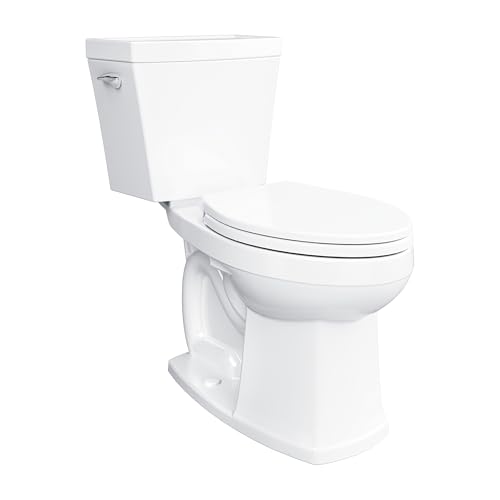
A Flushmate-style compressed-air blast that clears bulk waste relentlessly, ideal where a clog is never acceptable.
Check price on Amazon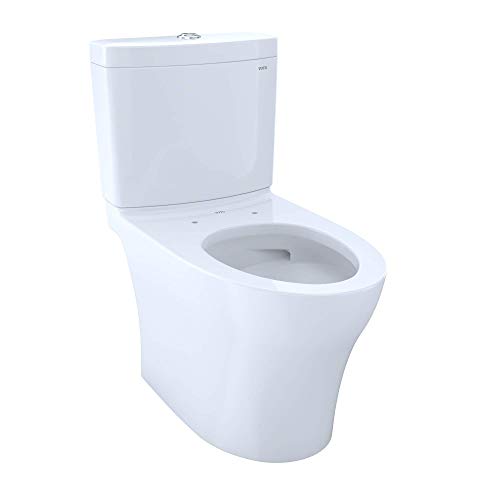
A 0.8 and 1.28 gallon dual flush with a strong full mode, averaging well below a single-flush toilet over real use.
Check price on AmazonStart with the room and the household, not the brand. For a standard home bathroom used by a normal family, a gravity siphonic toilet with a 1,000-gram MaP score is the right default; it is quiet, efficient, reliable and cheap to fix. Choose it unless you have a clear reason to do otherwise. The most common reason to leave gravity is a punishing workload: a busy office, a rental that takes abuse, or a household that simply clogs no matter what. In those cases a pressure-assisted toilet or a wide-trapway gravity model like the Champion 4 buys you extra clog insurance, with the understanding that pressure-assist is loud and costlier to service.
If your top priority is the water bill, a dual-flush toilet averages below any single-flush design and is the efficiency leader, especially for high-use homes; just favor a model with a genuinely strong full flush so the small-flush savings are not erased by double flushing. For a small or modern bathroom, a compact washdown or dual-flush bowl fits where a deep siphonic bowl will not. Whatever the room, three numbers decide the buy: the MaP score (aim for 800 grams, ideally 1,000), the GPF for water use, and the rough-in measurement so it physically fits. Once a toilet clears those, the flush type has done its job. For the full step-by-step process across every spec, our how to choose a toilet guide and the comparisons of one piece vs two piece toilets and round vs elongated toilets round out the decision.
The mistake we see most often is buyers fixating on a flush-type label they read online (chasing pressure-assist for power, or dual-flush for green credentials) without checking whether a quiet gravity toilet already does the job. For the large majority of homes it does, and at a lower lifetime cost. Decide the flush type by your actual problem: noise-sensitive household, default to gravity; recurring clogs, widen the trapway or go pressure-assist; water bill is the pain, go dual-flush. Then filter every candidate by its MaP score and rough-in, and almost any toilet that passes will serve you quietly for well over a decade.
Three flush families cover every home: gravity, pressure-assisted and dual-flush, with siphonic, washdown and the branded systems sitting underneath them as gravity variations. For nearly everyone the gravity siphonic flush is the right answer, and a 1,000-gram MaP model like the TOTO Drake II or Kohler Highline delivers the full flush power of a pressure-assisted unit without the noise or the expensive cartridge. Step outside gravity only with a specific reason: pressure-assist for relentless commercial-grade use, or dual-flush when cutting the water bill is the goal. Whichever family you choose, buy on the published MaP score and GPF, confirm the rough-in fits, and you will get a toilet that clears waste in one quiet flush for years.
There are three main flush families for a home: gravity flush, which uses falling tank water to start a siphon; pressure-assisted, which uses compressed air to blast water out; and dual-flush, which offers a reduced flush for liquids and a full flush for solids. Siphonic and washdown describe how a gravity bowl moves water, and branded names like Tornado Flush, Double Cyclone and Class Five are all refined gravity systems, not separate categories.
For most homes the gravity flush is best. It is quiet, runs on ordinary water pressure with no electricity, uses cheap and widely stocked parts, and the top models reach a 1,000-gram MaP score on 1.28 gallons. Choose pressure-assisted only for very heavy or commercial use where the extra force outweighs the noise, and dual-flush when minimizing the water bill is your priority.
They are worth it in specific situations. A pressure-assisted toilet clears bulk waste with more raw force than gravity and resists clogs in high-traffic or commercial bathrooms. The trade-offs are a much louder flush and a sealed cartridge that costs more to replace than a simple flapper. Because top gravity toilets now match the 1,000-gram MaP ceiling, most homes are better served by a quiet gravity model.
The noise comes from the mechanism. Compressed air stored in a sealed inner vessel releases all at once to drive water into the bowl, producing a sharp whoosh that is far louder than the gentle rush of a gravity siphon. There is no way to make this design quiet. If anyone in the home is a light sleeper or the toilet sits near a bedroom, a gravity model with the same MaP score is the better choice.
Yes, when used as intended. The reduced flush uses roughly 0.8 to 1.1 gallons for liquid waste, and because most daily flushes are liquid only, the weekly average falls well below a fixed single-flush toilet. A family can save thousands of gallons a year. The savings only hold if the full flush is strong enough to avoid double flushing, so choose a well-rated model like the TOTO Aquia IV.
A siphonic toilet has a curved trapway that fills during the flush to create suction, giving a strong, quiet flush with a large water surface that resists marks and odor. A washdown toilet uses a wider, straighter trapway and simply pushes waste out with water force, clogging less easily but holding a smaller water spot. Siphonic suits clean, quiet daily use; washdown suits compact and water-thrifty bowls.
No. TOTO's Tornado Flush and Double Cyclone are branded versions of a gravity siphonic system. They use angled nozzles instead of rim holes to swirl water around the bowl, which cleans the surface and starts the siphon efficiently while using less water. You are still buying a gravity toilet, so compare it the same way, on its MaP score, GPF and trapway width.
A MaP score of 600 grams handles a typical household, 800 grams is strong, and 1,000 grams is the practical ceiling and the best clog insurance available. Aim for at least 800 grams, and 1,000 grams if heavy use or past clogs are a concern. This benchmark applies across flush types, since MaP measures actual grams of waste cleared regardless of how the toilet generates the flush.
Pressure-assisted toilets and wide-trapway gravity models clog the least. Pressure-assist uses raw force to push waste through, while a gravity toilet like the American Standard Champion 4 uses a 2.375-inch glazed trapway, the widest in its class, to pass bulk in one flush. A high MaP score is the best single predictor of clog resistance for any flush type.
Yes. Gravity and pressure-assisted single-flush toilets use a fixed amount per flush, typically 1.28 or 1.6 gallons, while dual-flush averages lower because the reduced mode uses far less. Dual-flush is the most water-efficient format, and within single-flush designs a WaterSense-certified 1.28 GPF model uses 20 percent less than a 1.6 model. Always check the GPF and WaterSense label alongside the flush type.
Yes. A gravity toilet's flapper, fill valve and flush valve are inexpensive and stocked in every hardware store, and there is no pump, cartridge or electronics to fail. Pressure-assisted toilets use a sealed vessel that costs more to replace, and dual-flush valves have more parts. Over a decade, gravity is the cheapest flush type to maintain, which is a big part of its value.
Most TOTO toilets use gravity siphonic flushing under branded names like G-Max, Double Cyclone, Tornado Flush and Dynamax. These all rely on falling tank water and an oversized flush valve to start a fast siphon, which is how models like the Drake II and UltraMax II reach 1,000 grams on 1.28 gallons. TOTO also makes dual-flush gravity toilets such as the Aquia IV.
No. One-piece and two-piece describe the body construction, the tank and bowl molded together or bolted separately, not how the toilet flushes. Both can use any flush type. A one-piece TOTO UltraMax II and a two-piece Drake II share the same gravity siphonic flush; the difference is the seamless body and easier cleaning of the one-piece. Decide flush type and body style as separate choices.
Most smart and bidet toilets still use a gravity or washdown flush underneath the electronics, sometimes with a small pump to boost the rinse since tankless designs lack a gravity-fed reservoir. The automation adds touchless or sensor flushing, but the core mechanism that clears the bowl is usually a refined version of the same gravity or washdown action found on conventional toilets.
An older home with shallow-slope or cast-iron drains benefits from more carrying water, so a strong 1.6 GPF gravity toilet or a pressure-assisted model can be a safer hedge than the lowest-water dual-flush in its small flush mode. The extra volume helps move solids along a long or rough drain line. If you have a history of line clogs rather than bowl clogs, lean toward more water per flush.
Usually yes. Look for the words gravity, pressure-assisted or dual-flush, plus the flush-valve size and GPF. A listed Flushmate vessel means pressure-assist; a two-button or two-stage valve means dual-flush; everything else with a flapper or canister and a 3-inch or larger valve is gravity. If the listing hides the flush-valve size or the MaP score, treat that as a sign to look at a more transparent brand.
For gravity, TOTO (Drake II, UltraMax II), Kohler (Highline, Cimarron) and American Standard (Champion 4) lead, all reaching 1,000 grams. For pressure-assisted, Gerber (Avalanche) and Flushmate-equipped American Standard models are the standouts. For dual-flush, the TOTO Aquia IV, Kohler Santa Rosa-style designs and Swiss Madison St. Tropez are popular. Woodbridge T-0001 and T-0019 and the Gerber Viper round out strong gravity value picks.
When you flush, where does it go? Follow toilet water from the bowl through the trap, drain, and stack to a septic…
Read the guideDo toilets need electricity to flush? Most do not. Learn which toilets use power, how a standard flush works, and how to…
Read the guideFind out how many gallons per flush an old toilet really uses, how to check your own tank, and how much water…
Read the guide